
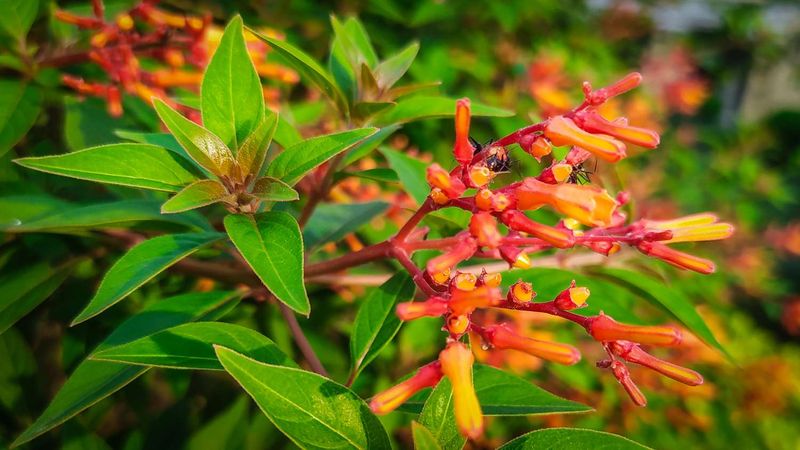
Florida summers can fry tender flowers fast, but the right native plants keep blooming when the heat feels relentless. If your butterfly garden fades by June, a few smart swaps can bring back color, nectar, and caterpillar action with less watering and fewer pest headaches. These Florida natives are tough, beautiful, and surprisingly easy for home gardeners to grow. Here are the plants that keep pollinators visiting even when the weather turns brutally hot.
1. Firebush

Firebush is one of those plants that earns its space fast because it blooms through punishing heat and still looks fresh. The orange-red tubes pull in zebra longwings, gulf fritillaries, and hummingbirds, giving your yard that busy, alive feeling you want all summer. If you have a sunny spot with decent drainage, this shrub usually settles in with very little fuss.
I like to mulch it lightly, water deeply while it establishes, and then back off so roots grow tougher. Skip heavy fertilizer, because too much nitrogen can push leafy growth instead of flowers. If cold nips it in winter, cut back dead wood in spring and let it rebound hard.
2. Swamp Milkweed

Swamp milkweed is a smart choice if you want monarch caterpillars and a plant that can handle Florida summer moisture without collapsing. Its pink flower clusters feed adult butterflies, while the leaves serve as critical host food for monarch larvae. That two-in-one value makes it one of the most useful natives you can plant.
The biggest mistake gardeners make is overtidying, then removing eggs or tiny caterpillars without noticing. Give it full sun, steady moisture, and avoid insect sprays anywhere nearby, even organic ones that can still harm larvae. If aphids show up, blast them off with water instead of reaching for chemicals, and let beneficial insects help finish the job.
3. Dense Blazing Star

Dense blazing star brings that vertical pop many butterfly gardens need, and the purple spikes stay busy with swallowtails, skippers, and bees. It handles summer heat far better than many nonnative perennials, especially when planted in full sun with open airflow. Once blooming starts, the whole bed feels more layered and dramatic.
I would not crowd it with aggressive groundcovers because the crown needs breathing room in Florida humidity. Plant it in sandy or well-drained soil, keep new plants watered until rooted, and deadhead some spent spikes to stretch the show. Leave a few seedheads later, though, because they add texture and can feed birds while the garden transitions toward fall.
4. Tropical Sage

Tropical sage is one of the easiest ways to keep red color in a Florida butterfly garden when summer turns sticky and exhausting. The flowers are magnets for butterflies, and the compact habit works well near paths, patios, or mailbox beds where you will actually notice pollinator traffic. It also reseeds politely, which saves money over time.
The trick is not to baby it too much after planting because slightly lean soil often keeps it blooming better. Cut plants back lightly if they get leggy, water at the base rather than overhead, and pull weeds early before they steal airflow. If caterpillars nibble a little, I treat that as a good sign, not a problem worth fixing.
5. Frogfruit

Frogfruit is the low-growing native many gardeners overlook, yet it can turn bare hot ground into a butterfly feeding strip with almost no drama. Its tiny flowers may seem modest, but they attract plenty of small butterflies, and the leaves host several caterpillar species. That makes it a clever replacement for thirsty turf in sunny edges.
I like it where a lawn struggles, especially along paths or beside beds where reflected heat bakes everything else. Give it sun to part sun, reasonable drainage, and time to spread, then mow or trim lightly if it creeps too far. Avoid broadleaf weed killers completely, because frogfruit will disappear with the weeds you were trying to target.
6. Tickseed

Tickseed, Florida’s state wildflower, brings cheerful yellow blooms that brighten a butterfly garden when many plants look tired or washed out. Different native species vary, but several perform beautifully in summer heat and attract a steady mix of pollinators. If you love a loose, sunny meadow look, this plant gives you that effect without much pampering.
The common mistake is planting it in rich, wet soil where growth gets floppy and short-lived. Choose a sunny spot with lean, well-drained soil, shear lightly after the first heavy flush, and let some flowers set seed for future patches. That simple routine usually gives you stronger repeat bloom and a more natural drift year after year.
7. Narrowleaf Sunflower

Narrowleaf sunflower is the kind of late summer powerhouse that rescues a garden from that tired, midseason slump. Its golden blooms arrive when butterflies still need nectar, and the tall stems create a bright backdrop that makes shorter natives stand out. In a sunny Florida yard, it often looks stronger as the heat builds.
Give this plant room, because crowded stems invite mildew and flopping in humid weather. Pinch or cut it back by about one-third in late spring if you want bushier growth and more manageable height by bloom time. I also stake only if needed, since plants grown in full sun and not overfed usually hold themselves up better than gardeners expect.
8. Scarlet Rosemallow

Scarlet rosemallow gives you huge red flowers that look almost too tropical to be native, yet it handles Florida conditions beautifully. Butterflies visit the blooms, and the bold foliage adds structure even before the flowers open. If your garden has a moist area that stays sunny, this plant can become the showpiece everyone asks about.
Because it likes moisture, I think of it as a problem-solver for rain garden edges or low spots that stay damp after storms. Keep mulch a few inches away from the crown, watch for Japanese beetles or chewing pests, and remove damaged leaves before fungal issues spread. A deep soak during dry spells keeps flowers coming without stressing the plant.
9. Elliott’s Aster

Elliott’s aster is a brilliant bridge plant because it starts helping in summer and keeps the butterfly buffet going as the season leans toward fall. The lavender blooms are especially useful when many gardeners realize too late that their nectar sources have thinned out. In a mixed native bed, it adds softness without looking weak.
I like pairing it with goldenrods or sunflowers so the color contrast catches your eye from across the yard. Plant it in sun to light shade, avoid soggy soil, and pinch it once in late spring if you want fuller branching. Leave the roots mostly undisturbed after it settles, because mature clumps often perform better when gardeners stop fussing with them.
10. Seaside Goldenrod

Seaside goldenrod is one of the best natives for gardeners who want bold color, butterfly traffic, and excellent heat tolerance with very little maintenance. Despite the myths, goldenrod does not cause hay fever, and its bright plumes can keep pollinators fed when other flowers slow down. That makes it a smart anchor for a long-blooming Florida planting.
It handles sandy soil, salt, and summer stress, but it looks best with full sun and occasional trimming if growth gets too wild. Give it space, since mature clumps expand, and divide every few years if the center thins or bloom drops. I would pair it with asters for an easy combo that looks intentional and keeps nectar available longer.