
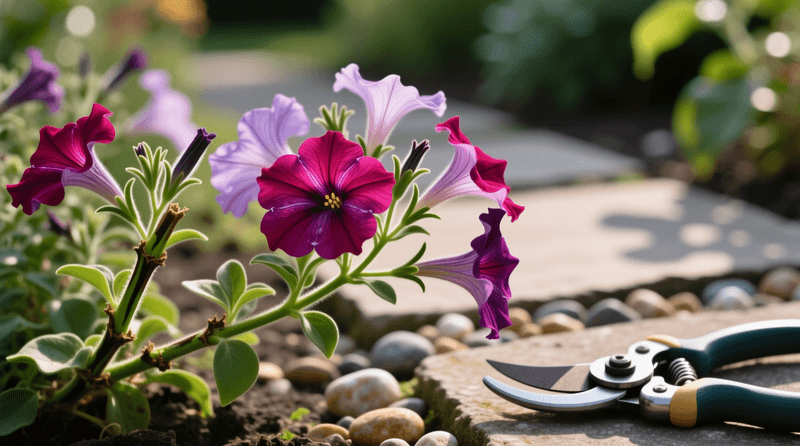
If your petunias look leggy, stretched out, and shy on flowers, they are basically begging you for a quick trim. Pinching sounds scary, but it is just removing a little growth to trick the plant into making more blooms and staying bushy. A few minutes of snipping now can turn a sad, straggly basket into a thick mound of color that keeps going through the hottest days. Here are five simple ways to pinch your petunias so you get bigger blooms that hang around all summer long.
1. Pinch the Center Stems First
Leggy petunias almost always start failing from the middle, where one or two long stems shoot up and steal all the plant’s energy. Those runaway stems look busy, but they leave the center bare and produce only a handful of flowers way out at the tips.
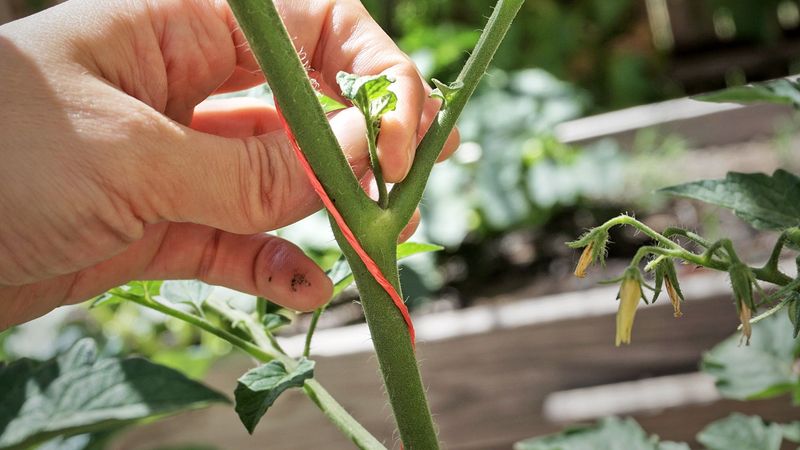
Start your rescue right in that thin, stretched-out core. Find the tallest central stems and pinch each one back by about a third, snipping just above a leaf joint where two little leaves meet. That spot is where new side shoots wake up, so you are basically telling the plant to branch out instead of climbing.
Use your thumbnail and finger, or clean scissors if the stem feels tough. Do not be shy here; a plant that looks a little chopped today can fill back in within a week or two.
Tackling the center first often improves airflow through the whole plant, which may help reduce the mildew and rot that thrive in dense, damp growth. You will trade a few long, lonely stems for a fuller shape that carries far more buds.
2. Deadhead the Spent Blooms
Every faded, mushy flower still hanging on your petunia is quietly working against you. Once a bloom wilts, the plant shifts energy toward making seeds inside that spent flower instead of pushing out fresh color.
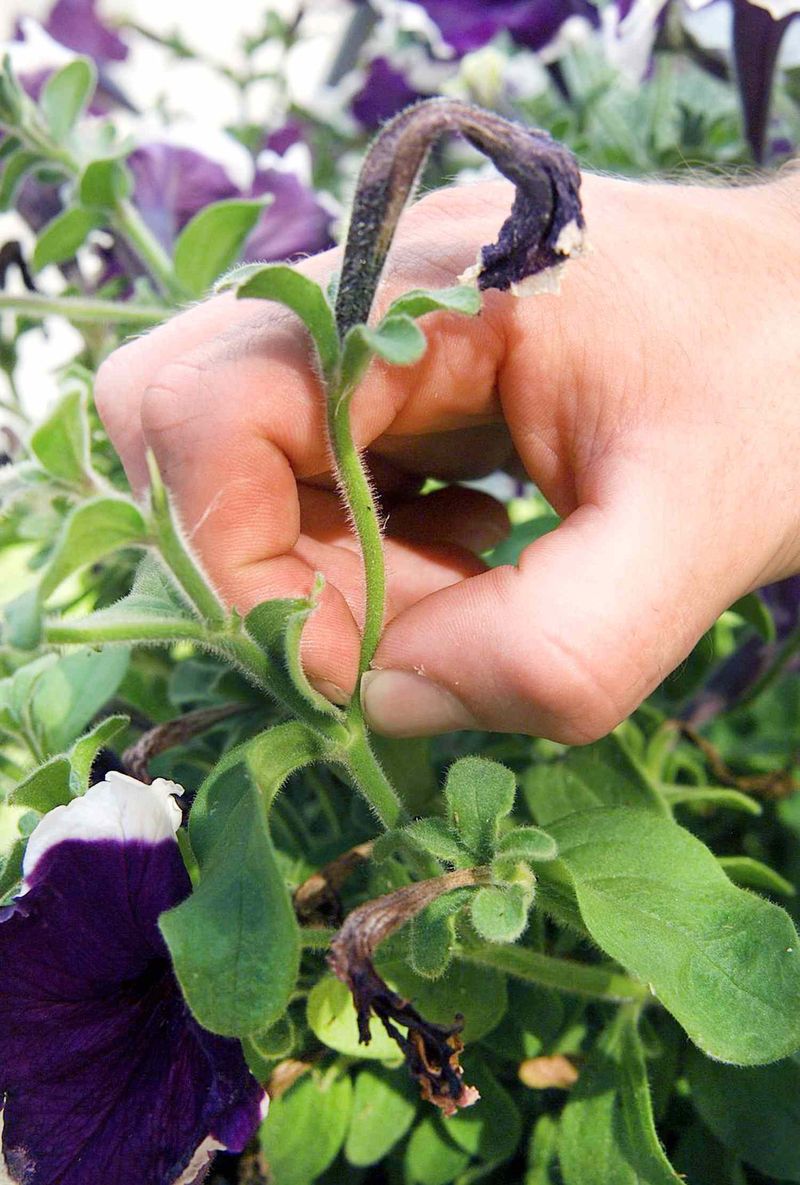
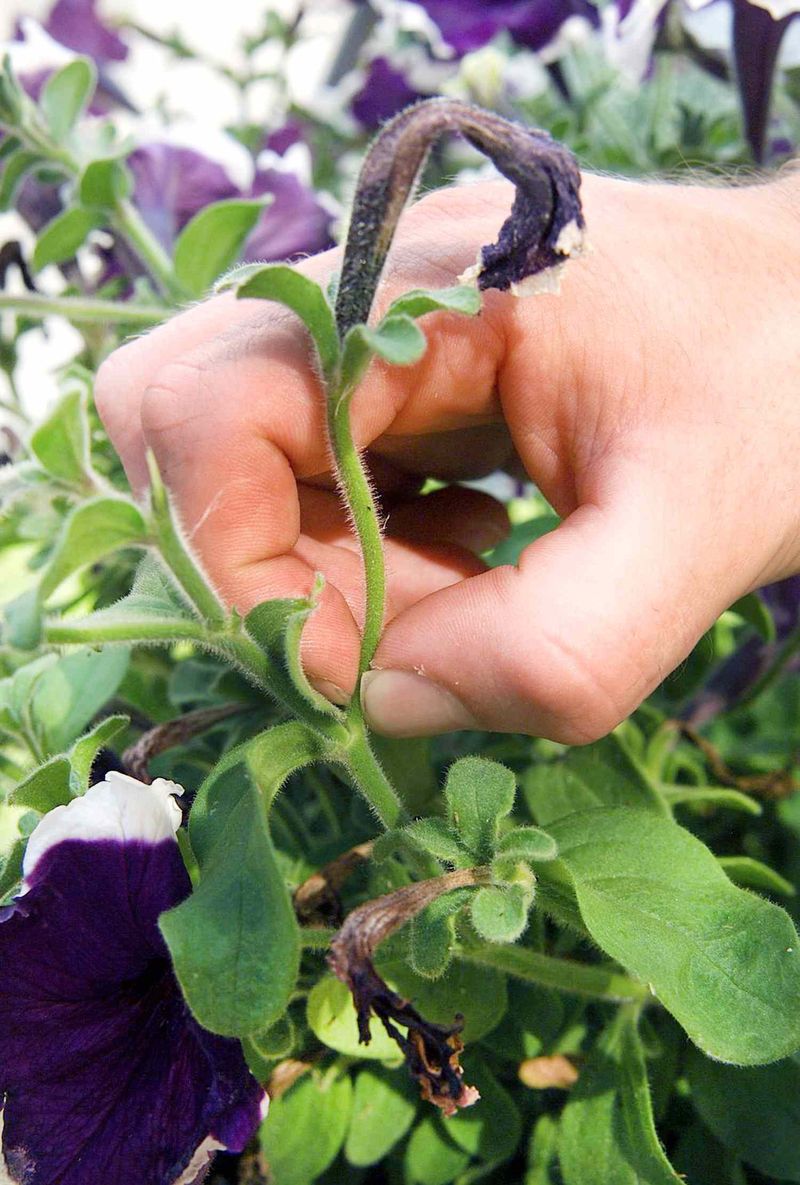
Deadheading fixes that in seconds. Look past the obvious dried petals and follow the flower down to the little swollen seed pod behind it, then pinch off the whole thing, seed pod included. Removing just the petals is a common mistake that leaves the seed factory running.
Do a quick pass every few days during peak summer, since petunias bloom fast and fade fast in the heat. Morning is a nice time, when stems are firm and you can spot the tired flowers before they turn to mush.
Clearing out old blooms can seriously boost the number of new buds a plant sets, and it often keeps the whole basket looking tidy instead of crispy.
Fun tip: drop the spent flowers into a bag, not back into the pot, so you are not inviting mold to settle in around the base.
3. Give a Mid-Summer Hard Cutback
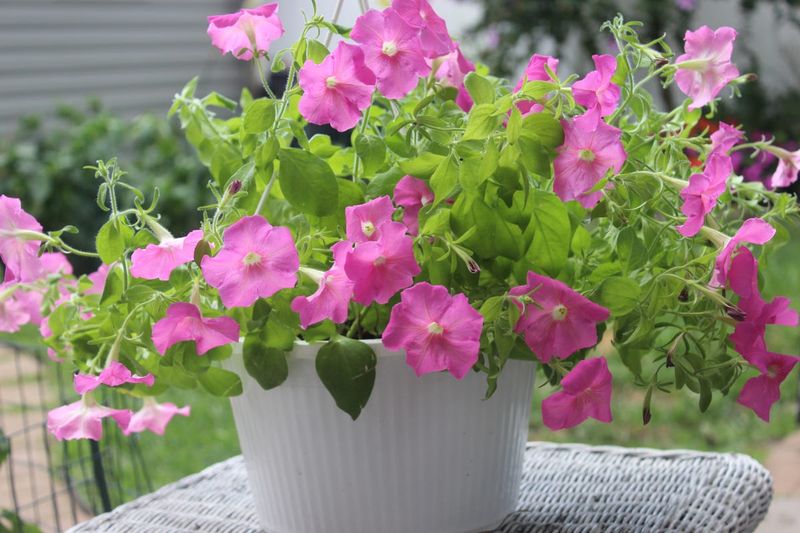
Come July, a lot of petunias hit the wall: long trailing vines, brown crispy middles, and flowers only at the very ends. That is your cue for the boldest move on this list.
A hard cutback means trimming the entire plant back by roughly half. Yes, half. Grab clean scissors and work around the whole basket, cutting the longest stems shorter and evening things out so nothing is left bald.
The plant will look shockingly naked for about a week, and that scares most gardeners into stopping too soon. Push through it. Petunias respond to a serious haircut by sending out a flush of fresh, tender growth loaded with buds.
Water well and feed lightly right after, since the plant is about to work hard rebuilding itself. A cutback done in stages, half the stems one week and the rest a few days later, can keep some color going while the plant recovers.
By early August you often get a second act that looks better than the first, carrying blooms straight into fall’s cooler days.
4. Nip Young Seedlings Early
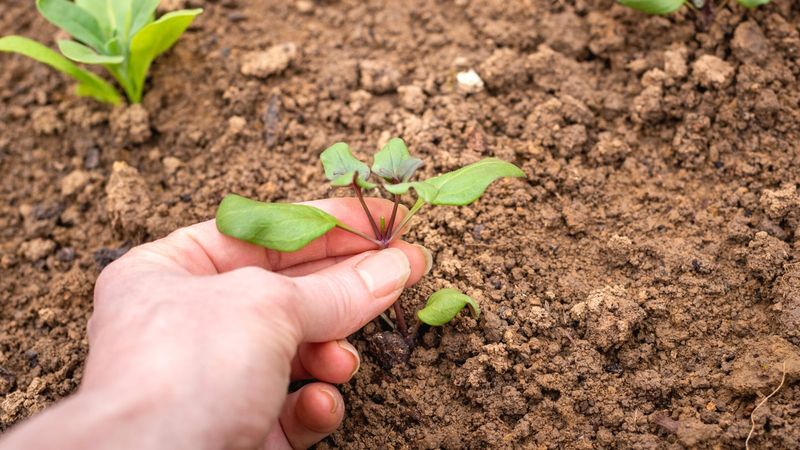
Waiting until a plant is a mess is the hard way. The gentlest, most effective pinching actually happens weeks before problems ever show up, back when your petunias are still small.
Once a young plant has three or four sets of true leaves, pinch out the very tip of the main stem. It feels almost cruel to trim something so tiny, but that single snip signals the plant to grow two branches where there was one.
Repeat as the side branches lengthen, and you build a wide, dense framework from the ground up rather than a tall single stalk that flops later.
Early pinchers are rewarded with baskets that fill in thick and mound over the edges instead of dangling in thin ropes.
Think of it as setting the plant’s habit while it is young and flexible. A few minutes spent nipping seedlings now can save you from a mid-summer rescue mission, and it often means the first big bloom show arrives fuller and more even than you expected.
5. Selectively Thin Overcrowded Growth
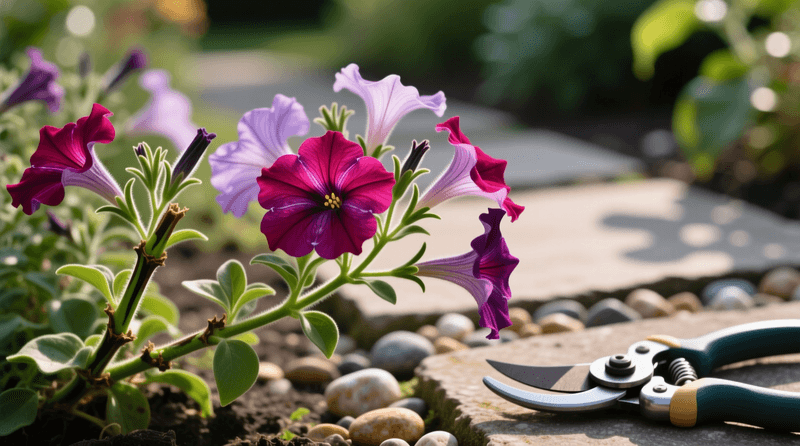
Not every pinch is about making more stems. Sometimes the smartest cut is one that opens the plant up and lets it breathe.
Older petunias can turn into a tangled thicket where inner stems get shaded out, go yellow, and stop flowering entirely. Reach into that dense interior and remove a few of the weakest, palest, or crossing stems right at the base.
You are not hacking the plant apart; you are thinning it like you would thin crowded carrots, giving the strong stems room and light. Removing that soft, shaded growth can reduce the trapped humidity where fungus and rot love to settle.
Aim to take out no more than a quarter of the stems in one session so you do not shock the plant.
What is left gets more sun and airflow, which usually translates into sturdier stems and more open flowers.
Handy habit: check the center of the basket whenever you water, and pluck out any stem that looks sickly before it drags down its neighbors. A little ongoing thinning keeps the whole plant healthier all season.
6. Use Clean, Sharp Tools
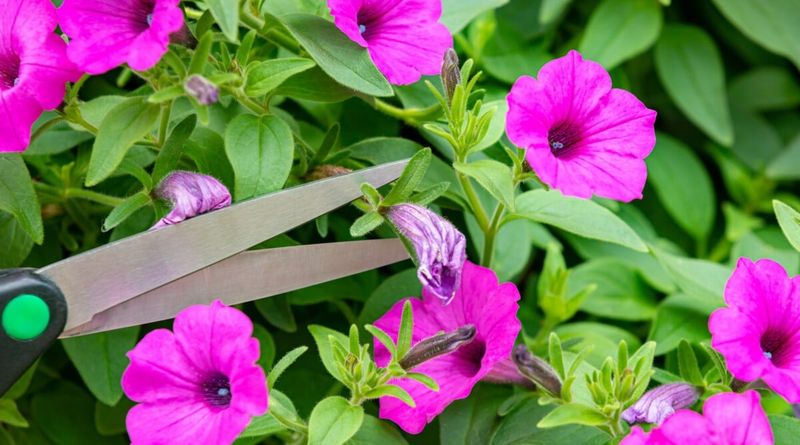
A ragged, crushed cut is an open door for trouble. Petunia stems are soft and juicy, so a dull blade mashes them and leaves a wound that heals slowly and invites disease.
Reach for small, sharp snips or fine scissors rather than tearing stems with your bare hands once the plant is established. Clean cuts seal faster and look neater, especially when you are trimming many stems at once during a cutback.
Wipe the blades with rubbing alcohol or a diluted bleach solution before you start and between plants. That simple step can reduce the chance of carrying mildew or bacterial gunk from one basket to the next.
Sticky sap builds up fast on petunia work, so give your tools a quick wipe partway through a big session too.
Storing snips dry and clean keeps them from rusting and getting dull, which brings you right back to crushing stems.
Good tools will not do the pinching for you, but they make every one of the techniques on this list gentler on the plant and easier on your fingers.
7. Pinch After a Heat Wave, Not During
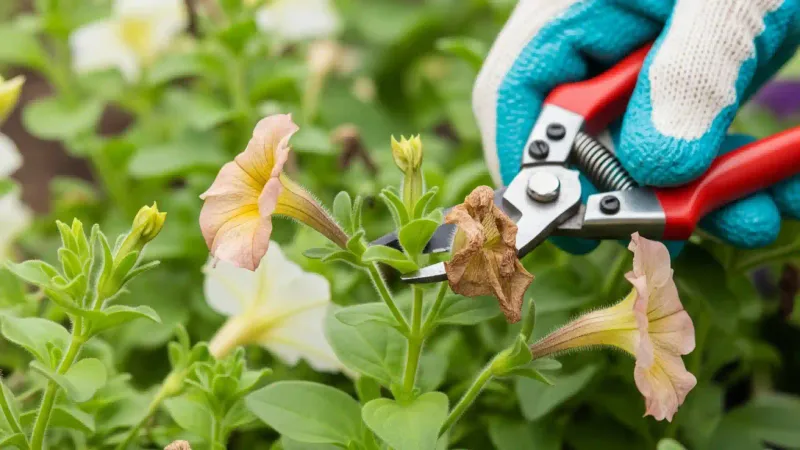
Timing turns a good trim into a great one. Snipping a petunia while it is baking in a heat wave is like asking someone to run laps with a fever; the plant is already stressed and has nothing left for regrowth.
Wait until temperatures ease, ideally after a stretch of cooler days or a good soaking rain, and pinch in the morning while the plant is plump with water.
Heat-stressed petunias often look wilted and flowerless, and the instinct is to cut them back right then. Hold off. Water them deeply, give them a day or two to perk up, then do your pinching once they have recovered.
Trimming a rehydrated plant lets it channel energy straight into fresh buds instead of just surviving.
Evenings can work too, but morning gives the cut stems a full mild day to seal before the next blast of afternoon sun.
Reading the weather before you reach for the snips can be the difference between a plant that bounces back fast and one that sulks for weeks.
8. Feed Right After You Pinch
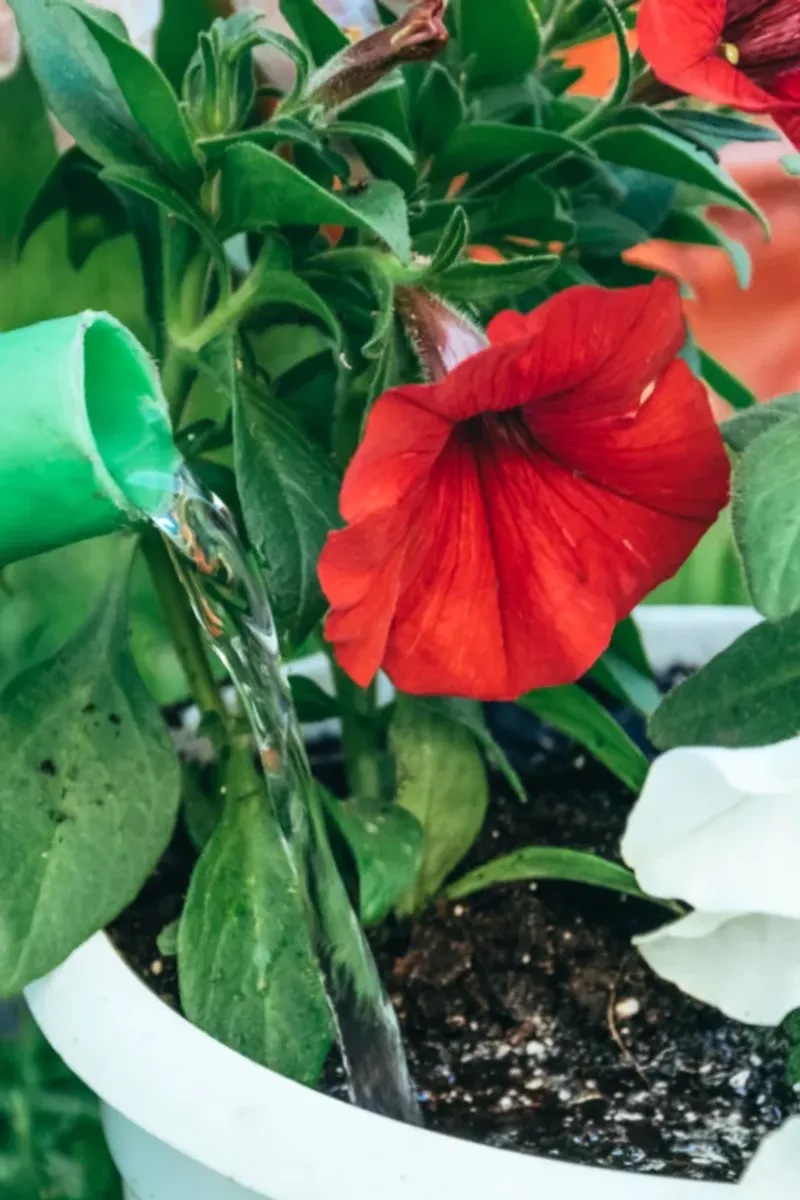
Pinching asks a lot of a plant, and an empty tank means a slow comeback. Right after you trim, your petunias are gearing up to grow new stems and buds, and that push runs on nutrients.
Follow a trim with a dose of balanced, water-soluble fertilizer made for flowering plants. A gentle feeding roughly every one to two weeks through summer often keeps the regrowth fast and the color deep.
Petunias in containers are especially hungry, since frequent watering flushes nutrients right out the drainage holes. Skipping food after a hard cutback is a classic reason plants stay bare and green far longer than they should.
Do not overdo it, though. Dumping on extra fertilizer will not double the blooms and can burn tender new growth or push floppy leaves instead of flowers.
Water the plant before you feed if the soil is bone dry, so the roots take in nutrients instead of getting scorched.
Pairing every pinch with a light meal turns a haircut into a full reset that can carry your baskets right through the season.
9. Target Blind Shoots That Never Bloom
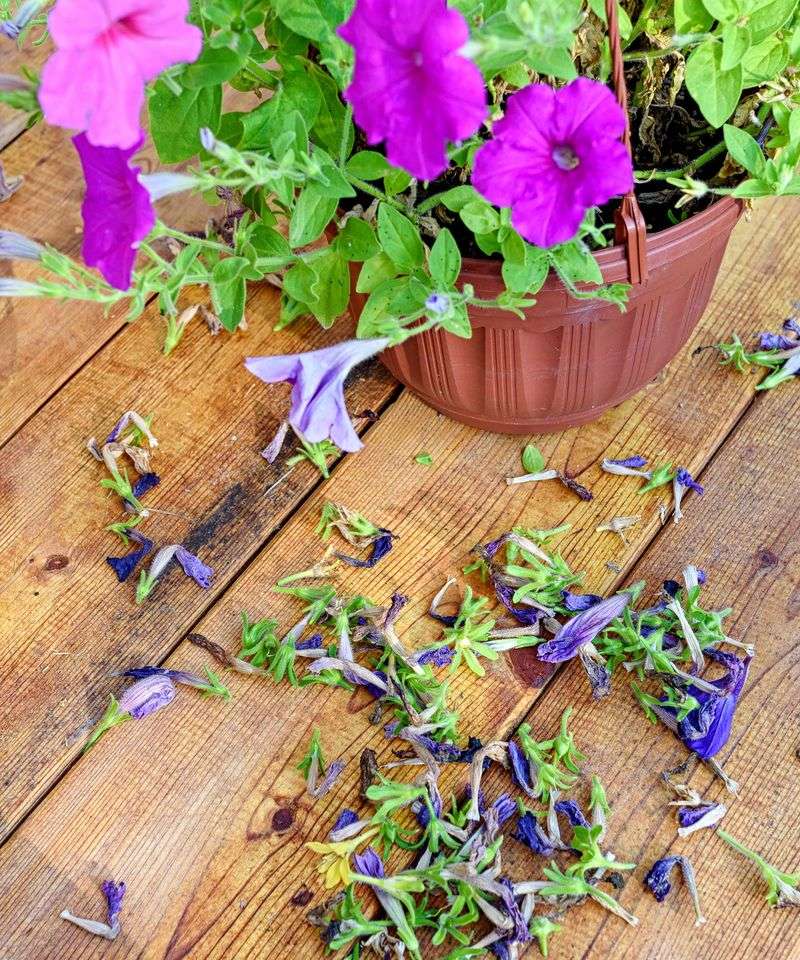
Ever notice a stem that grows long and leafy but flat-out refuses to flower? Gardeners call those blind shoots, and they quietly drain energy while giving you nothing in return.
Hunt them down and pinch them back hard. A blind shoot is easy to spot: healthy leaves, decent length, zero buds forming at the tip even when the rest of the plant is flowering.
Cutting one back by half or more often shocks the stem into branching, and those new branches usually do set buds. Sometimes a shoot that stayed stubbornly blind will finally bloom once it is forced to redirect.
Blind growth tends to show up after stress, uneven light, or a spell of too much nitrogen, so a plant with several of them may be telling you something about its care.
Clearing them out sharpens the plant’s focus and can noticeably lift the overall bloom count.
Keep an eye out during your regular deadheading rounds; catching blind shoots early means less wasted energy and a basket where nearly every stem is pulling its weight.
10. Pinch in Stages, Not All at Once
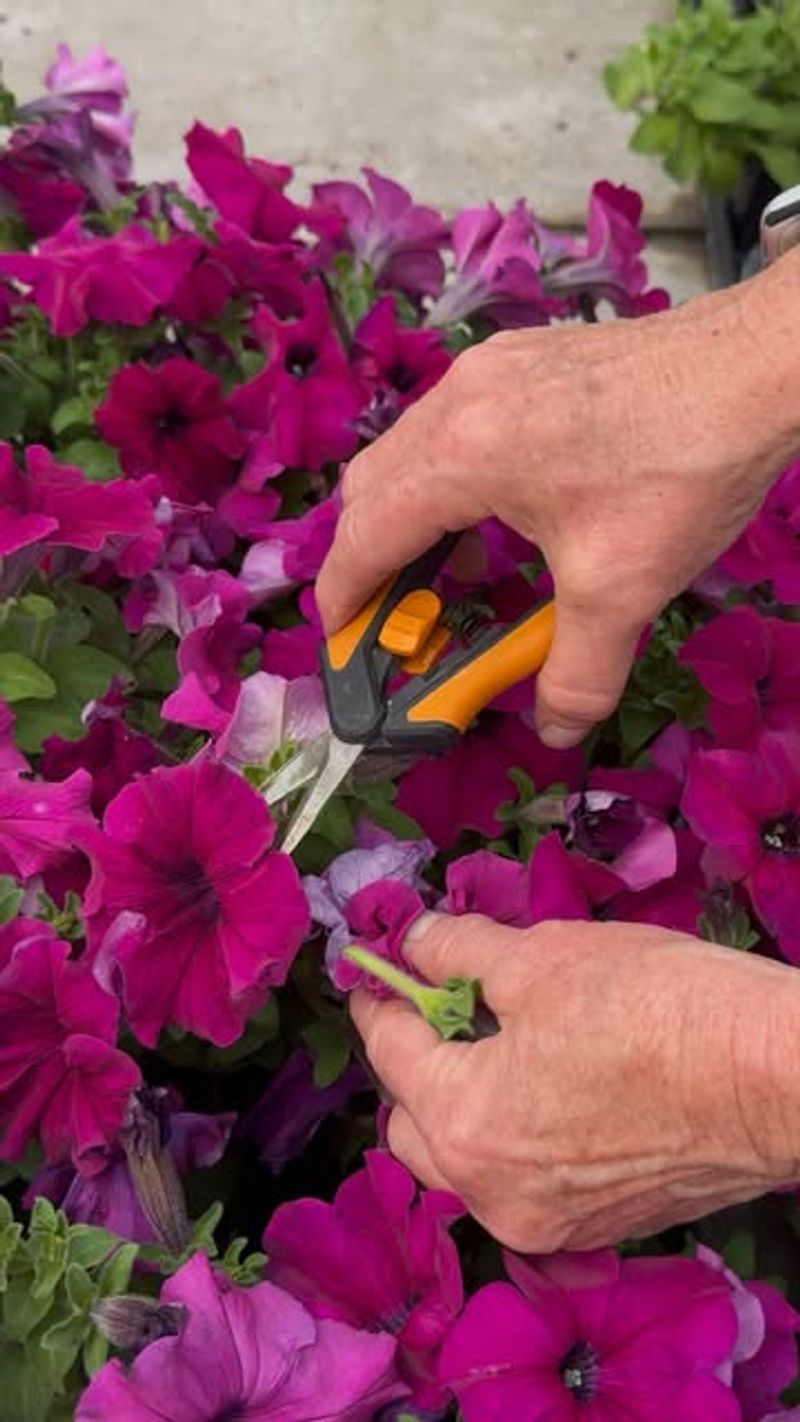
Bald baskets have ruined many a summer patio, and rushing the job is usually why. When you cut a whole petunia back at the same time, you get a couple of flowerless weeks with nothing to look at.
Staggering your pinching keeps the show going. Trim about half the stems one week, then come back four or five days later for the rest, so fresh growth on the first batch overlaps with the trim on the second.
The plant is never fully out of flowers, and you avoid that awkward stretch of green sticks.
Staged pinching is also gentler overall, spreading the stress instead of hitting the plant with one big shock during hot weather.
Works great for mixed containers too, where cutting everything at once would leave a gap right in the middle of your arrangement.
A little patience here pays off in continuous color rather than a boom-and-bust cycle.
Mark the calendar or set a phone reminder for the follow-up round, since it is surprisingly easy to forget that second half of the job.
11. Pinch Below Damaged or Diseased Spots
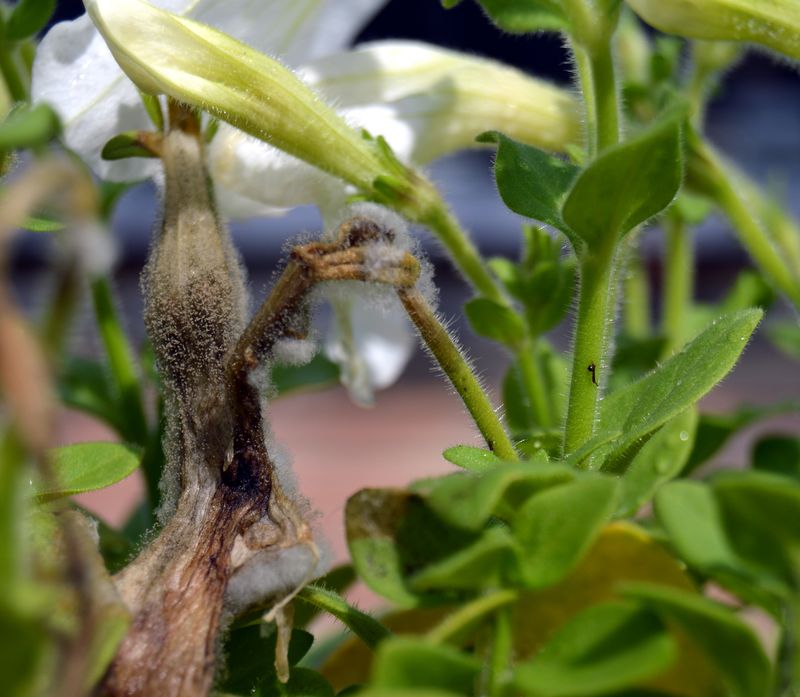
Brown mushy stems and spotted, moldy leaves are not just ugly; they can spread. When part of a petunia goes bad, pinching becomes damage control, and where you cut matters.
Always trim below the trouble, into clean healthy tissue, so you are not leaving infected bits behind to keep rotting. A cut made right at the edge of a diseased spot often lets the problem creep back.
Sanitize your snips before and after, and toss the removed material in the trash rather than composting it, since some petunia diseases can linger in a pile.
Removing damaged growth can slow the spread of fungal issues and may give the rest of the plant a fighting chance, though heavily infected plants sometimes cannot be saved.
Watch for gray fuzzy mold, which loves cool damp nights and crowded foliage; catching it early with a clean cut is far easier than fighting it once it takes over.
Follow up by improving airflow and easing off overhead watering, so the same soggy conditions that caused the damage do not simply invite it right back.
12. Shape Trailing Petunias for Fullness
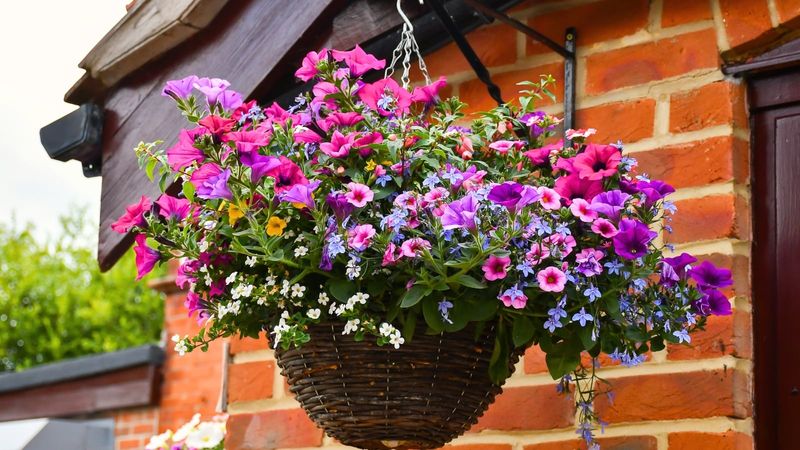
Spilling, cascading petunias look amazing in listings and terrible when they turn into three sad ropes dangling to the ground. Trailing varieties need pinching just as much as mounding ones, only aimed at a different goal.
Rather than shortening for height, you pinch to keep the trails branching along their length. Snip the tips of the longest runners every couple of weeks, and pinch back any vine that races far ahead of the others.
The result is a curtain of overlapping stems studded with flowers instead of a few bare strands with color only at the bottom.
Trailing types especially reward this kind of grooming, because their whole appeal is that lush, full waterfall effect.
Do not forget the top of the basket while you fuss over the trails, since the crown can thin out and look hollow if you only trim the edges.
Rotating the container every few days helps too, so every side gets sun and fills in evenly.
A little regular shaping keeps a trailing petunia looking like the magazine photo well past midsummer.
13. Read the Leaf Node Before Every Cut
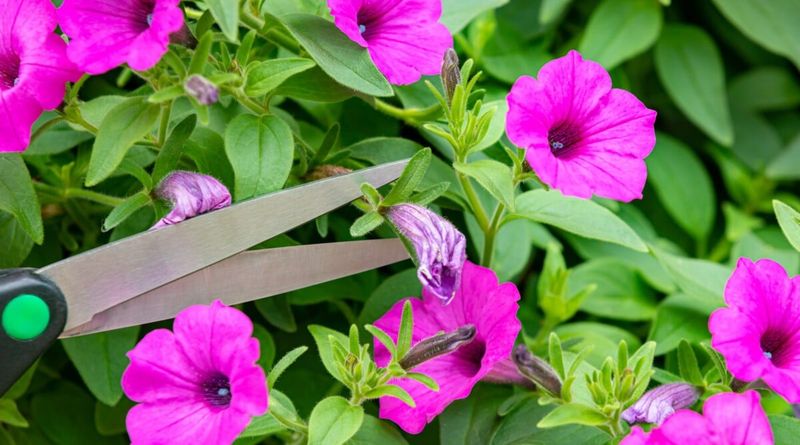
Where you place the cut decides what grows back, and the secret is the leaf node. That little point where a leaf attaches to the stem holds the buds that become new branches.
Before each pinch, glance down the stem and find the node just below where you want to trim, then cut a hair above it. Cut too far above and you leave an ugly stub that dies back; cut into the node and you lose the very buds you were trying to activate.
New growth reliably sprouts from the pair of buds sitting at that node, which is why nodes are the whole game in pinching.
Getting this right makes every other technique on the list work better, from seedling nips to hard cutbacks.
It takes an extra second per cut and quickly becomes automatic once your eye learns to spot the nodes.
Bonus: cutting cleanly above a node keeps the plant looking intentional and tidy rather than randomly hacked, so your baskets stay attractive even right after a big trimming session.
14. Pinch Newly Bought Plants Right Away
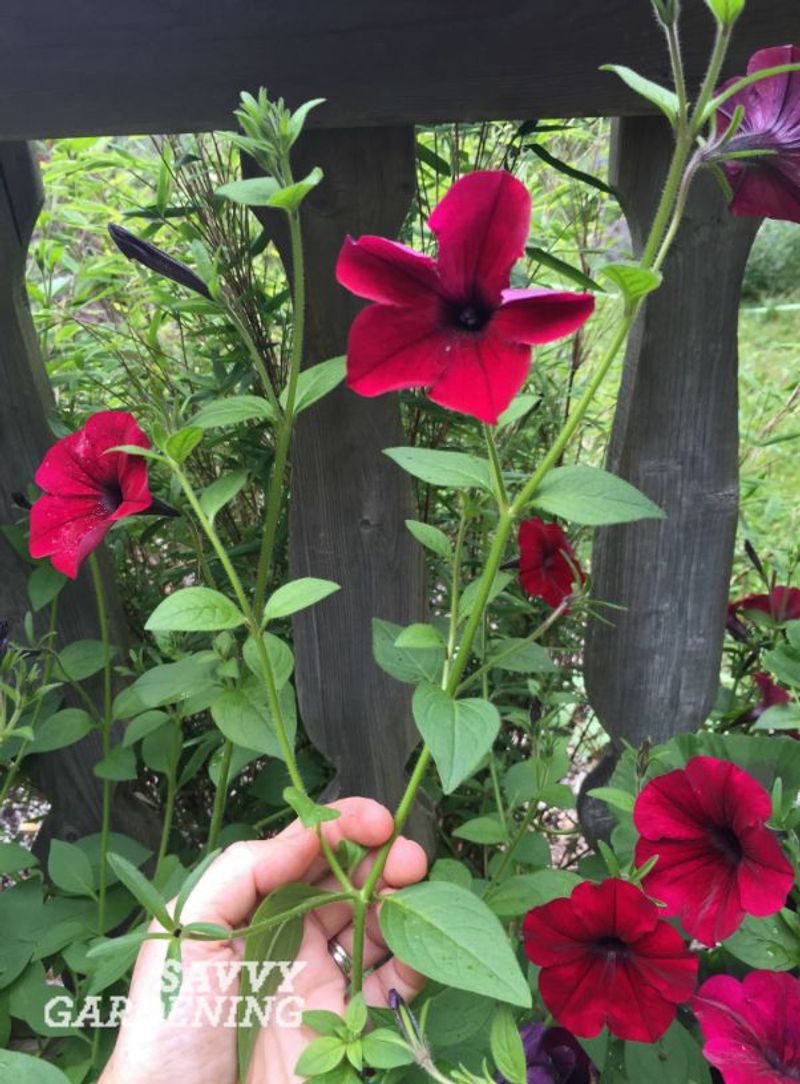
Garden-center petunias are grown to look irresistible on the shelf, packed with blooms and often already a little stretched from crowding. Bringing one home and planting it as-is feels satisfying, but it sets you up for a leggy plant by July.
Give a new purchase a light pinch within a few days of planting. Removing some of those showy tip blooms hurts for a moment, yet it pushes the plant to branch and root instead of coasting on the flowers it arrived with.
Nursery plants have often been sitting in tight pots competing for light, so a gentle trim resets that leggy start before it becomes a habit.
Water it in well and let it settle, then pinch again once it shows fresh growth.
Trading a week of fewer flowers now for a bushier, longer-lasting plant later is one of the best deals in the garden.
Think of it as an investment: the basket that looks slightly plain in June is often the one still overflowing with color when the neighbors’ plants have gone stringy.
15. Keep a Simple Pinching Schedule
The best technique means nothing if you only remember it once a season. Petunias grow fast, and consistency is what separates a basket that quits in July from one that blazes into fall.
Build a light routine you can actually stick to. A quick deadheading and tip pinch once or twice a week, plus one bigger cutback around midsummer, covers most plants without becoming a chore.
Tie the habit to something you already do, like watering or your morning coffee on the porch, so it happens naturally instead of getting forgotten.
Little and often beats big and rare, because small regular trims keep the plant branching steadily rather than swinging between overgrown and freshly hacked.
Jot notes on what your plants did after each pinch, and next summer you will know exactly when your baskets tend to slump.
A modest, repeatable schedule turns all the tips on this list from one-time fixes into ongoing habits, and habits are what deliver those bigger blooms that genuinely last from the first warm days straight through summer’s end.