
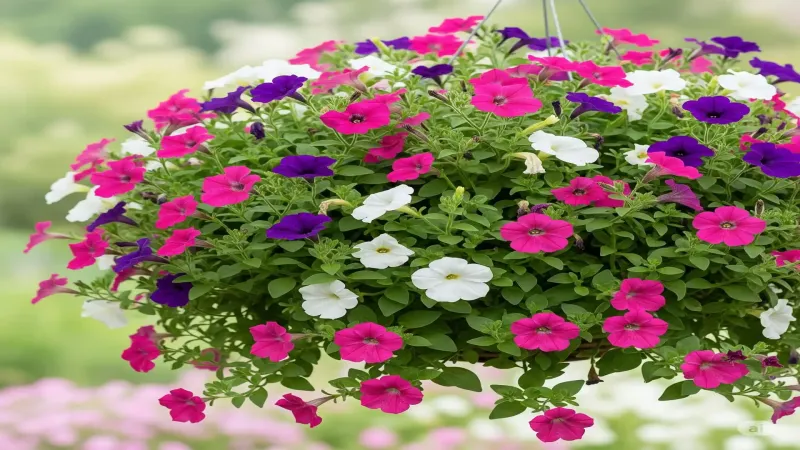
Petunias promise nonstop color, but by midsummer many gardeners watch them turn leggy, faded, and sad instead. The good news is that most petunia troubles trace back to a few missed habits, not bad luck or a black thumb. When you know what your plants are quietly asking for, fixing them is surprisingly easy. Here are 15 small routines that can rescue struggling petunias and keep the bright blooms coming right through the hottest weeks.
1. Deadhead Spent Blooms Every Few Days
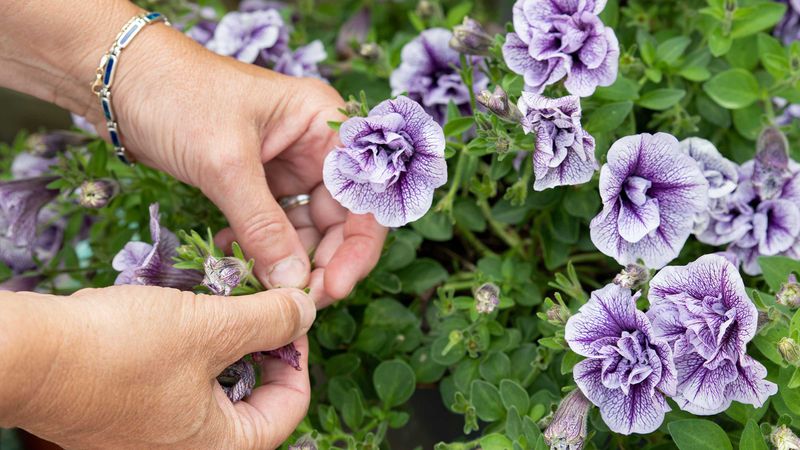
Ever notice how a petunia that was glowing in June looks tired and stingy with flowers by July? Old, wilted blooms are usually the culprit. When a flower fades, the plant shifts its energy into making seeds instead of new buds.
Pinching off those spent blossoms tells the plant to keep flowering rather than settle into seed mode. Grab the whole faded flower plus the little green swelling behind it, not just the papery petals. Skipping that seed pod is the mistake that keeps blooms coming back weak.
Make it a habit to walk your pots every two or three days with your fingers or small snips. It takes only a few minutes and can dramatically increase how many flowers you see.
Newer spreading types like Wave petunias are marketed as self-cleaning, and they do drop old blooms on their own. Even so, a quick cleanup often improves their fullness. Regular deadheading is the single easiest way to turn a fading plant back into a color machine that carries you deep into summer.
2. Pinch Back Leggy Stems
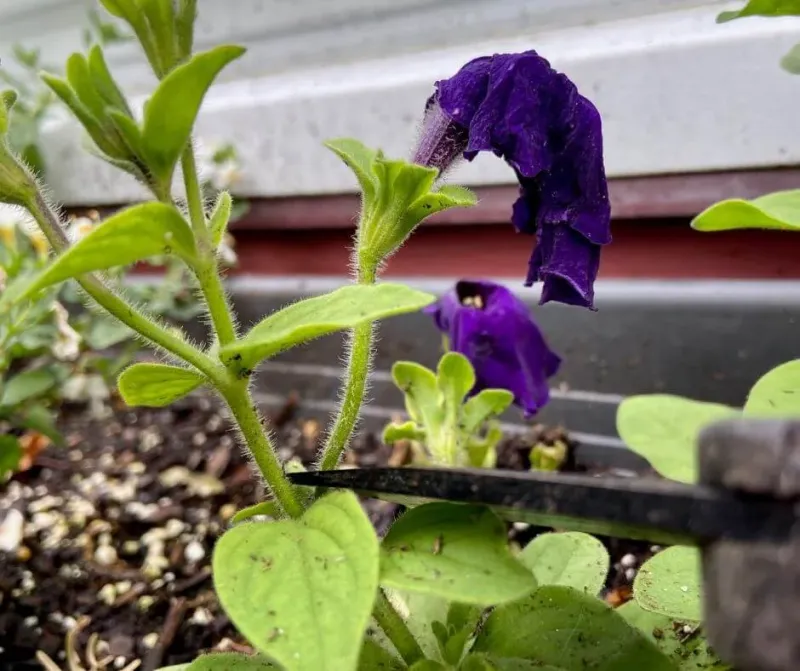
A petunia growing long, bare stems with a lonely flower dangling at the tip is practically begging for a haircut. Those stretched-out vines mean the plant is putting all its effort into length instead of fullness.
Pinching back the stems feels scary the first time, but it works wonders. Snip each straggly stem back by about a third, cutting just above a leaf joint. The plant responds by branching out from below, which can create a bushier, flower-packed mound within a couple weeks.
Around midsummer, many petunias hit a slump where they look thin and worn. A bold pinch-back then may seem like you are sacrificing color, and you will lose a few blooms briefly. The regrowth usually pays you back with heavier flowering than before.
Don’t be timid. If a hanging basket has turned into scraggly ropes, cutting it hard can revive the whole thing. Follow the trim with a good drink of water and a feeding, and your once-leggy plant often bounces back looking fuller and healthier than it did in spring.
3. Water Deeply at the Base
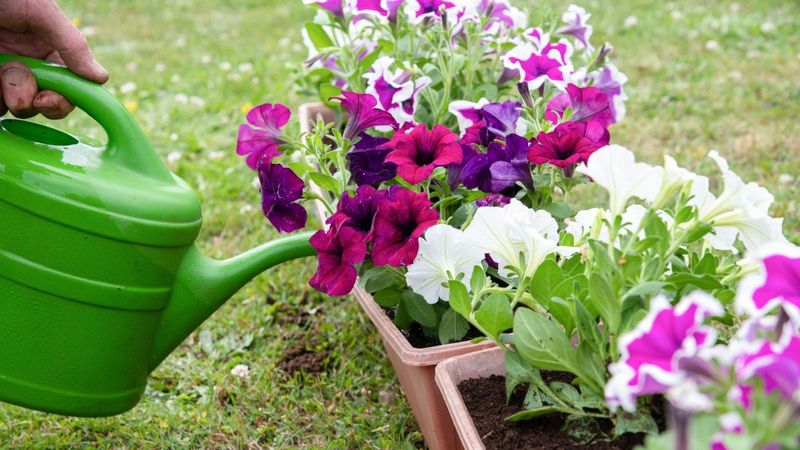
Drooping petunias in the afternoon heat send new gardeners into a panic, and the instinct is usually to splash a little water over the top. That quick sprinkle often does more harm than good.
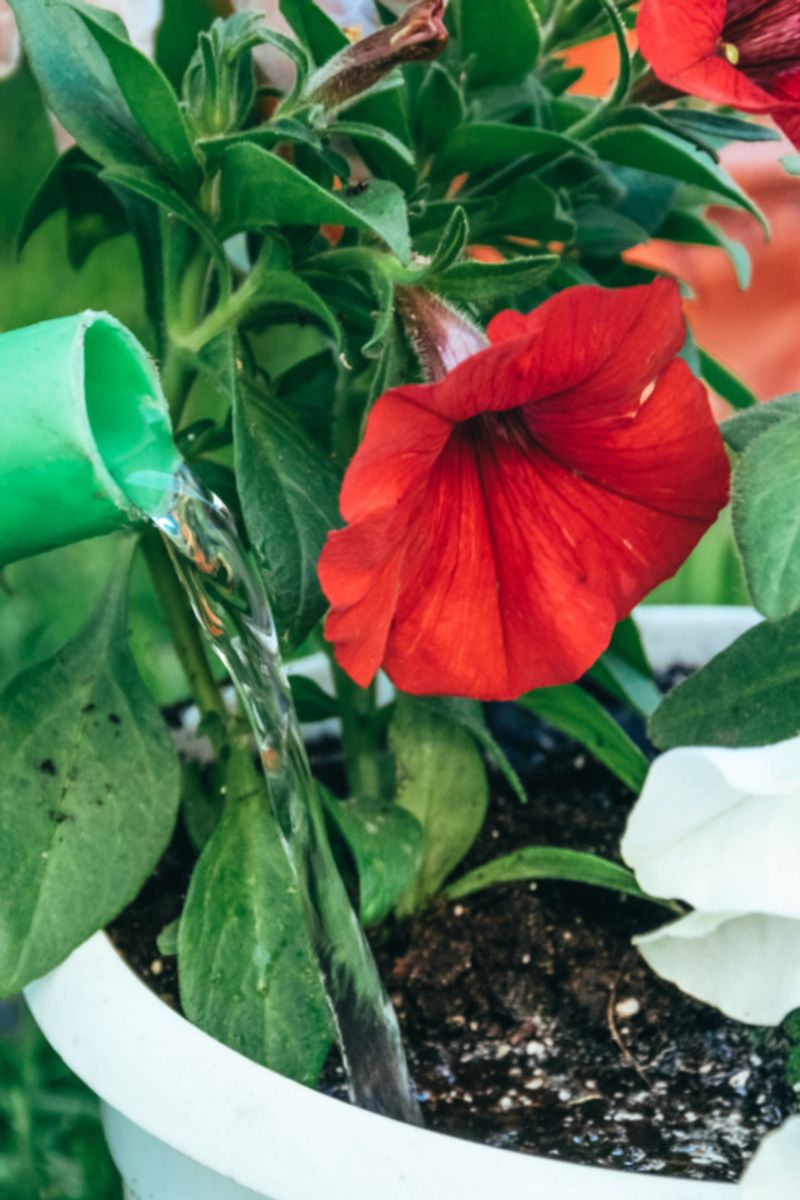
Petunias prefer a deep soak that reaches the entire root ball, then a chance to dry slightly before the next drink. Pour water at the base of the plant, aiming for the soil rather than the leaves and flowers. Wet foliage sitting overnight can invite mold and rot.
Container plants and hanging baskets dry out fast in summer and may need daily watering, sometimes twice a day during heat waves. Poke a finger an inch into the soil; if it feels dry, it is time.
Morning watering is ideal because it lets the plant fuel up before the sun peaks and gives leaves time to dry. Consistent, deep watering can prevent that sad midday wilt and keeps roots strong. Uneven watering, where soil swings from bone-dry to soggy, is one of the fastest ways to stress petunias into dropping their blooms.
4. Feed Regularly With Fertilizer
Hungry petunias are quiet complainers. Pale leaves, sluggish growth, and a slow trickle of flowers often mean the plant has simply run out of nutrients, especially in containers where every watering rinses food away.
These plants are heavy feeders and reward you generously when kept fed. A balanced liquid fertilizer every week or two can keep the bloom show going strong. Slow-release granules mixed into the soil at planting give a steady baseline you can boost with liquid feeds later.
Look for a fertilizer that supports flowering, often labeled with a slightly higher middle or last number. Follow the package rates rather than guessing, since overfeeding can burn roots and cause lush leaves with few flowers.
Spreading and trailing varieties in baskets are especially hungry because they pack so much growth into a small pot. If yours look green but refuse to bloom well, a bloom-focused feed may help nudge them along.
Think of feeding as fuel for the flower factory. Skip it for weeks and the whole operation slows; keep it steady and your petunias can stay dense and colorful right through the season.
5. Give Them Full Sun
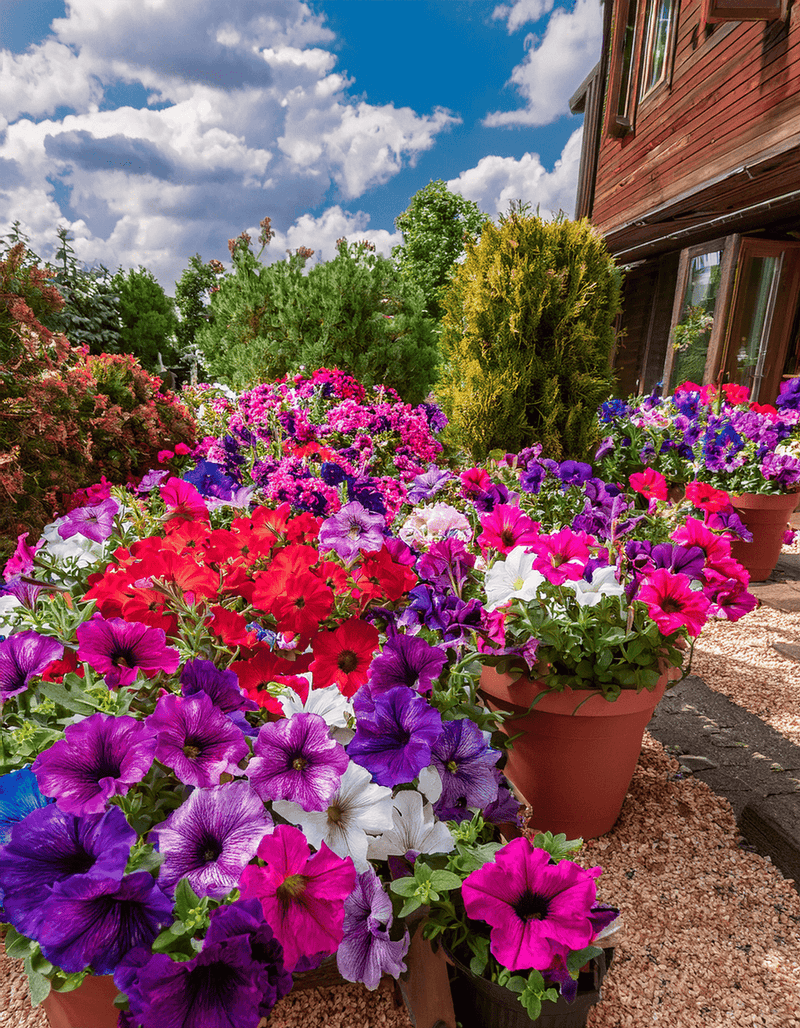
Wonder why one basket of petunias overflows with color while another next to the porch railing looks thin and leggy? Sunlight is usually the difference maker.
Petunias are sun lovers through and through. They crave at least six hours of direct light a day, and many bloom their best with even more. Planted in too much shade, they stretch toward the light, grow spindly, and produce disappointingly few flowers.
If a plant is underperforming, check where it sits before blaming anything else. A pot that gets stuck in dappled afternoon shade may just need to be moved to a brighter spot. Containers make this easy, since you can chase the sun as the season shifts.
In the hottest southern regions, a bit of light afternoon shade can actually help petunias avoid scorching, so there is a balance. For most US gardens, though, more sun means more blooms.
Before you fuss over feeding and trimming, make sure the basics are covered. Giving petunias the bright exposure they were built for often solves half the trouble on its own.
6. Use Well-Draining Soil
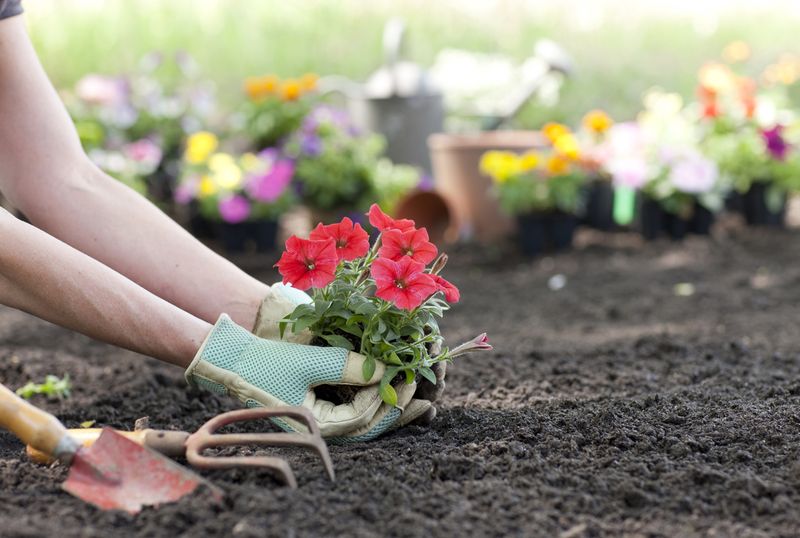
Soggy roots are a silent killer, and petunias sitting in heavy, waterlogged soil rarely thrive. If your plants look yellow and mushy no matter how carefully you tend them, drainage may be the hidden problem.
Roots need air as much as they need water. Dense garden dirt or a pot without drainage holes traps moisture, suffocates the roots, and opens the door to rot. A light, fluffy potting mix lets excess water escape while still holding enough to keep plants happy.
For containers, choose a quality potting mix rather than scooping up backyard soil, which compacts and stays wet. Mixing in a little perlite can improve airflow around the roots.
Always plant in pots with holes in the bottom, and lift saucers or empty them after rain so plants never stand in a puddle. In garden beds, working in compost helps loosen heavy clay so water moves through.
Get the soil right at planting time and you prevent a whole cluster of midseason miseries. Good drainage may not be glamorous, but it keeps roots healthy enough to support all those blooms above.
7. Watch for Aphids and Pests
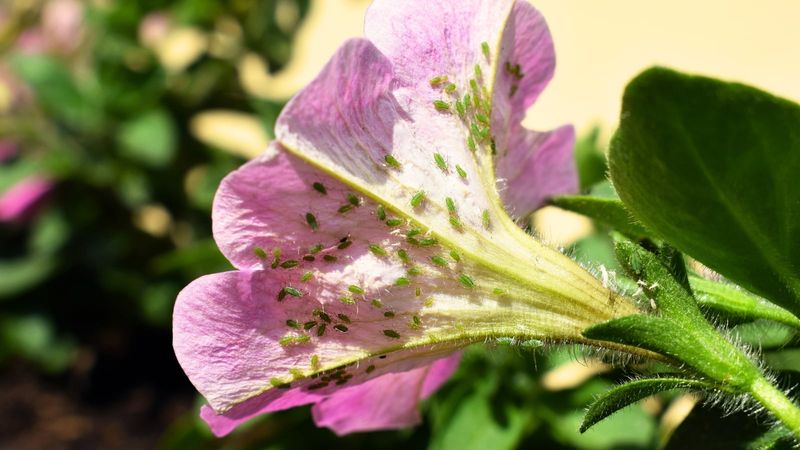
Sticky leaves, curling new growth, and clusters of tiny green or black specks under the foliage usually spell trouble: aphids have moved in. These sap-suckers love tender petunia stems and can weaken a healthy plant fast.
Catching them early makes all the difference. A strong spray of water from the hose can knock many aphids off before they multiply. For heavier infestations, insecticidal soap or a homemade soapy water mix often helps reduce the population when applied to the undersides of leaves.
Budworms are another common petunia pest, chewing holes in buds and blooms and leaving your flowers ragged. Look for tiny holes and dark droppings, and pick off any caterpillars you find.
Check your plants a couple times a week, flipping leaves over to spot pests before they settle in. The earlier you act, the less damage you deal with.
Keeping plants healthy and unstressed also makes them less inviting to pests in the first place. A quick inspection during your watering rounds can save you from a full-blown invasion that steals your summer color.
8. Protect From Deer and Rabbits
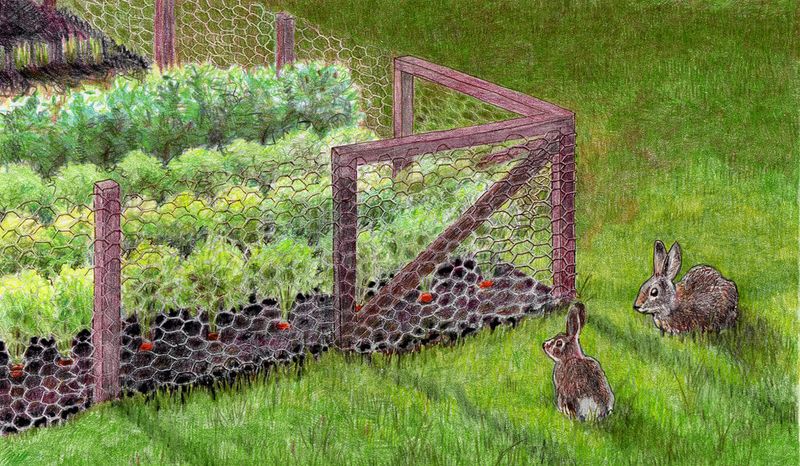
Nothing stings like walking out one morning to find your once-lush petunias nibbled down to stubs overnight. In many US backyards, deer and rabbits treat tender bedding flowers like a free salad bar.
Petunias are not deer-proof, so a little defense goes a long way. Fencing is the most reliable barrier, but for pots and small beds, scent-based repellents can help discourage browsing. Sprays made from garlic, hot pepper, or rotten-egg formulas may deter deer, though they usually need reapplying after rain.
Elevating plants on porches, tables, or hanging them high often keeps rabbits from reaching the buffet. Motion-activated sprinklers can startle larger visitors and may reduce repeat feasting.
Deer pressure tends to rise when natural forage gets scarce, so hungry animals grow bolder. Rotating between a couple of deterrents can keep them guessing, since critters get used to a single trick.
No method guarantees a wildlife-proof garden, but layering a few tactics stacks the odds in your favor. A little vigilance keeps your petunias on the plant and off the menu, so your summer color survives the neighborhood nibblers.
9. Mulch to Keep Roots Cool
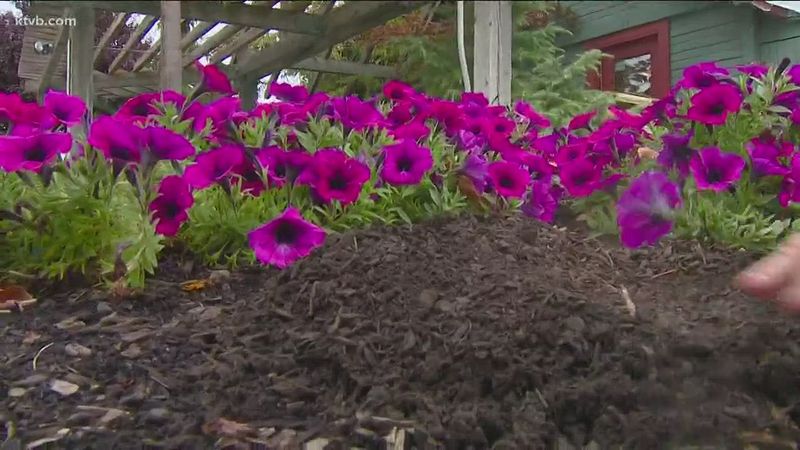
During a heat wave, the soil around petunias can bake and dry out shockingly fast, leaving roots stressed and plants wilting by noon. A simple layer of mulch acts like a cozy blanket that keeps things steady.
Spreading an inch or two of shredded bark, straw, or compost over the soil helps lock in moisture so you water less often. It also keeps root temperatures more even, shielding them from the harshest afternoon sun.
Mulch does double duty by smothering weeds that would otherwise compete with your flowers for water and nutrients. Fewer weeds means less fussing and more energy going into blooms.
Leave a little gap around the base of each stem so the mulch does not trap moisture right against the plant, which can invite rot. A ring rather than a mound is the goal.
Beds especially benefit, but even large containers hold moisture better with a thin mulch topping. When summer turns brutal, this quiet habit can be the difference between petunias that sulk and ones that keep pushing out color while everything around them wilts.
10. Trim Hard at Midsummer for a Second Flush
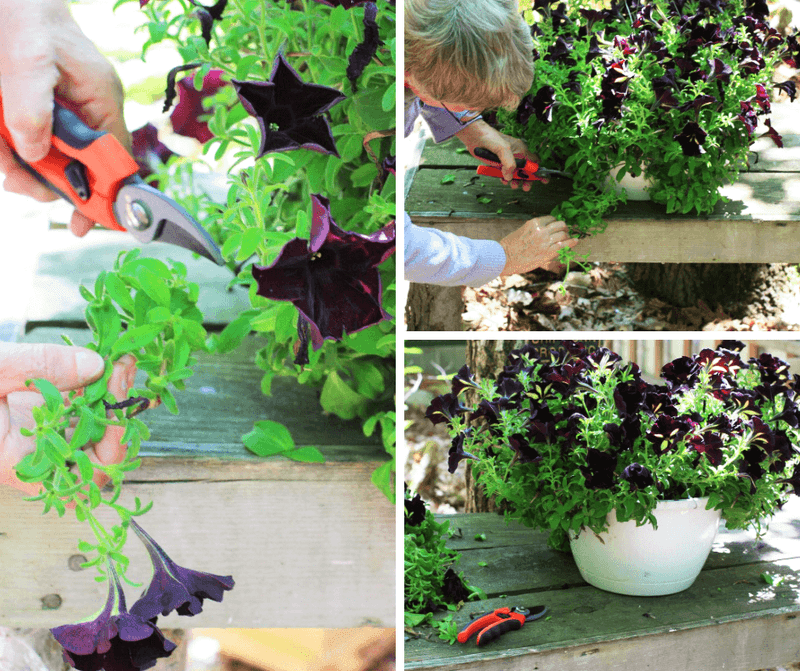
By late July, even well-tended petunias can look worn out, tangled, and short on flowers. Rather than tossing them, a bold midseason makeover can bring them roaring back.
Cutting the whole plant back by about a third to a half sounds drastic, and yes, you will lose the current blooms. What you gain is a fresh burst of branching growth that often flowers heavier than the first round. Think of it as hitting the reset button.
Do the trim in stages if a full chop feels too bold, snipping a few stems every few days over a week or two. Either way, follow up with a deep watering and a dose of fertilizer to fuel the regrowth.
Within two to three weeks, most plants fill back in with lush foliage and a wave of new color that can carry you into early fall. Hanging baskets that had turned into bare ropes respond especially well.
Combine this rescue trim with steady feeding, watering, and deadheading, and your petunias can stay dazzling far longer than gardeners who let them fizzle out and give up.