
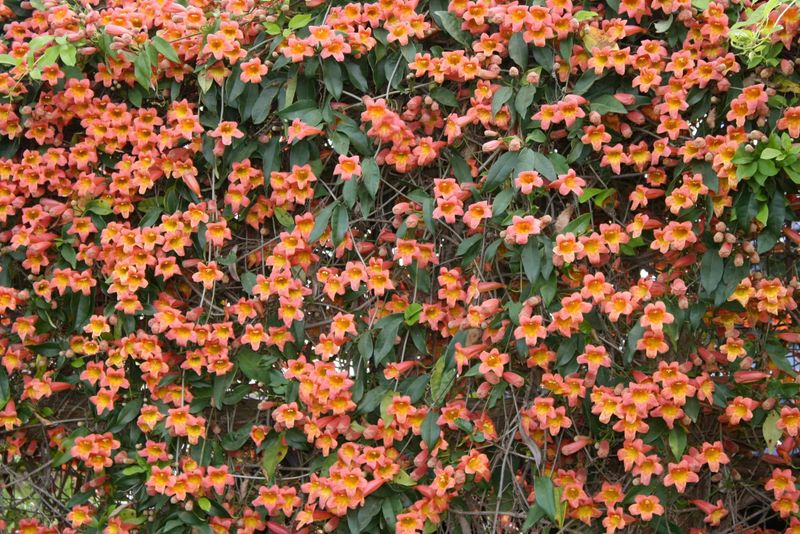
Wisteria looks dreamy hanging over a fence, but in Texas it can turn into a bully that swallows your yard and cracks your gutters. The good news is that Texas has its own lineup of native climbing vines that give you the same lush, flower-covered fence without the constant fight. These plants already know how to handle triple-digit summers, clay soil, and watering restrictions because they grew up here. Here are seven native vines that will cover your fence beautifully and stay in their lane.
1. Coral Honeysuckle (Lonicera sempervirens)
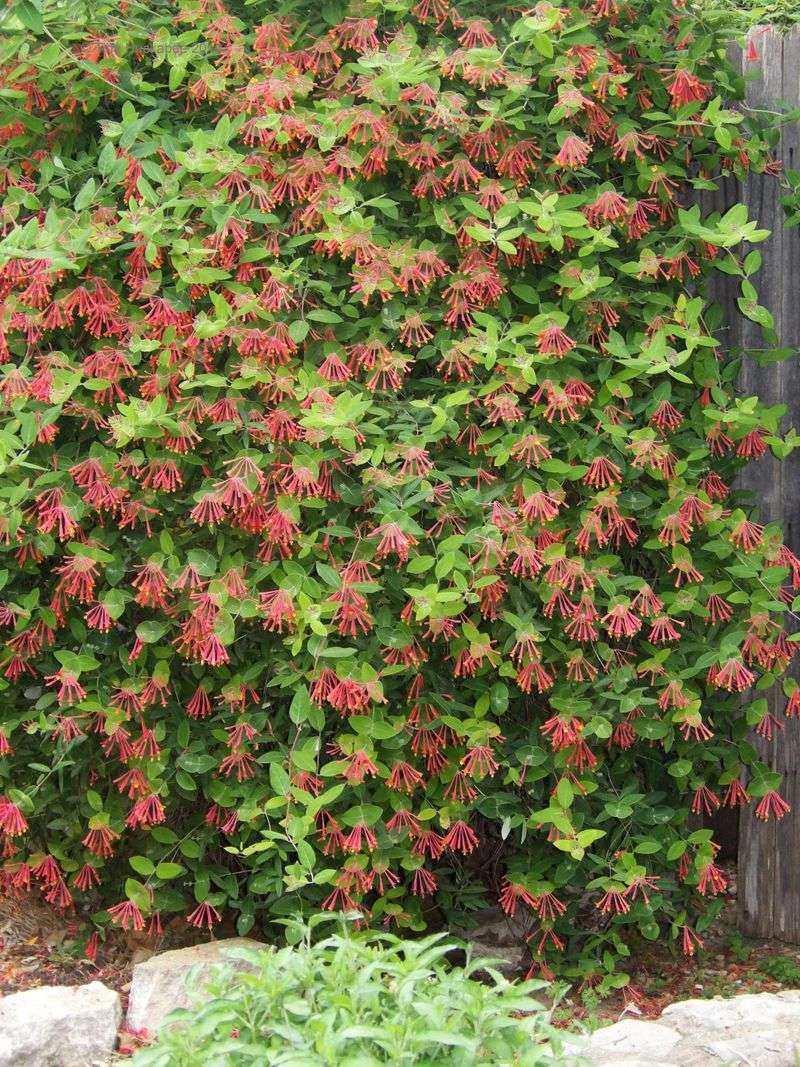
Picture a fence lined with clusters of tubular red-orange trumpets while hummingbirds zip in for a drink. Coral honeysuckle pulls off that show all spring and summer without turning into the aggressive tangle that gives its Japanese cousin such a bad name.
Unlike invasive honeysuckles, this Texas native climbs politely and stays where you plant it. It handles the heat of a brutal Texas summer, shrugs off drought once established, and keeps a good bit of green even through mild winters across much of the state.
Ruby-throated hummingbirds and butterflies treat the blooms like a roadside diner, and songbirds snack on the red berries that follow. That makes it a workhorse for anyone who wants their fence to feed local wildlife instead of just decorating the yard. Give it a sunny spot with a trellis or wire support and it will reward you for years with almost no fuss.
2. Crossvine (Bignonia capreolata)
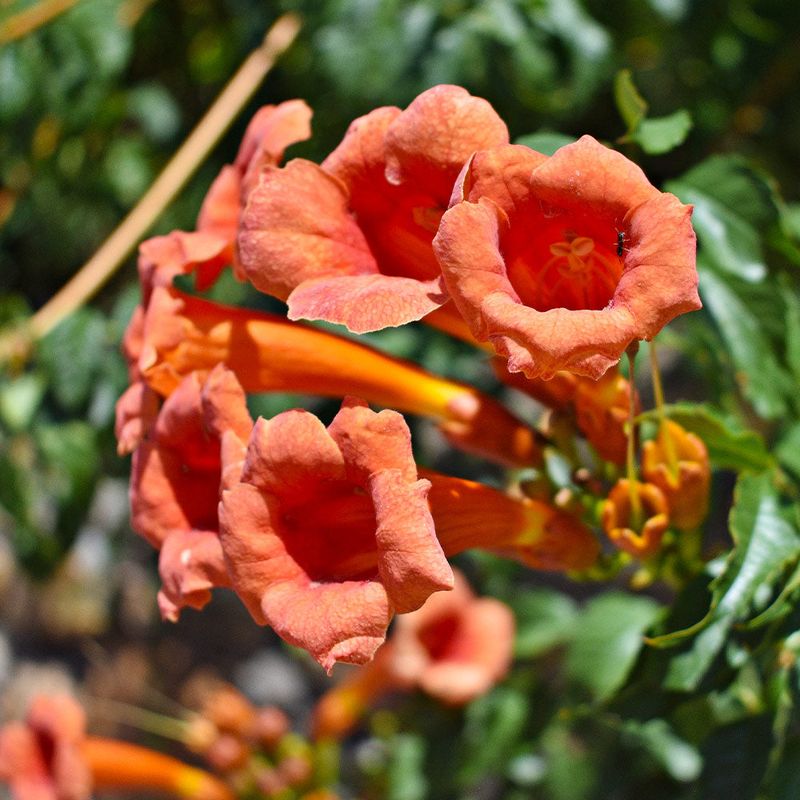
Come early spring, crossvine erupts in a firework of orange and yellow trumpet-shaped blooms right when you are itching for color after a long gray stretch. It gets its odd name from the little cross shape you see if you slice through the stem.
What sets this vine apart is muscle. It climbs with grippy tendrils that latch onto brick, wood, or wire, so it can cover a tall privacy fence faster than most natives without needing you to babysit it.
Texas heat and poor soil barely register with crossvine, and it holds onto semi-evergreen leaves through much of the year, giving you screening even in the cooler months. The early flowers are a lifeline for hummingbirds returning through the state in spring. Plant it where you want fast, dense coverage and dramatic color, then step back and let it work.
3. Carolina Jessamine (Gelsemium sempervirens)
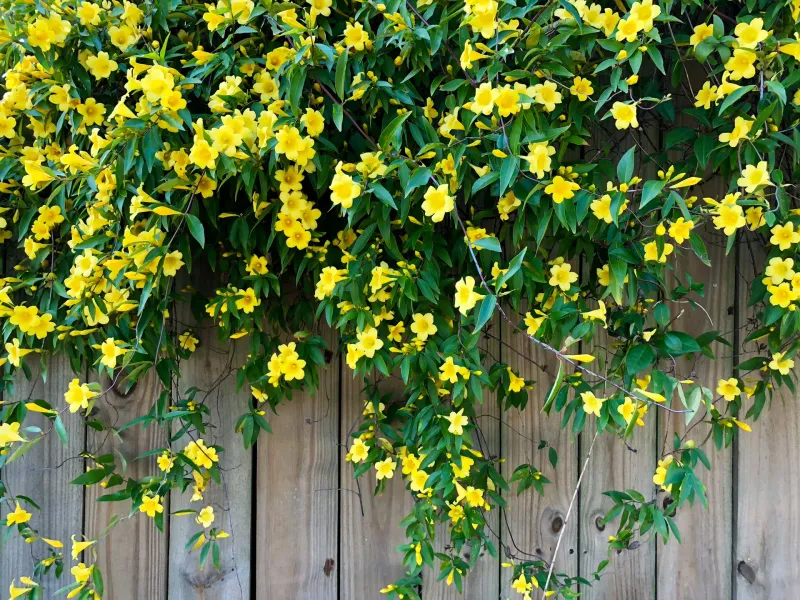
If you want your fence to glow yellow before winter fully lets go, Carolina jessamine is the vine that delivers. Its fragrant, bell-shaped blooms open in late winter and early spring, filling the air with a sweet scent that tells you the season is turning.
Glossy evergreen leaves keep the vine looking tidy year-round, so your fence never goes bare and scraggly the way deciduous climbers can. It grows at a manageable pace, which means you get coverage without the weekly wrestling match.
One honest heads-up: every part of this plant is toxic if eaten, so it may not be the best pick if you have curious pets or small kids grazing near the fence line. For gardens without those worries, it thrives in Texas sun and part shade, tolerates drought, and rarely asks for more than an occasional trim. The payoff is a neat, sweet-smelling curtain of gold that greets you at the start of the growing year.
4. Passionflower (Passiflora incarnata)
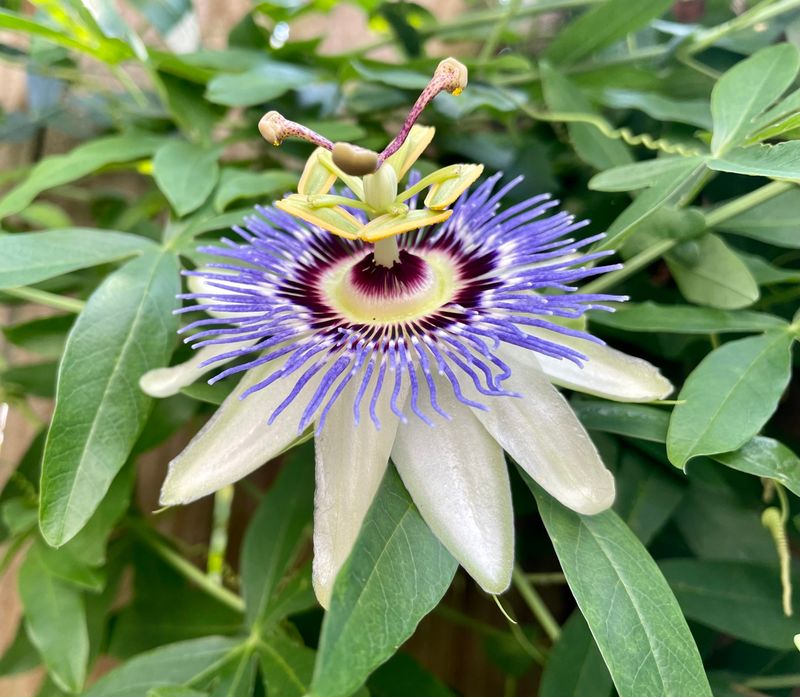
Few native vines put on a stranger, more beautiful show than passionflower, whose purple and white blooms look like something dreamed up by a sci-fi artist. Locals also call it maypop because the ripe fruit pops when you step on it.
Butterflies are the real reason gardeners fall for it. Passionflower is the host plant for Gulf fritillary and zebra longwing caterpillars, so planting it basically turns your fence into a butterfly nursery.
It dies back in winter and returns from the roots each spring, which is actually a handy feature since it keeps the vine from getting woody and overgrown. Texas heat and dry spells do not slow it down once it settles in. Give it something to scramble on, expect it to spread a little from underground runners, and enjoy a fence that hums with pollinators all summer long.
5. Virginia Creeper (Parthenocissus quinquefolia)
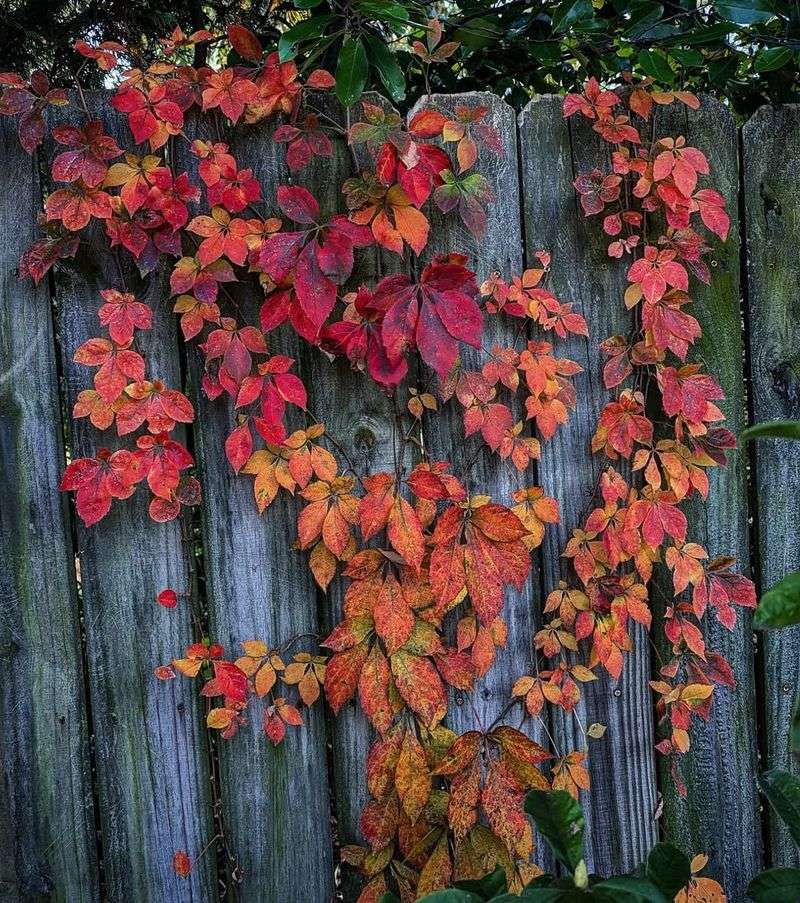
People sometimes confuse Virginia creeper with poison ivy, but count the leaves and you will see five instead of three, which is your quick reminder that this one is a friend, not a foe. It is a rugged native that asks for almost nothing.
The real magic happens in fall, when the deep green foliage turns a blazing crimson that few other Texas plants can match. That autumn color gives your fence a seasonal costume change most vines simply cannot offer.
Birds flock to the small dark berries in cooler months, making it a quiet powerhouse for wildlife. It climbs with sticky little pads that cling to wood and masonry, and it tolerates sun, shade, drought, and lousy soil without complaint. Because it is a strong grower, give it a big fence and an occasional trim, and you will have dependable green coverage that ends the year in a burst of red.
6. Coral Vine / Queen’s Wreath (Antigonon leptopus)
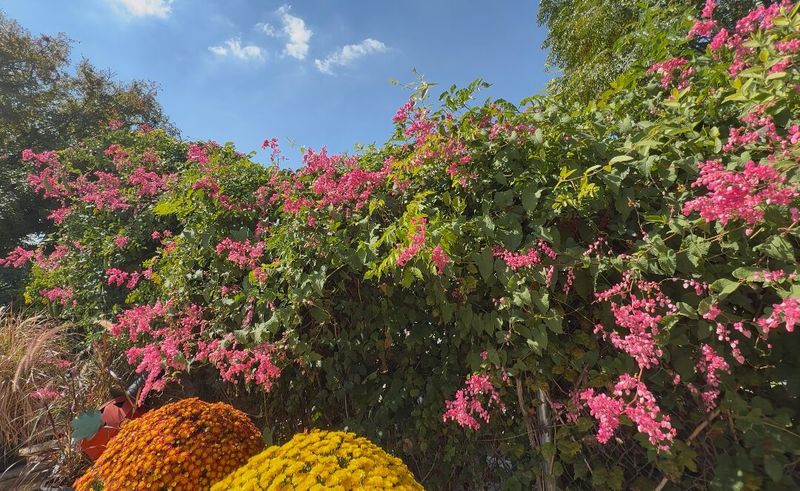
When the worst of the Texas summer heat has other plants wilting, coral vine keeps cranking out sprays of dainty pink flowers like it never got the memo. Gardeners along the Gulf Coast have loved this old-fashioned bloomer for generations, giving it the fitting nickname Queen’s Wreath.
Its superpower is timing. While many vines fade by August, this one peaks in the sizzling late-summer stretch, feeding bees and butterflies when other nectar sources have dried up.
A quick note on manners: it can be enthusiastic and reseed, so in the mildest parts of the state you will want to cut it back and keep an eye on stray sprouts. It dies back with frost across most of Texas, which naturally keeps it in check. Plant it against a hot, sunny fence where little else wants to grow, and watch it drape the whole thing in pink lace right when your garden needs it most.
7. Trumpet Creeper (Campsis radicans)
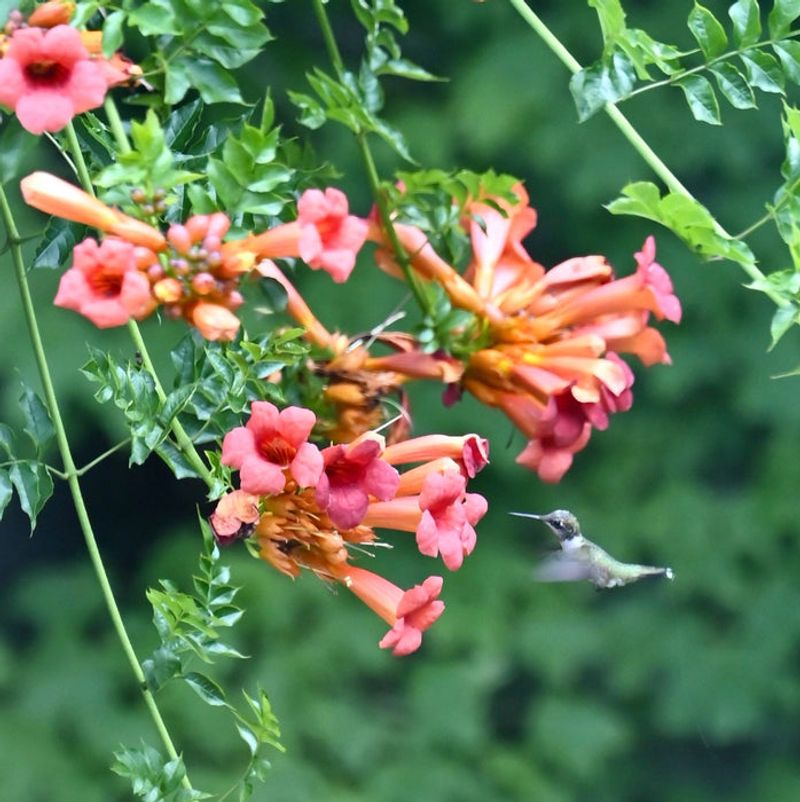
For sheer hummingbird magnetism, nothing on this list beats trumpet creeper and its big, fiery orange horns of nectar. It is bold, fast, and unapologetically showy, perfect for the gardener who wants a fence that demands attention.
Because it grows vigorously, this native is best matched with a sturdy fence and a willingness to prune. Think of it as the muscle car of native vines: tons of power, but you steer it with regular cutbacks so it does not roam into places you did not invite it.
Heat, drought, poor soil, none of it fazes trumpet creeper, and it blooms hard through the hottest months. Hummingbirds and bees practically camp out on it all summer. If you have a big, empty stretch of chain-link or a bare fence baking in full Texas sun, this is the vine that fills it fast and turns the whole thing into a living feeder.