
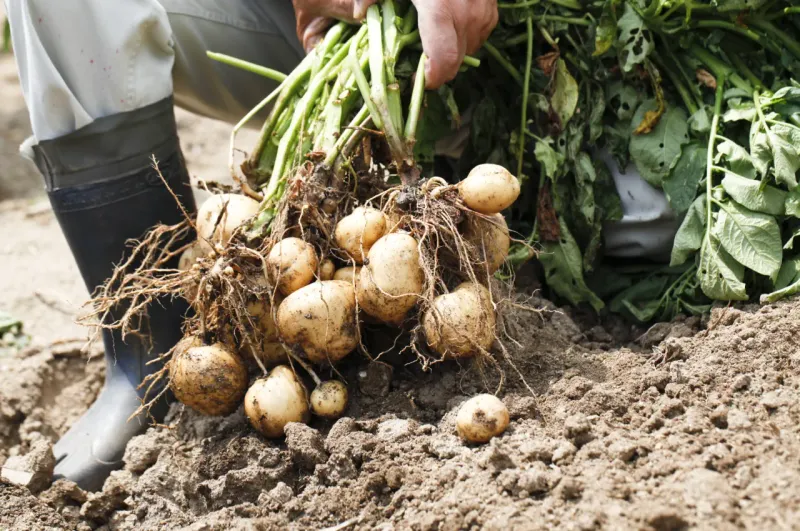
Pulling up a potato plant too soon is one of the most common mistakes in the home garden, and it usually means a bucket full of tiny, underdeveloped tubers instead of the harvest you were expecting. The tricky part is that potatoes hide underground, so you can’t simply look at the plant and know whether the crop is ready. Learning to read a few key signals – vine condition, a quick sample dig, and a simple skin test – can save you from digging too early or waiting too long.
No calendar date can prove that potatoes have reached their target size
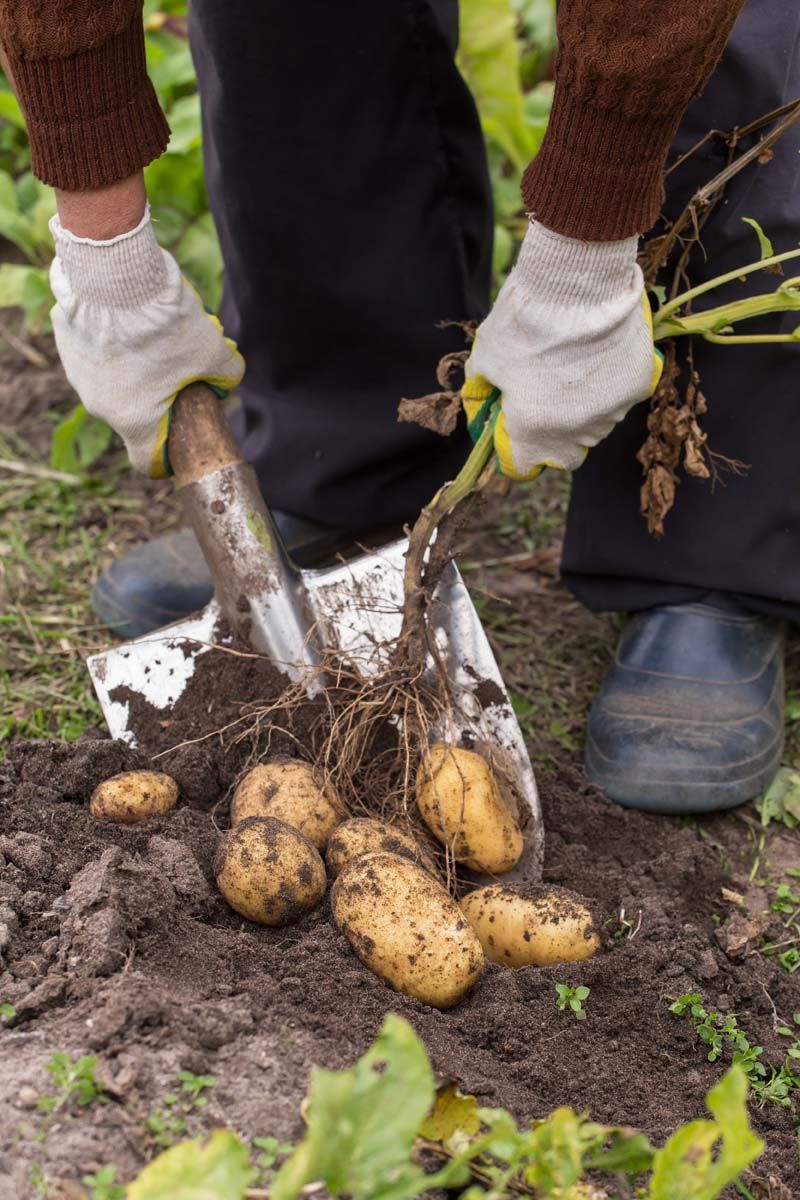
Gardeners often rely on the number of days printed on a seed packet, expecting that once that date passes, the potatoes are ready. That number is a rough guide at best. Purdue Extension notes that maturity varies by cultivar, planting date, temperature, moisture, fertility, and regional conditions, making a universal calendar rule unreliable.
Early varieties can mature in roughly 50 to 70 days, while late-season types may need 90 to 120 days or more. Even within those ranges, a cool wet summer or a hot dry stretch can push the schedule forward or backward by weeks. Clemson Extension’s potato factsheet confirms that local growing conditions alter the schedule considerably.
Flowers are another misleading cue. Bloom time signals that tubers have begun forming underground, not that they have reached their final size or developed mature skin. University of Illinois Extension and Penn State Extension both treat variety and growing conditions as the primary drivers of tuber size at maturity. A more reliable process combines vine observation, a sample dig, and a skin-set check, judged against what the variety is actually expected to produce rather than a fixed day count.
Natural vine dieback tells you when to start checking
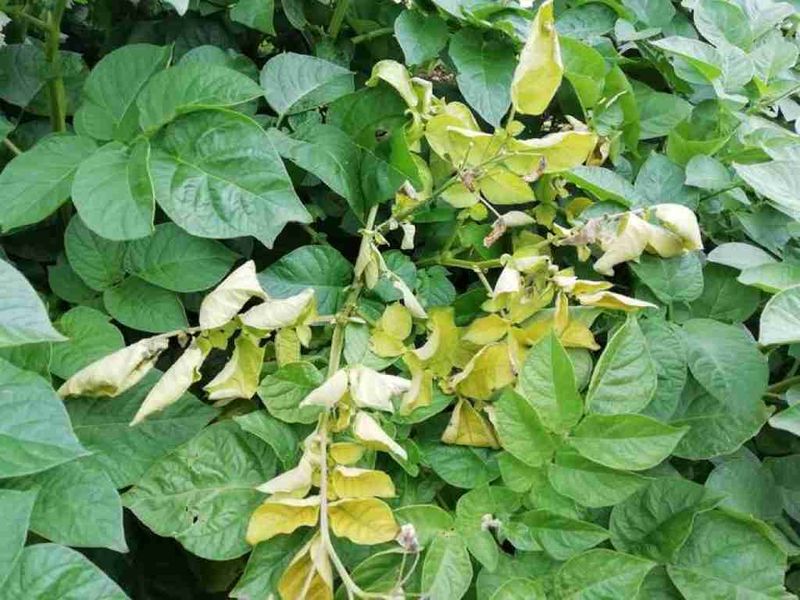
When potato foliage starts turning yellow and collapsing on its own, that’s your cue to shift from waiting to actively checking the crop. University of Minnesota Extension describes natural vine senescence as an important indicator that tuber development is nearing completion for mature, storage-oriented potatoes.
The key word is “natural.” Vine dieback starts the harvest check, it does not finish it. Disease, heat stress, drought, frost, or soil problems can all cause foliage to collapse before the tubers are anywhere close to their potential size. Colorado State Extension cautions that early foliage decline from these causes should not be read as a sign of crop readiness.
If your vines are dying but you suspect disease or unusual heat rather than normal senescence, dig a sample before assuming the crop is done. Minnesota IPM notes that stress-related foliage loss can occur well before the tubers have set their skins. Iowa State Extension recommends using vine condition as a starting point and confirming with a physical test rather than treating dieback as conclusive proof of readiness.
Use a sample dig to check skin set
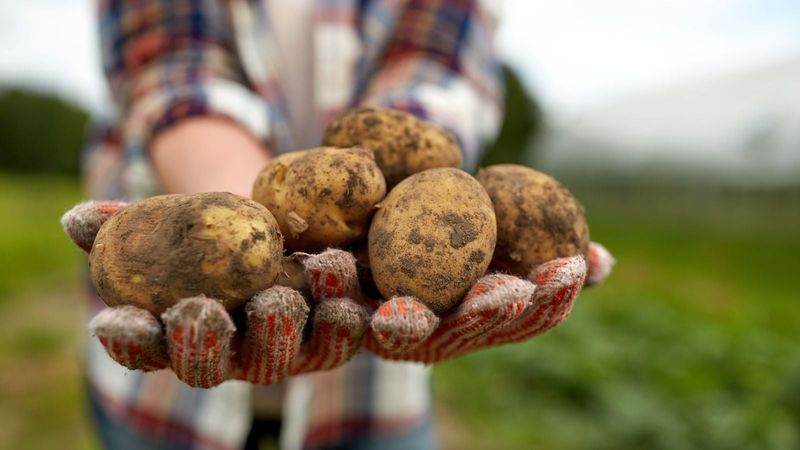
Once the vines have started dying back, grab a digging fork and carefully pull up one or two tubers from the edge of a hill. Hold a potato in your hand and rub the skin firmly with your thumb. If the skin resists and stays put, that resistance indicates skin set, which means the tuber is mature enough for harvest and storage handling.
If the skin slides off or peels back easily with light pressure, the tubers are not ready for storage. Iowa State Extension recommends waiting several more days and retesting, while Oregon State Extension suggests waiting about a week before checking again. Leave the rest of the crop undisturbed during that time.
One important boundary to keep in mind: the skin-rub test tells you about harvest and storage readiness, not about maximum yield or expected tuber size. USDA ARS research on skin set explains that immature skins are loosely attached and more vulnerable to scuffing, bruising, water loss, and storage decay. A firmly attached skin means the potato can handle being dug and stored. It does not confirm that the tuber has reached the largest size the variety or your growing conditions could have produced.
UC Davis postharvest guidance reinforces that skin integrity is a harvest-readiness marker, not a size guarantee. Always retest only when weather, soil conditions, disease pressure, and freeze risk make it safe to wait.
Choose between new potatoes and a mature storage crop
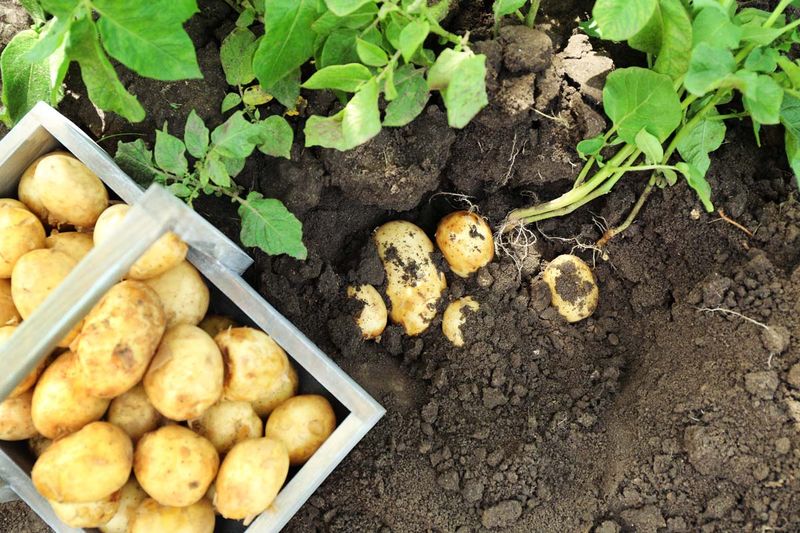
Before you decide when to dig, it helps to decide what you actually want from the harvest. New potatoes are intentionally picked while the plant is still green and the tubers are small and tender. You can carefully reach into the edge of a hill and remove a few without disturbing the main plant, letting the rest of the crop continue growing. University of Minnesota Extension describes this as a practical way to enjoy early potatoes without ending the season prematurely.
The tradeoff is durability. New potatoes have thin skins that slip easily, bruise with minimal handling, and lose moisture quickly. UC Davis postharvest information confirms that immature tubers are significantly more perishable and not suited for long-term storage. Plan to eat them within a few days of digging.
A mature table or storage potato is a different goal entirely. Utah State Extension and Purdue Extension both emphasize waiting for vine senescence and confirmed skin set before harvesting a crop meant to last through fall and winter. These are not different species or separate varieties, just different harvest stages with different practical outcomes depending on your kitchen plans.
Small tubers do not automatically signal an early harvest
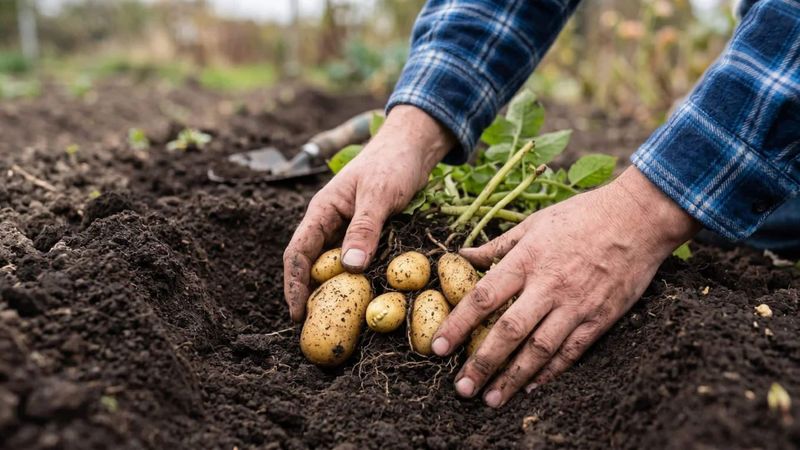
Finding small potatoes at harvest can feel discouraging, but size alone does not tell you whether you dug too soon. Variety plays a large role. Some potato cultivars are simply bred to produce smaller tubers, and University of Illinois Extension points out that close plant spacing also tends to limit individual tuber size by increasing competition for water and nutrients.
Penn State Extension notes that fertility, soil temperature, moisture availability, and other growing conditions all shape how large tubers grow before the plant reaches maturity. A potato grown in poor soil or during a dry stretch may be smaller than the packet promised, even if it is fully mature by every other measure.
The useful distinction is between size and skin set. A small potato can have firmly attached, mature skin. A larger potato can still have loose skin that slips under pressure. Utah State Extension recommends using the combined evidence – vine condition, skin-rub result, and knowledge of the variety – rather than treating size as the deciding factor.
If the skin is set and the vines have gone down naturally, a small potato is a finished potato, not a failed one.
Harvest carefully and weigh a short delay against weather risks
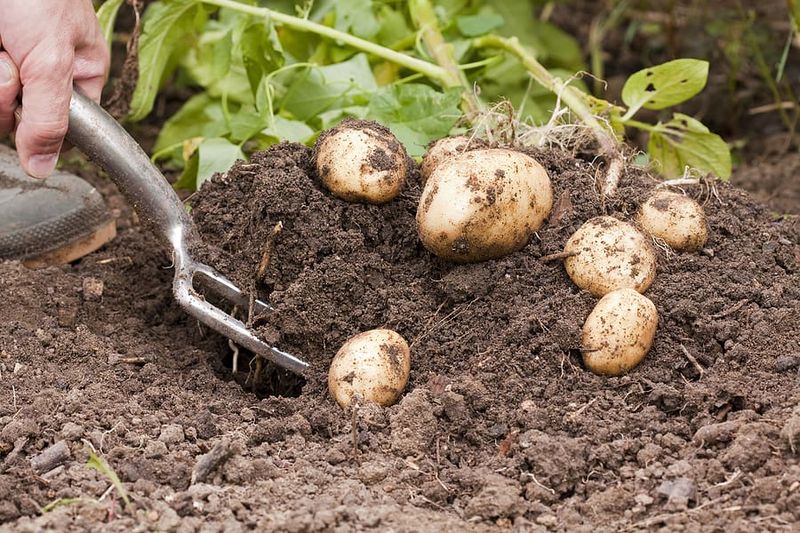
Once a sample dig shows set skin and the crop matches your intended use, pick a dry day with workable soil to harvest. Wet, compacted soil clings to tubers and makes it harder to work carefully. University of Minnesota Extension recommends using a digging fork or spading fork and keeping it well to the side of the hill to reduce the chance of puncturing tubers.
Any potato that gets cut, stabbed, or badly scuffed during harvest should go straight to the kitchen rather than into storage. Wounds invite decay, and a damaged potato sitting in a pile can spread rot to its neighbors. Utah State Extension’s harvest and storage guidance is clear that damaged tubers are not storage candidates.
Some regional extension advice suggests leaving mature potatoes in the ground for a brief period after vine death to allow additional skin hardening. Oregon State Extension’s fall vegetable guide and Colorado State Extension both note that this practice can be helpful, but it is not without risk. Heavy rain can waterlog the soil and promote rot, disease pressure can worsen, pests can move in, and a hard freeze can damage tubers that are still in the ground. Purdue Extension frames any delay as a judgment call that depends on current weather, not a blanket recommendation to wait as long as possible.
Check your forecast before deciding.
Cure mature potatoes after harvest without treating curing as ripening
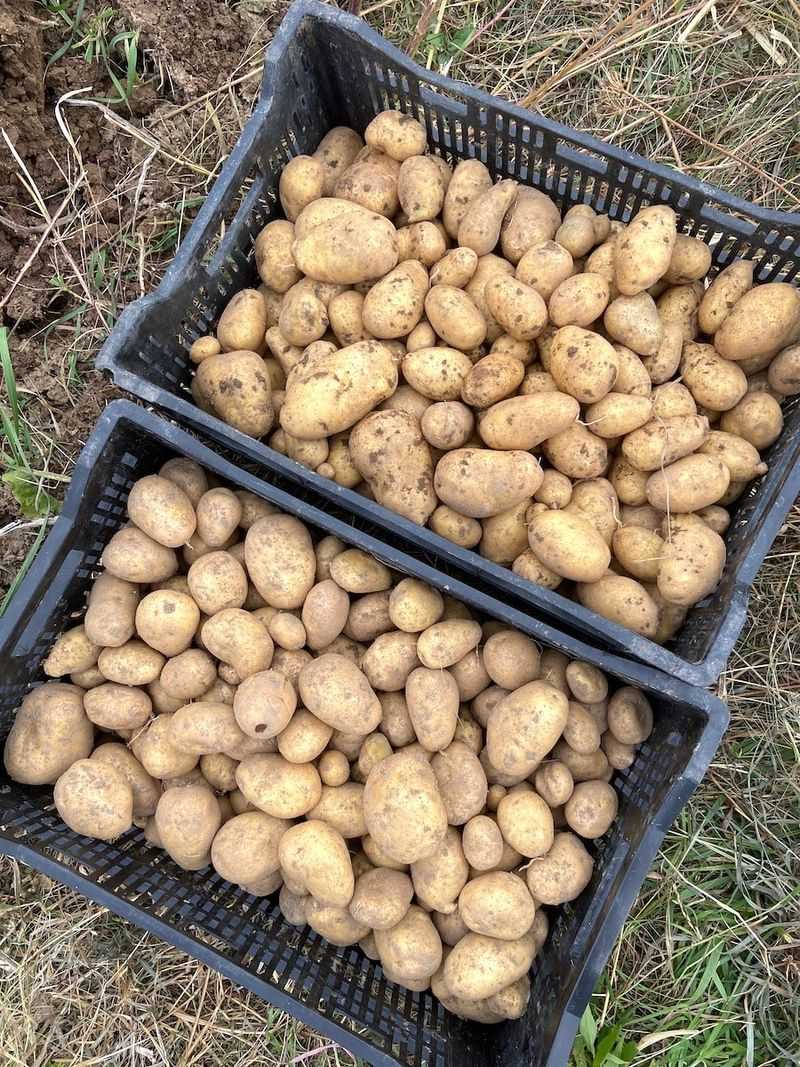
Curing is a postharvest process, not a finishing step for immature tubers. Putting a potato that failed the skin-rub test into a curing setup will not make it fully mature. What curing does is help already-mature potatoes heal the small nicks, scuffs, and surface wounds that happen during harvest, and it can firm or maintain the skin before long-term storage. USDA ARS research describes this wound-healing process as suberization, where a protective layer forms over minor damage.
Set harvested potatoes in a single layer or shallow pile in a dark space with good airflow, moderate warmth, and high humidity. Avoid piling them deep, which traps heat and moisture unevenly. Oregon State Extension and Iowa State Extension both recommend a curing period in this kind of environment before moving potatoes to long-term storage.
How long to cure varies by source and intended conditions. Utah State Extension and other extension programs suggest a range of roughly 7 to 10 days on the shorter end and up to two weeks or more depending on temperature, humidity, and how the potatoes will be stored afterward. Follow the guidance from your regional extension service as a starting point and adjust based on conditions.
Store the cured crop in darkness and airflow
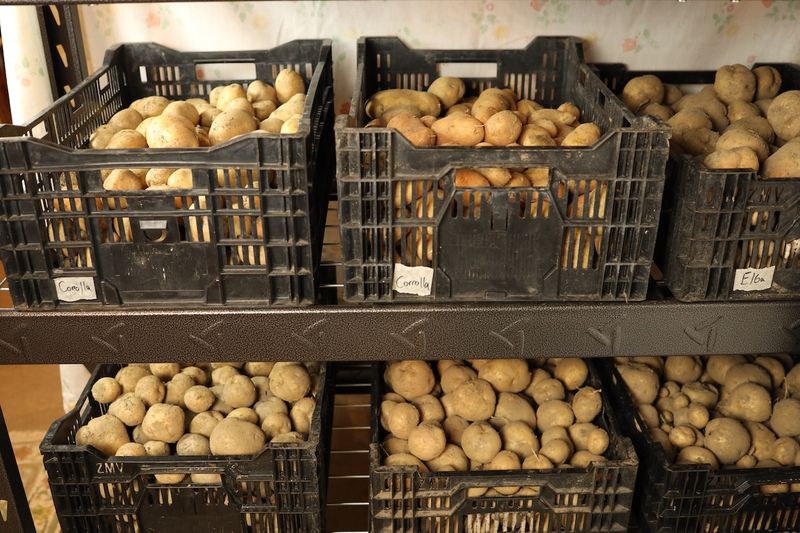
After curing, move your potatoes to a cool, dark spot with consistent airflow. Light is the main enemy at this stage. Exposure to light – even indirect or artificial light over time – causes potatoes to green. MedlinePlus notes that greening is associated with increased glycoalkaloids, compounds that can cause illness.
Potatoes with extensive green patches or green tissue beneath the skin should be discarded, not peeled thin and cooked. Ordinary cooking does not reliably break down these compounds.
Temperature matters too, but the right range depends on how you plan to use the potatoes. Oregon State Extension explains that very cold conditions can cause starch to convert to sugar, which affects flavor and produces poor frying color. Warmer storage encourages sprouting and speeds up decay. Utah State Extension and University of Minnesota Extension both recommend following the temperature range from your regional extension source based on whether you are storing for fresh eating or longer-term use.
The decision framework the whole article builds toward comes down to this: let vine condition and a skin-rub test guide when you dig, and let variety knowledge and growing conditions explain the size you find. A potato that passes the thumb test is ready for your root cellar, whatever size it turned out to be.