
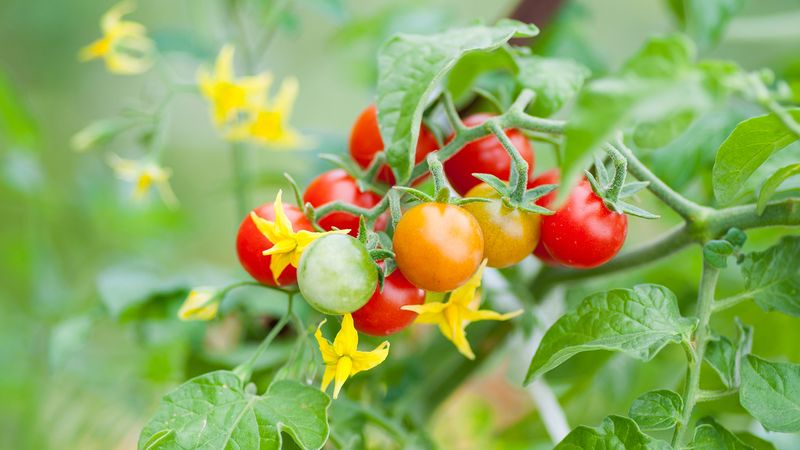
Few things are more frustrating than watching tomato flowers open and then drop off without leaving a single small fruit behind. This problem is more common than most gardeners expect, and the good news is that for plants growing in sheltered or enclosed spaces, a few seconds of gentle vibration may be all it takes to get things moving. Knowing what you are actually looking at, and why it happens, makes the difference between a fix that helps and one that misses the real cause entirely.
Identify blossom drop before reaching for a remedy
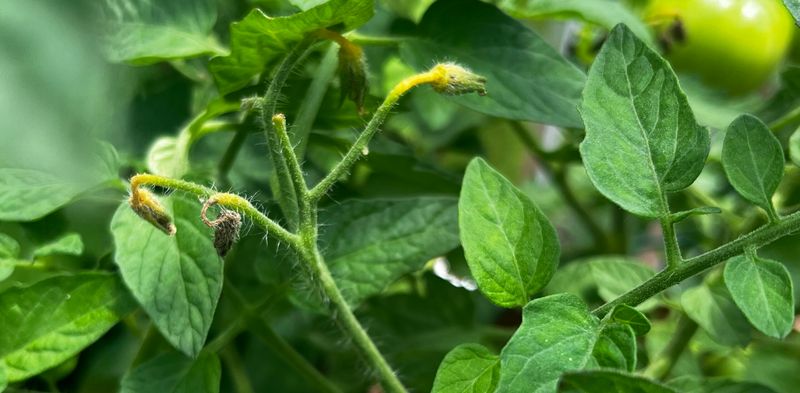
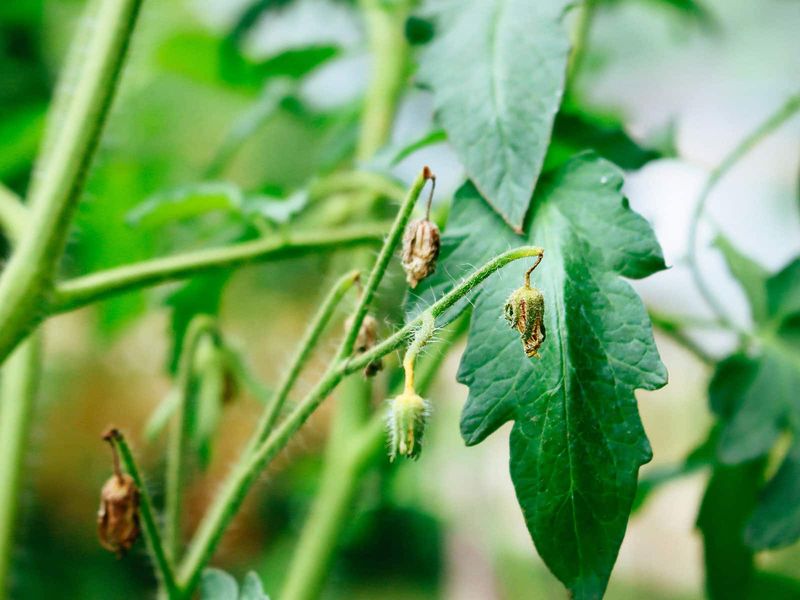
A tomato flower that drops cleanly without leaving anything behind is the telltale sign of blossom drop. Watch for blooms that dry up, detach at the base, and fall without producing even a tiny green swelling where the fruit would form. Iowa State University Extension notes that when flowers consistently fail to set fruit across multiple clusters, something in the growing environment is interfering with the process.
Losing a flower here and there during a stretch of hot or stormy weather can be completely normal. Repeated failure across multiple trusses, though, is a signal worth investigating rather than ignoring. The distinction matters because the right response depends on understanding what caused the failure in the first place.
Gentle vibration is one troubleshooting measure worth trying, but it is relevant mainly when flowers still look healthy and viable and when the plant grows indoors, under a cover, or in a very sheltered spot with limited air movement. Extension guidance on pollinating greenhouse tomatoes makes clear that the technique targets a specific gap in mechanical movement, not every possible cause of blossom drop. Reaching for vibration before checking temperature, water, and other basics can mean missing the actual problem entirely.
Tomatoes usually pollinate themselves
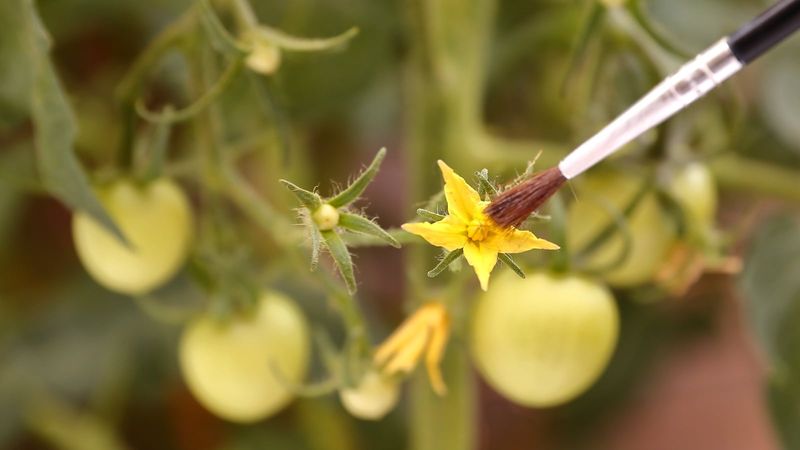
Tomato flowers carry both male and female reproductive parts inside the same bloom, which means the plant is built to pollinate itself without any help from a second plant, a bee, or a gardener with a paintbrush. Pollen sits inside a cone-shaped anther tube surrounding the central stigma, and it needs to be shaken loose so it can land where it needs to go. University of Missouri Extension’s guide to tomato fruit set explains that wind, normal plant handling, and the vibrations created by pollinating insects all help release that pollen naturally.
Outdoors, a light breeze brushing past the plant several times a day usually provides enough movement to do the job. Bumblebees are particularly effective because their buzzing frequency is well-matched to the frequency that shakes pollen from tomato anthers, but they are not a requirement for a successful harvest.
The situation changes when plants grow inside a greenhouse, under a high tunnel, or in a very still, sheltered corner of a yard. Oregon State University Extension recommends imitating that natural movement mechanically for greenhouse tomatoes, because the still air inside an enclosed structure may not provide enough agitation on its own. The goal is movement, not pollen transfer between different plants or flowers.
How to gently vibrate a tomato flower cluster
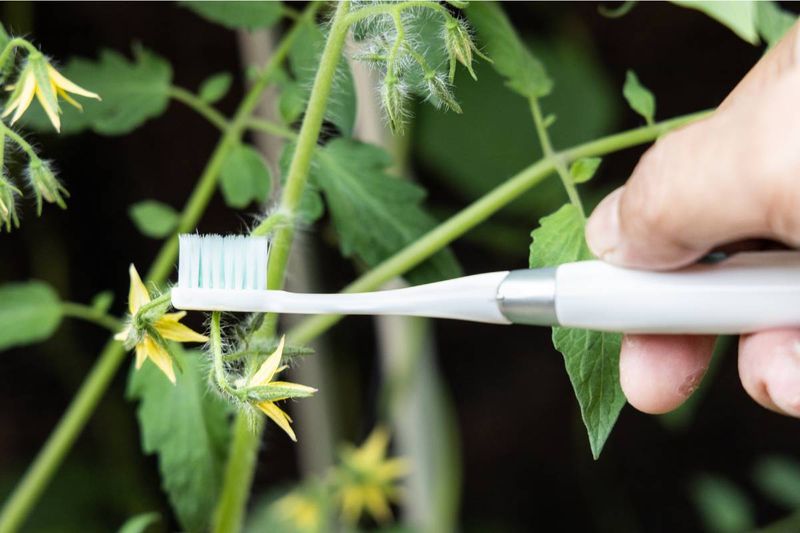
Start by identifying a cluster that has at least one or two freshly opened flowers. Fresh blooms are bright yellow, their petals are open and intact, and the truss holding them feels firm. Skip any cluster where the flowers look wilted, browned at the edges, or already starting to detach.
Once you have a viable cluster, place a finger or two against the supporting stem just behind the flower group and tap or flick it gently for roughly one to several seconds. You do not need to see a visible cloud of pollen or feel anything dramatic. A published greenhouse study on truss-vibration durations found that one-, three-, and five-second treatments all improved fruit set compared with no vibration, with no statistically significant difference among those durations. A short, gentle tap is enough.
For greenhouse tomatoes, Oregon State University Extension specifically recommends pressing a battery-operated toothbrush lightly against the truss to deliver consistent vibration. Hold the toothbrush against the stem, not directly against the petals, for a second or two per cluster. University of Florida IFAS greenhouse guidance describes a similar approach of vibrating each cluster for about one to two seconds.
Hard shaking, forceful brushing across the flower faces, or repeatedly rubbing delicate petals and stems can damage the very tissue you are trying to help. Keep the motion brief and the pressure light.
Repeat the treatment while flowers remain viable
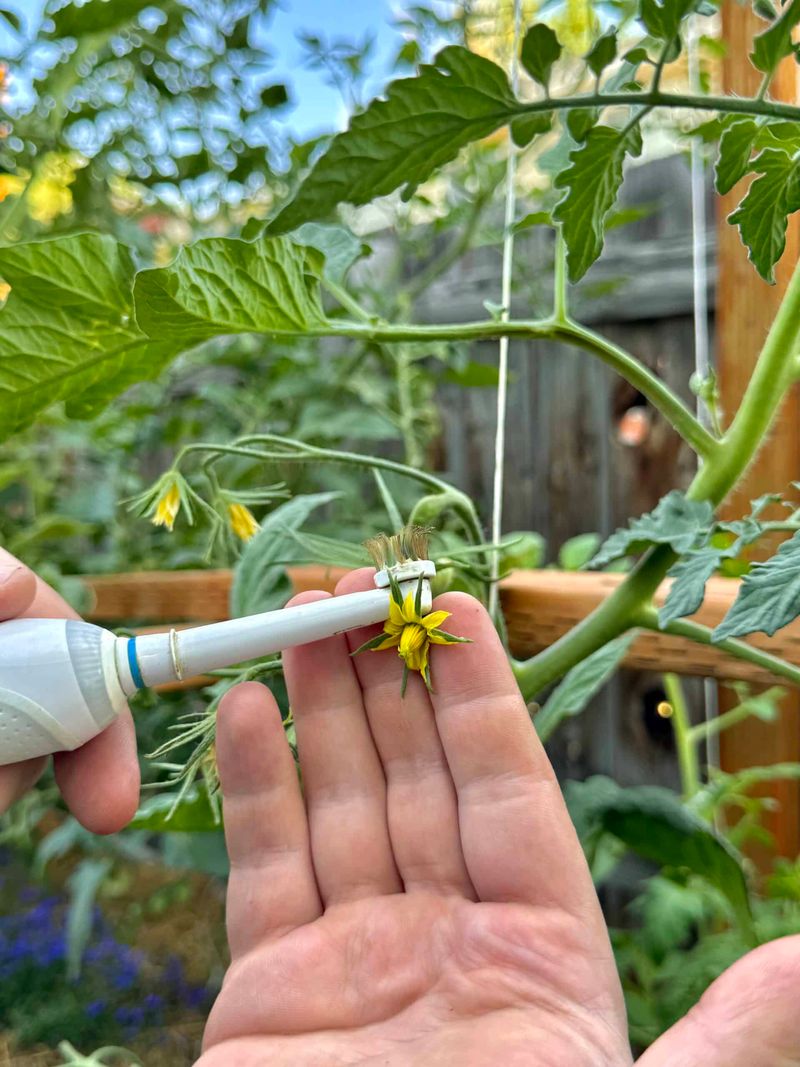
A single vibration session does not carry a plant through its entire flowering period. Each flower is only open and receptive for a short window, so returning to the same plant on a regular schedule matters more than perfecting the technique on the first try.
For plants growing in enclosed or protected conditions, University of Florida IFAS greenhouse tomato guidance recommends repeating vibration at least every second day while flowers remain open. Extension guidance on pollinating greenhouse tomatoes similarly describes treating during the short interval between bloom and the point when flowers begin to drop. Waiting too long between visits means some flowers will have already closed or begun to dry before they receive any help.
After a few days, check the clusters you treated by looking closely at the spot just behind where the petals were. A small, round green swelling forming there is an early sign that fruit development has started. That swelling is the developing ovary beginning to enlarge, and seeing it means the flower successfully set.
The absence of that swelling does not automatically prove that inadequate vibration was the only issue. Temperature spikes, water stress, or other environmental factors may have prevented development even in flowers that received treatment. Use the swelling as a helpful indicator, not a definitive verdict on pollination alone.
Check heat, cold, water, and humidity before blaming pollination
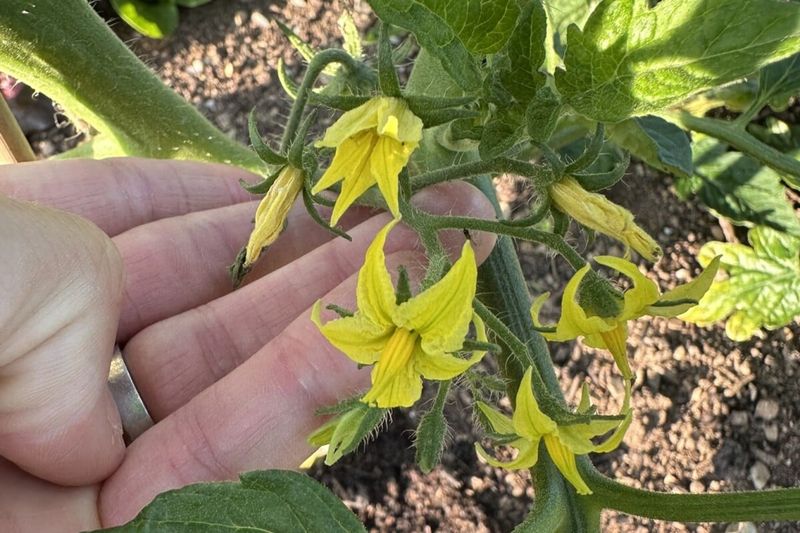
Vibration cannot fix a problem that originates in the growing environment rather than in a lack of mechanical movement. Temperature is one of the most common reasons tomato flowers drop without setting, and it is worth ruling out before assuming pollination is the issue.
Daytime temperatures above roughly 84 to 85 degrees Fahrenheit can interfere with pollen development and pollen-tube growth, while nighttime temperatures below about 55 degrees Fahrenheit can also impair fruit set. Very warm nights, somewhere above roughly 70 to 75 degrees, create their own problems for some varieties. Penn State Extension’s guide to heat stress in tomatoes explains that heat can cause abnormal flower development and hormone changes that trigger abortion independently of whether pollen was ever released. Vibrating a flower with heat-damaged pollen will not produce a tomato.
These temperature ranges are approximate risk thresholds, not rigid universal cutoffs. Cherry tomato varieties often tolerate a wider range than large-fruited or heirloom types, so a failure in one cultivar should not be generalized to every tomato in the garden.
Water stress is another frequent culprit. Iowa State University Extension identifies inconsistent soil moisture as a trigger for both flower and young-fruit shed. Mulch and deep, regular watering can help reduce those fluctuations. In protected growing spaces, Missouri Extension identifies approximately 40 to 70 percent relative humidity as favorable for tomato pollination.
Very high humidity can prevent pollen from shedding freely, while very low humidity can make pollen less likely to adhere once it reaches the stigma.
Avoid excess nitrogen and misread fertilizer symptoms
More fertilizer is not the answer when tomato flowers keep falling. Nitrogen encourages green, leafy growth, and when a plant gets too much of it, that vigorous foliage often comes at the direct expense of flowering and fruit production. Missouri Extension’s tomato fruit-set guidance specifically identifies excessive nitrogen as a factor that can reduce fruit set, so reaching for a fertilizer bag in response to dropped flowers may make the situation worse rather than better.
A separate and commonly confused problem is blossom-end rot, which looks alarming but is not the same thing as blossom drop. Blossom drop happens before fruit ever forms: the flower dries up and falls away cleanly. Blossom-end rot appears as a dark, sunken, leathery patch on the bottom of a tomato that has already started to develop.
University of Georgia Extension’s overview of rotten tomatoes explains that blossom-end rot is associated with calcium movement within the plant and uneven soil moisture, not with failed pollination. Calcium fertilizer is not a supported remedy for blossom drop, and applying it will not help a flower that has already aborted. Iowa State University Extension similarly separates these two conditions so gardeners can focus their response on the right problem.
Use the result to decide what to do next
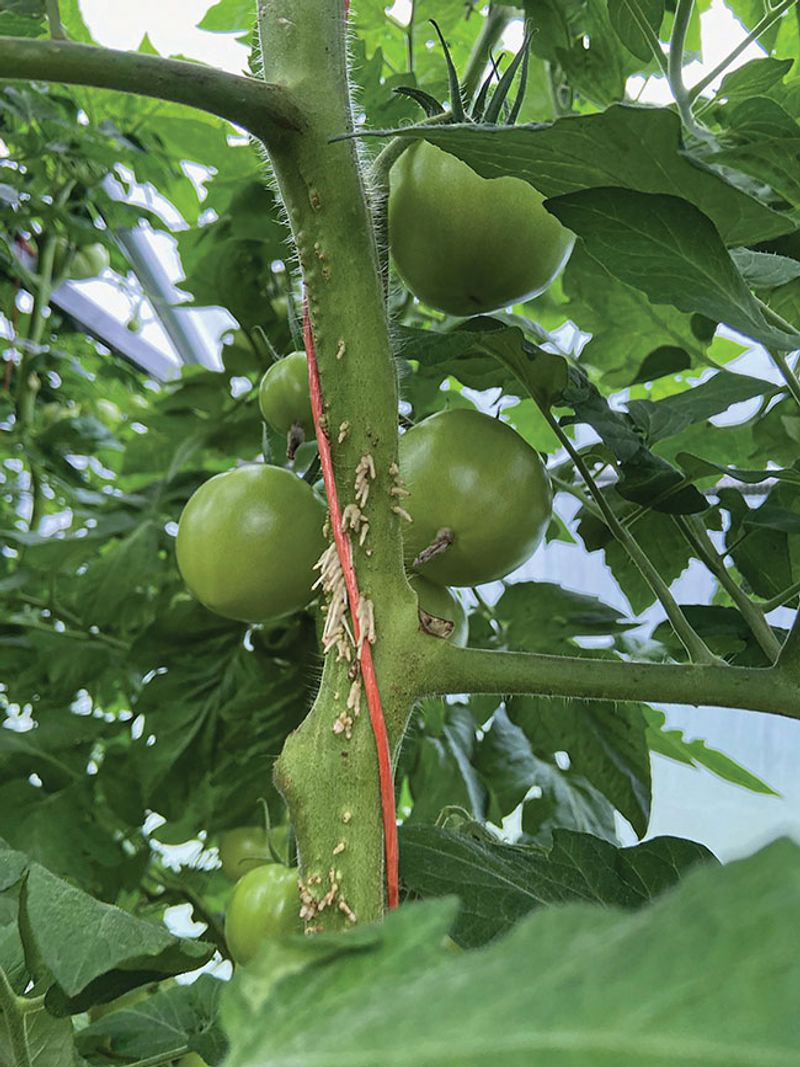
After a few rounds of treatment, the clusters themselves will tell you whether things are working. Green swellings forming behind faded petals are a positive sign; continued clean drop with nothing left behind is a cue to look elsewhere for the cause.
Outdoor plants often receive enough natural movement from wind and everyday handling that vibration provides little additional benefit. The technique is most useful for plants growing in a greenhouse, under a row cover, or in a very still and sheltered spot where air movement is consistently limited. Missouri Extension and University of Florida IFAS greenhouse guidance both frame vibration as a targeted response to that specific gap, not a general prescription for every tomato plant.
If flowers keep dropping after repeated gentle vibration, resist the urge to shake harder or increase frequency beyond every other day. Instead, revisit temperature records, check soil moisture consistency, consider whether fertilizer inputs have been heavy, and look at whether the flowers themselves appear healthy before they fall. Iowa State University Extension points out that cultivar differences matter too, since some varieties handle challenging conditions better than others. Seconds of gentle vibration may improve fruit set when conditions are otherwise suitable, but a plant growing under real environmental stress needs the stress addressed, not a more vigorous technique applied to the symptom.