
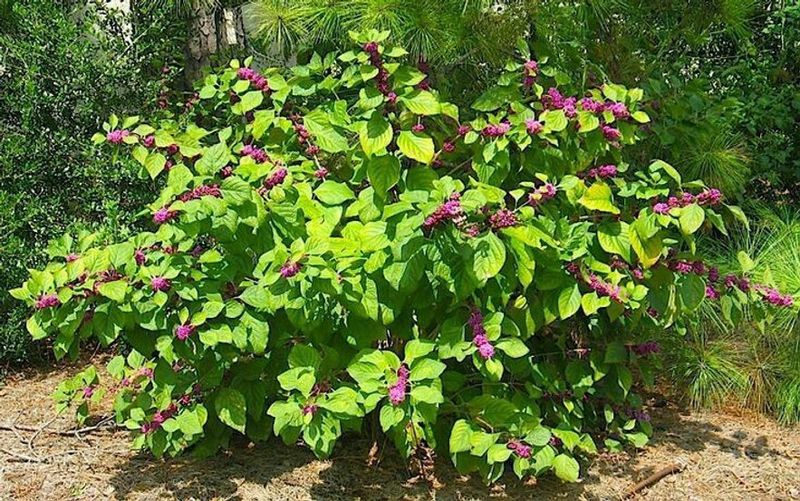
Florida summers mean more time outdoors on the patio, but mosquitoes and ticks can make every evening miserable. There is a native shrub that most gardeners walk right past at the nursery, and it turns out scientists have been studying its leaves for years. American beautyberry grows wild across Florida, produces stunning clusters of purple berries, and contains compounds that showed real insect-deterrent activity in laboratory tests. Before you rearrange your entire patio around it, though, there is an important story to understand about what the research actually found.
The overlooked shrub is American beautyberry
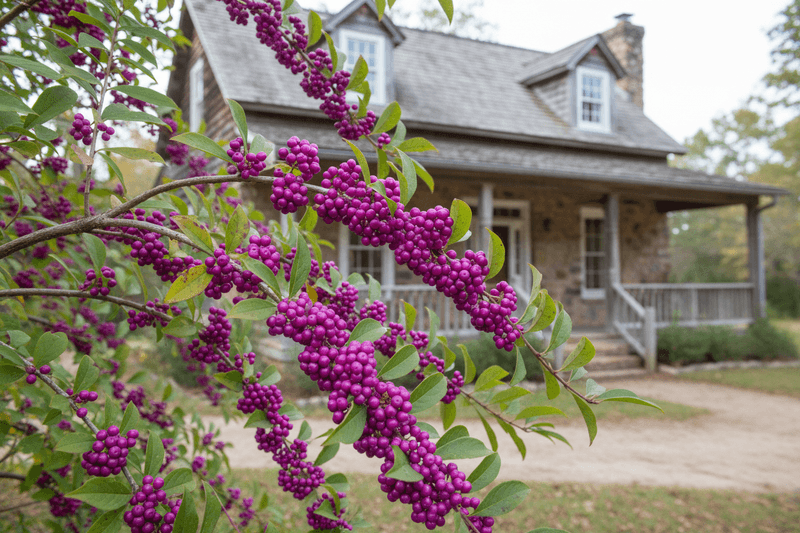
Most Florida gardeners have seen American beautyberry at some point, whether along a woodland trail, at a native plant sale, or tucked in the back corner of a nursery. Callicarpa americana is native to Florida and grows across the state from the Panhandle to the southern peninsula. Its most recognizable feature is the striking clusters of metallic purple berries that wrap around its stems in late summer and fall, making it one of the most visually dramatic natives you can put in a Florida yard.
The plant earns its place on horticultural merits alone. UF/IFAS beautyberry guidance confirms it is suitable for Florida USDA Zones 8a through 10b, meaning it covers nearly every corner of the state. It tolerates heat, handles sandy soil without complaint, and can deal with both drought after establishment and temporarily wet conditions, a combination that is genuinely rare and valuable in Florida landscapes.
Beyond the berries, beautyberry is a wildlife magnet. Birds flock to the fruit, and the plant supports pollinators and some butterfly and moth larvae. Its small pinkish flowers appear in summer before the berries follow in late summer and persist well into the cooler months. For any gardener who wants a Florida-native plant that looks spectacular, feeds wildlife, and earns its space without demanding perfect soil, beautyberry is a plant that deserves far more attention than it gets.
That said, this article is really about what beautyberry’s leaves contain and what that chemistry does and does not mean for your patio evenings. The plant is worth growing for everything described above. Whether it functions as a pest shield is a separate question, and the honest answer is more nuanced than the headline suggests.
What the research actually tested
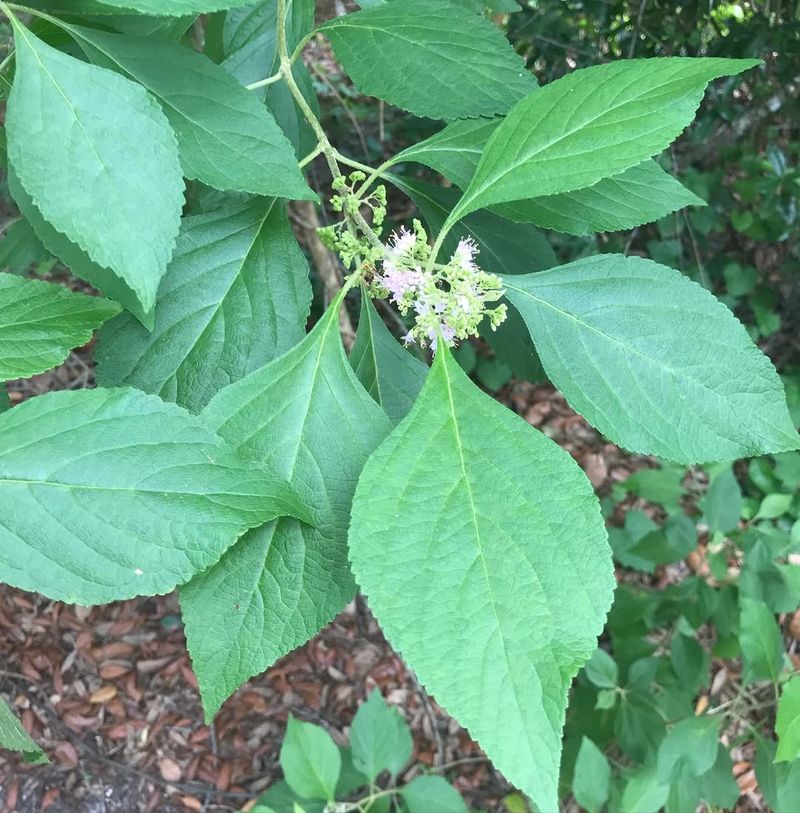
Beautyberry’s reputation as an insect deterrent did not come from gardening folklore alone. Researchers at the USDA identified specific compounds in beautyberry leaves that showed genuine activity against mosquitoes and ticks under controlled laboratory conditions. The two most studied compounds are callicarpenal and intermedeol, both terpenoids found in the leaves of Callicarpa americana and related species.
On the mosquito side, a 2005 USDA study published in the Journal of Agricultural and Food Chemistry isolated these terpenoids from beautyberry leaves and found they deterred mosquito biting in laboratory bioassays. The research confirmed that callicarpenal in particular showed meaningful activity, which explained why older folk practices of rubbing crushed beautyberry leaves on skin had some basis in plant chemistry rather than just tradition.
The tick findings were equally interesting. USDA Agricultural Research Service tick work published in 2007 tested beautyberry compounds against blacklegged tick nymphs and lone star ticks using treated cloth and laboratory exposure methods. Under those specific tested conditions, repellency against blacklegged tick nymphs exceeded 95 percent, a result that understandably generated significant attention.
Those numbers matter, but so does the context. Every one of these experiments used isolated compounds, concentrated extracts, or cloth treated with beautyberry material. Researchers were testing the chemistry itself, not a living plant sitting outdoors. The studies were designed to identify whether the compounds had deterrent activity and to understand the mechanism, which they did successfully.
What the research was not designed to measure is whether a beautyberry growing in a pot beside your chair releases enough of those compounds into the air around you to reduce bites on a humid Florida evening. That is a genuinely different question, and the answer from current evidence is that nobody has confirmed it does.
A living shrub is not a repellent barrier
Here is the core issue with the original headline: no published research shows that a beautyberry shrub growing undisturbed in your yard or on your patio releases enough active compounds into the surrounding air to protect people sitting nearby from mosquito bites or tick encounters. The laboratory results were real, but the conditions that produced them are far removed from a living plant in Florida heat.
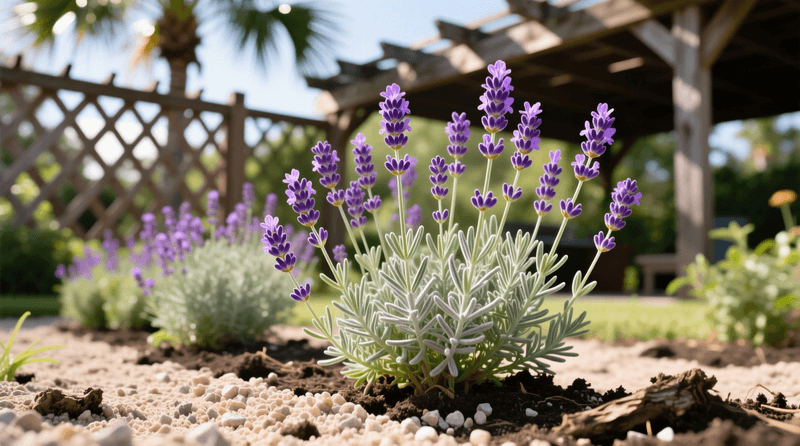
UF/IFAS extension specialists addressed this directly, explaining that mosquito-repellent plants generally provide little or no passive protection unless their oils are extracted and concentrated. An intact shrub does not crush its own leaves or volatilize its terpenoids at concentrations that would surround a person with a meaningful repellent cloud. The same principle applies to citronella geraniums, rosemary, lemongrass, lavender, and marigolds. None of them function as passive barriers around a patio.
The phrase “every evening” in the original title is also worth addressing directly. Mosquito activity and tick exposure are not constant. They shift with temperature, humidity, wind, rainfall, vegetation density, wildlife activity, and which species are active at a given time. CDC prevention guidance reflects the complexity of vector exposure, which is precisely why no single plant, product, or yard strategy can promise nightly protection.
As for applying crushed leaves to skin, older extension discussions mentioned the practice, but current guidance from UF/IFAS and the EPA’s repellent selection tool supports using EPA-registered repellents for dependable protection. Homemade preparations from plant material carry uncertain concentration, unknown duration of effect, and no established safety profile for use on children, pets, or sensitive skin. Stick with registered products for actual personal protection, and appreciate beautyberry for what the science does confirm: its leaves contain compounds that showed real deterrent activity when tested under controlled conditions.
Beautyberry fits Florida—but not every site
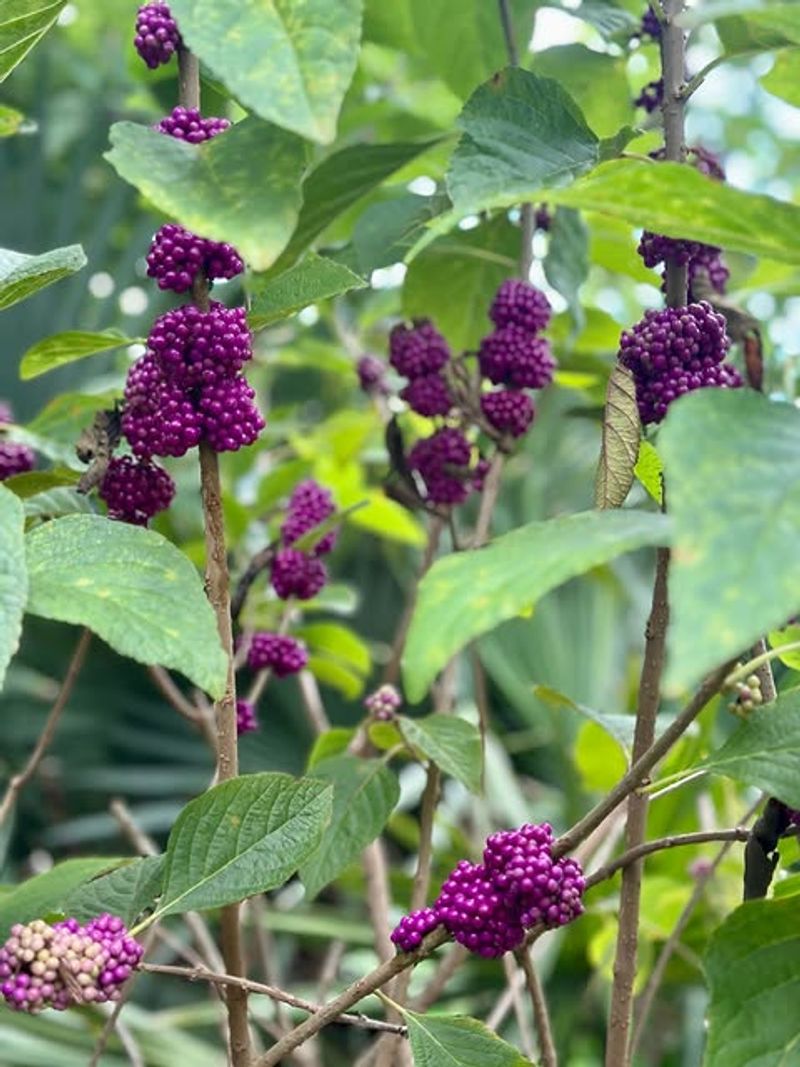
One of beautyberry’s genuine strengths is how well it suits most of Florida’s demanding conditions. Sandy, fast-draining soil that exhausts many ornamentals is not a problem for this native. It handles the state’s intense summer heat and, once established, tolerates periods of drought without much intervention. It also copes with temporarily wet soil, which matters in Florida where heavy rains can saturate a planting bed for days at a time.
Light flexibility adds to its appeal. UF/IFAS Gardening Solutions beautyberry guidance notes that the plant grows in full sun or partial to dappled shade. Full sun generally produces the most abundant fruiting, which means more of those vivid purple berry clusters in late summer and fall. In spots that receive brutal afternoon sun during July and August, some afternoon shade can reduce heat stress without sacrificing the plant’s overall performance.
Salt tolerance is where the picture changes. The UF/IFAS beautyberry fact sheet is clear that this species handles salt poorly, both in the soil and as spray. That distinction matters enormously across Florida, where growing conditions along the coast vary from sheltered inland yards a few miles from the water to fully exposed beachfront properties that receive direct salt spray from ocean winds.
An inland Central Florida yard, a north Florida landscape, or a sheltered suburban lot near the coast can all support beautyberry well. A garden at the edge of a barrier island or any site that regularly receives salt-laden air is a different situation, and planting beautyberry there is likely to produce a struggling or declining shrub rather than the vigorous, berry-laden plant you see in photographs. Before purchasing, assess your specific site honestly, not just your general region of Florida.
Give this native enough room to work as a patio plant
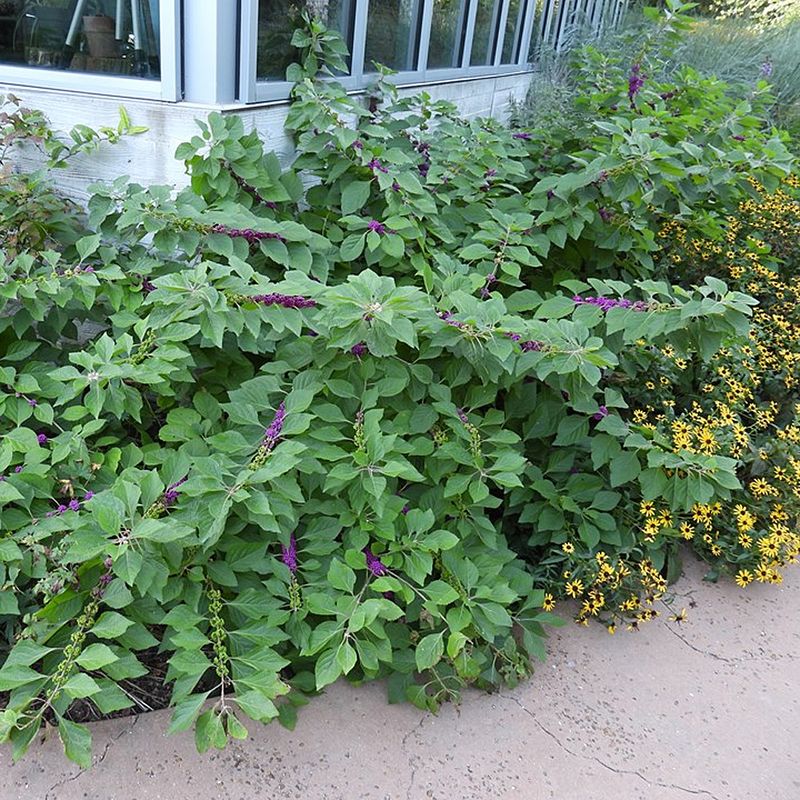
Calling beautyberry a “patio plant” requires some honest sizing expectations. This is not a compact accent shrub that stays neatly in a standard container. American beautyberry commonly reaches 3 to 8 feet tall and 4 to 8 feet wide at maturity, with a loose, arching, somewhat sprawling form that looks natural in a landscape but can quickly overwhelm a small patio if planted too close or in an undersized pot.
UF/IFAS lists beautyberry as suitable for containers and aboveground planters, which does make patio culture possible. The key is choosing a container large enough to support the root system without drying out every day in Florida’s summer heat. Small pots dry out fast in July and August, and a stressed beautyberry will drop leaves and produce fewer berries. A large, dark-colored container in direct afternoon sun will also heat the root zone significantly, which is worth factoring into your placement plan.
Container saucers deserve specific attention. UF/IFAS container gardening guidance emphasizes that containers should not sit in standing water, and saucers must be emptied regularly. On a patio with several potted plants, saucers that collect rainwater become mosquito breeding sites within days. If you are growing beautyberry partly because of its insect-deterrent chemistry, creating mosquito habitat right underneath it defeats the purpose entirely.
Pruning is a real commitment with this plant. UF/IFAS recommends pruning in late fall through late winter, because flowers and the berry clusters that follow form on new growth from the current season. Skipping pruning for a year or two produces a rangy, open shrub that takes up significant space without the dense berry display that makes the plant worth growing. Severe pruning can reset the form and encourage a bushier, more compact habit.
Also account for the practical reality that ripe berries fall, birds visit frequently, and a plant this size near a seating area means some cleanup. Placement just off the patio edge rather than directly on it often works better than centering a large beautyberry in the middle of your outdoor living space.
Pair the plant with measures that reduce real exposure
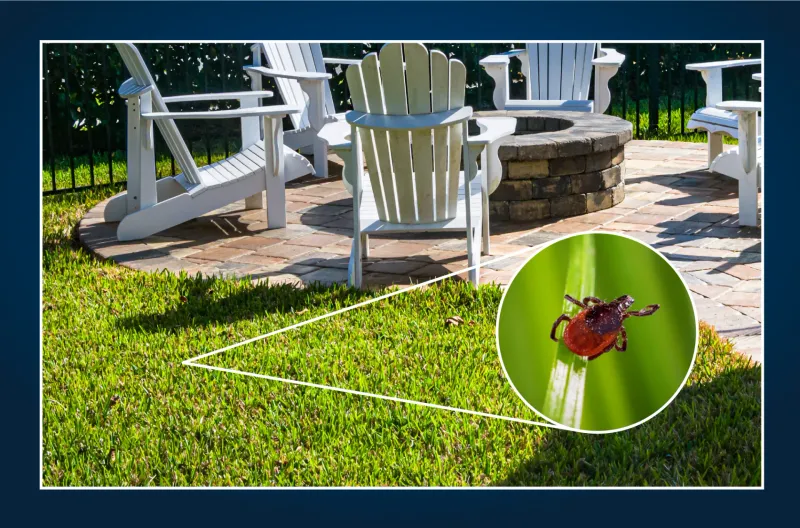
Beautyberry earns its spot in a Florida yard, but the plants that actually reduce how many mosquitoes breed near your patio are the ones you remove. Standing water is where Florida mosquitoes reproduce, and a single container saucer, a clogged gutter, a forgotten bucket, or a birdbath left unchanged for five days can produce hundreds of larvae. UF/IFAS integrated pest management guidance for mosquitoes around homes recommends flushing or draining water-holding containers, bromeliads, pet bowls, toys, and birdbaths every three to four days during summer. That single habit does more to reduce the mosquito population around your patio than any combination of plants.
UF/IFAS Gardening Solutions mosquito guidance also points to gutters, low spots in the yard, and any container that holds water after rain as priority targets. In Florida, where afternoon thunderstorms are routine from June through September, the water management cycle is essentially continuous during the peak season. Checking and emptying containers after every significant rain is not optional if you want to meaningfully reduce breeding near the house.
Tick exposure follows a different pattern and calls for different yard management. CDC tick prevention guidance recommends keeping grass mowed short, removing leaf litter and brush piles where ticks and their wildlife hosts shelter, and creating a separation between patios or lawn areas and wooded or brushy edges. A three-foot gravel or wood-chip barrier along that transition zone can reduce how many ticks migrate into the yard from surrounding vegetation.
For personal protection, CDC vector-borne disease prevention guidance and the EPA’s repellent selection tool both direct people to EPA-registered repellents with active ingredients such as DEET, picaridin, IR3535, oil of lemon eucalyptus or PMD, and 2-undecanone, used according to the product label. Protective clothing, patio screens, and thorough tick checks after time outdoors add additional layers. None of these measures guarantees zero exposure, but together they reduce risk far more reliably than any plant arrangement can on its own.
Let beautyberry earn its place without asking it to do too much
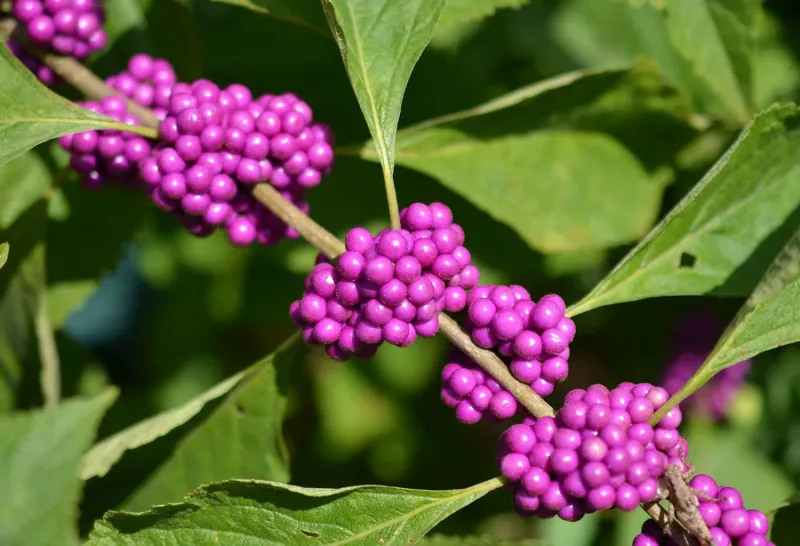
American beautyberry is a genuinely excellent Florida-native plant, and it belongs in more yards than it currently occupies. Its heat tolerance, adaptability to sandy soil, wildlife value, and spectacular fall berries make it a strong choice for any gardener who wants a low-effort native that rewards patience with a real visual payoff. The laboratory evidence for its insect-deterrent compounds is real and worth knowing about, and ongoing research into those compounds may eventually lead to practical applications.
What beautyberry cannot do is stand alone as your evening pest protection. UF/IFAS extension specialists are clear that passive protection from patio plants is minimal, and no shrub creates a repellent zone around your chair at dusk. Use CDC-recommended personal protection measures for actual bite and disease risk reduction, and treat beautyberry as the UF/IFAS-recommended Florida native it is: a worthwhile, well-adapted shrub with interesting chemistry, not a substitute for water management, repellents, or screens.
Plant it where the site suits its size and salt sensitivity, give it room to grow, prune it in late winter to keep it tidy, and empty any saucers it sits in after rain. A beautyberry that earns its place on those terms will be growing strong and covered in purple berries long after the novelty plants have come and gone.