
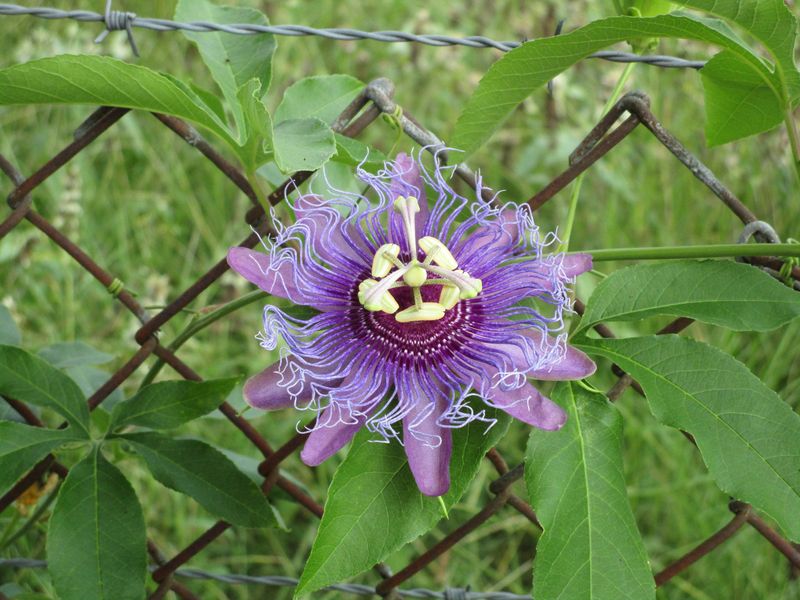
Most Florida fences just sit there, baking in the sun, doing nothing for the yard’s wildlife or its looks. Maypop, the Florida-native purple passionflower known to scientists as Passiflora incarnata, can change that in a single growing season. Its unusual blooms, fast-climbing stems, and value to Gulf fritillary and zebra longwing butterflies make it one of the most rewarding vines a home gardener can plant along a boundary line. Getting those results, though, takes the right species, a solid support, and a commitment to regular care.
Start with the right passionflower
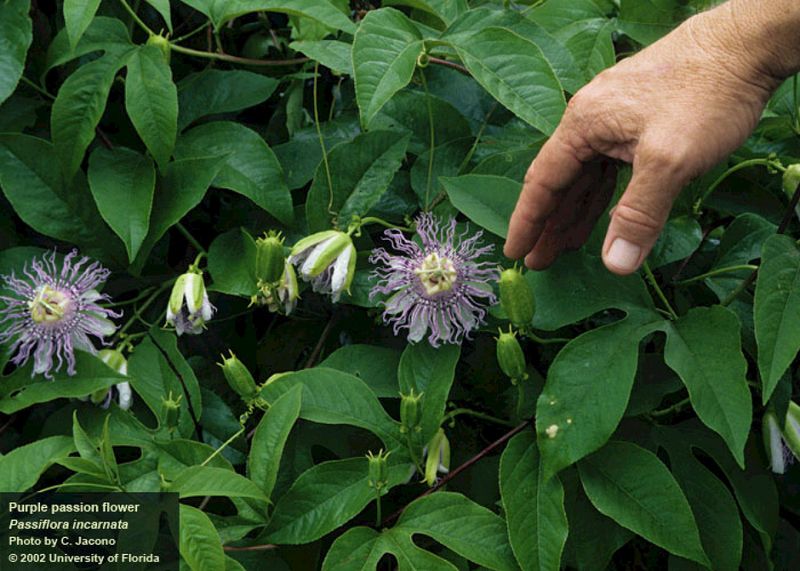
Before anything else gets planted, the species label matters more than the common name. The vine worth putting on a Florida fence is Passiflora incarnata, sold under several names: maypop, purple passionflower, wild passionflower, and passion vine. UF/IFAS Gardening Solutions confirms it as a Florida native with strong ornamental and wildlife value, which is the foundation of everything else in this article.
The problem is that “passionflower” appears on tags for dozens of species, and not all of them behave the same way in a Florida yard. Some come from South America, some carry documented invasion risk, and some offer little wildlife benefit compared with maypop. Before buying, ask the nursery staff for the full scientific name and check it against a reliable source.
One species worth knowing by name is Passiflora edulis, the tropical passionfruit vine widely sold in Florida. The UF/IFAS invasion risk assessment rates it as high risk and lists it as not recommended by IFAS for Florida landscapes. That does not mean every non-maypop passionflower is unsuitable for every purpose, but it does mean each species needs its own check for native status, invasion risk, intended use, and wildlife value before it goes in the ground.
UF/IFAS Extension Osceola County notes that plant labels at retail nurseries do not always distinguish between species, so the scientific name on the tag is the only reliable guide. If a tag reads only “passionflower” or “passion vine” without a Latin name, ask before buying or shop at a native plant nursery where staff can confirm the species. Getting this step right protects the rest of the project.
See why maypop changes the fence’s role
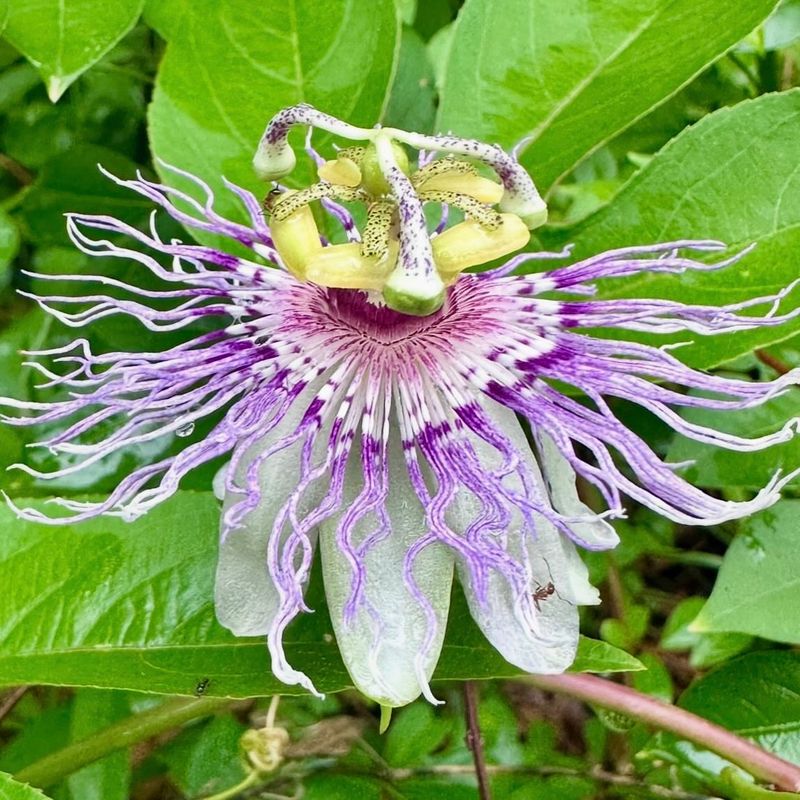
A plain board fence reads as a background element, something the eye moves past without stopping. Maypop gives it a reason to become the focal point. The flowers are genuinely unusual: each bloom opens to roughly three inches across, with white and purple petals layered beneath a fringe of filaments that shift from purple at the tips to white and then deep violet at the base. UF/IFAS describes the flower as intricate and striking, and that description holds up whether you see one bloom or fifty.
Fast growth adds the vertical payoff. Given a fence to climb, maypop can cover a substantial section in one warm season, using coiling tendrils to attach to wire, wood, or chain link. That speed is what makes the visual transformation feel almost immediate compared with slower ornamentals.
The wildlife dimension is where the vine earns its reputation, but the full picture requires separating two different groups of visitors. Bees and other pollinators come to the flowers for nectar and pollen. The Gulf fritillary and the zebra longwing, Florida’s state butterfly, use the foliage in a completely different way: their caterpillars need to eat it. The Florida Museum of Natural History identifies maypop as a larval host plant for both species, which means the vine supports butterfly reproduction, not just adult nectar feeding.
Adult Gulf fritillaries and zebra longwings also visit flowers for nectar, but they need additional nectar sources elsewhere in the landscape to stay active throughout the season. UF/IFAS guidance on Florida butterfly gardens recommends pairing host plants like maypop with separate nectar plants so adult butterflies have what they need beyond the host vine itself. Hummingbirds may also visit the flowers on occasion, though the strongest and most consistent wildlife relationships are with bees and the two fritillary species.
Match the site to the vine and its support
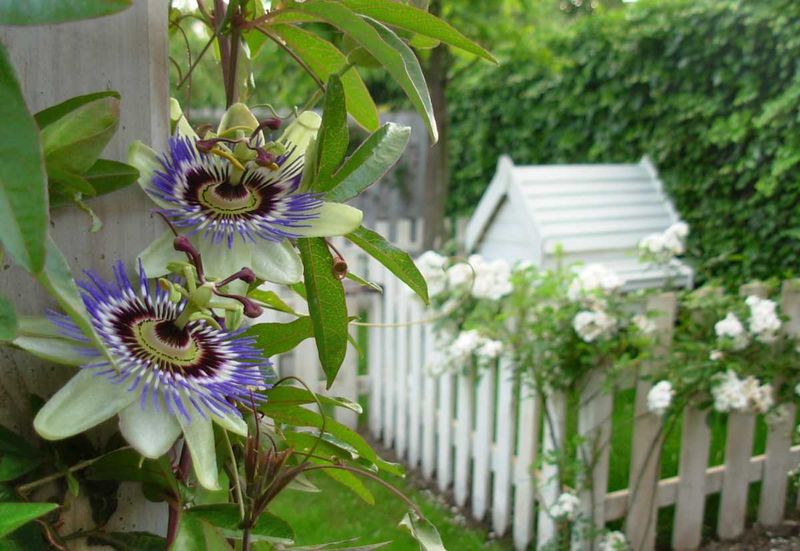
Maypop performs best in full sun, meaning at least six hours of direct light per day. It can tolerate some shade, but flowering and overall vigor tend to drop as light decreases, so a south- or east-facing fence section generally gives better results than a shaded north-facing run. Sandy, fast-draining Florida soil suits it well, and UF/IFAS confirms that maypop tolerates a range of soil types including sand.
The vine climbs by wrapping tendrils around whatever it can reach: fence boards, wire mesh, lattice, or the rails of a wooden trellis. Giving it something to grip early keeps growth orderly and prevents the stems from piling up in a tangled mass. A chain-link or wire-panel fence works well because the grid gives tendrils frequent attachment points. Solid wood privacy fencing with no horizontal rails may need a trellis panel added to the face so the vine has something to hold.
Structural strength is not optional. A mature vine adds real weight and dramatically increases wind resistance during summer storms. UF/IFAS guidance on landscape vines advises using a strong fence or trellis capable of handling high winds when covered with a vine, and that advice is especially relevant during Florida’s hurricane season. An aging or poorly anchored fence section is the wrong place to start; a sturdy, well-posted structure is the right one.
The UF/IFAS passion fruit publication reinforces that support integrity matters for any passionflower planting. Beyond strength, leave clear access for pruning along the entire fence run. Avoid sections that dead-end against a wall, run into a neighbor’s yard, or climb toward utility lines or established trees. The Florida Native Plant Society notes that maypop can spread into adjacent vegetation, so keeping the planting zone accessible from both sides makes ongoing management much easier.
Water the new planting before it earns drought tolerance
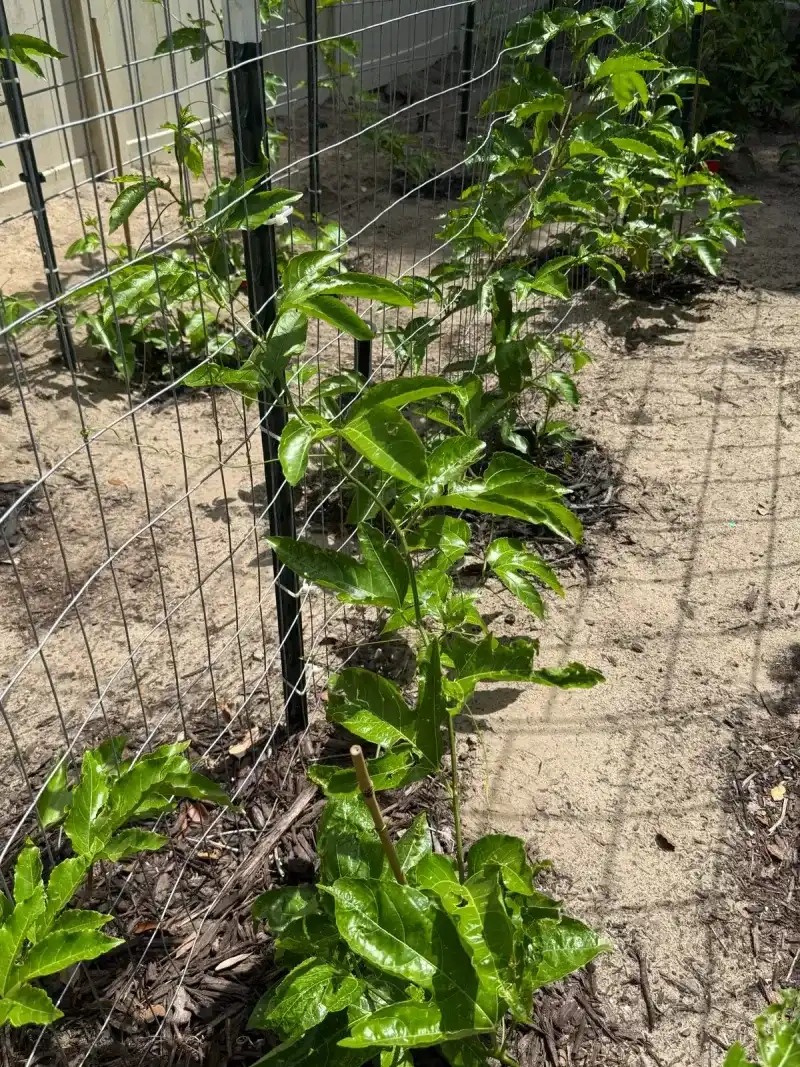
Maypop’s reputation for drought tolerance is real, but it applies to established plants with developed root systems. A vine that went in the ground last week has no such reserves, and Florida’s summer heat can push a new planting into serious stress within days of a missed watering. Plan on consistent irrigation for the first several months after planting, adjusting frequency based on rainfall, temperature, and how quickly your soil drains.
The UF/IFAS fact sheet on Passiflora incarnata describes the plant as highly drought-tolerant once established, but the establishment period itself requires attention. Drought stress during that window can reduce vine growth, delay or prevent flowering, reduce fruit set and fruit size, and in severe cases cause defoliation or vine death. Those outcomes are avoidable with regular watering during the first growing season.
A modest layer of mulch, two to three inches deep, helps retain soil moisture and suppresses weeds that would otherwise compete with the vine’s roots. Keep the mulch a few inches away from the base of the stem to reduce rot risk. One practical detail worth watching: the Florida Native Plant Society notes that maypop spreads through underground rhizomes, and loose mulch can make it harder to spot new shoots emerging beyond the intended planting area. Check the surrounding soil regularly, especially in the first year, so you catch any spreading stems before they travel far.
UF/IFAS passion fruit guidance also connects adequate moisture to overall vine health and productivity. Once the plant has been in the ground for a full season and its roots have spread into surrounding soil, you can scale back irrigation significantly and let Florida’s rainfall do most of the work. Getting through that first season well-watered is what makes the low-maintenance reputation possible later.
Train and contain the fast growth
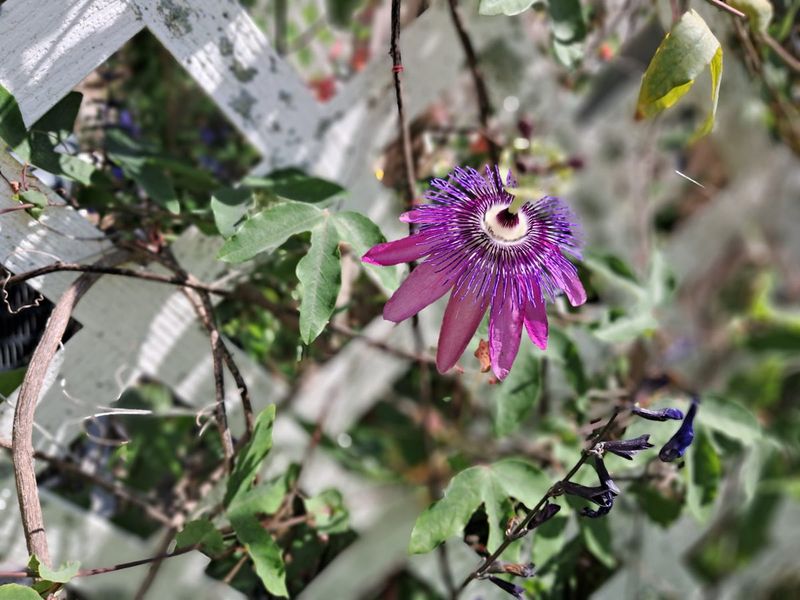
Maypop’s speed is one of its best features and its biggest management challenge at the same time. Left alone, it will cover more fence than you intended, climb into nearby shrubs, and send shoots underground to pop up several feet from the original plant. Starting the training process early, within the first few weeks of new growth, makes every subsequent season easier to manage.
The practical method is simple: weave young, flexible stems through the fence or trellis openings as they grow, directing them along the surface rather than letting them pile up. UF/IFAS advises periodic pruning of landscape vines and cautions against allowing growth to reach heights that cannot be safely maintained. For most home fences, that means keeping the vine below the top rail or fence cap so you can reach the stems without a ladder.
Pruning can be done with loppers or hand pruners, removing stems that have grown beyond the intended area or that are crossing back over themselves and creating a thick, airless mass. Cutting back to a healthy lateral stem or a strong bud keeps the plant tidy and encourages branching lower on the fence where it is easier to see and manage. UF/IFAS describes maypop as fast-growing and aggressive, so plan on pruning at least a few times per growing season rather than treating it as a once-a-year task.
Underground spread deserves its own regular check. The Florida Native Plant Society documents maypop’s tendency to spread through rhizomes and suckers, including into loose sand or mulch some distance from the original planting. Walk the fence line and the surrounding bed every month or two, looking for new shoots. Pull or cut them before they establish their own root systems and become harder to remove.
Treating this as routine maintenance rather than a sign that something went wrong keeps the planting looking intentional and prevents the vine from becoming a nuisance at the property line.
Let butterfly caterpillars do their work
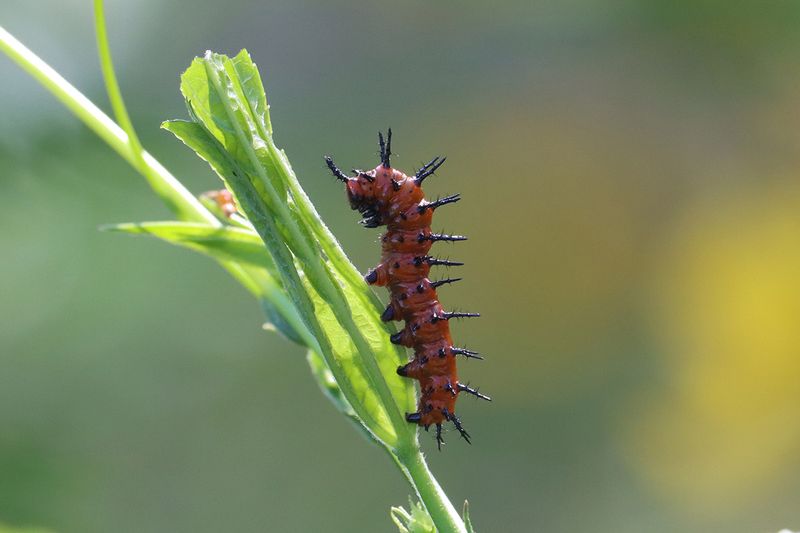
Stripped foliage on a maypop vine is not a failure. When Gulf fritillary or zebra longwing caterpillars have worked their way through a section of leaves, the plant is doing exactly what a butterfly garden host plant is supposed to do. The Florida Museum confirms maypop’s role as a larval host for both species, and that relationship requires caterpillars to eat the foliage, sometimes in amounts that leave stems temporarily bare.
Established maypop plants can generally recover from heavy caterpillar feeding. The roots remain intact underground, and the vine typically pushes new growth after a feeding cycle ends. Removing caterpillars, spraying them, or treating the foliage as a pest problem defeats the ecological purpose of planting a host vine in the first place. Florida Museum butterfly gardening guidance makes this point plainly: expect and accept caterpillar feeding as part of the process.
Adult butterflies that emerge from those caterpillars will need nectar sources beyond the maypop vine itself. UF/IFAS recommends pairing host plants with separate nectar plants so adult butterflies have food available throughout their lives. Planting pentas, lantana, or other Florida-friendly nectar sources near the fence line gives the butterflies a reason to stay in the yard after they emerge.
Pesticide use near a maypop vine can undermine the entire planting. UF/IFAS Extension Osceola County advises avoiding pesticide applications during bloom and while caterpillars are using the foliage. If a separate pest problem in the yard genuinely requires treatment, contact your local UF/IFAS Extension office for guidance on product selection and timing that minimizes harm to pollinators and butterfly larvae. Treating the maypop planting as a pesticide-free zone is the simplest way to protect its wildlife value.
Know when maypop is the wrong fence plant
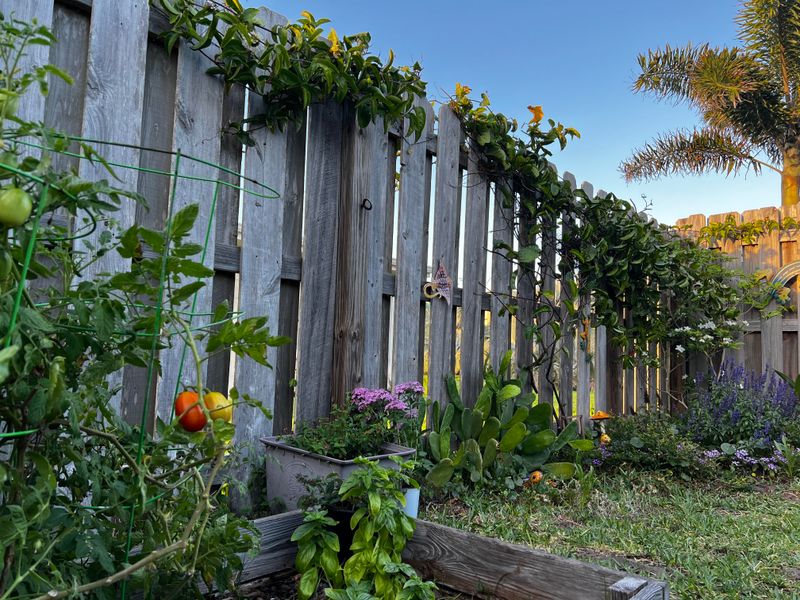
Maypop is a vigorous native plant, and vigorous native plants are not the right fit for every yard. A small fenced lot with limited maintenance time, close neighbors, or a fence that runs directly into established trees or utility equipment may not be a good candidate. The vine’s aggressive underground spread means it can cross property lines and root into areas where removal becomes genuinely difficult. The Florida Native Plant Society documents this spreading behavior as a characteristic of the species, not an occasional exception.
Nematodes are another real concern. UF/IFAS specifically identifies nematode susceptibility as a weakness of maypop, and Florida’s sandy soils are well-known nematode habitat. If a previous planting in the same bed struggled with nematodes, maypop may not thrive there without soil management.
In north and central Florida, cold weather can cause the vine to die back to the ground during winter. UF/IFAS Extension Osceola County notes that maypop typically regrows from its roots in spring, but gardeners expecting year-round fence coverage in those regions will be disappointed during the colder months. South Florida gardeners may see more consistent growth, though regional weather variation still affects flowering and fruiting from year to year.
Coastal and flood-prone properties face a different limitation. Maypop tolerates a range of soils and occasional wet conditions, but it is not suited for inundation by salty or brackish water. Readers gardening near tidal areas or in low-lying spots that flood with salt water during storms should choose a different plant for that fence section.
The fruit question also deserves a direct answer. Correctly identified P. incarnata fruit is edible, but UF/IFAS notes that maypop fruit is generally bland or only slightly sweet, quite unlike the strongly flavored commercial passionfruit that comes primarily from P. edulis. Do not taste fruit from any passionflower vine unless you have confirmed the species with a reliable source, because UF/IFAS warns that some passionflower fruits and plant parts from other species can be toxic.
Build a wildlife-rich fence with realistic expectations
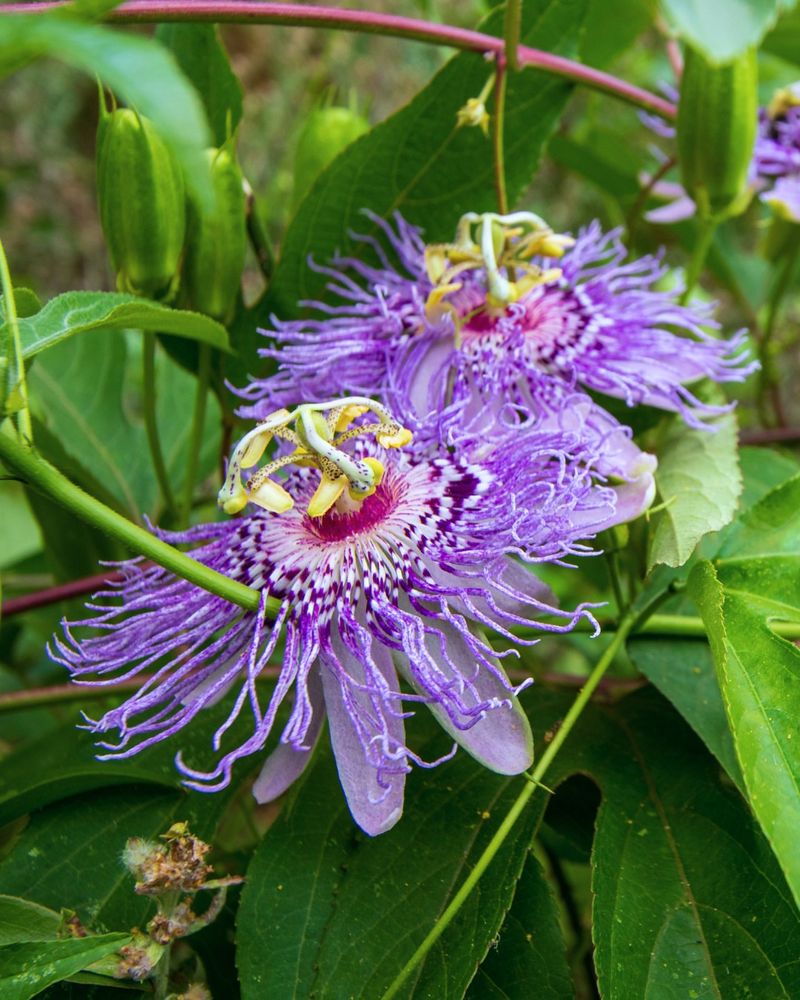
Maypop can genuinely transform an ordinary fence line into something worth stopping to look at, but that outcome depends on a sequence of decisions made before and after planting. Start by confirming the species at a reputable native plant nursery, look for Passiflora incarnata by scientific name, and choose a fence section with full sun and a strong, accessible support structure.
Water the new planting consistently through its first season, mulch lightly to hold moisture, and begin training stems through the fence as soon as they are long enough to weave. Plan for regular pruning and monthly spread checks so the vine stays within its intended space. UF/IFAS recommends maypop for fences, trellises, and arbors precisely because it rewards this kind of attentive setup. Add nectar plants nearby so adult butterflies have food beyond the host vine, and treat caterpillar feeding as success rather than damage.
What you get in return can include striking purple blooms across multiple warm months, consistent pollinator activity, and a reliable nursery for Gulf fritillary and zebra longwing butterflies. The Florida Museum describes maypop as one of the most ecologically valuable native vines for Florida butterfly gardens, and the Florida Native Plant Society supports its use in appropriate landscape settings. The fence that once disappeared into the background can become the part of the yard that draws the most attention, provided the gardener stays engaged with it. That is a worthwhile trade for anyone willing to put in the work.