
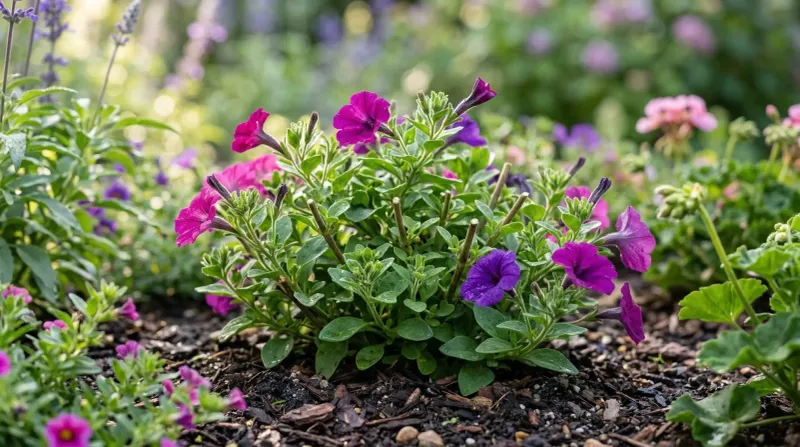
By midsummer, petunias that started the season full and colorful can turn into long, bare-stemmed plants with barely a flower in sight. That transformation is frustrating, but it doesn’t mean the plant is finished. A deliberate cutback can often help a healthy, leggy petunia push out new side shoots and return to blooming, though the results depend on the plant’s type, its growing conditions, and whether something deeper is causing the decline.
Leggy growth signals a symptom, not a diagnosis
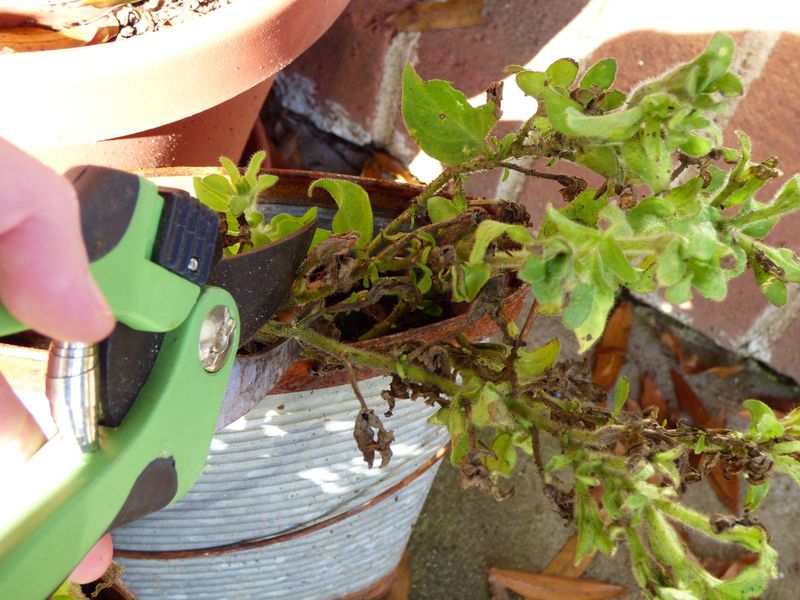
Long, bare stems with flowers only at the tips and wide gaps where foliage used to be full – that’s the classic midsummer petunia slump. The plant looks tired rather than thriving, and the instinct to grab scissors is understandable. Before making any cuts, though, take a few minutes to look the plant over carefully, because the visible pattern can have more than one cause.
A petunia with firm green stems, no unusual spots or lesions, and roots that look pale and healthy is a reasonable candidate for a cutback. One that shows rapid wilting, persistent yellowing across most of its leaves, black or mushy roots, a rotting crown, gray fuzzy mold on stems or leaves, or visible pest damage is telling you something a pair of pruners won’t fix. Penn State Extension’s petunia disease guide lists root rots, crown rots, and foliar diseases that produce symptoms easy to mistake for ordinary stress, and pruning those plants can make matters worse.
Low light, drought, overwatering, poor drainage, root restriction from a too-small container, prolonged heat, inadequate nutrition, insect feeding, and disease can all reduce flowering or cause spindly growth. University of Minnesota Extension and Clemson Cooperative Extension both point to inadequate light and improper watering as frequent culprits. Diagnose the growing conditions first, correct what you can, and then decide whether a cutback is the right next step.
Identify the petunia’s growth habit before pruning
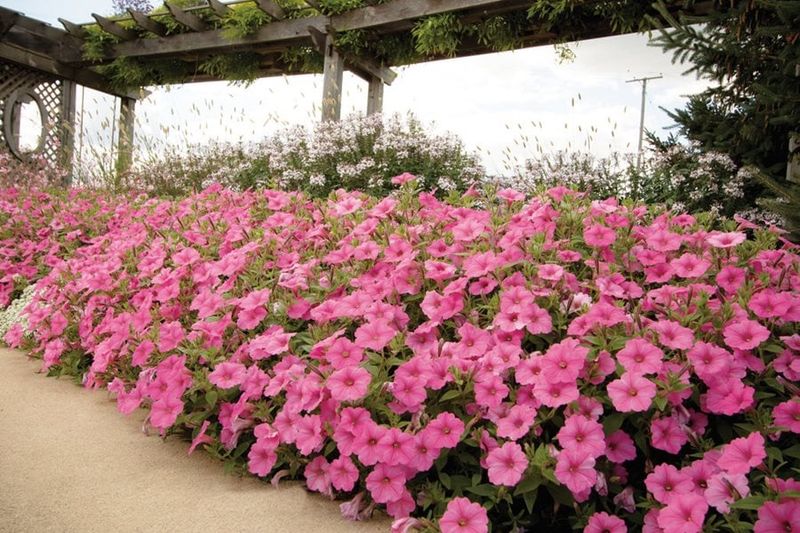
Not every petunia responds to pinching the same way, and that difference starts with the cultivar. Upright grandiflora types produce large single blooms on taller stems and tend to get the leggiest without regular attention. Multiflora petunias carry smaller, more numerous flowers on a somewhat bushier frame and also benefit from pinching. Both groups are the ones where a deliberate cutback most commonly pays off.
Milliflora and spreading cultivars, including the widely grown Wave series, are a different story. University of Minnesota Extension specifically advises against pinching milliflora and spreading types during initial establishment, because those plants are bred to branch and trail naturally. A long stem on a Wave petunia spilling over a container edge is not automatically a problem that needs correcting – it may simply be the plant doing what it was designed to do.
Cultivar identification also pairs directly with a light check. Petunias generally need at least five to six hours of direct sunlight each day, and full sun produces the best flowering. A plant that isn’t getting enough light will stay weak and sparse even after a good pruning, so move containers to a sunnier spot or consider whether an in-ground bed is too shaded before expecting a cutback to do much. Addressing light first makes any subsequent pruning far more likely to produce a worthwhile response.
A cut tip can release side shoots, but results vary
Removing the growing tip of a stem changes what happens below it. The tip of a shoot produces hormones that suppress the buds sitting in the leaf axils further down the stem. When that tip is removed, those axillary buds can become active and grow into new lateral branches, which is the mechanism behind the fuller, bushier appearance that pinching is meant to encourage.
Research backs up the basic principle while also showing that the outcome isn’t uniform. A study published in the Scientific Papers series of the Horticulture journal found cultivar-specific responses to shoot pinching in petunia, with some varieties showing increased branching or flower number after pinching while others showed tradeoffs including differences in flower size or stalk length. A separate line of research has linked root restriction to increased apical dominance in petunia, meaning a plant crowded into a small container may suppress its own side buds more strongly regardless of whether you pinch.
The practical takeaway is that cutting a shoot tip can release side buds and may support a later flush of growth, but the response depends on the cultivar, the health of the plant, the growing conditions, and how much of the stem you remove. Treating the outcome as a real possibility rather than a certainty keeps expectations honest and helps you notice when something else – light, water, roots, or disease – is the actual limiting factor.
Make an even one-third-to-one-half cutback
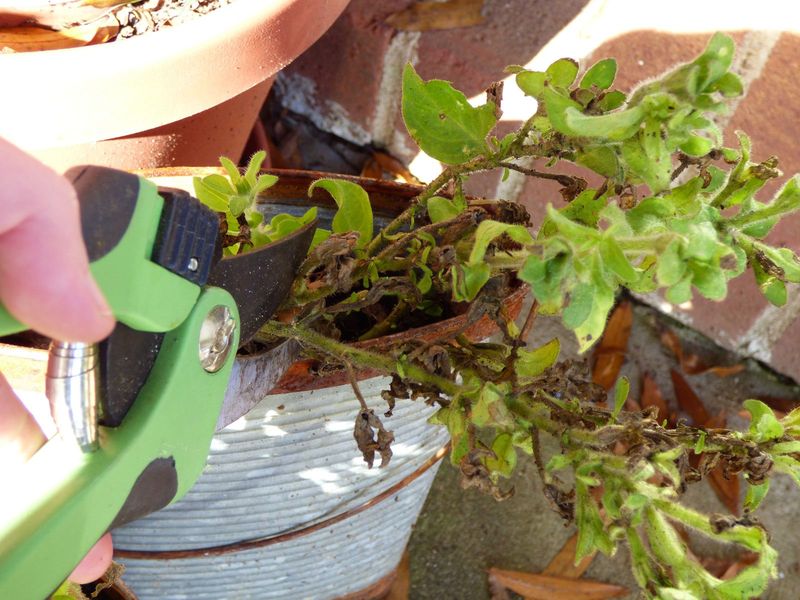
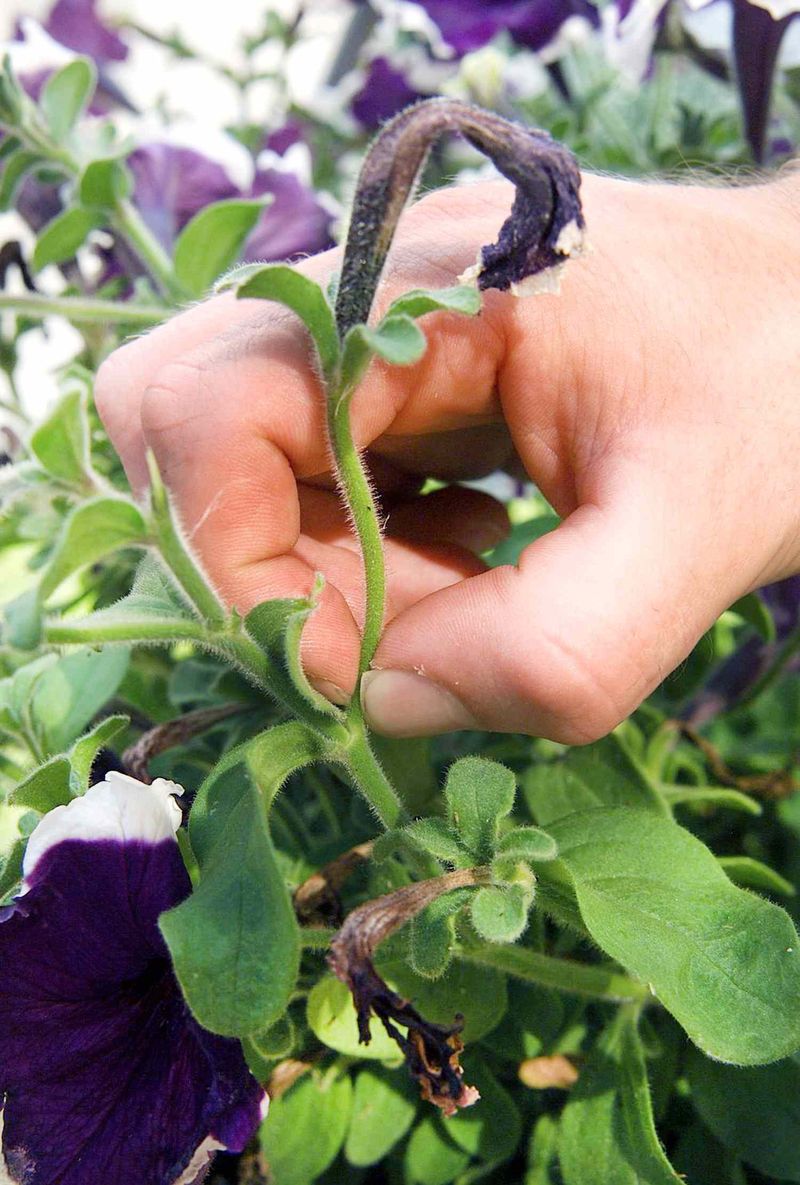
Start by removing any spent flowers and the small swollen structures beneath them where seeds develop. Getting those off first gives you a cleaner view of the stems you’re working with and eliminates energy the plant would otherwise spend on seed production.
Next, identify the longest, most stretched stems and cut them back by roughly one-third to one-half of their length. Make each cut just above a healthy leaf, a node, or a visible side shoot. Clemson Cooperative Extension recommends cutting petunia shoots to about half their length and notes that plants can be cut back closer to the base if necessary, as long as some leaves remain on the plant. Leaving foliage is not optional – a stem stripped of all its leaves has no way to support itself through regrowth.
Spread the cuts throughout the plant rather than taking everything from one side or one section. Penn State Extension advises distributing cuts evenly for uniform regrowth, and that advice makes a visible difference in how the plant fills back in. If you’d rather keep some flowers showing while new growth develops, cut about one-third of the stems now and return to the rest in a week or two. That staged approach is slower but preserves a bit of color during the wait.
For a mature midsummer plant that has grown very long, plan on making several deliberate cuts across multiple stems rather than removing only the very tip of each one.
Support regrowth with light, water, and restrained feeding
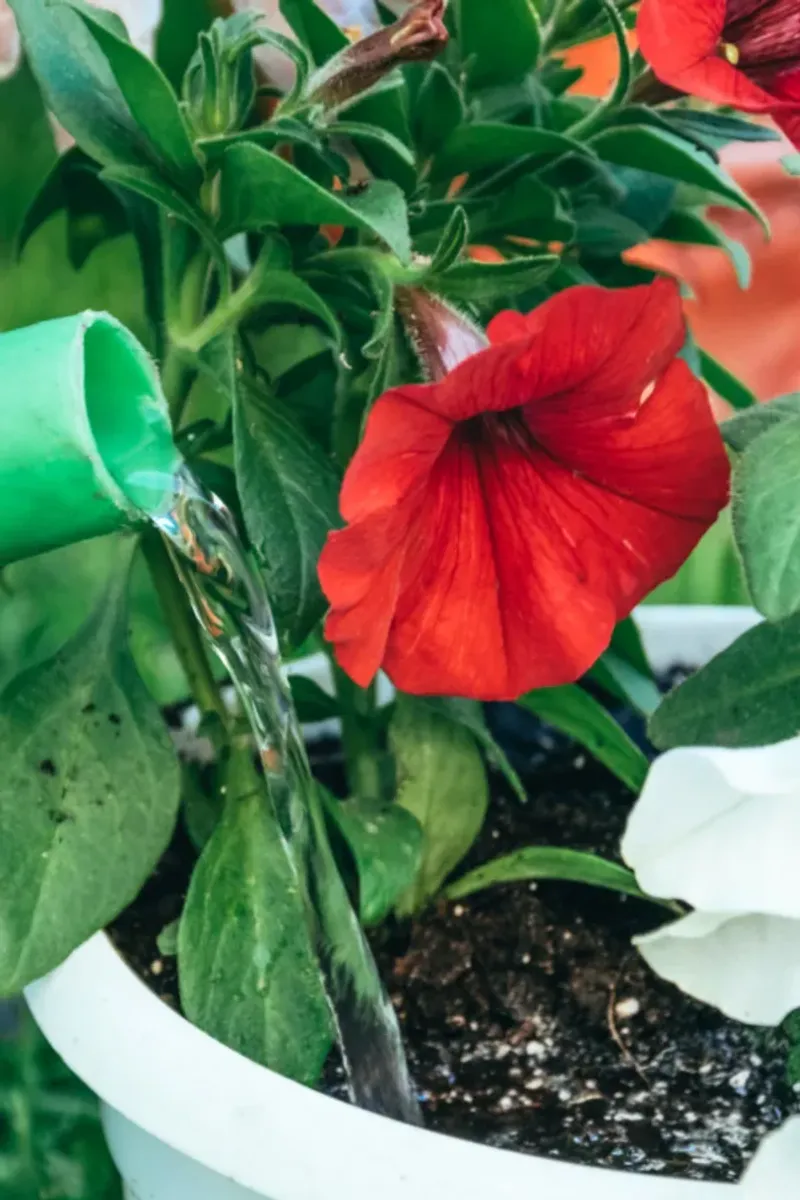
After a cutback, what happens next depends heavily on conditions. Move containers to the sunniest available spot if light has been marginal, and confirm that in-ground plants aren’t being shaded by neighboring plants or structures that have grown up over the summer. A pruned plant sitting in too much shade will produce weak new growth or none at all.
Water the root zone thoroughly if the soil feels dry an inch or two below the surface, then let the soil approach dryness again before watering. Avoid keeping the soil consistently wet – soggy conditions stress roots and can invite rot. University of Minnesota Extension notes that containers may need watering more frequently than in-ground plants, sometimes daily in hot weather, while in-ground beds hold moisture longer. Match your watering frequency to what the soil and weather actually call for, not a fixed schedule.
Resume regular feeding once the plant is no longer drought-stressed. Use a fertilizer labeled for flowering plants and follow the product’s label rate – more fertilizer does not always mean more flowers, and excess can damage roots or push leafy growth at the expense of blooms. North Carolina Cooperative Extension advises that new blooms may take roughly one to two weeks to return after a cutback, depending on how much was removed and how favorable the conditions are. Expect a temporary reduction in flowers during that window and treat the timeline as an estimate, not a promise.
Deadheading removes spent blooms; pruning reshapes stems
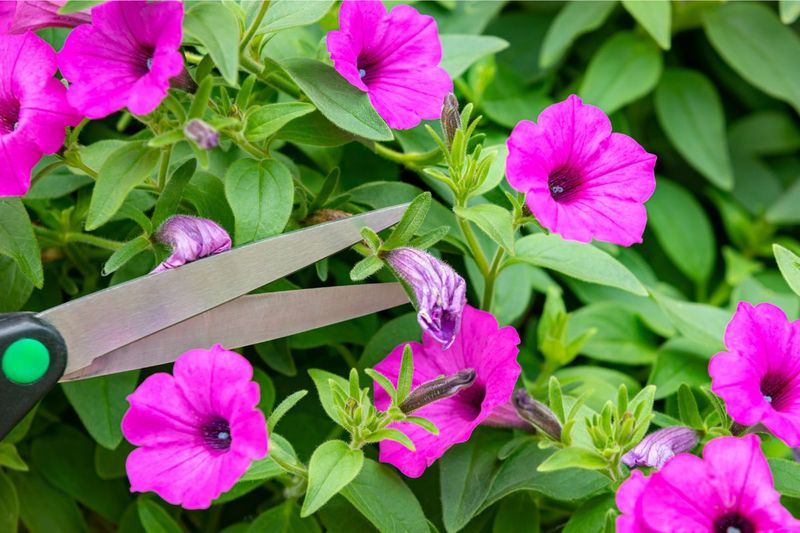
Gardening advice sometimes uses “pinching” and “deadheading” as though they mean the same thing, but the two tasks accomplish different goals and should not be swapped. Deadheading is the removal of a faded flower along with the small seed-producing structure beneath it. Mississippi State University Extension explains that simply pulling off the petals often leaves the seed-forming base still attached, so a clean pinch or snip at the base of the flower structure does the job properly.
Pinching, by contrast, removes the growing tip of a shoot to encourage branching lower on the stem. University of Connecticut’s Home Garden Education Center distinguishes the two clearly: deadheading tidies the plant and may reduce seed-set, while pinching reshapes its structure. The two practices can be done at the same time, but doing only one does not substitute for the other.
Which petunias benefit most from deadheading also varies by cultivar. Large-flowered grandifloras and double-flowered types tend to hold onto their spent blooms and can look noticeably cleaner and fuller after regular deadheading. University of Minnesota Extension notes that many small-flowered, spreading, and vegetatively propagated cultivars are self-cleaning, meaning old flowers drop on their own without help. Deadheading those types is optional rather than essential.
Either way, removing spent flowers will not correct severe legginess on its own – that requires the kind of stem cutback described in the previous section.
Treat collapsing or rotting plants as a separate problem
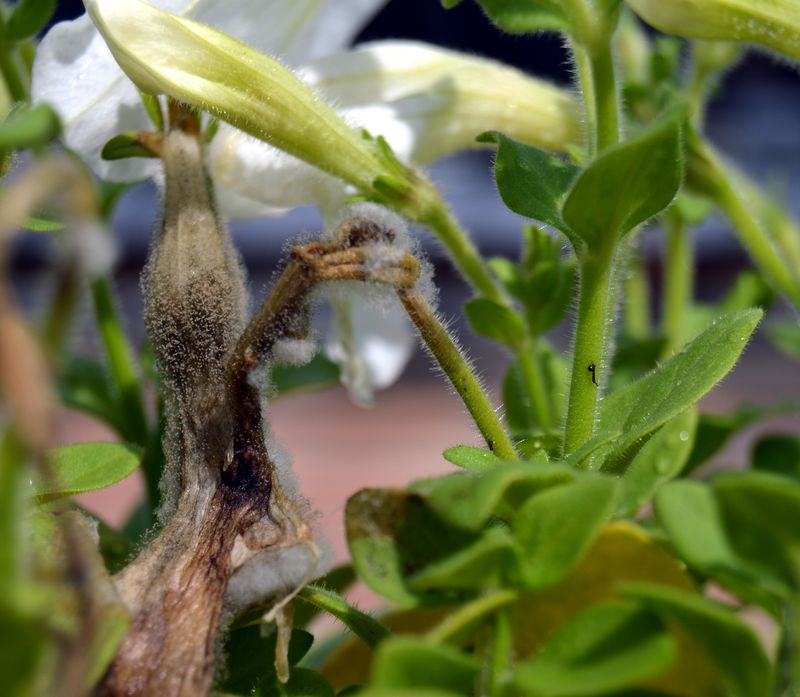
Some midsummer petunias look leggy because they are genuinely struggling with a problem that a pair of shears cannot reach. Rapid wilting that doesn’t improve after watering, stems that collapse at the base, a crown that feels soft or smells off, persistent yellowing that spreads across the plant, gray fuzzy mold on stems or leaves, or dark lesions on the stem are all warning signs that something other than normal midsummer stretch is at work.
Waterlogged soil is a frequent culprit that mimics drought. When roots sit in poorly drained soil for too long, they lose the ability to move water into the plant even when plenty of moisture is present – so the plant wilts anyway. University of Massachusetts Amherst documents black root rot caused by Thielaviopsis in petunia, a disease linked to wet, poorly aerated root zones. Penn State Extension’s petunia disease resource covers Pythium, Phytophthora, Botrytis, and other pathogens that require targeted management rather than pruning.
Prolonged heat can also suppress growth and flowering in a way that looks like a structural problem. A University of California Extension publication notes that petunias may perform poorly during extended periods of high heat, though the threshold varies by region and cultivar. Before pruning a heat-stressed plant, give it shade cloth during the hottest part of the day and consistent moisture, then reassess.
For plants showing disease symptoms, look up the specific pathogen and follow management guidance suited to that problem. Removal or replacement makes sense only for plants that are severely affected or clearly not recovering despite corrective care. A healthy, leggy petunia with sound roots, adequate light, and proper moisture may well push new growth after an even cutback – but the word “healthy” is doing real work in that sentence, and it’s worth confirming before you cut.