
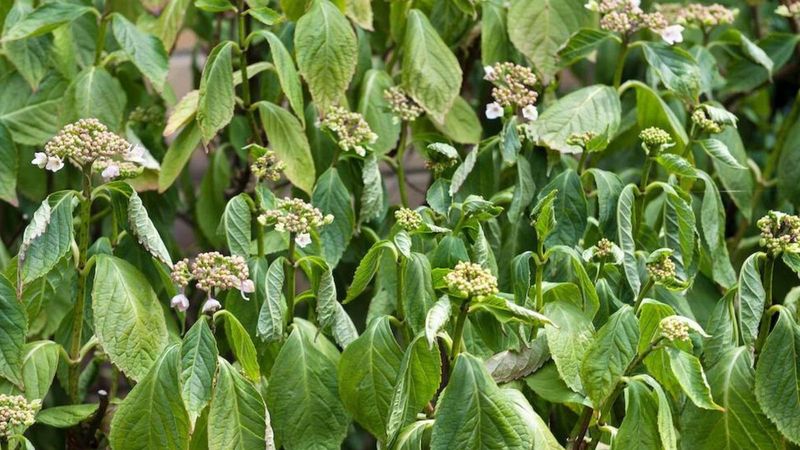
Watching your hydrangeas go limp every hot afternoon is genuinely alarming, especially when you just watered them yesterday. The good news is that drooping leaves during peak heat are often a normal plant response, not a sign that something is terribly wrong. Before you reach for the hose, though, there is one step that matters more than how much water you add: checking whether the soil actually needs it.
Afternoon wilt can signal heat stress, not a watering command
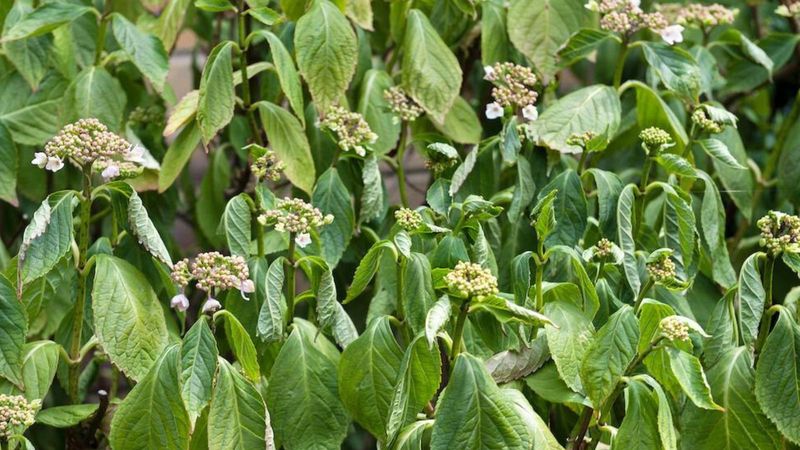
Leaves that droop during the hottest hours of the day and then perk back up by evening or the next morning are showing you a pattern that gardeners see every summer. Heat, wind, and rapid water loss through leaves can temporarily make a hydrangea lose moisture faster than its roots can replace it, even when the soil still has adequate water in it. OSU Extension’s heat-wave plant guide confirms that this kind of temporary wilt is a recognized heat-stress response, not automatic proof that the plant is thirsty.
That does not mean every case of afternoon wilt is harmless or can be ignored. The drooping itself does not tell you whether the cause is heat, dry soil, damaged roots, or something else entirely. Wilt alone is not enough information to justify panic-soaking.
A wilted hydrangea is not automatically a dying one. Many plants recover on their own once temperatures drop, especially when the root zone has enough moisture. The right response is to observe the plant’s recovery pattern and check the soil before deciding whether water is actually what the plant needs.
Check the soil and recovery pattern before watering
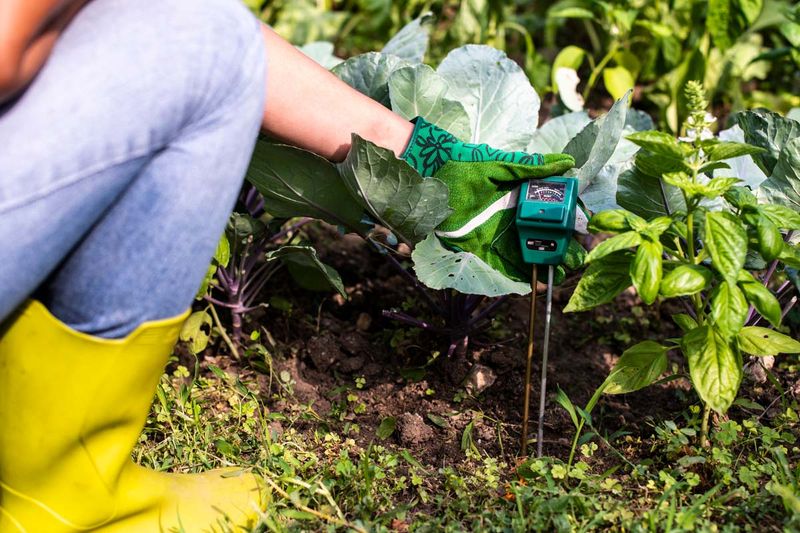
Before you water, push a finger or a thin trowel roughly 6 to 9 inches into the soil near the base of the plant. For established in-ground shrubs, UMN Extension’s guidance on watering established shrubs recommends checking at that depth: if the soil feels cool and moist, additional water is generally unnecessary; if it feels dry, watering is warranted. This single check is far more useful than guessing based on how the leaves look.
Pair that soil check with what the plant does overnight. A hydrangea that droops at 2 p.m. and stands back up by the following morning is showing a pattern consistent with temporary heat stress. Persistent wilt that does not improve by morning, or that gets worse over several days, deserves closer attention rather than just more water.
The 6 to 9 inch test applies most reliably to established in-ground shrubs with a developed root system. Containers and newly transplanted shrubs dry out faster and need more frequent, situation-specific monitoring. A container can feel moist at the surface while being bone dry a few inches down, and a shrub planted this season has not yet spread roots widely enough to rely on the same check. These plants may need attention more often than an established shrub would.
Water dry roots slowly and deeply in the morning routine
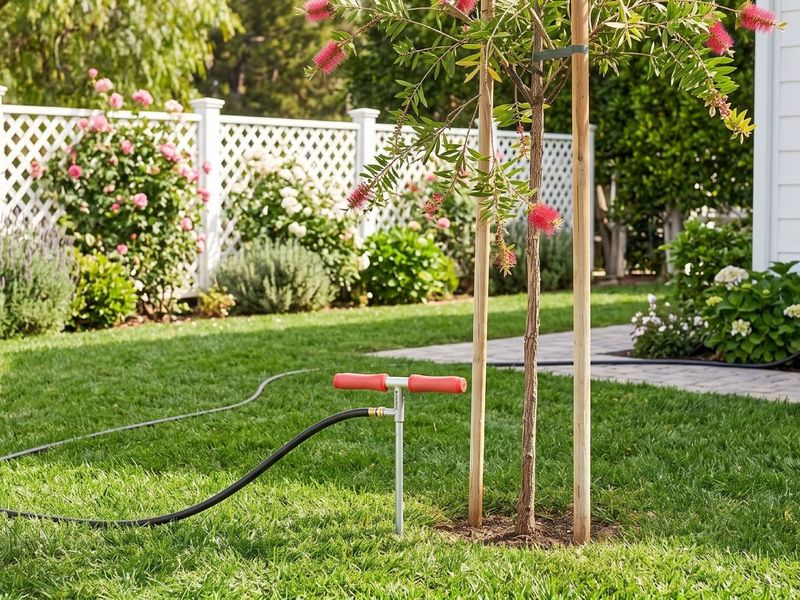
When the root-zone soil genuinely is dry, the most useful routine action is to apply water slowly and deeply right at the base of the plant. A soaker hose, drip line, or a slow trickle from a garden hose works far better than a quick sprinkle over the top. OSU Extension’s hydrangea heat-wave guide specifically notes that fast hand-watering of dry soil often wets only the surface, while slow application allows water to move deeper into the root zone where it actually does the plant some good.
Early morning is the preferred routine window. Cooler temperatures and lower wind early in the day can reduce evaporation and give water more time to soak in before afternoon heat arrives. UMN Extension’s hot-weather gardening advice supports morning watering as a practical way to improve moisture uptake before the hottest part of the day.
Skip fixed schedules and universal gallon amounts. Soil type, drainage, recent rainfall, sun exposure, plant age, hydrangea species, and whether the plant is in the ground or a container all change how often and how much water is needed. Penn State Extension’s planting care guidance reinforces that watering needs vary too much by site and plant to prescribe a single rigid routine. Let the soil check, not a calendar, drive the decision.
Water a genuinely dry, wilted plant as soon as practical
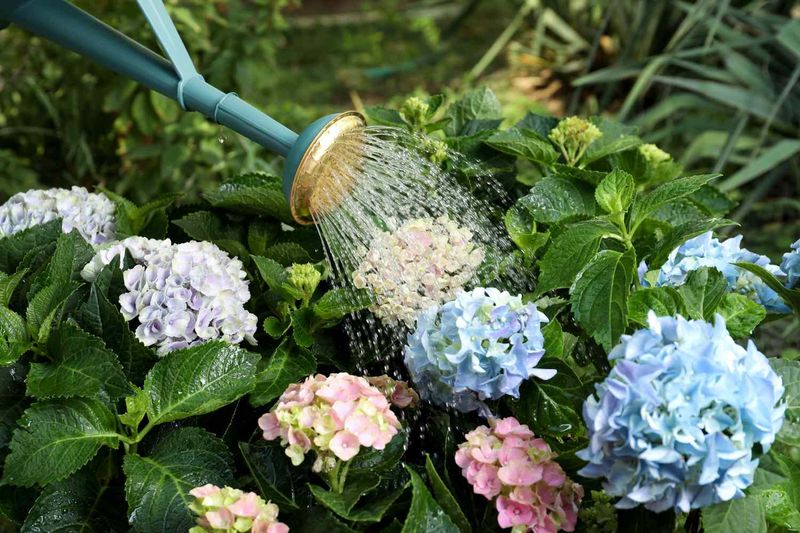
Morning watering is a sensible routine, but it should not become a reason to leave a hydrangea in confirmed drought stress all afternoon. If the plant is already wilted and the root-zone soil is genuinely dry, water it as soon as reasonably possible using the same slow, base-level method. OSU Extension’s heat-stress guide advises watering wilted plants as soon as practical rather than waiting for the ideal time of day when drought stress is already present.
This is a targeted response to a confirmed problem, not a license to soak the plant every time it droops. The soil check still comes first. If the soil at depth is already moist, adding more water does not address heat-related water loss and can create a separate root problem over time.
Repeated emergency soaking of soil that is already wet is the pattern most likely to backfire. The goal is to replenish genuinely depleted root-zone moisture, not to flood the plant out of concern. Water slowly, stop when the soil has received a thorough drink, and then let the plant’s recovery pattern and the next soil check guide what comes after.
Avoid panic-soaking soil that stays wet
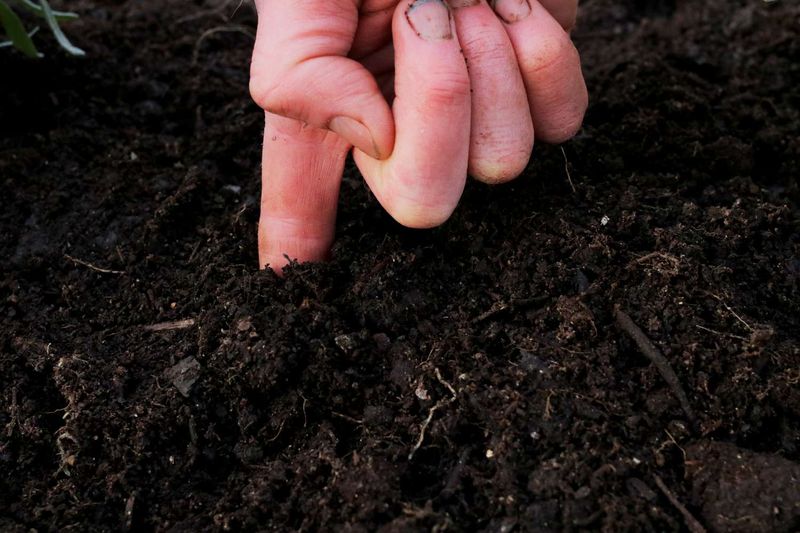
Overwatering does not cause ordinary afternoon wilt in a well-drained garden bed, but it can create a serious problem when soil stays saturated over time. Clay soil, compacted ground, or a low spot that collects water can leave very little oxygen around the roots, which roots need just as much as water. University of Illinois Extension’s guide on plant drowning explains that roots deprived of oxygen lose their ability to function, which can eventually cause the plant to wilt even though the soil feels wet.
A hydrangea can droop while sitting in damp soil if root damage has already progressed far enough. OSU Extension’s general hydrangea care page notes that hydrangeas appreciate consistent moisture but do not tolerate permanently saturated conditions. Adding more water to a plant that is already struggling in wet soil will not help and may accelerate root deterioration.
When you do the soil check and find that the root zone is already moist or wet, stop there. Do not water. If the soil stays wet for days without rain and the plant continues to wilt, the issue is more likely drainage or root health than thirst. Poor drainage is worth investigating as its own problem, separate from the watering question.
Account for hydrangea type, site, and heat exposure
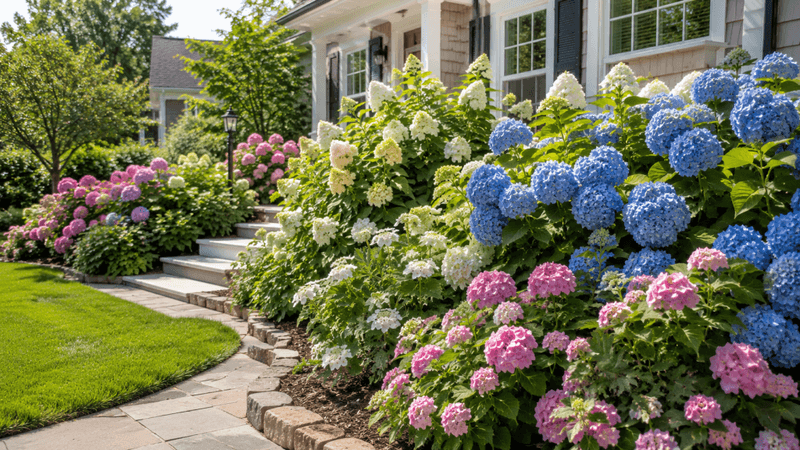
Two hydrangeas growing in the same yard can respond very differently to an identical hot afternoon. Bigleaf hydrangeas (Hydrangea macrophylla) are generally among the least tolerant of heat and drought, and they tend to wilt earlier and more dramatically than other types. OSU Extension’s hydrangea variety overview notes that panicle hydrangeas handle heat and sun considerably better, while oakleaf and smooth types also show more resilience in warm conditions. Cultivar selection and actual site conditions still matter within each type.
Beyond species, the plant’s situation changes the risk level. A newly planted shrub, a container hydrangea, a plant growing near a south-facing wall, or one in a spot with reflected heat from pavement or dark mulch will need closer monitoring than an established shrub in a sheltered border. OSU Extension’s extreme-heat plant protection guidance highlights wind exposure and reflected surfaces as factors that meaningfully increase plant water demand.
A few supportive steps can help without overcomplicating things. Spread a 2 to 3 inch layer of organic mulch around the root zone, keeping it a few inches away from the stems, to help conserve soil moisture and moderate temperature. Water at the soil surface rather than overhead: wet foliage can increase the risk of leaf disease, as Penn State Extension’s hydrangea disease page describes. After heat damage, avoid removing large amounts of foliage; light removal of badly burned leaves or spent blooms is less stressful on the plant than heavy pruning.
Treat persistent or worsening wilt as a separate problem
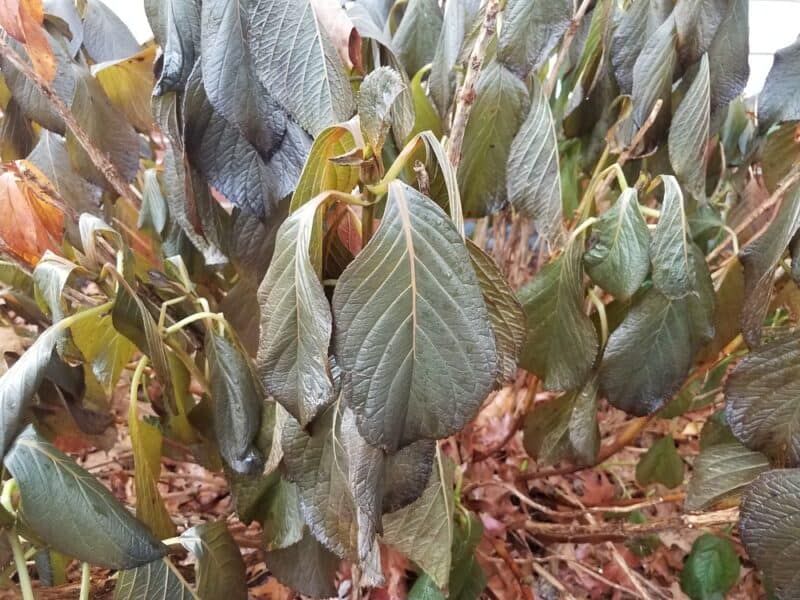
Overnight recovery is a useful supporting clue, but it is not a definitive test that separates heat stress from every other possible cause. A plant that bounces back by morning is probably handling temporary heat-driven water loss. One that is still wilted the next morning, or that keeps getting worse despite reasonable soil moisture, is telling you something different.
Several patterns are worth investigating more carefully. Wilt that affects only one branch while the rest of the plant looks fine can point to a localized vascular or root problem. Wilt that continues despite soil moisture being adequate is a flag for root damage or drainage issues. Penn State Extension’s plant health diagnostic guide recommends looking for additional symptoms alongside wilt: yellowing leaves, stem discoloration, leaf spots, dieback, or consistently wet soil can each point toward disease, root rot, or a drainage problem that watering cannot fix.
Brown or crispy leaf edges are easy to misread. University of Illinois Extension’s heat-stress explainer notes that scorch can result from heat itself, wind, reflected heat, drought, or root damage, not just insufficient watering. Adding water will not reverse leaf scorch caused by any of those other factors. If wilt persists, check for signs of fungal or vascular disease before deciding on a course of action.
The practical sequence comes down to four steps: check the soil before reaching for the hose, water dry roots slowly and deeply at the base, stop adding water when the root zone is already moist, and treat persistent or worsening wilt as a separate diagnostic question. A hydrangea that wilts every afternoon but recovers every morning is probably coping with summer heat; one that stops recovering is asking you to look more closely.