
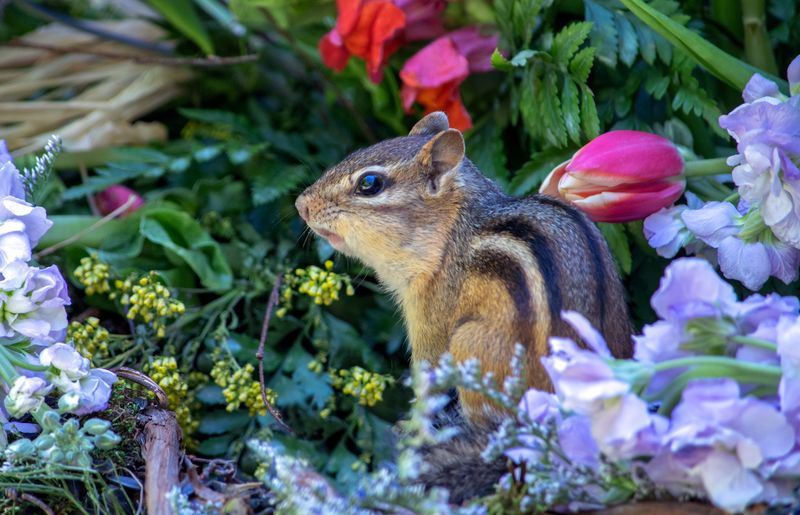
Those striped little acrobats look adorable until you find your tulip bulbs scattered across the yard or a row of seedlings yanked clean out of the soil. Chipmunks are resourceful and surprisingly bold when a garden offers easy food and good cover. The good news is that you can protect specific beds without harming the animals, and without waging a full-scale war on your whole yard. A few targeted moves can make your most vulnerable plantings a lot less inviting.
Confirm the culprit before you protect the bed
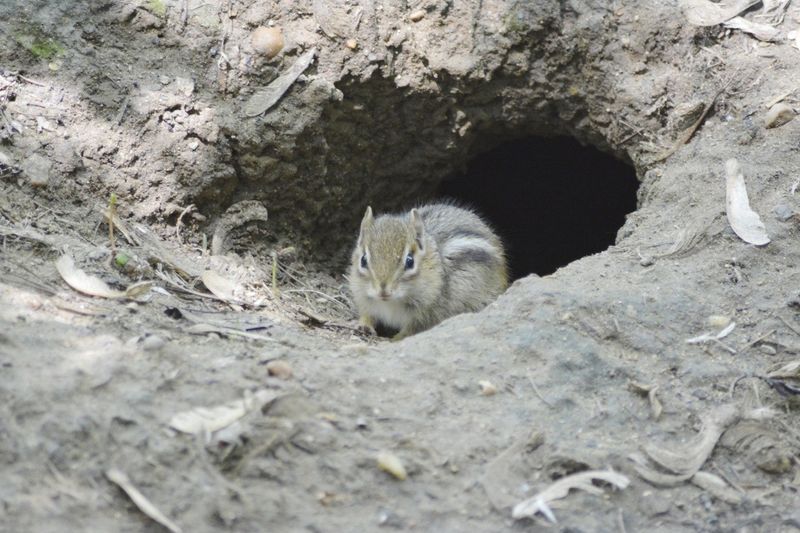
Before spending money on hardware cloth or repellents, make sure a chipmunk is actually the problem. Eastern chipmunks are small, striped, ground-oriented rodents, usually five to six inches long, with reddish-brown fur and two pale stripes running down each side. They spend most of their time at or below ground level, darting between cover and food sources rather than climbing fences or trees the way squirrels do.
Burrow entrances are one of the clearest signs. Look for small, clean holes roughly two inches across near building foundations, woodpiles, stumps, brush piles, or garden edges. Unlike moles or voles, chipmunks carry excavated soil away in their cheek pouches, so the entrance may look surprisingly tidy with no dirt pile around it. Penn State Extension’s chipmunk guidance notes this detail as a useful identification clue.
Also look for a pattern of missing or disturbed bulbs, seeds, or seedlings, especially near known cover. A single missing plant is not a diagnosis. Squirrels, voles, rabbits, birds, and even deer can create damage that looks similar, and University of Georgia Extension’s wildlife conflict guide advises confirming the species before acting. A direct sighting near the damaged area is the most reliable confirmation you can get.
Protect the planting instead of chasing the chipmunk
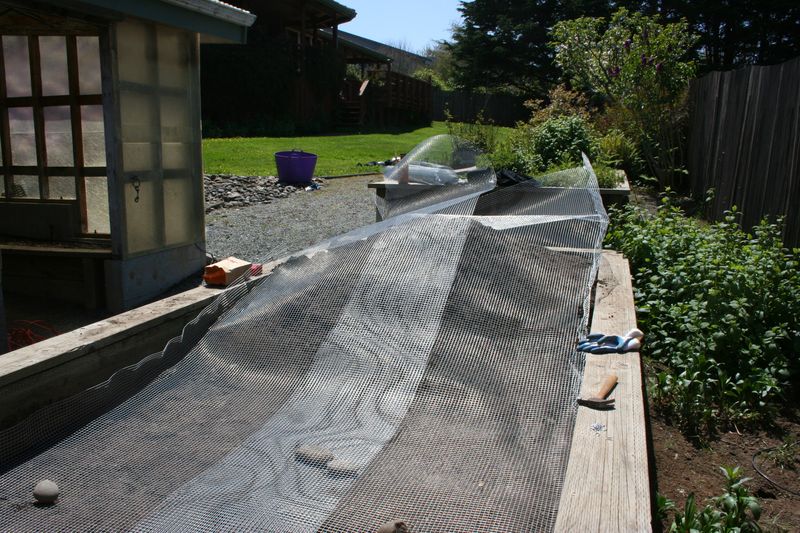
Trying to chase individual chipmunks away from a garden bed is a losing game. They have home ranges that overlap with your yard, they are fast and numerous, and a new animal can move into a vacated territory within days. A more dependable approach is making the bed itself hard to access, so the chipmunk goes looking for an easier meal somewhere else.
University of New Hampshire Extension and UGA Extension both point to exclusion as a practical, humane first step for protecting bulbs, seeds, seedlings, vegetables, berries, and fruit. Penn State Extension adds that exclusion can be less expensive than repeated trapping over time. The goal is to reduce access to a specific planting, not to guarantee that chipmunks disappear from your property entirely.
An effective setup has to address two things at once: digging and climbing. Chipmunks are capable climbers, so a barrier that only blocks the sides can still fail. Any enclosure needs to cover the top as well as the bottom and sides, and every joint, corner, and edge has to be secured. A partial barrier gives a determined animal a starting point, not a stopping point.
Build a continuous barrier around vulnerable beds
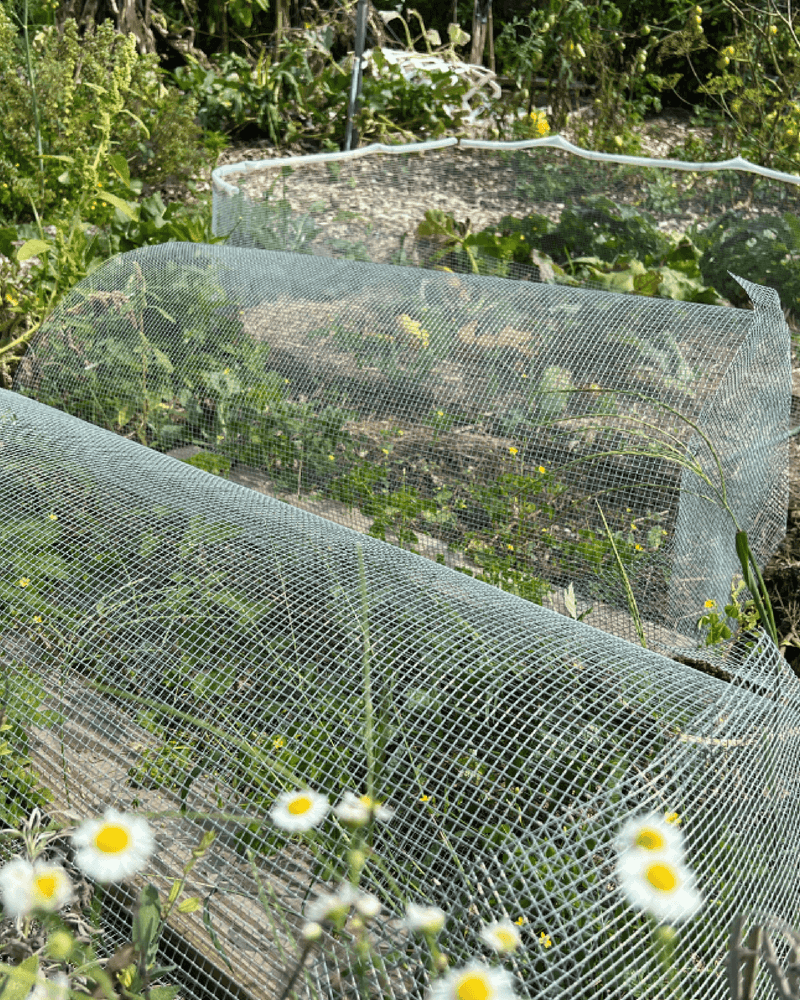
For a full garden bed, the most reliable physical barrier is sturdy, fine-mesh hardware cloth, not the wide-gap chicken wire sold at most hardware stores. Chicken wire has openings large enough for a young chipmunk to squeeze through. Penn State Extension recommends quarter-inch hardware cloth for protecting flower beds, bulbs, and seeds, specifying that the mesh should extend at least one foot beyond each edge of the planting area.
UGA Extension’s wildlife conflict guidance describes burial depths ranging from roughly six to twelve inches depending on the barrier design, with the lower edge bent outward at the base to discourage digging under the edge. Illinois Extension guidance puts the acceptable mesh range at quarter- to half-inch, with a similar six-inch burial recommendation. For most small, vulnerable plantings, the finer end of that range is the safer practical choice.
The part most gardeners miss is continuity. Gaps at corners, where panels join, at gate openings, along the soil line, and at the top of the enclosure are all entry points. A chipmunk that finds a loose edge or an open corner will use it. The barrier should form a complete enclosure with no breaks, and the top should be closed or covered because chipmunks can scale vertical mesh.
Inspect the setup after installation and again after heavy rain or freeze-thaw cycles shift the soil.
Use a closed mesh cage for individual plants
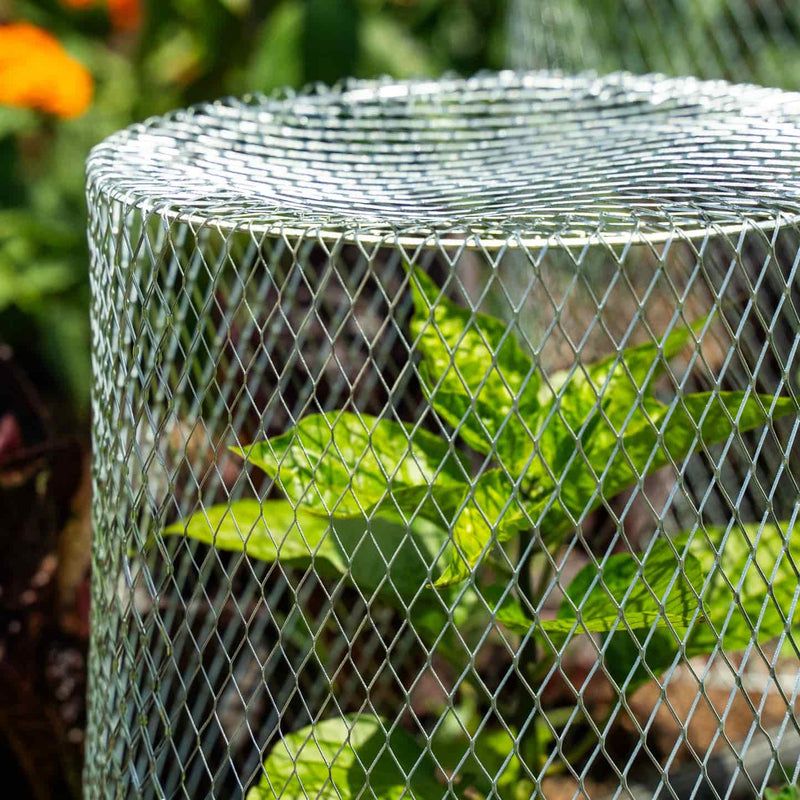
Sometimes you only need to protect one thing: a prized tulip cluster, a newly transplanted seedling, or a single container of strawberries that keeps getting raided. Building a cage around an individual plant is faster and cheaper than enclosing an entire bed, and it can be the right move when damage is concentrated in one spot.
Illinois Extension specifically recommends forming a hardware-cloth cylinder around a plant, burying the lower edge about six inches, and closing the top. Closing the top is not optional. Chipmunks are capable climbers, and an open-top cylinder is essentially a funnel that guides them directly to the plant inside. Use the same quarter- to half-inch mesh as you would for a larger enclosure, and make sure the cylinder is wide enough that the plant has room to grow without pressing against the mesh.
A cage like this works especially well for bulb clusters planted in fall, since it can be set in place at planting time and left through the winter. For seedlings, plan to remove or expand the cage as the plant grows so the stems are not constricted. The cage does not need to be elaborate or permanent; a simple cylinder secured with a few twist ties or garden stakes can protect a plant through its most vulnerable early weeks without harming anything that tries to reach it.
Remove food and shelter near the planting
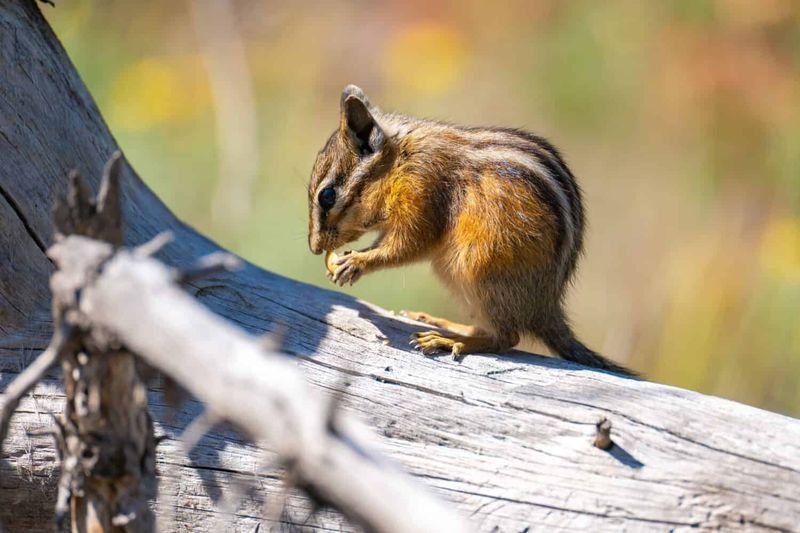
Physical barriers work better when the area around the bed is less attractive in the first place. Chipmunks are drawn to gardens by two things: food and cover. Reducing both near a vulnerable bed can lower overall activity without requiring any trapping or chasing.
Spilled birdseed is one of the biggest attractants. Penn State Extension recommends moving bird feeders fifteen to thirty feet away from buildings to reduce chipmunk activity near foundations. UNH Extension advises eliminating spilled seed entirely and, if chipmunk activity is high, temporarily removing feeders until the problem is under control. UNH’s bird feeding fact sheet also recommends catching fallen seed before it accumulates on the ground.
Store bagged seed, pet food, and other dry goods in sealed, rodent-resistant containers rather than in sheds or garages where a chipmunk can chew through the bag.
Cover is the other half of the equation. Brush piles, woodpiles, stacked debris, and dense low vegetation right beside a bed or foundation give chipmunks a safe staging area just steps from your plants. Penn State Extension advises clearing continuous cover that connects wooded areas to foundations and keeping grass and groundcover trimmed short near garden edges. Removing a brush pile or pulling a woodpile a few feet away from the bed can make that stretch of open ground feel riskier to cross, which may reduce how often chipmunks visit.
These changes can reduce activity around the bed, but they are unlikely to clear the entire property.
Treat repellents as limited backup protection
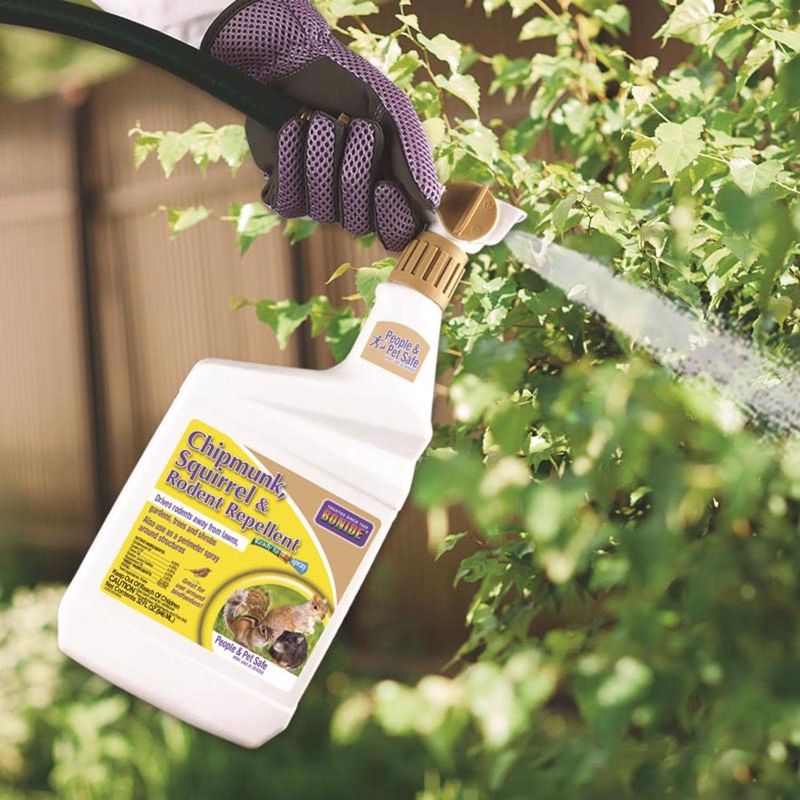
Commercial taste repellents can add a layer of protection for bulbs, seeds, or foliage, but they work best as a supplement to physical barriers, not as a replacement for them. Penn State Extension notes that repellents require repeated applications and can be expensive, and that they generally do not provide complete damage reduction on their own. Extension experts and University of Florida IFAS guidance similarly describe them as temporary measures that may need to be reapplied after rain or heavy dew.
For edible crops, the product label is not just a suggestion. Any repellent applied to food-producing plants must be specifically labeled for that crop and that use site. EPA guidance on reading pesticide labels is clear that the label is the law, and EPA’s pesticide labeling Q&A explains that registered products must have applicable residue tolerances or exemptions for food-use sites. Qualifying minimum-risk pesticide products operate under a separate federal exemption framework described by EPA’s minimum-risk pesticide list, but they still require compliance with applicable labeling and any relevant state rules.
When in doubt, contact your state department of agriculture or a local Extension office.
Skip the folk remedies. Homemade hot-pepper or chili powder applications on edible crops create residue and application problems and are not backed by the Extension and agency sources reviewed here. Essential oils, coffee grounds, predator urine, aromatic border plants, and ultrasonic devices are similarly unsupported as dependable solutions. Use only labeled commercial products, follow the directions, and plan to reapply on schedule.
Avoid relocation, poison, and unsafe shortcuts
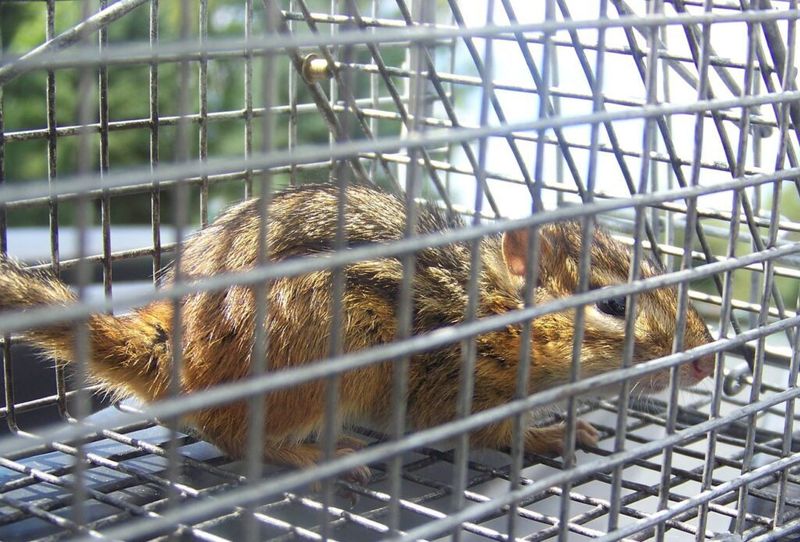
Live trapping may seem like the kindest option, but the reality is more complicated. Extension recommendations are not consistent on this point. UNH Extension warns directly that releasing a live-trapped chipmunk into unfamiliar territory exposes it to predators, starvation, and other hazards it has no experience navigating. Penn State Extension describes live traps as one available option but also discusses release and euthanasia as outcomes, which signals that relocation is not a simple, guaranteed fix.
Federal wildlife management guidance goes further. USDA’s wildlife translocation technical report states that moving nuisance wildlife is rarely legal, often discouraged, and associated with disease transmission, stress, homing behavior, liability, and poor survival outcomes. USDA’s published translocation guidance reinforces that state and local rules vary widely. Before any capture, transport, or release of a chipmunk, check with your state wildlife agency, because what is legal in one state may carry a fine in another.
If you do handle any trap outdoors, avoid direct contact with captured animals or droppings. CDC guidance on rodent control and CDC hantavirus prevention information advise against direct contact with rodents and recommend keeping traps away from children and pets. That guidance is aimed at indoor mice and rats specifically and should not be read as a claim that every outdoor chipmunk trap is medically dangerous, but the basic hygiene precautions transfer.
Poison and mothballs are not appropriate solutions. EPA pesticide labeling rules make clear that mothball products are registered for tightly controlled uses like sealed storage containers, not as outdoor animal repellents. Penn State Extension notes that no toxic baits are registered for controlling chipmunks in garden settings, and any rodenticide used outdoors risks harming pets, hawks, owls, and other non-target animals.
Measure success by a safer, protected bed
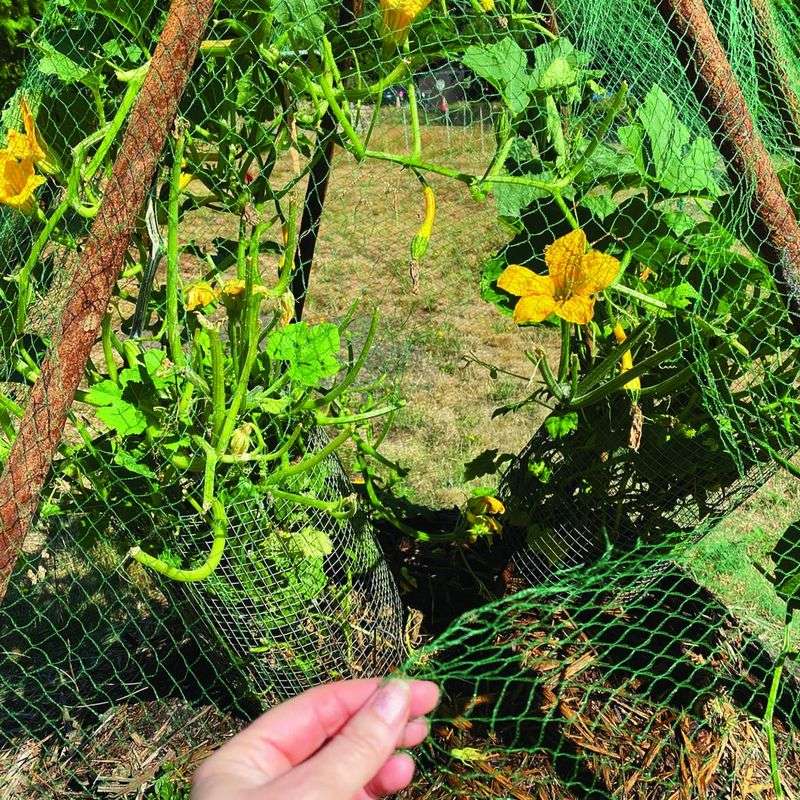
Protecting a specific bed from chipmunk access is a realistic, achievable goal. Clearing every chipmunk from your property is not, and it is not necessary. Work through a short action sequence: confirm that chipmunks are the actual culprit, install continuous fine-mesh hardware cloth that closes off digging and climbing, remove nearby food sources and cover, and add a properly labeled repellent only if the label covers your crop and site.
Inspect the barrier after it is in place, and check again as plants grow, after heavy rain, and at the start of each season. Penn State Extension and UNH Extension both frame exclusion as an ongoing practice, not a one-time installation. Gaps that open up over time are the most common reason a previously effective barrier stops working.
Chipmunks eat insects, mushrooms, and seeds alongside the garden crops they raid, and wildlife checklists note their role in seed dispersal, which can support plant growth beyond the garden. Targeted exclusion protects what matters to you without treating every chipmunk in the neighborhood as an enemy. A well-secured bed is the win, and a chipmunk foraging twenty feet away in the shrubs is not a loss.