
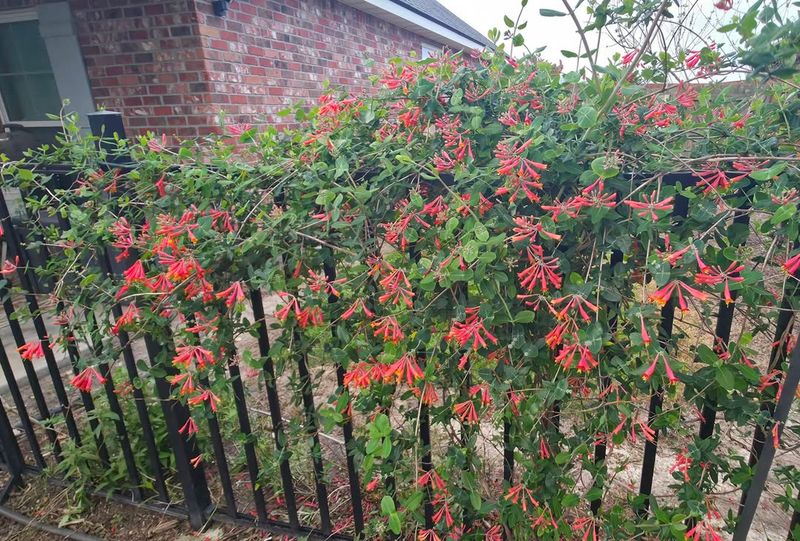
A bare wooden or chain-link fence sitting in the Florida sun is a missed opportunity, and coral honeysuckle (Lonicera sempervirens) can help change that. This Florida-native vine climbs through fence rails and produces clusters of red-to-coral tubular flowers that hummingbirds regularly visit during spring and summer. Planting the right native vine on the right fence can bring color, wildlife activity, and a sense of place to an otherwise empty stretch of yard, as long as you go in with realistic expectations about what the plant can and cannot do.
Coral honeysuckle fits a Florida fence and wildlife garden
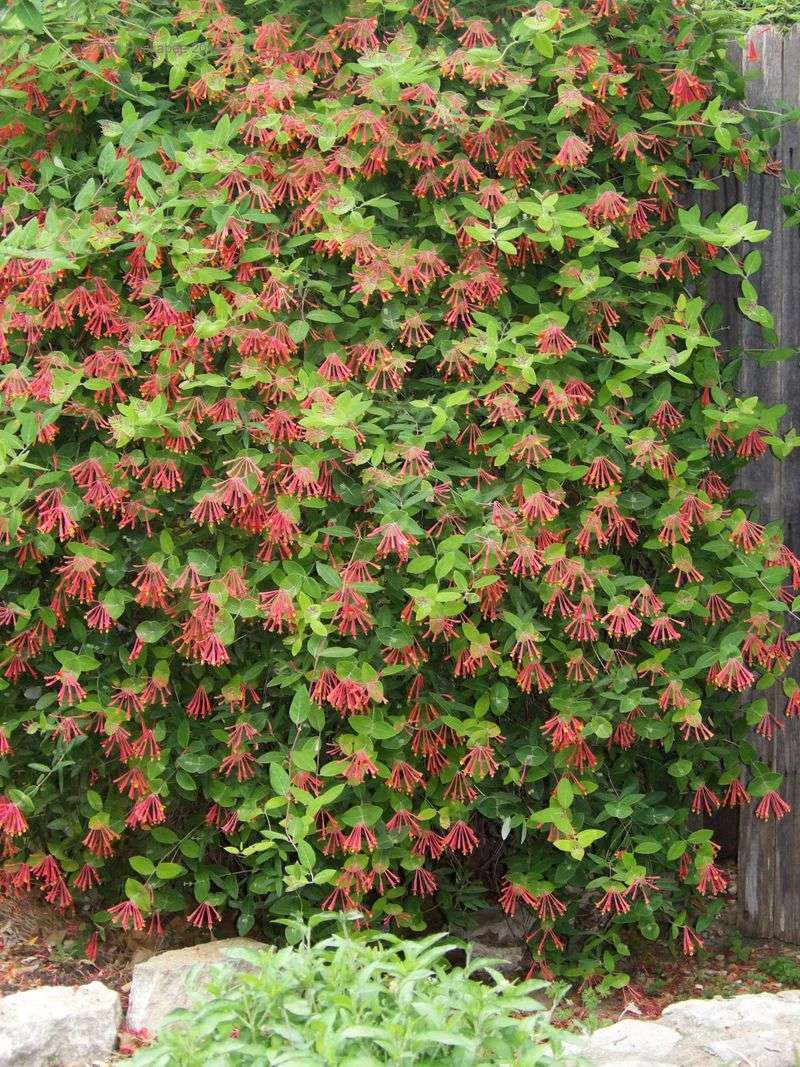
Florida gardeners looking for a flowering native vine to cover a bare fence have a well-supported option in Lonicera sempervirens, commonly called coral honeysuckle or trumpet honeysuckle. UF/IFAS Plant Directory guidance on coral honeysuckle describes it as a native Florida plant recommended as a Florida-Friendly alternative to invasive Japanese honeysuckle, with woody twining stems that can weave through fences, trellises, arbors, lampposts, and even mailbox posts. Its seasonal flowers and native credentials make it one of the more practical choices for gardeners who want both coverage and wildlife value from a single planting.
That said, calling it the best or only native vine for Florida fences would be an overstatement. Coral honeysuckle performs well when the site conditions match what the plant needs, including adequate sunlight, manageable soil moisture, and a sturdy support to climb. When those conditions line up, UF/IFAS documentation on Lonicera sempervirens describes it as vigorous and capable of covering a fence with red-to-crimson tubular blooms from spring through summer.
Its native status carries real advantages for Florida gardeners. Native plants are adapted to regional rainfall patterns, sandy soils, and the local insect and bird communities that evolved alongside them. But native does not mean carefree from the first week after planting. UF/IFAS Gardening Solutions on coral honeysuckle notes that the vine requires appropriate care during establishment, including supplemental water, training onto a support, and occasional pruning to stay tidy.
Think of coral honeysuckle as a strong candidate for the right Florida fence, not a guaranteed solution for every yard.
Why its trumpet-shaped flowers attract hummingbirds
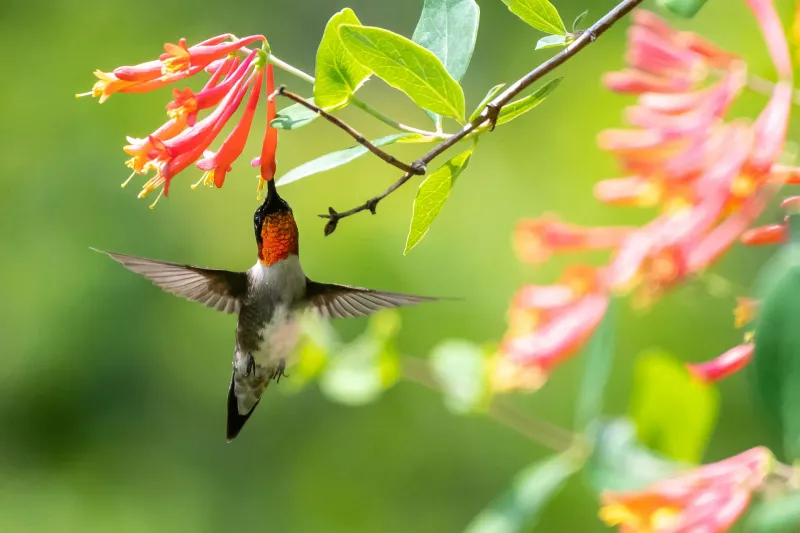
Red, tubular, and rich with nectar, coral honeysuckle flowers are shaped almost perfectly for hummingbird feeding. The long narrow tube matches the bill of the ruby-throated hummingbird, which is the most common hummingbird in Florida during the warmer months, and UF/IFAS hummingbird guidance for Florida lists coral honeysuckle among the native vines that provide nectar for these birds. Flowering generally runs from spring through summer across Florida, though timing, duration, and bloom density vary with cultivar, climate zone, available sunlight, and how well established the plant is.
Calling the vine a “hummingbird magnet” captures its appeal as a gardening shorthand, but visits are never guaranteed. Local hummingbird populations must be present, the vine must be producing flowers at a time when birds are actively foraging, and the yard as a whole needs to offer enough nectar to draw birds in and keep them returning. A residential garden study on hummingbird visitation and plant diversity found that hummingbird sightings were associated with both the number of nectar-producing plant species and the proportion of native plants in the landscape. A single vine on one fence is a useful contribution, but a yard stocked with multiple native nectar sources gives hummingbirds more reasons to stay.
Sunlight also plays a role. A coral honeysuckle growing in strong, direct light produces more flowers than one tucked into shade, and more flowers means a better chance of catching a passing hummingbird’s attention. UF/IFAS fact sheet data on the species confirms that full sun supports the best bloom production. Plant the vine where it gets the most light your fence line can offer, pair it with other Florida-native nectar plants nearby, and you create the kind of layered garden that hummingbirds actually explore rather than simply fly past.
The vine covers a fence by twining through a support
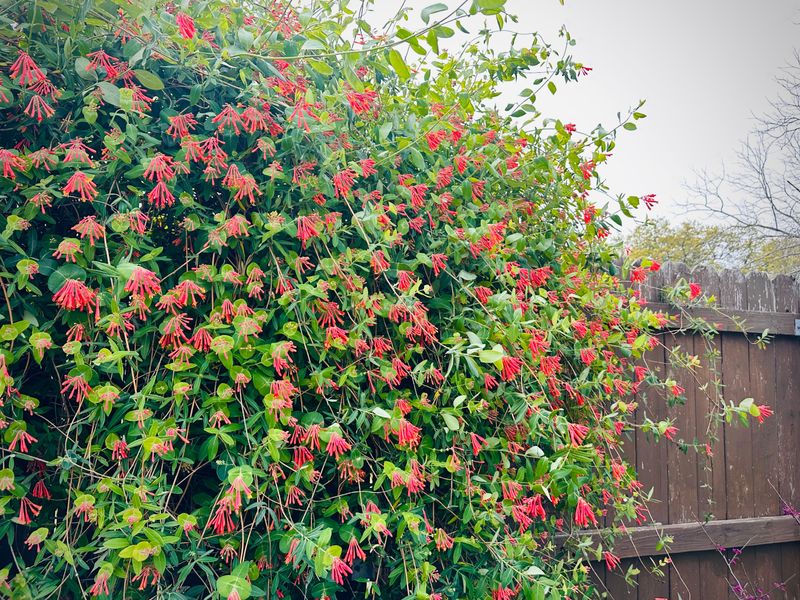
Coral honeysuckle is a woody twining vine, which means it wraps its stems around and through a support rather than gripping a flat surface the way ivy does with its adhesive roots. Young stems need to be guided onto fence rails, wire, lattice, or trellis openings so they can find purchase and begin climbing on their own. Once the stems locate a rail or wire to wrap around, the plant takes over, weaving upward and outward as new growth appears throughout the season.
UF/IFAS documentation on coral honeysuckle recommends it for fences, trellises, arbors, lampposts, and mailboxes, and individual stems can reach approximately 15 feet in length. UF/IFAS Gardening Solutions describes the plant as capable of covering a fence quickly after it is established, though UF/IFAS landscape plant guidance also characterizes it as slow to establish and fast-growing afterward. A newly planted vine may spend its first season putting energy into root development rather than sending long stems across the fence, so patience is part of the plan.
Fence strength and anchoring deserve attention before you plant. A mature vine covered in foliage adds weight to whatever it climbs, and a leafy fence presents more surface area to wind than a bare one. UF/IFAS Extension Escambia County guidance on coral honeysuckle supports using the plant on sturdy structures. Choosing a well-anchored fence or reinforcing an older one before the vine fills in is a practical precaution, not an engineering requirement, and it protects both your investment in the plant and the fence itself over time.
Full sun and prepared soil improve flowering
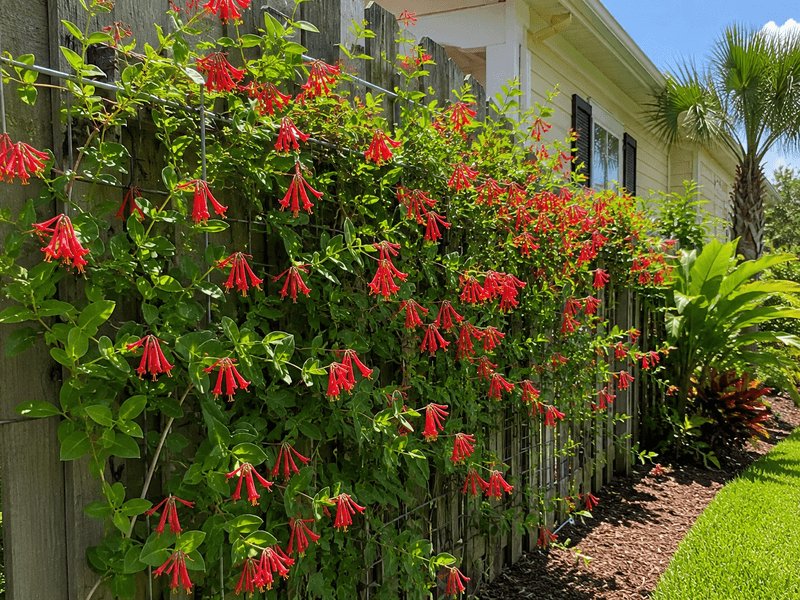
Where you plant coral honeysuckle on your fence line matters almost as much as the vine itself. Full sun, meaning at least six hours of direct sunlight per day, consistently produces the strongest flowering. UF/IFAS documentation on Lonicera sempervirens states that the plant tolerates partial shade but warns that flowering is poor in shaded conditions. A fence that runs along the south or east side of a yard, or any run that receives unobstructed morning and afternoon sun, gives the vine the light it needs to fill in with blooms rather than just foliage.
Florida’s sandy soil is a real challenge for this plant. Coral honeysuckle tolerates a range of soil types, but UF/IFAS Gardening Solutions guidance specifically notes that it does not perform well in dry sand. If your fence sits along a stretch of the typical fast-draining sandy soil that covers much of Florida, you will likely need to improve the planting hole and the surrounding area before putting the vine in the ground. Working in compost or other organic matter helps the soil hold moisture longer and gives young roots a more hospitable environment to spread into.
Amending the soil is not a one-time fix that lets you walk away. Sandy soil loses organic matter relatively quickly in Florida’s heat, and a newly planted vine still needs supplemental irrigation even after you have prepared the site. Think of soil preparation as reducing the vine’s stress load rather than eliminating the need for follow-up care. Choosing a sunny fence line, improving the soil before planting, and committing to watering during establishment are the three site decisions that most directly shape whether coral honeysuckle delivers the flowering fence you are picturing.
Use an establishment plan instead of a drought-proof promise
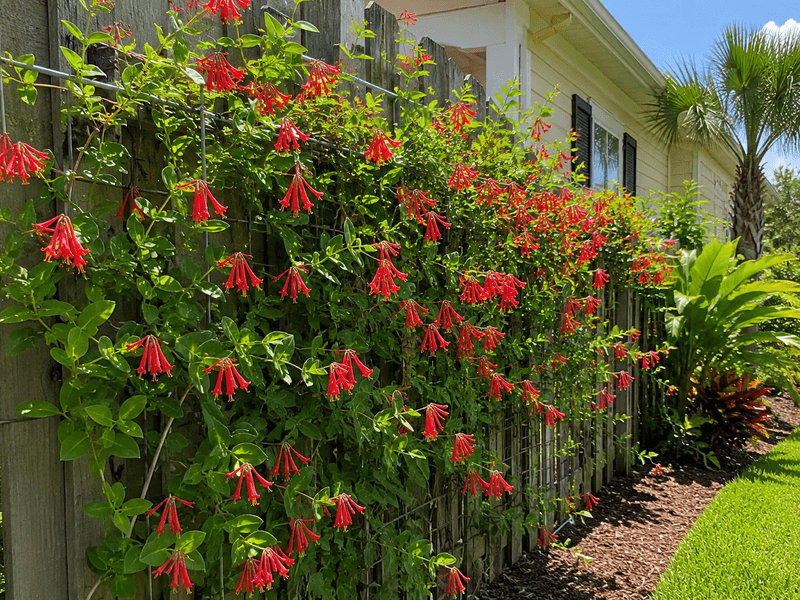
Established coral honeysuckle has a reputation for handling dry stretches reasonably well, and that reputation is earned, but it applies to a plant that has had time to develop a deep, spreading root system. A vine that went into the ground last month does not yet have that advantage. UF/IFAS guidance on coral honeysuckle describes established plants as drought tolerant while also noting that the vine does not thrive in dry sand without support during establishment. Treating the plant as drought-proof from planting day is one of the most common ways a promising vine ends up struggling through its first Florida summer.
A practical establishment plan means watering the root zone regularly after planting, checking soil moisture before assuming the plant is fine, and paying extra attention during hot, dry stretches. UF/IFAS Florida-Friendly Landscaping guidelines recommend supplemental irrigation for landscape plants until they are established, with additional water during severe drought. Exactly how often to water depends on your soil type, the time of year, recent rainfall, and how large the plant is, so monitoring the soil rather than following a fixed schedule gives you the most useful information.
Placement also determines whether the vine ever gets to show its drought tolerance at all. Florida Native Plant Society data on Lonicera sempervirens notes that the plant has low to no tolerance for salty wind and direct salt spray, and is not suited to saltwater inundation or prolonged flooding. A fence near the coast, in a low-lying yard that floods regularly, or in a spot with poor drainage is not an ideal site for coral honeysuckle, regardless of how much you water it. Matching the vine to a site where it can actually establish roots is the first step toward eventually having a plant that handles dry weeks with minimal intervention.
Training and post-bloom pruning keep growth in bounds
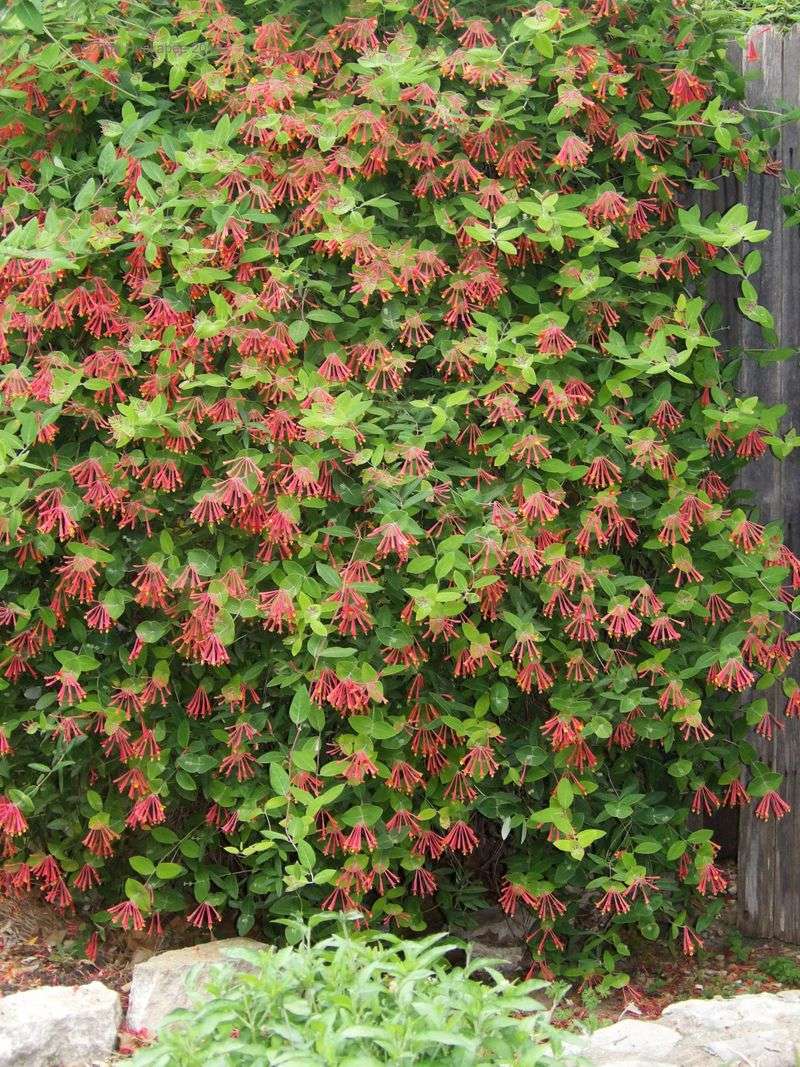
Left entirely to its own devices, coral honeysuckle tends to pile most of its new growth at the top of a fence or trellis, leaving the lower section bare and stemmy over time. Guiding young stems across fence rails from the start, rather than letting them reach straight up and stop, spreads coverage more evenly and gives you a more visually satisfying result. Use garden ties or soft twine to secure stems to the fence in the direction you want them to grow, and check periodically to redirect any stems that are heading into neighboring plants or along the ground.
UF/IFAS coral honeysuckle documentation recommends yearly heading back to encourage foliage lower on the fence, which is particularly useful once the vine has matured and its base has become woody and sparse. Coral honeysuckle produces flowers on new growth, so timing your pruning matters. NC State Extension guidance on Lonicera sempervirens supports pruning after the main flowering period as the safer general timing when you want to preserve as many blooms as possible in the current season. Cutting back hard before the vine flowers removes the very stems that would have produced your spring display.
Pest and disease issues are generally minor for coral honeysuckle, but UF/IFAS shrub fact sheet data notes that aphids, leaf rollers, four-lined plant bugs, scale, leaf spots, powdery mildew, and crown gall can occasionally appear. Minor leaf damage or a small aphid cluster does not automatically call for a chemical response. Monitoring the vine, removing damaged growth, and letting natural predators work often resolves minor problems without intervention. The key maintenance expectation to carry into the first year is that coral honeysuckle is manageable and generally low-effort, but it is not a plant you install and ignore.
Check the species and the Florida site before planting
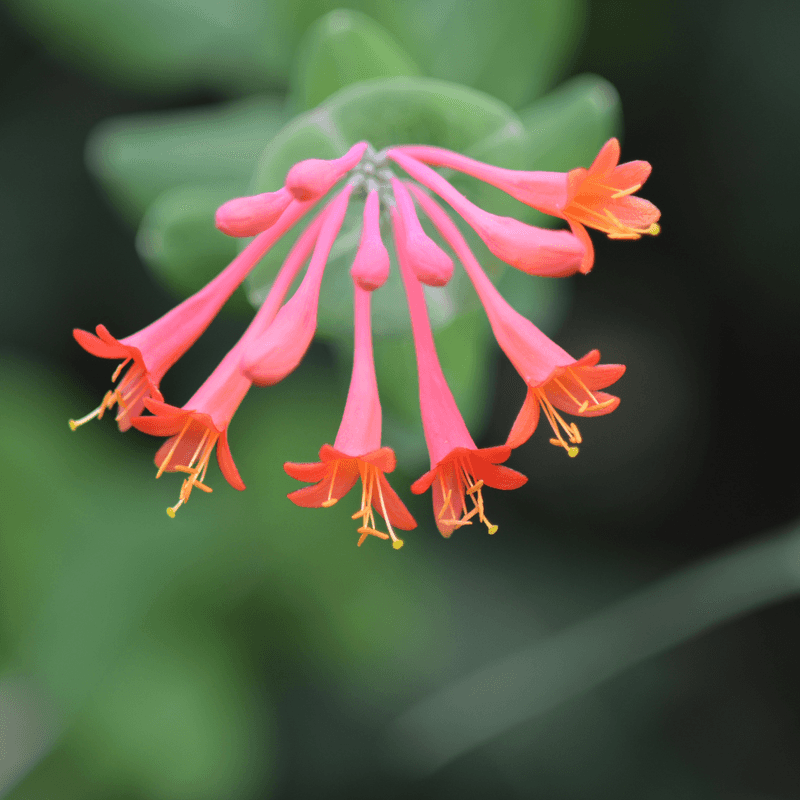
One identification mistake can turn a wildlife-friendly planting project into a weed problem. Japanese honeysuckle (Lonicera japonica) looks superficially similar to coral honeysuckle but is a very different plant with a very different legal status in Florida. UF/IFAS Pest Alert documentation on Japanese honeysuckle confirms that Lonicera japonica is now listed as a Florida state noxious weed, meaning it is regulated because of its documented harm to natural areas. UF/IFAS invasive plant guidance on Japanese honeysuckle describes it as a highly aggressive vine that smothers native vegetation.
Telling the two apart is not difficult once you know what to look for. Coral honeysuckle (Lonicera sempervirens) produces red, coral, or orange-red tubular flowers with almost no fragrance. Japanese honeysuckle typically produces white-to-yellow flowers with a strong, sweet scent that many people find familiar from roadsides and disturbed areas. UF/IFAS plant directory information on Lonicera japonica provides additional distinguishing characteristics.
When purchasing from a nursery, ask for the scientific name and confirm you are buying Lonicera sempervirens, not a related species.
Even after you have the right plant, a few site realities deserve a clear-eyed look. UF/IFAS documentation and UF/IFAS Gardening Solutions both describe coral honeysuckle as aggressive or spreading in its horticultural habit, even though it is native. Without periodic training and cutting back, it can run along the ground and push into nearby shrubs or garden beds. Regionally, Florida Native Plant Society records for the species note that the vine has low to no salt tolerance for salty wind or direct spray, making it a poor fit for beachfront or exposed coastal fence lines.
Evergreen behavior also varies: the vine tends to hold its leaves through winter in Central and South Florida but may drop them during colder stretches in North Florida, which affects year-round screening expectations across different parts of the state.
Set realistic expectations for a flowering fence
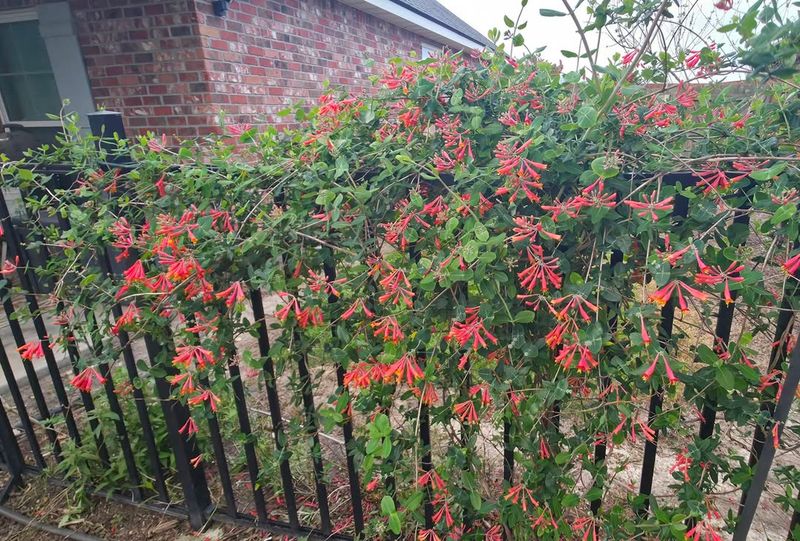
Coral honeysuckle earns a place on the right Florida fence, but the right fence matters. Before planting, confirm that the structure is sturdy, well anchored, and able to handle the added weight of a mature vine. Choose a location that receives strong light, has soil you can improve if it is overly sandy, and sits away from low spots that flood regularly or coastal areas exposed to salt spray.
When those conditions are in place, the vine can provide genuine seasonal value: red-to-coral tubular flowers from spring through summer, useful coverage that builds after establishment, and nectar that hummingbirds, butterflies, moths, and bees actively use. UF/IFAS documentation on coral honeysuckle and UF/IFAS Gardening Solutions both support it as a Florida-native choice for fences and wildlife gardens. The hummingbird appeal is real, but as residential garden research on hummingbird visitation suggests, the vine works best as part of a broader nectar-rich planting rather than a stand-alone guarantee of bird activity.
Coral honeysuckle will not fill a bare fence overnight, and it will not perform equally well on every site across Florida. What it can do, reliably, is reward a gardener who picks the right spot, prepares the soil, provides water during establishment, and trains the stems with some regularity. A well-placed coral honeysuckle is less a magic solution and more a living collaboration between plant and gardener, one that tends to pay off in blooms and wildlife visits season after season.