
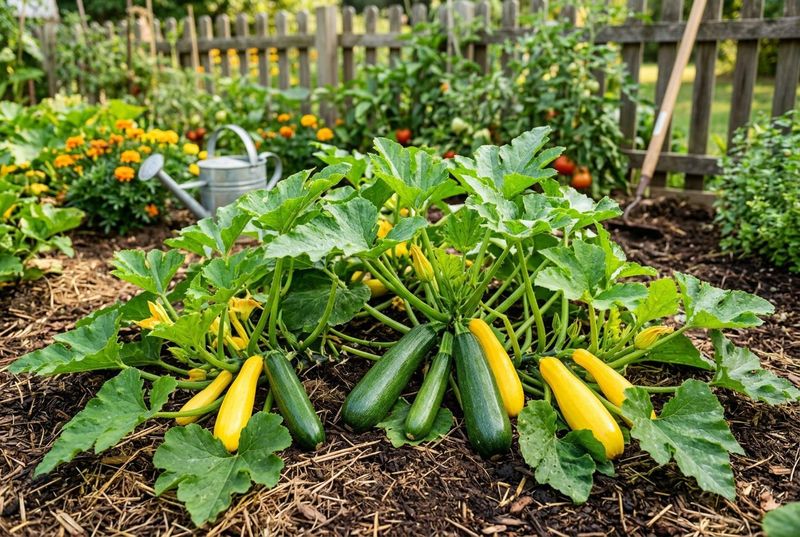
Zucchini plants are famous for producing more squash than most families can eat, so when they suddenly stop setting fruit in the heat of summer, it feels like something has gone seriously wrong. The plant looks healthy, flowers keep opening, and yet every small zucchini shrivels before it gets started. Several things can cause this, from pollination gaps to heat stress to how you are watering, and figuring out which one applies to your plant is the fastest way to get production back on track.
Start by identifying which flowers the plant is making
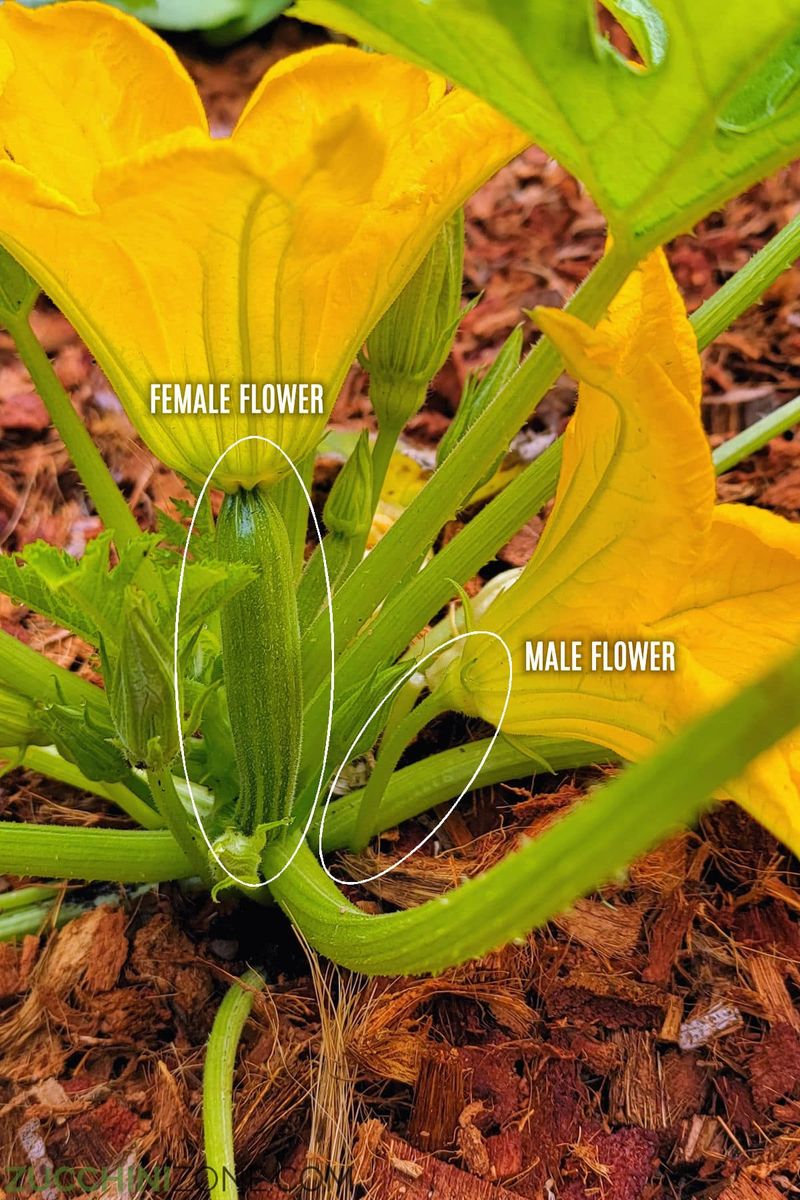
Before assuming the worst, take a close look at the flowers your plant is actually producing. Zucchini has two distinct flower types, and only one of them can develop into fruit. University of Minnesota Extension guidance on growing summer squash notes that male flowers typically appear first and naturally drop after blooming, which can alarm gardeners who do not recognize this as normal behavior.
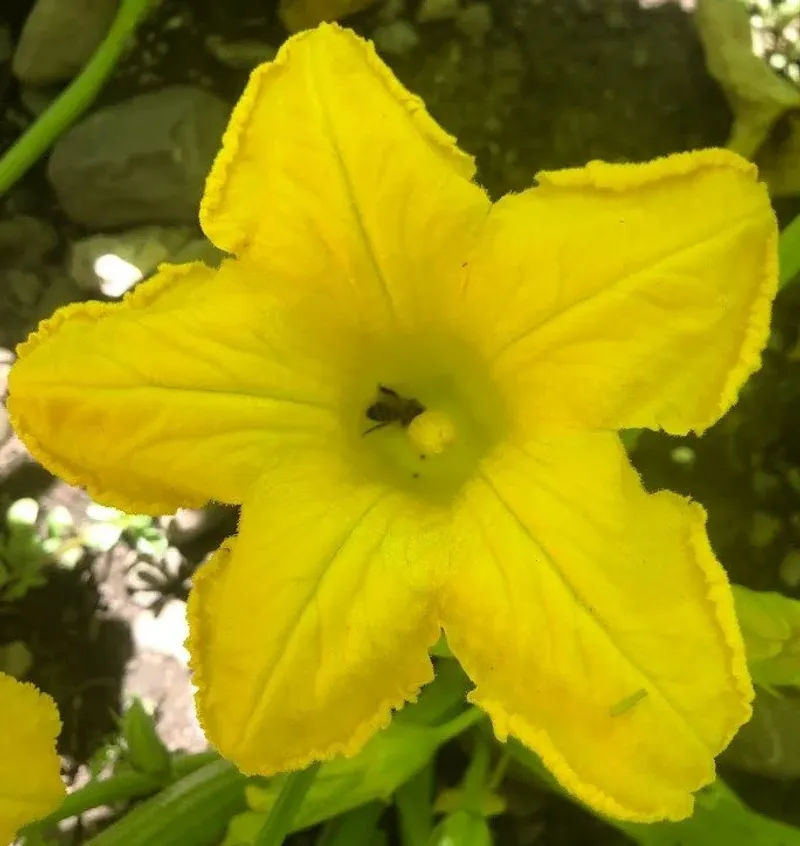
The quickest way to tell the two apart is to look behind the blossom. A female flower has a small, swollen miniature zucchini sitting directly at its base, while a male flower has only a thin, plain stem. If every flower on your plant has a thin stem and nothing behind it, the plant is still in its male-dominant phase, and no amount of intervention will produce fruit until female flowers arrive.
Heat can stretch that male-heavy period longer than usual, which is worth knowing when temperatures climb through a long stretch of summer days. Oregon State University Extension guidance on growing zucchini confirms that insects must transfer pollen from male to female flowers for normal fruit development. That said, University of Delaware Extension research on summer squash fruiting disorders points out that some varieties can set fruit without pollination, so flower type is a useful starting clue rather than an absolute rule for every plant.
Heat can reduce fruit set without creating one exact cutoff
Summer heat does more than make gardeners uncomfortable. When temperatures climb into the 90s °F during the day and stay in the 70s °F at night, cucurbits like zucchini can shift toward producing more male flowers, slow down female-flower development, and begin aborting small fruits before they size up. University of Minnesota Extension’s weekly vegetable update explicitly cautions that heat effects are gradual and variety-dependent, with hotter conditions more likely to shift the flower balance than to stop pollination all at once.
Those temperature figures are approximate warning conditions, not a universal line where every plant gives up. Variety, humidity, light intensity, soil moisture, and overall plant health all influence how strongly a particular zucchini responds. A plant growing in rich, consistently moist soil with good airflow may handle the same heat wave much better than one that is already stressed.
What makes heat tricky to diagnose is that it produces symptoms that can easily be mistaken for a watering problem. UMN Extension research on limited fruit set and fruit abortion in cucurbits describes how hot conditions can cause flower drop and small-fruit abortion that looks nearly identical to drought stress or inconsistent irrigation. Checking temperature patterns alongside soil moisture gives a much clearer picture than blaming one factor alone.
Hand-pollinate when an open female flower is available
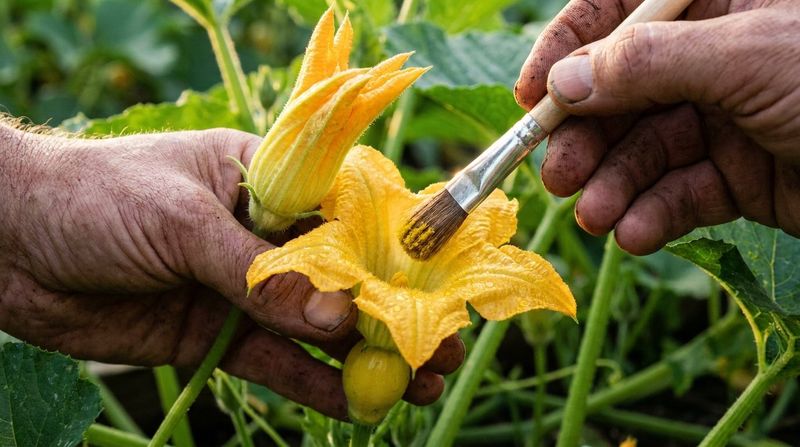
When a female flower is open and bee activity has been low because of rain, wind, heat, or simply a shortage of pollinators in the area, hand-pollination is a practical option worth trying. The procedure is straightforward and takes less than a minute. Pick a freshly opened male flower, the one with the thin stem and no swollen base, and either remove its central anther entirely or peel back the petals to expose it fully.
Oregon State University Extension’s zucchini growing guide describes transferring pollen by pressing the male anther directly onto the stigma, which is the sticky central structure inside the open female flower. A small, clean paintbrush or cotton swab works as well if the direct approach feels awkward. Do this in the morning while both flowers are freshly open, since the receptive window is short.
Utah State University Extension guidance on vegetable pollination confirms that hand-pollination is most useful when female flowers are present but insect visits are unreliable. The important limit to understand is that this technique cannot solve a situation where the plant is only producing male flowers during a heat episode, or where the underlying problem is disease, insect damage, root stress, or severe water stress. Colorado State University Extension’s cucurbit guide reinforces that female flowers must be present and receptive for any pollination strategy to work, so confirming flower type first keeps the effort from being wasted.
Steady moisture matters more than a daily watering rule
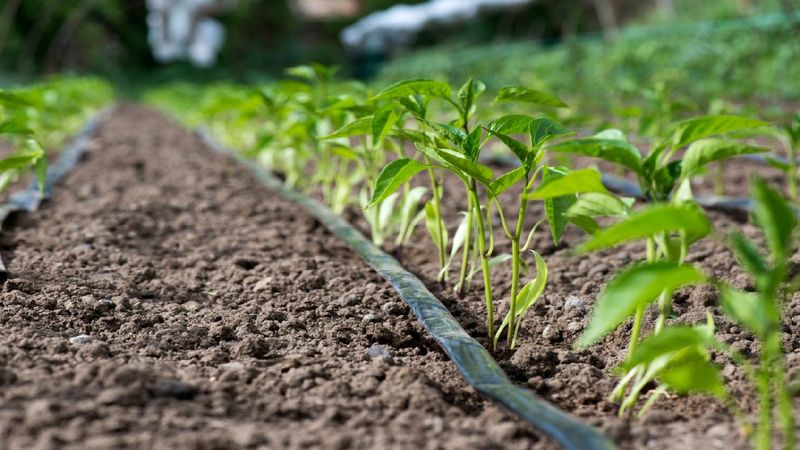
The watering question around zucchini is often framed as “am I overwatering?” but the more useful frame is water stress in either direction. UMN Extension’s research on cucurbit fruit abortion makes clear that both drought and waterlogged soil can reduce fruit set or cause young fruits to abort. Saturated soil pushes oxygen out of the root zone, while prolonged drought can shift the male-to-female flower ratio and cut production.
Rather than watering on a fixed daily schedule, check the soil before you water. UMN Extension’s guide to watering vegetable gardens recommends watering when soil is dry about 2 inches below the surface, and applying water slowly enough that it soaks in without puddling or running off. Sandy soil dries out faster and may need attention more often than heavy clay, and a container plant dries out much faster than an in-ground bed.
UMN Extension’s summer squash growing guide puts the general target at roughly 1 inch of water per week for vine crops, but that figure is a starting point, not a rule. Rainfall, soil type, drainage, wind, and plant size all change what your specific garden actually needs. Drip irrigation or a soaker hose delivers water directly to the root zone and keeps foliage, flowers, and developing fruit drier, which lowers the risk of disease problems that can further complicate fruit set.
Inspect fruit and roots before blaming pollination
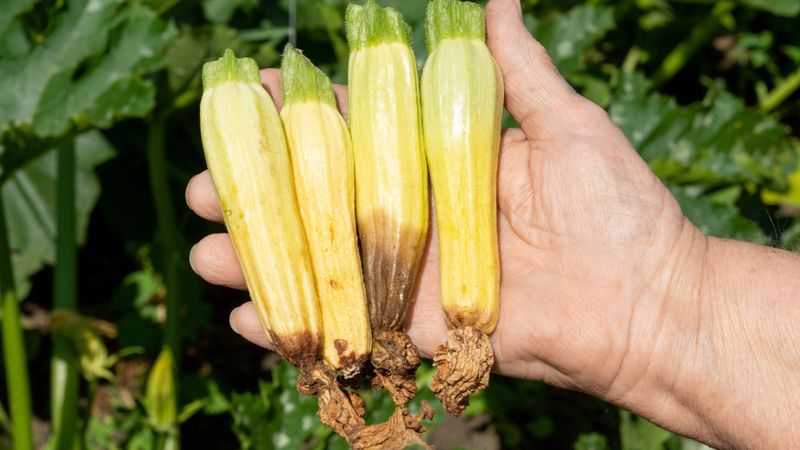
A shriveling or yellowing young zucchini does not always point to pollination failure. The symptom looks similar whether the cause is inadequate pollen transfer, heat stress, water stress, root damage, disease, or a nutrient problem, so the fruit itself is a starting clue, not a final answer. University of Delaware Extension research on summer squash fruiting disorders notes that crooked, pinched, hollow, or undersized fruit can result from any of these stresses, and no single physical trait is diagnostic by itself.
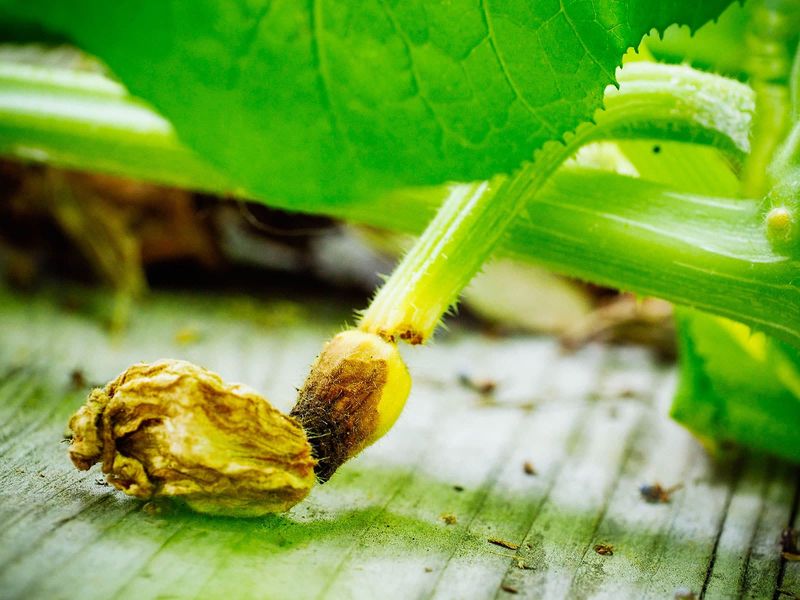
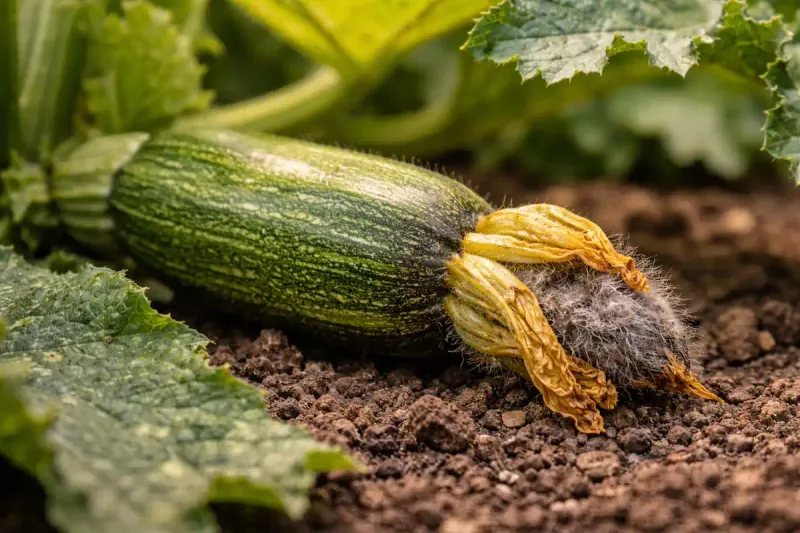
One pattern worth watching closely is what happens at the blossom end of the fruit. A small zucchini that simply shrivels and turns yellow within a day or two of the flower opening is often a pollination problem, especially when weather or low bee activity has been an issue. A fruit that becomes mushy, develops a soft blossom end, or shows white, purple, or black fuzzy growth during a stretch of wet weather points toward a different problem. UMN Extension’s Choanephora rot disease guide describes that specific combination of symptoms as characteristic of a fungal rot that thrives in prolonged wet conditions.
UMN Extension’s fruit abortion research also points out that root damage and severe water stress can cause fruit abortion that looks identical to pollination failure from the outside. If the plant has yellowing lower leaves, wilts even after watering, or shows stunted growth alongside poor fruit set, the root zone deserves a closer look before hand-pollination is tried.
Protect pollinators and encourage the next fruit set
A few practical habits can make a real difference in how consistently your plant produces once you have addressed the main cause of poor fruit set. Row covers are useful early in the season for pest protection, but they also block bees and other beneficial insects. UMN Extension’s summer squash guide recommends removing covers once flowering begins unless you are actively hand-pollinating, because keeping them on will exclude the pollinators the plant depends on.
Utah State University Extension’s pollination guidance advises avoiding insecticide applications while zucchini flowers are open and bees are actively foraging, unless treatment is genuinely necessary and the product label specifically states it is safe to use around pollinators. Even products considered relatively low-risk can harm visiting bees if applied at the wrong time of day.
Harvest frequency also matters more than many gardeners expect. Colorado State University Extension’s cucurbit guide explains that leaving oversized fruit on the plant can signal to it that reproduction is complete, which may slow or stop further fruit set. Picking zucchini regularly, before it grows beyond about 6 to 8 inches, keeps the plant in a productive cycle rather than putting energy into maturing seed in an oversized squash.
Match the observed symptom to the next step
Working through the problem gets easier when you match what you are seeing to a specific next action. A plant producing only male flowers needs time, but use that time productively. Check whether a heat wave is driving the male-heavy pattern, confirm soil moisture is steady, and look at overall plant health rather than simply waiting it out. UMN Extension’s weekly vegetable update is a useful reminder that heat effects on flower production are gradual, and conditions that improve plant health can help shift the balance.
When female flowers are opening but young fruit keeps failing, try morning hand-pollination on the next available open female flower. Oregon State University Extension’s zucchini guide confirms that the flowers are receptive for only a short window, so acting early in the day improves the chance of success. If the soil is dry several inches down or consistently waterlogged, correcting that moisture problem takes priority, since UMN Extension’s vegetable garden watering guidance makes clear that both extremes reduce a plant’s ability to set and hold fruit.
Fruit that shows rot, unusual discoloration, or physical distortion beyond simple shriveling points toward disease or another stress that hand-pollination cannot address. The honest takeaway is that hand-pollination can improve fruit set when pollination is genuinely the bottleneck, but summer zucchini failures usually have more than one contributing factor, and matching the fix to the actual cause is what gets production moving again.