
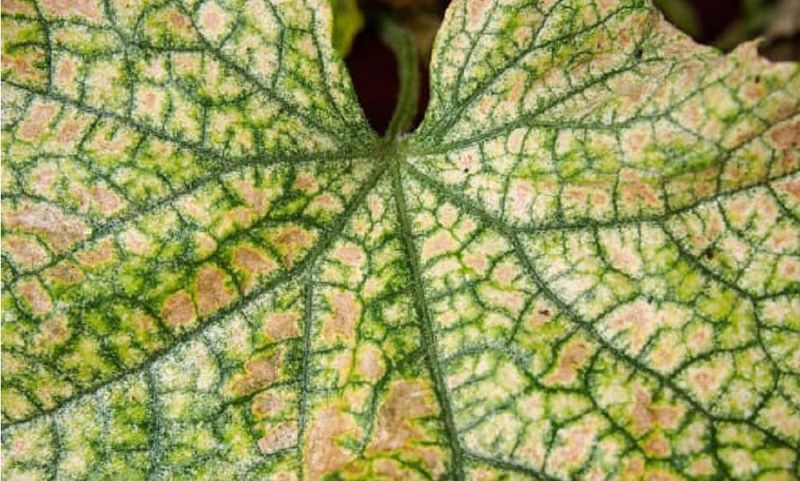
Tiny specks are appearing across your cucumber leaves, the color is fading to bronze, and the vines look worse every day. Those symptoms point strongly toward spider mites, a group of microscopic arachnids that thrive when summer turns hot and dry. Catching them early and following a practical management plan can slow the damage and protect the parts of the plant still worth saving.
The stippling pattern points to spider mites
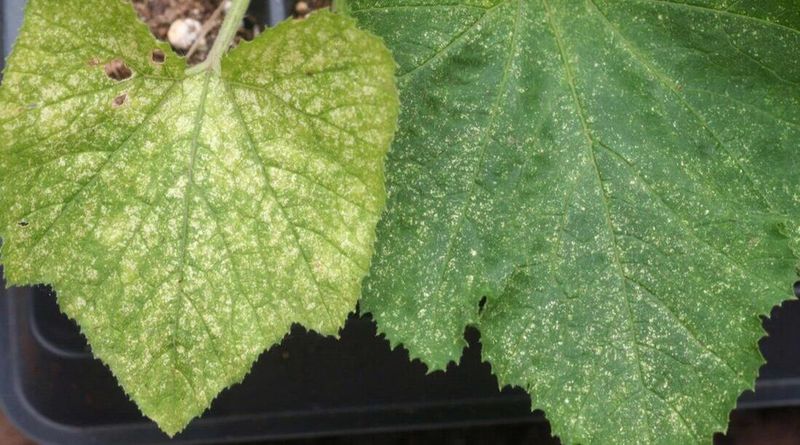
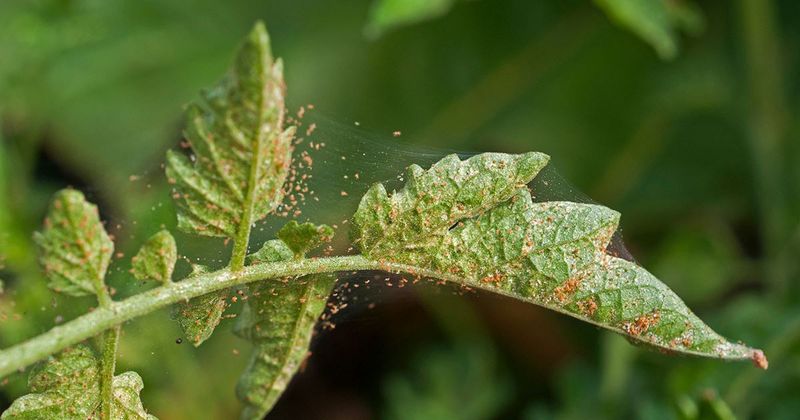
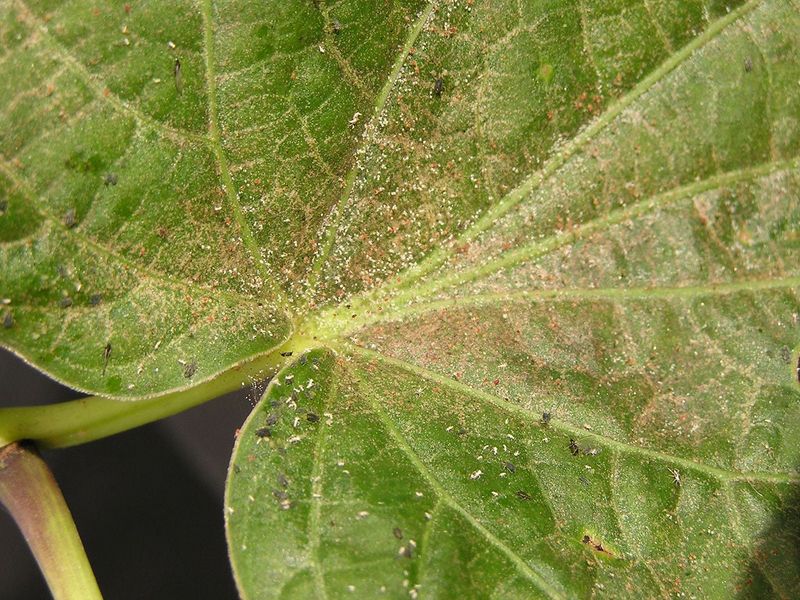
Fine pale dots scattered across a cucumber leaf are often the first clue something is feeding on it from below. Spider mites pierce individual leaf cells and drain the contents, leaving behind a pattern of tiny white, yellow, or pale green specks called stippling. As feeding continues, those specks merge and the leaf surface takes on a dull, grayish, or bronze cast that looks almost scorched.
Webbing on the leaf undersides is a supporting clue, but not a definitive one on its own. Ordinary garden spiders leave silk too, and airborne plant fluff or debris can mimic the fine threads mites produce. Colorado State University Extension notes that webbing alone should not be used to confirm a mite problem without a closer look at the mites themselves.
The most reliable confirmation step is flipping a leaf and examining the underside with a hand lens or magnifying glass. Mites are tiny, roughly the size of a period at the end of a sentence, but they move and can be seen with magnification. UC IPM’s cucurbit guidance recommends inspecting the undersides specifically, since that is where mites feed and congregate. A working diagnosis of spider mites is reasonable when stippling matches the pattern described and live mites or eggs are visible on the underside, but not every bronze cucumber leaf carries an active infestation.
Why hot, dry weather accelerates the damage
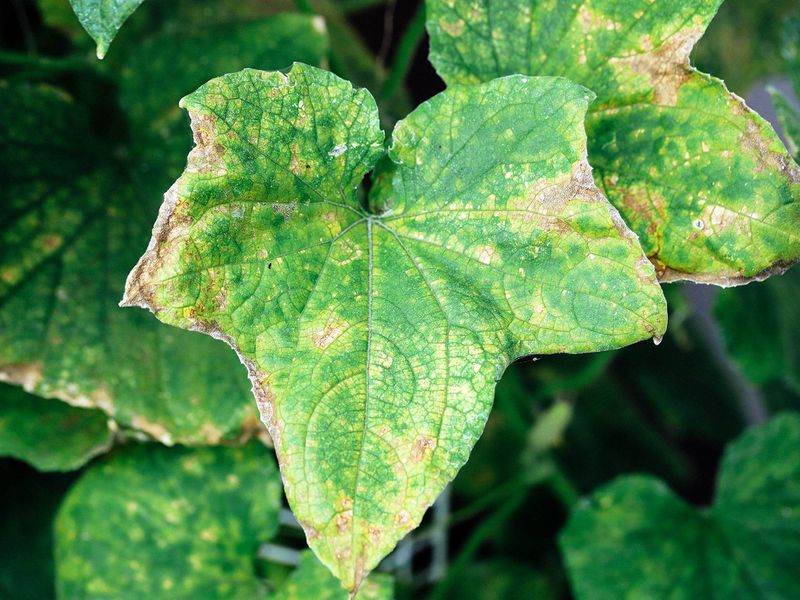
Spider mites are arachnids, not insects, and their biology responds quickly to environmental conditions. When temperatures climb and humidity drops, mite reproduction speeds up considerably. A single female can produce hundreds of eggs, and under hot, dry conditions, those eggs can mature into reproducing adults in as little as a week. University of Minnesota Extension explains that populations can increase rapidly during hot, dry weather, which is why outbreaks often seem to appear out of nowhere in midsummer.
Heat is a contributing factor, but it does not act alone. Drought-stressed plants are more vulnerable because they cannot compensate as easily for the cell damage mites cause. Dusty conditions coat leaf surfaces and can interfere with the natural enemies that normally keep mite numbers in check. Broad-spectrum pesticide applications earlier in the season may have already eliminated those predators, leaving the mite population to grow without biological pressure.
The damage follows a recognizable sequence. Early stippling is pale and scattered. As feeding intensifies, the stippled areas expand, the leaf surface grays out, and advanced injury produces the bronze, papery texture that signals serious chlorophyll loss. UC IPM’s cucurbit resource documents that heavy mite feeding can reduce yield and, in severe cases, contribute to vine collapse.
Understanding that progression helps explain why acting at the stippling stage, before bronzing takes hold, gives the plant a better chance.
Start with a rinse and steady root-zone care
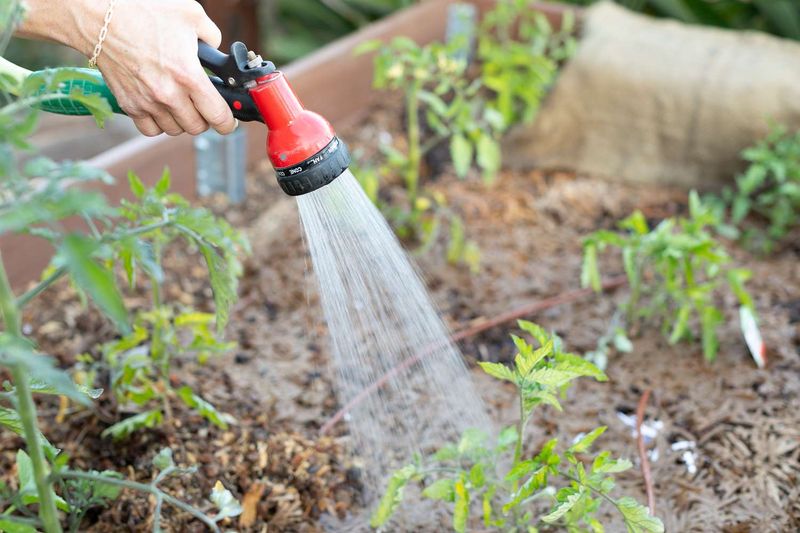
Before reaching for any product, a strong spray of water is the logical first response. Directing a firm stream at the undersides of affected leaves can knock mites off the plant and break apart webbing. University of Wisconsin Extension includes physical removal by water as a practical early step, though it is honest about the limits: eggs cling to leaf tissue and will not wash away as easily as the mites themselves, and an established population may require more than one rinse to see any meaningful reduction.
Root-zone care matters just as much as what happens above ground. Consistently watered plants tolerate mite injury better than drought-stressed ones, so keeping the soil evenly moist, not waterlogged, is part of the management response. UC IPM’s home and landscape guidance connects adequate soil moisture to improved plant resilience. Applying a layer of mulch around the base of the vine helps retain that moisture between waterings and moderates soil temperature during heat spells.
One caution worth keeping in mind: repeatedly soaking the foliage in an attempt to raise humidity is not the recommended approach for outdoor cucumbers. Prolonged leaf wetness creates conditions that can favor fungal diseases, so moisture management should focus on the root zone rather than misting the canopy. Minnesota Extension recommends checking plants every few days during hot, dry stretches, since mite populations can build faster than they appear to during peak summer conditions.
Protect predators that already hunt mites
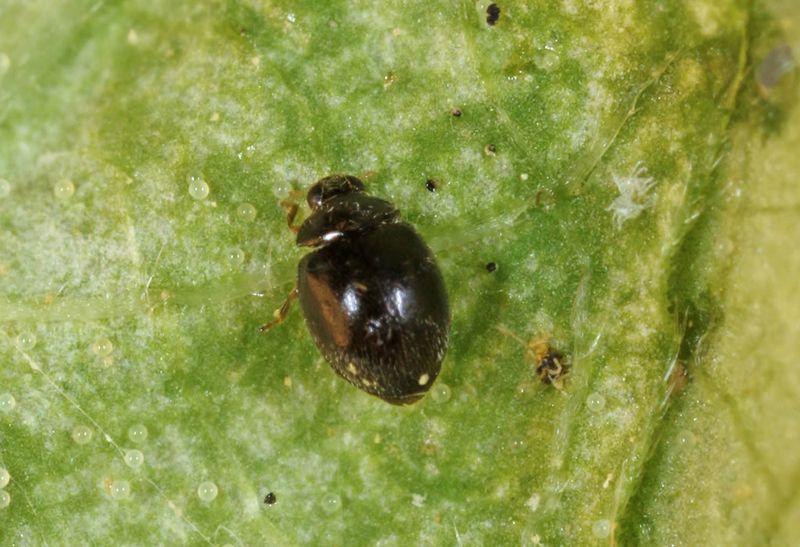
Gardens are rarely as empty of helpful organisms as they might seem. Predatory mites in the genus Phytoseiidae hunt spider mites directly, feeding on eggs and adults alike. Stethorus lady beetles, which are much smaller than the familiar red-and-black species, specialize almost entirely on spider mites. Lacewing larvae and certain predatory thrips also contribute to keeping mite populations in check.
UC IPM’s cucurbit page identifies these natural enemies as meaningful contributors to biological suppression in garden settings.
The problem is that broad-spectrum or long-residue insecticides can wipe out these allies along with the pests they target. A peer-reviewed study on secondary pest outbreaks found that insecticide use can disrupt natural enemy communities in ways that allow secondary pests, including mites, to rebound to higher levels than before treatment. That rebound effect is part of why a routine spray of something broad-spectrum can make a mite problem worse rather than better.
Protecting predators means being selective about what goes on the plant and when. Avoiding unnecessary pesticide applications, especially early in the season when predator populations are building, gives beneficial organisms room to establish. Biological suppression alone may not eliminate a heavy infestation, but a garden with active predators is more resilient and less likely to experience the sharp population spikes that cause the most visible damage. Think of predator protection as a long-term buffer, not a guaranteed cure.
Use soap or oil only under the right conditions
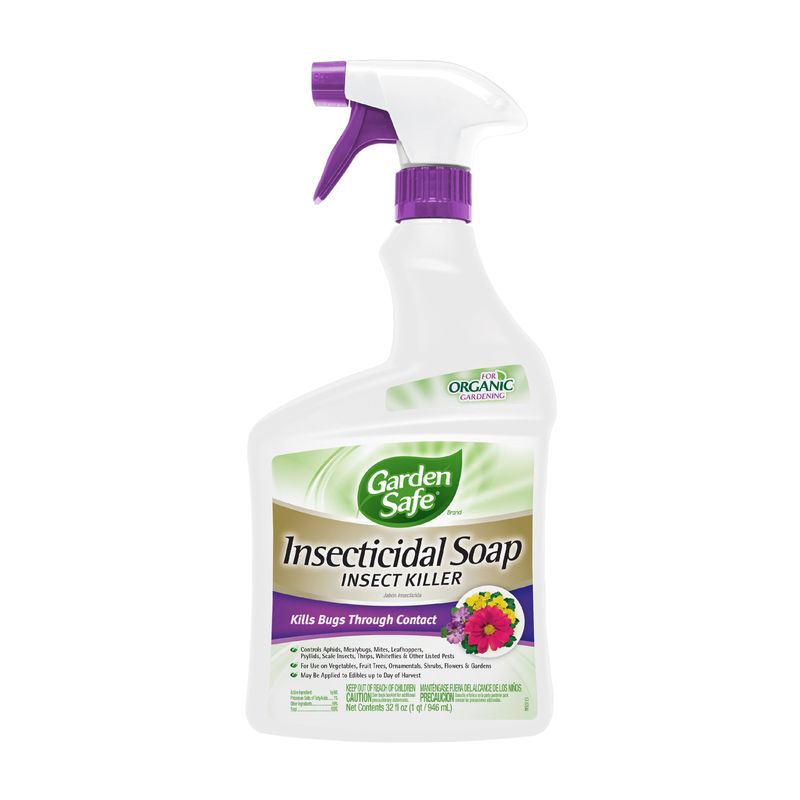
When rinsing and improved watering have not slowed visible mite activity, a registered insecticidal soap or horticultural oil becomes a reasonable next option. Both products work through direct physical contact with the mite’s body rather than through a residual chemical action, which has important practical consequences. University of Minnesota Extension is clear that thorough coverage of both leaf surfaces, especially the undersides where mites live, is essential because any mite the spray does not reach will survive and continue reproducing.
Timing and plant condition matter as much as the product itself. UC IPM advises against applying soap or oil when temperatures are high, specifically citing 90 degrees Fahrenheit as a threshold above which these products can damage foliage. Individual product labels may set different limits, so the label on the specific container always governs. Never apply either product to a plant that is already drought-stressed, since stressed tissue is more prone to phytotoxic injury from oils and soaps.
Utah State University Extension suggests that two or three applications spaced roughly five to seven days apart may improve control compared to a single treatment, because eggs present at the first application can hatch into mites the spray did not affect. That interval guidance is a useful reference point, but the current product label determines the actual schedule. Neem oil and other plant-derived oils carry the same heat and stress cautions as petroleum-based horticultural oils, so the assumption that natural products are automatically gentle does not hold. Always do a small test on a few leaves if you are uncertain how the plant will respond.
Choose products by the label, not by speed
Reaching for the fastest-acting spray on the shelf is a common instinct when a plant looks bad, but speed is the wrong criterion for choosing a mite treatment. The only thing that legally and safely governs how a pesticide product may be used is its current registered label. The U.S. EPA explains that pesticide labels are legally binding documents, and using a product in a way that contradicts the label is a violation of federal law.
Before applying anything, confirm that the label specifically permits use on cucumber or the relevant vegetable crop and lists spider mites or the target pest by name.
Registrations vary by state, product formulation, and crop, so a recommendation written for commercial cucurbit production may not apply to a backyard plant. EPA’s pesticide label search tool can help you verify what a specific product is registered for. EPA’s labeling Q&A also clarifies common questions about what label language means in practice.
Pyrethroids such as bifenthrin and permethrin are sometimes suggested as a quick fix, but they are poor choices for spider mites in a home garden. These broad-spectrum, long-residue products kill the predatory mites and beneficial insects that naturally suppress populations, and repeated use raises the risk of mite resistance. UC IPM’s home and landscape guidance warns that sulfur, sometimes promoted as a safe organic option, can injure cucurbits, should not be applied above specific temperatures, and must not be used within a certain window after an oil application due to phytotoxicity risk. The exact interval depends on the product, so check both labels before using either material near the other.
Protect new growth instead of chasing perfect leaves
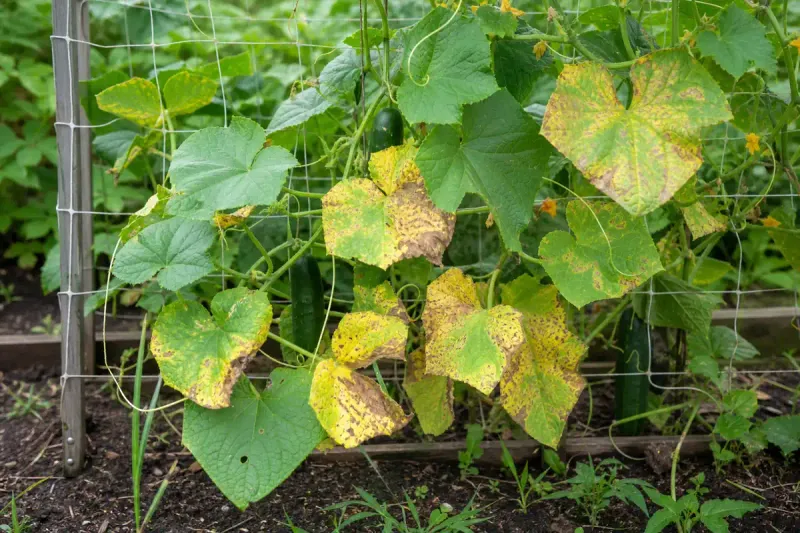
Bronze, papery leaves on a cucumber vine represent advanced cell damage, and that damage is not reversible. Even after live mite numbers drop significantly, the discolored tissue will not regain its green color or resume normal photosynthesis. This is an inference drawn from the documented progression of mite injury, from stippling through bronzing to leaf death, rather than a promise of a specific outcome, but the practical implication is clear: the goal after intervention shifts from restoring damaged leaves to protecting the ones that have not yet been harmed.
New leaves emerging from the growing tips and lateral shoots are worth the most attention. UC IPM’s cucurbit guidance emphasizes monitoring during vegetative growth and directing management toward the parts of the plant with the most productive potential. Removing the most heavily infested or visibly declining leaves can reduce the immediate mite load in that area, but pulling off every stippled leaf is counterproductive. Indiscriminate defoliation removes photosynthetic area the vine needs and can further weaken a plant already under stress.
Penn State Extension’s mite guidance reinforces that recovery is measured by protecting productive growth, not by cosmetic restoration of damaged tissue. Keep inspecting the undersides of newer leaves every few days. If stippling appears on growth that emerged after treatment, that signals the population has not been reduced enough and a follow-up response is warranted. Minnesota Extension recommends ongoing monitoring rather than relying on any single application to close the problem.
Follow a management plan, not a guaranteed fix
A realistic spider mite response on cucumbers follows a sequence rather than a single action. Confirm mites are present by inspecting leaf undersides with a hand lens. Rinse the foliage with a firm stream of water, concentrating on the undersides, to dislodge what you can. Correct any drought stress at the root zone with consistent watering and mulch.
Avoid pesticide choices that harm the predatory mites and beneficial insects already working on the problem.
If the population continues building after those steps, apply a currently labeled insecticidal soap or horticultural oil only when the temperature is within the product’s safe range and the plant is not already stressed. Repeat according to the label schedule, not out of impatience, and keep checking new leaves every few days to judge whether the population is actually declining. University of Minnesota Extension and UC IPM both frame mite management as an ongoing monitoring process rather than a one-time event.
The honest measure of success here is population reduction and protection of new growth, not a spotless plant or a complete cure. Older bronze leaves may stay bronze while the vine pushes out healthy new foliage from the growing tips. That new growth, kept free of active mite feeding, is what can carry the plant through to harvest. Patience and observation, applied consistently, tend to outperform any single spray.