
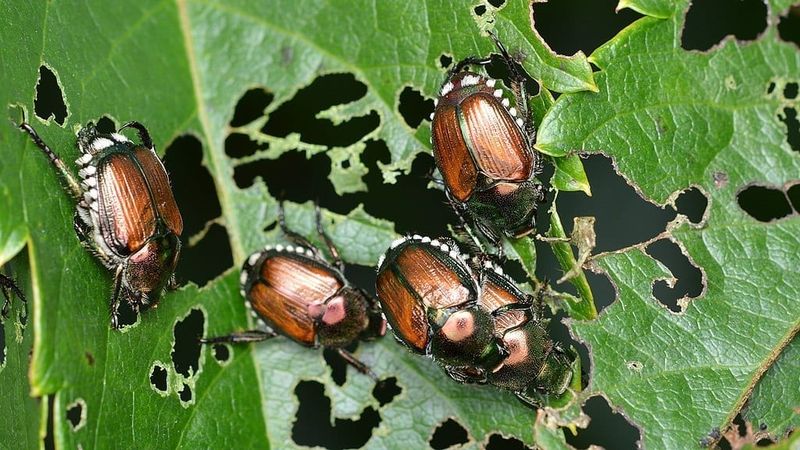
Walking out to your garden and finding leaves that look like green lace can stop you cold. That delicate skeleton of veins where solid leaf used to be is a signature sign of a chewing insect, and Japanese beetles are one of the most common culprits in U.S. home gardens during summer. The damage can appear to happen suddenly, turning a healthy-looking plant into a tattered mess within days. Knowing what you are actually dealing with, and confirming it before reaching for any treatment, is the fastest way to protect what is left of your plants.
Lace-like leaves suggest a chewing insect
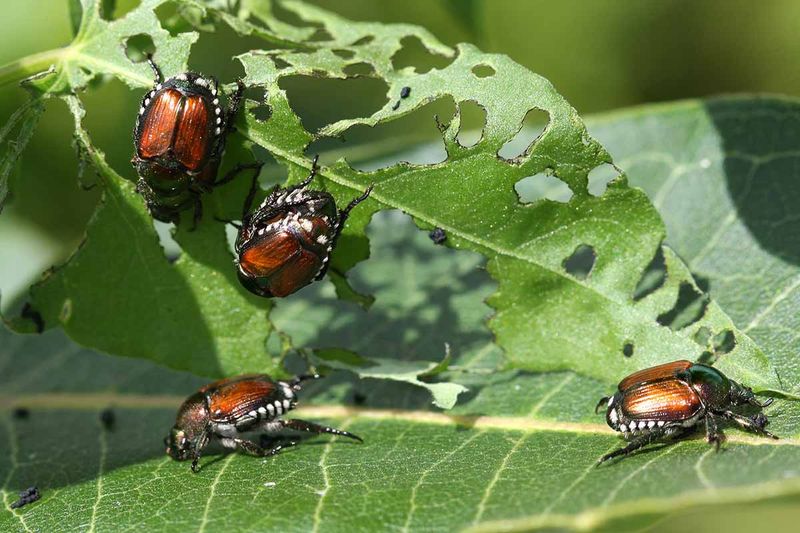
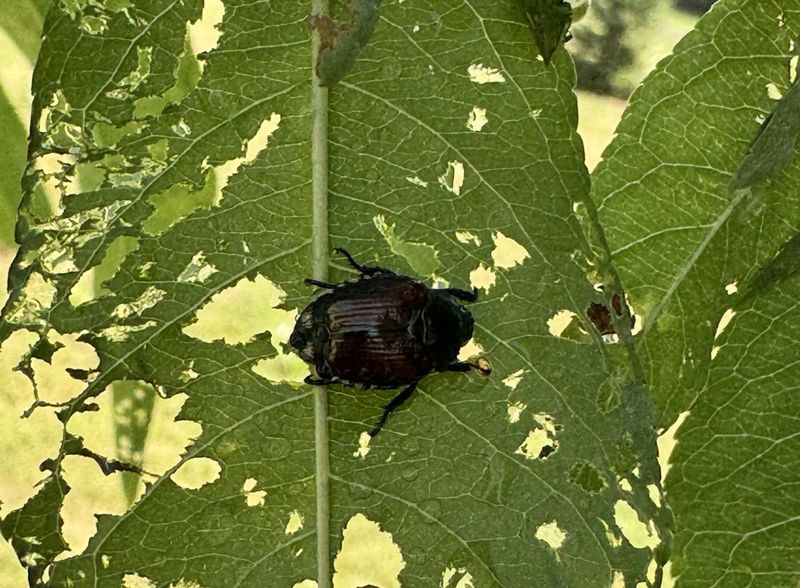
Foliage that looks like green netting, with the tissue between the veins eaten away and only a transparent skeleton remaining, is a clear sign that a chewing insect has been at work. Japanese beetle adults feed specifically between the major veins of a leaf, leaving behind that characteristic lace-like or skeletonized appearance. They also feed on flowers and fruit, so damaged blooms alongside shredded foliage can point in the same direction.
That said, the symptom alone cannot confirm the diagnosis. Drought stress, fungal disease, and other environmental problems cause discoloration, wilting, scorching, and premature leaf drop, but they do not remove tissue cleanly from between the veins the way a chewing insect does. If the damage pattern is clearly skeletonization rather than browning or wilting, you are looking at insect feeding, not a watering problem.
Before treating anything, look for the actual insect. University of Minnesota Extension guidance on Japanese beetles and the USDA APHIS homeowner handbook both emphasize confirming the pest before choosing a response. Bean plants in particular require extra caution: bean leaf beetles and other pests can produce very similar between-vein injury, so plant identity and leaf damage alone are not enough to make a definitive call.
Why damage can seem sudden during July and August
Adult Japanese beetles commonly emerge from the soil in late June or early July across much of the continental United States, then feed primarily through July and August, with some activity continuing into September depending on local conditions. Weather, latitude, elevation, and the size of the local beetle population all shift that window, so the calendar is a guide rather than a guarantee. In warmer, southern parts of the range, beetles may appear earlier; in cooler northern or higher-elevation areas, emergence often runs later.
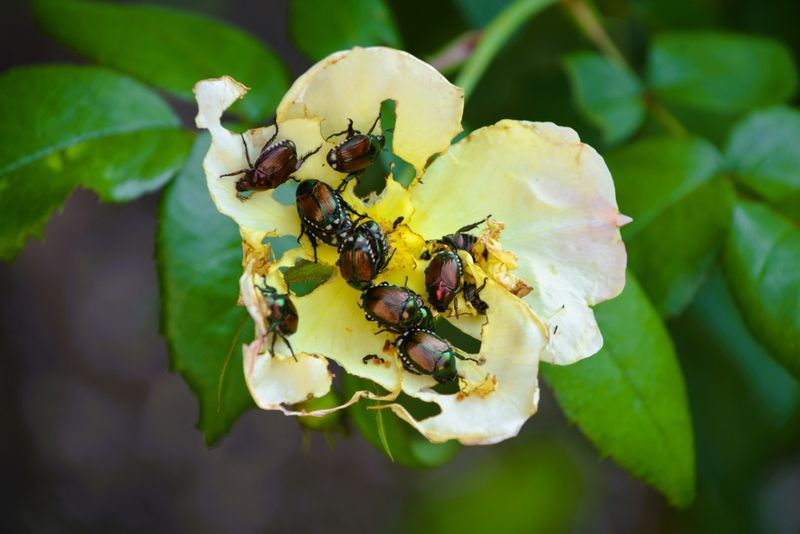
What makes the damage seem to appear so suddenly is the way beetles gather. University of Minnesota Extension explains that feeding-induced odors released by damaged foliage attract more beetles, and adults also congregate around preferred plants for mating. A plant that had only a few beetles on Monday can carry a dense cluster by Wednesday, making the injury look as though it happened overnight. More accurately, it builds within days as the group grows.
Using the word “swarm” to describe this is common in casual conversation, but beetles are not technically swarming in the way bees do. They are aggregating around food and mates, which is a meaningful distinction because it means the cluster is somewhat predictable and responds to repeated removal. Understanding this pattern helps gardeners time their response to the actual peak rather than reacting to every stray beetle that appears in June.
Confirm the beetle before choosing a treatment
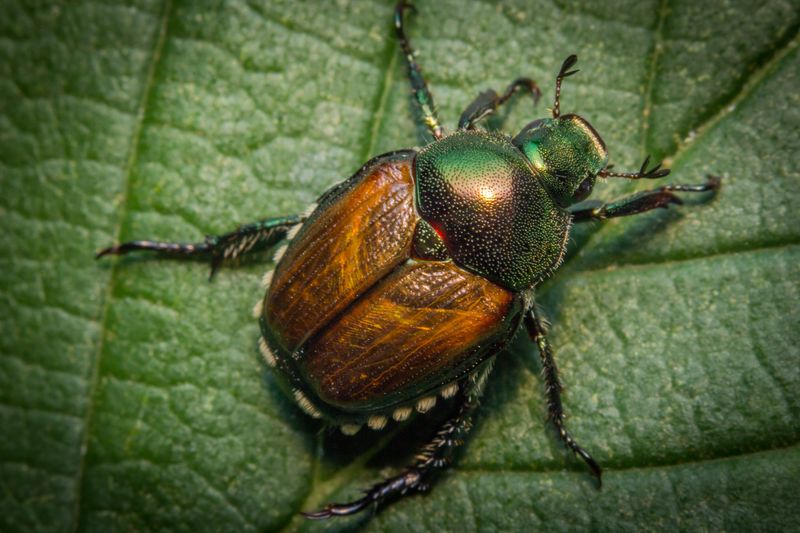
Adult Japanese beetles are easy to identify once you know what to look for. They are roughly one-third to one-half inch long, with a metallic green head and thorax, copper-brown wing covers, and a row of small white hair tufts running along each side of the abdomen. The University of Minnesota Extension beetle identification page provides a clear visual reference if you want to compare what you are seeing against a confirmed specimen.
Check damaged leaves, flower heads, and the soil surface near the plant. Adults are most active during warm, sunny midday hours and tend to cluster at the tops of plants or on the most sun-exposed leaves. If you find the metallic green and copper insects on the same plant showing between-vein skeletonization, that is a strong match. The damage pattern plus the insect together make a reliable diagnosis.
Roses are a well-documented preferred host for Japanese beetles, so finding them on a rose plant alongside skeletonized leaves is a fairly confident identification. Beans are a different story. Bean plants can attract Japanese beetles, but they are also targeted by bean leaf beetles, which are smaller and differently marked. Treating for Japanese beetles without confirming which insect is present could mean choosing the wrong approach entirely, so take the time to look at both the damage and the bug before acting.
Hand-picking is a practical first step for a few plants
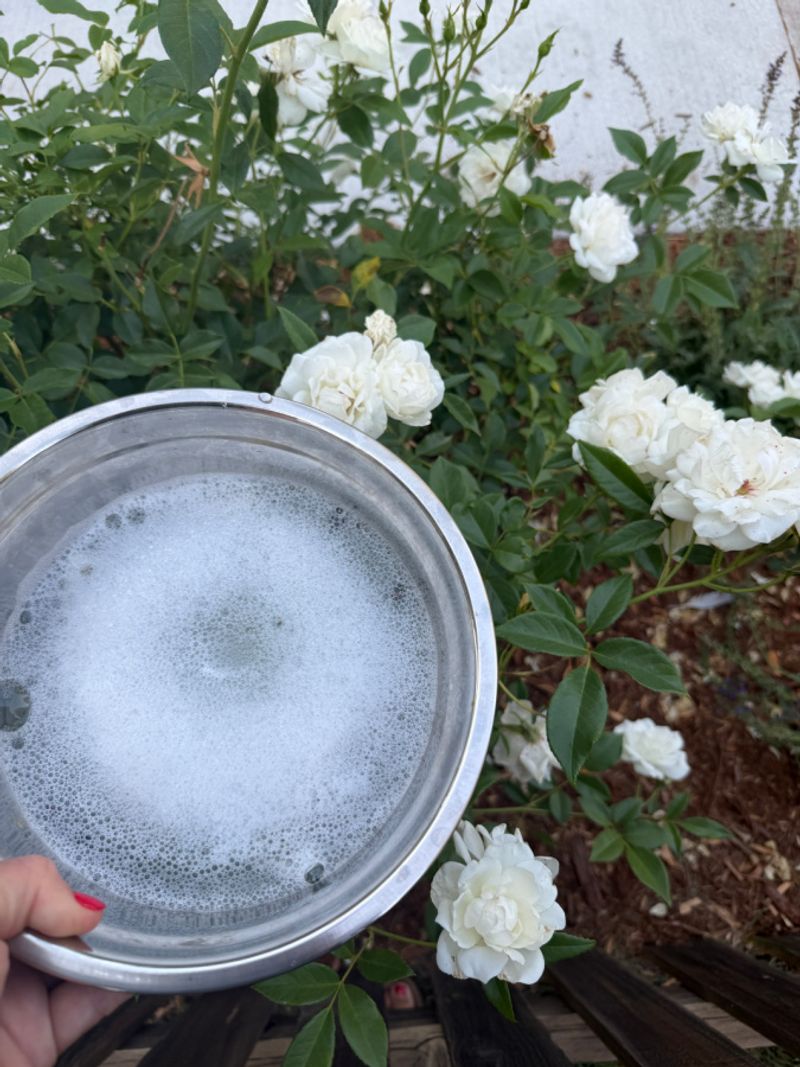
For a small number of plants, daily inspection and physical removal of adult beetles is a practical and low-risk first response. Hold a bucket or container filled with soapy water beneath the plant, then shake the stem or tap the leaves so the beetles drop in. University of Minnesota Extension and University of Missouri Extension both recommend this method, noting that morning and evening are the best times because beetles are cooler and less likely to fly away before they fall.
Consistency matters more than any single removal session. New adults will continue arriving and feeding throughout the typical six-to-eight-week activity period, so a one-time knockdown will not solve the problem. Checking the same plants every day and removing whatever you find helps reduce the cumulative feeding load over the course of the season.
Hand-picking works best when you can realistically inspect each affected plant on a daily basis. A gardener with two rose bushes or a short row of beans can manage this without much trouble. Someone with a large vegetable garden or many ornamental shrubs may find it difficult to keep up. In those situations, hand-picking the most valued or most vulnerable plants first is a reasonable way to prioritize.
No physical removal method promises total control, but regular attention during peak feeding can meaningfully reduce the damage.
Netting and harvest can reduce ongoing injury
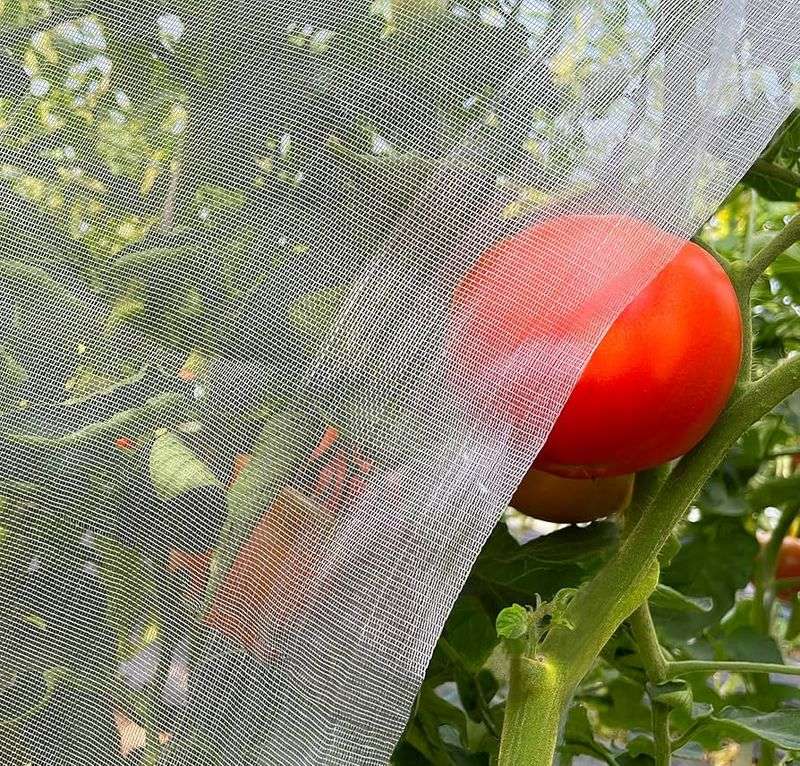
Fine-mesh garden netting can act as a physical barrier between beetles and susceptible plants, but it comes with an important condition: do not cover any plant that is still flowering and needs pollinators to set fruit or seeds. Blocking bee access during bloom will prevent pollination and reduce your harvest even if it stops the beetles. University of Minnesota Extension recommends continuing hand-picking through the flowering and fruit-set period, then applying netting afterward if the plant and situation are appropriate.
Fruits, vegetables, and herbs can often tolerate limited leaf feeding without a major setback. A mature bean plant that loses a portion of its leaves to beetle feeding may still produce a reasonable crop if the damage is not severe. The risk rises when plants are young, already stressed by drought or poor soil, or when defoliation is heavy enough to reduce the plant’s ability to photosynthesize and push energy into pods or fruit.
Regular harvesting during July and August can also help reduce feeding on edible portions. Beetles are drawn to ripe or ripening fruit, so leaving mature vegetables on the vine longer than necessary may invite more feeding. Picking beans, cucumbers, and other vegetables promptly as they reach harvest size removes one attractant and keeps the plant focused on producing new growth rather than defending damaged tissue.
A commercial trap may draw beetles toward your plants
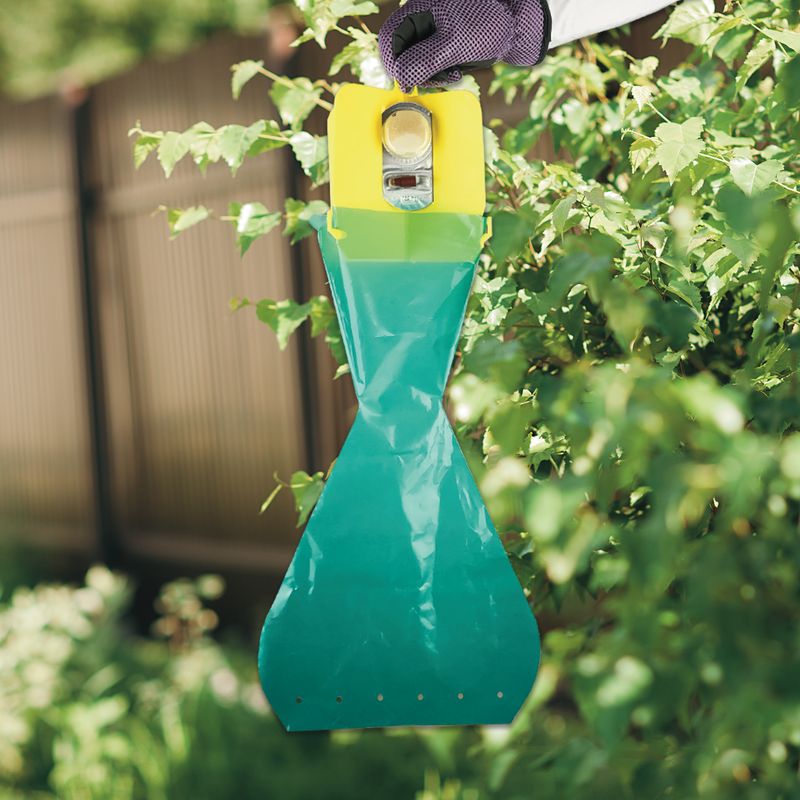
Commercial Japanese beetle traps use two attractants: a synthetic version of the female sex pheromone and a floral scent that mimics preferred host plants. That combination is powerful enough to pull beetles in from a wide area, which is exactly what makes the traps useful for monitoring beetle presence in a region, and exactly what makes them risky to hang near your garden.
University of Minnesota Extension and University of Missouri Extension both advise against using traps as a home-garden control measure. A peer-reviewed Journal of Integrated Pest Management analysis of Japanese beetle management in North America reinforces this, noting that traps may increase local beetle activity rather than reduce it. The USDA APHIS homeowner handbook describes traps as useful for assessing beetle presence, not for protecting plants.
Treating your lawn for grubs will not reliably stop adults from feeding on your roses or vegetables either. Adult Japanese beetles can fly considerable distances, and beetles from neighboring untreated properties will continue arriving throughout the season. Grub control is worth considering as a way to reduce lawn damage and protect turf health over the long term, but it should not be relied on as a solution for the adults that are actively feeding on your plants right now.
Use sprays only after checking the label and pollinators
Chemical insecticides can reduce Japanese beetle feeding, but they are a conditional tool, not a default rescue. Any product you consider must be registered and labeled for use on the specific plant you are treating and for Japanese beetles specifically. Reading the label is not optional: it tells you the correct application rate, timing restrictions, and any plants or situations where the product should not be used.
Pollinator safety is a serious concern with several of the most effective options. Pyrethroids, carbaryl, and some systemic products can harm bees and other beneficial insects. Colorado State University Extension specifically flags this risk when discussing Japanese beetle management, and EPA pesticide safety guidance advises avoiding outdoor application in wind or rain and keeping children, toys, and pets away from treated areas until the product has fully dried or the label’s re-entry interval has passed. Do not spray blooming plants or apply during periods of active pollinator activity.
Some gardeners ask about neem oil, insecticidal soap, or homemade sprays. University of Minnesota Extension notes that neem-based products may deter beetles for a few days but are less effective when beetle numbers are high. Penn State Extension states that insecticidal soap is not considered effective against adult Japanese beetles, as it is designed mainly for small, soft-bodied insects. Neither product should be treated as a reliable solution, and homemade remedies have even less support behind them.
Many healthy roses, trees, and shrubs tolerate feeding
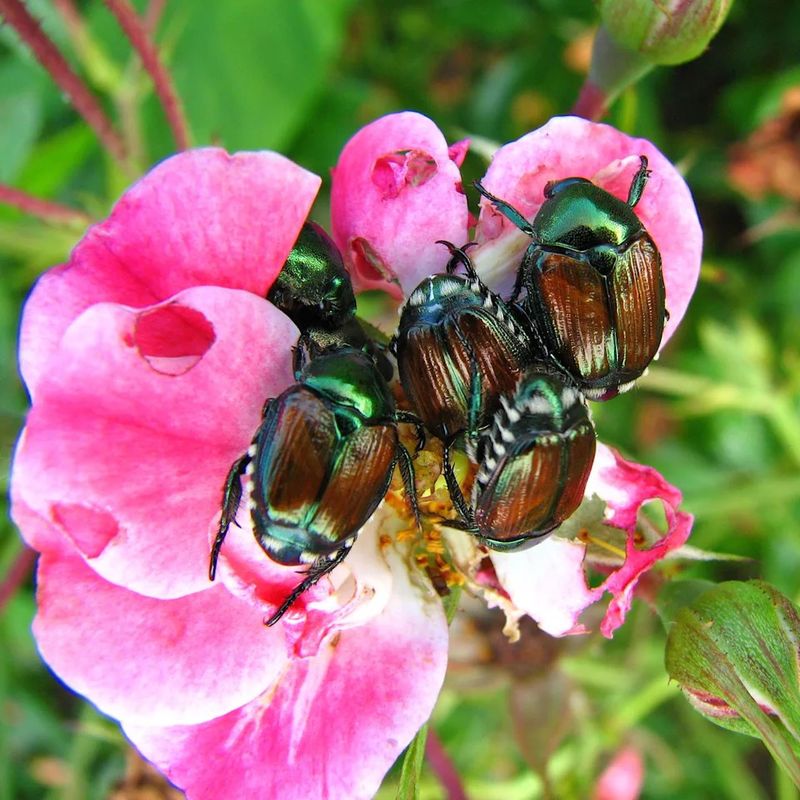
Healthy, established trees and shrubs can absorb a surprising amount of Japanese beetle feeding without lasting harm. Their root systems and stored energy reserves allow them to push out new growth even after substantial defoliation. University of Minnesota Extension notes that healthy roses generally survive the season, though the flowers themselves may be ruined by adult feeding during peak activity. A rose that looks battered in late July can still leaf out and bloom again once beetle activity winds down.
The picture is different for plants that are already under stress. Young transplants, drought-stressed shrubs, or vegetable plants that lose a large portion of their leaves during the critical growth and fruiting period face a higher risk of reduced yield or slowed recovery. Bean plants that are heavily defoliated just as pods are forming may produce fewer beans than they would have otherwise. Paying closer attention to these vulnerable plants, and prioritizing hand-picking and protection for them, is a reasonable way to focus your effort.
The typical adult feeding period runs about six to eight weeks, with most activity winding down by mid- to late August in much of the country. Monitoring your plants through that window, removing adults regularly, protecting suitable plants without blocking pollination, and skipping attractant traps gives you a realistic and manageable approach. The beetles do not last forever, and a plant that holds on through the peak often bounces back faster than it looks like it will.