
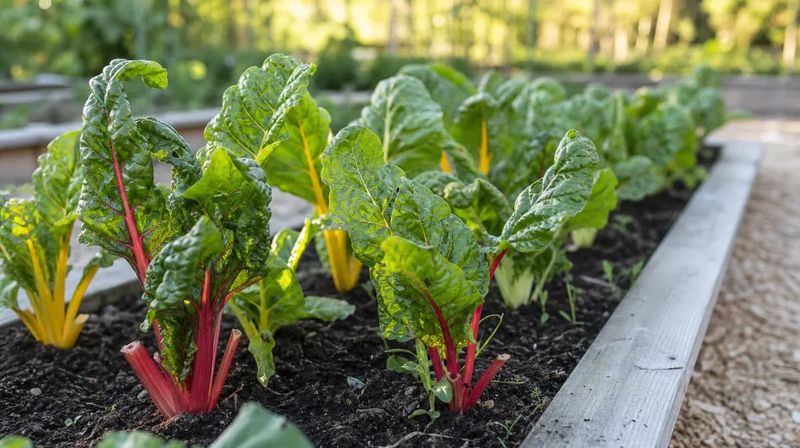
A chard plant that looks tired in December can still feed you for weeks if you pick it the right way. The trick is not a fancy tool or a secret fertilizer.
It is knowing which leaves to take and which ones to leave alone. Here is how Southern gardeners can keep picking from the same plants as nights get cold, and what to expect when the weather has other plans.
Choose usable leaves from the outside in
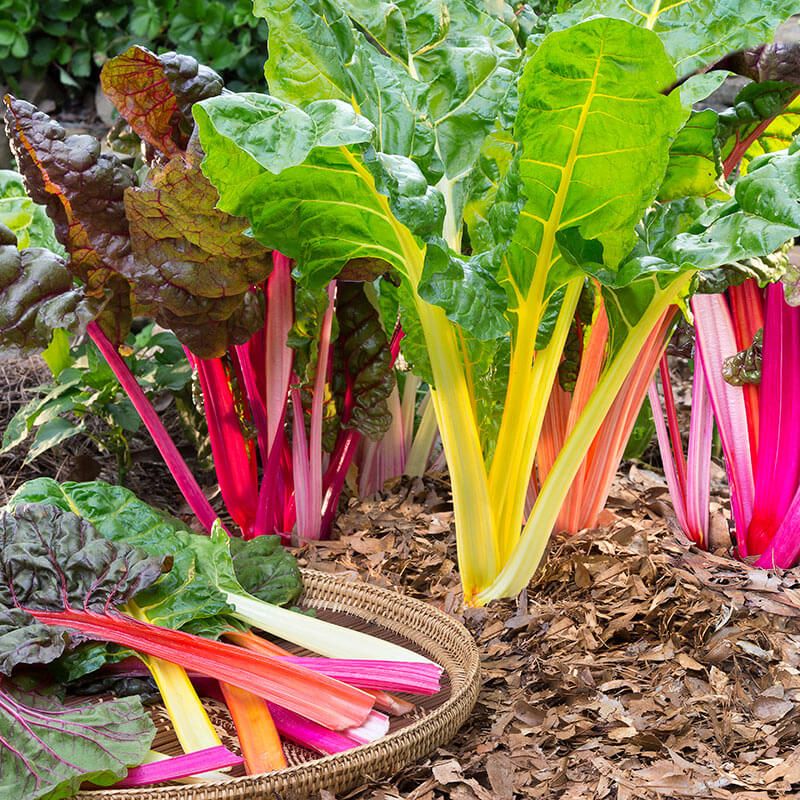
Walk around the plant and look for the biggest, oldest leaves on the outside of the clump. Those are the ones to pick first.
The small, curled leaves in the middle are the plant’s future, so leave them be.
How big is big enough? UF/IFAS suggests harvesting at about 8 to 10 inches, while Clemson Extension gives a wider range of roughly 4 to 12 inches.
Treat those numbers as a guide, not a strict rule. Baby leaves are tender for salads, and larger ones are great for sauteing.
Pick only what you plan to cook that day or the next. Taking a few leaves from each plant, rather than stripping one plant bare, keeps every plant carrying enough foliage to stay active.
Skip any leaf that is yellowed, torn, or chewed down to the veins.
Cut near the base without injuring the crown
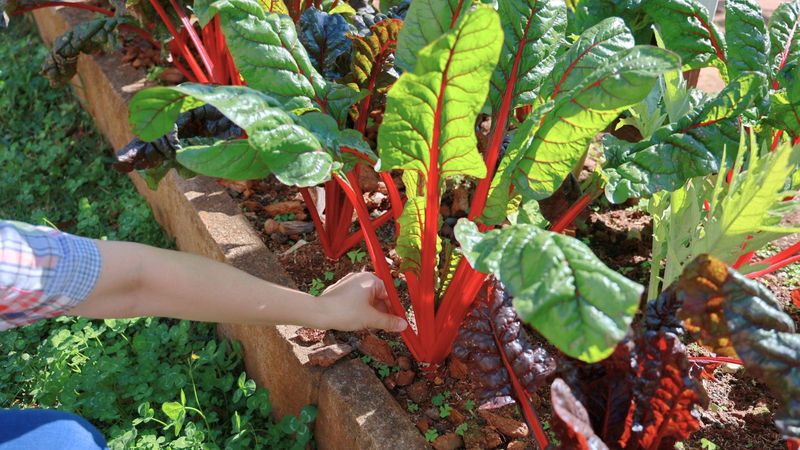
Once you have picked a leaf, follow its stalk down toward the soil. Cut it with clean, sharp snips about an inch or so above the ground, or snap it off with a gentle sideways tug.
Keep your blade away from the short, thick center where new leaves emerge. That center is called the crown.
The RHS advises picking chard leaves individually rather than taking the whole plant when you want it to keep producing. Avoid leaving long stubs, since they can rot and invite pests.
Routine picking like this is different from a rejuvenation cut. Maryland Extension describes snipping leaves about 2 inches above the crown to encourage a fresh flush of growth.
That is a separate method you might try on a ragged plant. For everyday harvests, stick with single outer leaves.
Support later pickings with steady care
Because the center stays intact, the same living plant can give you more leaves later. Extension sources describe this as a way to keep harvesting from chard over time.
Expect successive pickings, though, not instant replacement of every leaf you removed.
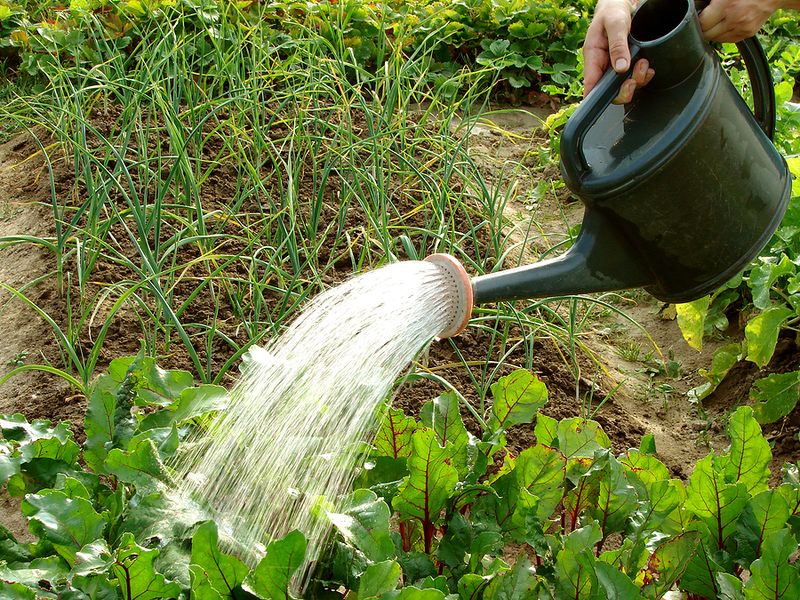
Water matters here. Maryland Extension recommends a uniform moisture supply and deep, regular watering during dry spells.
A drip line or a slow soak at the base works well, and a layer of mulch helps hold moisture.
Watering cannot overcome cold, though. When nights drop and days stay chilly, chard slows down no matter how well you tend it.
Check the soil with a finger before you water, and ease off when a cool, damp stretch settles in. Overly soggy soil in winter does the plant no favors.
Winter production depends on your local conditions
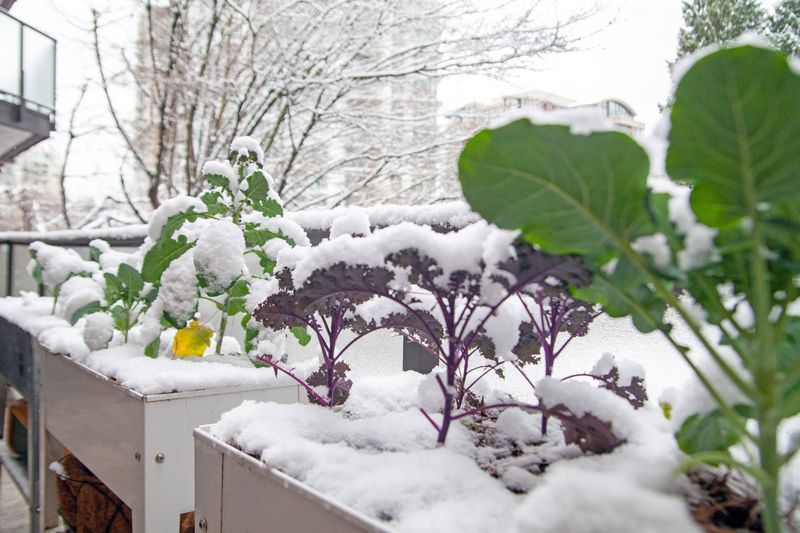
So how long will your chard keep going? That depends on where you garden.
Chard tolerates some frost and light freezes, but its cold tolerance has limits. Iowa State Extension says chard may take minor damage below 32°F and recover, and Mississippi State Extension says mature plants can handle temperatures into the upper 20s.
Those are general guides, and a hard freeze can badly damage or kill plants.
Cool weather suits chard, but growth slows in cold snaps. UC IPM notes it grows best at moderate temperatures, so do not expect the same pace in January as in November.
Southern conditions vary. UF/IFAS planting windows differ by Florida region, so check your county calendar.
Texas A&M says chard can be harvested all year in many areas of the state, but not every location. Watch your local freeze forecast.
Use frost covers carefully
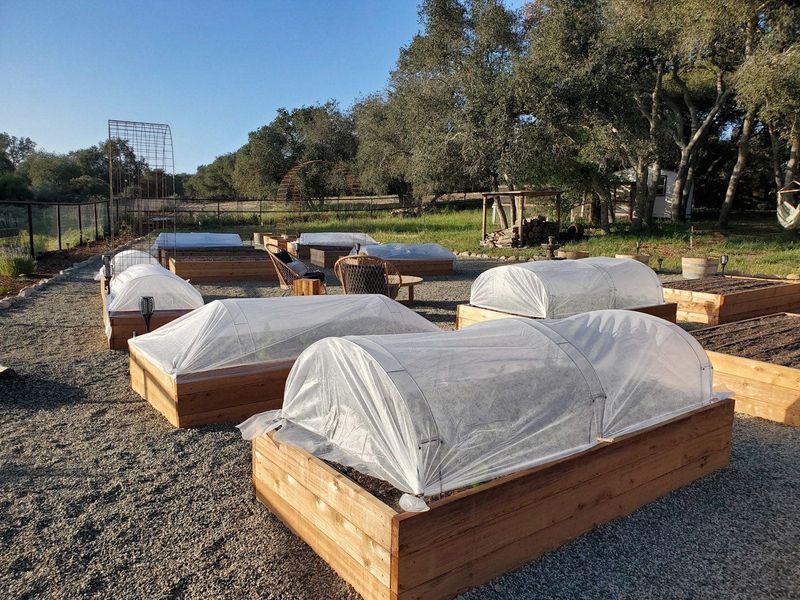
When a hard freeze is in the forecast, a cover can help. UGA Extension recommends anchoring covers down to the ground so they trap heat rising from the soil.
Weigh the edges with soil, bricks, or garden staples.
Keep the cover off the leaves. Hoops, stakes, or tomato cages can hold fabric or plastic above the plant.
Plastic touching foliage can make cold injury worse.
Take covers off once temperatures rise above 32°F, usually the next morning. Left in place, they can overheat plants and may contribute to pest and disease problems.
Even with good protection, survival is not guaranteed, especially in a deep or prolonged freeze. Think of a cover as a helpful buffer for a short cold night, not a shield against anything winter sends.
Harvest again when the plant is still growing
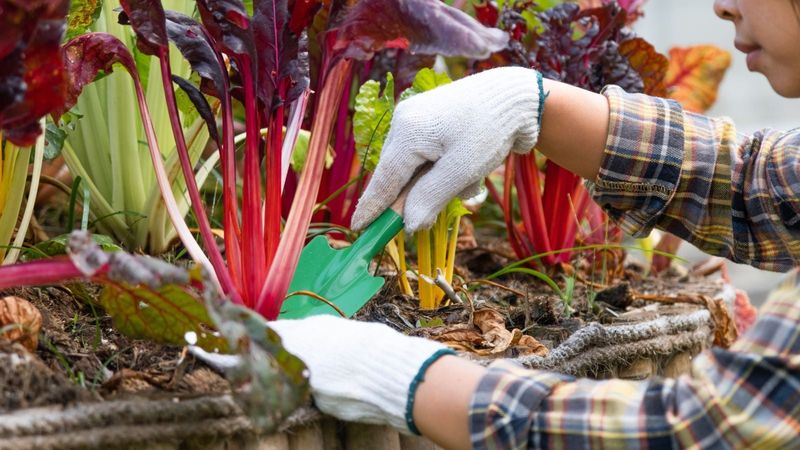
Pick outer leaves near their bases, leave the crown alone, and come back when the plant shows fresh growth. UF/IFAS describes this leaf-by-leaf approach as a way to keep harvesting, while UC IPM reminds growers that cold limits chard.
Careful picking stretches your harvest, but weather decides the final chapter. A plant that is still pushing new center leaves is a plant worth visiting again.