
Late July heat is brutal in Texas, but for gardeners in the northern part of the state, it can also be the last good window to get long-season fall vegetables in the ground. Miss that window and some crops simply will not have enough days to mature before a freeze arrives. Knowing your region, your local freeze history, and your specific crop’s timeline makes all the difference between a full harvest basket and a lot of empty raised beds.
Texas Has Several Fall-Garden Calendars
Planning a fall garden in Texas starts with one uncomfortable truth: the state does not run on a single planting calendar. Texas A&M AgriLife Extension’s fall vegetable gardening guide divides the state into five distinct gardening regions, each with its own planting windows. A broccoli transplant that needs to go in the ground during mid-July in the Panhandle might not be due until September or October in Central Texas, and even later in the Rio Grande Valley.
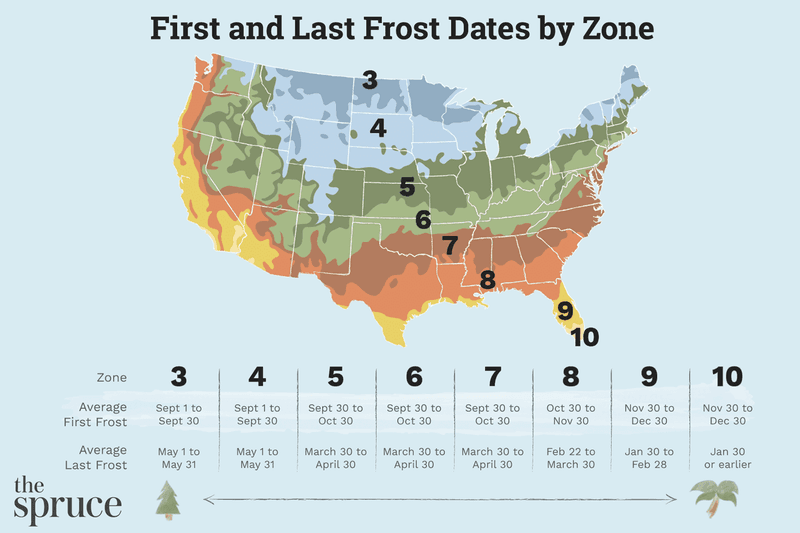
First-freeze timing drives that difference. National Weather Service data for the Amarillo area shows freezes commonly arriving around mid-October across much of the Panhandle, while El Paso’s average first 32-degree freeze lands around November 15, and the Dallas-Fort Worth 1991-2020 climate average puts that threshold near November 22. These numbers describe what typically happens, not what is guaranteed each year.
Treating those averages as fixed deadlines sets gardeners up for trouble. A warm fall can push a freeze well past the typical date; an early cold front can arrive weeks ahead of schedule. The practical move is to use your local average as a planning estimate, then build in a buffer so the crop has time to mature even if the season runs short.
Freeze terminology matters, too, because not every cold night hits crops the same way. A light frost differs meaningfully from a 32-degree freeze, which in turn is less severe than a hard freeze at 28 degrees or below. Cold-tolerant crops like broccoli and cabbage can shrug off a light frost; a prolonged hard freeze is a different situation entirely. Knowing which category you are facing helps you decide whether to cover plants, harvest early, or let the garden ride out the cold.
Which Crops May Need Attention in Late July?
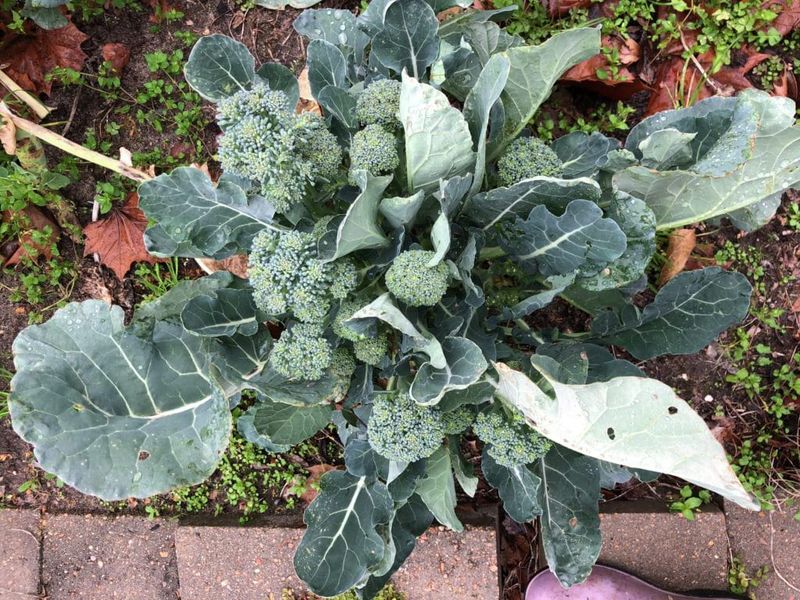
Not every fall vegetable belongs in the ground during late July, but a specific group of crops makes the timing matter most for northern Texas gardeners. Broccoli, Brussels sprouts, cabbage, and cauliflower are the strongest candidates. These are long-season brassicas that need roughly ten to sixteen weeks from transplant to harvest, and in areas where a first freeze typically arrives by mid-to-late October, that math points squarely at a mid-July to early-August transplanting window.
The same crops are not necessarily urgent farther south. AgriLife’s regional planting tables show that Central Texas gardeners may not need cabbage or broccoli transplants until September, and South Texas windows can extend even later. Rushing those crops into overheated soil before their regional window opens does not help them; it just adds heat stress to a plant that could have waited.
A second category worth checking is warm-season crops that may still fit a regional fall window in late July. Beans, cucumbers, and summer squash can sometimes be direct-seeded during this period in regions where enough frost-free days remain, but gardeners need to verify that against the local table rather than assuming a statewide green light. These crops are frost-sensitive, so a miscalculation on timing leaves them exposed when temperatures drop.
Cold-tolerant greens like lettuce, spinach, mustard, and turnips are a different story. The Texas Vegetable Growers Handbook notes that high soil temperatures can impair germination and establishment for these crops during the hottest part of summer. Most of them belong to later planting windows across much of Texas, not the late-July push. The short version: late July is urgent for long-season brassicas in the north, optional for some warm-season crops depending on region, and premature for cool-season greens in most of the state.
Count Back from a Local Freeze Estimate
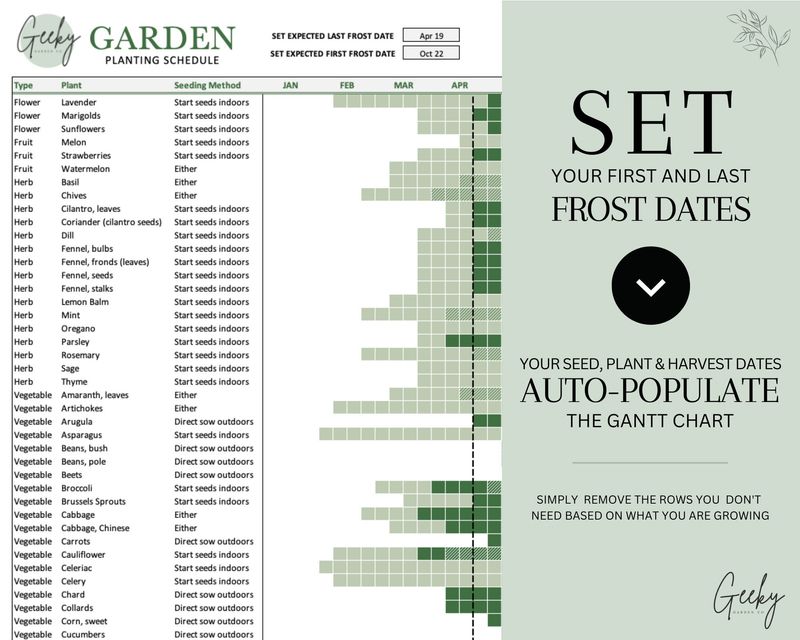
Every solid fall-garden plan starts with a single number: the typical first-freeze date for your specific location. Pull that figure from a National Weather Service climate page or from AgriLife’s regional resources, and treat it as a planning estimate rather than a promise. Local conditions, elevation, and microclimates all shift the actual date from year to year.
Once you have that estimate, add a buffer. A crop that technically matures just before your average first-freeze date is cutting it too close, because some years the freeze arrives early. A buffer of one to two weeks gives the harvest a margin for weather variability and the inevitable slowdowns that come with extreme Texas heat. University of Minnesota Extension’s guide on planting for fall harvest explains that days-to-maturity figures on seed packets typically begin when a transplant goes into the ground outdoors, not when the seed was started indoors.
Factor that in when you are counting backward.
Texas A&M’s Home Vegetable Gardening Guide provides approximate planning intervals from planting to the first freeze: bush beans, beets, lima beans, and carrots generally need about eight to ten weeks; broccoli and cabbage run ten to sixteen weeks; Brussels sprouts fall in the ten-to-fourteen-week range. Use these as ballpark figures, not fixed deadlines.
Several factors can stretch those estimates in Texas. Extreme late-summer heat slows establishment and can delay the point at which a transplant really starts growing. Variety selection also matters; AgriLife notes that only a limited number of cultivars are well adapted to any given Texas area, so checking local recommendations before buying seed or transplants pays off. Penn State Extension’s season-extender guidance reinforces that the same math applies whether you are working with transplants or direct-seeded crops, as long as you account for the added germination and seedling time when starting from seed.
Give New Transplants a Heat-Survival Plan
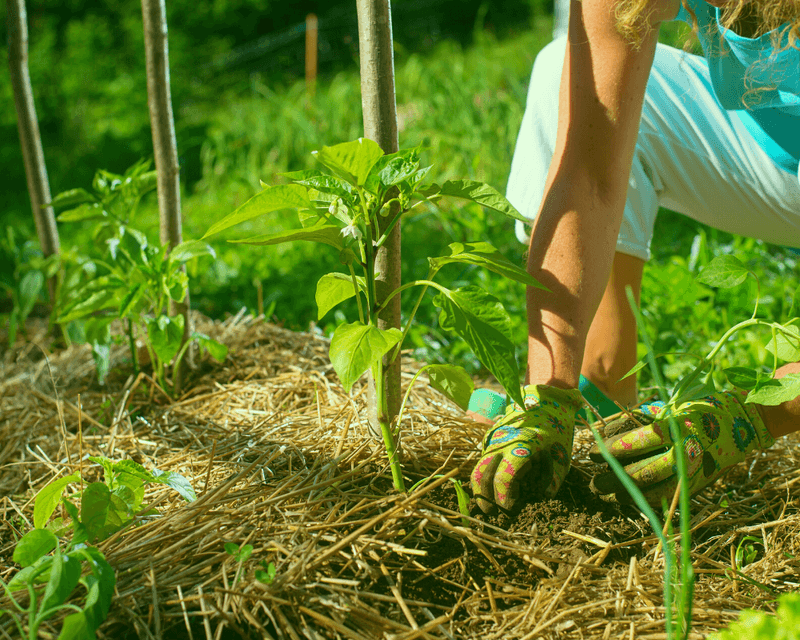
Timing is only half the battle in a Texas late-summer garden. Getting a transplant to survive its first two weeks in triple-digit heat is where many fall gardens actually succeed or fail. Transplants are often the practical choice for fall crops precisely because they skip the germination stage, giving the plant a head start when the calendar is already tight.
AgriLife specifically recommends transplants for tomatoes and peppers in the fall garden, and the same logic applies to brassicas when a gardener is working close to the regional deadline. Tomatoes and peppers need to be in the ground from transplants, not seed, to have any realistic shot at production before cold arrives. Broccoli, cabbage, and cauliflower transplants similarly outperform direct-seeded plants when the window is narrow.
Sun exposure matters more than most gardeners expect. AgriLife recommends full sun with shade after roughly 3 p.m. for establishing fall transplants during the hottest weather. A simple shade cloth or even a strategically placed board on the west side of the bed can reduce afternoon heat load enough to keep wilting in check. Well-drained soil is equally important; AgriLife’s soil preparation guidance emphasizes that compacted or poorly draining beds stress roots and create conditions for disease.
Watering new transplants in Texas heat requires attention, not a fixed schedule. Restricted-root transplants may genuinely need water every day or two during the first couple of weeks, but saturated soil can cause root rot just as quickly as drought can kill a wilting plant. Check soil moisture before watering rather than running on a timer. A layer of mulch reduces evaporation, moderates soil temperature, and protects against the rapid moisture loss that Texas heat and dry winds cause, making it one of the most practical tools for keeping new transplants alive through the worst of summer.
Hot Soil Changes When Seeds Can Succeed
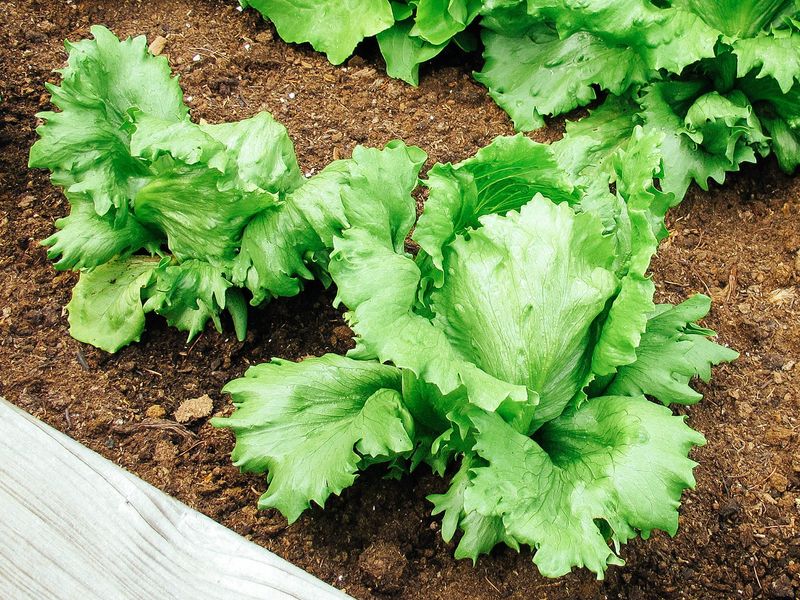
Soil temperature is one of the most overlooked variables in fall garden planning, and it directly determines whether a direct-seeded crop germinates or simply sits in the ground until conditions improve. For gardeners eager to get the whole fall lineup started in late July, that variable changes the strategy for an important group of crops.
The Texas Vegetable Growers Handbook identifies heat-induced dormancy as a real germination problem for lettuce and spinach when soil temperatures climb into the upper summer range. Sowing these seeds directly into hot Texas soil during late July is likely to produce poor or no germination, not because the timing is wrong on the calendar but because the soil itself is hostile to those particular seeds. Waiting until soil cools, providing shade to lower surface temperature, or starting transplants in a cooler indoor environment are all more reliable approaches.
Mustard, turnips, and similar cool-season greens share some of this sensitivity, though their thresholds and regional windows vary. AgriLife’s regional planting tables place most of these crops in later fall windows across much of Texas, often September or beyond, which conveniently aligns with cooler soil temperatures that support better germination rates.
The practical takeaway is to match the crop’s germination requirements to actual soil conditions, not just the calendar date. Check your regional AgriLife window, consider whether the soil has cooled enough for the seeds you want to plant, and choose transplants or a slightly later direct-seeding date when the ground is still too hot. Late July is a genuine action window for brassica transplants in northern Texas; for cool-season greens, patience and a soil thermometer are better tools than urgency.
Use Frost Protection Without Ending the Season Early
A first freeze does not automatically close a Texas fall garden. Whether it ends the season depends on which crops are growing and how cold the night actually gets. Understanding that distinction keeps productive plants in the ground longer and prevents premature harvests driven by unnecessary panic.
Cold-tolerant crops can continue growing after a light freeze and in some cases improve in flavor when temperatures drop. Broccoli, cabbage, Brussels sprouts, carrots, beets, kale, collards, chard, lettuce, mustard, spinach, and turnips all fall into this category. AgriLife categorizes these crops as able to withstand temperatures below 32 degrees Fahrenheit, though that tolerance is not unlimited and does not extend to prolonged hard freezes. Frost-sensitive crops are a different situation entirely: beans, cucumbers, eggplant, okra, peppers, squash, tomatoes, and watermelon should be harvested before a freeze is forecast.
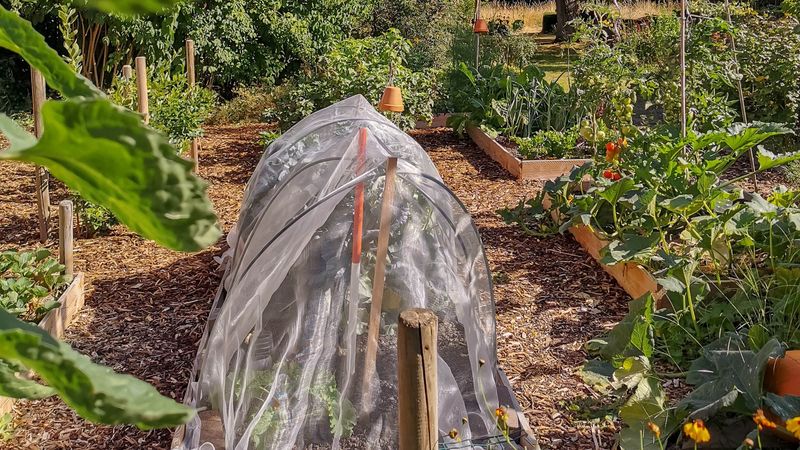
Row covers and other protection tools can extend the season for both categories, but they come with trade-offs. Plastic sheeting offers stronger cold protection but traps heat during the day and must be ventilated or removed before temperatures rise, or plants can cook underneath it. Season-extender resources from Penn State Extension and University of Minnesota Extension’s fall harvest guide both note that spunbond fabric offers a different balance, providing some frost protection while being less likely to overheat plants on warmer days. Neither option is foolproof; both require monitoring actual forecasts rather than relying on average freeze dates.
The National Weather Service distinguishes between frost, a 32-degree freeze, and a hard freeze at 28 degrees or below, and that distinction should guide how aggressively you protect plants. A light frost advisory calls for a different response than a hard-freeze warning. Matching your protection level to the actual forecast keeps the garden productive longer without wasting effort on mild nights.
Build Your Regional Planting Decision
Pulling this all together comes down to a short sequence of decisions that starts with your location, not a generalized article deadline. Find the typical first-freeze date for your specific area using a National Weather Service climate page or the AgriLife fall vegetable gardening guide’s regional planting tables. Treat that date as an estimate with real uncertainty on both sides, not a promise from the calendar.
Next, check the crop-specific window for your Texas region. Add a practical buffer of one to two weeks to account for early cold fronts and the inevitable slowdowns that Texas heat puts on young transplants. Then count backward using the days-to-maturity figure on your chosen variety’s label, remembering that number typically starts from transplant date, not seed-start date. If the math works out, plant.
If it does not, choose a faster-maturing variety or wait for a crop with a later regional window.
Northern Texas gardeners may genuinely need to act during late-July heat to get long-season brassicas in the ground before the Panhandle or North Texas freeze season closes that window. Central and southern Texas gardeners typically have later windows and should resist the urge to rush crops into soil that is still too hot for good establishment. The best fall garden in Texas is not the one started earliest; it is the one planted at the right time for the right place.