
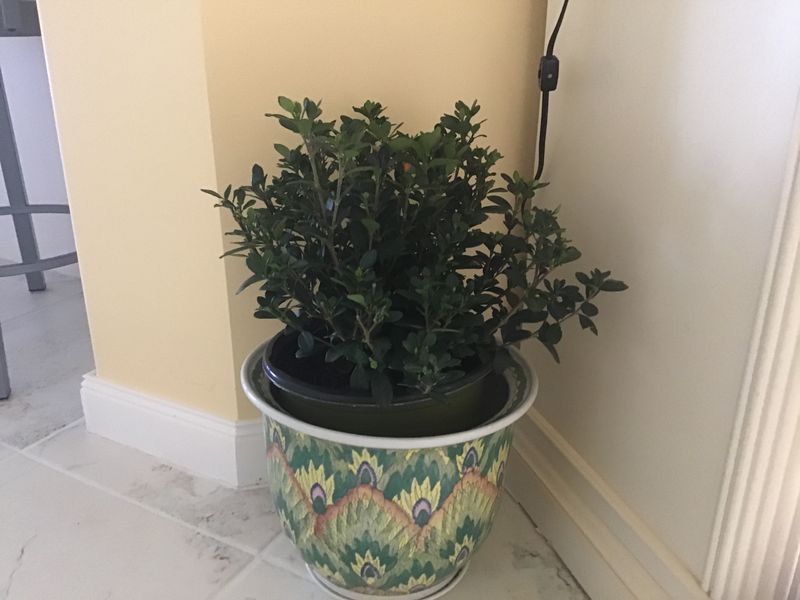
Gardenias are one of those plants that stop people in their tracks with their creamy white blooms and intoxicating fragrance, but growing them in a Texas summer is a real test of patience and preparation. The heat, the reflected pavement, the alkaline water, and the dry spells can push a potted gardenia to its limit fast. Growing one in a container gives you more control than planting it in the ground, but that same container can also heat up and dry out faster than you might expect. The methods in this guide are designed to improve your plant’s chances of handling a Texas summer, not to promise that heat can never hurt it.
Set realistic expectations for a Texas container gardenia
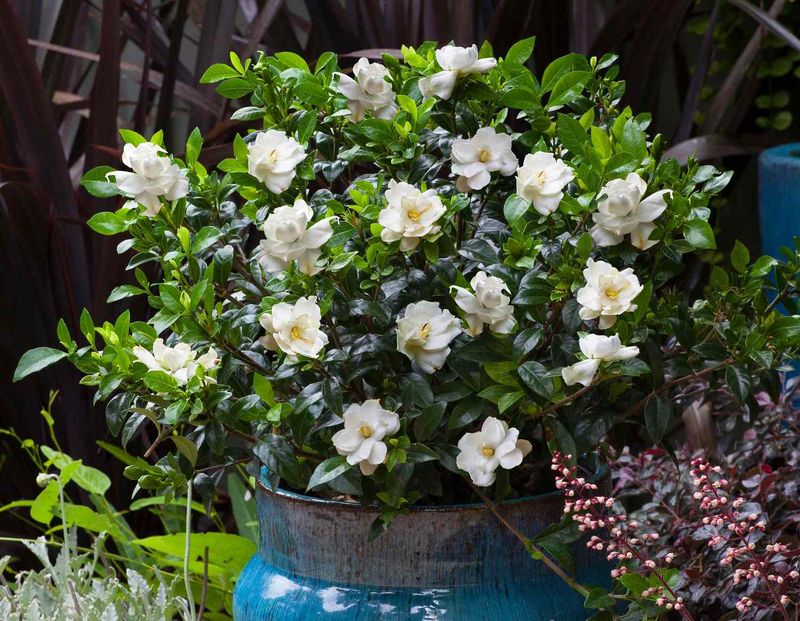
Gardenias can grow in Texas containers, and plenty of Texas gardeners have pulled it off, but the honest starting point is that no setup makes a plant immune to triple-digit heat. Clemson Extension’s gardenia guidance describes the plant as preferring consistent moisture, acidic media, and protection from harsh afternoon sun, all of which take deliberate effort in a Texas summer. The goal here is to improve the plant’s odds, not to guarantee its survival.
Where you live in Texas shapes those odds considerably. Gulf Coast and some East Texas locations may offer more favorable humidity and milder reflected heat in certain microclimates, which can reduce some of the moisture stress a gardenia faces. Galveston County Master Gardener guidance specifically recommends morning sun with protection from direct hot afternoon sun, a prescription that reflects how seriously local advisors take afternoon heat even along the coast.
Exposed sites in Central and North Texas can present a harder set of challenges: more intense reflected heat from pavement and walls, lower humidity, alkaline irrigation water, and sharper freeze events that vary from one neighborhood to the next. Brazoria County guidance calls for regular watering and avoidance of late-afternoon heat, which are region-specific recommendations rather than universal guarantees.
A container does give you real advantages: tighter control over pH, drainage, and growing media composition, plus the ability to move the plant when weather turns dangerous. University of Minnesota Extension’s container-plant guidance notes that pots dry and heat faster than open ground, which means the control a container provides comes with a responsibility to check on the plant more frequently. Managing that trade-off well is what the rest of this guide is about.
Use morning sun and afternoon shade to reduce heat exposure
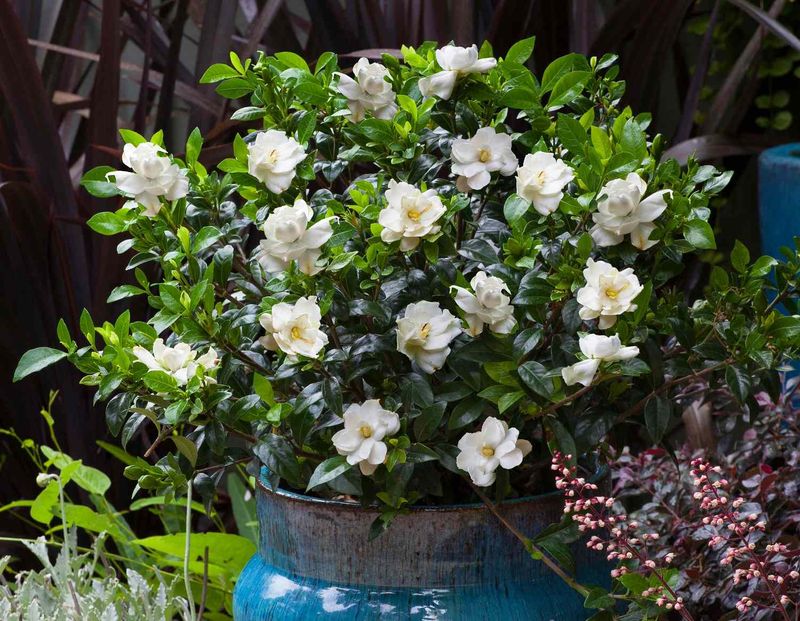
Placement is one of the most consequential decisions you will make for a container gardenia in Texas, and afternoon sun is where most gardeners get it wrong. Clemson Extension identifies light to partial shade, preferably morning sun with afternoon shade, as the preferred exposure for gardenias, and that recommendation holds especially true when the pot is sitting on or near heat-radiating pavement.
A spot that gets three to four hours of direct morning light and then moves into filtered shade by early afternoon gives the plant enough energy to support flowering without cooking the roots and foliage during the hottest hours. Insufficient light creates its own problems, including weak growth and poor bud development, so the answer is not to tuck the plant in deep shade all day. The sweet spot is bright, indirect light through the afternoon combined with direct morning sun.
Cultivar tags that say “full sun” or “part shade” can be misleading in a Texas context. Henderson County Master Gardener guidance on ‘August Beauty’ lists the plant as full sun/part shade but separately notes the need for more frequent watering during extreme heat, which is a signal that even a sun-tolerant cultivar needs extra support in Texas conditions. Brazoria County guidance takes a more conservative line and recommends avoiding direct late-afternoon sun entirely.
Before you settle on a spot, spend a day watching how light and heat move across it. A south- or west-facing wall can reflect enough radiant heat to stress a gardenia even if the pot is technically in shade. Wind exposure matters too, since a hot, dry breeze accelerates moisture loss from both the foliage and the container. Morning sun with afternoon protection is the safer default for any exposed Texas container, and it gives the plant a better chance of avoiding heat stress during the months when temperatures are most punishing.
Build an acidic, porous, well-drained root environment
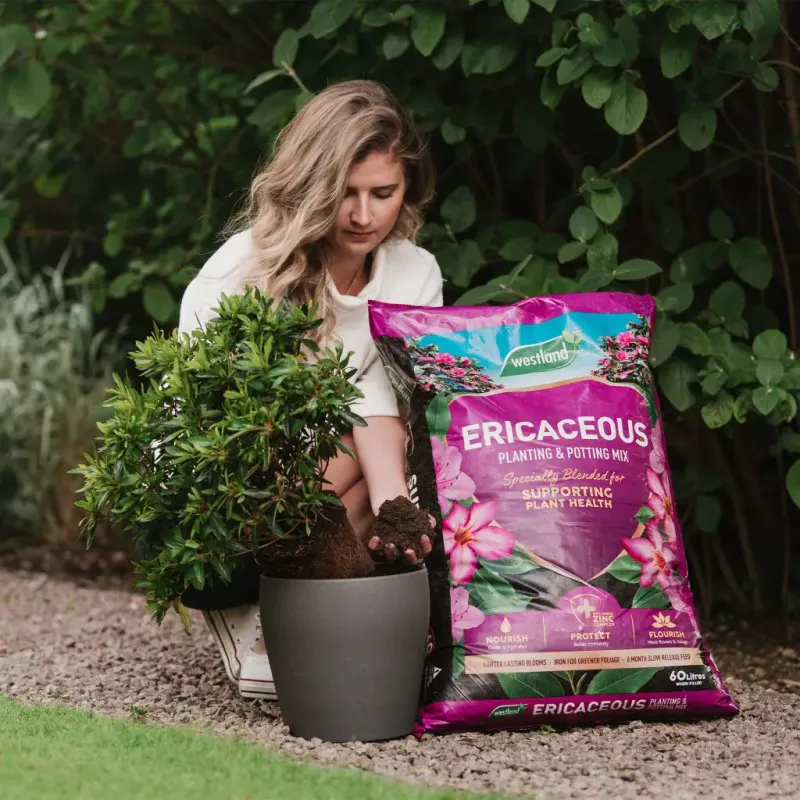
What you put in the pot matters as much as where you put it. Gardenias need acidic, porous, well-drained growing media, and straight Texas garden soil does not meet any of those three requirements reliably. Garden soil in a container tends to compact, restrict drainage, and hold moisture unevenly, which creates conditions where roots sit in poorly aerated media even when the surface looks dry.
University of Georgia Extension’s container gardening guide recommends porous soilless mixes containing materials such as composted bark, peat or coir, perlite, or vermiculite. A commercial mix labeled for acid-loving plants or camellias and azaleas is a reasonable starting point because it is already formulated for the pH range gardenias prefer. Clemson Extension places the preferred gardenia media pH at approximately 5.0 to 6.0 and notes that pH above 7.0 can make iron unavailable to the plant, causing yellowing between the veins of newer leaves.
Porosity and acidity are separate requirements. An acidic mix that drains poorly still deprives roots of oxygen and sets up root problems. The pot itself must have unobstructed drainage holes, and you should never leave the container sitting in a saucer of standing water. Penn State Extension’s container gardening guidance reinforces that waterlogged media is one of the most common causes of root failure in containers.
Container size affects moisture management more than most gardeners expect. UGA Extension’s container gardening overview generally recommends sizing up gradually as roots fill the existing pot rather than moving a small plant into an oversized container all at once. A very large volume of media around a small root system can stay wet for extended periods, reducing oxygen and increasing the risk of root problems even in a porous mix. A container that is one size larger than the current root ball gives roots room to grow without leaving them surrounded by persistently saturated media.
Let moisture checks—not the calendar—control watering
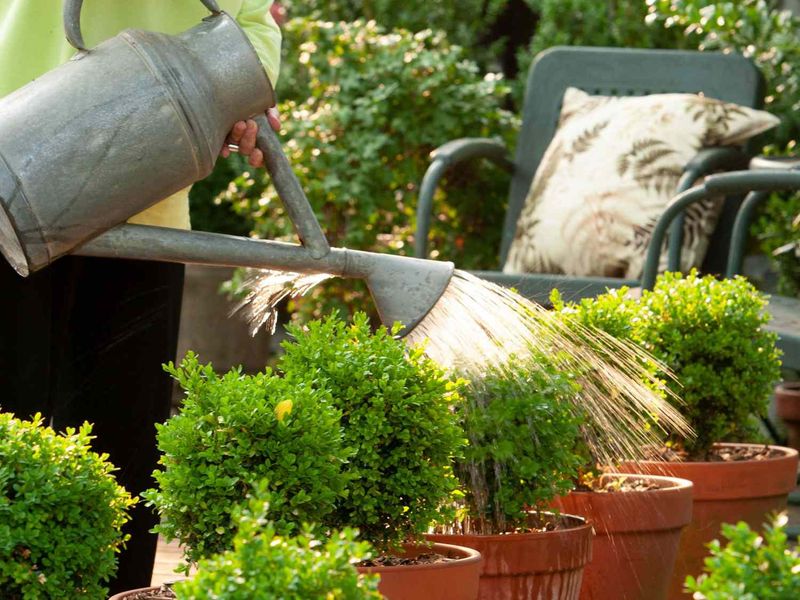
Watering a container gardenia by the calendar is one of the fastest ways to lose it in a Texas summer. A small pot in a west-facing spot on a concrete patio may need water every day or even twice a day during a heat wave, while a larger pot in a shaded corner with lower wind exposure might hold moisture much longer. University of Minnesota Extension’s container watering guidance confirms that water demand changes with pot size, wind, sun exposure, plant size, media composition, humidity, and temperature, making a fixed schedule unreliable for any container plant.
The right approach is to inspect the media and the plant frequently, especially during hot, dry, or windy stretches. Press a finger an inch or two into the growing mix; if it feels dry at that depth, water thoroughly. Penn State Extension recommends watering until water flows freely from the drainage holes, which ensures the entire root zone gets wet rather than just the top layer. After watering, empty any water that collects in the catch tray so roots are not sitting in standing water.
The target is growing media that stays evenly moist but well drained, never constantly saturated. UGA Extension’s container guide notes that both underwatering and overwatering cause stress symptoms that can look similar on the surface, including wilting, leaf drop, and declining plant health. Assuming the plant needs more water every time it looks stressed can make a drainage problem worse rather than better.
Clemson Extension identifies inconsistent moisture as a contributing factor in bud drop, which is one of the most frustrating gardenia problems during a Texas summer. Keeping the moisture level steady, rather than swinging between bone dry and saturated, is one of the most useful things you can do for a gardenia in a container. Check the pot daily during peak heat, and adjust your frequency based on what you find rather than what the last few days looked like on the calendar.
Reduce heat around the container and root zone
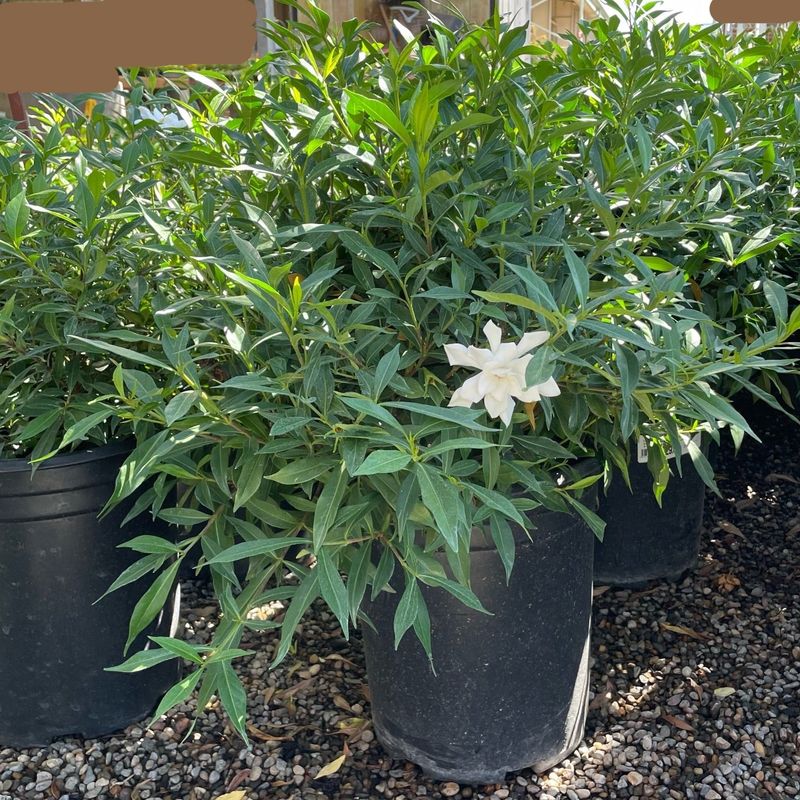
Watering keeps roots hydrated, but it does not stop the container from absorbing and radiating heat. A dark-colored nursery pot sitting directly on concrete in a Texas summer can reach temperatures that damage roots even when the media stays moist. UGA Extension’s container overview notes that containers expose roots to greater temperature fluctuations than in-ground plants, making the physical setup of the pot itself a meaningful part of heat management.
A few practical changes can reduce that heat load. Using a light-colored or insulated outer container, or slipping the nursery pot inside a larger decorative pot with an air gap between them, helps reflect radiant heat rather than absorb it. Raising the pot off the pavement with pot feet or a wooden platform limits direct contact with heat-radiating surfaces. University of Minnesota Extension’s watering guidance supports mulching the media surface as a way to reduce evaporation and moderate temperature at the root zone.
A thin layer of organic mulch, such as pine bark or shredded wood, applied over the top of the growing media can slow moisture loss and buffer temperature swings at the surface. Keep the mulch from touching the trunk directly to avoid creating conditions where stem rot can develop. Rockwall County Master Gardener guidance on container plant exposure reinforces that pot positioning and insulation both matter when roots have nowhere else to go. None of these steps guarantee the plant will sail through a Texas summer unaffected, but together they reduce the heat load the root zone faces on the hottest days.
Feed carefully and investigate yellow leaves before treating
Container gardenias need regular feeding because their roots cannot reach beyond the pot for nutrients, and nutrients leach out of the media with every watering. An acid-loving plant fertilizer used according to the label is a reasonable approach for most Texas container gardenias. Clemson Extension recommends feeding gardenias appropriately rather than pushing heavy bloom-booster applications repeatedly, since excess fertilizer can injure roots and build up soluble salts in the limited media volume of a container.
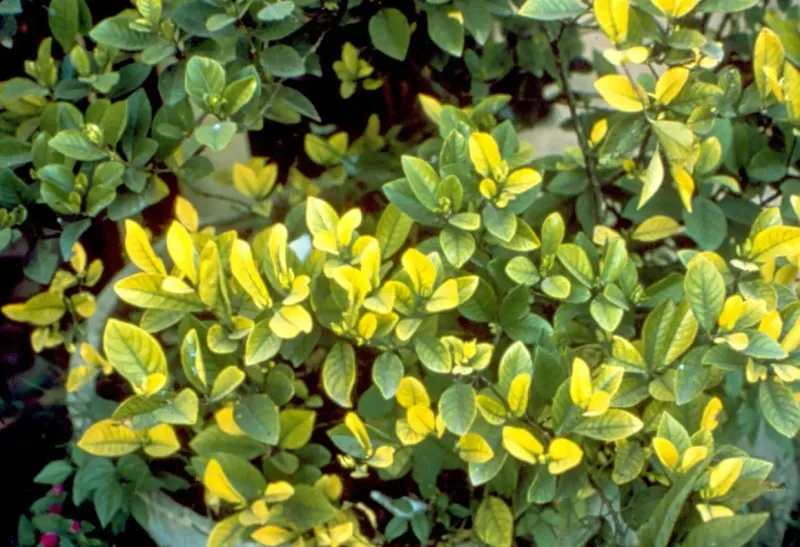
Yellow leaves are one of the most common reasons gardeners reach for fertilizer, but adding more fertilizer is rarely the right first response. Clemson Extension’s gardenia problems guide explains that yellowing between the veins of newer leaves, with the veins themselves staying green, is more consistent with iron chlorosis caused by high pH than with a simple nutrient shortage. That pattern is common in Texas containers watered with alkaline municipal water or filled with a mix that has drifted above pH 6.0 over time.
However, older leaves turning uniformly yellow and dropping can be a normal part of aging, and yellowing across the plant can also result from overwatering, underwatering, poor drainage, insufficient light, pest activity, or temperature stress. UGA Extension’s container guide notes that diagnosing the actual cause before treating prevents the kind of well-intentioned over-treatment that makes the underlying problem worse.
If you suspect pH is the issue, test the media rather than guessing. Ask Extension’s iron-chlorosis discussion makes clear that acid-loving fertilizer alone does not reliably correct severely alkaline media. Chelated iron can temporarily improve symptoms, but it does not permanently lower pH. Measured, label-based amendments guided by a soil test are the more defensible path, and improvised fixes like vinegar or coffee grounds are not supported by the extension sources reviewed here.
Address the pH problem at its root before expecting fertilizer to carry the load.
Treat bud drop and pests as clues to investigate
Bud drop is one of the most discouraging things that happens to a gardenia, and it rarely has just one cause. High temperatures, inconsistent moisture, waterlogged media, insufficient light, and low humidity can all contribute to buds falling before they open. Clemson Extension also notes that gardenia flower-bud formation benefits from cool nighttime temperatures around 50 to 55 degrees Fahrenheit, which means buds lost in summer are not necessarily evidence of heat damage alone. Tracking when the drop happens and what conditions preceded it gives you more useful information than assuming any single cause.
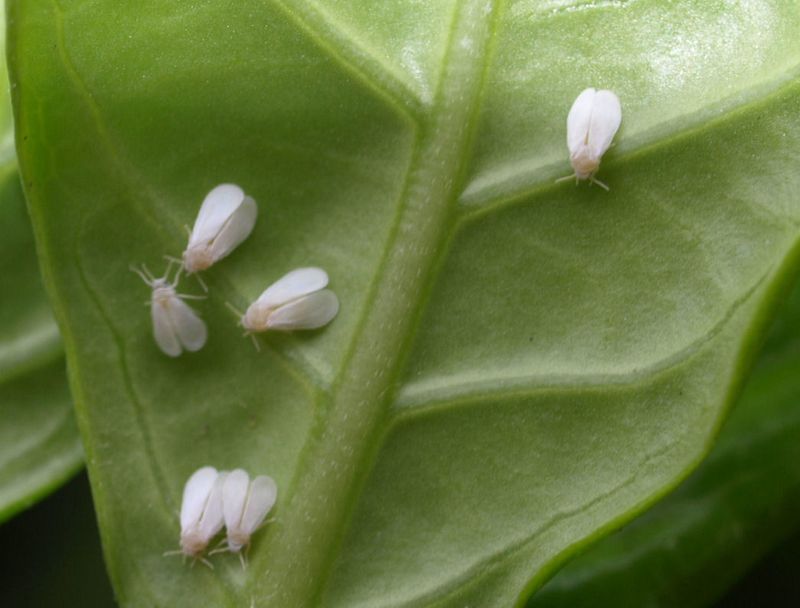
Pests are another variable that can look like environmental stress until you check closely. Whiteflies, aphids, scale, thrips, and mites are all known to affect gardenias, and Clemson Extension’s gardenia problems factsheet points out that hot, dry conditions can intensify mite pressure. Before treating, inspect the undersides of leaves and new growth carefully. Small moving dots, sticky residue, tiny cottony clusters, or fine webbing are all signs worth taking seriously before you reach for a product.
If treatment is warranted, horticultural oil is one option supported by published label guidance. One EPA-registered horticultural oil label and a second registered label both carry specific instructions for dilution, timing, temperature limits, and plant compatibility. Do not apply horticultural oil to a wilted or drought-stressed plant; doing so increases the risk of phytotoxicity. Follow the product label for the specific product you are using, including the temperature window and any restrictions for sensitive plants.
If you choose insecticidal soap instead of or alongside oil, follow the label for that specific soap product. The restrictions on oil labels do not automatically transfer to soap products, and soap labels vary by formulation. Treating a stressed, drought-affected gardenia with any contact pesticide during peak afternoon heat adds risk without improving results. Identify the pest, confirm the plant is adequately watered, and apply during a cooler part of the day according to the label’s direction.
Move the container when extreme weather approaches
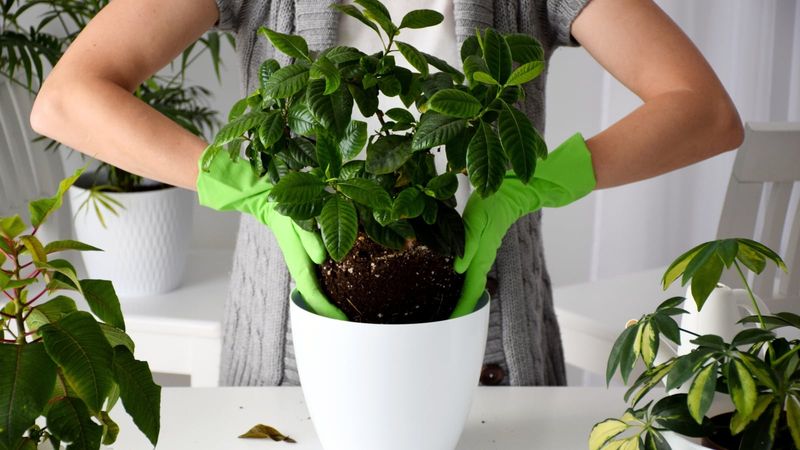
Mobility is the single biggest advantage a container gives you over an in-ground plant, and it pays off most when weather turns severe. Reflected heat from a south-facing wall, an approaching hailstorm, a sudden freeze warning, or a stretch of damaging wind are all situations where moving the pot to a more protected spot can make a real difference. Ask Extension’s guidance on overwintering container plants explains that container roots are less insulated than roots in the ground and face greater temperature swings during cold events, which is a risk that applies across much of Texas even where average winters are relatively mild.
Hardiness-zone ratings describe broad average winter risk rather than guaranteeing that any particular winter or summer will stay within a comfortable range. UGA Extension’s shrub care guidance places gardenias in USDA Zones 8 to 11, but an unusual freeze in a zone-8 Texas location can still damage exposed container roots in ways that a zone rating does not predict. Plan for mobility before you need it by keeping the pot on a wheeled plant caddy and making sure you know where you will move it when a forecast turns threatening.
Galveston County Master Gardener guidance reinforces that thoughtful site management, not just watering, is what separates a gardenia that survives a Texas summer from one that does not. A prevention checklist for the season: choose a spot with morning sun and afternoon protection, fill the pot with acidic, porous, well-drained growing media, check moisture daily and water based on what you find rather than a schedule, use a light-colored container off hot pavement with mulch over the media surface, feed according to the label and test before treating yellow leaves, monitor for pests on leaf undersides, and keep the plant on wheels so you can move it fast. A gardenia grown this way has a genuinely better chance of coming through a Texas summer, and that honest improvement in odds is the most reliable thing this guide can offer.