
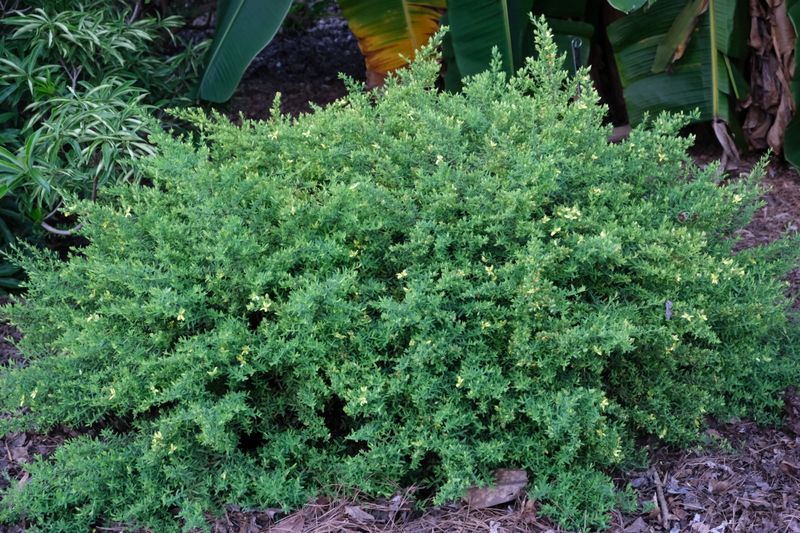
Most nursery shelves pass right over St. Andrew’s cross, a compact native shrub that quietly flowers through much of summer and gets by on less water than you might expect once it settles in. Known botanically as Hypericum hypericoides, it belongs to North Carolina’s Coastal Plain and Piedmont landscapes, where it grows in sandy soils and open woodlands. The flowers are small and understated, not the kind of showstopper that stops you in your tracks, but the plant earns its place through steady summer color, low-fuss care after establishment, and genuine value for bees, butterflies, and birds. If you have been looking for a native shrub that fits a dry, sunny spot without demanding constant attention, this one is worth a closer look.
Meet St. Andrew’s cross
St. Andrew’s cross carries the botanical name Hypericum hypericoides, a detail worth knowing because several unrelated plants share the common name St. John’s wort and lumping them together leads to confusion about appearance, care, and safety. NC State Extension’s plant toolbox describes it as a compact, dense, erect to multi-stemmed native shrub that typically grows about 2 to 4 feet tall and 1 to 3 feet wide, making it a tidy fit for smaller yards and garden borders.
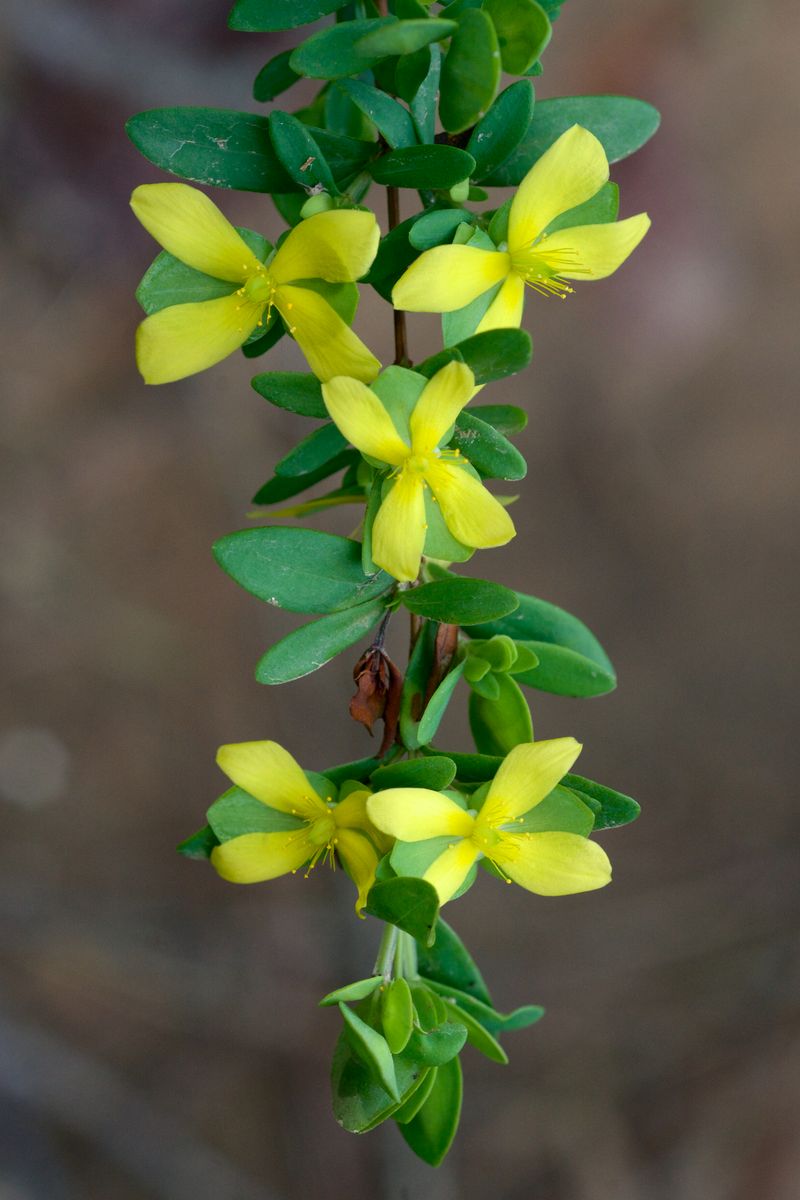
The plant’s modest size is matched by its modest flowers. Each bloom is small, yellow, and shaped like a cross, which is exactly where the common name comes from. Missouri’s Department of Conservation field guide notes plainly that the flowers are neither abundant nor especially showy, so shoppers walking past a flat of them at a nursery might not give a second glance. That low visual impact on the sales floor probably contributes to why you see it less often than showier ornamentals, though no hard sales data confirms a statewide pattern.
The title of this article calls the shrub a nonstop bloomer that shrugs off dry spells without a second thought. Both ideas are directionally right, but each needs a qualifier. The bloom season is fairly long through summer, not uninterrupted from spring through frost. And while the plant becomes fairly drought-tolerant after it establishes, new plants need regular water and even settled ones can struggle during an unusually prolonged dry stretch.
Think of it as a capable, low-key native rather than a no-care miracle, and it will likely reward you.
Expect a long summer bloom, not nonstop flowers
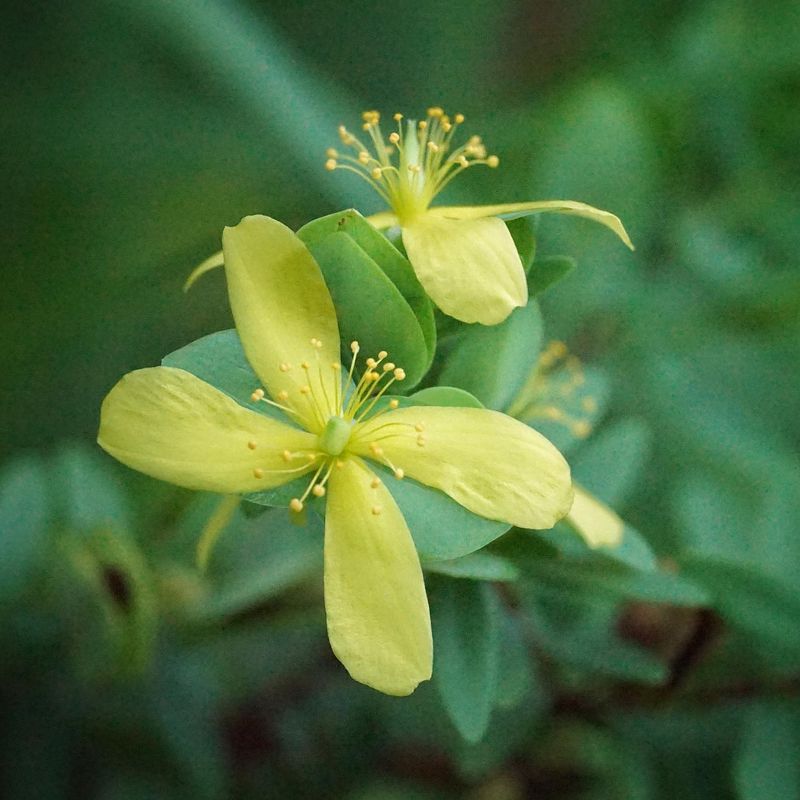
Yellow flowers appear on St. Andrew’s cross through a fairly long stretch of summer, and that extended season is genuinely useful in a garden where many shrubs finish flowering by late spring. NC State’s plant profile for St. Andrew’s cross describes the bloom as a fairly long season during the summer, and notes that in warmer climates the plant can flower nearly year-round. For most North Carolina homeowners in the Coastal Plain and Piedmont, a reasonable expectation is steady bloom through much of summer rather than a wall-to-wall floral display from April through October.
Each individual flower measures less than an inch across. The four petals are arranged in a cross shape, giving the plant its name, but they are delicate and not the kind of bold, saturated blooms that photograph dramatically or anchor a focal-point border. The Missouri Department of Conservation’s assessment that the flowers are not abundant or highly showy is a fair heads-up: this is a plant for gardeners who appreciate quiet, native-scale interest rather than a centerpiece that demands attention from across the yard.
There is no strong evidence in the reviewed sources that St. Andrew’s cross goes through distinct waves of bloom the way some perennials do, so calling it a rebloomer would overstate the case. What the sources do support is an extended flowering window that carries through summer without the plant going fully dormant between flushes. That steady, low-key presence is actually part of its appeal for a naturalized border or a pollinator patch where you want something reliably in flower without constant deadheading or fuss.
How it handles dry spells
Drought tolerance is real for this shrub, but it comes with a condition: the plant has to be established first. NC State’s plant toolbox entry describes Hypericum hypericoides as fairly drought-tolerant, and its natural habitat in sandy Coastal Plain soils supports that reputation. Sandy and loamy soils that range from average-moist to occasionally dry are its sweet spot. Compacted ground or sites that stay persistently wet are a poor match and can lead to root problems rather than the resilient performance the plant is known for.
A newly planted shrub is a different story. NC State’s Extension Gardener Handbook chapter on native plants advises keeping newly planted natives well-watered for the first few weeks or until roots establish. Skipping that step during a hot, dry first summer is one of the fastest ways to lose a plant that would otherwise have been low-maintenance for years. Plan on watering regularly through the establishment window, and do not assume that calling something drought-tolerant means it can be ignored from day one.
Even after establishment, an unusually prolonged heat wave or multi-week dry spell can push the plant past its comfort zone. NC State’s guidance on helping landscapes survive drought recommends supplemental irrigation during extended dry periods rather than waiting for visible stress. Watching for wilting or leaf scorch gives you an early signal that the plant needs a drink even if it has been in the ground for a season or two.
A 2 to 3 inch layer of mulch over the root zone makes a real difference on hot, sandy sites. Mulch conserves soil moisture, moderates temperature swings, and cuts down on weed competition, all of which reduce the stress the plant faces during a dry stretch. Keep the mulch pulled back from direct contact with the stems to avoid rot and pest issues at the base.
Choose the right North Carolina site
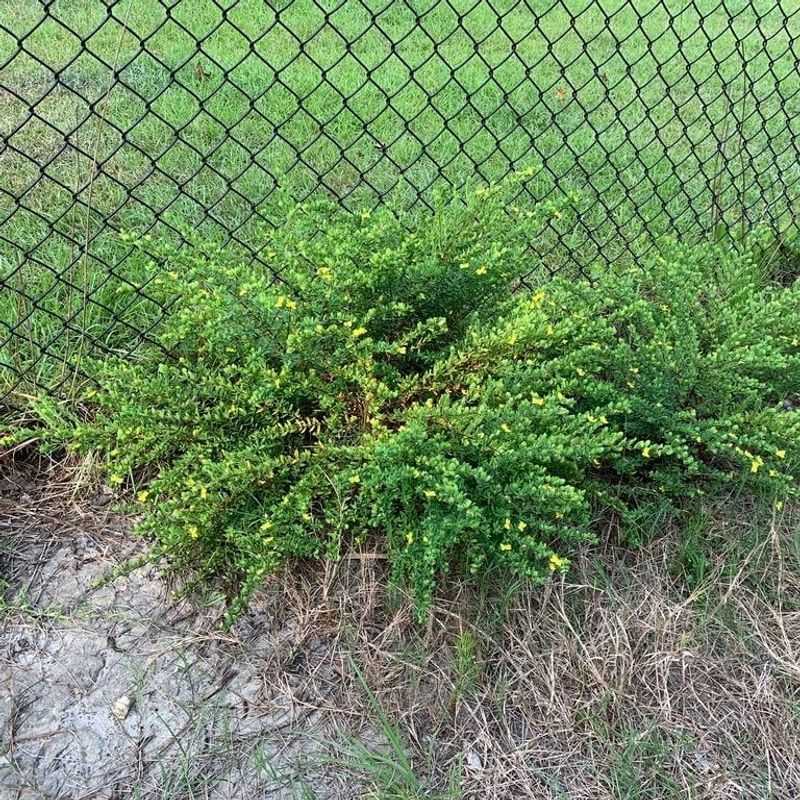
NC State lists Hypericum hypericoides for North Carolina’s Coastal Plain and Piedmont, connecting it to sandy prairies, open pine-hardwood forests, thickets, and grasslands. Those are the regions where the plant has a documented native presence and a track record of performing well. The available sources do not establish that the shrub is equally suitable or equally reliable in the mountains, so homeowners in western North Carolina should look for locally sourced guidance before planting it as a go-to choice.
Light matters for flowering. Full sun will give you the best bloom production, and that makes sense given the open, sunny habitats where the plant naturally occurs. Partial shade is tolerated, but expect fewer flowers in shadier spots. A site with morning sun and some afternoon relief from the hottest summer heat is a reasonable compromise if full sun is not available, though a genuinely shaded location is likely to produce a leggy, sparse plant with minimal bloom.
Soil choice is straightforward: well-drained sandy or loamy ground is the target. NC State’s toolbox profile confirms that the plant fits native, pollinator, naturalized, border, and mass-planting designs, which gives you a lot of flexibility in how you use it. A naturalized edge planting along a sunny fence line, a pollinator strip in a sandy backyard, or a low border in a native plant garden are all practical applications.
One firm limitation applies to coastal properties: the plant is not salt-tolerant. That rules it out for exposed beachfront sites or any location that regularly receives salt spray from ocean winds. Homeowners on the coast with a sheltered, well-drained yard well back from the water may still find it worth trying, but placing it where salt spray is a regular factor will likely end in disappointment.
Its wildlife value is useful, not miraculous
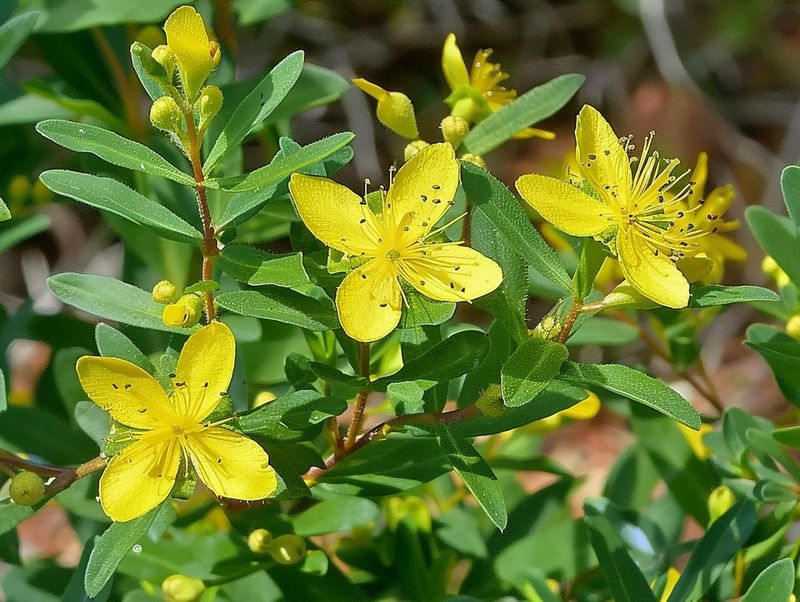
Bees and butterflies visit the flowers, and birds eat the seeds. Those are the documented wildlife benefits of St. Andrew’s cross, and they are genuinely worth having in a yard that supports native wildlife. NC State’s plant profile confirms all three visitor types, placing the shrub solidly in the useful-native category for a pollinator patch or a naturalized border where you want to feed the food web.
Context helps here. The flowers are small and not especially abundant, so the shrub is not likely to become the busiest spot in a pollinator garden during peak summer. A larger-flowered native nearby will probably draw more obvious insect traffic. What St. Andrew’s cross offers is steady, low-key availability through a fairly long summer window, which means pollinators that work the garden regularly will find it and return.
Missouri’s field guide reinforces that the understated flower display is part of the plant’s character rather than a deficiency to be corrected.
A word of caution on pest control claims: the evidence reviewed for this article connects St. Andrew’s cross to pollinators and seed-eating birds, not to tick or mosquito reduction. Planting this shrub will not create a tick-free yard or cut down on the mosquitoes near your patio. Those are separate problems that call for separate strategies. The wildlife value here is real and worth appreciating on its own terms, without layering on pest-defense promises the plant has not been shown to deliver.
Find and establish it realistically
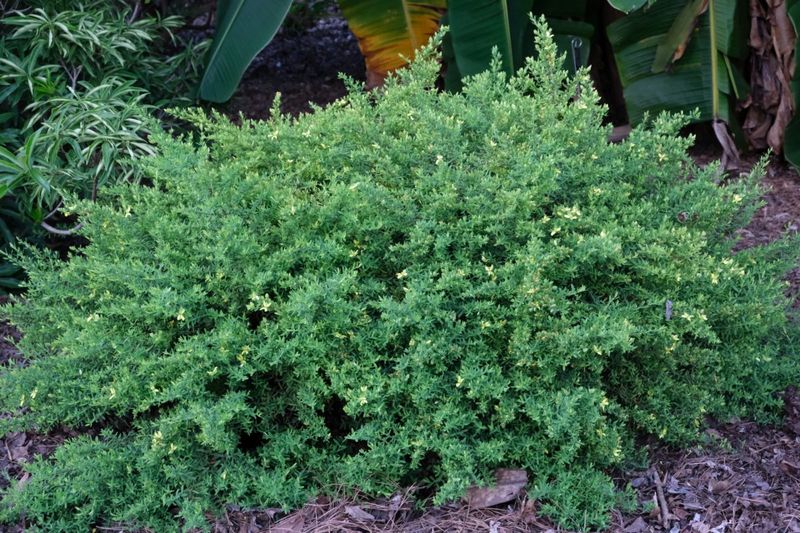
Getting your hands on this plant takes a little more effort than picking up a boxwood or a knockout rose at the big-box store. Specialty native nurseries sometimes list St. Andrew’s cross as unavailable or sold out, and a similar pattern appears at other Carolina-focused native plant sellers. That intermittent availability does not mean the plant is universally rare or that nurseries have decided against carrying it; stock at native plant nurseries shifts with the season and propagation cycles. Calling ahead before making a trip is always a good idea.
The North Carolina Native Plant Society’s nursery directory is a practical starting point for finding sources. The directory lists specialty growers across the state, and many of them carry plants that mainstream garden centers do not stock. Availability changes, so checking the directory more than once during the year increases your chances of finding it in stock.
Once you source a plant, establishment is straightforward. USDA NRCS describes Hypericum hypericoides as easy to cultivate, with propagation possible from seed or stem cuttings if you want to grow your own or multiply plants you already have. Water regularly through the first growing season, apply mulch to conserve moisture, and give it a well-drained, sunny spot. After that, the plant largely looks after itself outside of extended droughts.
One practical note on lifespan: NC State describes the shrub as fairly short-lived. Plan for eventual replacement rather than treating it as a permanent foundation planting. Propagating cuttings from a healthy plant gives you a ready successor without another nursery search.
Finally, a safety note for pet owners. The name St. John’s wort gets applied to several Hypericum species, and they are not interchangeable. ASPCA lists Hypericum perforatum as toxic to dogs, cats, and horses due to photosensitization risk. Hypericum hypericoides is a different species.
Always use the botanical name when researching safety, and do not use any Hypericum species for herbal or medicinal purposes based on this article.
A quiet native worth considering
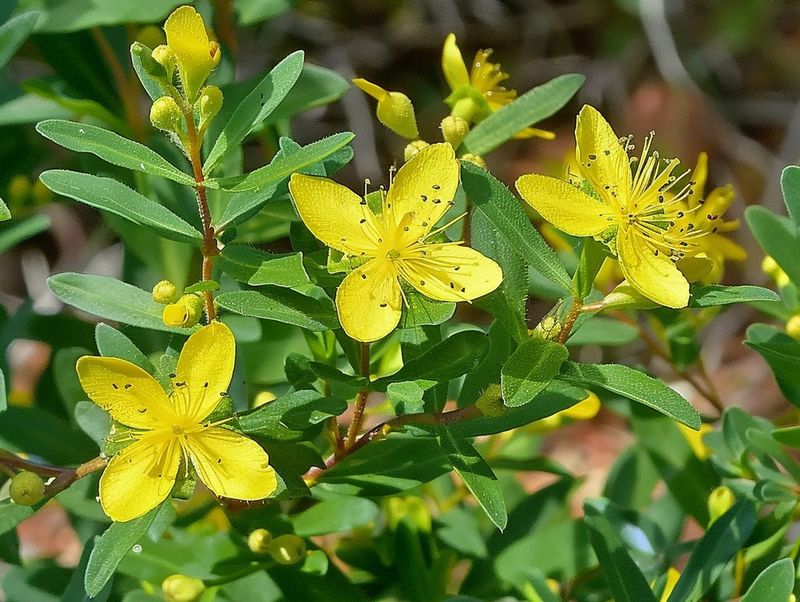
For a North Carolina homeowner in the Coastal Plain or Piedmont with a sunny, well-drained spot and a preference for native plants that do not demand constant attention, St. Andrew’s cross offers a compact footprint, a fairly long summer bloom, and reduced supplemental watering after establishment. Those qualities add up to a useful, region-appropriate shrub that fits naturally into a pollinator border, a naturalized edge, or a mass planting where you want low-key summer color without a high-maintenance commitment.
It is not the right choice for every situation. Mountain homeowners lack clear sourcing guidance for this species. Beachfront sites with regular salt spray will not suit it. Gardeners wanting a bold floral focal point, a completely drought-proof planting, or a shrub that lasts indefinitely without replacement should look elsewhere.
The plant’s fairly short lifespan and intermittent nursery availability mean some planning is required, and first-season watering is non-negotiable regardless of its drought reputation.
What it does well, it does without fuss: small yellow flowers through much of summer, a compact form that fits modest spaces, and real value for the bees, butterflies, and birds that share your yard. Sometimes the most useful plant in the garden is the one that quietly does its job while everything flashier demands your time.