
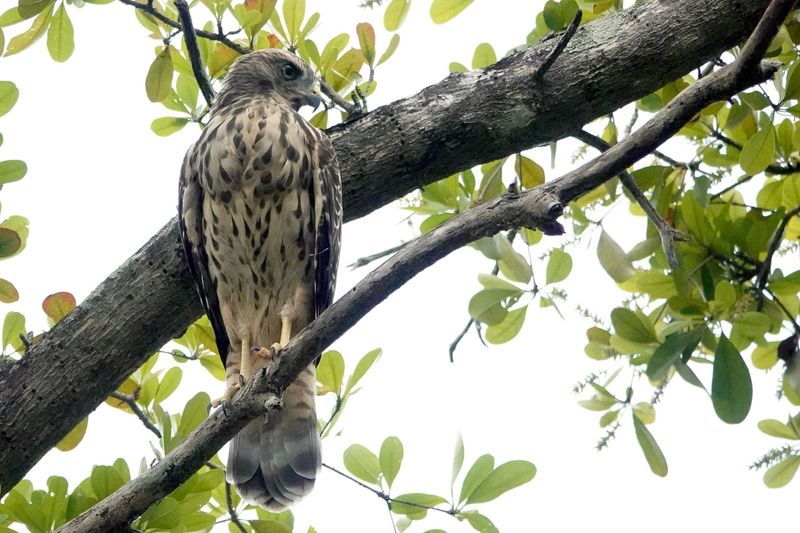
A yard full of hiding places can be a haven for mice and rats. The right Florida native plants can also make room for animals that hunt them, including rat snakes and hawks.
Snakes need safe cover, while hawks need clear views and sturdy perches. Here are seven plants that help build both kinds of habitat without turning your yard into a jungle.
1. Saw Palmetto
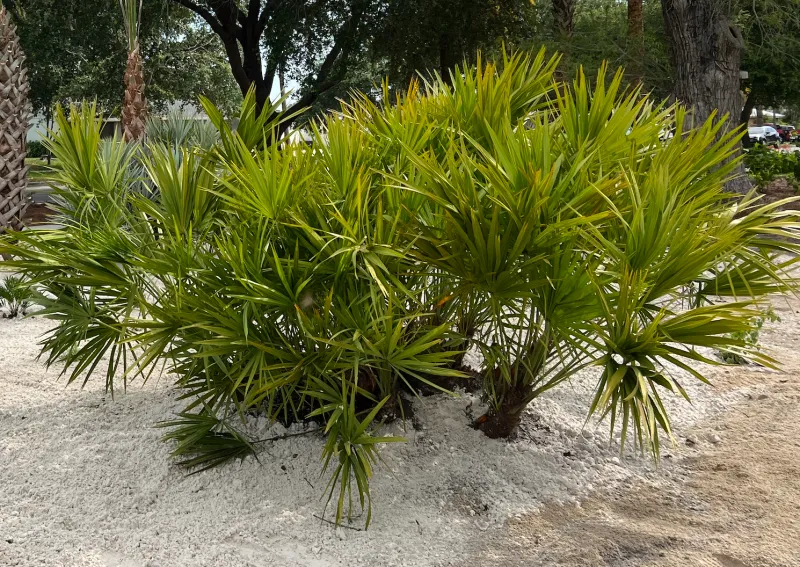
A saw palmetto looks like it could guard the edge of a Florida yard. Its broad fans and low, dense growth create sheltered ground where a rat snake can move without crossing a wide, exposed lawn.
That makes it useful along a back fence or at the edge of a larger planting bed.
Give this native room to spread, and check its mature size before planting near a walkway. Once established, saw palmetto handles sandy soil and dry spells well, but it is not a tidy little foundation shrub.
Keep its sharp-edged leaf stalks away from play areas and spots where you need to reach in for weeding.
Cover alone will not solve a rodent problem. Leave a nearby strip of open ground so a hawk has a chance to spot prey, and keep fallen birdseed, pet food, and trash from feeding rodents.
The goal is a useful habitat edge, not a thick hiding place pressed against the house.
2. Southern Live Oak
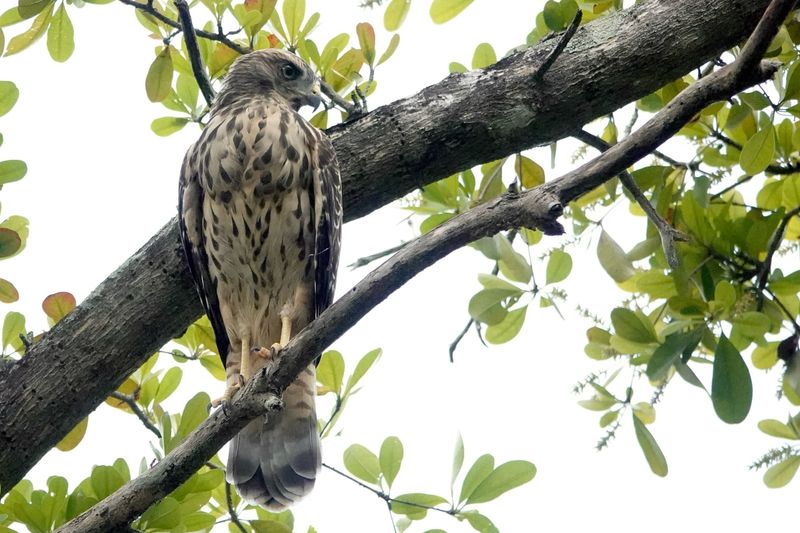
For a hawk, a strong branch above an open yard is a useful lookout. Southern live oak offers plenty of those branches once it matures.
A hawk might pause there while scanning the grass, although planting an oak cannot guarantee regular visits or rodent control.
Live oak is the long-term choice on this list. Its spreading canopy can shade a house and anchor a large landscape, but the tree needs space above and below ground.
Plant it well away from buildings and overhead wires, following local extension guidance for spacing and storm-conscious tree care.
Under the canopy, skip the temptation to pile up brush or let vines swallow the trunk. A maintained bed of native plants can provide some ground-level cover, while an open area beyond the branches gives hunting birds a better view.
If your lot is small, admire a neighbor’s established oak instead of squeezing one into a space it will outgrow. A healthy tree is a yard asset; a badly placed one becomes a costly problem.
3. Wax Myrtle
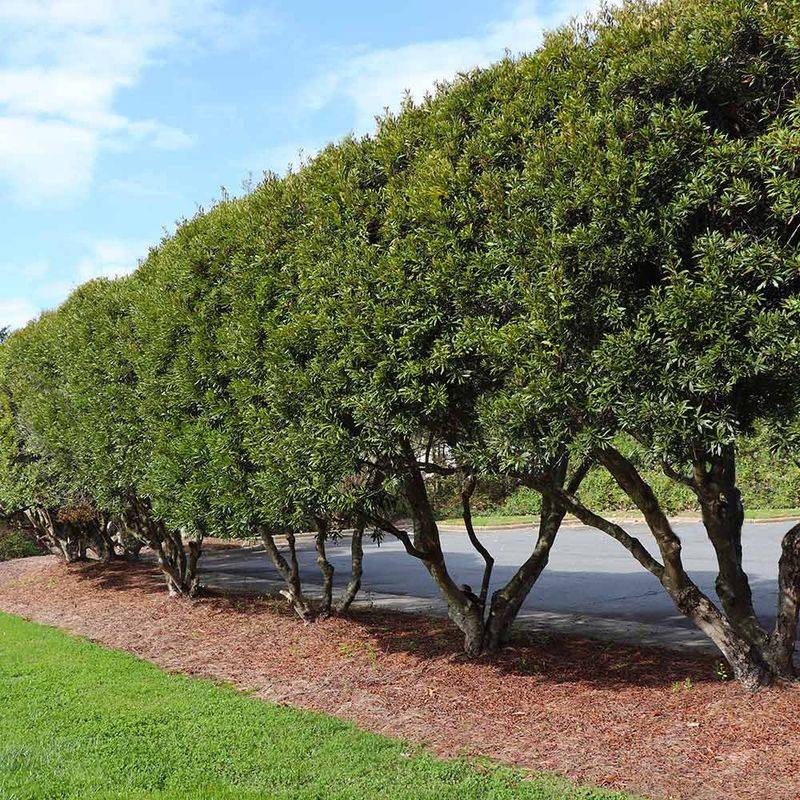
Need privacy without building a solid green wall? Wax myrtle grows into an airy evergreen screen that fits many Florida yards.
Its branches give small birds places to land, while the leaf litter beneath it offers cover along a planting edge where snakes may travel.
Use it along a property line rather than against the house. Wax myrtle grows quickly and can become a large shrub or small tree, so allow for its full width and prune with its natural shape in mind.
It suits sunny sites and is especially useful where sandy, fast-draining ground makes fussier shrubs hard to keep happy.
Its berries feed birds, not hawks directly. The rodent-hunting connection is the yard layout: a planted edge offers cover for a rat snake, and open space beside it lets a hawk watch for movement.
Keep the base free of discarded pots, boards, and food waste. Those items can shelter or feed rodents far more effectively than the shrub can help control them.
4. Yaupon Holly
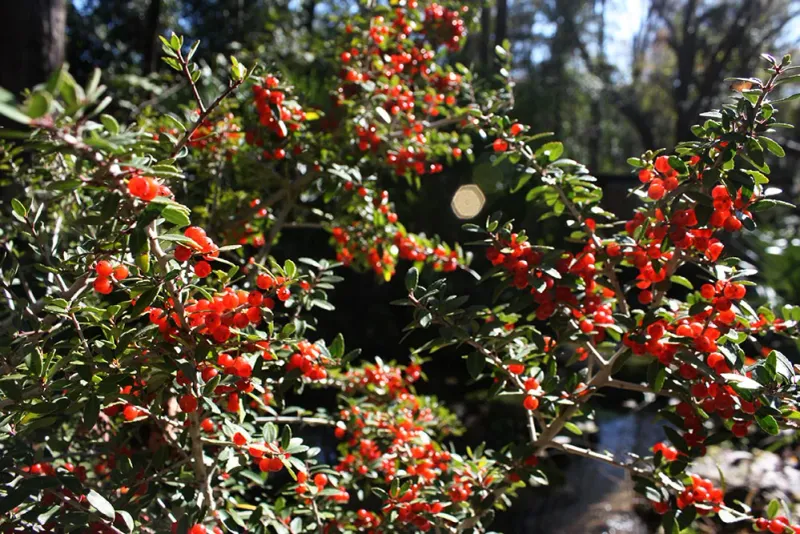
Red berries make yaupon holly easy to notice when much of the yard looks quiet. Birds use its branches for cover, and a tree-form yaupon can offer a modest perch above a garden bed.
It is a flexible choice for gardeners who want a smaller woody plant than a live oak.
Choose the form to fit your space. A naturally growing yaupon can become a thicket if left alone, while selective pruning can open it into a small tree.
Plant it in sun or part shade, give it room to mature, and keep a clear view across the nearby lawn or bed if you hope to make the space usable for hunting hawks.
Only female plants produce berries, and they need pollen from a male plant nearby. Ask a Florida native nursery about the plant’s sex if berries are part of your plan.
Those berries support wildlife, but they are not a rodent-control tool by themselves. The payoff is a layered yard with cover, perches, and open sightlines working together.
5. Muhly Grass
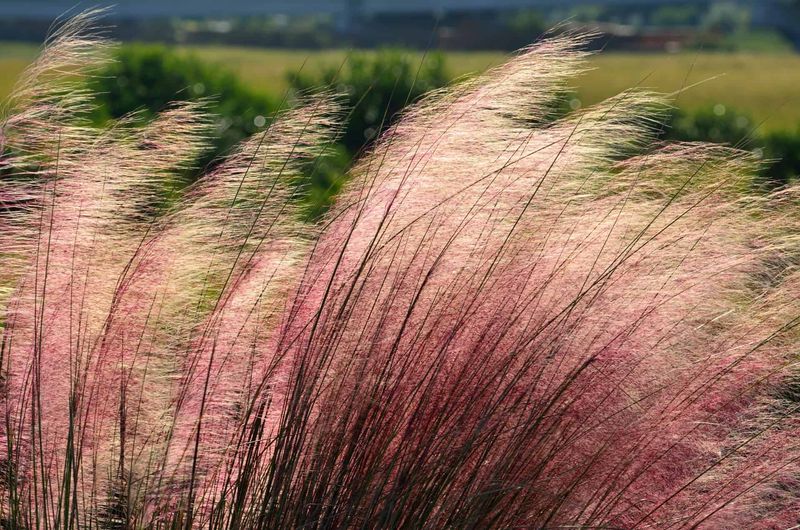
In fall, pink muhly grass can make a plain border look as if it has been dusted with color. Its airy plumes are the show, but the tidy clumps below them are the practical part of this planting plan.
Set along an open lawn, they add pockets of cover without blocking the entire view.
Plant muhly grass in full sun and well-drained soil, leaving space between clumps so they keep their rounded shape. That suits many sandy Florida yards and makes this an easier choice than a dense, high-maintenance hedge.
It is especially striking beside a path or at the back of a low bed.
Do not expect the grass itself to summon a snake or hawk. Instead, use it to create a gradual shift from planted cover to clear ground, where a hunting bird can see movement.
Keep the border away from doorsteps if you would rather not surprise a passing snake. Avoid rodenticides, too: poisoned rodents can harm the very predators you hope to welcome.
6. American Beautyberry
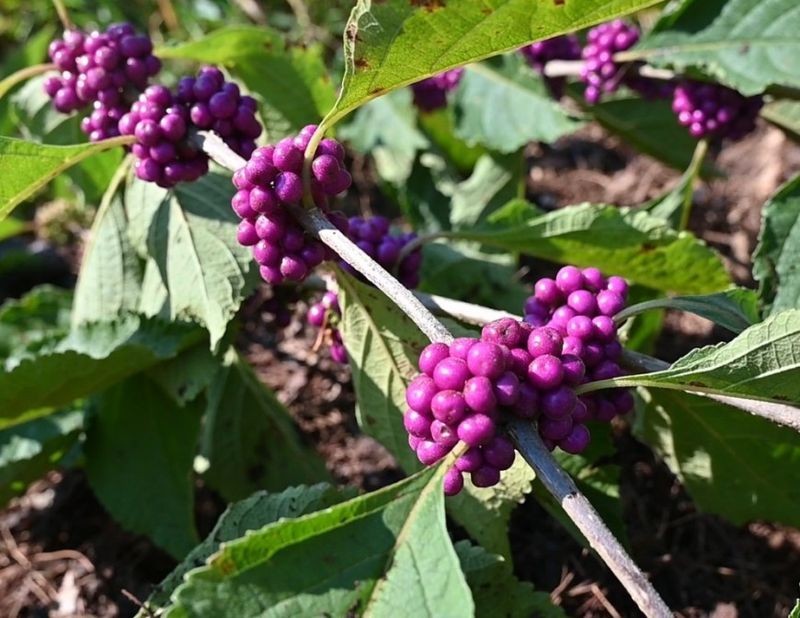
Purple berries wrapped around the stems make American beautyberry look almost unreal. In a Florida yard, this loose, arching shrub brings bright fall color to a partly shaded edge without demanding a formal clipped shape.
Its branching growth can add cover within a mixed native planting.
Give beautyberry room to arch instead of wedging it into a narrow foundation bed. It grows well in part shade and appreciates some water while getting established.
In a spot with very dry sand, mulch the root area and watch the plant during prolonged dry weather.
Birds eat the berries, and the shrub helps make a yard more welcoming to wildlife. It does not directly lure rat snakes or train hawks to hunt there.
For the best layout, place beautyberry near other native cover but leave an open area a short distance away. A snake can use a sheltered route through the planting, while a hawk needs space to spot prey.
Pick up fallen fruit near patios if it creates a mess, and keep all outdoor food sources secured so rodents have less reason to settle in.
7. Slash Pine
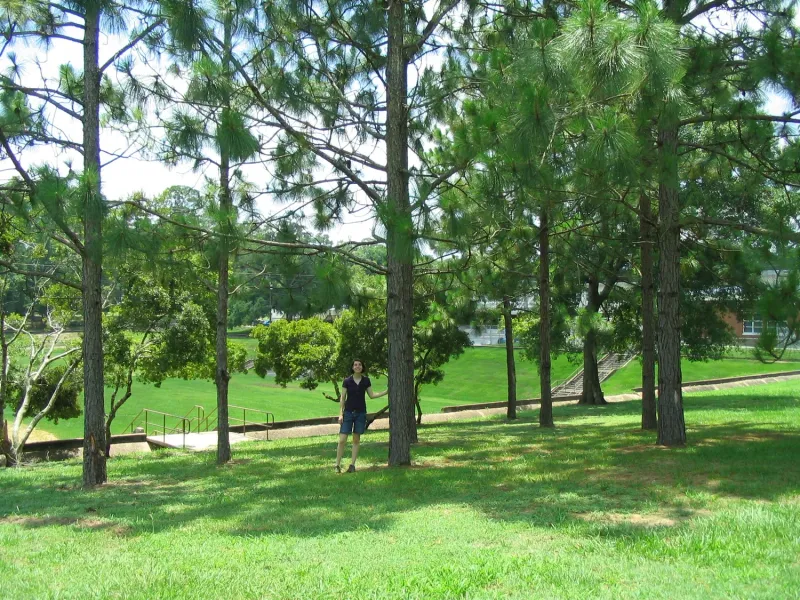
Some yards have room for a tree that gives birds a view from well above the roofline. Slash pine is a Florida native that can provide that height, along with branches that birds of prey may use for resting or watching open ground.
It belongs on this list for its tall perch, not for its ability to hide a snake.
Choose it only if you have space for a large tree. Check setbacks, power lines, and local planting advice before buying one, and have mature trees assessed when storm damage or structural concerns appear.
In a smaller yard, an existing safe tree nearby may already provide the perch you need.
Needles beneath a pine can be part of a planted bed, but keep the area around the house clear and maintained. Pair the tree with a modest patch of native ground-level cover farther out, then preserve an open hunting area.
Wildlife will come and go on its own schedule. The most dependable rodent plan still starts with sealing entry holes and removing easy meals; predator-friendly planting is a helpful extra layer.