
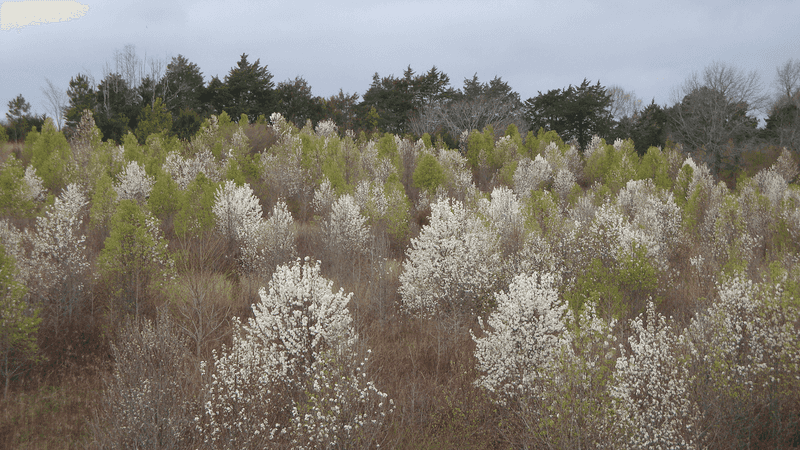
Some plants look pretty in the garden but turn into bullies once they escape into the wild. Across North Carolina, more counties are cracking down on invasive plants that crowd out native wildflowers, trees, and shrubs that our birds, bees, and butterflies depend on. When these troublemakers take over, they leave less food and shelter for the wildlife that keeps our yards healthy and our tick and mosquito problems in check. Here are seven plants facing bans and heavy restrictions, and why swapping them for native choices is one of the best things you can do for your land.
1. Bradford Pear (Callery Pear)
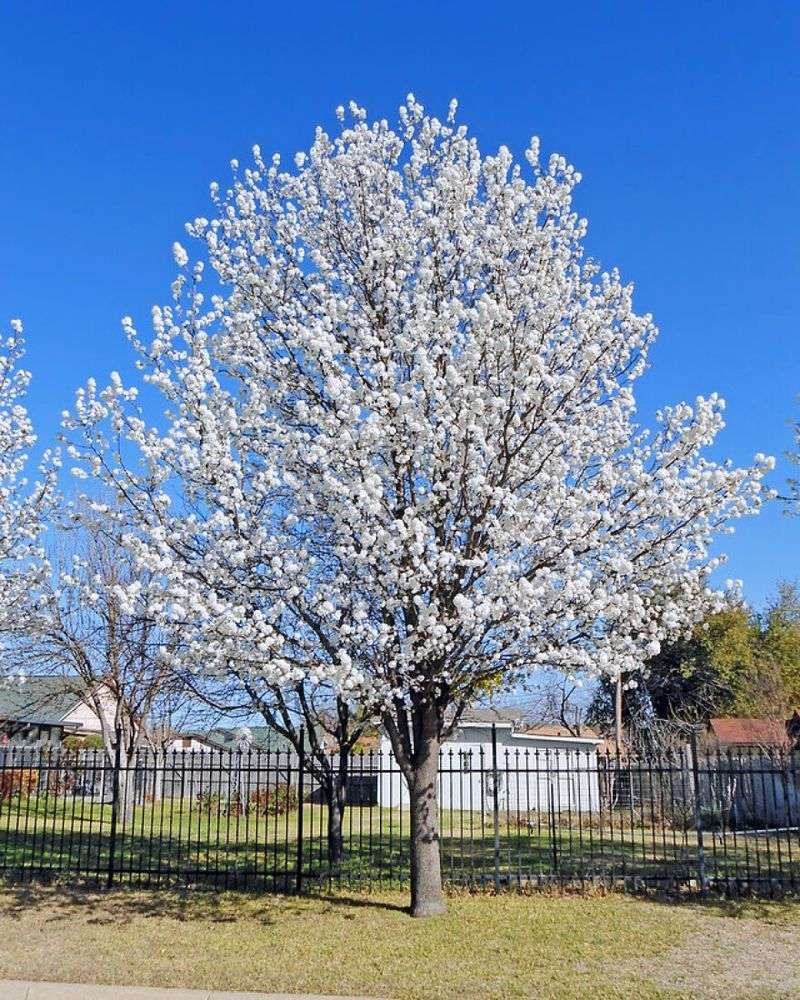
Springtime used to bring a certain smell to NC neighborhoods that had homeowners wrinkling their noses, and the Bradford pear was the culprit. Those clouds of white blossoms looked like a postcard, but the tree quickly earned a reputation as one of the state’s worst plant offenders.
South Carolina already banned its sale, and North Carolina counties are increasingly following suit with bounty programs that pay you to cut yours down. The problem is that Bradford pears cross-pollinate and produce wild seedlings with brutal thorns that form dense thickets in fields and roadsides.
Those thickets shade out native dogwoods, redbuds, and serviceberry, the very trees that feed songbirds and pollinators through the seasons. If you want that early spring bloom without the trouble, a native serviceberry or eastern redbud gives you flowers plus berries that birds actually eat. Making the swap can help restore the food chain your backyard wildlife relies on.
2. Chinese Privet
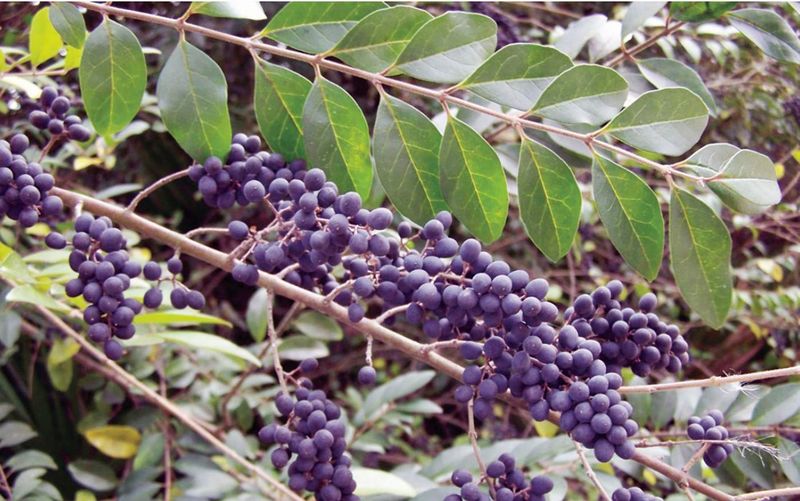
Ever walked along a Piedmont creek and noticed a wall of glossy green leaves choking everything else out? Odds are good you were looking at Chinese privet, a hedge shrub that jumped the garden fence generations ago and never looked back.
Birds eat the small dark berries and scatter the seeds far and wide, which is exactly how privet has swallowed up thousands of acres of NC bottomland forests. Once it settles in, it forms a shady thicket so dense that native seedlings simply cannot get started underneath it.
The result is a forest floor stripped of the wildflowers and understory plants that pollinators and ground-nesting birds need. Counties are pushing to keep it off nursery shelves, and land managers spend serious money trying to beat it back. For a well-behaved evergreen screen, native inkberry holly or wax myrtle gives you privacy while supporting local wildlife instead of smothering it.
3. Kudzu
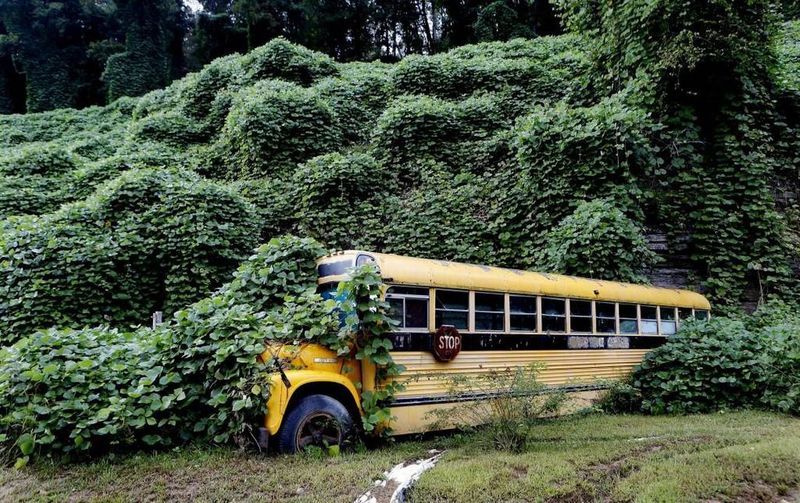
They call it the vine that ate the South for good reason, and kudzu wears that crown across North Carolina. Drive down almost any rural road in summer and you will spot entire hillsides, old barns, and even telephone poles buried under a blanket of heart-shaped leaves.
Brought over as an erosion fix and livestock feed, kudzu can grow up to a foot a day during peak season. That runaway speed lets it smother mature trees by blocking every bit of sunlight, eventually collapsing whole stands of native forest under its weight.
When the trees go, so do the birds, insects, and mammals that lived among them, leaving a green desert that supports almost nothing. Counties keep it firmly on the banned list, and eradication is a years-long battle. There is no pretty landscaping version of this one, so the smart move is to report new patches early and never let a sprig take root on your property.
4. Japanese Honeysuckle
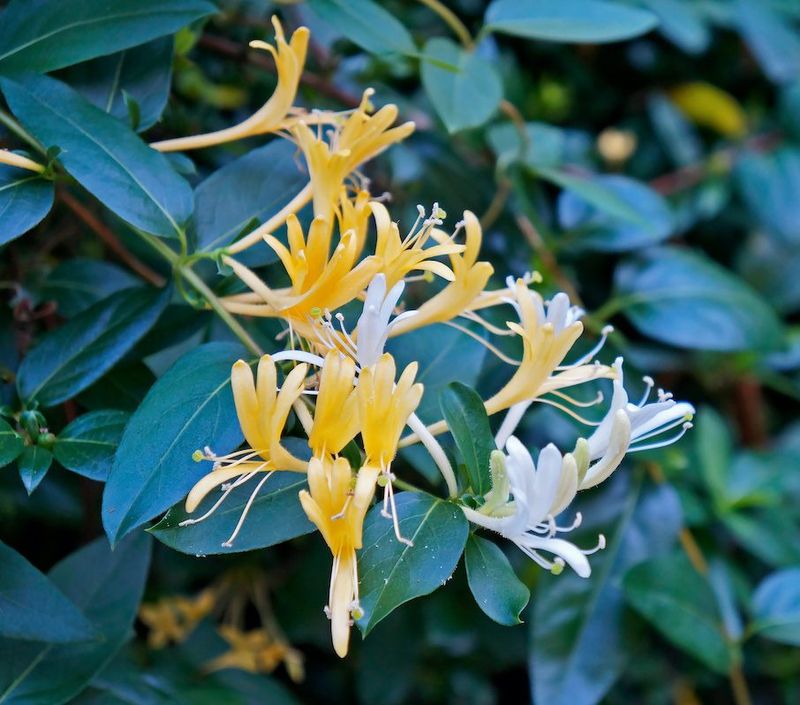
The sweet smell of honeysuckle on a warm evening tricks a lot of folks into thinking this vine belongs here. Japanese honeysuckle smells like childhood summers, but it behaves like an unwelcome houseguest that refuses to leave.
Unlike our native coral honeysuckle, the Japanese version twines aggressively around young trees and shrubs, girdling and strangling them as it climbs toward the light. It stays green late into the year, giving it a head start that native plants simply cannot match.
Whole woodland edges across the coastal plain and Piedmont get draped in it, choking out the diverse plants that feed caterpillars and, in turn, the baby birds that eat them. More counties are discouraging its sale and spread as awareness grows. The good news is that native coral honeysuckle gives you those tubular blooms hummingbirds adore, without the strangling habit that makes the imported kind such a menace.
5. Tree of Heaven
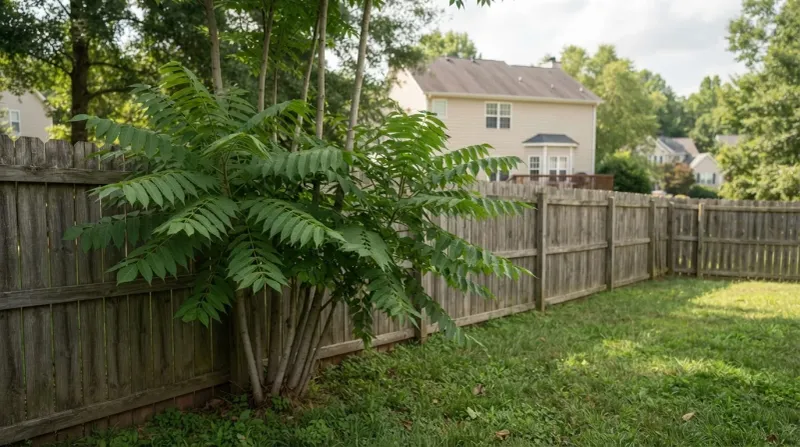
Do not let the heavenly name fool you, because this tree is anything but a blessing for NC landscapes. Tree of heaven shoots up fast in cracks, alleys, and abandoned lots, often before anyone realizes what they are dealing with.
What makes it especially nasty is a double threat. It releases chemicals into the soil that poison nearby native plants, and it happens to be the favorite host of the spotted lanternfly, a destructive pest already knocking on North Carolina’s door.
Cutting it down barely slows it because the roots send up a small army of new sprouts in every direction. Officials are watching it closely and urging removal before lanternfly populations gain a foothold. If you spot the smooth gray bark and long clusters of leaflets with a burnt-peanut smell when crushed, that is your cue to plan a careful removal and replace it with a native shade tree like red maple or blackgum.
6. English Ivy
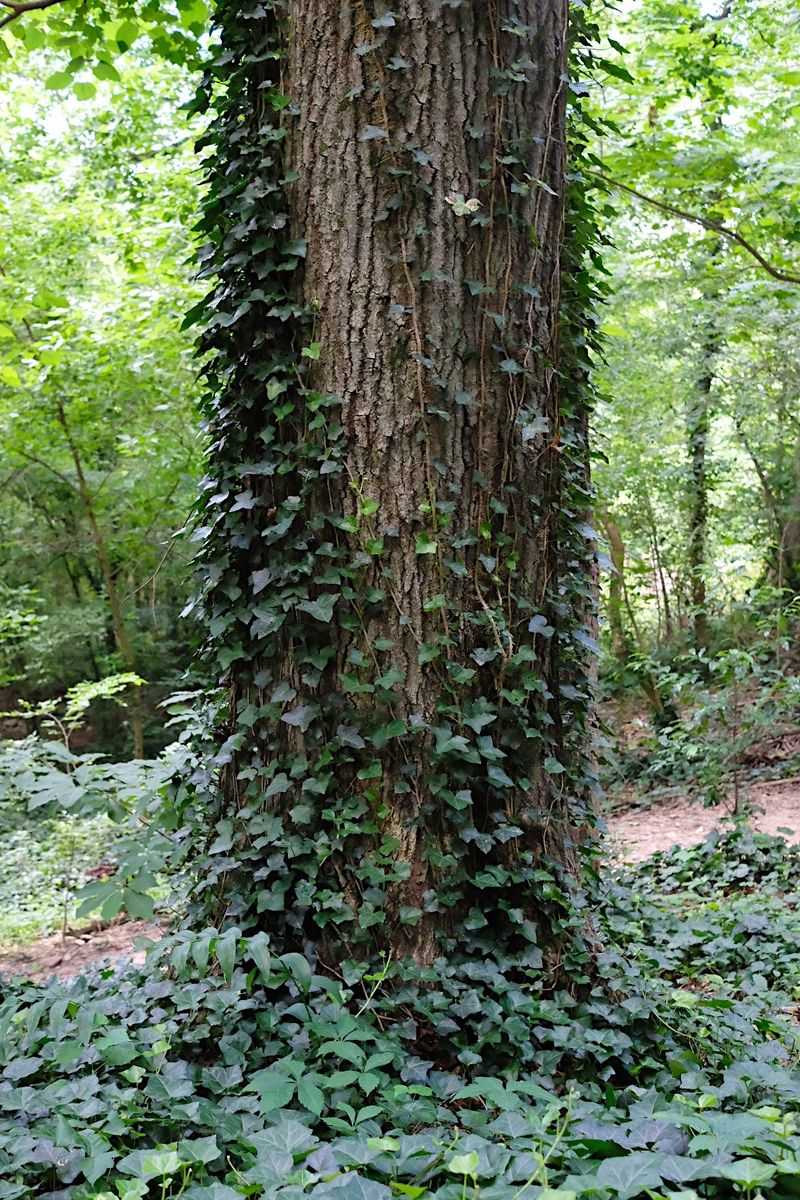
Picture the classic ivy-covered cottage and you will understand why so many yards started with a few innocent sprigs of English ivy. That romantic image hides a plant that turns into a slow-motion wrecking ball for native trees and ground cover.
On the ground, ivy forms a thick mat that blocks wildflowers and tree seedlings from ever seeing sunlight. When it climbs, the added weight and trapped moisture weaken mature trees and make them far more likely to topple in a storm.
Ivy also produces berries only once it climbs high, and birds spread those seeds into natural areas where the vine keeps marching. As counties push native-first landscaping, ivy is falling out of favor fast. Swap it for native partridgeberry, green-and-gold, or Christmas fern, and you get low-maintenance ground cover that shelters insects and small critters instead of smothering them.
7. Nandina (Heavenly Bamboo)
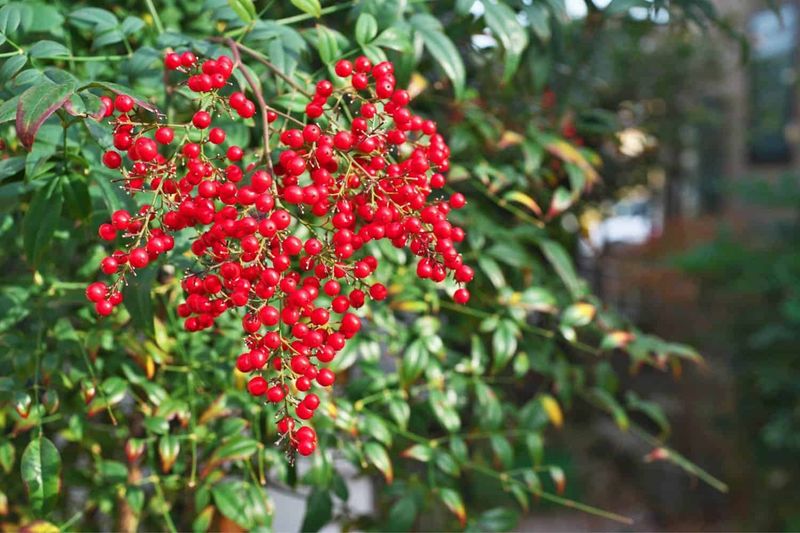
Bright red berries glowing against evergreen leaves make nandina a holiday-season favorite, but those cheerful berries hide a deadly secret. Cedar waxwings and other birds that gobble them down in large numbers can actually be poisoned by the cyanide the berries contain.
Beyond the danger to birds, nandina spreads readily into NC woodlands where its seedlings crowd the forest floor. It is not truly a bamboo at all, despite the nickname, but it shares that same knack for popping up where it is not wanted.
Wildlife advocates and a growing number of counties are steering homeowners away from it for both reasons. If you love that pop of winter color and berries that feed birds safely, native winterberry holly or American beautyberry does the job beautifully. Making that switch turns a hazard into a genuine buffet for the songbirds passing through your yard.