
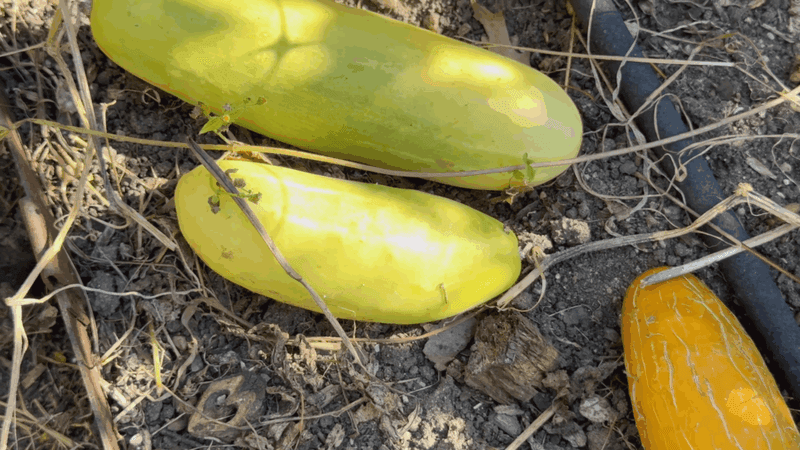
Finding a fat yellow cucumber hiding under the leaves can feel like something went wrong overnight, and during a hot summer it can happen faster than you expect. For most ordinary slicing and pickling cucumbers, that oversized yellow fruit is not waiting to ripen further – it has already moved past the best eating stage. The habit most often behind it is simple: the fruit was left on the vine too long. Understanding why that happens, and what to do about it, can help you get more from your plants before the season ends.
A Yellow Cucumber Usually Signals Missed Harvesting
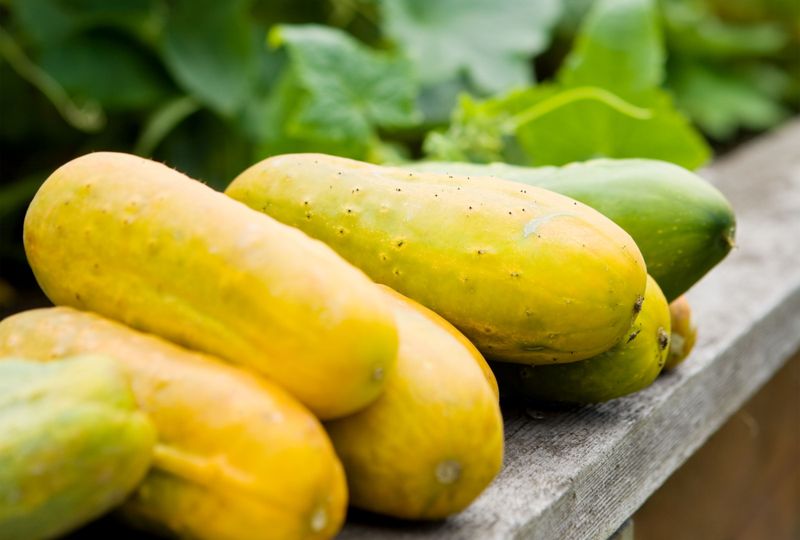
Slicing and pickling cucumbers are picked at their best while they are still firm, slender, and uniformly green, before the seeds inside have a chance to harden. When a cucumber is left on the vine past that window, it keeps developing – the seeds enlarge, the flesh softens, and the skin shifts from green to yellow. That yellow color is not a sign the fruit needs more time. For common garden cucumbers, it usually marks a point well past the preferred eating stage.
According to Illinois Extension guidance on cucumbers, harvest timing is one of the most important factors in keeping fruit quality high and supporting continued production. A cucumber that reaches the yellow, bloated stage has progressed toward mature seeds and that transition generally brings along tougher texture, larger or harder seeds, a pithy or hollow center, and sometimes a bitter taste. None of those changes make the fruit poisonous, but they do make it far less pleasant to eat.
One important exception is worth keeping in mind. Some cultivars, including lemon cucumbers and a handful of specialty varieties, naturally turn yellow when they reach their ideal harvest stage. That is a cultivar trait, not a problem. Checking the seed packet or the description from the nursery where you bought transplants is always the right first step before assuming a yellow cucumber is simply a missed one.
Old Fruit May Slow New Fruit Set
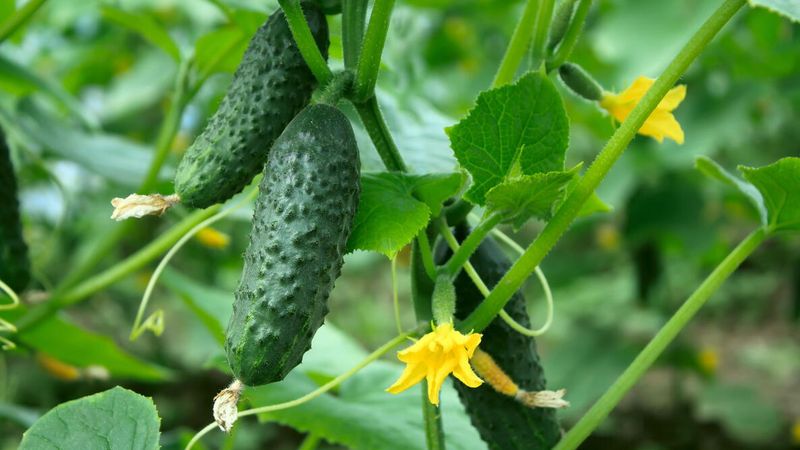
Leaving a large, mature cucumber on the vine does more than reduce the quality of that single fruit. Extension recommendations consistently advise removing over-mature cucumbers because the presence of fruit that has moved toward seed maturity can inhibit or reduce the plant’s continued flowering and fruit set. The vine is putting resources into maturing seeds inside that old fruit instead of directing energy toward new flowers and developing cucumbers.
Research on fruit load and cucumber development – including a study on fruit growth and biomass allocation in cucumber – shows that temperature and the number of fruits already on the plant affect how quickly new fruits develop and how plant resources are distributed. A heavy load of maturing fruit, especially during warm weather when growth accelerates, can shift the plant’s priorities away from setting new cucumbers.
That said, one yellow cucumber does not automatically shut down an entire vine. The relationship is better described as a potential drag on production rather than an on-off switch. Vine age, disease pressure, pest activity, pollination success, soil moisture, and heat all play roles in how much fruit a plant continues to set. Prompt harvesting offers two real benefits: it preserves eating quality for the fruit you pick, and it may help maintain continued flowering and fruit set as the season progresses.
Treating it as one useful tool, rather than a guaranteed fix, keeps expectations realistic.
Summer Heat Can Hide the Harvest Window
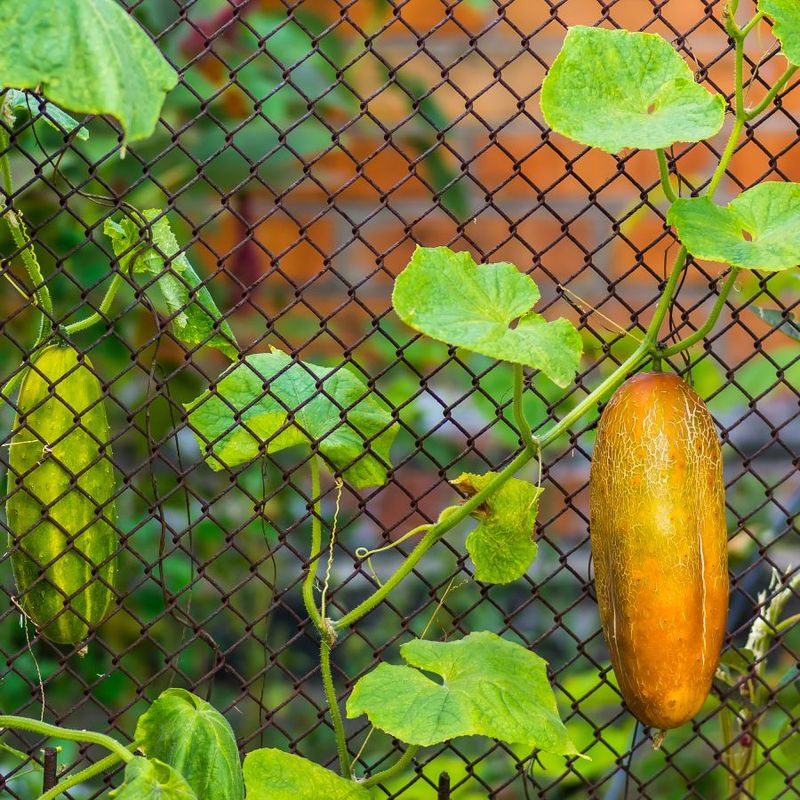
Warm weather does not cause a cucumber to turn yellow on its own, but it does compress the window between “ready to pick” and “already too big.” Fruit that looked the right size on Monday can be noticeably oversized by Wednesday when temperatures are high and growth is moving fast. That is the real connection between summer heat and the yellow cucumbers you keep finding: the timing gets harder to catch, not because heat ripens the fruit differently, but because everything happens more quickly.
High temperatures bring separate concerns as well. Penn State Extension notes on cucumber production explain that heat stress can reduce fruit set, and hot, dry conditions can contribute to bitterness, water stress, and misshapen fruit. Those are real problems, but they are distinct from a timing issue. A cucumber that turned yellow because it was missed during a busy week is a harvest problem.
A vine that sets fewer fruits during a heat wave, or produces bitter cucumbers during a dry stretch, may be dealing with stress that goes beyond picking frequency.
Treating heat as a factor that changes your inspection schedule – rather than proof that heat caused a particular yellow fruit – helps you respond to what is actually happening. During hot spells, check more often. The fruit will not wait as long as it does in cooler weather, and staying ahead of the growth rate is the practical answer to the compressed window summer creates.
Harvest Often to Protect Quality and Maybe Production
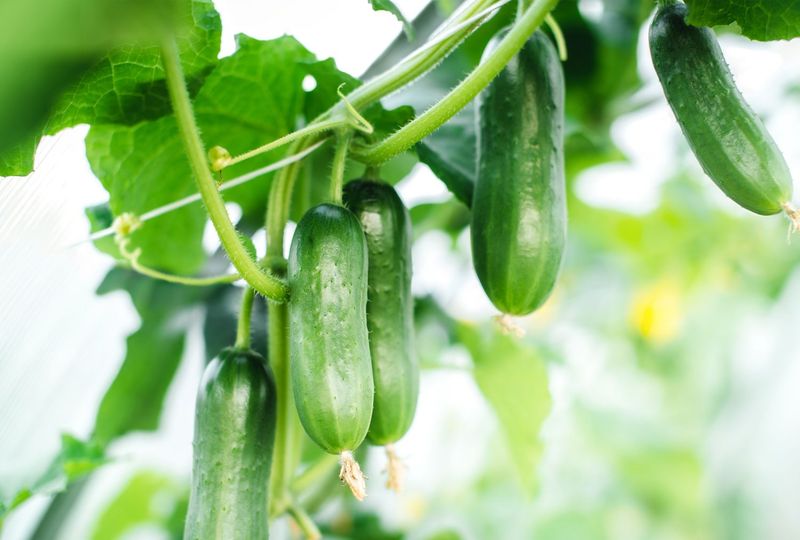
Building a regular inspection habit is the most direct way to keep cucumbers at their best. Illinois Extension recommends checking cucumber vines at least every other day, and pickling types may need daily attention because their fruit size increases especially fast. Slicing cucumbers grow quickly too, and a fruit that looks like it needs another day often does not.
When you walk the vine, do not just scan from the outside. Part the leaves and look along the full length of each stem. Cucumbers hide well under foliage, and a fruit tucked beneath a large leaf can go from ideal to oversized without ever being visible from a casual glance. Hidden fruit is one of the most common reasons gardeners end up with yellow cucumbers even when they think they are checking regularly.
For harvest size, your seed packet or cultivar description is the best guide because different types are picked at very different sizes. As a general reference, small pickling cucumbers are often harvested around 2 to 4 inches, while slicing types are typically ready between 6 and 8 inches. Those ranges are starting points, not rules that override what your specific variety calls for. The fruit should feel firm and look uniformly green, without soft spots or a faded, pale skin color.
Removing large yellow or missed cucumbers promptly is part of this routine, not a separate task. Frequent picking does not guarantee the vine will keep producing at full pace, especially as the season advances or if other stresses are present, but staying on top of the harvest is the single most controllable factor in keeping fruit quality high.
Remove Missed Cucumbers Without Injuring the Vine
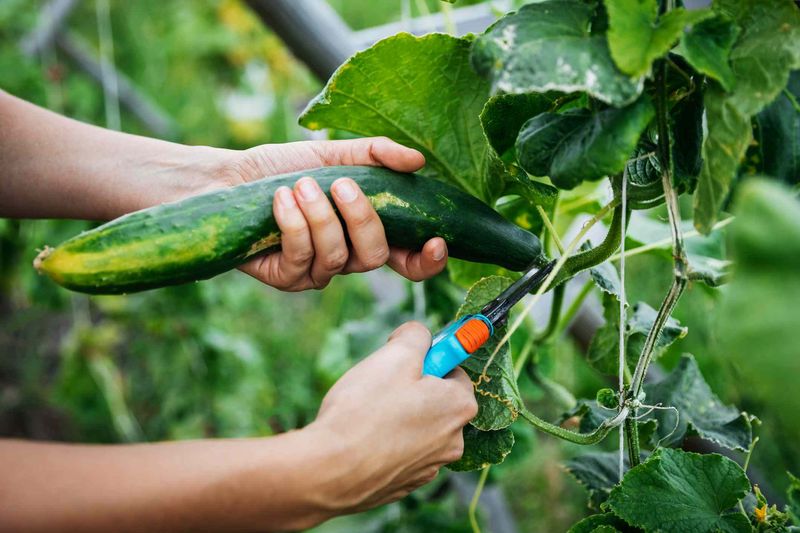
Getting an oversized or missed cucumber off the vine cleanly matters more than it might seem. The right method is to cut the stem about one-quarter inch above the fruit. If the cucumber does not release with light pressure, use a knife or a pair of clean pruners to make a clean cut rather than forcing it. Pulling, twisting, or yanking at the fruit can tear the vine, damage nearby stems, or stress the plant at a point where it is already working hard.
According to University of Georgia Cooperative Extension guidance on growing cucumbers, proper removal technique protects the vine and reduces the chance of introducing injury that could invite disease or slow recovery. A small cut heals more cleanly than a torn stem, and the plant does not have to spend resources dealing with physical damage on top of everything else.
Removing old fruit is a cleanup and production-support measure, not a guaranteed rescue. If the vine looks healthy aside from the missed cucumber, prompt removal and continued regular harvesting are the right response. If the vine also shows wilting, yellowing leaves, distorted growth, or signs of pest damage, those symptoms point to something beyond harvest timing. Removing the old fruit is still worth doing, but it will not address a disease, a pest infestation, or heat and drought damage that has already set in.
Check the Variety and Look Beyond the Fruit
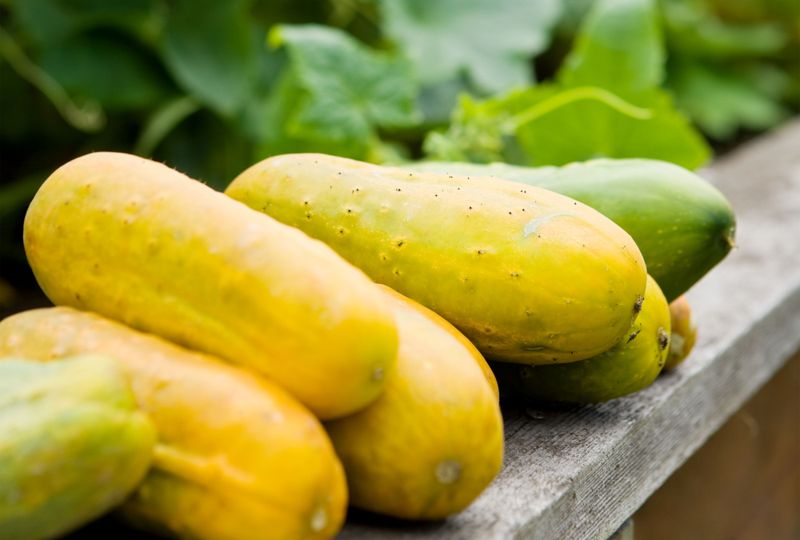
Not every yellow cucumber is a missed harvest. Lemon cucumbers turn yellow when they are ready to eat, and a few other specialty varieties do the same. Before concluding that a yellow fruit is a problem, match what you are seeing to the description on the seed packet or from the nursery. If the variety is supposed to be yellow at maturity, harvesting at that color is correct.
If the variety is supposed to stay green, the yellow fruit is a sign it waited too long.
A yellow cucumber and yellow leaves are two very different symptoms, and mixing them up can lead to the wrong response. University of Minnesota Extension guidance on cucumbers notes that yellowing leaves, interveinal chlorosis, wilting, distorted growth, or widespread vine decline can indicate pests, viruses, bacterial wilt, nutrient deficiencies, root disorders, or other problems that have nothing to do with harvest timing. If the fruit looks over-mature but the rest of the vine looks healthy, the harvest explanation fits. If leaves are yellowing in unusual patterns, growth looks stunted or twisted, or the plant is wilting despite adequate water, a deeper diagnosis is needed.
Water management plays a supporting role here too. UC Master Gardener Program guidance on cucumbers recommends keeping soil moisture reasonably even during the fruiting period. Mulch can help hold moisture and moderate soil temperature, which matters especially during hot weather. The goal is steady, consistent moisture – not flooding after dry spells, and not soil that stays saturated.
Uneven watering can contribute to bitter or misshapen fruit and can stress roots in ways that affect the whole plant, so moisture consistency is part of the larger picture alongside managing heat and production stress.
Store Fresh Cucumbers at the Right Temperature
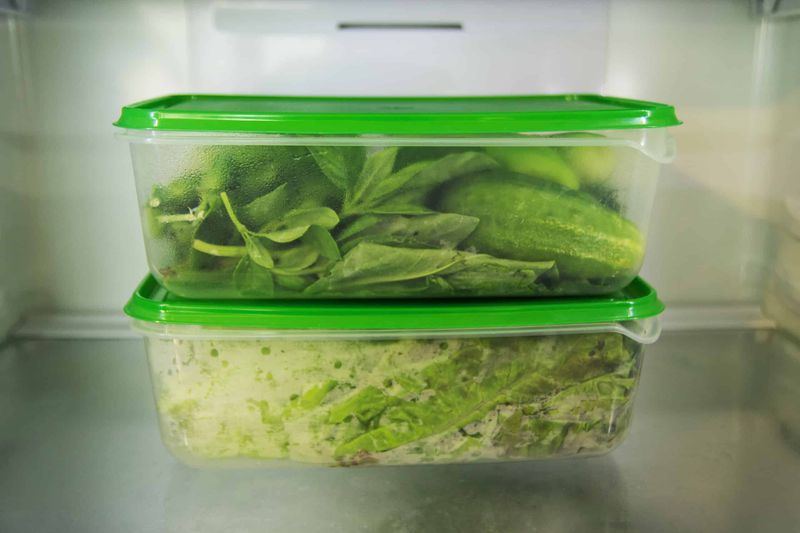
Once you have picked firm, green cucumbers, how you store them affects how long they stay in good condition. UC Davis postharvest guidance on cucumbers recommends storing cucumbers at around 50 to 55 degrees Fahrenheit with high relative humidity. That range preserves texture and slows the yellowing process that continues even after harvest.
A standard household refrigerator typically runs between 35 and 40 degrees Fahrenheit, which is colder than cucumbers prefer. Storing cucumbers at those lower temperatures can cause chilling injury – pitting, water-soaked areas, and accelerated decay once the fruit warms back up. If the refrigerator is the only option, keeping cucumbers in the warmest part of it, such as a crisper drawer set to high humidity, and using them within a few days reduces the risk. Warm storage at room temperature has the opposite problem: it speeds up yellowing and softening, especially in fruit that was already close to over-mature when it was picked.
Pulling together the full routine: identify your cultivar and know what color and size it should be at harvest, check vines every day or two during rapid summer growth, remove oversized fruit by cutting cleanly rather than pulling, and investigate yellow leaves or vine-wide decline separately rather than expecting a harvest change to solve those problems. A cucumber that reaches your kitchen firm and green, stored at the right temperature, is the straightforward payoff for staying on top of the vine. The habit is simple – the trick is just not letting a hot week make you miss a round.