
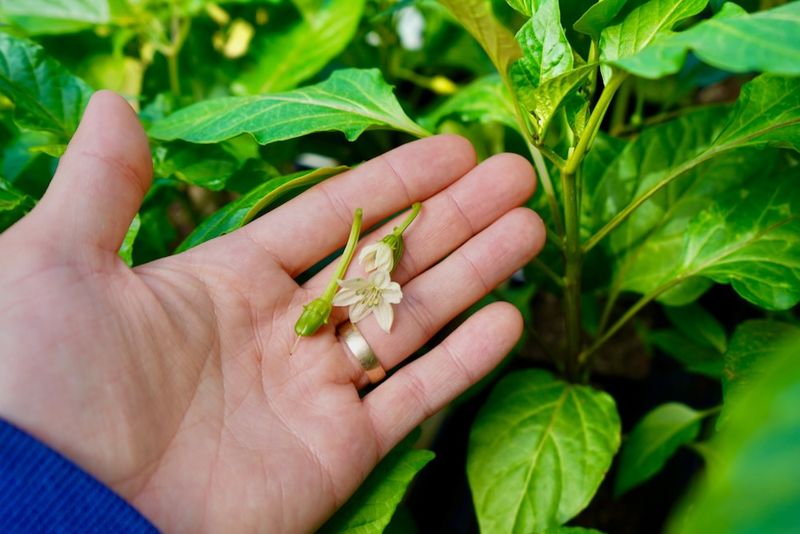
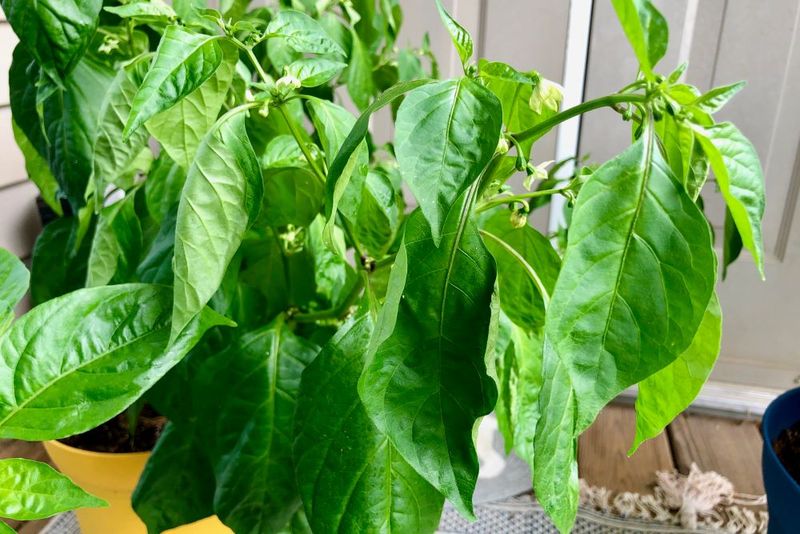
Watching your pepper plant burst with thick, dark-green leaves while every flower falls off before setting fruit is genuinely frustrating. The plant looks healthy from the outside, which makes the problem harder to pin down. A heavy hand with fertilizer is one possible explanation, but heat, inconsistent watering, and other stresses can produce the exact same result. Working through a short checklist – starting with your feeding history, then your growing conditions – gives you the best shot at figuring out what is actually happening.
Lush leaves offer a clue, not a diagnosis
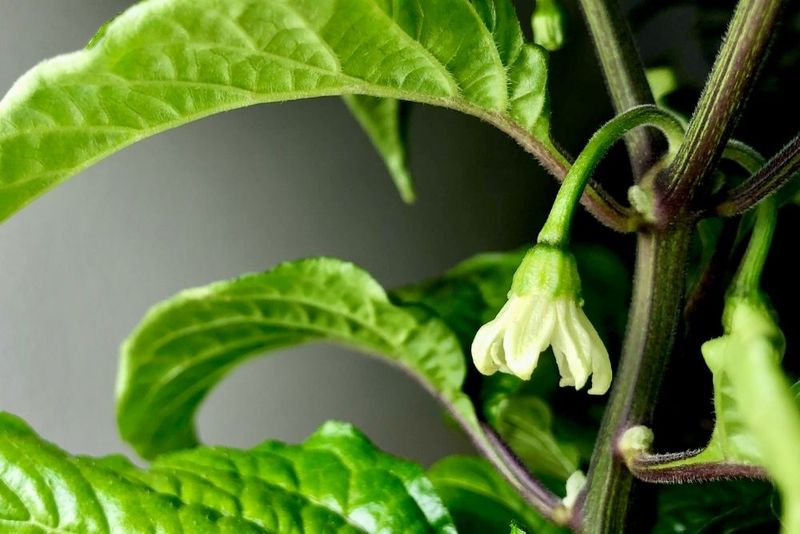
A pepper plant covered in deep-green, vigorous leaves while its flowers drop is the kind of symptom that points in more than one direction. Excess nitrogen is one plausible explanation: when a plant receives more nitrogen than it needs for normal growth, it can channel energy into producing stems and leaves rather than setting fruit. Kansas State Extension guidance on tomato and pepper fruit set links extensive vegetative growth and poor blossom set with excessive fertilization, particularly from nitrogen-heavy products.
Even so, lush foliage is a clue rather than a confirmed diagnosis. A pepper plant can look perfectly healthy and still drop flowers because of heat, cold snaps, drought stress, wind, low humidity, or inadequate light. UMass Extension’s pepper growing tips explicitly caution that poor production is often caused by unfavorable weather rather than excess fertility.
The practical rule here is to compare the foliage with your feeding history before drawing any conclusions. If the plant is unusually leafy and you have been applying fertilizer frequently or in large amounts, excess nitrogen becomes a more credible suspect. If the feeding schedule has been modest and the weather has been extreme, environmental stress deserves the first look. Treat the diagnosis as a process, not a single answer.
Check whether fertilizer sources overlap
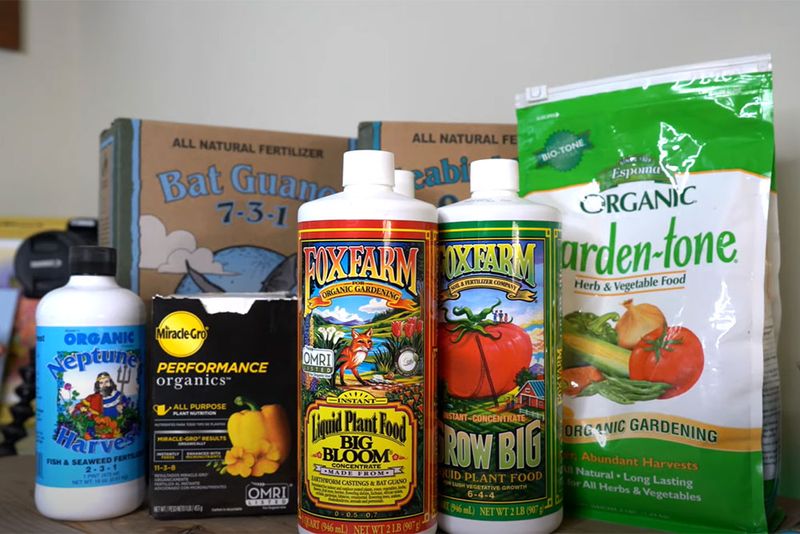
Before assuming anything, pull out every product you have used on your container pepper and set them side by side. Many bagged potting mixes already contain a starter charge of fertilizer or a slow-release granule blend mixed in at the factory. If you added more granules at planting and have also been applying liquid feed on a regular schedule, the plant may be receiving nitrogen from three separate sources at once.
University of Minnesota Extension’s container fertilizing guidance points out that the correct approach is to account for all nutrient sources – including what is already in the medium – before deciding whether to add anything else. Container plants face a specific risk here because the root zone is small and confined. Nutrients that would spread through a large garden bed concentrate in a few gallons of potting mix, which means repeated high-nitrogen inputs can build up faster than they would in the ground.
Check each product label for its nitrogen-phosphorus-potassium ratio and its recommended application rate and frequency. If any product is being applied more often or at a higher concentration than the label allows, that is worth pausing immediately. University of Maryland Extension’s container vegetable guide recommends reviewing the medium and the label before adding any new fertilizer. Hold off on applying anything extra while you work through the rest of the assessment.
Look for signs of fertilizer-salt buildup
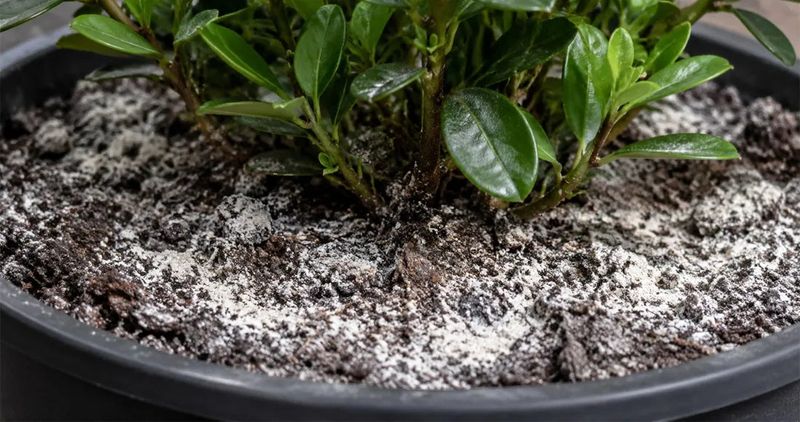
Soluble fertilizer salts can accumulate in potting media over time, and a small container speeds that process considerably. Each time you water and the water evaporates or is absorbed by the plant, dissolved minerals are left behind. Eventually the salt concentration in the root zone can reach levels that stress roots, reduce water uptake, and contribute to symptoms that look a lot like drought stress even when the soil feels moist.
Physical signs make salt buildup more plausible when you spot them. A white or tan crusty deposit on the soil surface or around the drainage holes and rim of the pot is one of the more visible indicators. University of Arizona Extension’s container gardening publication lists that crust alongside leaf-tip or leaf-margin browning, wilting despite adequate moisture, and general stunting as symptoms associated with fertilizer-salt accumulation in container media. UConn Extension’s houseplant fertilization fact sheet similarly identifies tip and margin burn as common signs of salt injury.
Keep in mind that these symptoms do not prove nitrogen caused the blossom drop. Salt buildup can occur with any over-applied fertilizer, and the root damage it causes creates a more general plant stress. A pepper experiencing root stress from excess salts may drop flowers for the same reason it would drop them during a drought: the plant is conserving resources. Use the physical signs as supporting evidence when they match a heavy feeding history, not as a standalone diagnosis.
Leach suspected salts only when drainage works
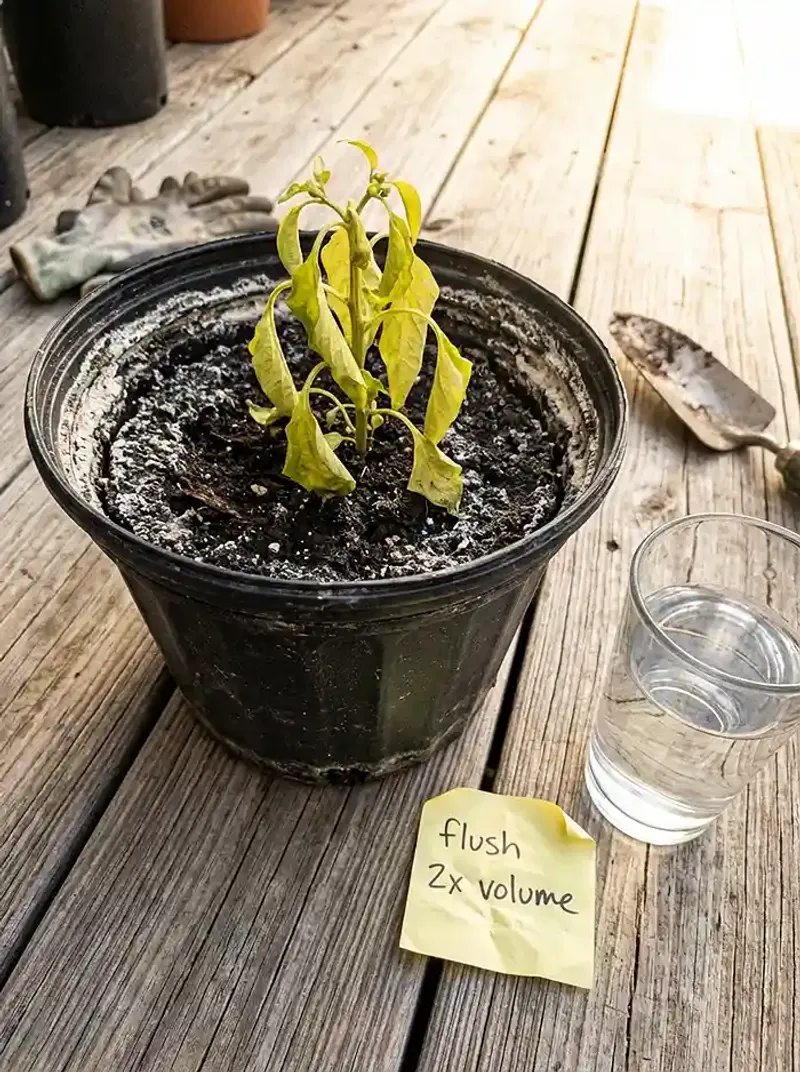
When the evidence points toward salt buildup – white crust on the pot, burned leaf margins, a confirmed heavy feeding history – leaching can help clear soluble salts from the root zone. The process is straightforward: set the container where runoff can drain freely, then apply good-quality water slowly and steadily until a substantial volume of water has run out of the drainage holes. University of Arizona Extension and University of Maryland Extension both recommend this approach as a way to move excess soluble salts through and out of the medium.
One firm precaution: do not leach a container that lacks drainage holes or one that stays waterlogged after a normal watering. Saturated potting media cuts off oxygen to roots and can trigger root rot, which creates a new and serious problem on top of the original one. If your pot has no drainage, the right fix is to repot into a container that drains properly before attempting any leaching.
Leaching also has clear limits as a remedy. It removes soluble salts, but it does nothing to correct high temperatures, inconsistent watering, low light, or a misdiagnosed feeding problem. After leaching, wait before resuming fertilizer applications and revisit the rate and frequency based on the product label and the plant’s current condition rather than the previous schedule.
Check weather, water, light, and container size
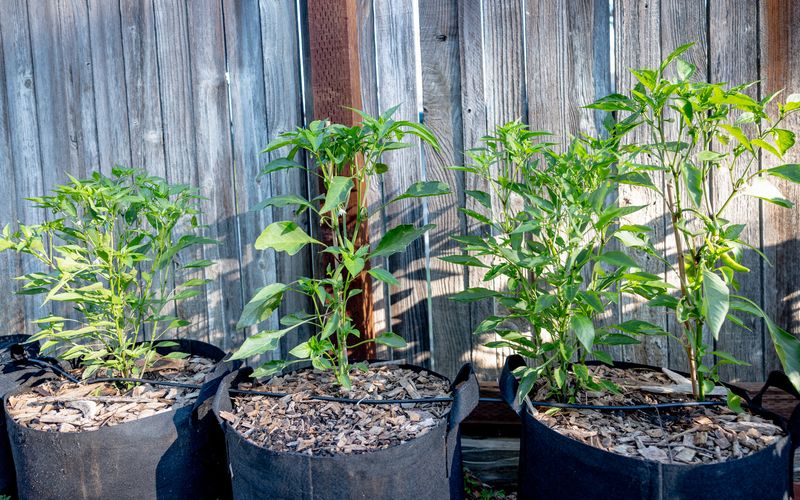
Even a perfectly fed pepper can drop every flower if the growing conditions are off during bloom. Temperature is one of the most reliable triggers. NC State Extension’s blossom drop resource identifies extreme temperatures as a frequent cause of flower abortion in peppers, and University of Maryland Extension’s fruit-set guide notes that both high and low temperature extremes interfere with pollination and fruit development. Published thresholds vary by cultivar and region, but several sources associate blossom drop with night temperatures below roughly 55 to 60 degrees Fahrenheit, night temperatures above roughly 70 to 80 degrees, and daytime highs above approximately 85 to 95 degrees.
Sustained heat or cold during flowering can make pollen nonviable, and a single week of extreme weather during bloom can wipe out a flush of flowers regardless of how well the plant was fed.
Moisture consistency matters nearly as much. Oregon State Extension’s pepper growing guide notes that peppers can drop buds, flowers, and small fruit when soil dries out or moisture fluctuates sharply. Water thoroughly until drainage runs from the bottom, then allow the medium to approach – but not reach – the point of severe dryness before watering again. Avoid keeping the medium constantly soggy.
Light is the third factor worth checking. Peppers generally need at least six hours of direct sun daily, and Oregon State Extension’s pepper production page recommends six to eight hours for fruiting crops in containers. Container size plays into this too: smaller pots dry out faster than larger ones and need more frequent monitoring, especially during hot spells. Iowa State Extension’s container care guidance and several other programs suggest at least a five-gallon container for fruiting vegetables, though specific recommendations vary.
A pot that is too small for the root system compounds both water and nutrient management problems.
Separate blossom drop from blossom-end rot
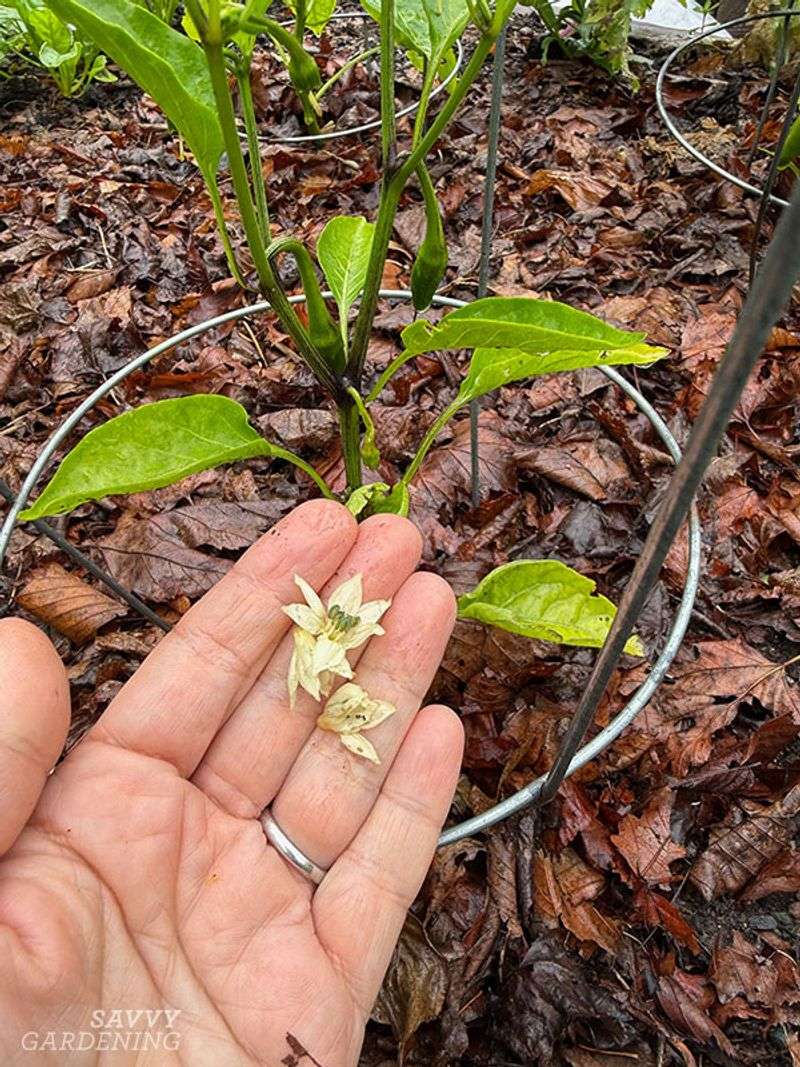
Two disorders often get confused because both involve the word “blossom,” but they affect the plant at different stages and call for different responses. Blossom drop means flowers or very small developing fruit abort completely and fall from the plant before forming anything recognizable. The stem is left bare, and there is no fruit to examine.
Blossom-end rot is something else entirely. UC Davis postharvest produce information on bell peppers describes blossom-end rot as a dark, sunken lesion that develops on the blossom end of a maturing fruit – not a dropped flower. Oregon State Extension’s pepper production publication associates blossom-end rot mainly with disrupted calcium movement inside the plant, which is often connected to inconsistent water supply rather than a simple calcium deficiency in the soil. Adding calcium fertilizer indiscriminately will not fix blossom drop, and improving calcium uptake will not prevent flowers from aborting if the real cause is heat or drought stress.
On the question of pollination: peppers are generally self-pollinating, so a lack of bees is rarely the first explanation when flowers fall. New Mexico State University’s pepper production guide and Cornell Cooperative Extension’s seed-saving resource both note that pepper flowers can self-fertilize. Temperature, humidity, strong wind, physical damage, and overall plant stress can still interfere with that process, but those factors should be investigated before hand-pollination becomes a priority.
Resume measured feeding instead of chasing blooms
Once you have paused suspected excess applications, reviewed every fertilizer source, and addressed any environmental stressors, the question becomes how to feed the plant going forward rather than whether to keep feeding at all. Container plants can lose nutrients through repeated watering, and a fruiting pepper in active growth does need continued nutrition. The goal is to match the product and rate to the actual situation: container size, potting mix composition, plant size, watering frequency, and whatever nutrients the medium already contains all factor into the right amount. University of Minnesota Extension’s container fertilizing guide and Oklahoma State Extension’s pepper production fact sheet both emphasize following product label rates rather than guessing.
Resist the impulse to reach for a high-phosphorus bloom booster as a quick fix. UMass Extension’s guidance on phosphorus in fertilizing cautions that adding phosphorus when the medium already contains enough may not improve flowering and can contribute to nutrient imbalance. University of Florida IFAS Extension similarly notes that phosphorus should be applied when there is evidence of need, ideally from a soil or media test, rather than as a routine supplement.
Fertilizer is a legitimate container-specific variable to investigate when the foliage is unusually lush and the feeding history is heavy – but it is one piece of a larger puzzle, not the automatic answer every time a pepper blossom falls.