
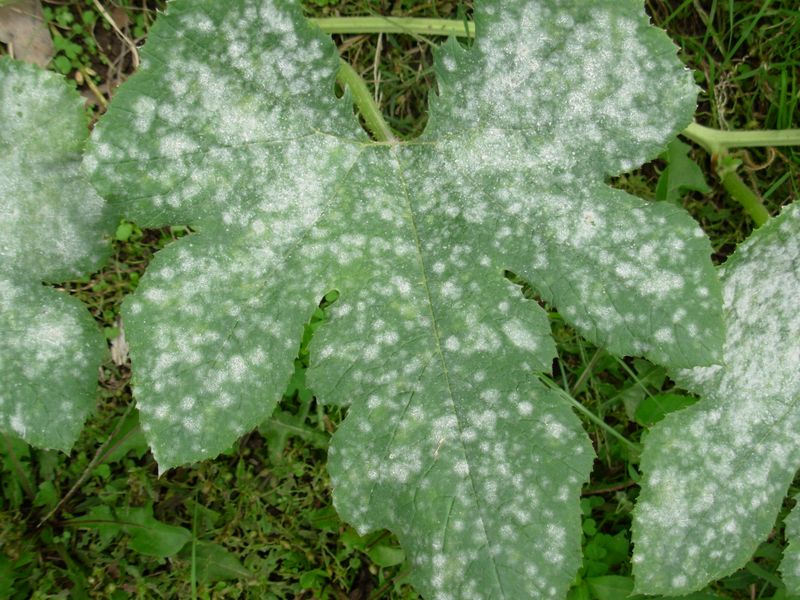
Spotting a white, flour-like coating on your zucchini leaves mid-summer can feel alarming, especially when the plants looked fine just days before. Most of the time, that dusty film is powdery mildew, a fungal disease that shows up reliably once the season heats up. Before you reach for a spray bottle or change everything about your watering routine, it helps to understand what actually drives this disease and what you can do about it right now.
A floury coating usually signals powdery mildew
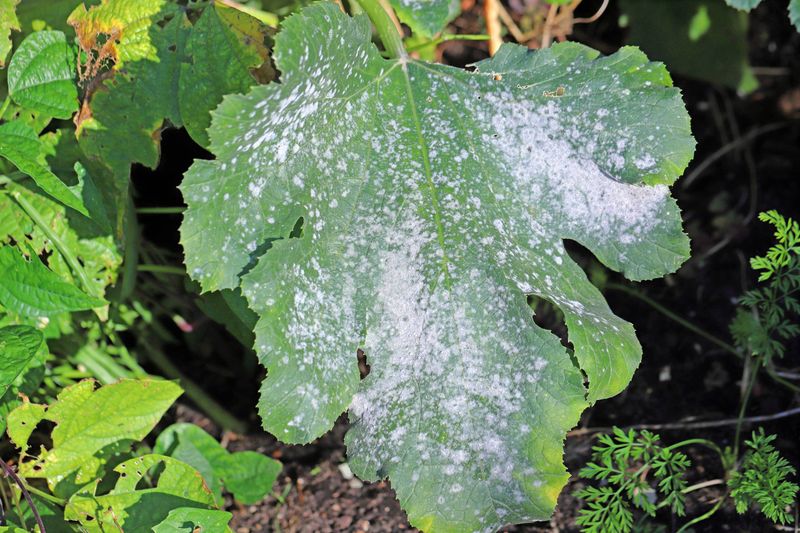
When a white-to-gray, talcum-like film settles across your zucchini foliage, powdery mildew is the most likely explanation. According to University of Minnesota Extension guidance on cucurbit powdery mildew, the disease often starts as pale yellow spots on older or shaded leaves before the familiar floury coating spreads across the leaf surface, petioles, and sometimes stems.
Midsummer is prime time for this disease, and once conditions favor it, the infection can move across a plant surprisingly fast. You might notice just a few dusty patches one week and find entire leaves coated the next.
That said, a white or silvery appearance on leaves is not automatic proof of powdery mildew. Illinois Extension’s powdery mildew overview notes that several pests and diseases can produce pale or discolored foliage that looks similar at a glance. Treat a visual match as your starting hypothesis and take a closer look at both sides of the leaf before deciding how to respond.
Overhead watering does not explain every outbreak
Here is where the common story about powdery mildew needs a correction. Cucurbit powdery mildew can infect and produce spores even when leaves stay completely dry. As UC IPM’s cucurbit powdery mildew resource explains, the disease spreads readily in warm, dry weather and is favored by humid plant canopies, dense foliage, shade, and poor air circulation rather than by wet leaves alone.
Humid nights or morning dew, crowded plants that trap moisture close to the canopy, susceptible zucchini tissue, and the simple presence of existing spores can all contribute to an outbreak. These conditions are often more relevant to whether mildew takes hold than whether you watered from above.
There is an added nuance worth knowing: free water on leaf surfaces can actually inhibit spore germination for many powdery mildew species. Penn State Extension notes that some commercial growers even use overhead irrigation to wash spores from squash leaves. For home gardens, though, routinely wetting foliage is still a habit worth changing because it can increase humidity around the canopy and raise the risk of other foliar diseases that do rely on leaf wetness.
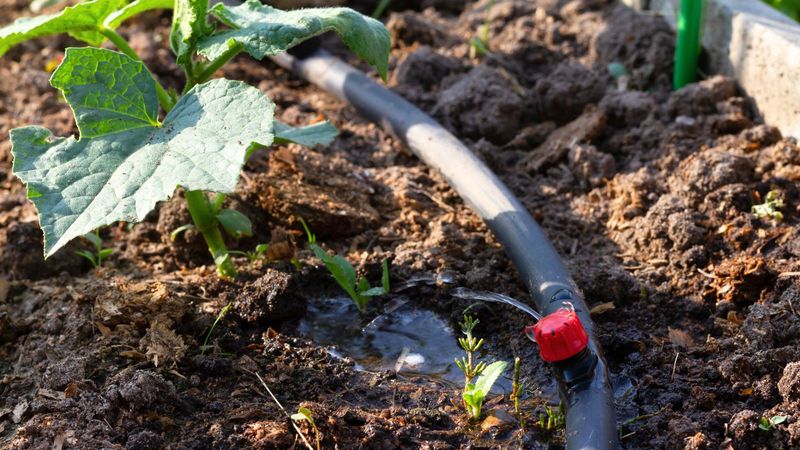
The practical takeaway is straightforward: move your watering to the soil level, but do not treat that change as a cure for powdery mildew already present. The goal is better overall disease management, not reversing a single cause.
Check whether the leaves are truly powdery
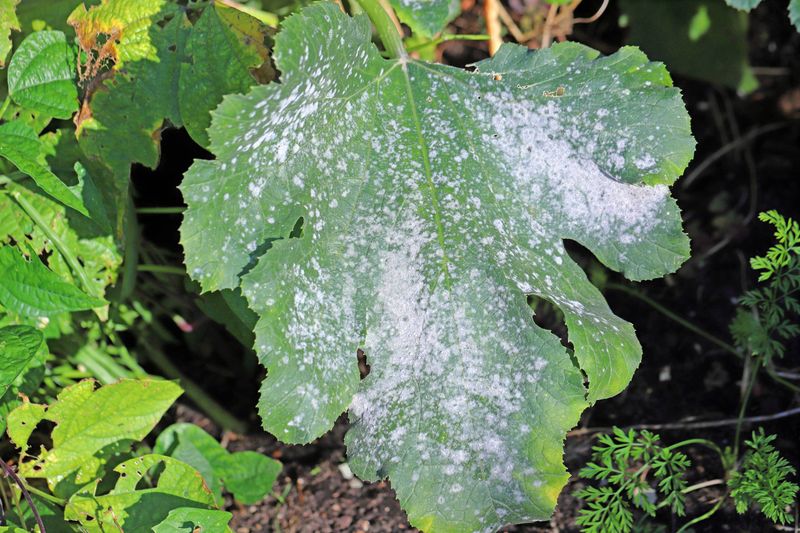
Before treating anything, spend two minutes with a close look at your plants. Flip the affected leaves over and examine both surfaces, because the underside often tells you more than the top.
Powdery mildew produces that familiar flour-like coating, usually on the upper leaf surface first. Spider mites look different: Utah State University Extension’s spider mite guide describes their feeding damage as tiny white stippling that can progress to a bronze or silver sheen across the leaf, especially during hot, dry weather. To confirm mites, shake a suspect leaf briskly over a sheet of white paper and look for tiny moving specks.
Downy mildew is another look-alike that requires different treatment. Penn State Extension’s downy mildew alert describes it as pale green, yellow, or brown angular lesions on the upper surface paired with dark gray-brown or purplish fuzzy growth on the underside. That fuzz is the key diagnostic difference from powdery mildew’s dry, white coating.
Angular leaf spot is a bacterial disease that can also fool you. Illinois Extension’s angular leaf spot resource notes that it produces water-soaked, vein-limited lesions and, under humid conditions, a thin white bacterial crust or dried exudate on the leaf underside. Hot, dry weather is useful context for thinking about spider mites and midsummer mildew, but heat alone is not a diagnosis. Match the symptom pattern carefully before you act.
Water the soil while meeting zucchini’s needs
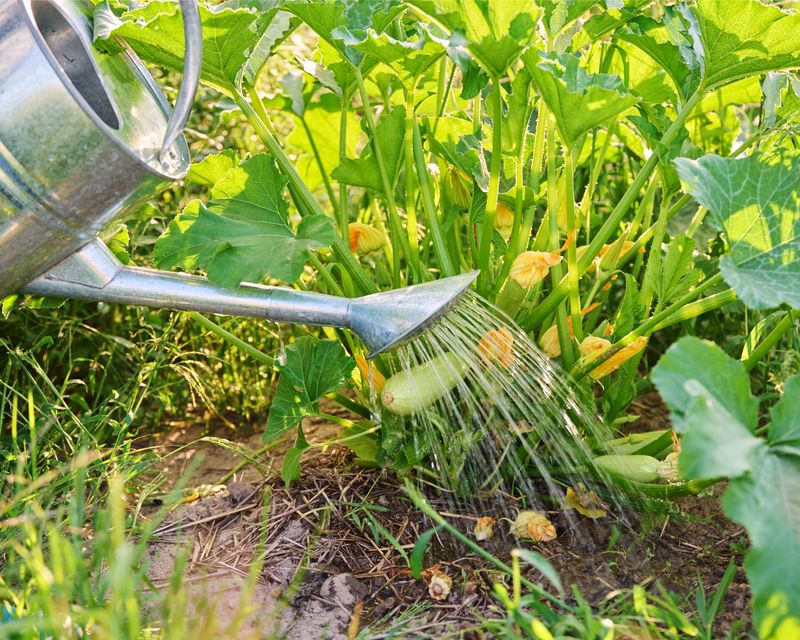
Changing your watering method does not mean watering less. Zucchini needs consistent, adequate moisture at the roots, especially when summer heat is pushing the plants hard. The correction is about where the water lands, not how much you provide.
Drip irrigation, a soaker hose, or careful hand watering aimed at the soil line all keep the foliage dry while delivering moisture where the roots can actually use it. University of Minnesota Extension’s zucchini growing guide recommends keeping leaves dry to reduce the risk of foliar diseases, and suggests morning as the best time if overhead watering cannot be avoided, so any splash on foliage has the full day to dry off.
Deep, infrequent watering generally serves zucchini better than frequent shallow sprays. Shallow watering keeps moisture near the surface, which encourages shallow root growth and leaves plants more vulnerable during dry spells. Instead, water long enough to wet the soil several inches down, then let the top layer dry out slightly before watering again.
Illinois Extension’s cucurbit growing guide offers roughly one inch of water per week as a general starting point for cucurbits, but soil type, recent rainfall, air temperature, and container size all shift that number. Rather than following a fixed schedule, check soil moisture by pushing a finger or a trowel a few inches below the surface. Moist but not saturated is the target. Withholding water to fight mildew is not a safe strategy; the disease does not respond to drought stress the way weeds do, and stressed plants are actually more vulnerable.
Open the canopy and reduce disease pressure
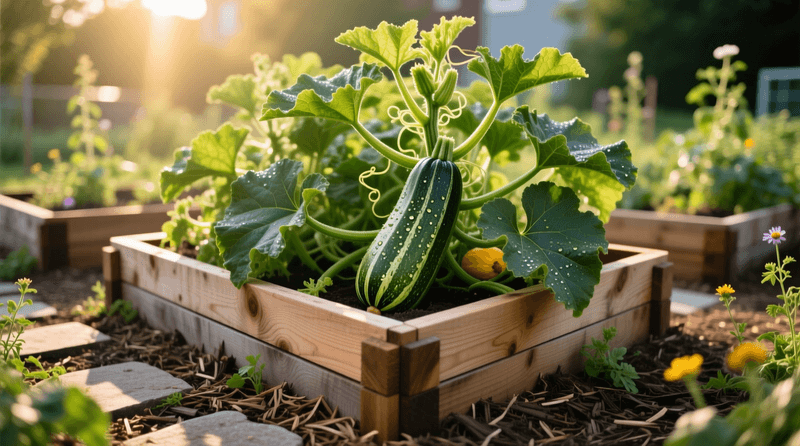
Powdery mildew thrives in stagnant, humid air pockets, so the physical layout of your garden matters. Crowded plants trap moisture near the foliage and shade each other in ways that create exactly the conditions the disease prefers.
Giving each zucchini enough space to stand on its own, keeping weeds pulled so they do not block airflow at the base, and positioning plants where they receive as much direct sun as possible can all help reduce the humid microclimate around the canopy. Minnesota Extension’s powdery mildew management guidance specifically recommends improving air circulation through proper spacing, weed control, and avoiding dense overlapping foliage as part of a prevention strategy.
Fertilizer choices matter here too. Pushing plants with heavy nitrogen applications encourages fast, lush, leafy growth that can become dense and shaded, which may increase susceptibility to powdery mildew. Hold off on extra nitrogen once your plants are established and producing, and focus instead on maintaining steady soil moisture and good light. Think of these steps as measures that can reduce disease pressure and slow spread rather than a way to eliminate mildew entirely once it has arrived.
Treat early and respect hot-weather limits
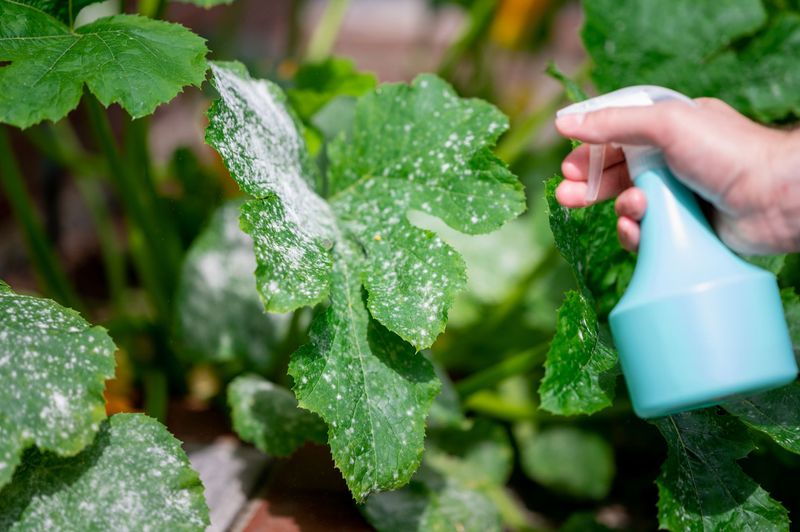
Fungicide treatments for powdery mildew work best when you catch the disease early, before it has spread across most of the leaf surface. Once a leaf is heavily covered, treatments can slow further spread but are unlikely to restore what is already damaged.
Only use products labeled specifically for squash or edible cucurbits, and read the entire label before opening the container. Minnesota Extension’s treatment guidance makes clear that the label governs application rate, reentry interval, and preharvest interval, and those instructions are not optional. Applying too much or too close to harvest creates food safety and plant safety risks.
Temperature matters a great deal with common home-garden fungicides. Utah State University Extension’s cucurbit powdery mildew page warns that sulfur-based products can injure foliage above 90 degrees Fahrenheit, and that oils can cause damage above 85 degrees. Mixing oil and sulfur, or applying them within the label-restricted interval of each other, can cause phytotoxicity that damages your plants more than the mildew would. Always check the specific product label for its temperature restrictions, because formulations vary.
Colorado State University Extension describes baking-soda-based mixtures as experimental and advises using them at the gardener’s own risk rather than as a reliable first-line treatment. Leaf-wetting sprays may suppress some powdery mildew species but can encourage bacterial and other fungal diseases, so Penn State Extension limits that approach to situations where other foliar diseases are not a concern. Apply any treatment in the early morning on a day when temperatures will stay within the product’s safe range.
Protect this crop and plan the next one
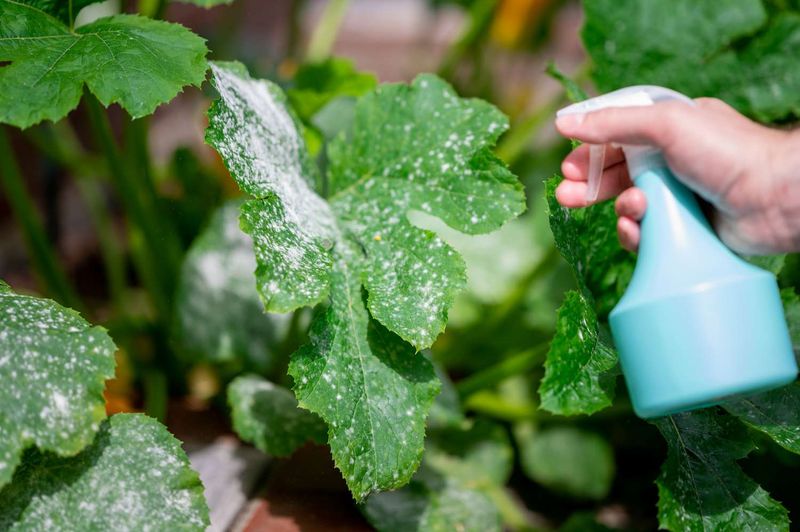
Pulling all of this together comes down to a short checklist. Confirm the flour-like pattern on both leaf surfaces, switch to soil-level watering while keeping up adequate moisture for the roots, improve airflow and light around the canopy, and act with a properly labeled product early if the infection is spreading.
Minnesota Extension’s cucurbit disease resource notes that powdery mildew can weaken plants over time, reducing fruit size and number and increasing the risk of sunscald when leaves are lost and fruit becomes exposed. The good news is that the disease does not directly infect squash fruit itself, so plants that keep some healthy foliage can still produce a reasonable harvest.
For next season, variety selection gives you a useful head start. Minnesota Extension’s zucchini growing guide points to resistant or partially resistant varieties as a way to reduce disease severity, though resistance is not absolute and different pathogen strains can behave differently in different gardens. Pairing a more resistant variety with good spacing, consistent soil-level watering, and early attention to the first signs of mildew gives your zucchini the best realistic chance, season after season.