
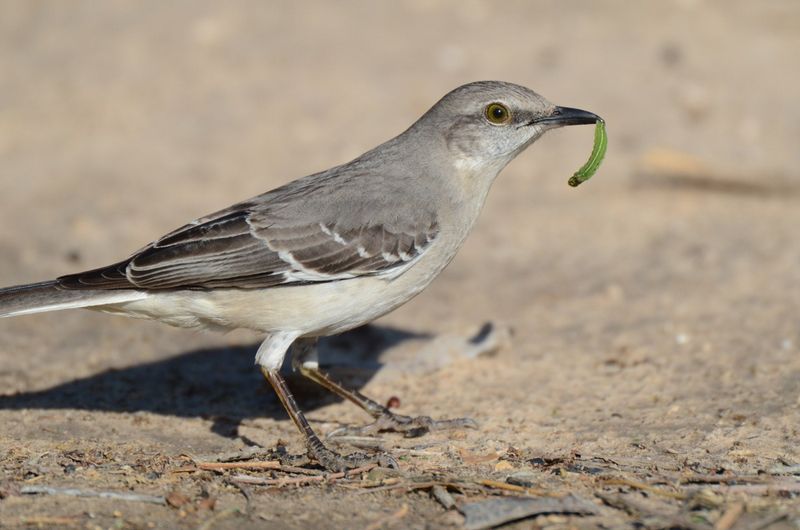
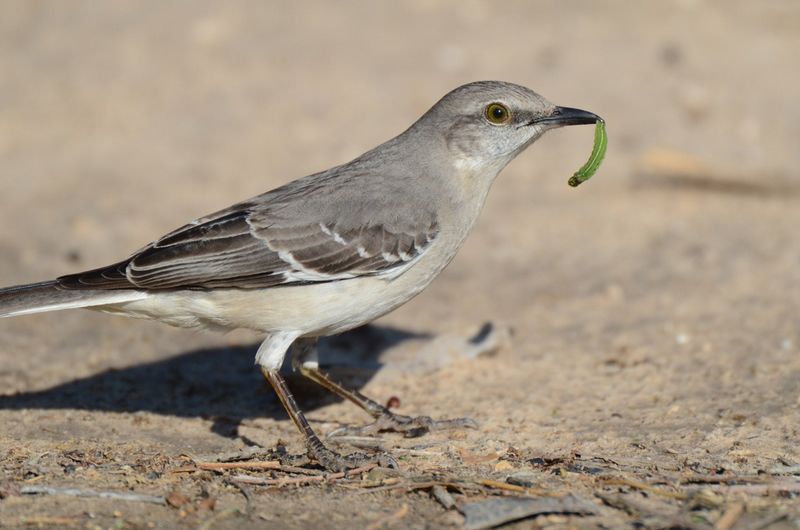
Walk across a North Carolina yard on a June morning and you might spot a gray bird hopping across the lawn, pausing, then snatching something from the grass before darting back to a shrub. That is a Northern Mockingbird doing what it does naturally, and it is a genuinely useful wildlife neighbor to have around. Before you start counting on it to solve a beetle or tick problem, though, it helps to understand what the bird actually eats and what it cannot realistically do. A few simple yard choices can make your property more welcoming to this bird while you keep the pest-management habits your family still needs.
What the mockingbird is really hunting
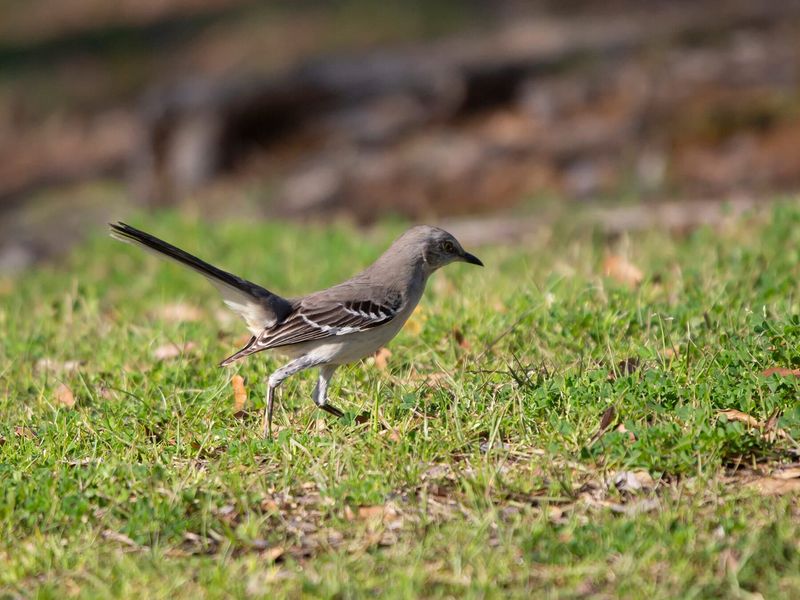
Northern Mockingbirds are a familiar sight across North Carolina, from the mountain foothills to the Coastal Plain, and their foraging style is hard to miss once you know what to look for. They walk, run, and hop across open lawns rather than probing into soil, snatching prey from or just below the surface before retreating to a nearby shrub or fence post. That combination of open ground and close cover is the habitat signature that makes a well-maintained suburban yard genuinely attractive to them.
Their diet shifts noticeably through the year. In late spring and summer, Cornell Lab of Ornithology life-history data shows that insects make up a large share of what mockingbirds eat, including beetles, ants, wasps, grasshoppers, and earthworms. Berries and fruit become more important in fall and winter, which is why fruiting shrubs are such a practical habitat addition. Through the warmer months, though, a bird working your lawn is likely picking off a meaningful variety of surface-foraging arthropods.
Where beetles are concerned, the honest picture is this: mockingbirds eat beetles as part of a broad insect diet, and they may pick up some adult beetles while foraging. Sources do not identify Japanese beetles as a preferred or principal prey item, and there is no reliable evidence that a single bird meaningfully reduces a beetle population. That does not make the mockingbird less valuable. It is a genuine wildlife asset and one modest part of the yard’s natural insect-eating community, which also includes spiders, ground beetles, and other predators.
Welcoming it means understanding its real role rather than expecting it to stand in for a pest-management program.
Adult beetles, lawn grubs, and ticks are different problems
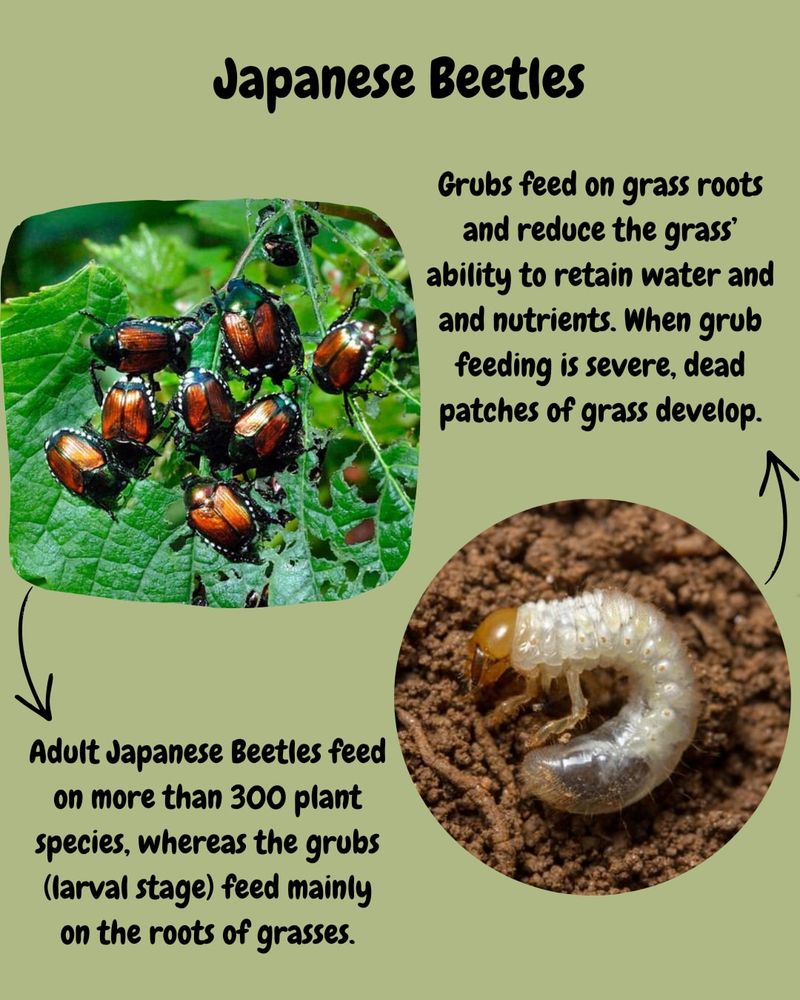
One of the most common misconceptions about birds and yard pests is that a bird patrolling the lawn is working on all of them at once. Japanese beetles, lawn grubs, and ticks are three genuinely separate problems, and understanding how each one lives makes it clear why a single bird cannot address all three.
Japanese beetles have a two-stage life cycle that splits between aboveground and underground. The adult beetles you see skeletonizing rose leaves or clustering on fruit trees are feeding above the soil surface from roughly June through August. Their larvae, the white grubs that damage grass by chewing roots, live several inches underground. University of Maryland Extension guidance on white grubs makes clear that grubs develop in the soil, which is well below where a surface-foraging bird can reach them.
A mockingbird hopping across your lawn may occasionally find a shallow grub during peak emergence, but it is not removing the grub population in any reliable way.
Even for the adult beetles feeding aboveground, the picture is limited. University of Maryland Extension research on natural enemies of Japanese beetles notes that natural predators generally have difficulty suppressing large adult Japanese beetle populations, partly because the beetles arrive in such numbers and partly because predators lag behind sudden pest increases.
Ticks are a separate category entirely. They are blood-feeding arachnids, not insects, and they feed on mammals, birds, reptiles, and amphibians. CDC tick life-cycle information explains that birds can actually carry ticks rather than hunt them, so the presence of a mockingbird in your yard does not translate into reduced tick exposure for your family. Ticks require their own set of precautions, which are covered later in this article.
The mockingbird is a welcome visitor, but treating it as a solution to three different pest problems overstates what any one bird can do.
Keep some open ground near dense cover
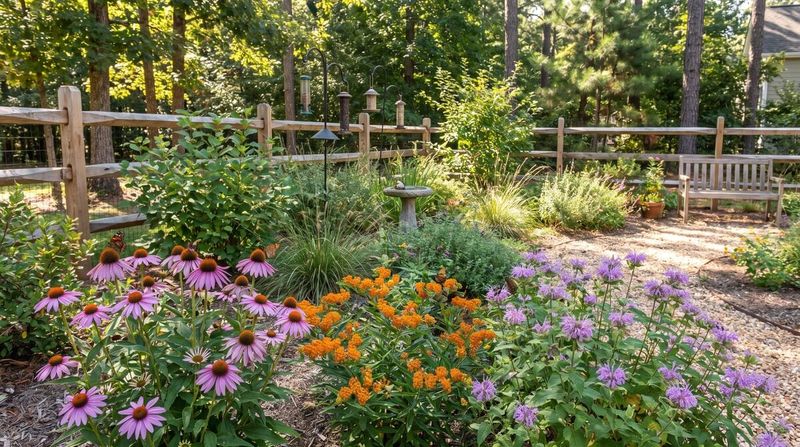
Mockingbird habitat comes down to a simple pairing: open ground for foraging and dense cover close enough to retreat to quickly. Yards that already have both are the ones where you are most likely to see a mockingbird working the lawn on a regular basis. The good news for North Carolina homeowners is that a perfectly ordinary managed yard often has most of what the bird needs.
Keeping some portion of your lawn mowed short gives a foraging bird the visibility and mobility it needs to spot and catch prey. Mockingbirds do not hunt effectively in tall, unmowed grass or dense ground cover because they rely on running and hopping to close in on insects. A patch of open turf, even a modest one, serves that purpose well. You do not need a large, perfectly manicured lawn; the key is that some area stays open and accessible.
The dense cover nearby is equally important. Cornell Lab life-history notes describe mockingbirds favoring open ground with nearby shrubs or thickets, which they use for shelter, nesting, and singing perches. Hedges, native shrub borders, or even a well-placed group of fruiting plants along a fence line can fill that role. The shrubs also produce insects and berries that extend the bird’s food supply across seasons.
One honest qualification belongs here: suitable habitat may encourage a mockingbird to visit or hold a territory in your yard, but it cannot guarantee one will appear or stay. Territory size, local bird density, season, and food availability all affect where individual birds settle. Think of these yard choices as making your property a reasonable option rather than a sure thing. That framing keeps expectations realistic while the habitat improvements themselves remain genuinely worthwhile for a wider community of native wildlife beyond just the mockingbird.
Choose plants that fit your North Carolina site
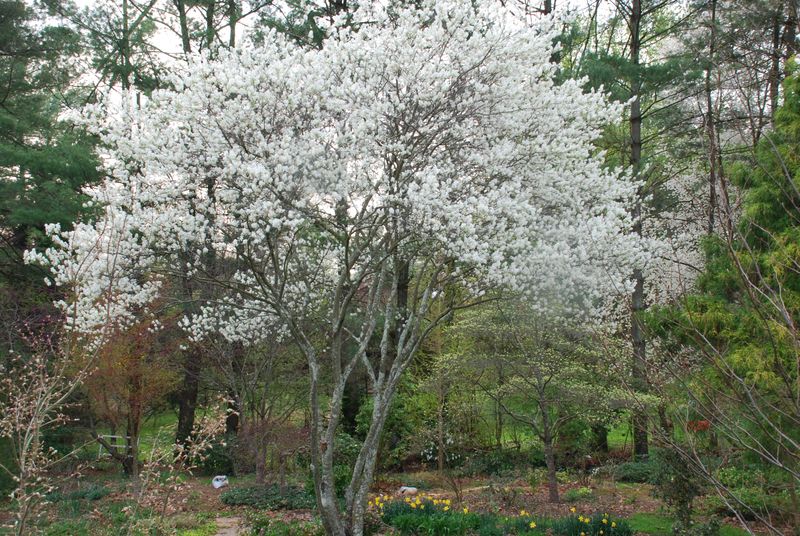
Fruiting shrubs and native cover plants do two things at once for a mockingbird: they supply food directly through berries and they support the insects that the bird hunts the rest of the year. Choosing plants that actually suit your specific North Carolina site matters more than picking any single “best” species, because suitability varies considerably across the mountains, Piedmont, and Coastal Plain.
Serviceberry is one of the most broadly useful options across the state. NC Extension’s profile of Amelanchier arborea documents it as native throughout North Carolina, tolerant of a range of soil conditions, and a reliable early-season fruit source for birds. Canadian serviceberry (Amelanchier canadensis) is particularly well-suited to moist, lower-elevation sites. Either species works well as a multi-season plant that provides spring blossoms, early summer fruit, and fall color.
American beautyberry is another strong choice for the Piedmont and Coastal Plain. NC Extension’s beautyberry entry confirms it as a native species that produces vivid purple berries in late summer and fall, exactly when mockingbirds are shifting toward fruit-heavy feeding. It tolerates partial shade and adapts to a range of soil types, making it practical for yards that do not get full sun everywhere.
Native blackberries and dewberries are worth considering where you have room and do not mind a somewhat thicket-forming habit. Southern dewberry (Rubus trivialis) is native to the Piedmont and Coastal Plain and produces fruit that many bird species use. In mountain sites, native blackberry species are the more appropriate choice.
Inkberry (Ilex glabra) deserves a specific note. NC Extension’s inkberry profile shows it as best suited to moist, acidic soils common in the Coastal Plain and parts of the Piedmont. Critically, inkberry requires both a male and a female plant to produce berries, so planting a single specimen will not yield fruit. Pair plants if berry production is your goal.
No single plant from this list guarantees a mockingbird will appear; the value is in combining food, cover, and open foraging space into a yard that makes sense for the bird across all seasons.
Fruit and cover better match mockingbird behavior than seed feeders
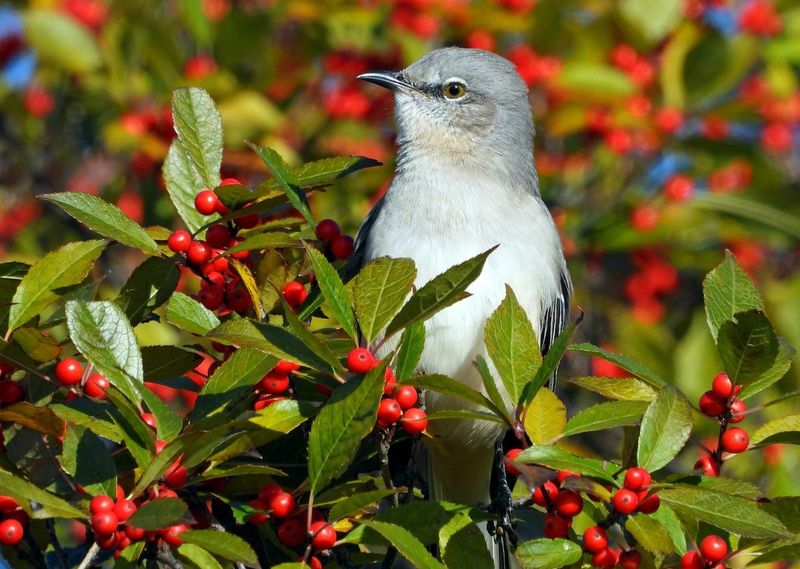
Seed feeders are a familiar backyard addition, but they are not particularly well-matched to what mockingbirds actually eat. Cornell Lab’s Northern Mockingbird overview notes that mockingbirds do not commonly visit seed feeders the way house finches or cardinals do. Their diet centers on insects during warmer months and fruit and berries through fall and winter, so the habitat additions most likely to matter are fruiting shrubs, native cover plantings, and open lawn rather than a hanging feeder stocked with sunflower seed.
That does not mean you need to remove a feeder you already have. Other birds in your yard benefit from them, and a busy feeding station can add to the general wildlife activity that makes a yard feel alive. Just do not expect a seed feeder to draw mockingbirds specifically or to substitute for the plant-based habitat described in the previous section.
A shallow birdbath is a more relevant optional addition, since mockingbirds do drink and bathe. If you add or already have one, maintenance is not optional. CDC guidance on wildlife and backyard feeding recommends cleaning birdbaths at least weekly, or more often when visibly dirty, and cleaning feeders at least monthly. Keep pets away from feeding and bathing areas, and wash your hands after handling any feeder or bath equipment.
If you notice sick or dead birds near your yard, remove feeders and baths temporarily until the situation is resolved and you understand what caused it. These are not complicated steps, but skipping them turns a wildlife-friendly feature into a potential hazard for the birds you are trying to support and for your household.
Pairing a clean birdbath with a nearby fruiting shrub and some open lawn creates a small habitat cluster that fits the mockingbird’s actual behavior far better than any single feeder ever will.
Treat bird-friendly pest control as a supporting layer
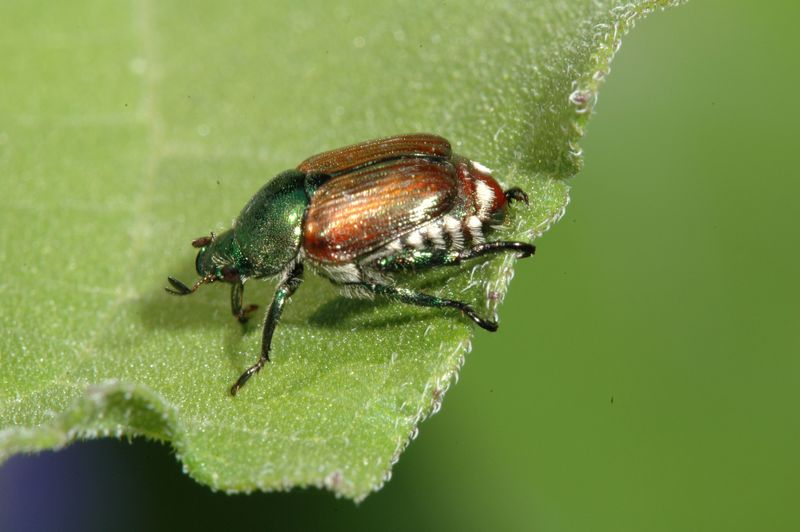
Mockingbirds and other insect-eating birds are best understood as one layer in a yard’s overall pest management, not as a replacement for it. That distinction matters most when Japanese beetle pressure is high, because natural predators face real limits in those situations.
University of Maryland Extension research on natural enemies of Japanese beetles explains that predators, parasites, and pathogens generally struggle to suppress large adult Japanese beetle populations. Natural enemies typically lag behind sudden pest increases, and even in yards with healthy wildlife populations, beetle numbers can overwhelm what predators can consume. Weather, local pest density, and available habitat all affect outcomes in ways that no homeowner can fully control.
Correct pest identification is the practical starting point for any response. Penn State Extension’s Japanese beetle guidance emphasizes that identifying the pest accurately before choosing a treatment prevents unnecessary applications and protects other species in the yard. From there, sensible lawn care, such as keeping turf healthy so it recovers from grub feeding, matters more than reactive spraying in most seasons.
When treatment is genuinely needed, the choice of product and timing carry real consequences for the rest of your yard’s ecology. Broad-spectrum insecticides do not discriminate between pest beetles and the ground beetles, spiders, parasitic wasps, and other predators that help keep pest populations in check naturally. University of Georgia Extension’s overview of beneficial garden insects documents how many common yard arthropods actively suppress pest species, and broad-spectrum products can remove them along with the target pest. Flowering plants deserve special protection: applying any insecticide to a plant in bloom when pollinators are actively visiting it can cause significant harm beyond the intended pest.
Wildlife-friendly yard care does not mean refusing every treatment option. It means making targeted, label-compliant choices that address real problems without unnecessarily reducing the insect community that birds and other predators depend on.
Protect your family and the nesting bird
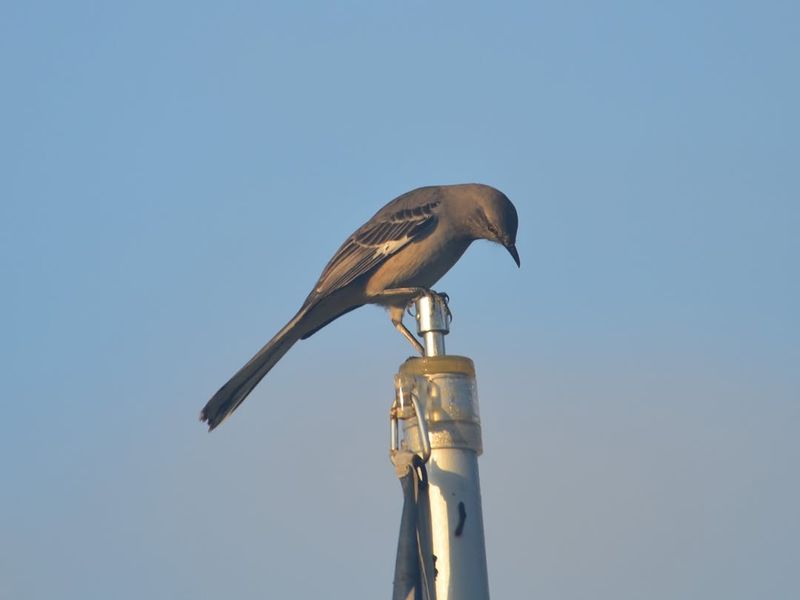
A mockingbird in your yard is a genuine wildlife benefit, and it belongs there. At the same time, its presence does not change what your family needs to do to stay safe around ticks, and nesting season brings its own set of considerations for how you move around the yard.
Tick exposure in a North Carolina yard is a real and seasonal concern across all three regions of the state. CDC tick prevention guidance recommends a practical combination of steps: keep lawn mowed and manage vegetation around play and seating areas, reduce leaf litter near places where your family spends time, consider a gravel or wood-chip barrier between a maintained lawn and any adjacent wooded or brushy edge, and avoid walking through tall grass or brush when practical. After any time spent outdoors, including in your own backyard, check yourself, your children, and your pets for ticks. If you use a pesticide product for tick control, follow the label exactly, since label directions carry legal weight and exist to protect both people and wildlife.
None of those steps are replaced or reduced by having a mockingbird around. Ticks are blood-feeding arachnids that use birds as hosts rather than prey, so a mockingbird patrolling your lawn does not lower tick risk for your family.
Nesting season introduces a separate behavioral consideration. Audubon’s Northern Mockingbird field guide describes the species as highly territorial, particularly near active nests, and homeowners sometimes find that a nesting bird will dive at people or pets who come too close. The straightforward response is to give the nest a wide berth and avoid disturbing it. U.S.
Fish and Wildlife Service guidance on bird nests explains that active nests, eggs, and dependent young songbirds may receive protection under the Migratory Bird Treaty Act. If a nest location creates a genuine safety concern, the right step is to contact your state wildlife agency for guidance rather than attempting to move or remove it on your own.
Welcome the bird without asking it to do a pest controller’s job
Pulling the practical advice together, the lowest-effort path to a mockingbird-friendly yard involves four things: leave some open lawn for foraging, add site-matched native shrubs or fruiting plants for cover and food, limit unnecessary broad-spectrum spraying that removes the insects the bird and other predators rely on, and keep any birdbath or water feature clean and safely maintained. None of these steps require a major yard overhaul, and all of them benefit a wider community of native wildlife beyond the mockingbird alone.
Cornell Lab’s life-history documentation confirms that mockingbirds may consume some adult surface-foraging beetles as part of a broad insect diet, and that is genuinely useful. But extension research on Japanese beetle natural enemies makes equally clear that no bird or predator reliably controls a serious beetle infestation, so targeted pest management when pressure is real remains part of responsible yard care. And CDC tick prevention recommendations apply regardless of what wildlife visits your yard, because ticks require their own consistent precautions for your family and pets.
A mockingbird working your lawn is worth having around on its own terms. Treat it as a wildlife neighbor rather than an unpaid exterminator, and the relationship holds up just fine.