
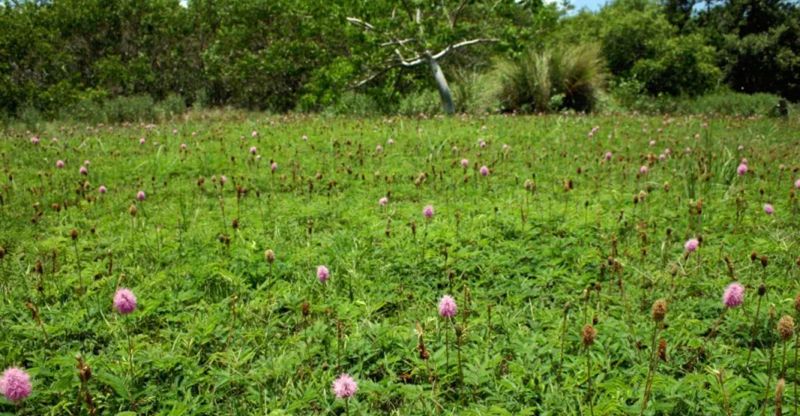
Bare soil in Florida does not stay bare for long. If you leave it open, weeds usually move in fast, especially in sandy yards after rain. Native ground covers can fill those empty patches, shade the soil, and cut down on watering once they settle in. The right ones also support pollinators, handle Florida heat, and make the yard look cared for with less work.
1. Sunshine Mimosa
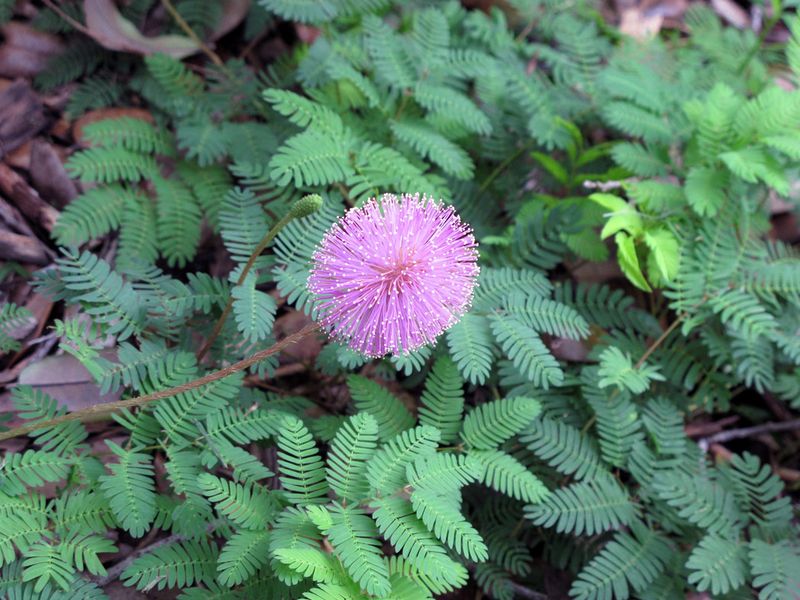
Step on a patch of sunshine mimosa and you may notice the tiny leaves folding up like they are playing shy. That little trick makes it one of the most charming native ground covers for Florida yards, but its real value is how well it spreads across open, sunny ground.
Sunshine mimosa, also called powderpuff, forms a low mat that can soften the look of bare sand, driveway edges, and open lawn gaps. Once established, it usually needs far less irrigation than thirsty turf, especially in central and south Florida landscapes with fast-draining soil.
The pink puffball flowers are more than cute. They attract bees and other small pollinators, so this plant brings wildlife value while doing the practical job of covering soil before weeds can grab the space.
Give it full sun, room to creep, and patience during the first few months while the roots settle. It can tolerate light foot traffic, which makes it useful near paths, but it is not a sports-field substitute for heavy running and play.
2. Frogfruit
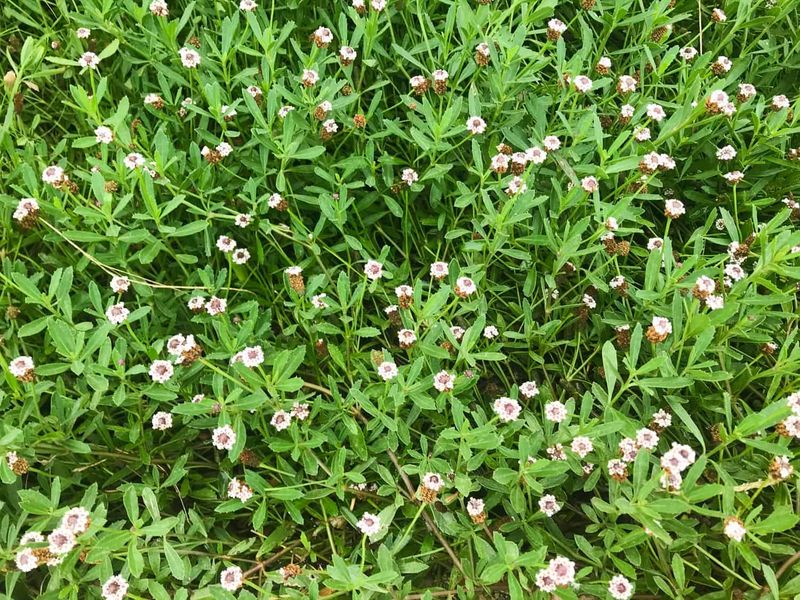
A butterfly landing strip can be hiding in one of Florida’s toughest little ground covers. Frogfruit stays low, spreads with a relaxed, rambling habit, and often keeps blooming when many fussy plants have already complained about the heat.
Gardeners like it because it can handle sunny spots, part shade, and those awkward transition areas where turf gets thin. In many Florida yards, frogfruit works well between stepping stones, along swales, or in open patches where weeds keep returning after every summer storm.
Its small flower heads may look modest from a distance, but they are busy feeding stations for native bees and butterflies. It is also a host plant for several butterfly species, which gives it a stronger reason to exist than simply being a green filler.
During establishment, water it regularly enough to keep the root zone from drying out completely. After that, frogfruit is often quite forgiving, and a light trim can keep it looking tidy if it wanders into walkways or bed edges.
3. Beach Sunflower
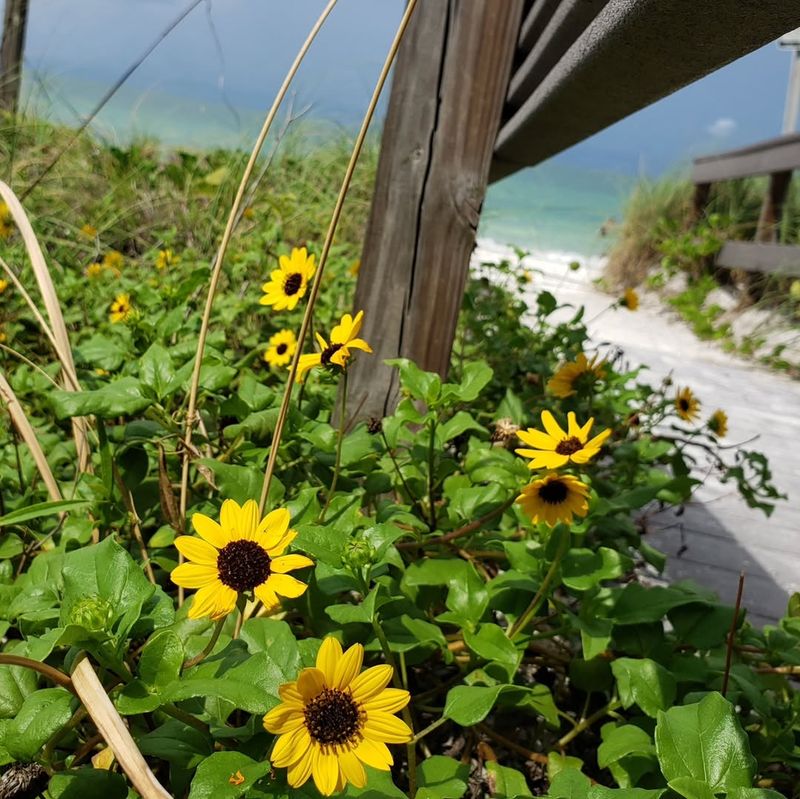
For hot, glare-filled spots where many plants sulk, beach sunflower brings the cheerful energy of a tiny dune garden. Its golden flowers look casual and sunny, but the plant is tougher than its soft petals suggest.
Beach sunflower is especially useful in coastal and inland sandy soils, as long as the site drains well. It spreads into a dense, leafy cover that helps shade bare ground, which can reduce the open space that weed seeds need to sprout.
Florida gardeners often use it near mailboxes, curb strips, dry slopes, and full-sun beds that would otherwise need constant attention. Salt tolerance gives it an extra advantage near the coast, where wind and salty air can punish more delicate ground covers.
Pollinators visit the bright blooms, and the plant has a loose, natural look that fits well in native and beach-style landscapes. Trim it back when it gets leggy, especially after heavy bloom periods, and it can push fresh growth instead of becoming a tangled mat.
It is not a deep-shade plant, so save it for bright places. In the right spot, beach sunflower can make a dry, sandy patch look intentional instead of forgotten.
4. Coontie
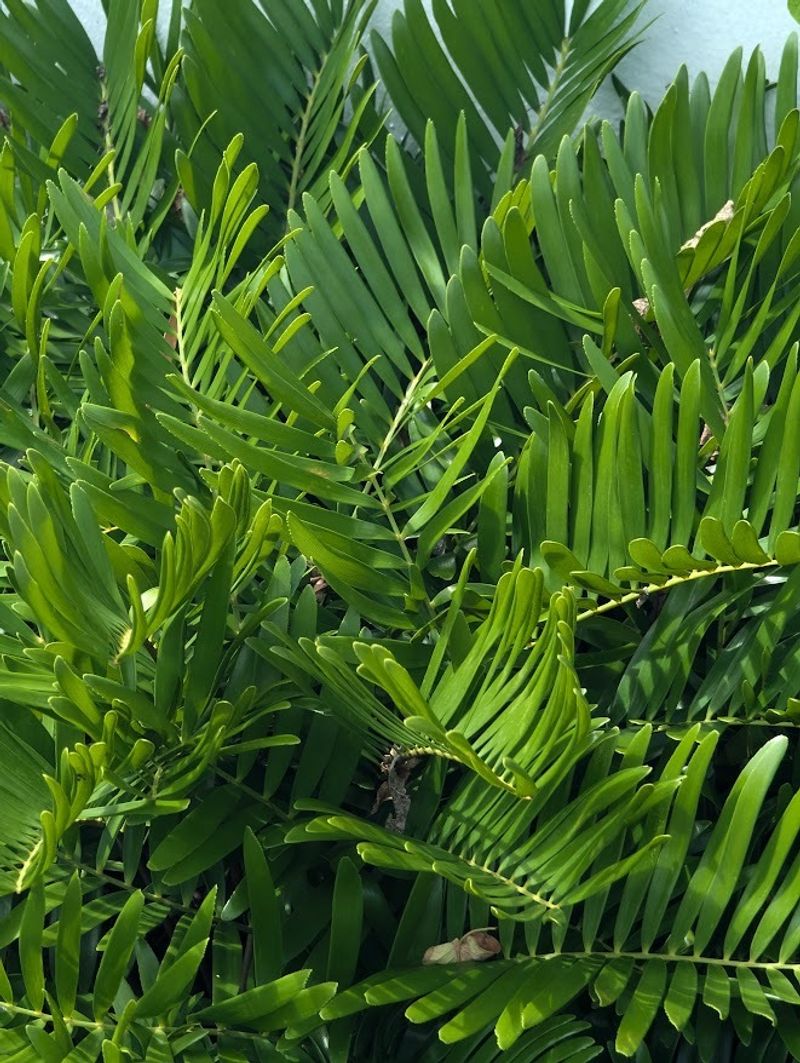
Coontie does not race across the yard, and that is exactly why many Florida gardeners love it. Instead of acting like a fast creeper, it builds a tidy, fernlike mass that slowly fills bare spaces with deep green texture.
This ancient-looking native cycad is a smart choice under palms, near foundations, along shaded walks, and in beds where you want weed suppression without constant trimming. Its stiff, glossy leaves cast shade over the soil, helping make the area less welcoming for sprouting weeds.
Coontie handles drought well once established and fits Florida’s sandy soils better than many ornamental imports. It also supports the atala butterfly, a striking native butterfly with dark wings and bright blue markings, which makes a coontie planting feel like more than a landscaping fix.
Because it grows slowly, start with enough plants to cover the area in a reasonable time. Mulch between new plants at first, then let the foliage close in as the clumps mature.
One caution matters for homes with curious pets or children: coontie seeds are toxic if eaten. Place it thoughtfully, remove exposed seeds if needed, and enjoy a durable native that stays handsome through Florida’s rough weather swings.
5. Partridgeberry
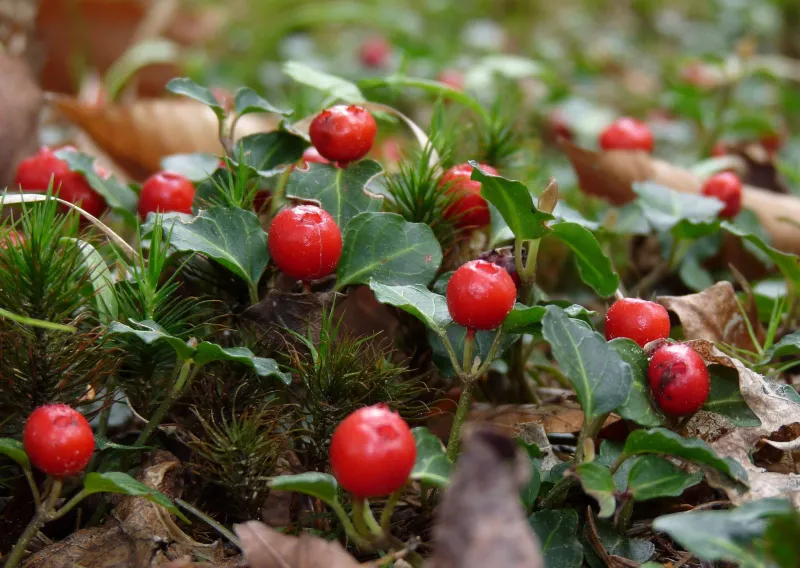
In the cooler hush beneath shrubs and trees, partridgeberry gives bare ground a quiet, woodland feel. It is not flashy in the way beach sunflower is, but its tiny paired flowers, glossy leaves, and red berries reward anyone who looks closely.
Partridgeberry is best for shady to partly shady areas where sun-loving ground covers struggle. Think oak canopy edges, pine needle paths, naturalized beds, and moist but well-drained pockets that stay protected from the harshest afternoon heat.
Its growth is low and creeping, so it can knit across small bare patches without becoming a towering mess. In Florida yards with sandy soil, adding leaf litter or composted organic matter can help mimic the woodland floor it prefers.
Wildlife value is part of its appeal. The berries can feed birds and small animals, while the flowers support small pollinators in a subtle, low-key way.
Partridgeberry is not the fastest weed fighter on this list, so pair it with mulch during the early stage. Once it settles in, it brings a soft native carpet to shaded spots where mowing is awkward and turf usually gives up.
6. Golden Creeper
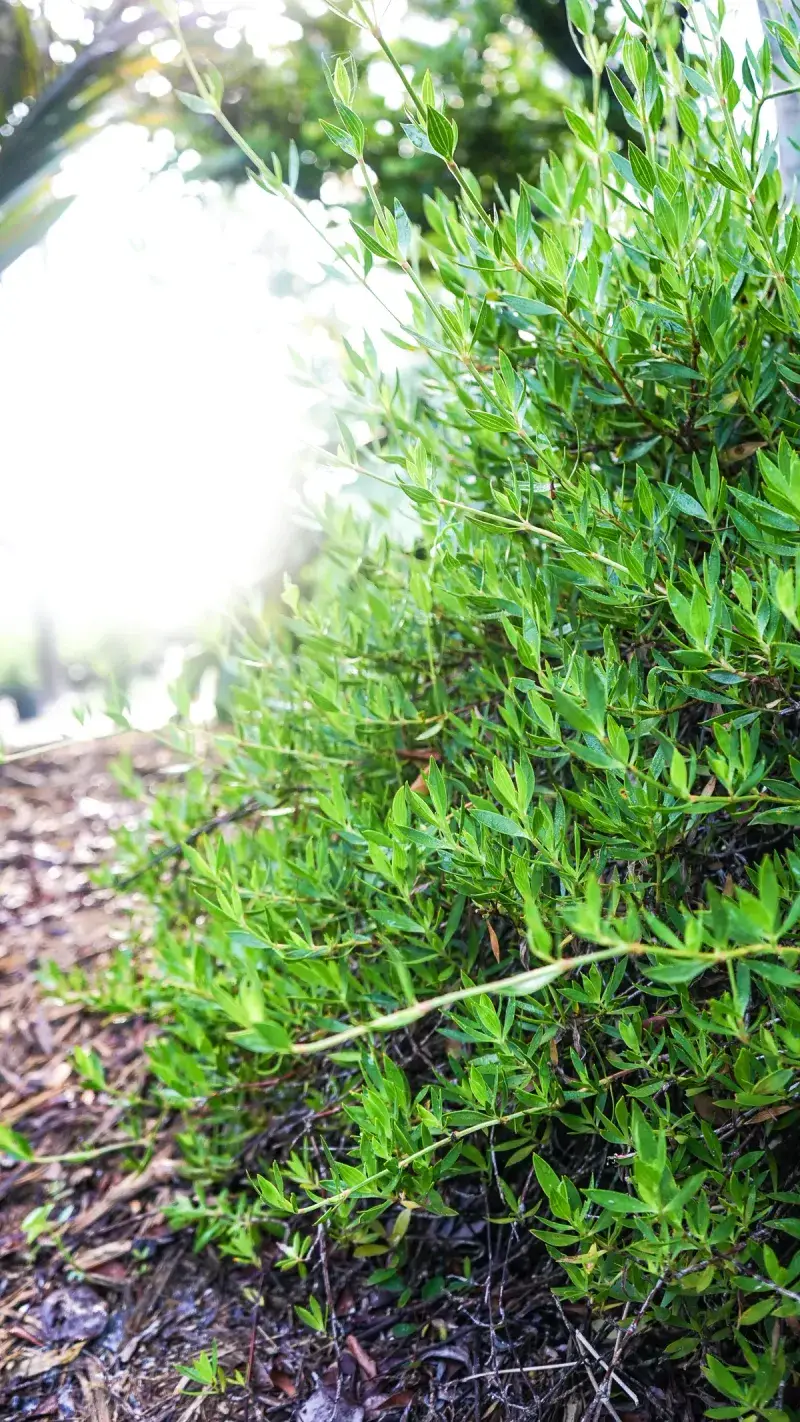
Some plants seem built for the tough corners of South Florida, and golden creeper is one of them. It has a clean, low look that suits modern landscapes, coastal yards, and dry beds where irrigation should not be the main event.
Golden creeper is native to coastal areas of Florida and is especially useful in the southern part of the state. It tolerates sandy, well-drained soil and bright sun, making it a good candidate for open spaces that bake between rains.
Rather than stealing the show with big flowers, it earns its place through structure. The foliage spreads into a ground-hugging cover that can help stabilize exposed soil and reduce weedy gaps in low-maintenance planting beds.
Use it where you want a neat native alternative to plain mulch, especially near paths, rock features, or coastal-style plantings. It can look especially sharp when planted in sweeps instead of dotted around one plant at a time.
Like many drought-tolerant natives, it still needs care at the beginning. Water during establishment, avoid soggy sites, and give it space to expand naturally without burying the crown under heavy mulch.
7. Lyreleaf Sage
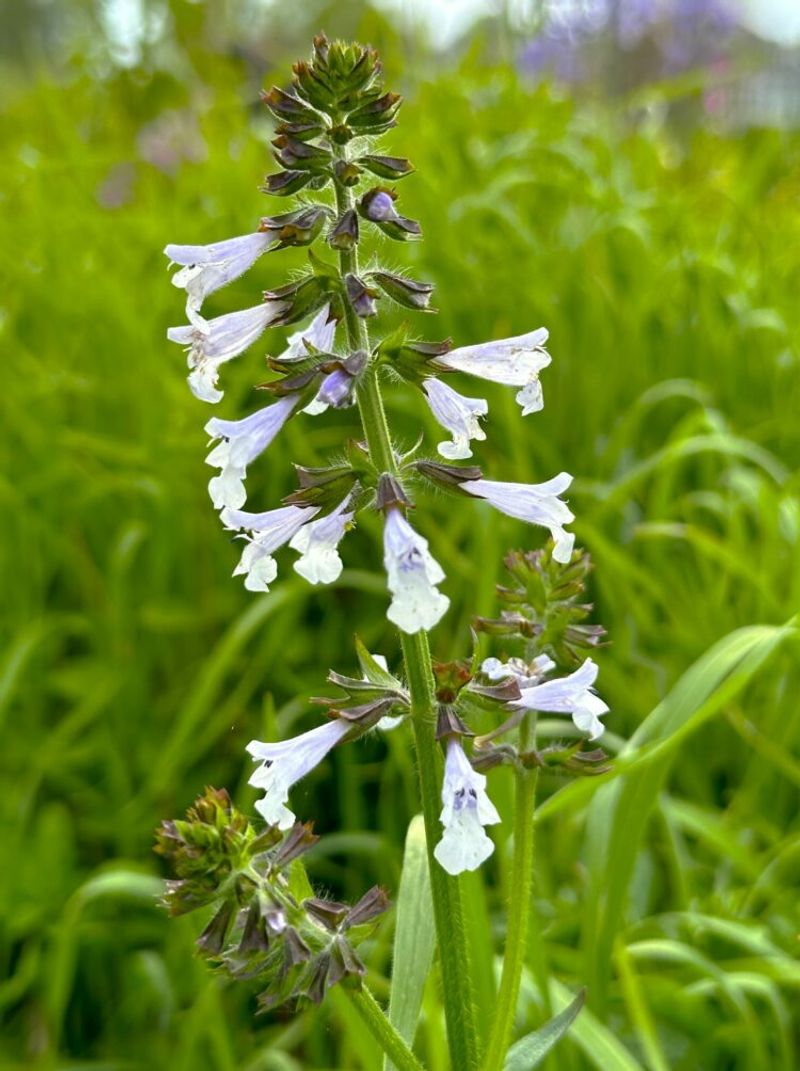
Lyreleaf sage has a wildflower personality hiding inside a ground cover body. For part of the year it sits low in leafy rosettes, then sends up purple-blue flower spikes that make a plain patch feel alive.
It works well in Florida lawns and beds where the goal is a more natural, pollinator-friendly cover rather than a perfectly flat carpet. The basal leaves can fill in thin areas, while the flowers feed bees and add movement without needing a high-water routine.
One reason it stands out is its ability to reseed politely in the right conditions. That can be a gift in bare, sandy areas because new seedlings help close gaps before weeds dominate, though gardeners who prefer crisp edges may want to deadhead or trim after flowering.
Lyreleaf sage is comfortable in sun to part shade and can handle average Florida soils once established. It looks especially good in meadow-style patches, around young trees, or mixed with frogfruit for a layered native lawn alternative.
Mow or cut it high after the blooms fade if you want a shorter look. Give it a little establishment water, then let its self-sufficient streak do much of the work.