
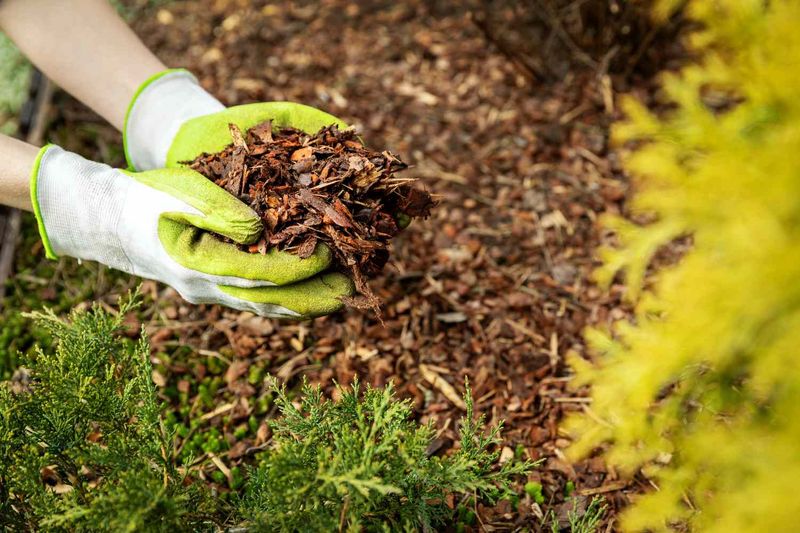
Faded mulch can look tired by fall, and many Southern gardeners assume it all has to be raked up and hauled off. Often it does not.
Some of it can stay right where it is, and some can go into a compost pile as a carbon-rich ingredient. Here is how to sort it, what to expect, and why a pile of mulch may not turn into finished compost by spring.
Faded mulch does not automatically need to come out
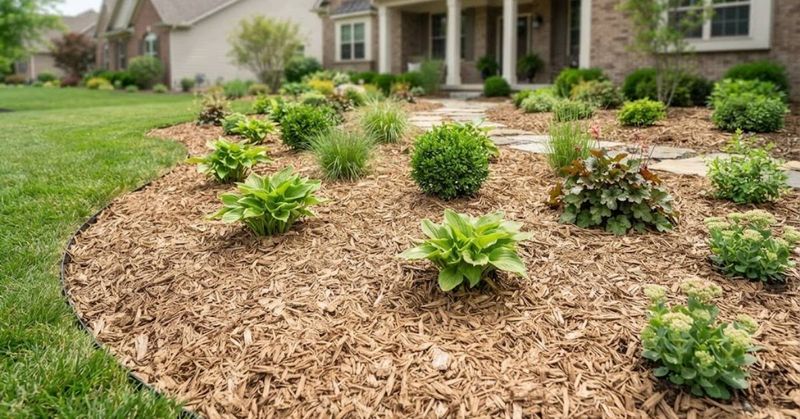
Gray or faded mulch is not trash. Sound organic mulch such as bark, wood chips, or leaves keeps working as it ages, shading soil and slowing evaporation through a long Florida or Texas fall.
Start by identifying what you have. UF/IFAS describes organic types like bark and wood chips, along with inorganic types like stone and rubber.
Then check the depth before adding anything new. Oregon State guidance advises against going past about 3 inches for bark or 4 inches for wood chips, and warns that too much depth plus overwatering can hurt plant growth.
If your layer is already thick enough, simply fluff it with a rake and leave it. If it is thin, top it off lightly.
Keep mulch pulled back from trunks and stems, because extension guidance recommends a mulch-free ring around trees.
One more worry to set aside: nitrogen tie-up is mainly a problem when woody material gets mixed into the soil. Mulch resting on the surface is not an automatic nitrogen thief.
Only suitable organic mulch belongs in the compost pile
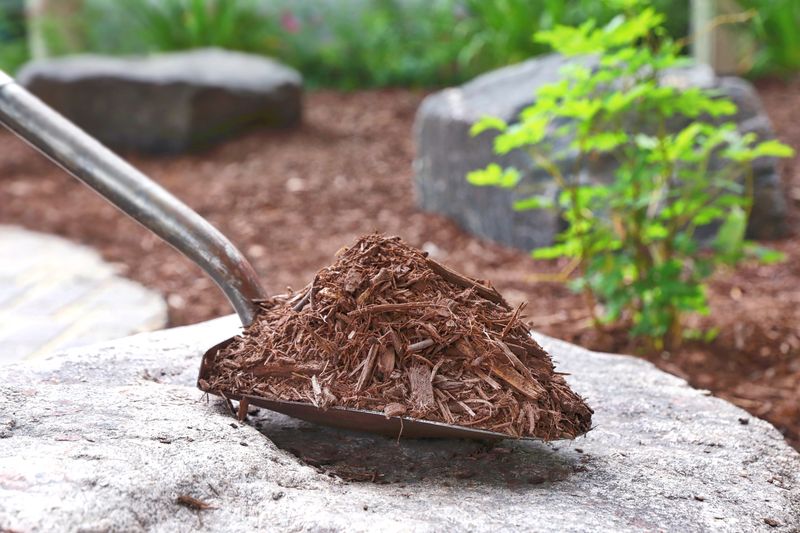
Before anything goes into a pile, sort it. Leaves, bark, and wood chips are organic and can break down as compost ingredients.
Stone, plastic, and rubber mulch cannot, so rake those out and keep them separate, as the UF/IFAS mulch overview makes clear when it separates organic from inorganic types.
Next, think about where the mulch came from. If you are unsure, leave it out of the pile.
UGA Extension advises choosing mulch free of pesticides, chemical contaminants, and weeds, and notes that some free municipal mulch can include recycled wood or rotten building lumber.
Treated lumber scraps, mystery loads, and weedy material are the main red flags. Dyed mulch is a different story.
Color alone does not make mulch toxic, so the real question is the source and any possible contaminants.
A quick hand sort on a tarp takes only a few minutes and keeps the pile clean.
Pair woody mulch with nitrogen-rich ingredients
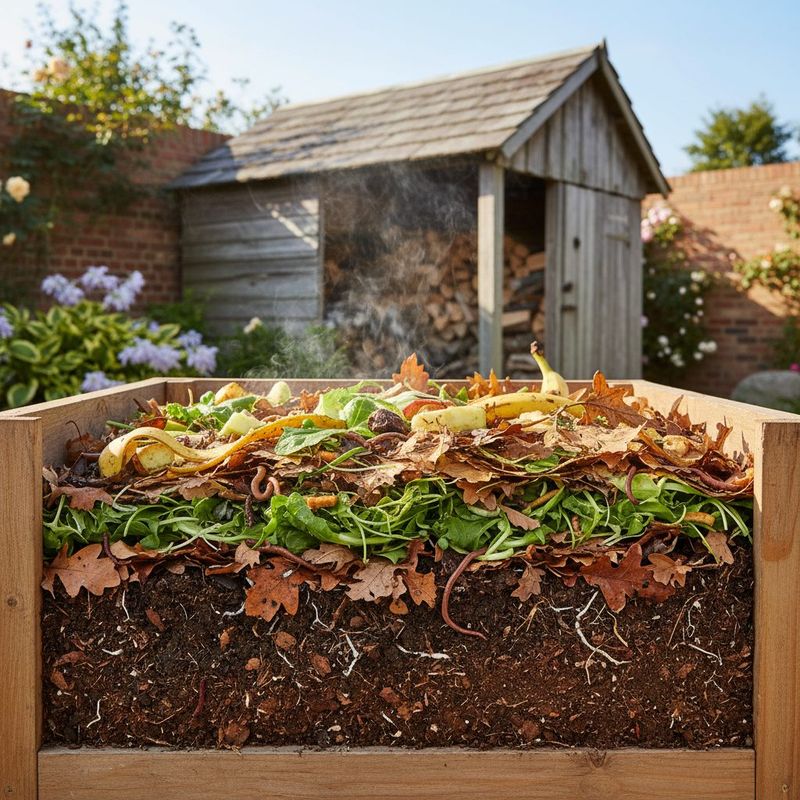
Bark and wood chips are carbon-rich “browns.” They are not finished compost, and a pile made mostly of woody mulch can sit for a long time without much happening.
The fix is balance. Texas A&M AgriLife recommends mixing high-carbon materials with nitrogen-rich ones such as fresh grass clippings.
Its guidance points to a carbon-to-nitrogen ratio near 30:1 as ideal, but it also says home composting is not exact.
So skip the math. Think in layers: a few inches of chopped mulch, then a layer of fresh clippings, then repeat.
If the pile smells sour, add more browns. If it seems dry and slow, add more greens.
You do not need to reach for nitrogen fertilizer. What the pile needs depends on what is in it, and fresh clippings, kitchen scraps, and leaves often do the job.
Shred and care for the pile to support decomposition
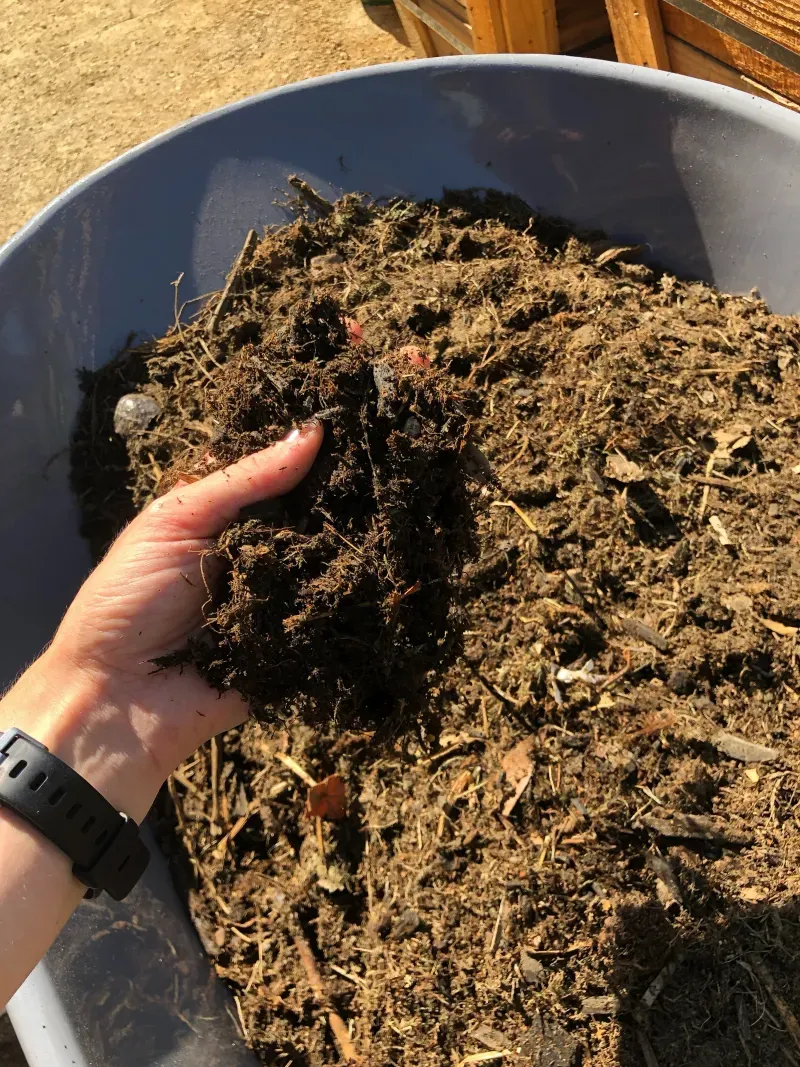
Smaller pieces break down faster because microbes get more surface to work on. For mixed yard material, Texas A&M suggests particles ideally under 2 inches, and its composting guide notes that shredding helps decomposition.
A mower pass over the mulch or a chipper can do the work.
Then keep air moving. Turn the pile with a fork now and then so the center does not go stale.
Moisture matters just as much. Utah State Extension suggests a simple test: the pile should feel like a well-wrung-out sponge, damp but not dripping.
Texas summers dry piles out fast, while heavy Gulf Coast rains can soak them, so a tarp lid helps in wet spells.
Chopping and tending can speed things up, but they do not promise a spring finish. Large wood pieces still take their time.
Spring compost is possible, but not guaranteed
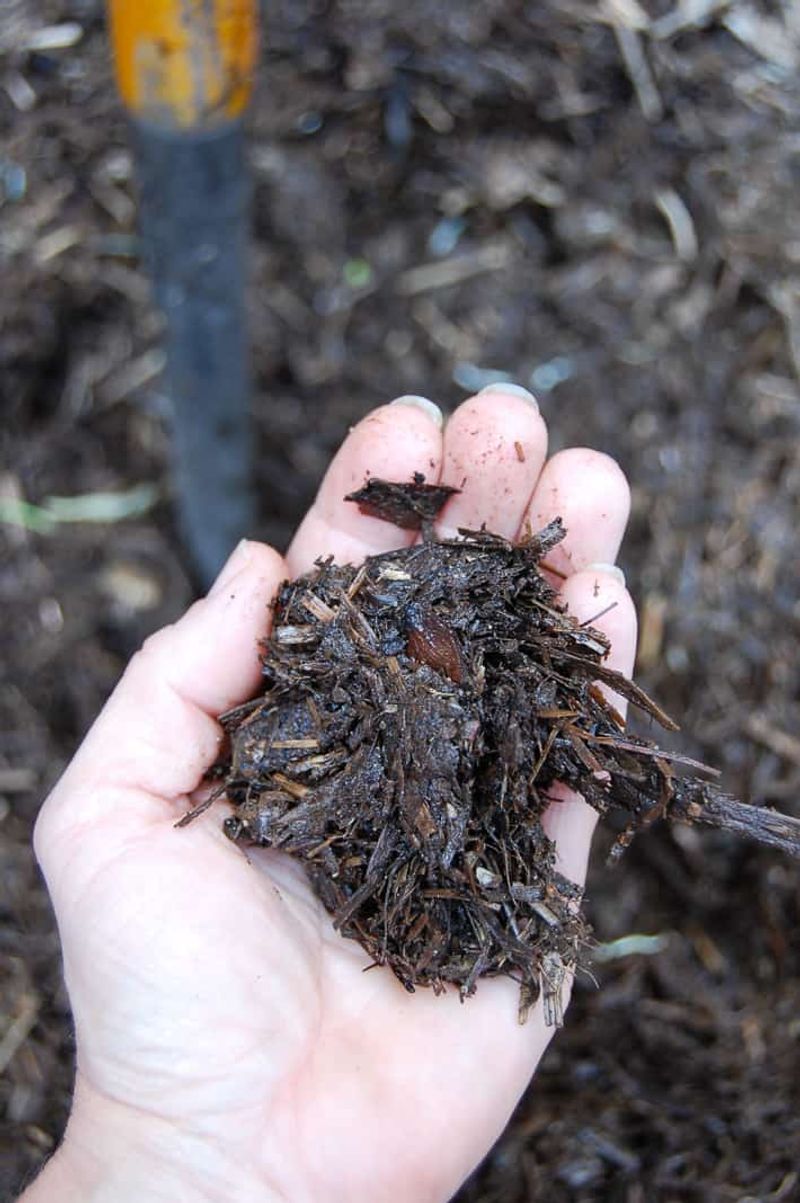
Here is the candid part. A pile of mulch left alone to weather usually becomes aged mulch, not compost.
Oregon State describes composting as a managed process, with attention to moisture and aeration.
Even with good care, woody material is slow. Texas A&M says wood chips may take up to two years to reach the humus stage, and larger pieces take longer.
Some chunks in a mixed pile may stay as darkened mulch.
So how do you know when it is done? USU Extension offers the cues: finished compost looks dark and crumbly and smells earthy.
If you can still pick out recognizable wood, it is not there yet.
Treat spring as a possible bonus, not a deadline. Sift out the finished material for beds and put the coarse leftovers back to work.
A backyard pile may not sanitize every seed or pathogen
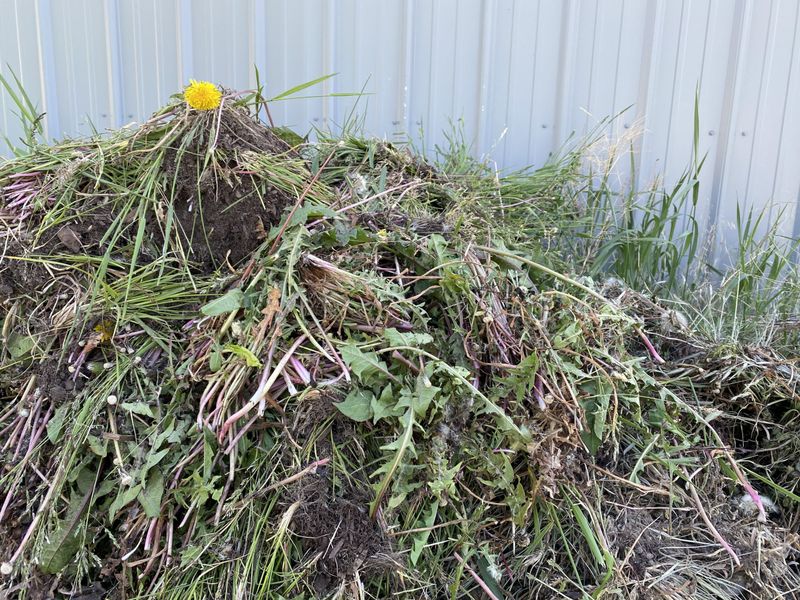
Home piles are forgiving, but they are not sterilizers. UGA Extension notes that some weed seeds and disease organisms can survive, because a backyard pile may not be mixed well enough to bring every part through the hot center.
That means you should not count on ordinary composting to make questionable material safe. Weeds that are already setting seed, plants with a known disease, and mulch from weedy sources are better kept out of the pile.
A practical example: if tomato plants had a leaf disease this year, bag them or follow local disposal rules instead of tossing them in with old mulch. The same goes for a thick mat of seeding crabgrass or nutsedge.
Good turning and moisture management can help, but they do not guarantee a clean result. When in doubt, leave it out.
Use finished compost to support soil, not as an automatic fertilizer replacement
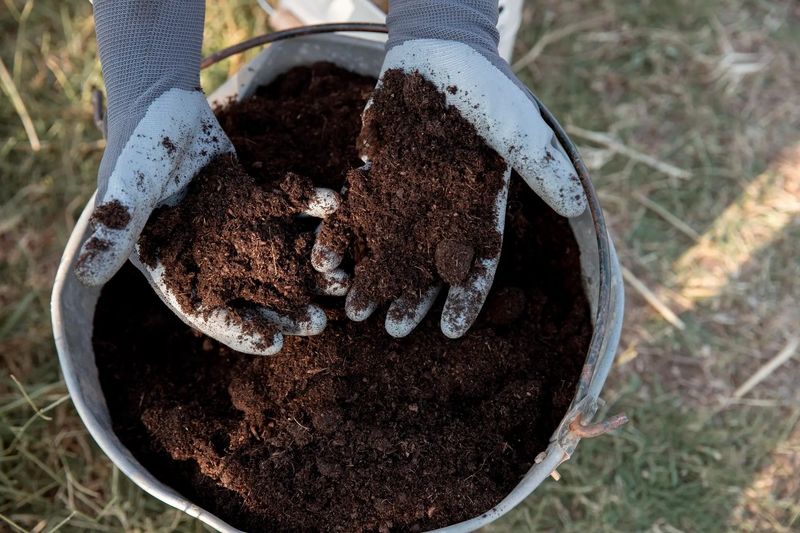
Finished compost is a soil helper. In sandy settings like much of Florida, UF/IFAS Hillsborough County explains that compost can improve water- and nutrient-holding properties.
That is a real payoff where water drains fast.
It does not necessarily supply every nutrient your plants need, though. A soil test is the best way to guide those decisions, so you add only what is missing instead of guessing.
Your fall choice can be simple. Leave suitable mulch in place if the depth is right.
Compost the clean organic material you can manage. If some woody pieces are not finished by spring, use them as mulch rather than calling them failed compost.
Either way, nothing was wasted.