
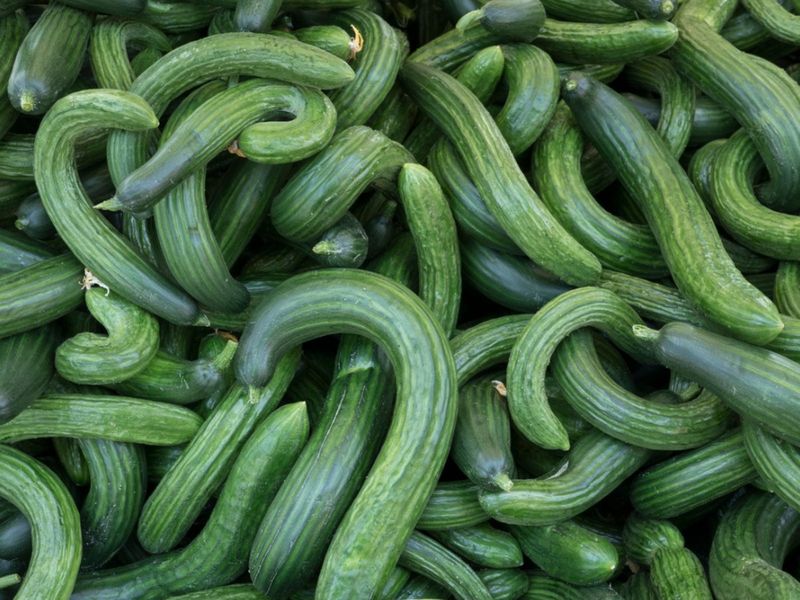
You pull back the leaves on your container cucumber and find fruit that looks more like a fish hook than a vegetable. Before you blame the heat or assume the plant is sick, there is a good chance your watering routine deserves a closer look. Letting a pot swing from bone dry to soaking wet during hot weather can contribute to misshapen cucumbers, but it is not the only explanation. Pollination problems, physical obstructions, and even the variety you planted can create the same curved, pointed shapes.
Inconsistent moisture can contribute to hooked cucumbers
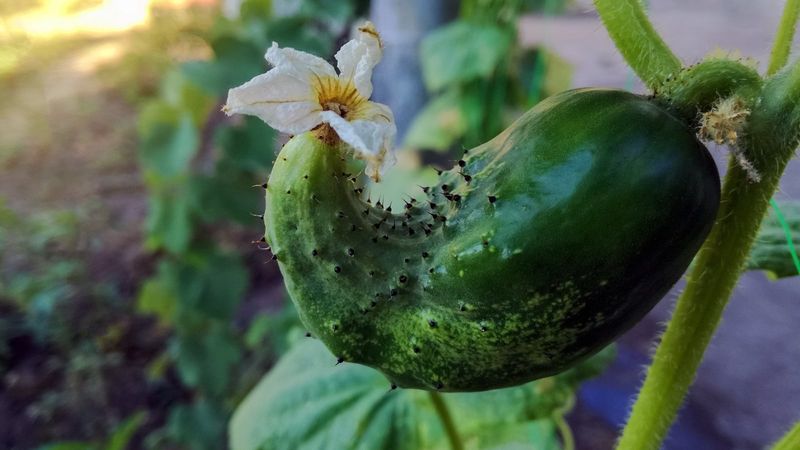
A cucumber growing in a pot during a heat wave has very little buffer when moisture runs out. When the potting mix dries completely between waterings and then receives a sudden heavy soak, the plant experiences a stop-and-start pattern of water availability that can disrupt normal fruit development. Utah State University Extension notes that inconsistent watering around flowering and fruit set can produce misshapen cucumbers, and that drought stress during fruit development can cause bitterness, pointed ends, and irregular shapes.
The periods that matter most are flowering, fruit set, and the early weeks of fruit enlargement. When cells in a developing cucumber cannot expand evenly because water supply keeps fluctuating, the fruit may grow faster on one side than the other, producing a curve, hook, or taper. The effect is most noticeable in containers because there is simply less soil volume to buffer against sudden drying.
That said, a hooked cucumber is not a guaranteed sign of watering trouble. University of Minnesota Extension identifies incomplete pollination, heat-related disruption of bee activity, mechanical contact with a trellis or pot edge, low fertility, and cultivar characteristics as additional causes of abnormal fruit. Inconsistent moisture is a credible first place to look, especially in a hot container, but it is a starting point for diagnosis rather than a certain answer.
Heat gives container cucumbers less room for error
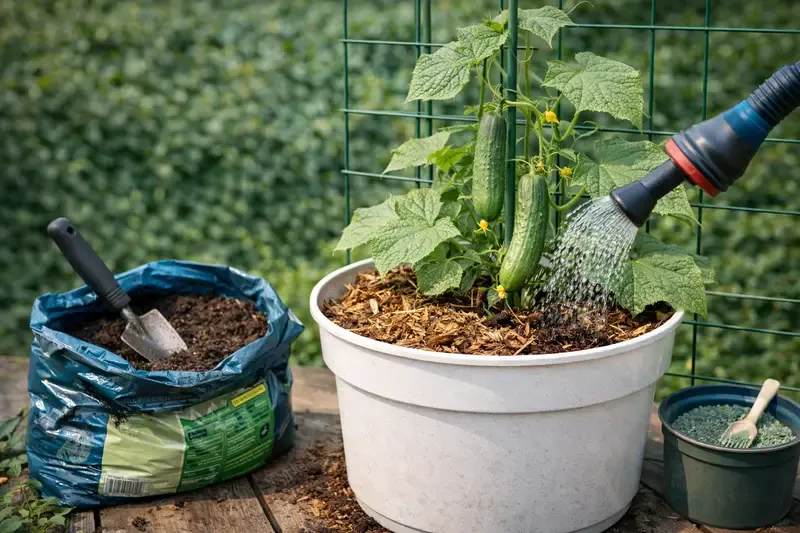
Garden soil holds moisture across a wide root zone, giving plants a cushion when temperatures spike. A five-gallon pot holds a fraction of that volume, and on a hot afternoon the potting mix can go from moist to dangerously dry in just a few hours. Penn State Extension advises that container vegetables generally need watering at least once daily during hot summer weather, and some pots may need attention more than once a day depending on conditions.
Pot size plays a real role in how quickly this happens. Colorado State University Extension recommends at least a five-gallon container for vegetables like cucumbers, because a larger volume of potting mix holds more water and nutrients and gives the roots more room to stay hydrated between checks. A small pot on a south-facing patio in July can become a worst-case scenario for moisture swings.
University of Minnesota Extension guidance on container plants reinforces that watering frequency in pots depends on pot size, plant size, weather, and the type of potting mix used. A rigid schedule – every other day, or twice a week – does not account for those variables. During a heat wave, the only reliable approach is to check the root zone frequently and water when the mix actually needs it, rather than waiting for a calendar date.
Check the root zone instead of trusting a wilted leaf
Wilting leaves feel like an obvious signal, but they can mislead you during a heat wave. On a very hot afternoon, cucumber leaves sometimes droop even when the root zone has plenty of moisture, because the plant loses water through its leaves faster than the roots can replace it. Acting on that wilt by immediately flooding the pot could push the soil from adequately moist to waterlogged, which creates its own set of problems including reduced root oxygen and increased disease risk.
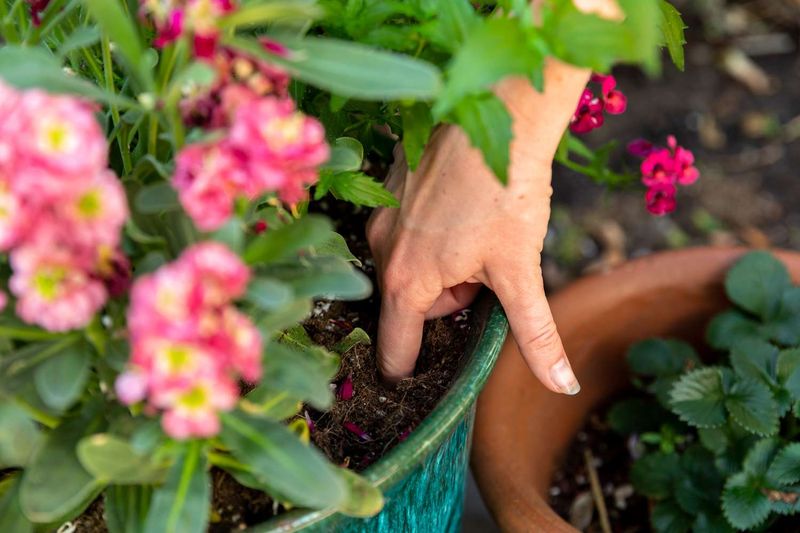
University of Minnesota Extension recommends checking soil moisture directly before deciding to water, because surface conditions and leaf appearance can both be misleading in extreme heat. The practical method is simple: push a finger two to three inches into the potting mix near the center of the pot. If the mix feels moist at that depth, the plant likely does not need water yet. If it feels dry or barely damp, water right away.
The target is evenly moist potting mix throughout the root zone, not constantly wet. Soil that stays saturated for extended periods deprives roots of oxygen and can invite fungal problems. Think of the goal as steady and consistent rather than perpetually soaked. Morning checks are especially useful because they give you a true picture of overnight moisture loss and let you water before midday heat accelerates drying even further.
Water thoroughly, then protect the pot’s drainage
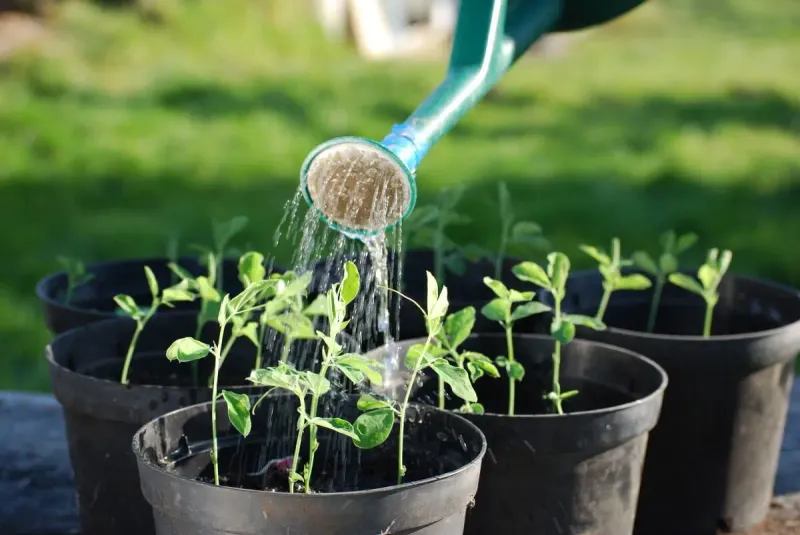
Once you have confirmed the root zone is dry enough to need water, the method matters as much as the timing. Light, quick waterings that only wet the top inch or two of potting mix leave the lower root zone dry, which means the plant is still stressed even though the surface looks damp. The correct approach is to water slowly and thoroughly until water begins to drain from the holes at the bottom of the container. That tells you moisture has moved all the way through the root zone.
After watering, let the excess drain completely. Penn State Extension is clear that containers need functional drainage holes and that saucers should not hold standing water for prolonged periods. Roots sitting in pooled water lose access to oxygen, and that creates root health problems that are separate from, and potentially worse than, the moisture stress that caused the misshapen fruit in the first place.
University of Minnesota Extension recommends watering at the soil level rather than overhead, using a gentle stream directed at the base of the plant. Keeping foliage dry reduces the conditions that favor leaf diseases. A layer of mulch over the potting mix surface can slow evaporation and moderate root-zone temperature on hot days, though it should be kept away from the main stem. University of Minnesota container plant guidance also notes that during very hot weather, daily or more-than-daily monitoring replaces any fixed weekly schedule as the practical standard.
Check pollination and physical contact before blaming water
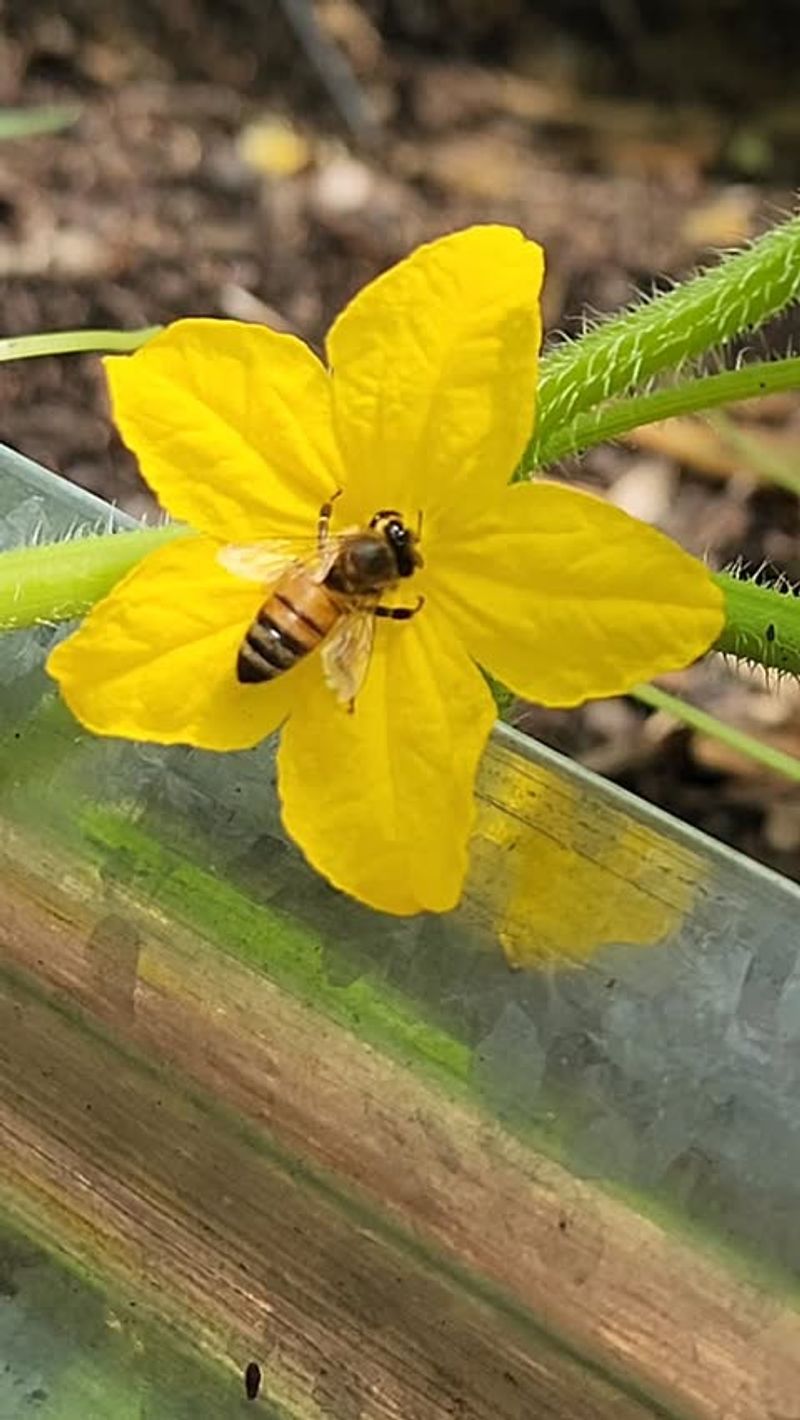
Even with perfect moisture management, cucumbers can develop hooked or irregular shapes for reasons that have nothing to do with water. Pollination is one of the most common culprits. When a female cucumber flower is only partially pollinated, the seeds that form are unevenly distributed along the fruit. The sections with fewer seeds grow more slowly, which pulls the fruit into a curve, narrow taper, or flattened area.
The result can look almost identical to moisture-stress deformity.
University of Minnesota Extension reports that temperatures around 90 degrees Fahrenheit can reduce bee activity and contribute to deformed cucumbers. Penn State similarly identifies temperatures above roughly 90 degrees as capable of reducing fruit set. Heat, heavy rain, low light, and pesticide exposure can all reduce the number of pollinator visits a flower receives. UC IPM guidance on cucurbit pollination describes how poor pollination produces narrow, pointed, shriveled, or misshapen fruit that can resemble stress-related deformity.
Hand pollination is worth trying if you suspect poor pollinator activity, though it is not necessary for every plant, and parthenocarpic varieties – those bred to set fruit without pollination – have different requirements entirely.
Physical obstruction is another possibility worth ruling out before adjusting your watering routine. Penn State Extension notes that mechanical contact with a trellis, tie, wire, or container edge can distort a developing cucumber. Run your hand along each fruit and check whether anything is pressing against it. Illinois Extension also points out that some cucumber varieties naturally produce curved fruit, particularly when grown without support, so a slightly curved cucumber in an unsupported vine may simply be expressing its natural shape.
Better watering helps future fruit, not fruit already formed
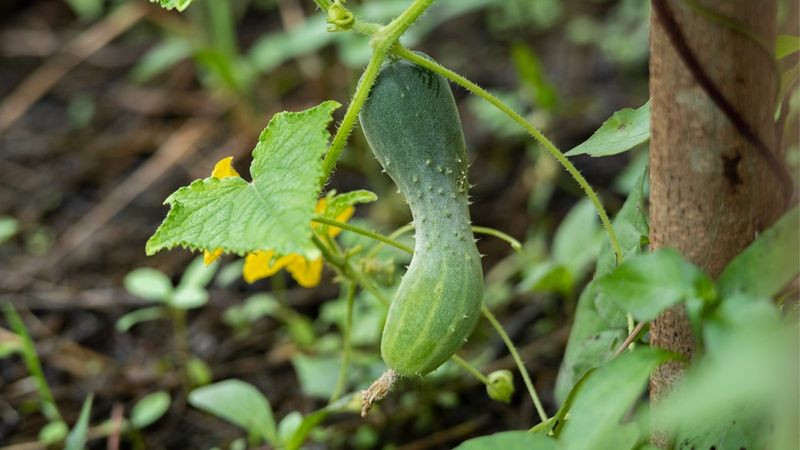
Correcting your watering routine will not reshape a cucumber that has already grown crooked. Once a fruit has developed an irregular shape, that shape is set. Improved moisture management is aimed at the fruit that has not yet formed, giving those future cucumbers a steadier environment during their most vulnerable growth stages.
For fruit that is already severely misshapen, Illinois Extension advises that badly deformed young cucumbers generally will not straighten as they mature. Removing them can allow the plant to redirect its energy toward newer, healthier fruit instead of continuing to develop a cucumber that will likely not be usable anyway. This is a practical step, not a defeat – it is the same logic as pinching off a damaged bloom to encourage better ones.
A trellis can support straighter fruit development in future harvests by letting cucumbers hang freely rather than resting on soil, a pot rim, or other surfaces. Penn State Extension notes that trellising also improves air circulation around the plant. But a trellis is a structural support, not a correction for moisture stress or poor pollination. If those underlying problems continue, the fruit hanging from the trellis can still develop abnormally.
Address the root cause first, and let the trellis do its job as a supplement.
Use the next flush to test your diagnosis
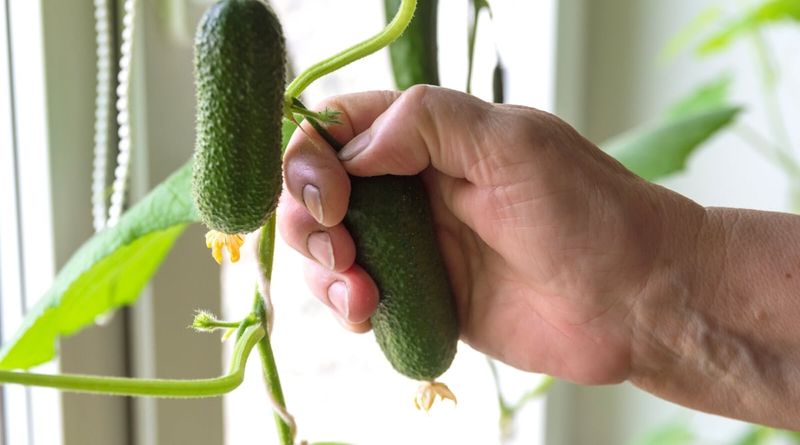
The next round of fruit gives you a practical test of whether moisture was the main problem. Starting now, check the root zone every morning and water thoroughly whenever the mix is dry two to three inches down. Pay extra attention during the flowering stage and the first two to three weeks after fruit sets, since Utah State University Extension identifies those windows as particularly critical for uniform irrigation in cucumbers. Keep the drainage path clear and do not allow the saucer to hold standing water overnight.
If the next flush of cucumbers develops normally, that is a strong signal that moisture inconsistency was a significant contributor. If the new fruit still shows hooks, curves, or narrow tapered ends despite steady moisture, shift your attention to the other possibilities. University of Minnesota Extension notes that heat itself can interfere with pollination independently of watering, so persistent deformity during a prolonged heat wave may reflect reduced bee activity or pollen performance rather than anything you are doing wrong with water.
At that point, look at whether fruits are pressing against anything, consider whether your variety tends toward curved shapes, and check whether flowers are receiving pollinator visits during the cooler morning hours. Illinois Extension cautions against adding extra fertilizer as a default response to misshapen fruit – if fertility seems relevant, follow the container fertilizer label or get a soil test rather than applying an unspecified heavy dose. Steady moisture, good drainage, and attentive observation across the next flush will tell you more than any single fix ever could.