
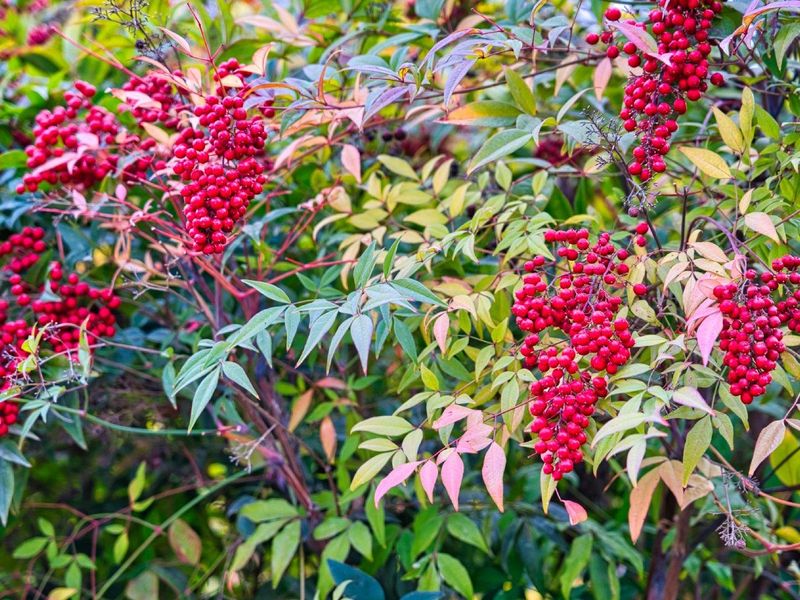
That thick row of nandina lining your fence may look tidy, but fruiting plants are listed as invasive in North Carolina and have been linked to a documented bird poisoning event involving cedar waxwings. Before fall gets away from you, it is worth knowing whether your hedge is the berry-producing kind, what a safer native screen looks like, and how to make the swap without setting your new plants up to fail. This guide walks through identification, removal, replacement selection, and planting in plain language so you can make a practical, site-specific decision rather than a panicked one.
Fruiting nandina poses a specific, documented bird risk
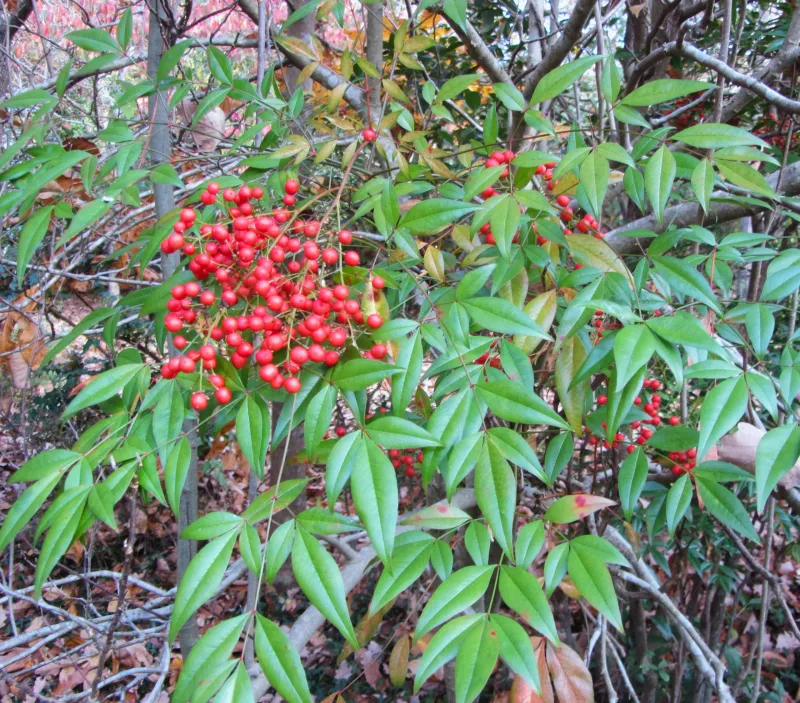
Nandina domestica, often called heavenly bamboo, has been on North Carolina’s invasive plant radar for years. NC State Extension notes that the plant spreads into natural areas and that its berries and other tissues contain cyanogenic compounds, meaning the plant chemistry can produce hydrogen cyanide under certain conditions. That alone is a reason to take a closer look at any fruiting hedge on your property.
The clearest evidence connecting nandina to bird harm comes from a documented mortality event in Georgia. A peer-reviewed case report described a group of cedar waxwings found dead after consuming large quantities of nandina berries. The berries were the only food material recovered from the examined birds’ digestive tracts, and the investigators concluded that the findings were consistent with cyanide toxicity. That is a specific, documented case, not a broad controlled study covering every bird species, every cultivar, or every dose.
Cedar waxwings are fruit-eating birds that tend to move in flocks and feed heavily on whatever berry source they find. When a fruiting nandina hedge is loaded with berries and other food is scarce, a flock may consume a large amount in a short period. Clemson Extension guidance reinforces this concern, noting that the risk is particularly associated with birds that gorge on abundant fruit rather than birds that sample a berry or two. Other bird species do eat nandina berries without the same reported outcomes, so the evidence points to dose, feeding behavior, and species susceptibility rather than a guarantee that any contact is lethal.
Removing fruiting nandina from your yard can help reduce potential exposure and limit berry and seed spread into surrounding natural areas. The stewardship case is strong, especially for plants that are actively fruiting, dropping berries near bird activity, or showing signs of spreading beyond your intended planting area. The goal is not to alarm, but to give you enough information to decide whether your hedge warrants action this fall.
Confirm whether the plant is fruiting nandina
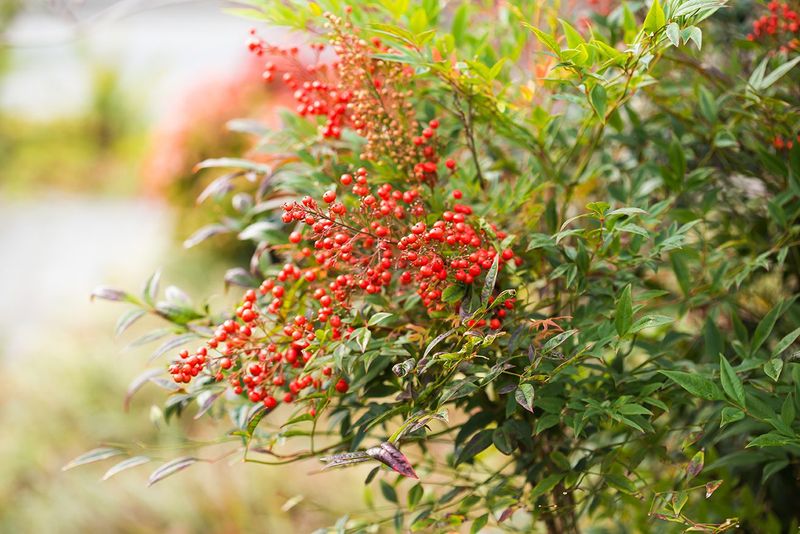
Before pulling anything out of the ground, spend five minutes confirming what you actually have. Nandina has a few reliable identifying features: cane-like, unbranched stems that rise directly from the base, finely divided compound leaves that give the plant a feathery or bamboo-like texture, and terminal clusters of round red berries that persist well into winter. The foliage often takes on red or burgundy tones in cooler weather, which is part of why the plant became so popular in the first place.
The more important question is whether your plant is actually fruiting. A hedge full of red berries near areas where birds gather is the situation that warrants prompt attention. Clemson Extension and NC State Extension both distinguish between ordinary berry-producing nandina and sterile or non-fruiting cultivars, which have been developed specifically to reduce seed spread. Extension guidance does not treat these two types as the same wildlife-risk case, so a non-fruiting cultivar is a different conversation than a hedge loaded with berries.
Look for berry drop on the ground beneath the plant, seedlings emerging nearby, or visible spread into lawn edges or adjacent natural areas. Any of those signs suggests the plant is reproducing and distributing seeds, which strengthens the case for removal. If you are genuinely uncertain whether what you have is nandina, a fruiting cultivar, or something else entirely, take a branch sample or clear photos to your county NC Cooperative Extension office. Getting the identification right before you invest in removal and replanting is a practical first step, not an extra hurdle.
Remove berries, roots, and resprouts
Once you have confirmed a fruiting or spreading plant, timing the first step matters. If the berries are ripe and birds are active in your yard, removing the berry clusters before birds consume or distribute them can help reduce both potential exposure and seed spread. Clip or bag the berry clusters and dispose of them in a sealed trash bag rather than the compost pile, since nandina seeds remain viable and composting may not destroy them.
For small or recently established plants, hand-pulling after a soaking rain is often effective. Wet soil releases roots more cleanly, and getting as much of the root system out as possible in one pass reduces regrowth. UGA Extension guidance on evicting invasive plants recommends working methodically and checking the cleared area over subsequent seasons rather than assuming a single removal solves the problem. Nandina can regenerate from root fragments and suckers, so cutting the canes at ground level without excavating the roots often just delays regrowth by a season or two.
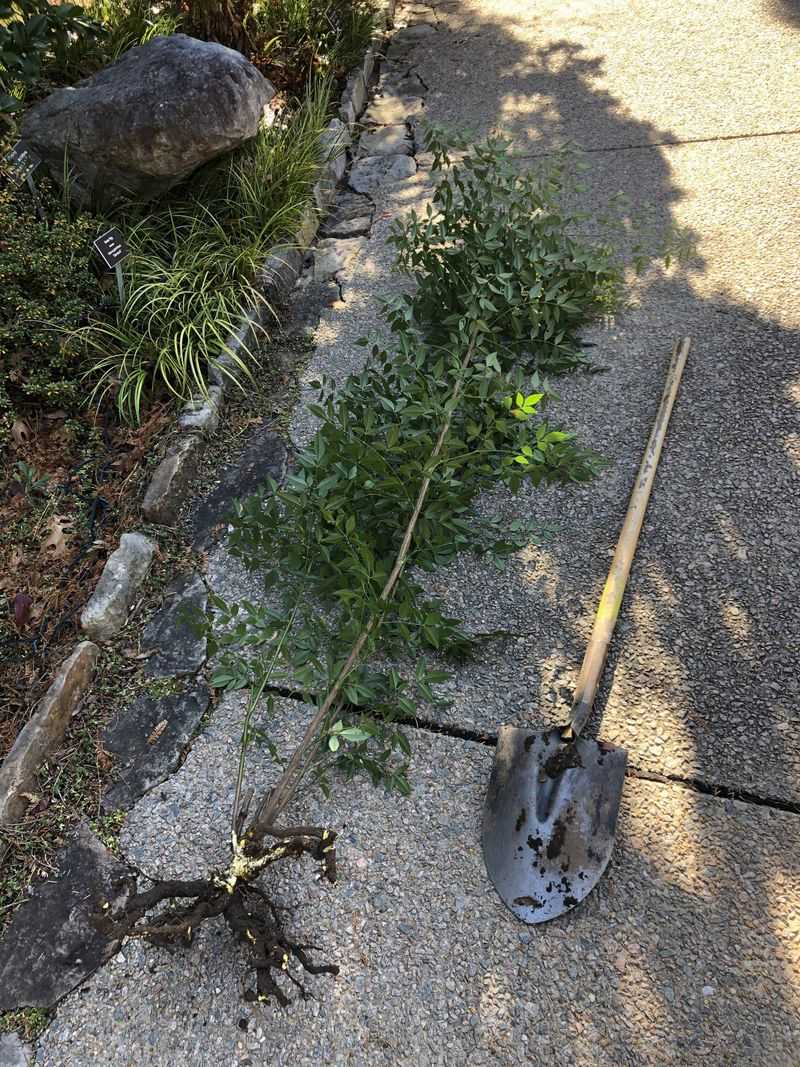
For established shrubs with a dense root mass, use a spade or mattock to excavate as much of the root system as practical. Additional UGA Extension invasive plant guidance and a UGA Cherokee County Master Gardener newsletter both note that physical removal followed by consistent monitoring is the core of a successful invasive plant removal plan. Plan to revisit the cleared area at least two or three times over the following growing season to catch resprouts while they are still small and easy to pull.
Chemical control is sometimes considered for large or deeply rooted plants, but this article will not provide product names, concentrations, or mixing instructions. Herbicides can injure nearby desirable plants, reach waterways, and pose risks if misused. NC State’s guidance on landscape weed control and the NC Forest Service invasive plant resources are better starting points than a general article. If chemical treatment is on the table, read the product label fully and contact your county Extension office before applying anything near children, pets, wildlife habitat, or water.
Choose inkberry for a site-matched evergreen screen
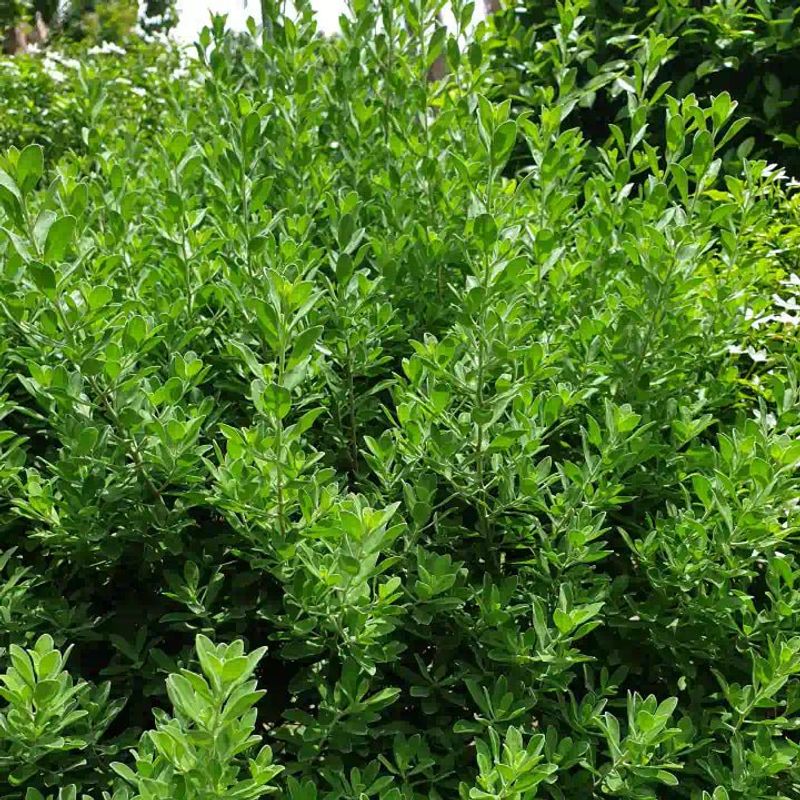
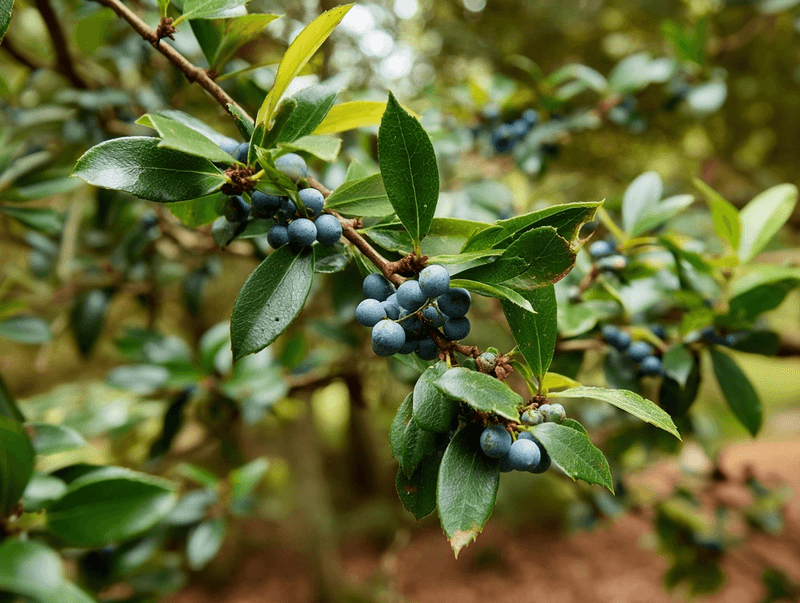
Inkberry holly (Ilex glabra) is the native evergreen shrub most consistently recommended for North Carolina landscapes when a screening function is the priority. NC State Extension documents inkberry as a southeastern native that typically reaches 5 to 10 feet tall, stays evergreen through winter, and produces small black berries that are eaten by birds and small mammals. Those characteristics make it a reasonable functional alternative to a nandina hedge when the site conditions align.
Reasonable is the key word. Inkberry does not look like nandina. Where nandina has fine-textured, feathery foliage and bright red berries, inkberry has broader, dark green leaves and understated black fruit. The plant fills the screening role, but if you are expecting a visual match, you will be disappointed.
Think of it as a better-matched plant for your landscape ecology, not a direct copy of what came out.
Site requirements matter before you buy a single plant. Inkberry performs best in full sun to partial shade and prefers acidic soils, which are common across much of North Carolina. It tolerates moist and occasionally wet conditions, making it a workable choice for low spots or areas with periodic drainage issues where many other shrubs struggle. Good drainage is preferred for healthy growth, but the plant has more moisture flexibility than most evergreen screening options.
A few practical notes before planting a row. Inkberry can spread through suckers, which helps it fill a screen over time but also means you may need to manage its spread at the edges. Outside of a formal clipped hedge, it needs relatively little pruning. Berry production requires both male and female plants, so if wildlife food value is part of your goal, plan for at least one male plant within pollination range of your females.
NC State lists low-severity poison characteristics for inkberry, so while the berries feed birds and small mammals, sensible precautions around young children and pets still apply. Inkberry is a well-supported native choice for many North Carolina sites, but matching it carefully to your soil, light, and space is what makes it succeed.
Use yaupon when its size and region fit
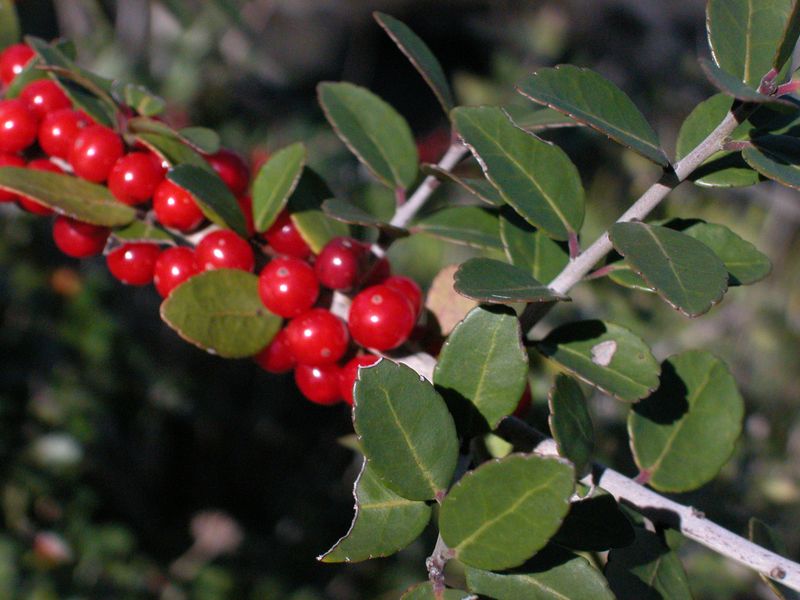
Yaupon holly (Ilex vomitoria) earns a place in this conversation because it offers characteristics that inkberry cannot always match. NC State Extension describes yaupon as a native evergreen particularly well suited to the Coastal Plain and Piedmont that tolerates full sun through deep shade, drought, salt spray, and occasional flooding. That combination of stress tolerances makes it one of the more adaptable native screening shrubs in the state, especially for exposed coastal or dry urban sites where inkberry would struggle.
Yaupon also takes heavy pruning without complaint, which matters if you need a tightly maintained hedge rather than a naturalistic screen. The red berries it produces are eaten by songbirds and small mammals, adding wildlife value similar to inkberry. Male and female plants are required for fruit production, so the same planning note applies: include at least one male if berry production is part of your goal.
The trade-off is size and habit. Yaupon can reach 10 to 20 feet as a shrub or small tree, and it forms thickets through suckering. In a small foundation bed or a tight side yard, that growth potential creates long-term maintenance problems that outweigh the benefits. NC State also notes a high flammability rating for yaupon, which is worth considering if the planting site is close to the house or in an area with dry summers.
Match the plant to the space before committing to a row of them.
Winterberry holly (Ilex verticillata) sometimes comes up in this conversation because its showy red berries are excellent bird food and the plant is a North Carolina native. NC State Extension notes that winterberry is deciduous, meaning it drops its leaves in fall and winter, so it cannot provide the year-round visual screen that nandina currently offers. For pure wildlife value it is worth considering in a moist or wet site, but it does not fill the screening function this article is addressing. NC State Extension Gardener privacy planting guidance reinforces the point that mature size, regional suitability, and maintenance expectations should drive the selection, not just the plant’s wildlife credentials.
Plant during a favorable fall window, not by the calendar alone
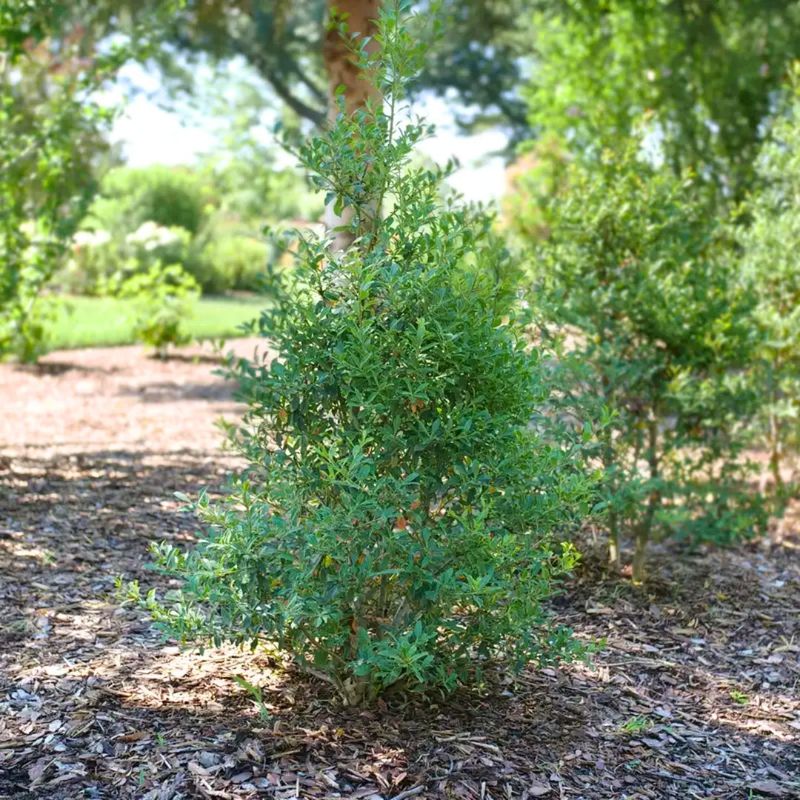
Fall planting in North Carolina works well when it is timed to cooler air temperatures, warm soil, and reliable moisture rather than a fixed date on the calendar. Roots keep growing in warm soil long after air temperatures drop, which gives a new shrub time to anchor itself before the stress of summer heat returns. Eastern NC Extension guidance identifies roughly mid-September through early December as a useful planting window for that region, but that range does not apply uniformly across the state.
In the mountains, soil temperatures drop earlier and hard freezes arrive sooner than in the Piedmont or Coastal Plain. Planting a broadleaf evergreen like inkberry or yaupon in late November in the western part of the state carries more freeze risk than the same planting in coastal Carteret County. NC State guidance on preparing plants for winter cautions against planting broadleaf evergreens so late in the season that a hard freeze arrives before the plant has had time to establish any new root growth. When in doubt, earlier in the fall window is safer than later.
The installation itself follows a straightforward sequence. Dig the planting hole roughly two to three times as wide as the root ball and no deeper than the root ball’s height, so the top of the root ball sits at or just slightly above the surrounding soil grade. The NC State Extension Gardener Handbook on woody ornamentals recommends maintaining firm soil contact around the root ball to eliminate air pockets that dry out roots. Apply a 2- to 3-inch layer of mulch over the root zone, but keep mulch pulled back a few inches from the stems to avoid moisture buildup against the bark.
NC State’s pre-planting guidance is consistent on one fertilizer point: wait until spring to fertilize a shrub planted in fall. Applying fertilizer too soon after planting can push tender new growth that is vulnerable to cold damage before the plant has developed enough root structure to support it. Give the plant a full growing season to settle in before you start pushing it.
Protect the new planting and keep berry precautions
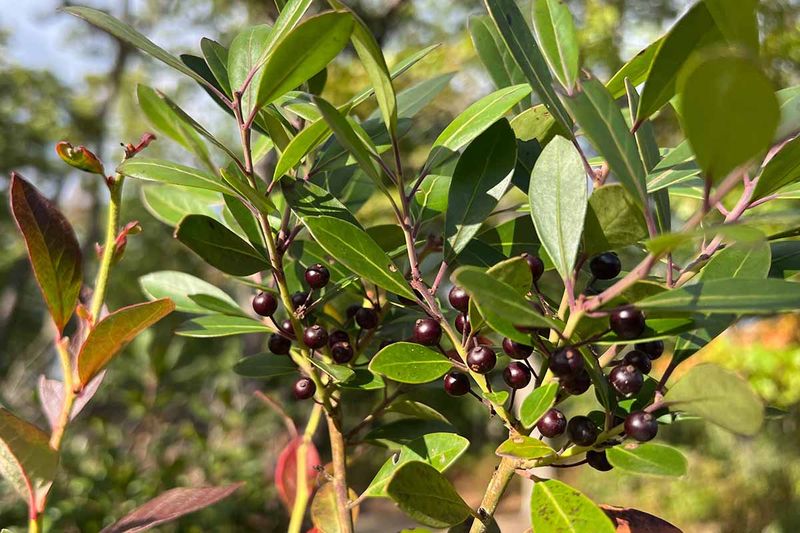
Newly planted shrubs need consistent moisture to develop roots in their first weeks, but the right amount changes with conditions. As a general starting point, NC State Extension’s woody ornamentals handbook suggests roughly 3 to 5 gallons of water twice weekly for newly planted 1- to 3-gallon shrubs when rain is absent, for approximately three to four weeks after planting. Cooler fall weather reduces plant stress and soil evaporation, so you may find that your new inkberry or yaupon needs less supplemental water than the same plant would in July. Adjust based on what you observe: if the soil stays moist several inches down between waterings, pull back.
Watch the plant rather than the schedule. Wilting during the cool part of the day, dry soil just below the mulch layer, or leaf scorch are signs that the plant needs more water. Soggy soil that never drains is equally harmful. Inkberry’s tolerance for moist conditions gives it some buffer in heavier soils, but standing water around the root ball after every rain is still a problem worth correcting through drainage improvement or a different planting location.
One safety point deserves a clear statement before you close this article. Replacing nandina with a native holly does not eliminate all ingestion concerns. NC State lists low-severity poison characteristics for yaupon holly, and the same applies to inkberry. Both plants produce berries that birds eat without harm, but the berries are not intended for human or pet consumption.
Keep young children away from berry clusters, and treat any suspected ingestion by a child or pet promptly. For human exposures, contact Poison Control at 1-800-222-1222. For pets, call your veterinarian. Native does not mean harmless, and a sensible awareness of what grows in your yard is good practice regardless of which plants you choose.
Make the replacement a site-specific stewardship decision
The strongest version of the advice in this article is not “rip out every nandina hedge this weekend.” The defensible version is this: if you have a fruiting or spreading nandina, removing it can help reduce potential wildlife exposure and limit berry and seed spread into surrounding natural areas. Those are meaningful stewardship benefits, even if they cannot be measured as a precise outcome from removing a single hedge.
Start with verification. Confirm the plant is actually fruiting Nandina domestica before you invest in removal and replanting. Prioritize plants that are actively producing berries, dropping fruit near bird activity, or showing signs of spreading. Dig the roots thoroughly, bag the berries, and return to the cleared area over the following season to catch resprouts before they re-establish.
UGA Extension guidance on invasive plant removal consistently emphasizes follow-up monitoring as the step most homeowners skip.
For the replacement, match the plant to the site rather than the other way around. Inkberry holly is a well-supported native evergreen screen for many North Carolina conditions, particularly where soil is acidic and moisture is adequate. Yaupon holly may be the better choice on a dry, exposed, or salt-affected site in the Coastal Plain or Piedmont, provided you have room for its mature size. Neither plant is a universal solution, and neither eliminates every berry-related concern around people or pets.
Time the planting to a favorable fall window for your region, not an automatic date. NC State’s winter preparation guidance is clear that late planting before a hard freeze is a risk for broadleaf evergreens. A well-matched plant, installed at the right time in prepared soil, is the outcome worth working toward. The goal is a landscape that does a better job for your family and for the birds that visit it, and that kind of improvement is built one good decision at a time.