
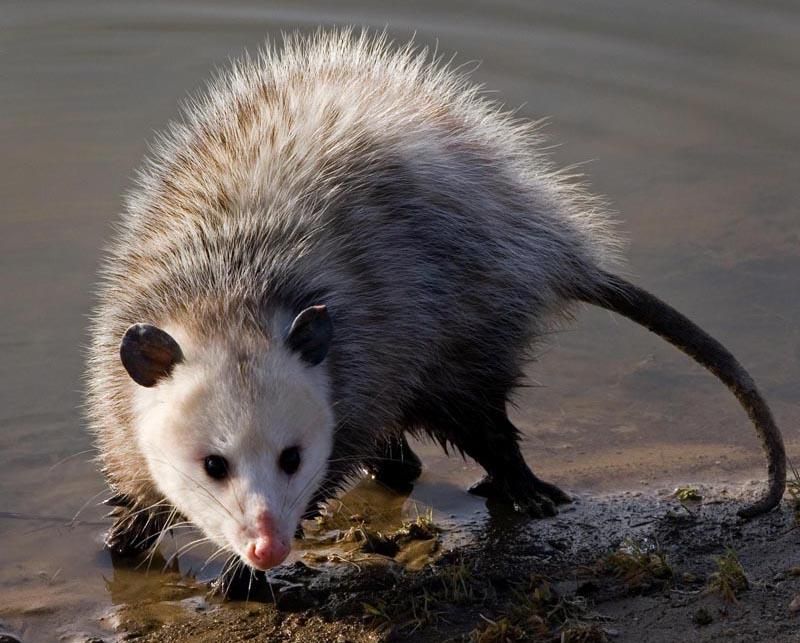
Spotting a slow-moving opossum crossing your yard at night can feel surprising, but this animal is one of North Carolina’s most common native mammals. Social media posts love to say that a single opossum vacuums up thousands of ticks every week, making your yard safer just by passing through. The science behind that claim is more complicated, and understanding what researchers actually found can help you make smarter choices about tick protection for your family and pets.
Meet the Virginia opossum in your North Carolina yard
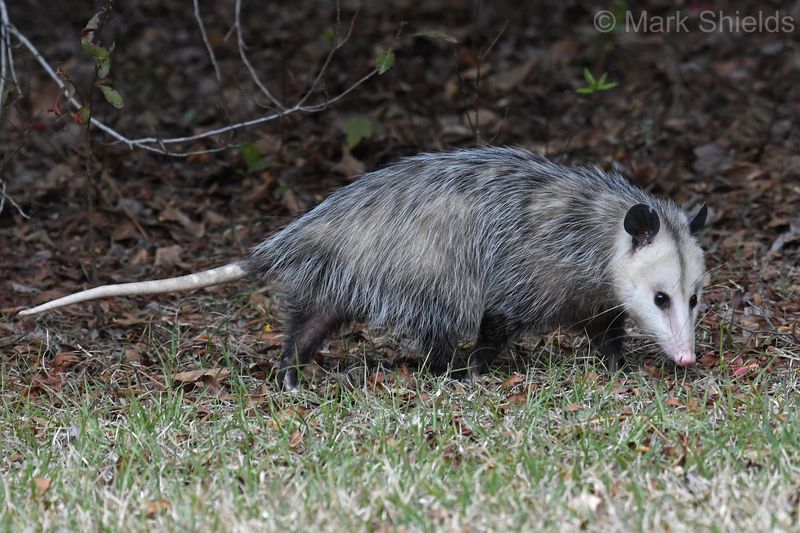
The animal crossing your yard is the Virginia opossum, known scientifically as Didelphis virginiana and the only opossum species native to North Carolina. Calling it a large rodent or comparing it to a rat is a common mistake. Opossums are mammals, yes, but they belong to a completely separate group called marsupials, meaning females raise their young in a pouch, much like kangaroos do.
According to NC Wildlife resources on the Virginia opossum, the species is found throughout the state, from the Coastal Plain to the Piedmont and into the mountains. It thrives wherever food is concentrated, which is why suburban and rural yards with pet food, fallen fruit, or open compost bins are perfectly appealing to it. The opossum is primarily nocturnal and almost always solitary, so a single animal moving through after dark is completely normal behavior.
A daytime sighting tends to make people nervous, but it does not automatically mean the animal is sick. Young opossums that have recently left their mother, or adults disturbed from a resting spot, may move around in daylight without any sign of illness. The best response is simply to observe from a distance and let the animal move on at its own pace.
Opossums are highly resistant to rabies, a fact that NC Wildlife notes. Resistance, however, is not the same as immunity. You should never approach, corner, or attempt to handle a wild opossum, no matter how calm it appears. If the animal looks injured, is spinning in circles, or is behaving in a clearly disoriented way, contact your local animal control or a licensed wildlife rehabilitator rather than intervening yourself.
What the original tick study actually measured
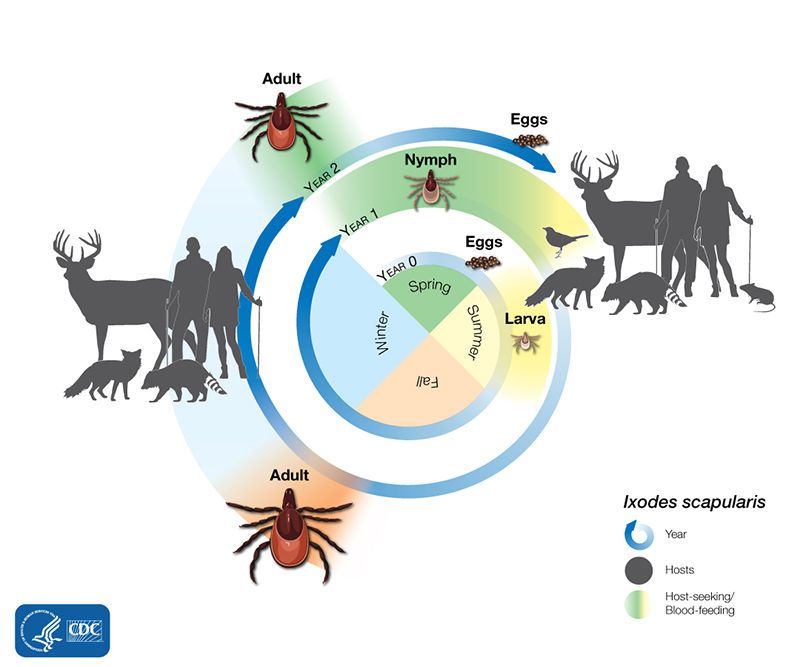
The story of opossums as tick-eating heroes traces back to a real piece of science. A 2009 laboratory experiment placed larval blacklegged ticks, the tiny immature stage of Ixodes scapularis, onto several different host animals and then counted how many ticks successfully fed and survived. Among the hosts tested, opossums stood out because the hosts-as-ecological-traps study estimated that opossums killed 83 to 96 percent of the larval ticks that attempted to attach and feed on them.
That is a striking number, and it deserves some context before it travels from the lab to your backyard. Researchers placed ticks directly onto opossums under controlled conditions, then observed what happened during grooming and feeding attempts. The study measured survival rates of ticks on an opossum’s body, not how many free-living ticks an opossum encountered while wandering a residential yard on a warm summer night.
The distinction matters quite a bit. A tick has to find the opossum, climb onto it, and attempt to feed before the opossum’s grooming behavior can kill it. In a real yard, most ticks are waiting in leaf litter, on grass stems, or in brushy areas for a warm-blooded host to brush past. Whether an opossum’s movements bring it into contact with enough of those ticks to make a measurable dent in the local population was not something the 2009 experiment was designed to answer.
What the study genuinely showed is that opossums are poor hosts for larval blacklegged ticks, and that distinction from other hosts, like white-footed mice, may have ecological meaning at a landscape scale. That is a worthwhile finding. It just does not translate directly into a promise that a visiting opossum is cleaning your yard of ticks while you sleep.
Why the 5,000-ticks-a-week claim does not hold up
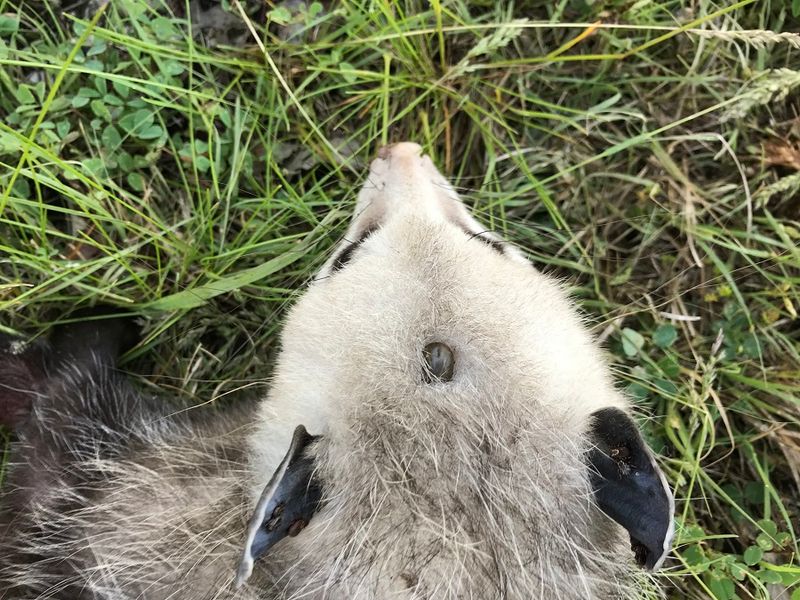
Somewhere between the 2009 laboratory paper and the internet, a specific number appeared: one opossum kills 5,000 ticks per week, sometimes reported as 5,500. The figure spread quickly because it is vivid and memorable. The problem is that it was never measured directly in the field.
A 2021 study that re-examined the opossum-tick relationship found something that complicated the popular narrative considerably. Researchers examined the gut contents of 32 wild opossums and found no tick remains in any of them. In a separate, small captive trial involving five animals, an average of only 3.5 ticks fell off each opossum during observation. The rest of the ticks that had been placed on the animals were assumed in earlier work to have been eaten, but this study raised real questions about whether that assumption was correct.
The researchers called for better field validation of what scientists call the ecological-trap effect, meaning the idea that opossums act as a population sink for ticks by killing more than they pass along. Extension commentary reassessing the opossum-tick relationship has echoed that caution, noting that attracting opossums specifically for tick control is not a practice supported by current evidence.
None of this means opossums never kill ticks. The 2009 finding on poor tick survival rates is still real. What it means is that killing some ticks that try to feed on an opossum’s body is a very different thing from controlling the tick population around a home. An opossum passing through your yard is a native animal doing its own thing.
Framing it as a free pest-control service overstates what the research actually supports and can lead homeowners to skip precautions that genuinely reduce risk.
Do not generalize one tick result to every North Carolina tick
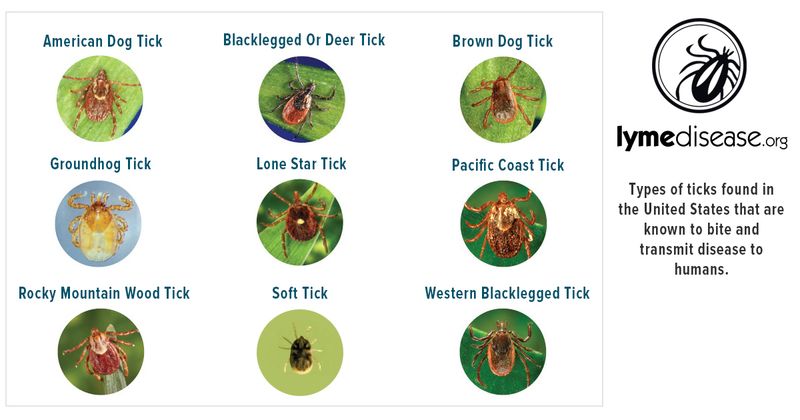
Even if the 2009 laboratory result held up perfectly in every field setting, it would still apply only to one tick species at one life stage. The experiment used larval blacklegged ticks, and North Carolina is home to several other species that bite people and pets regularly.
According to NC State Extension guidance on tick protection, the state’s tick community includes lone star ticks, American dog ticks, brown dog ticks, and Gulf Coast ticks, in addition to the blacklegged tick. Each species has its own preferred hosts, peak activity seasons, and habitat preferences. Lone star ticks, for example, are aggressive biters that actively pursue hosts and are associated with ehrlichiosis and alpha-gal syndrome. American dog ticks are common along trails and in grassy areas and can transmit Rocky Mountain spotted fever.
There is no research showing that opossums interact with these other species the same way the 2009 study described for larval blacklegged ticks. Assuming otherwise would be like concluding that a treatment proven effective against one plant pest automatically works on every insect in your garden. The biology simply does not support that leap.
Tick pressure also varies by habitat, season, and the local mix of host animals, not just by whether an opossum is present. Lee County Cooperative Extension’s overview of tick season in NC notes that different species peak at different times of year, which means protection strategies need to account for that variation rather than relying on a single wildlife interaction. Protecting yourself across the full tick season in North Carolina means understanding which species are active when, not counting on any one animal to manage the problem.
Reduce tick-friendly conditions at the wooded edge

An opossum sighting near the tree line is a good reminder that the boundary between your lawn and a wooded or brushy area is worth paying attention to. Ticks spend most of their lives off a host, waiting in humid, shaded spots for an animal to brush past. Leaf litter, dense groundcover, tall grass, and overgrown shrubs along that transition zone all provide conditions where ticks can survive and position themselves for contact with people, pets, and wildlife.
NC State Extension and Henderson County Cooperative Extension both recommend a set of practical yard adjustments that reduce those favorable conditions. Mowing grass regularly and keeping it short removes the vertical structure ticks use to quest for passing hosts. Raking and removing leaf litter, especially near play areas, patios, and paths, cuts down on the moist hiding spots ticks prefer. Pruning low-hanging branches and shrubs that brush against walkways reduces the chance of ticks transferring directly to clothing or skin during routine yard activity.
One of the most concrete steps comes from CDC tick prevention guidance, which recommends placing a three-foot-wide barrier of wood chips or gravel between your lawn and any wooded or brushy area. That physical buffer creates a dry, open zone that ticks are reluctant to cross, making it harder for them to migrate from the woods into the more-used parts of your yard. Henderson County’s pest-alert guidance on ticks in the landscape also suggests locating play equipment, seating areas, and garden beds away from wooded edges when the yard layout allows.
These changes do not eliminate ticks from a property. Ticks arrive on deer, birds, rodents, and other wildlife regardless of yard condition. What habitat management does is reduce the places where ticks can thrive close to where your family spends time, which meaningfully lowers the chances of an encounter. That is a reliable benefit, and it does not depend on whether an opossum happens to pass through.
Let the opossum pass without feeding it
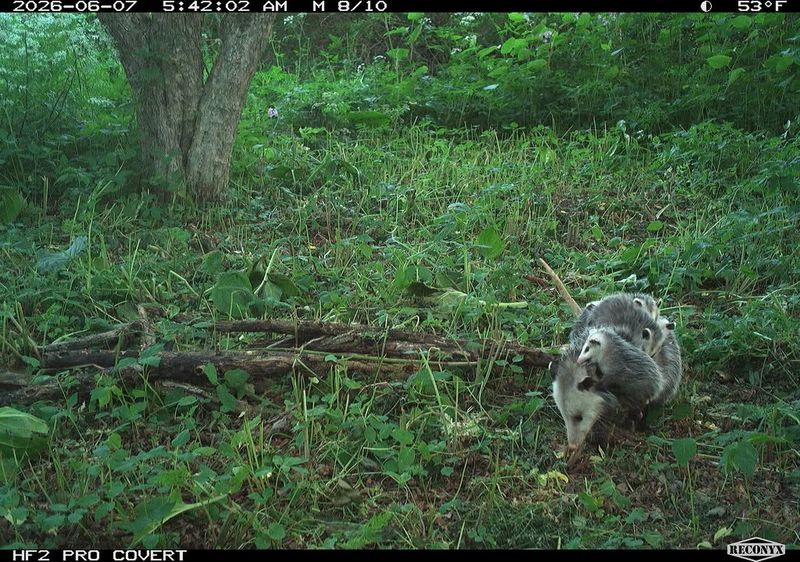
Watching a healthy opossum move through your yard at its own unhurried pace can feel like a small wildlife moment worth appreciating. The right response is simply to let it pass. Feeding the animal, even with good intentions about tick control, creates problems that outweigh any possible benefit.
Outdoor food sources attract more than just opossums. Extension analysis on whether attracting opossums makes sense notes that baiting or feeding wildlife draws raccoons, rodents, feral cats, and other animals that can introduce more ticks to your yard, not fewer. Rodents in particular are efficient reservoirs for tick-borne pathogens, so increasing rodent activity near your home works directly against the goal of lowering disease risk.
The practical coexistence steps are straightforward. Secure garbage cans with tight-fitting lids or bungee cords. Bring pet food and water bowls inside at night rather than leaving them on a porch or patio. Store poultry feed and birdseed in sealed containers, and consider suspending bird feeders during peak opossum activity if the animals are becoming a regular presence.
NC Wildlife’s profile of the Virginia opossum supports this approach as the sensible way to manage encounters without creating conflict.
A passing opossum is a native animal filling a legitimate role in the local ecosystem, eating insects, fruit, carrion, and whatever else it finds. Missouri Department of Conservation’s overview of opossum ecology describes it as a generally beneficial scavenger that helps clean up organic matter. Appreciating that role does not require turning your yard into a feeding station, and it certainly does not mean you can count the visit as a tick-control treatment.
Use personal protection after yardwork
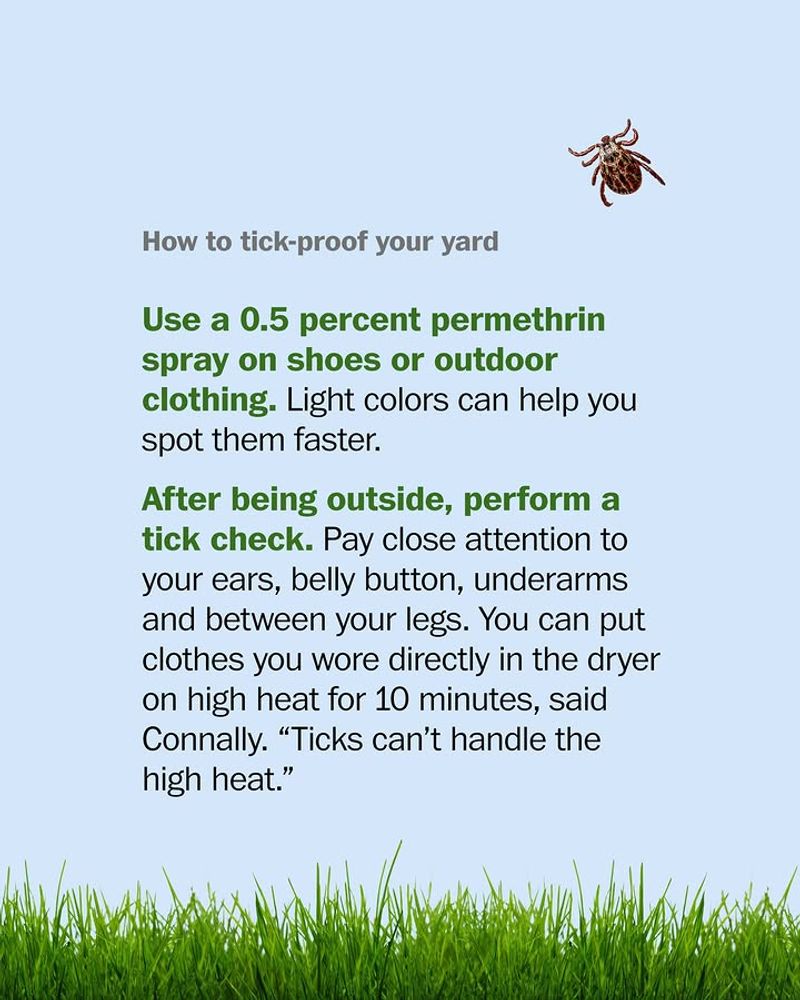
No amount of habitat management or wildlife observation replaces the protection you put directly on your body before heading outside. Personal protection works regardless of what animals are moving through the yard, and it works during every tick-active season, not just when conditions look obviously risky.
Start with clothing. Wearing long pants tucked into socks, long sleeves, and closed-toe shoes when doing yardwork near brushy or leafy areas significantly reduces the amount of skin a tick can reach. Light-colored clothing makes it easier to spot ticks before they attach. CDC tick prevention recommendations advise using EPA-registered repellents according to label directions, with DEET, picaridin, IR3535, and oil of lemon eucalyptus all listed as effective options for skin and clothing.
Permethrin-based products can be applied to clothing and gear but should never be applied directly to skin.
After any time spent near wooded edges, tall grass, or leaf litter, a thorough tick check is one of the most effective things you can do. Run your fingers through your hair, check behind your ears and knees, look in the armpits, and examine the waistband area. Clay County Cooperative Extension’s guide to preventing tick bites notes that showering within two hours of coming inside can help wash off unattached ticks and makes it easier to do a full-body check.
If you find an attached tick, remove it promptly using fine-tipped tweezers, grasping as close to the skin surface as possible and pulling upward with steady pressure. Clean the bite area and your hands with rubbing alcohol or soap and water. NC State’s spring 2025 tick protection guidance also recommends keeping children’s play areas, decks, and seating zones away from brushy edges when yard layout allows, reinforcing that distance from tick habitat is a practical layer of protection on its own.
Protect pets and respond safely to wildlife contact

Dogs and cats that spend time outdoors are efficient tick transporters. They move through exactly the kind of brushy, leafy habitat where ticks wait, and they bring those ticks inside on their fur, often without any visible sign until the tick has already been feeding. An opossum in the yard does nothing to interrupt that pathway.
Talking with your veterinarian about tick prevention products is the most reliable step you can take for your pets. EPA guidance on controlling fleas and ticks on pets is clear that products must be used according to label directions, matched to the correct species, and dosed by the animal’s weight. Applying a dog-labeled product to a cat can cause serious harm, including neurological toxicity in some cases, so species specificity is not optional.
Your veterinarian can help you choose between topical treatments, oral preventives, and tick collars based on your pet’s lifestyle, health history, and the tick species most active in your part of North Carolina. CDC Lyme disease prevention guidance reinforces that pet-borne ticks are a genuine route of human exposure and that consistent prevention is worth maintaining through the full tick season, not just peak summer months.
On the topic of wildlife contact, the balanced view on opossums is this: appreciate one from a comfortable distance, do not attempt to handle or corner it, and do not feed it. NC Wildlife notes that opossums are highly resistant to rabies, which is genuinely reassuring, but resistant is not the same as immune. If an opossum or any wild animal bites or scratches you, wash the wound immediately and thoroughly with soap and water, then contact a healthcare provider or your local public health department promptly. CDC rabies prevention guidance is straightforward on this point: no wildlife exposure should be dismissed because the animal seemed healthy.
An opossum moving quietly through your yard at dusk is a native creature worth respecting on its own terms, and the best way to protect your household from ticks is still the combination of habitat management, personal protection, and consistent pet care, not a passing marsupial.