
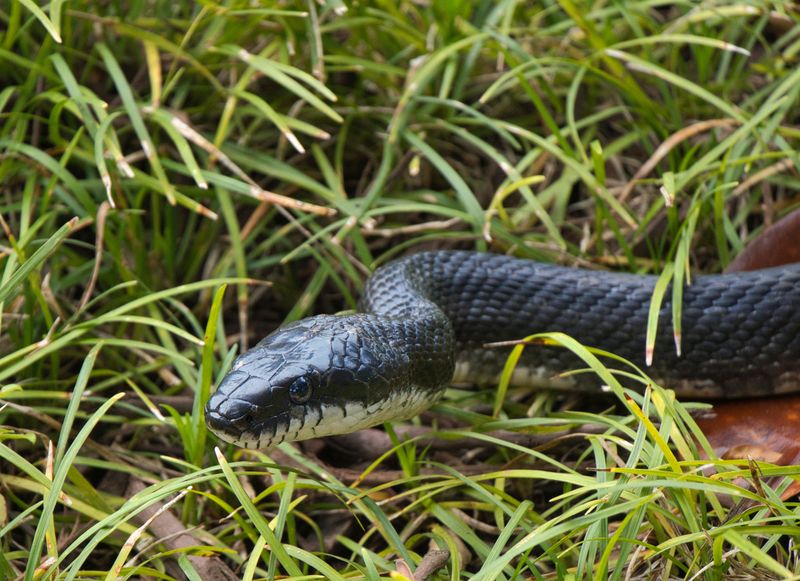
Spotting a large dark snake at the edge of your North Carolina yard can stop you cold, but that moment of surprise is worth a second look before you reach for a shovel or a phone. A confirmed black rat snake is one of the state’s most common native predators, and its appearance near the woodline can tell you something real about what your property offers. It may be hunting, resting, or just passing through, and some of what it hunts are the same small rodents that ferry ticks into family spaces. Understanding what that sighting actually means, and what it does not, helps you make smarter choices for your yard, your family, and the wildlife that belongs there.
Confirm the snake before interpreting the sighting
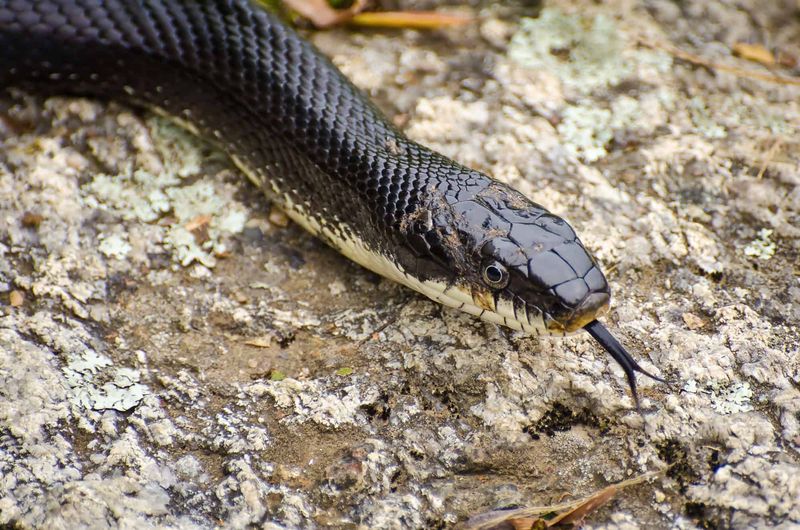
Calling any dark snake a “black rat snake” is a common shortcut, but color alone does not confirm the species. North Carolina rat snakes vary considerably depending on where in the state you are: adults in the mountains and Piedmont tend to be glossy black with a lighter belly and white chin, while individuals on the Coastal Plain may appear greenish, grayish, or even retain a faint striped pattern. Juveniles look dramatically different from adults, showing bold gray-brown blotches on a pale background that can confuse even experienced observers.
According to NC Wildlife Resources Commission’s rat snake profile, adults commonly reach five to six feet and are nongame, nonvenomous, and found statewide in forests, farms, and suburban edges. That said, other snakes share similar dark coloration in North Carolina. Black racers are sleek, fast-moving, and often confused with rat snakes. More seriously, copperheads and cottonmouths, both venomous, can appear dark or brownish in certain lighting conditions or at certain ages.
Before drawing any conclusions about what a snake is doing in your yard, you need to know what you are actually looking at. Body shape, head shape, the texture of the scales, and the pattern on the belly all matter more than color. NC State Extension’s snake identification guidance recommends observing from a safe distance and consulting a field guide or wildlife professional when you are uncertain. Never handle, pin, or attempt to catch an unidentified snake.
The safest rule is simple: if you are not sure what it is, treat it as potentially venomous and keep people and pets clear until you can get a confident identification.
Treat the woodline as a habitat clue, not a rodent census
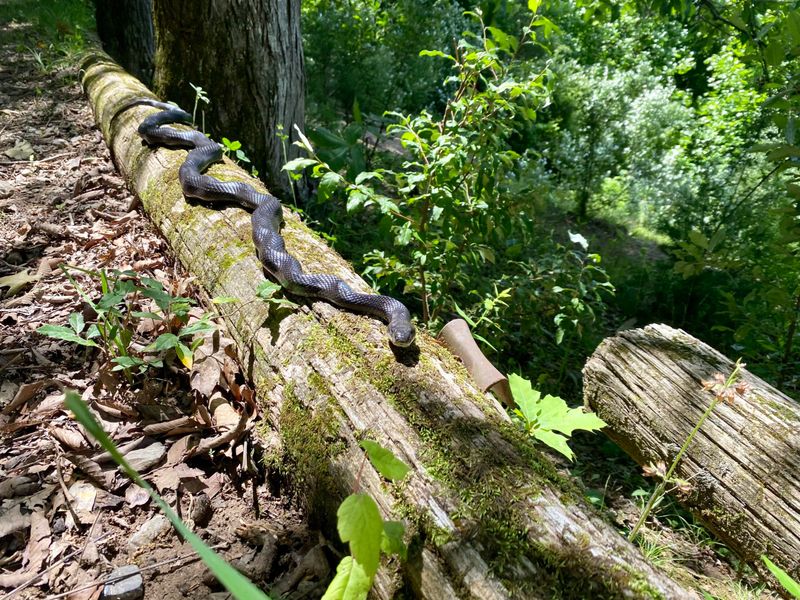
A confirmed rat snake near your woodline is a habitat signal, not a population report. The animal may be hunting, but it could just as easily be traveling between patches of cover, warming itself on a sun-exposed surface, or seeking shelter under a rock, woodpile, or garden pot. Rat snakes are capable climbers and will also move vertically into trees, brush piles, and even building eaves when conditions suit them.
Yards near wooded edges tend to offer exactly what rat snakes need: warmth from sun-warmed surfaces, moisture, structural complexity from rocks and debris, and access to prey. NC State Extension notes that homes and yards commonly attract snakes through a combination of warmth, water, shelter, woodpiles, debris, pots, and rocks, not necessarily through unusually high rodent numbers. The sighting does not prove that your property is overrun with mice or that a permanent snake resident has taken up guard duty.
What the sighting does suggest is that your woodline provides at least some of what a large native predator needs to move through or rest in. That is consistent with a functioning edge habitat. NC Wildlife describes rat snakes as common in exactly these kinds of mixed landscapes: woodland borders, hedgerows, old fields, and suburban lots that back up to trees. Treating the sighting as evidence of healthy native habitat is reasonable.
Treating it as proof of a rodent problem, or as proof that no rodent problem exists, goes further than the observation supports.
Responsible stewardship at the woodland edge means preserving that native complexity farther from high-use areas while keeping the zones around patios, paths, and play spaces well-maintained. The snake’s presence is one piece of information about your yard’s ecology, and a useful one, but it is not a census count of anything.
A rat snake may eat rodents, but it is not a tick-control program
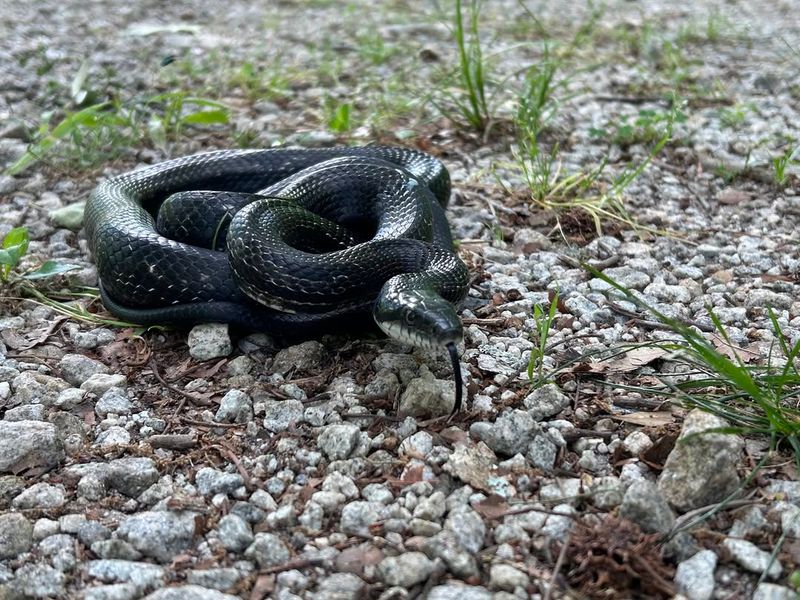
Rat snakes are genuine predators with real appetites, and rodents are a significant part of what they eat. They hunt by scent and heat detection, constrict their prey, and can take on animals as large as a full-grown rat. NC Wildlife confirms that eastern rat snakes feed heavily on rodents and that this predatory role earns them a reputation for natural pest control around farms, barns, and rural properties.
The diet does not stop at mice and rats, though. NC Wildlife’s species account specifically notes that rat snakes also eat birds, bird eggs, and other small mammals. A snake that finds a bluebird box, a chicken coop, or a nest of Carolina wrens is not going to pass up the opportunity. For homeowners with poultry, nest boxes, or active bird habitat, that broader diet is a practical tradeoff worth knowing about.
Calling the snake an exclusively beneficial rodent exterminator misses a real part of its behavior.
More importantly, one snake sighting does not translate into a measurable reduction in rodents on your property, and a reduction in some rodents would not automatically mean fewer ticks or a lower risk of tickborne illness. The logical chain from “snake appeared” to “yard is safer” involves several steps that simply have not been demonstrated for residential yards in North Carolina. Predator effects on animal communities are real in ecology, but they depend on the size of the predator population, the density and behavior of prey, and the structure of the broader food web. A single rat snake passing through is one predator in a large and complex system.
The practical takeaway is that a confirmed rat snake is a welcome native predator that may consume some rodents over its lifetime on or near your property. That is worth appreciating. It is not, however, a substitute for sealing buildings against rodent entry, managing food attractants, or using direct tick-prevention measures around the areas where your family spends time.
Ticks depend on a complex host network
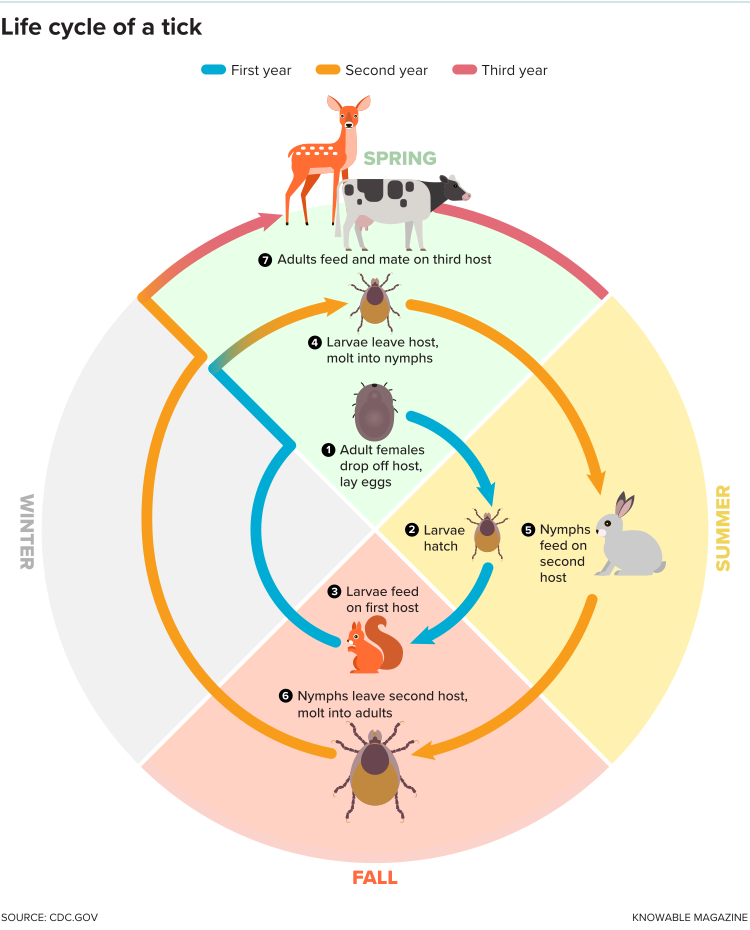
Understanding why one snake cannot be a tick-control program starts with understanding how ticks actually work. Ticks do not simply live on one host animal their entire lives. Most species require a different host at each life stage, moving from larva to nymph to adult while feeding on whatever warm-blooded or cold-blooded animal they can find. CDC’s tick lifecycle overview explains that blacklegged ticks, for example, can feed on mammals, birds, reptiles, and amphibians depending on the life stage, meaning that reducing one type of host animal in one location does not stop the cycle.
White-footed mice are frequently cited as important reservoir hosts for Borrelia burgdorferi, the bacterium associated with Lyme disease, in parts of the northeastern United States. They matter in that specific context, but they do not represent all rodents, all ticks, or all tickborne pathogens. North Carolina has multiple medically significant tick species, including the blacklegged tick, the lone star tick, and the American dog tick, each with its own preferred hosts and associated diseases. CDC’s guidance on where ticks live makes clear that tick species, pathogen presence, and disease risk vary significantly by geography and habitat type.
North Carolina does have documented evidence of blacklegged ticks and Borrelia burgdorferi circulating in local rodent and tick populations. A study on Borrelia burgdorferi transmission on the Outer Banks of North Carolina confirmed that rodent-associated tick ecology and Lyme-related bacteria do exist in a localized North Carolina system. That finding establishes that the biology is present in the state, but it describes a specific coastal location and does not mean that every North Carolina backyard faces the same risk profile or that a rat snake nearby would reduce it.
The broader point for homeowners is that ticks are woven into a wide network of hosts, habitats, and pathogens. Removing or adding any single predator from that network does not reliably collapse the system. Managing your own exposure through yard maintenance and personal precautions is far more direct than relying on the food web to do the work for you.
Create safer activity zones without erasing native habitat
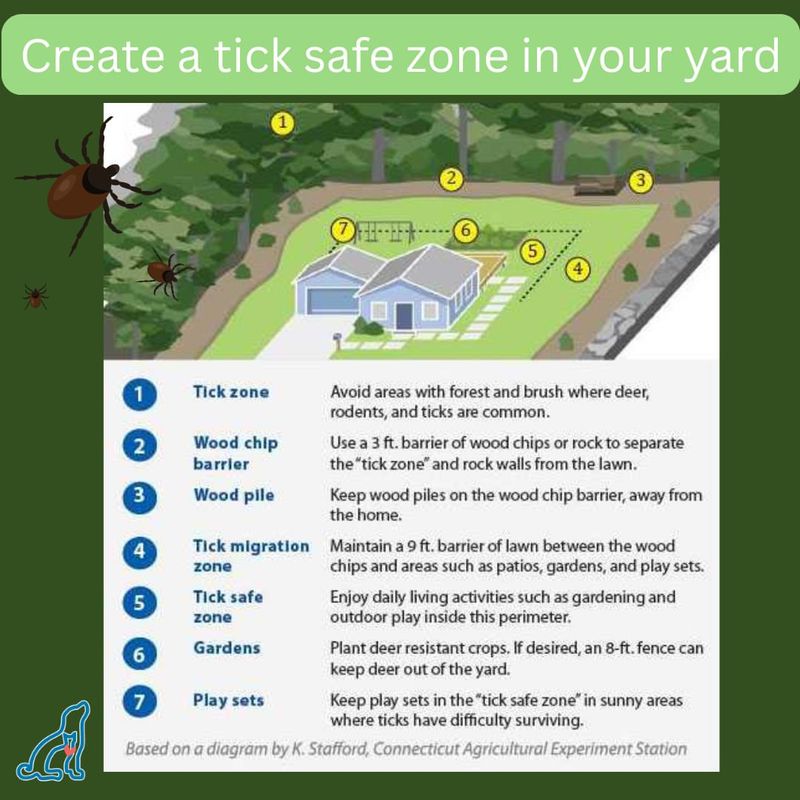
Protecting your family from ticks does not require clearing every shrub or driving away every native animal. The more practical approach is to create a clear difference between the areas where people spend time and the wilder habitat that belongs at the woodland edge. Start close to the house and work outward.
Around patios, play equipment, garden paths, and main entrances, keep grass mowed short, remove leaf litter regularly, and cut back any tall grass or brush that creeps into these zones. CDC tick-prevention guidance and the Tick Management Handbook both recommend placing a roughly three-foot barrier of wood chips or gravel between the maintained lawn and the woodland edge. This transition strip does not stop ticks entirely, but it interrupts the moist, shaded path that ticks prefer when moving from wooded areas toward activity zones.
Woodpiles are a specific concern. Stacked wood near the house creates shelter for both rodents and the snakes that follow them. Move woodpiles away from the structure, stack them neatly off the ground, and keep them dry. Debris piles, old lumber, overgrown foundation plantings, and cluttered garden sheds serve the same function: they give rodents a place to nest close to your home, which in turn draws snakes and concentrates tick-carrying animals near where people walk and play.
Rodent management near buildings matters beyond just the snake question. CDC rodent control guidance recommends removing outdoor food sources such as fallen birdseed, unsecured compost, and pet food, and sealing any gaps around the foundation, utility lines, and vents that could allow rodents inside. Fewer rodents sheltering against your house means fewer tick-carrying animals in the highest-traffic parts of your yard, which is a more direct benefit than hoping a passing snake will manage the population for you.
Native vegetation and wildlife habitat farther from the house can stay intact. The goal is a gradient, not a clearcut.
Respond safely when a snake enters the yard or house
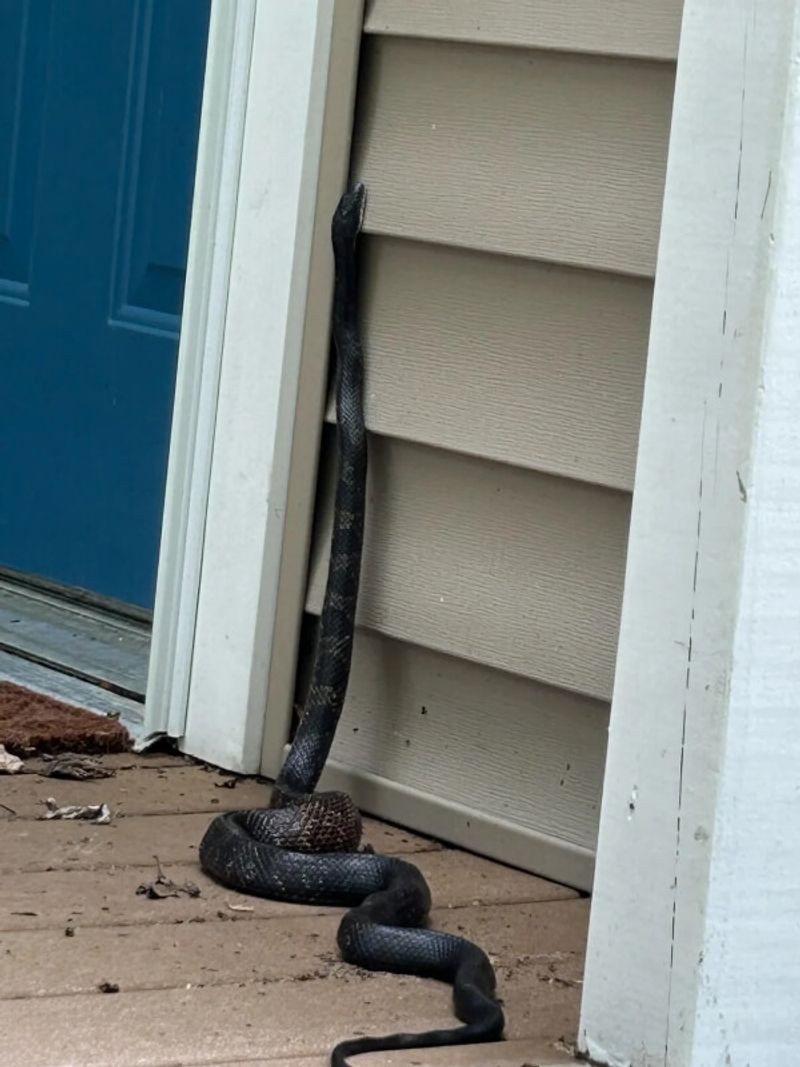
Finding a snake in the yard is startling, but the first and most important step is to do nothing that puts you or the snake at risk. Keep children and pets away from the area, give the snake space, and watch from a distance while you figure out what it is. Most snakes encountered in North Carolina yards are nonvenomous and will move on without any intervention at all.
If the species is uncertain or there is any chance it could be venomous, do not attempt to handle, pin, or kill it. NC State Extension’s snake guidance is direct on this point: even nonvenomous snakes can and do bite when restrained, and misidentifying a venomous species as a harmless one is a real risk. The same guidance notes that while a nonvenomous snake found inside a building might sometimes be swept out with a broom, handling still carries bite risk and should only be attempted if you are confident in the identification. When in doubt, contact a wildlife professional or your county cooperative extension office for help.
When a rat snake turns up inside a structure, the building itself is the problem to fix. NC State Extension’s storm-related snake guidance recommends sealing any opening a quarter-inch or larger in the foundation, siding, around pipes, and at utility entry points. Snakes enter buildings in pursuit of warmth, shelter, or prey, so reducing those attractants – clearing clutter, securing food storage, and eliminating rodent harborage inside and outside the structure – addresses the reason the snake came in rather than just the snake itself.
Long-distance relocation is not the answer. NC State Extension explains that snakes have established home ranges and that moving one far from where it was found increases its mortality and does nothing to address the conditions that attracted it. If removal is genuinely necessary, releasing the animal on the same property away from the structure is the safer choice. Commercial snake repellents are not a reliable solution either: NC State Extension notes they have not been scientifically shown to be effective and may cause harm if misused.
Use direct tick precautions whether or not snakes are present

A native predator in your yard is genuinely good news, and a healthy food web that includes rat snakes, hawks, foxes, and other wildlife does matter ecologically. None of that changes what you need to do before and after spending time near the woodline. Personal protection is the most direct and reliable way to reduce your family’s exposure to ticks, and it works regardless of what is happening in the food web that day.
CDC tick-prevention recommendations cover the essentials: use EPA-registered repellents containing DEET, picaridin, IR3535, or oil of lemon eucalyptus as directed on the label. For clothing and gear, 0.5% permethrin applied to fabric or purchased pre-treated provides lasting protection through multiple washes and is especially useful for frequent outdoor workers and hikers. After coming inside, do a full-body tick check, paying close attention to the scalp, behind the ears, underarms, behind the knees, and the groin area. Check pets as well, since they can carry ticks indoors even when they show no symptoms themselves.
Showering within two hours of coming inside has been shown to reduce the risk of tickborne disease by washing off unattached ticks before they find a place to feed. If you find an attached tick, remove it promptly with fine-tipped tweezers, pulling steadily upward without twisting, and clean the bite site thoroughly. CDC’s tick lifecycle guidance notes that blacklegged ticks generally need to be attached for 36 to 48 hours before they can transmit Lyme disease, so prompt removal genuinely matters.
Rat snakes belong in a healthy North Carolina yard. So do your repellent, your tick checks, and your habit of tucking pants into socks when you walk the woodline. Both things are true at once.
Read the sighting as a habitat signal, not a health guarantee
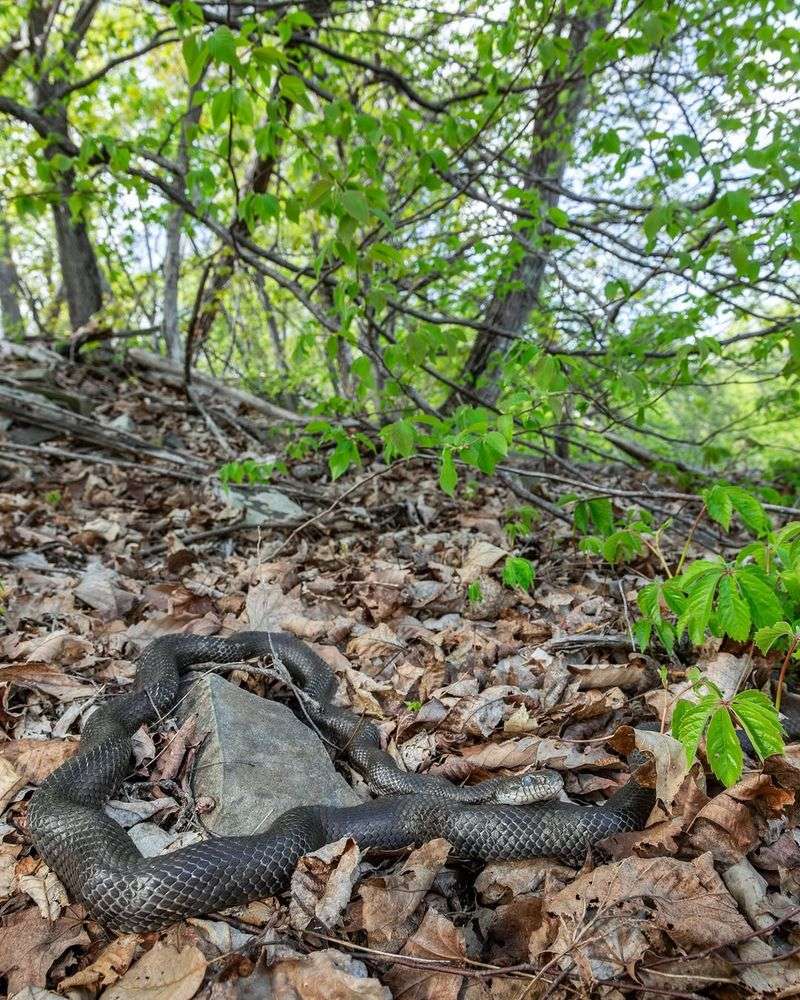
A confirmed rat snake at your North Carolina woodline is a native predator doing what native predators do: moving through a landscape that offers shelter, warmth, and something to eat. That is worth noting and worth respecting. NC Wildlife recognizes rat snakes as beneficial, nongame animals that belong in the state’s ecosystems, and their presence near a woodland edge is consistent with a functioning habitat rather than a sign that something has gone wrong.
What the sighting cannot do is certify that rodents are under control, that tick populations have dropped, or that your household faces less risk of tickborne illness. The food web is real, but it is also complex, and one predator in one yard does not tip the whole system. Preserve the snake’s habitat at a comfortable distance from high-use areas, manage rodent attractants and building access points, keep activity zones maintained, and continue using the tick precautions that CDC recommends regardless of what wildlife is present.
The best way to read a rat snake sighting is as the yard sending you a signal: the edge habitat is working. Your job is to keep it working safely for everyone who uses the space, scaled and feathered alike.