
A tired wooden trellis can make a garden corner look forgotten, but the right vine can turn it into the best part of the yard. Florida native vines are built for sandy soil, heavy rain, sticky heat, and hungry wildlife. Many come back year after year with very little fuss once their roots settle in. Pick the right one, and that old frame can become a living wall of flowers, shade, berries, or butterfly habitat.
1. Coral Honeysuckle
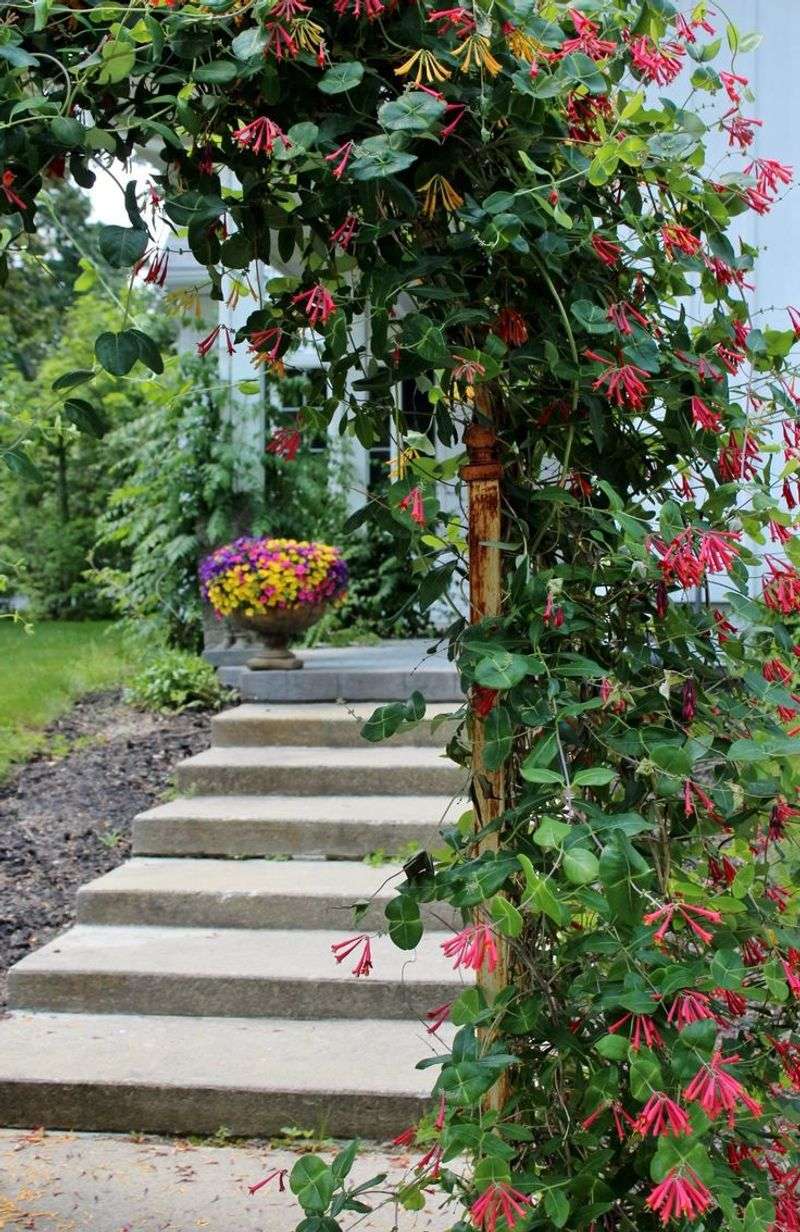
Hummingbirds seem to find coral honeysuckle before people do, which is part of its charm. One day the trellis looks bare, and the next it is threaded with red, trumpet-shaped blooms that feel made for a Florida fence line.
Coral honeysuckle, known botanically as Lonicera sempervirens, is a Florida native that behaves better than many heavy, wild-looking vines. It climbs by twining, so it works well on an old wooden trellis that still has enough strength to hold a moderate vine. In much of Florida, it can stay semi-evergreen, giving you coverage even when some flowering plants look tired.
Its biggest difference is the wildlife payoff without the garden takeover. The flowers feed hummingbirds and long-tongued pollinators, while red berries can support birds later in the season. It handles Florida heat better once established, but it appreciates water during long dry spells, especially in sandy soil.
Give it sun to part shade, mulch the root zone, and prune lightly after bloom if it starts wandering. If the trellis is truly unsafe, add a few discreet wires or a metal panel behind it so the vine has backup support while still hiding the worn wood.
2. Crossvine
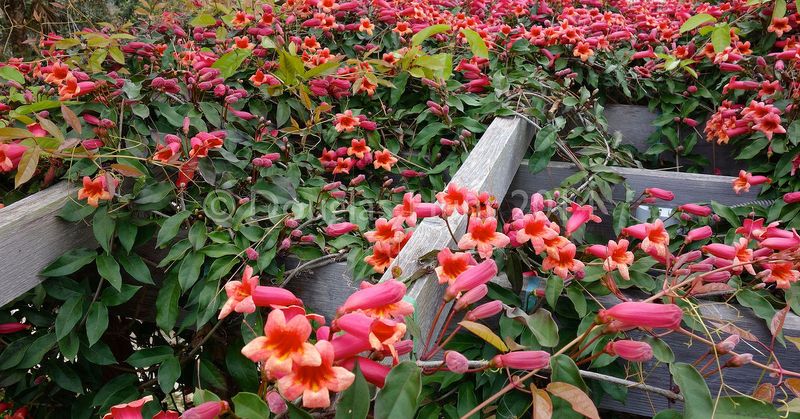
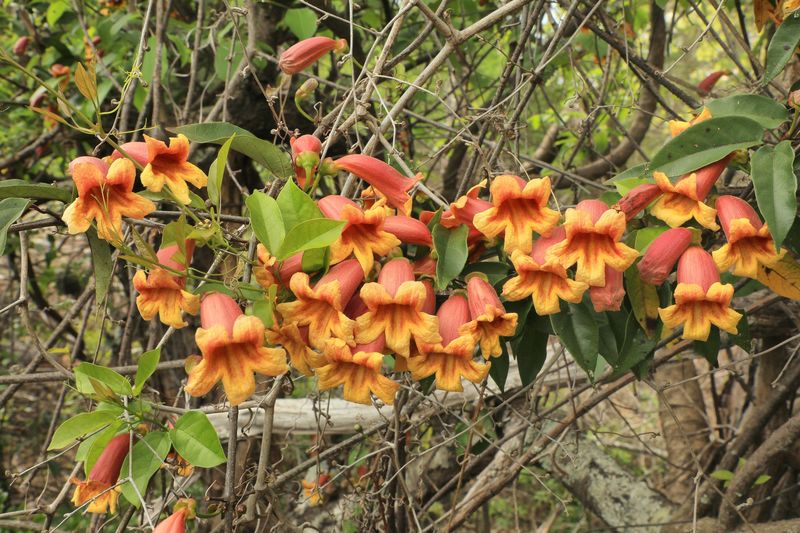
A scruffy trellis can disappear fast under crossvine, especially in spring when the flowers arrive like little orange-red trumpets. Gardeners who want quick coverage without choosing a nonnative problem vine often put this one high on the list.
Crossvine, or Bignonia capreolata, is native to Florida and naturally climbs trees and structures using small tendrils with adhesive tips. That makes it useful on older wood, because it can grip and spread without needing constant tying. It is vigorous, so it fits a larger trellis, arbor, pergola, or back fence better than a tiny decorative panel.
What sets crossvine apart is its speed and staying power. Once roots are established, it can push through heat, brief dry periods, and ordinary Florida neglect with less drama than many showier plants. The glossy leaves also provide a fuller screen than vines that go thin between bloom cycles.
Plant it where it gets sun for the best flower show, though it will tolerate part shade. Prune after its main flush of bloom to keep it from swallowing gutters, roof edges, or nearby shrubs. In hurricane-prone yards, regular trimming is smart because a heavy vine catches wind when allowed to build too much bulk.
3. Purple Passionflower
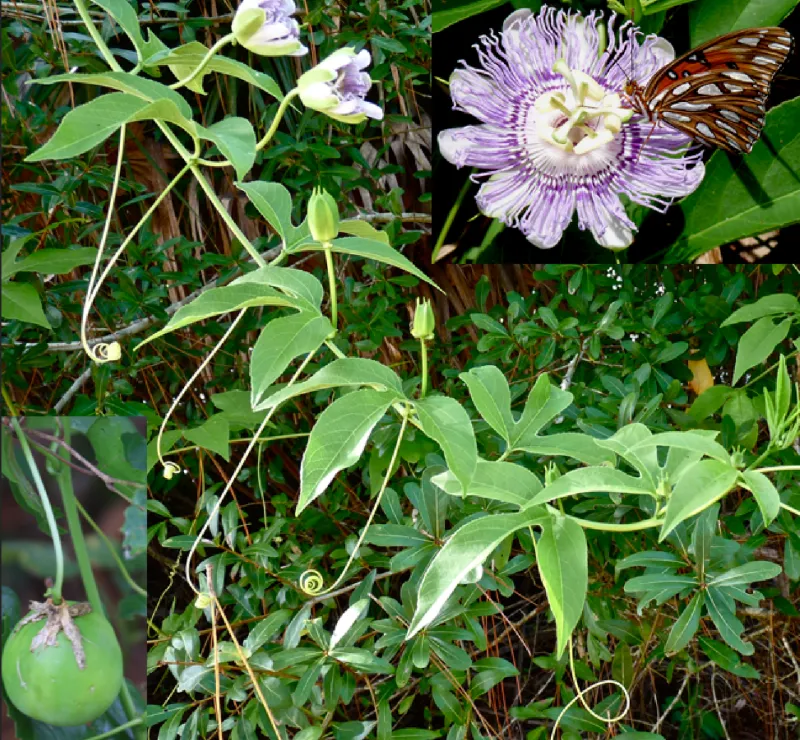
If your yard has Gulf fritillary butterflies, purple passionflower can turn a plain trellis into a tiny butterfly nursery. The flowers look almost unreal, with purple fringe, pale petals, and a shape that makes visitors stop mid-sentence.
Passiflora incarnata is native to Florida and is often called maypop. It is different from the tougher screening vines on this list because its main gift is wildlife and seasonal drama. The leaves feed caterpillars of Gulf fritillary and zebra longwing butterflies, so some chewing is not failure, it is the whole point.
In sandy Florida soil, purple passionflower may spread by underground runners. That can be helpful if you want a living cover that renews itself around an old trellis, but it also means you should place it where a little wandering is welcome. A mowed edge, path, or deep border can help keep it in bounds.
Full sun encourages the strongest flowering, though afternoon shade can be useful in the hottest inland spots. The vine may die back after cold snaps in North Florida, then return from the roots. For a rotting trellis, add string, wire, or a simple cattle panel behind the wood, and let the passionflower do the pretty work up front.
4. Corkystem Passionflower
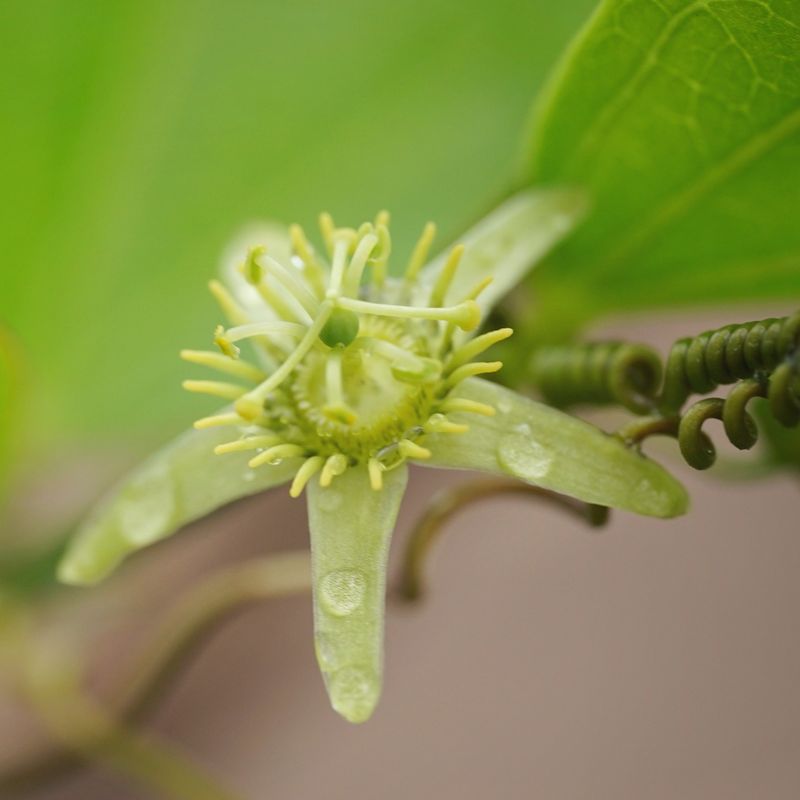
Not every useful vine needs big flashy flowers. Corkystem passionflower earns its keep quietly, then surprises you when butterflies start treating the trellis like a neighborhood diner.
Passiflora suberosa is native in much of Florida, especially warm central and southern areas. Compared with purple passionflower, it has smaller, less showy blooms and a finer texture. That makes it excellent for gardeners who want a softer, natural-looking cover instead of a heavy curtain of leaves.
Its special strength is shade tolerance and butterfly value. Corkystem passionflower is a host plant for zebra longwing and Gulf fritillary caterpillars, and birds may eat the small dark fruits. In a Florida yard where mosquitoes, heat, and storm cleanup already create enough work, a vine that supports wildlife without demanding constant attention is a welcome trade.
It can climb a trellis, weave through shrubs, or soften a fence corner. Because it is lighter than muscadine or crossvine, it is a good choice when the old wooden trellis is mostly decorative and you do not want to load it with too much weight. Give it part sun to bright shade, occasional water while young, and permission to look a little wild.
5. Virginia Creeper
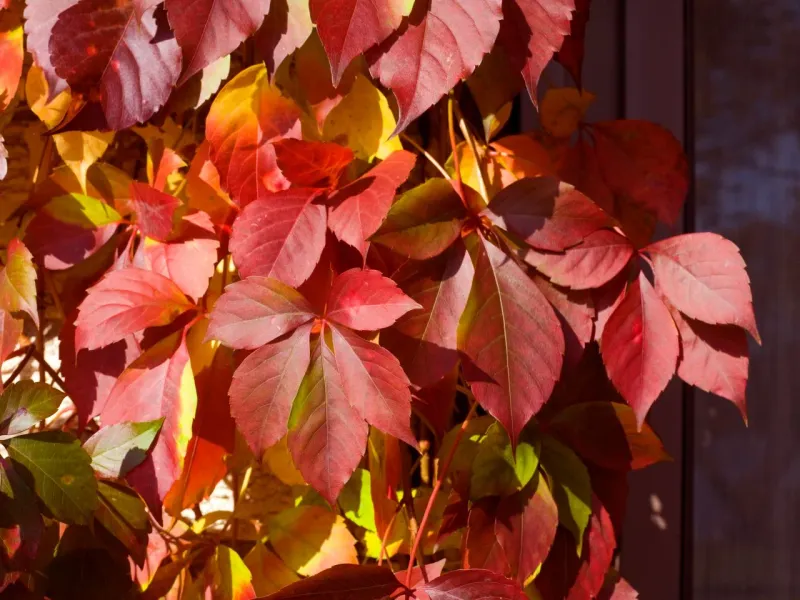
For pure coverage, Virginia creeper is the vine that does not ask for applause. It simply gets to work, covering boards, posts, and awkward corners with neat five-leaflet foliage.
Parthenocissus quinquefolia is native to Florida and much of the eastern United States, but in Florida gardens it has a practical role: hiding ugly structure fast. It clings with tendrils and adhesive pads, so it can scramble over an old trellis with little training. The leaves can turn red in cooler parts of the state, adding a seasonal bonus that feels rare in many Florida landscapes.
Its reason for being on this list is toughness. Virginia creeper tolerates a range of light, from sun to part shade, and it handles ordinary sandy soil once established. Birds value the berries, though people and pets should not eat them.
Place it with care because it can climb beyond the trellis if ignored. Keep it off painted walls, soffits, and rooflines, and trim it back a few times a year. If poison ivy worries you, learn the difference: Virginia creeper usually has five leaflets, while poison ivy usually has three. Gloves are still a good habit, since some people get skin irritation from handling the vine.
6. Carolina Jessamine
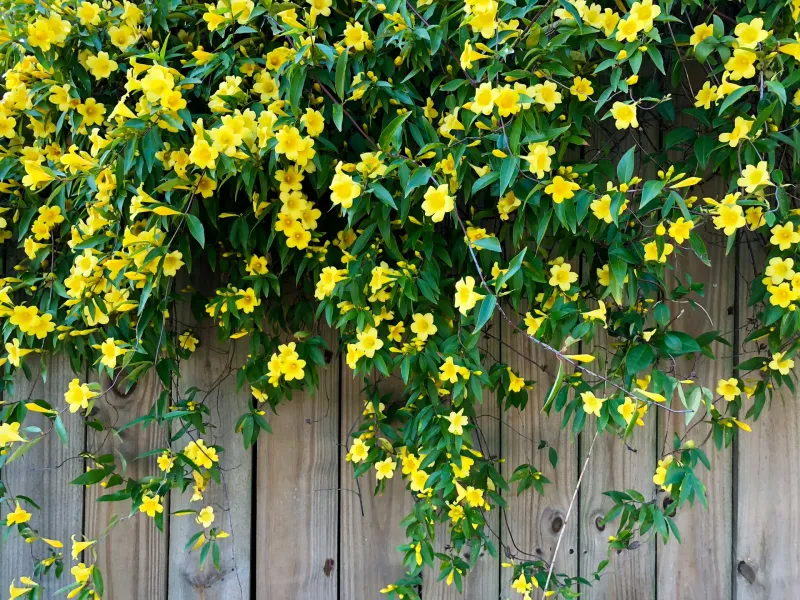
Yellow flowers in late winter can feel like a small celebration, especially when the rest of the yard still looks sleepy. Carolina jessamine brings that bright moment to a trellis before many spring plants have even warmed up.
Gelsemium sempervirens is native to Florida and is especially useful in North and Central Florida landscapes. It twines rather than clings, so it may need a few ties while young, but after that it can lace itself through trellis slats and soften weathered wood beautifully. The evergreen leaves help keep the screen attractive after the bloom show ends.
What makes Carolina jessamine different is timing. Its golden trumpet flowers often appear when gardeners are hungry for color, and bees may visit during mild weather. It is also lighter and more refined than some vigorous native vines, making it a nice fit near patios, mailbox structures, or smaller garden entries.
There is one serious caution: all parts of the plant are poisonous if eaten. Avoid using it where children, pets, or grazing animals might chew the vine. Give it sun for more flowers, part shade for softer growth, and a trim after blooming to keep it tidy before Florida rain and heat push new growth.
7. Muscadine Grape
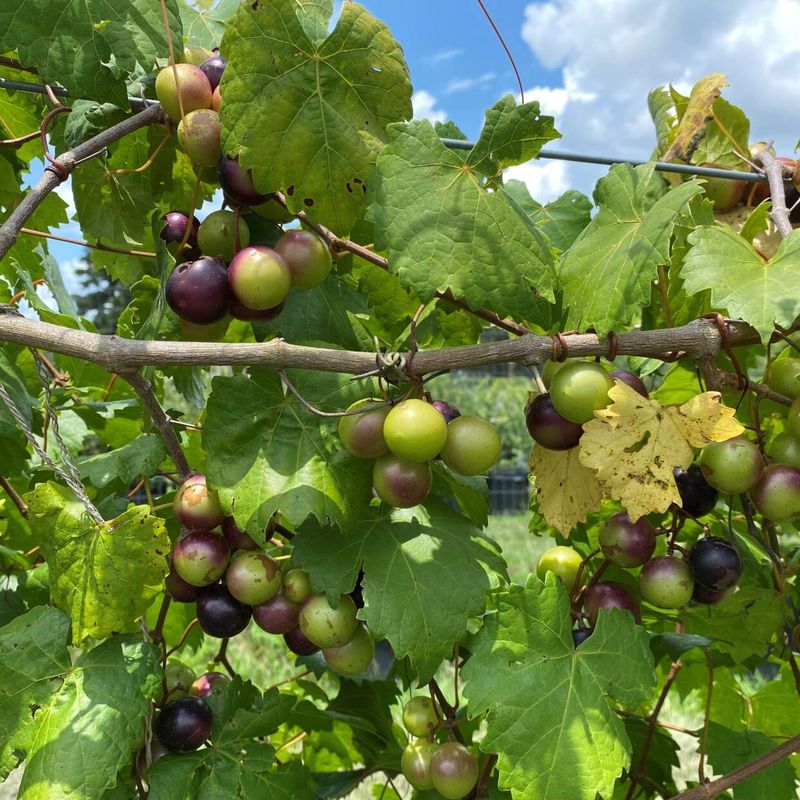
Some vines hide an old trellis, but muscadine makes it feel like it was always meant to be there. Broad leaves, curling tendrils, and late-season grapes give it an old-Florida backyard feeling that is hard to fake.
Vitis rotundifolia, commonly called muscadine grape, is native to Florida and well adapted to heat, humidity, and sandy soils. It is a strong grower, so it belongs on a sturdy trellis, fence, arbor, or reinforced old frame. If the wood is truly rotting, do not depend on it alone. Add posts, wire, or a metal support first, then let the vine cover the repair.
Muscadine stands out because it can offer edible fruit along with shade and wildlife value. Birds enjoy the grapes, and people can grow selected muscadine varieties for fresh eating, jelly, or juice. Wild plants may be male or female, and fruiting depends on flower type and pollination, so choose a known self-fertile variety if grapes are a goal.
Annual pruning matters more here than with the lighter vines. Without it, muscadine can become a heavy tangle that holds moisture and catches storm winds. Prune during dormancy, keep the main framework simple, and you can have a long-lived vine that turns a fading trellis into a productive garden feature.