
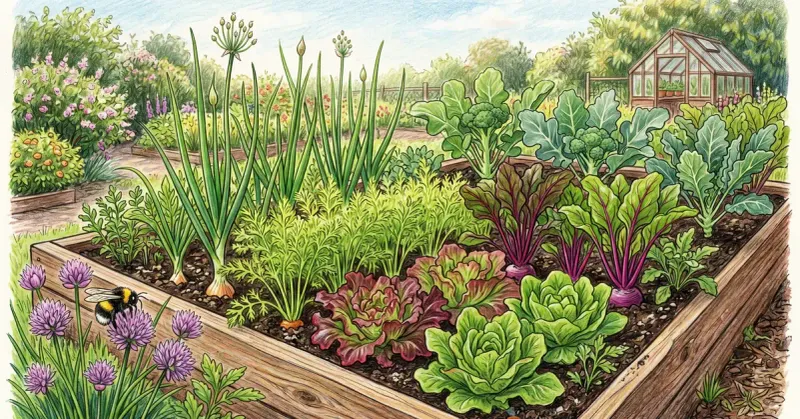
Growing more than one vegetable type in the same bed is a trick many North Carolina gardeners swear by, and there is real science behind why it can work. Mixed beds may slow certain pests down, make better use of limited space, and keep early outbreaks from spreading as fast through a solid block of one crop.
The catch is that results depend heavily on what you plant, how you arrange it, and the conditions in your corner of the state. This guide explains the honest mechanics behind pairing vegetables so you can test the approach in your own garden with clear eyes.
Intercropping Offers Possibilities, Not Guarantees
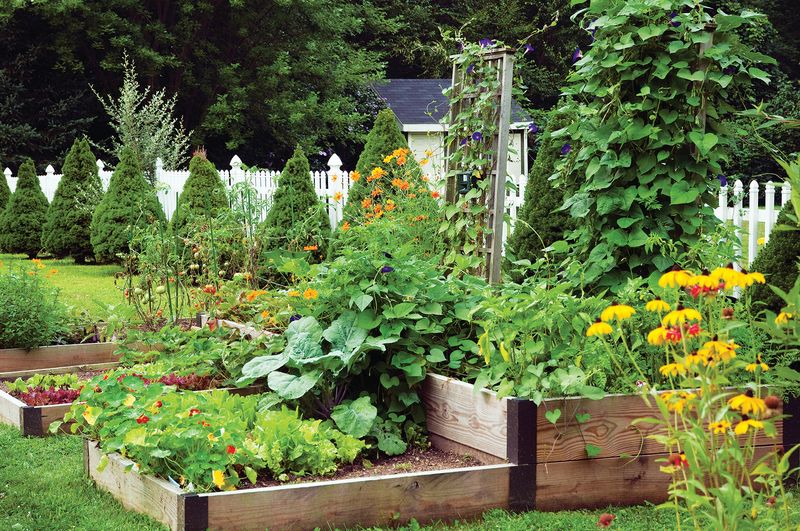
Growing two or more vegetable types in the same bed at the same time goes by several names, companion planting being the most popular, but the core idea is straightforward. You fill your available space with more than one crop, and the mix may make it harder for certain pests to locate their preferred host plants while also putting unused soil, light, and water to work.
NC State Extension defines interplanting as growing two or more vegetable types in the same place at the same time, and describes it as one tool within a broader set of garden management practices, not a standalone fix.
What the research does not support is treating any pairing as a dependable guarantee. A broad review published in the Journal of Economic Entomology found that intercropping can improve resource use and suppress some insects, pathogens, and weeds, but that yield effects vary widely.
Competition between crops for light, nutrients, water, and space is one of the main reasons outcomes shift from bed to bed.
The practical takeaway is that you should judge any mixed planting by two honest measurements: how much pest damage actually showed up, and how much total edible food the entire bed produced. A combination that slightly reduces tomato yield per plant but fills the same space with a second productive crop may still come out ahead in food per square foot.
One that crowds both crops and triggers disease has made things worse, not better. Keep that standard in mind before repeating any arrangement a second season.
A Mixed Planting Can Disrupt How Some Pests Find Hosts

Pest insects do not wander randomly through a garden. Many species rely on visual cues and plant odors to locate the specific host crop they need to feed and reproduce.
When a bed holds only one vegetable type, a pest that lands anywhere nearby has an easy path to more of the same plant. Breaking that uniform block with a different species can slow that search, and University of Minnesota Extension notes that visually varied plantings may make it harder for pests to find a preferred host compared to a solid row of one crop.
Beyond visual confusion, mixed beds can alter the blend of volatile compounds a planting releases, potentially masking the scent signals a pest uses to zero in on its target. A third mechanism involves habitat: flowering plants and herbs within a bed can provide nectar, pollen, or shelter that supports predatory insects and parasitoid wasps, which in turn may reduce pest populations.
NC State recommends mixing plant families partly because early pest damage then does not move as easily through an entire planting, which makes infestations easier to spot and address before they spread.
Each of these mechanisms is real, but none operates automatically or universally. The outcome depends on which pest species is present, how the crops are arranged, the timing of bloom relative to pest pressure, the surrounding landscape, and whether natural enemies are already active in your area.
Flowers and herbs do not automatically attract enough beneficial insects to provide meaningful control. Treating any companion plant as a guaranteed biological pest shield overstates what the evidence shows, and gardeners who rely on that assumption alone are likely to be disappointed when a specific pest ignores the arrangement entirely.
Plan the Bed Around Light, Airflow, and Regional Timing
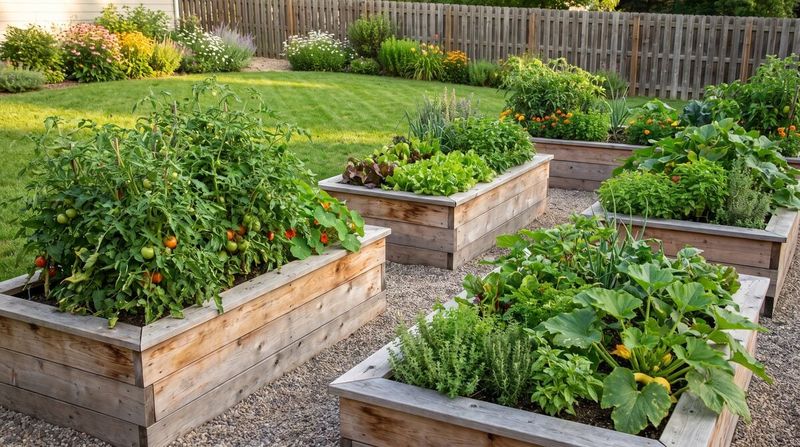
Before choosing which crops to pair, the bed itself needs a workable structure. NC State provides separate planting calendars for eastern, central, and western North Carolina, and the guidance is explicit that dates should be adjusted for year-to-year weather.
A gardener in Asheville and one in Wilmington are not working from the same frost dates, heat accumulation, or disease pressure window, so applying a single statewide schedule to a mixed bed creates timing mismatches that can undercut both crops before pests become the main concern.
Spacing is where most mixed beds go wrong. NC State advises following the spacing listed on seed packets or plant tags and leaving enough room to reduce disease risk.
Intensive planting guides can be useful references, but they are not permission to push incompatible plants together just because a pairing sounds appealing. Each crop still needs the space it requires at full maturity, and crowded plants compete for the same light, water, and nutrients while also creating the humid canopy conditions that invite fungal disease.
Tall crops and trellised vines belong on the north side of a bed whenever possible. NC State Extension specifically recommends this arrangement so that corn, okra, pole beans, tomatoes, cucumbers, and squash do not cast shade over shorter neighbors as the season progresses.
As for layout options, alternating rows by species, mixing plants within a single row, distributing different species throughout the bed, and tucking edibles among ornamentals are all valid approaches. Choose the layout that matches the mature size, light needs, and harvest schedule of each crop rather than selecting one because a gardening book calls it a classic combination.
Choose Pairings for a Specific Job, Not a Folklore Promise
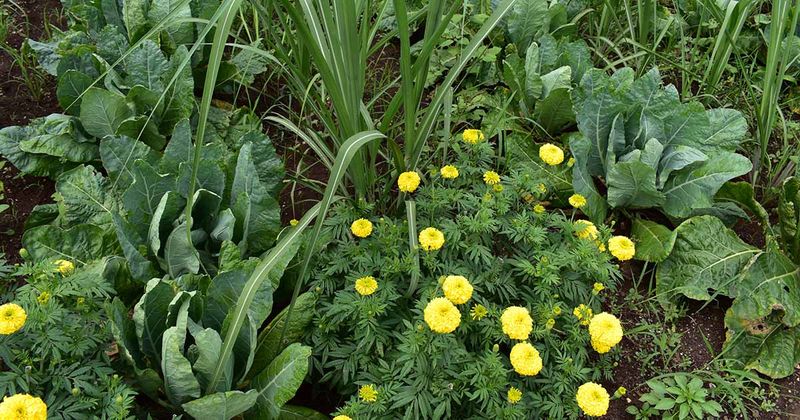
Picking a companion plant works best when you start with a clear purpose rather than a popular recommendation. The useful jobs a second crop can do include breaking up a solid block of a pest’s preferred host, filling space that would otherwise sit empty between slow-maturing plants, providing habitat for predatory insects during a window when they are most needed, or serving as a managed trap crop that lures pests away from the main planting.
NC State uses alternating rows of peppers and onions or mixed leeks and parsley as examples of how a bed can be organized to separate plants of the same family. Those are layout illustrations, not claims that onions repel pepper pests or that parsley boosts leek yields.
University of Minnesota Extension summarizes several studied combinations with specific limits attached. Thyme, onion, and nasturtium grown with broccoli, and marigold, onion, and nasturtium grown with cabbage, showed pest reductions in particular studies under particular conditions.
Basil or marigold with tomato produced some outcomes related to specific thrips in certain trials. None of these results should be read as a promise that the same pairing will perform the same way in a Piedmont or Coastal Plain garden under different soil, humidity, and pest-pressure conditions.
Trap cropping is a more clearly defined strategy than broad repellent claims, and it comes with a specific responsibility. Arugula, mustard, rapeseed, and Napa cabbage have shown potential as trap crops for flea beetles, and research cited by Minnesota Extension found that mixtures of three or more trap-crop species outperformed single-species traps.
The critical detail is that a trap crop attracts pests on purpose. Without a plan to monitor it and then destroy, remove, or treat it before pests migrate into the main crop, a trap crop can become a breeding site that makes pest pressure worse rather than better.
Lower Pest Injury Can Come With Lower Main-Crop Yield
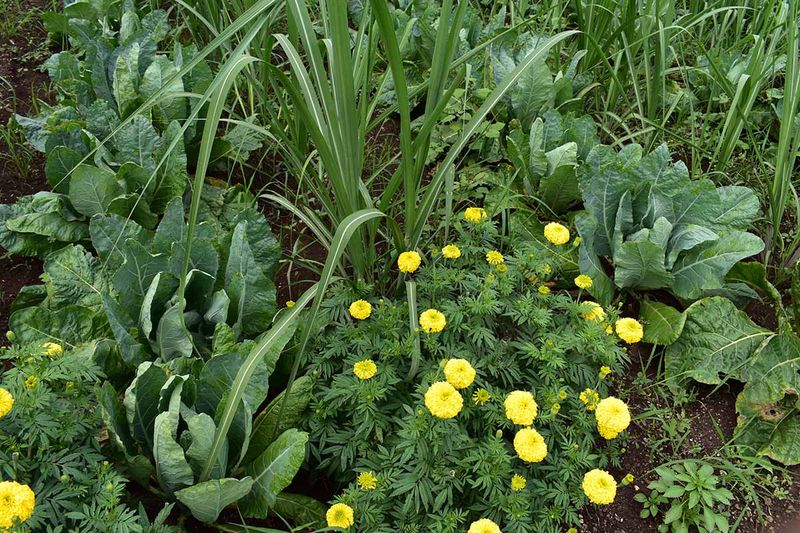
Two specific studies make the tradeoff between pest reduction and crop productivity concrete enough to plan around. A peer-reviewed cauliflower study found that relay-cropping cauliflower with lettuce reduced cabbage-maggot egg laying in both years of the trial.
The results were not uniformly positive, however. A different Delia species actually increased in one of the two years, and plant loss from that pest reduced cauliflower yield in that same year.
The study demonstrates a possible mechanism that is worth understanding, but it does not establish relay cropping as a reliable pest-control method for every garden or every season.
A 2023 meta-analysis examining cabbage intercropping systems found an average 48 percent reduction in pest injury across the studies reviewed, alongside an average 7 percent reduction in cabbage productivity. No companion crop in that analysis increased both cabbage productivity and product quality at the same time.
Those percentages come from a wide range of commercial and research settings and should not be applied directly to a home garden bed in North Carolina as an expected result. What they do establish clearly is that lower pest injury and higher main-crop yield do not automatically travel together.
The right measurement for a home garden is not yield per cabbage or cauliflower plant alone. A broader review in the Journal of Economic Entomology reinforces that intercropping’s stronger evidence base involves land-use efficiency rather than reliably boosting the focal crop.
When a second crop fills the same space productively, total food from the bed per square foot may come out ahead even if the main crop yields slightly less per plant. Record both crops when you harvest, and compare the whole bed’s output against what a single-crop planting produced in the same space.
Use Intercropping as One Layer of Integrated Pest Management
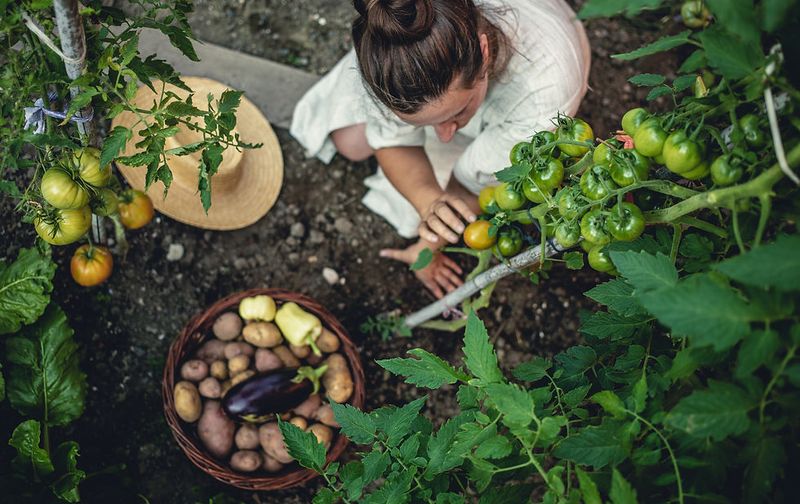
A mixed bed earns its place in a garden plan when it fits into a broader set of practices rather than standing alone as the pest solution. NC State describes integrated pest management as a sequence: monitor the garden regularly, identify what pest is actually present, assess whether the damage level crosses a threshold that justifies action, choose the least-toxic effective response available, and then evaluate whether the response worked.
Intercropping fits inside that sequence as a cultural tactic that may reduce early pest establishment or slow spread, not as a step that replaces the rest.
Crop rotation remains a separate and non-negotiable practice. Rotating plant families from bed to bed each season addresses soil-borne pathogens and pests that overwinter in place, and a mixed bed does nothing to substitute for that.
Sanitation, which means removing dead plant material and spent crops promptly, cuts off refuge sites for disease and insects. Mulch helps retain moisture and suppress weeds that can harbor pests.
Appropriate watering, especially at the base of plants rather than overhead, limits the leaf wetness that fungal diseases need to establish. NC State also recommends selecting resistant varieties and using physical barriers such as row covers for crops with predictable early-season pest pressure.
Scouting is the thread that holds all of these practices together. Walking through the garden two or three times a week, turning leaves over, and knowing what normal looks like allows you to catch a problem while it is still manageable.
NC State notes that home gardeners do not need to eliminate every insect. Some leaf damage can be tolerated without serious harm to the crop or the harvest, depending on what you are growing and what your goal is.
Treating every nibbled leaf as a crisis leads to unnecessary interventions that can harm the beneficial insects your mixed planting was partly intended to support.
Prevent Crowding, Pest Nurseries, and Unsafe Treatments
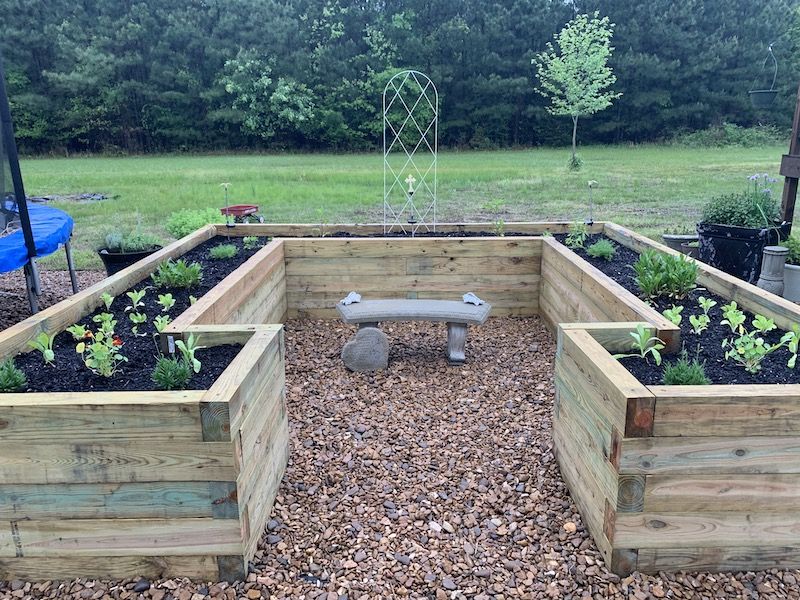
Several failure points can erase whatever benefit a mixed planting might offer, and most of them trace back to how the bed is set up rather than which crops are chosen. Crowding is the most common problem.
When plants are pushed closer together than their mature size requires, airflow drops, shade from taller plants falls on shorter neighbors, and root systems compete for the same water and nutrients. NC State advises preserving the spacing each crop needs at full size, and that guidance applies whether the bed holds one crop or six.
A dense canopy also makes scouting difficult, which means pest problems go undetected longer and are harder to treat when they finally surface.
Trap crops require a monitoring and management plan written before the crop goes in the ground. Minnesota Extension’s guidance on trap cropping is clear that an unmanaged trap crop can become a breeding site, allowing the pest population to build before moving into the main planting.
Decide in advance how you will handle the trap crop once it has attracted pests, whether by pulling and bagging it, covering it, or applying a targeted treatment, and act before migration occurs. NC State recommends checking beds frequently so you can respond at the right moment rather than after the window has passed.
When any control product enters the picture, the label is the legal and safety document that governs use. NC State Extension warns that general-use and natural pesticides are not automatically safe for people, pets, or beneficial organisms.
Observe re-entry intervals and pre-harvest intervals, avoid drift onto neighboring plants or water sources, and never spray blooming plants when pollinators are foraging. EPA guidance on pollinator protection identifies bloom-time restrictions and late-day application as standard precautions.
Mixed beds that include flowering companions are beds where those precautions matter most, because the flowers that may support beneficial insects can also expose them to harm if treatments are applied carelessly.
Measure the Whole Bed Before Repeating the Pairing
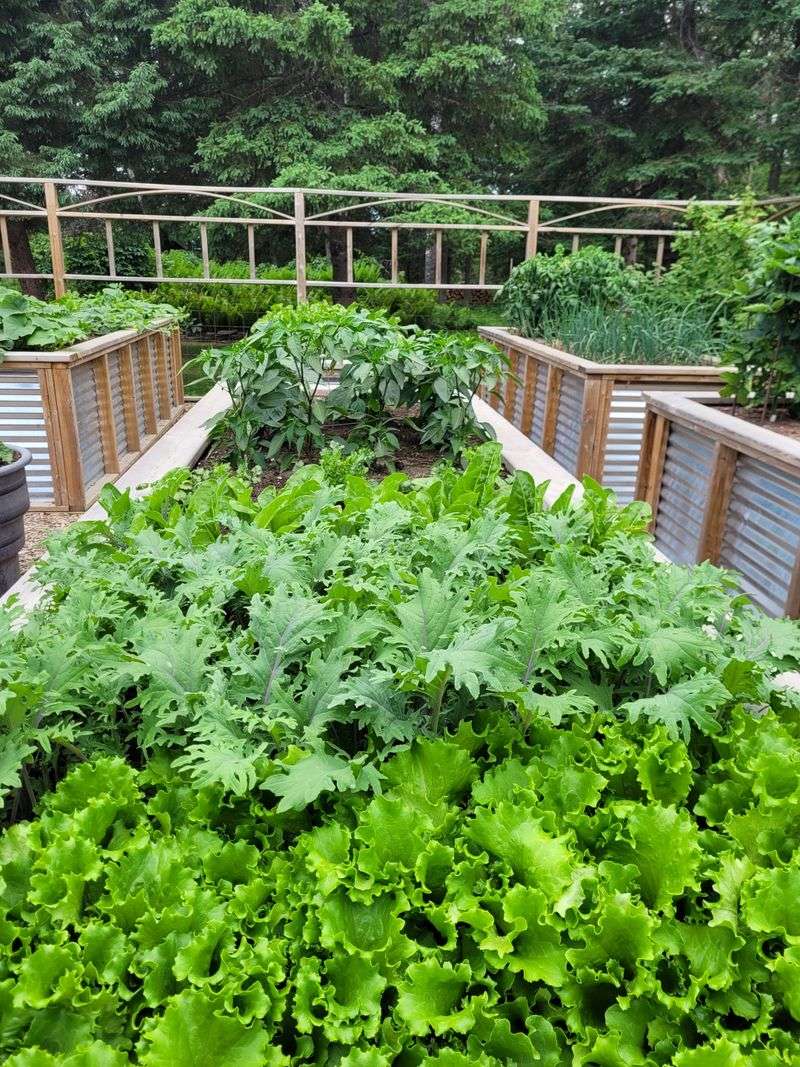
The most useful thing any North Carolina gardener can do after trying a mixed bed is keep a record honest enough to learn from. Start with one clearly planned bed, write down the arrangement, the planting dates for each crop, and the region-specific calendar you used.
Through the season, note what pests appeared, when they showed up, how much damage they caused, and how difficult the bed was to water, scout, and harvest compared to a simpler planting.
At the end of the season, weigh or count the output from every crop in the bed, not just the main vegetable. Compare that total against what a single-crop bed of similar size produced in the same conditions.
The Journal of Economic Entomology review and the 2023 cabbage meta-analysis both point toward land-use efficiency as the more reliable potential benefit, so food per square foot is the number worth tracking. If the mixed bed produced more food with manageable pest pressure and was not harder to maintain, that is a result worth repeating.
If pest damage was similar and yield was lower, NC State’s IPM framework gives you the tools to adjust the arrangement, spacing, or timing rather than abandoning the idea entirely. The goal is not to find a magical pairing but to learn whether a particular arrangement works in your soil, your climate zone, and your garden, because that is the only trial that actually counts.