
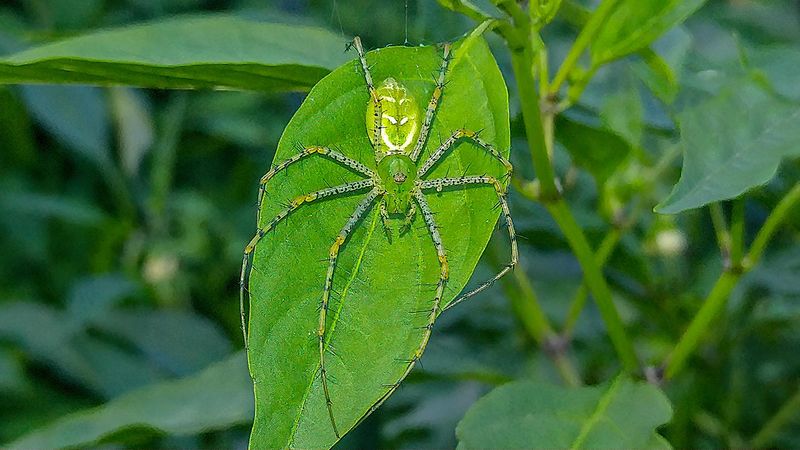
Spot a big, bright green spider crouched on your pepper plant and your first instinct might be to knock it off. Before you do, it helps to know what that spider actually eats and whether it is working for you or against you. Green lynx spiders are real Texas predators that hunt caterpillars and other insects right on garden plants, but the story of what they can reliably do for your pepper harvest is more complicated than it looks.
Recognize the green lynx spider in a Central Texas garden
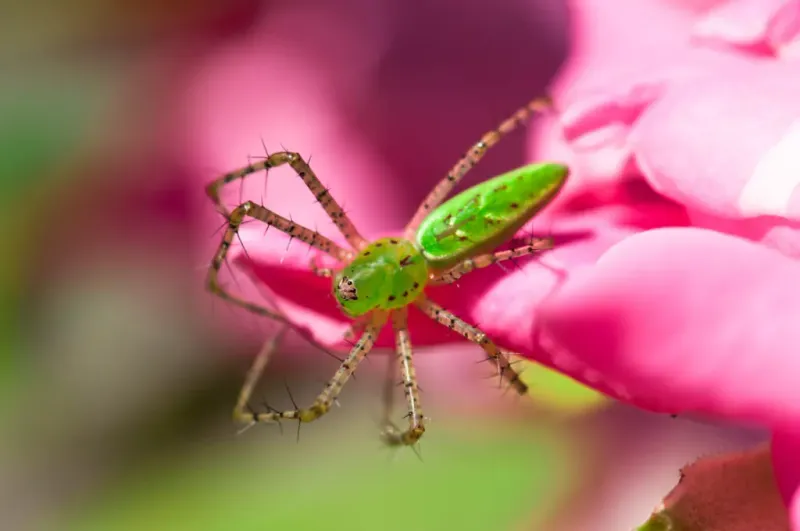
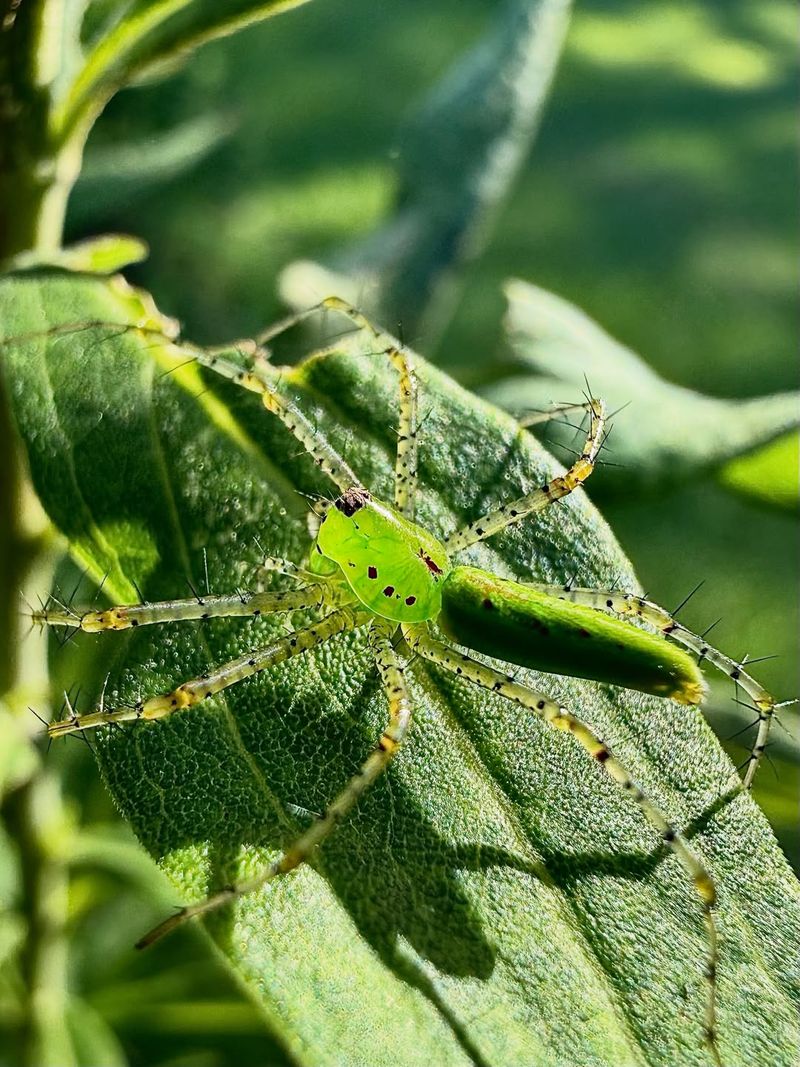
Bright green, bristling with spiny legs, and nearly as wide as a quarter when fully grown, the green lynx spider is hard to miss once you know what to look for. Unlike orb weavers or funnel spiders, it builds no prey-catching web. Instead, it actively stalks insects across leaves, stems, and flower heads, making it a sit-and-ambush hunter you are likely to spot pressed flat against foliage on a warm Texas afternoon.
Knowing what you are looking at matters because Central Texas is genuine green lynx territory. iNaturalist records from Blanco County and surrounding areas confirm the species turns up regularly across the Hill Country and surrounding regions, and the U.S. Fish and Wildlife Service documents green lynx spiders at multiple Texas refuges across the southern part of the state. If you grow peppers outdoors here, an encounter is plausible rather than exotic.
Gardeners sometimes mistake the green lynx for the striped lynx spider, a smaller relative. The key difference is facial pattern: the striped lynx spider carries conspicuous stripe markings on its face and body, while the green lynx is more uniformly vivid green with reddish spots along the abdomen. UF/IFAS describes the green lynx as one of the largest lynx spiders in North America, which helps separate it from smaller look-alikes at a glance.
When you find one on a pepper plant, the best move is simple observation. A female guarding an egg sac is particularly defensive, and any wild spider can react if trapped or pressed against skin. Watch it from a comfortable distance, note where it is hunting, and let the more interesting question take over: can this spider actually help with the caterpillars chewing your fruit?
The research confirms caterpillar predation, not pepper protection
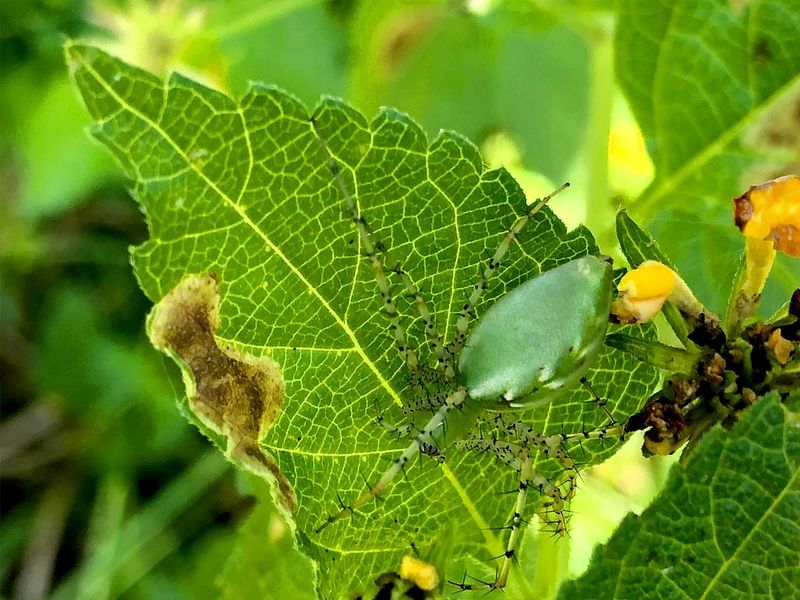
Green lynx spiders are genuine hunters. Rather than waiting passively on a web, they pursue prey across vegetation, and field researchers in East Texas documented exactly what ended up on the menu. A study of green lynx spider predation in East Texas cotton and woolly croton habitats recorded spiders eating insects from many orders, including moths. Among the identified prey were corn earworm, now generally classified as Helicoverpa zea, and cotton leafworm, Alabama argillacea.
Both are moth species whose larvae cause real crop damage, so the observation that green lynx spiders will eat them is genuinely relevant to a pepper grower thinking about caterpillar management.
The study’s details, though, deserve a close read. Each observed spider captured fewer than one prey item per day on average. That is a modest rate, and it reflects the reality that a single spider ranges across a limited area and does not hunt continuously. More striking is the diet breakdown: predatory arthropods made up more than half of the recorded prey.
In other words, the spiders were eating other predators, including insects that were themselves likely suppressing pest populations. UF/IFAS also documents green lynx spiders attacking non-pest insects, including a bumblebee, reinforcing that these are opportunistic generalists rather than targeted pest controllers.
What the East Texas research established is a diet record, not a crop-protection result. The study measured what spiders ate in a specific habitat, at a specific time, in a region with different agricultural conditions than a Central Texas backyard pepper bed. Nothing in that data set shows that green lynx spiders reduced caterpillar populations, cut the rate of pepper injury, or lifted yields for any grower. That distinction matters enormously when deciding how much management weight to put on the spider’s shoulders.
The honest takeaway is this: green lynx spiders do eat moth caterpillars, and that is worth knowing. Treating it as proof that more spiders equals less caterpillar damage, however, goes further than the evidence supports.
A spider’s presence does not prove caterpillar control
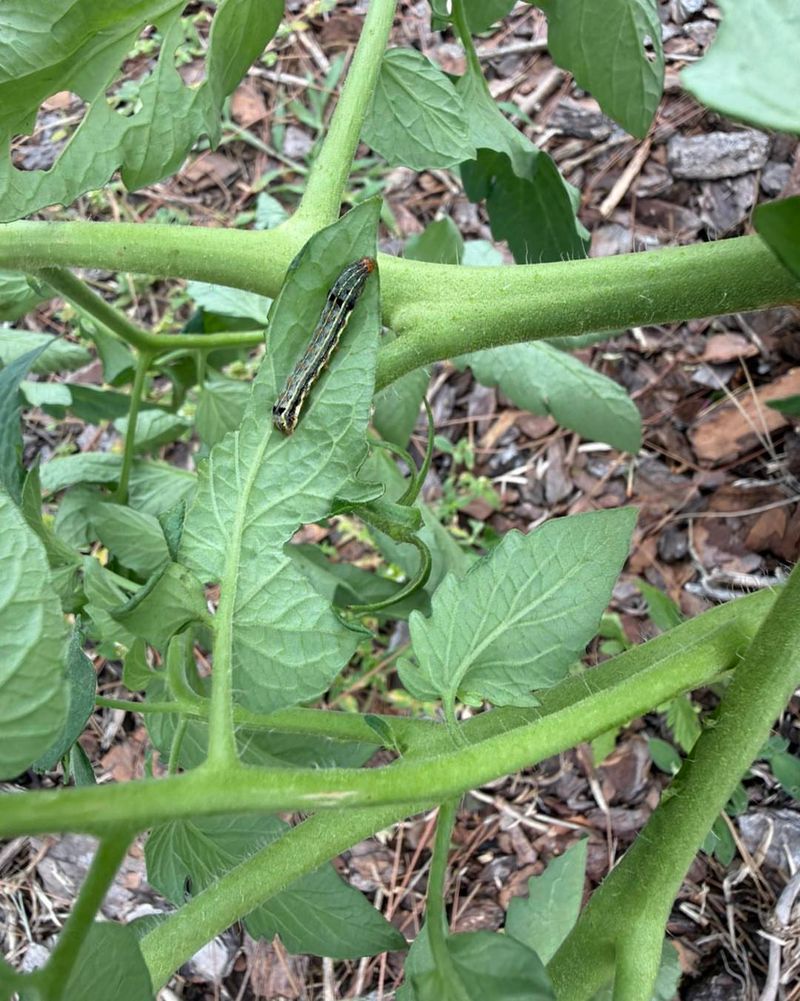
Seeing a green lynx spider on your pepper plant feels reassuring, but presence and protection are two different things. A spider perched on an upper leaf may be hunting insects that have nothing to do with the caterpillar chewing a fruit two nodes down. It may have moved to that spot because prey were already plentiful there, not because it is systematically clearing the plant. The spider has no awareness of your pepper harvest or your damage threshold.
The behavior of the caterpillars themselves makes this gap even wider. Texas A&M identifies armyworms among the insect pests affecting Texas peppers, and armyworm larvae are not always easy targets for a surface-hunting spider. Young larvae feed on foliage where a spider might intercept them, but older larvae often bore into fruit, hide in rolled leaves, retreat into soil, or shelter in plant debris. A green lynx spider hunting exposed vegetation simply cannot reach a caterpillar that has tunneled inside a pepper.
UC IPM notes specifically that natural enemies may not reliably control beet armyworms when larvae are feeding on fruit, which is exactly the scenario that costs pepper growers the most. Other caterpillar species, including hornworms and loopers, present different hiding habits and feeding patterns, so the spider’s ability to intercept any particular larva depends heavily on species and life stage.
The available research and reviewed sources do not establish a recommended spider density, a protection radius around a pepper plant, or a Central Texas pepper-yield benefit from encouraging green lynx spiders. That is not a reason to disturb or remove the spider. A predator that occasionally takes a caterpillar off the foliage is still a net positive. The point is that a spider on your plant is not a substitute for checking the plant yourself and knowing what is actually happening at fruit level.
Support natural enemies without trying to stock the garden
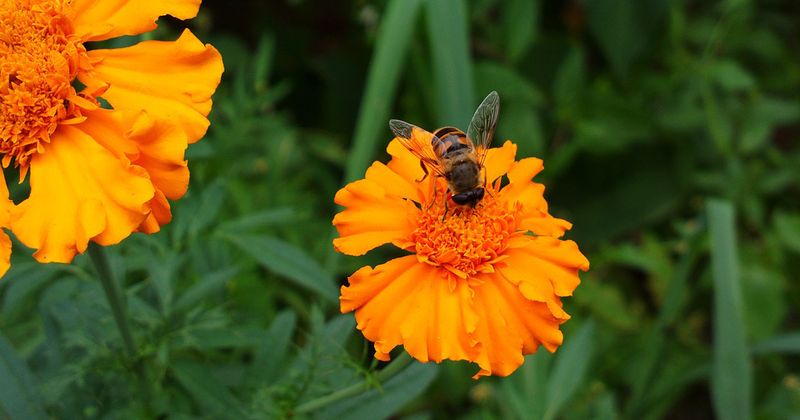
Trying to import or relocate green lynx spiders into your pepper bed is not a realistic strategy, and no reliable source identifies a specific flower or planting arrangement that predictably concentrates enough of them to protect a crop. What you can do is make your garden a place where natural enemies, including spiders, parasitic wasps, and predatory beetles, are more likely to survive and stay.
The most direct step is reducing routine broad-spectrum insecticide applications. Texas A&M AgriLife’s integrated pest management guidance explains that persistent, broad-spectrum products can kill natural enemies alongside target pests, sometimes triggering secondary pest outbreaks when predator and parasitoid populations collapse. A single unnecessary spray can set back the beneficial arthropod community that took weeks to build up around your garden. Keeping that community intact is more valuable than any individual spider.
UC IPM’s biological control guidance reinforces that natural enemies work best when habitat supports them continuously, not just during pest outbreaks. Flowering plants contribute to that habitat by providing nectar and pollen for adult beneficial insects, offering shelter, and supporting alternate prey populations that keep predators present between pest flushes. UC IPM’s insectary plant guidance frames this as a broad benefit for the entire beneficial arthropod community rather than a targeted recruitment tool for any single species.
For Central Texas gardeners, this translates to practical choices: grow some flowering plants near the vegetable bed, tolerate a modest amount of insect activity that is not causing damage, and reach for a spray only after scouting confirms a real problem. You are not trying to hit a spider-count target. You are maintaining conditions where the natural enemies already present can do their jobs without being wiped out before they get the chance.
Scout peppers before deciding that caterpillars need treatment
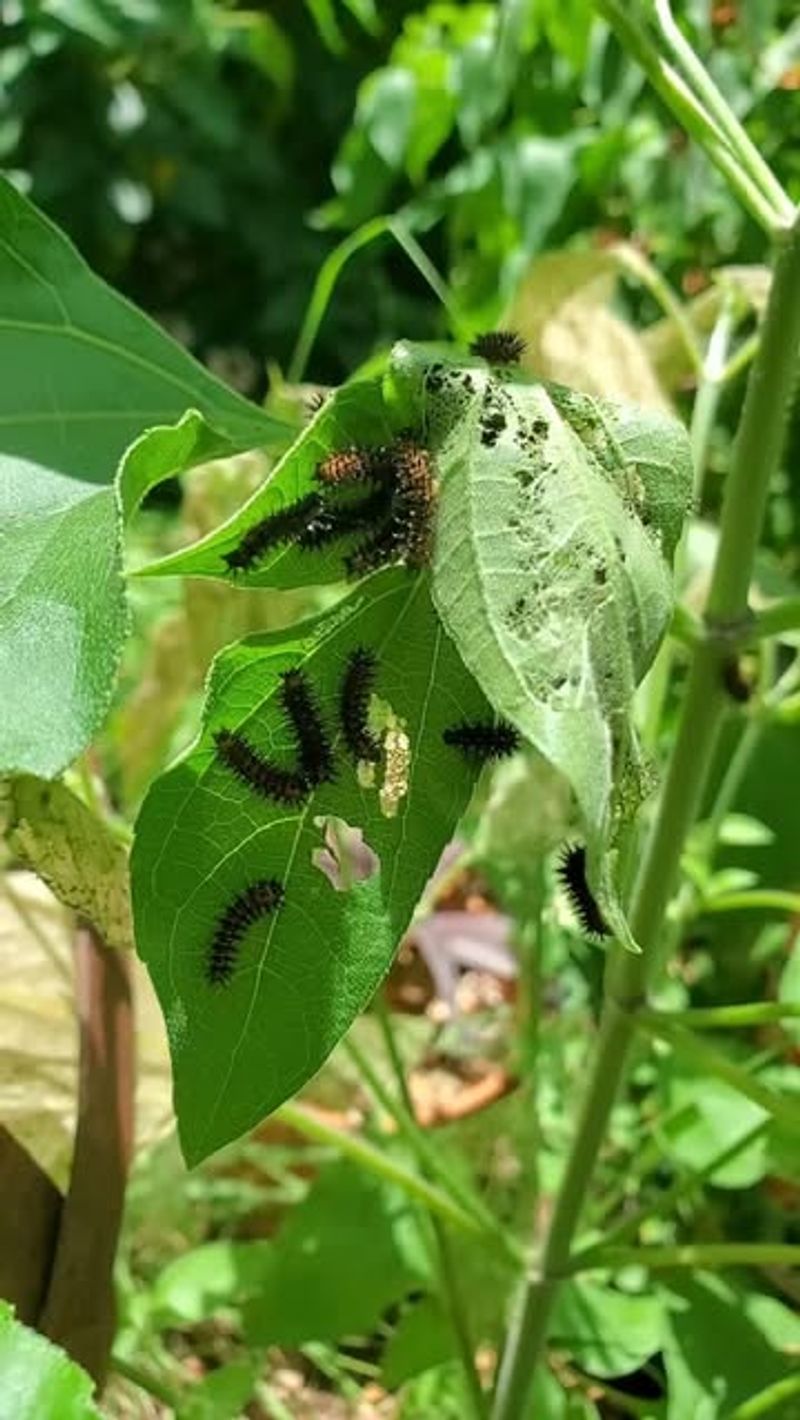
A weekly walk through your pepper plants is the most reliable pest-management tool you have, and it costs nothing. Pull back leaves, check undersides, look at fruit surfaces and stem junctions, and scan for frass, webbing, and egg masses. What you find, and where you find it, matters more than the simple presence of caterpillars.
Identification should come before any treatment decision. Some caterpillars become native butterflies, and many plants can tolerate limited leaf feeding without losing productivity. UC IPM’s leaf-feeding caterpillar guidance points out that healthy plants often recover from minor defoliation, and that the appropriate response depends on the species, the amount of damage, and whether fruit is being injured. A handful of chewed leaves on a vigorous pepper plant in July is a different situation from larvae actively tunneling into fruit.
For beet armyworm specifically, UC IPM’s beet armyworm guidance for peppers offers a concrete scouting benchmark: a five-minute search that turns up one or more larvae or egg masses may justify treatment, particularly when larvae are present on fruit. Apply that threshold to beet armyworm in peppers, not as a universal rule for every caterpillar you encounter in a Texas garden. Other species, damage patterns, and plant conditions call for their own judgment.
European pepper moth, also called false codling moth, is another pest worth knowing. UC IPM’s European pepper moth profile describes larvae that bore into fruit and are difficult to detect until damage is visible from the outside, a reminder that fruit-level inspection is not optional. Texas A&M’s fall vegetable gardening guide also encourages regular inspection as a core practice for Texas pepper growers across the season.
Consistent scouting keeps you from reacting to a single caterpillar that would never have caused meaningful damage, and it keeps you from missing a growing infestation until fruit is already lost. Neither extreme serves your harvest.
Choose the least disruptive effective control
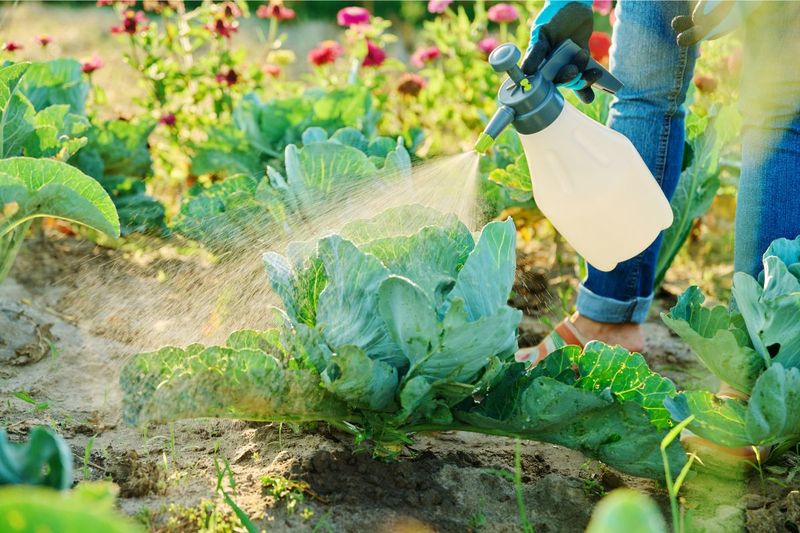
When scouting confirms meaningful damage and the caterpillar species warrants action, the goal is to solve the problem without dismantling the natural enemy community you have been working to protect. Start at the least disruptive end of the options available to you.
Handpicking is genuinely effective for small infestations. Drop larvae into soapy water, check the plant again in two or three days, and repeat. University of Minnesota Extension’s caterpillar guidance confirms that manual removal works well when populations are low and the caterpillars are accessible on exposed foliage or fruit surfaces. For a home garden with a handful of pepper plants, this approach can resolve a minor infestation without any spray at all.
When a spray becomes necessary, Bacillus thuringiensis var. kurstaki, commonly called Btk, is a selective option worth reaching for first. It works by producing proteins that are toxic to caterpillars that consume treated foliage, and it performs best against small, early-instar larvae. UC IPM’s leaf-feeding caterpillar resource notes that Btk has minimal impact on most non-target arthropods, which means your spiders, parasitoids, and predatory insects are largely unaffected. Always confirm that the specific product you purchase carries a label approving use on peppers, and follow all label directions.
UC IPM’s beet armyworm guidance for peppers includes Btk among options for managing larvae before they reach fruit.
Spinosad is another caterpillar-active option, but it requires extra care. UC IPM’s natural enemies resource flags that spinosad can harm bees and some beneficial insects, particularly while the product is still wet and shortly after application. Do not apply it to flowering pepper plants or nearby blooms in ways that expose pollinators, and defer entirely to the product label for timing and use restrictions. Texas A&M AgriLife’s IPM framework consistently points toward the most selective labeled option as the preferred choice when chemical intervention is warranted.
Broad-spectrum insecticides, including pyrethroids and carbamates, can knock down a caterpillar infestation but carry real costs: they can kill green lynx spiders, parasitoids, pollinators, and other natural enemies present on the plant, sometimes setting up conditions for a secondary pest outbreak. Reserve them for severe, fruit-damaging infestations where more selective tools have not been sufficient, and treat the label as the controlling document in every case.
Leave the spider alone and keep watching the peppers
Green lynx spiders can contribute to natural pest suppression in a Central Texas pepper garden, and they are generally worth leaving undisturbed. The East Texas predation study documents real caterpillar predation, and that matters. What it does not establish is that any particular spider density, habitat arrangement, or seasonal timing reliably translates into fewer caterpillars on your fruit or a better pepper harvest.
The practical approach is to maintain diverse, less pesticide-disrupted habitat and keep inspecting your plants on a weekly schedule. A green lynx spider hunting your foliage is a good sign about the health of your garden ecosystem, not a signal that you can stop scouting. The spider may catch a caterpillar you would have missed, or it may spend the afternoon hunting a predatory wasp that was doing the same job. You cannot know which, and you do not need to.
On the safety question, UF/IFAS describes green lynx spider bites as of little concern, and MedlinePlus notes that most spider bites are not a significant medical emergency for healthy adults. Bites from green lynx spiders are rare in practice. Even so, avoid handling the spider or disturbing a female guarding an egg sac. Observation costs nothing and keeps both you and the spider out of trouble.
A garden that supports natural enemies broadly, tolerates some leaf feeding, and responds to real damage with the most selective tool available will serve your peppers better than any single predator ever could on its own.