
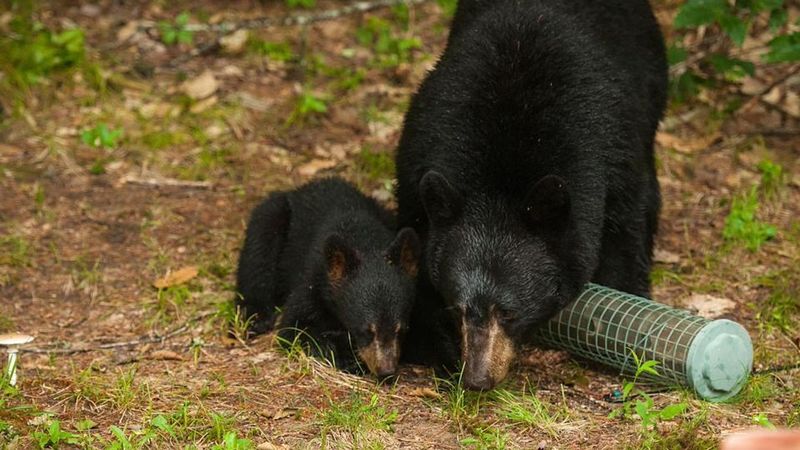
Fall is a busy eating season for Florida black bears, and that can matter for anyone with a yard. Bears live across much of Florida all year, but they spend more time looking for calories as cooler weather arrives.
Easy food around a home can give a bear a reason to stop by or hang around. Here is what is going on, what to check in your yard, and how to stay calm if a bear shows up.
Fall feeding sends bears in search of calories
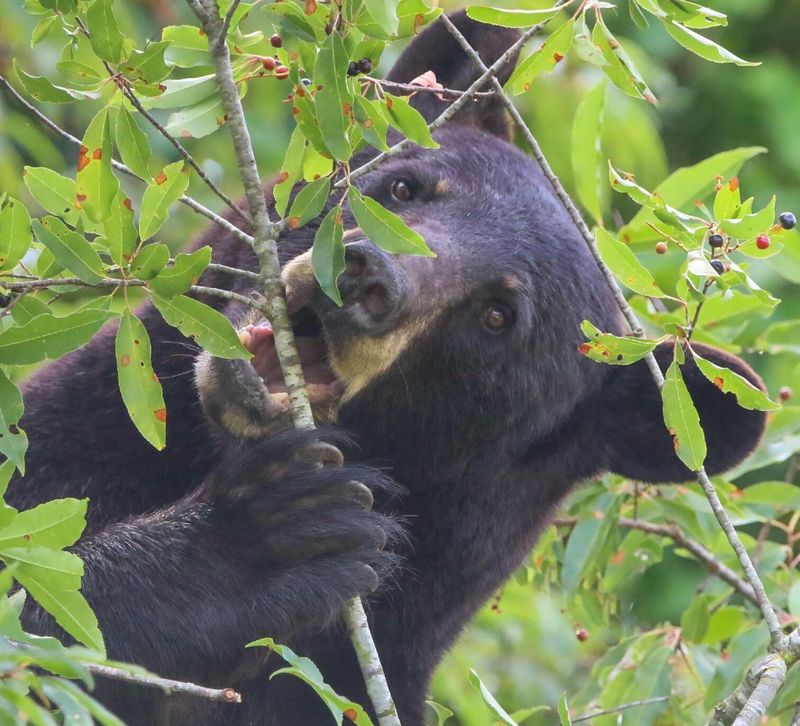
Biologists use the word hyperphagia for a simple idea: in fall, bears eat more to build up fat reserves. Florida’s wildlife agency says bears increase their fall feeding, and easy neighborhood foods can give them a reason to visit or linger near homes.
A bear’s menu in Florida is mostly natural. According to FWC’s biology page, diets change by season and region and include nuts, berries, vegetation, and insects.
Acorns, saw palmetto berries, and grubs in a rotting log are the kind of foods bears are built to find.
Human food is not something a bear needs. It simply happens to be packed with calories and sitting in a spot that takes little effort to reach.
A bear that is spending much of its day searching for food may notice an open trash can or a full bird feeder the way you would notice a free buffet.
Eating more is not the same as acting more aggressive. A hungry bear is mostly a busy bear, focused on finding calories and moving on.
Seeing one does not mean something is wrong, and most bears prefer to avoid people.
The good news is that this is one part of the picture you can influence. Food left outside is the piece a household controls, so that is where the rest of this guide spends its time.
A fall sighting does not prove your yard caused it
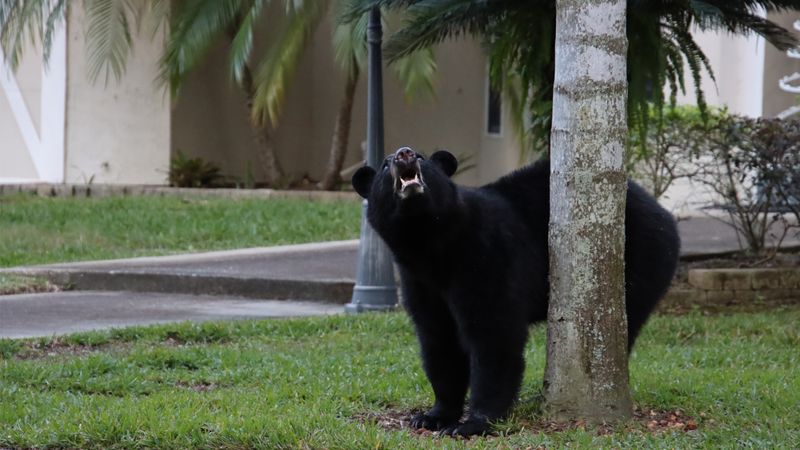
Seeing a bear in October does not mean the bear only just arrived, and it does not mean your yard is the reason. Bears live in Florida all year, and sightings can happen in any season.
Where you live matters a lot. FWC’s range map describes areas where bears are frequent, common, occasional, or rare, though bears can turn up almost anywhere in the state.
A homeowner near the Ocala National Forest and one in a far-off urban core are not equally likely to see a bear.
Natural food also shapes where bears go. A good acorn year or a berry-heavy palmetto stand can pull bears in one direction, and a poor year can send them searching somewhere else.
Habitat plays a part too. FWC research explains that fragmented habitat can bring bears into contact with people, roads, and human-sourced foods as they travel between remaining patches of woods.
A bear crossing a subdivision may simply be getting from one patch to the next.
So think of yard food as one possible attractant, not a verdict. Unsecured food can encourage a bear to visit or stay longer, but nobody can say it explains one particular visit.
Securing it is still smart because it removes a reason to linger, whatever brought the bear nearby in the first place.
Check garbage, pet food, and grills first
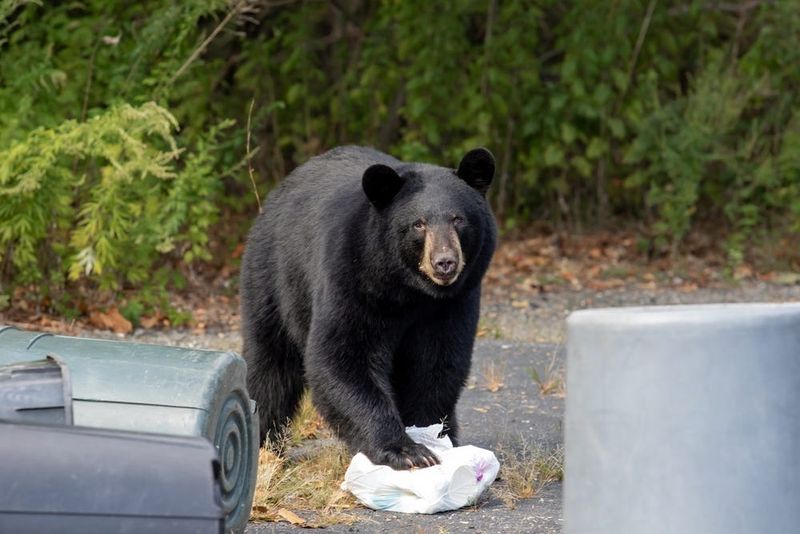
Walk your property at dusk and look for anything smelly. Three items top the list: garbage, pet food, and grills.
FWC’s fall guidance names garbage and pet food, and its general attractant advice also flags grills.
Garbage is the big one. A bag left by the garage or a can with a loose lid can send a strong scent across a neighborhood.
Store trash in a secure place, such as a garage or sturdy shed, until pickup day.
Pet food is easy to forget. A bowl left on the lanai overnight is a meal waiting to be found, and the same goes for open bags of kibble in a carport.
Feed pets indoors, and bring dishes in when mealtime is over.
Grills hold old grease and drippings that smell long after the cookout ends. A quick scrape and wipe after cooking helps, and so does a thorough cleaning every so often.
Then store the grill somewhere secure when you can, as FWC’s attractants page recommends cleaning and securing grills.
None of these habits take special gear. They take a few minutes, and they apply whether or not you have ever seen a bear nearby.
Birdseed and fallen fruit can also attract bears
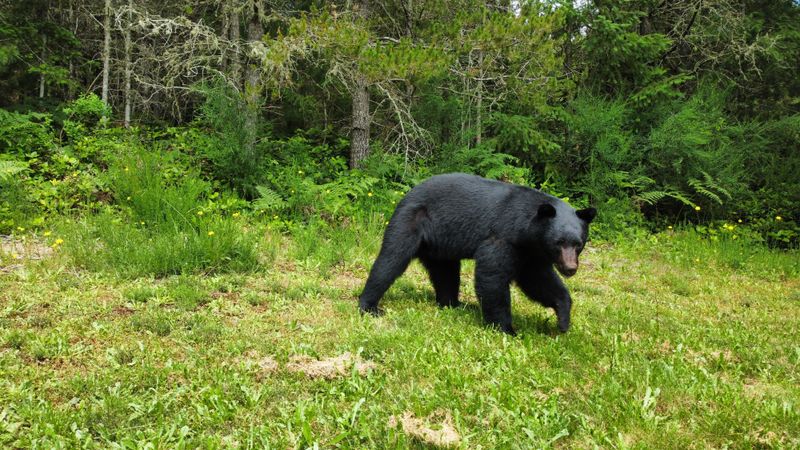
Backyard fruit trees and bird feeders feel like harmless parts of a Florida garden, yet both are food a bear can smell. Birdseed is rich in fat and easy to eat, and ripe fruit on the ground is an open invitation.
FWC’s attractants guidance says to remove feeders or hang them at least 10 feet above the ground and 10 feet from trees or structures. Hanging a feeder at that height does not guarantee a bear will leave it alone.
If a bear is getting into your feeder, take it down, and wait until the bear has moved on before putting it back.
Fruit calls for a steady routine. Pick ripe citrus, mangoes, loquats, persimmons, and figs as they mature, and rake up fallen fruit rather than letting it pile up.
FWC’s fall advice includes removing ripe and fallen fruit.
Add a few more spots to your yard audit. Wildlife or livestock feed should be stored in a secure building.
Compost piles with kitchen scraps can smell like a meal, so keep meat, grease, and cooked food out of them. Vegetable gardens can draw a bear when produce ripens, so harvest on time and clear dropped produce.
You do not have to give up the garden. Small changes to timing and storage keep the fun parts of your yard while taking away easy calories.
Make outdoor food harder for bears to reach
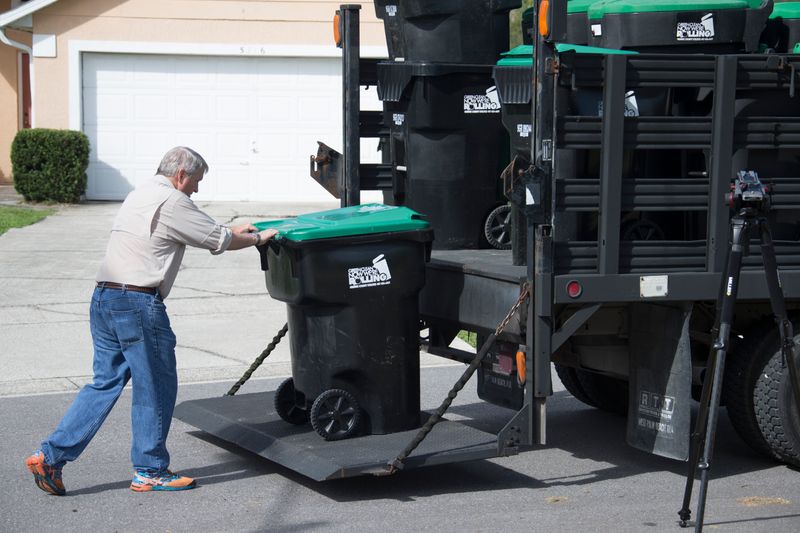
Once you have found the attractants, a simple routine keeps them under control. Keep garbage in a secure spot, then roll it to the curb on the morning of pickup instead of the night before.
Fewer hours at the curb means fewer chances for a bear to find it.
Keep feeding pets indoors, and bring in anything else that smells like food, from grill tools to recycling with food residue. FWC’s BearWise advice covers these steps.
A bear-resistant bin can help, but check with your waste provider before buying one. Some haulers have specific containers, rules, or equipment, and a bin that does not fit their system may not work.
Florida’s rules are worth understanding without worry. FWC says intentionally feeding bears is prohibited.
A separate provision covers food or garbage that attracts bears and creates a nuisance, and under Florida Statutes section 379.412 a prior written warning is required before a penalty under that provision.
In plain terms, a trash can left out once does not automatically make anyone a lawbreaker. Local rules may add their own requirements, so a quick call to your city or county is a good idea.
If a bear appears, keep your distance
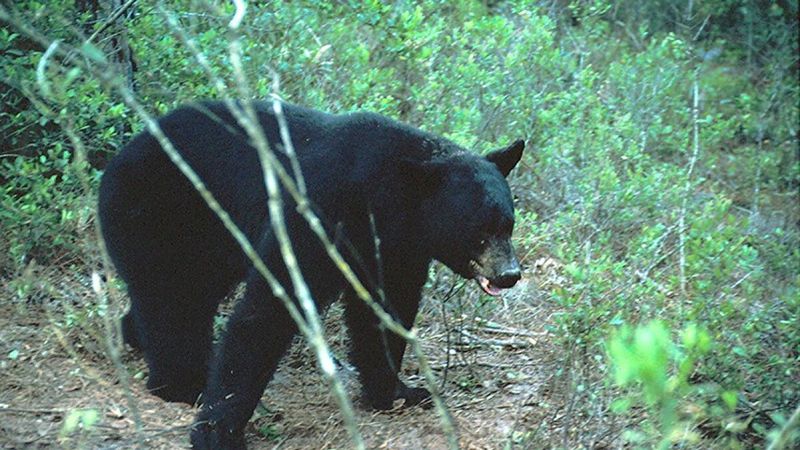
Most bear sightings end quietly, with the bear wandering off. Your job is to stay calm, keep your distance, and give the bear an escape route so it does not feel cornered.
Bring pets inside and let the bear leave on its own.
If a bear is close, FWC’s encounter guidance says to stand upright, speak calmly, and back away slowly. Do not run, and do not approach the bear.
Injuries are rare in Florida, and a bluff charge is not the same as an attack.
Do not try to scare a bear if it is a cub, up a tree, running away, or near a road. Pushing it in those situations can make things worse.
Scaring a bear also never replaces removing whatever food drew it close.
Report a bear that threatens people, pets, or livestock, or that damages property. Call the FWC wildlife alert line or your local FWC office so staff can respond.
Afterward, take a walk around your yard and tidy up anything that could hold a scent. Remember that you may never know exactly why a bear passed through, and that is fine.
Securing food is a good habit either way.
A quiet yard with nothing to eat is a boring stop for a bear, and boring is exactly what you want.