
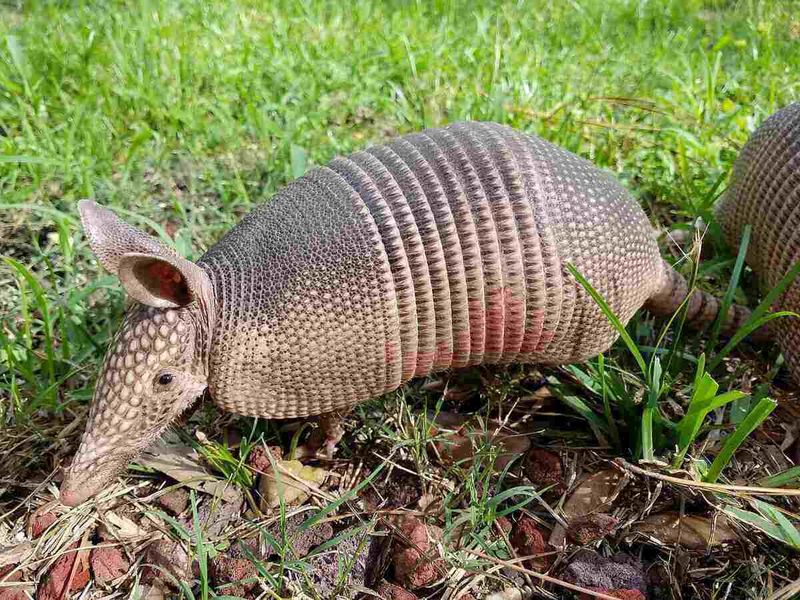
Armadillos can turn a neat Florida lawn into a patchwork of holes by morning. They are usually hunting grubs, worms, and other soil insects, so the best plan is to make your yard less easy and less inviting to dig.
Native plants can help by adding prickly edges, strong scents, dense roots, and tougher planting beds that do not feel like open buffet lines. Here are seven Florida natives that can help protect trouble spots while still fitting our sandy soil, heat, rain, and wildlife-friendly yards.
1. Saw Palmetto
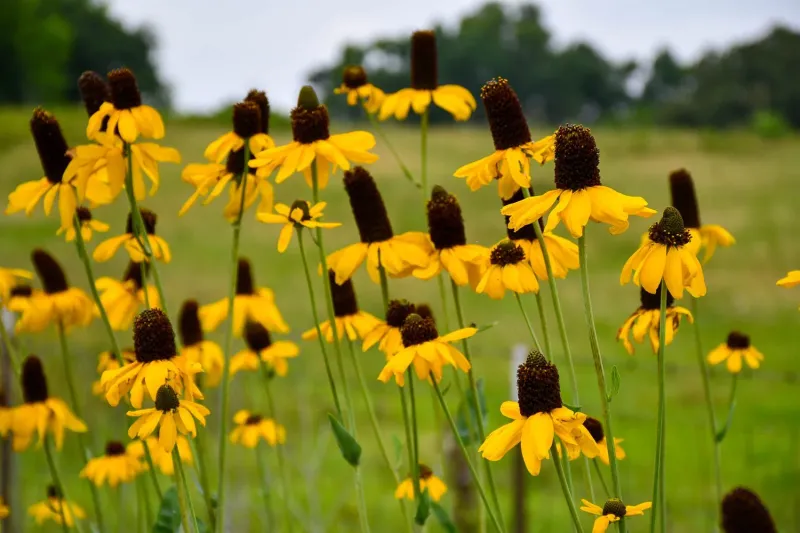
Picture an armadillo waddling toward your flower bed, then meeting a waist-high tangle of stiff fan leaves and sharp-edged stems. Saw palmetto is not a plant that politely steps aside, and that is exactly why it earns a place near lawn edges, fence lines, and mulched islands where digging keeps happening.
Native across much of Florida, saw palmetto handles sandy soil, salt spray in coastal spots, drought after establishment, and the kind of blazing sun that makes many ornamentals sulk. Its dense clumping habit can make open ground harder to access, which may discourage armadillos from nosing around the same soft patch night after night.
Use it as a living barrier rather than a single accent. A few plants grouped together can help protect the edge of a bed, especially when paired with pine straw or chunky mulch that dries faster than loose, grub-rich turf.
Give saw palmetto room, because it spreads slowly but steadily. The bonus is big: birds and other wildlife use it for shelter, so you get a tougher yard edge without turning your garden into a sterile fortress.
2. Coontie
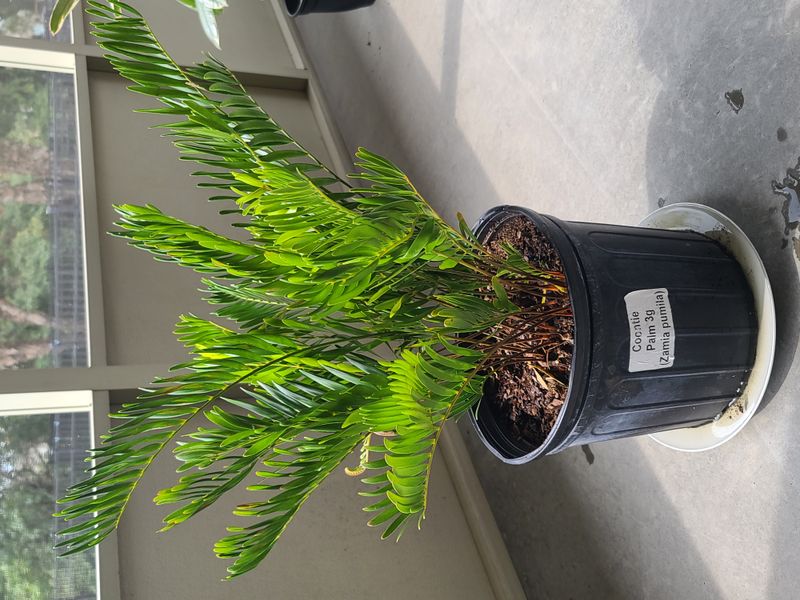
A neat little plant with ancient roots, coontie looks soft from a distance but forms a surprisingly useful low barrier. Its stiff, fern-like leaves create a textured planting strip that feels far less inviting than bare sand or thin St. Augustine turf.
Coontie is Florida’s only native cycad, and it is well suited to the dry, sandy conditions many homeowners battle. Once established, it asks for little water and stays tidy without constant pruning, which makes it a strong set-and-forget choice for beds near patios, walkways, and problem corners of the lawn.
Armadillos are not known for browsing coontie, and the plant’s dense crown can help protect soil from being easily pawed through. It works best when planted in groups, where the overlapping leaves reduce open gaps that invite nighttime rooting.
There is also a wildlife perk. Coontie is the host plant for the atala butterfly, a Florida conservation success story that gardeners love to see.
Planting it lets you address digging pressure while supporting a native insect that belongs here.
3. Prickly Pear Cactus
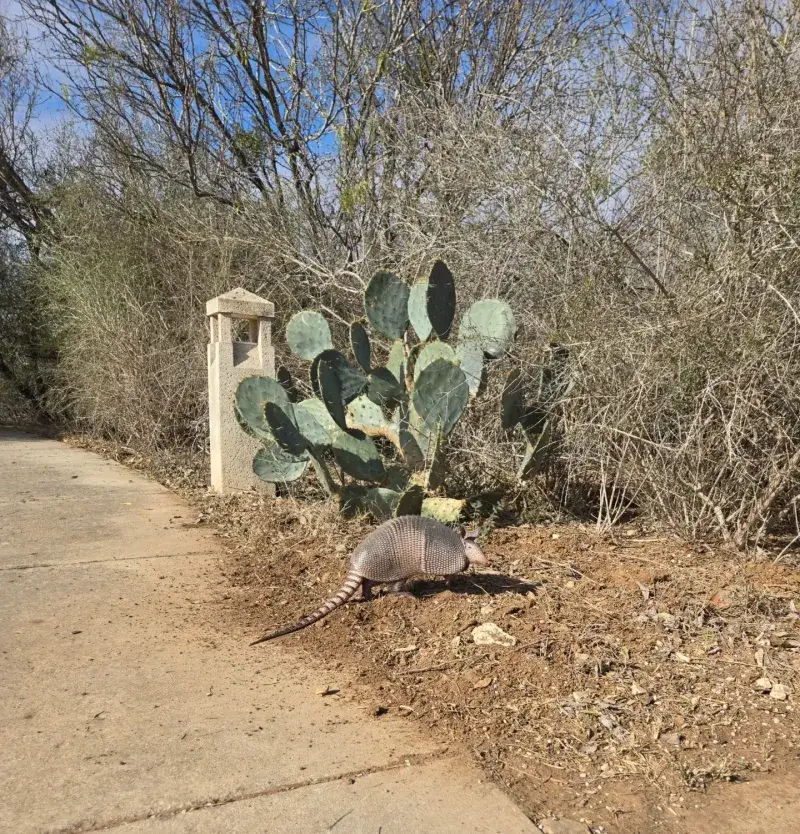
Few plants send a clearer message than prickly pear cactus. For a digger that explores with its nose and front feet, a patch of spiny pads is a strong reason to choose an easier route.
Florida has native prickly pear species that fit hot, dry, sandy places where irrigation is limited and grass often struggles. In full sun, prickly pear can become a low, defensive planting for narrow strips along driveways, mailbox beds, fence gaps, or the edge of a sunny lawn that armadillos keep tearing up.
The key is smart placement. Keep it away from children’s play areas, tight walkways, and spots where pets run, because the spines and tiny glochids can be painful.
In the right location, though, it can serve as a low-water, high-impact barrier that does not need pampering through a Florida summer.
Spring and summer flowers add a bright surprise, and the fruit can feed wildlife. For homeowners tired of replacing the same torn sod, prickly pear offers a practical trade: less soft open soil, more rugged native structure.
4. Beautyberry
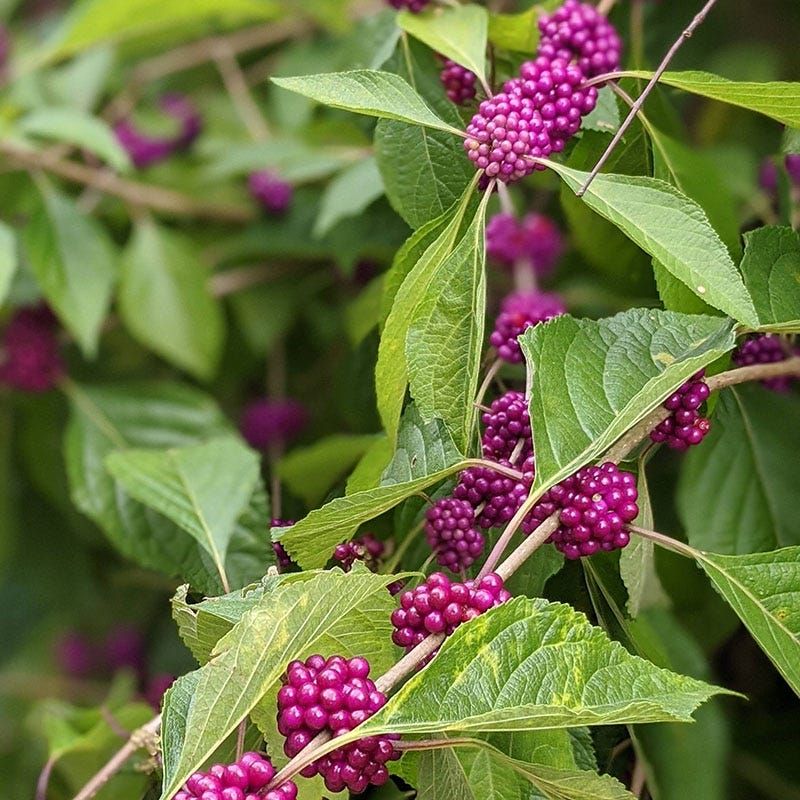
Every fall, beautyberry looks like it decorated itself for a neighborhood party. Those bright purple berry clusters get the attention, but the shrub’s real value in an armadillo-prone yard is its loose, branching bulk.
American beautyberry is native to Florida and adapts well to part sun, light shade, and average sandy soils. When planted in a small group, it fills space quickly enough to make a bed feel occupied rather than open and easy to dig.
That matters because armadillos often target exposed, insect-rich soil where they can move fast.
The leaves also have a noticeable scent when crushed, and gardeners often mention beautyberry in conversations about nuisance insects. While it is not a magic shield, its aroma and structure can be part of a layered plan that makes a yard less attractive to pests and the animals hunting them.
Place beautyberry along back fences, under high pine shade, or between lawn and natural areas. Birds relish the berries, so you get a living screen that helps soften digging pressure while bringing more native wildlife into view.
5. Yaupon Holly
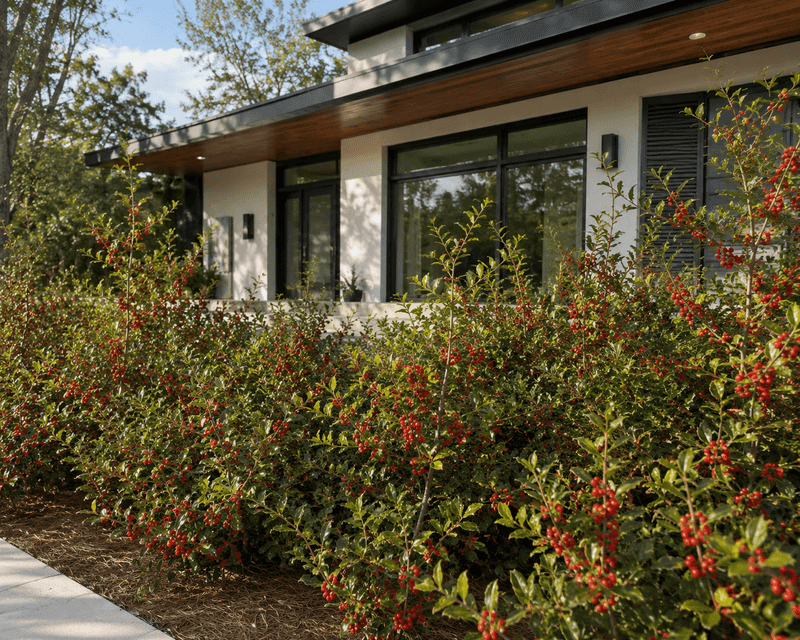
A good hedge can be more than pretty yard furniture. Yaupon holly gives Florida gardeners a tough evergreen wall that helps steer armadillos away from soft beds and narrow lawn passages.
This native holly tolerates heat, drought after establishment, periodic wet spells, and pruning, which makes it useful from North Florida into much of the peninsula. Its fine-textured branches can be clipped into a tidy hedge or allowed to grow in a softer, wildlife-friendly shape.
Either way, a dense row reduces the open access that digging animals prefer.
Yaupon holly is especially useful where armadillos enter from a wooded edge, drainage swale, or neighbor’s unfenced yard. Planting a line near the route can help break their path, particularly when combined with a fence apron, mulch, and fewer overwatered turf areas.
Female plants produce red berries that birds use, and the leaves contain caffeine, a quirky fact that connects yaupon to traditional Southeastern uses. For a Florida homeowner who wants a polished look with real backbone, this native shrub is one of the most practical choices.
6. Wild Coffee
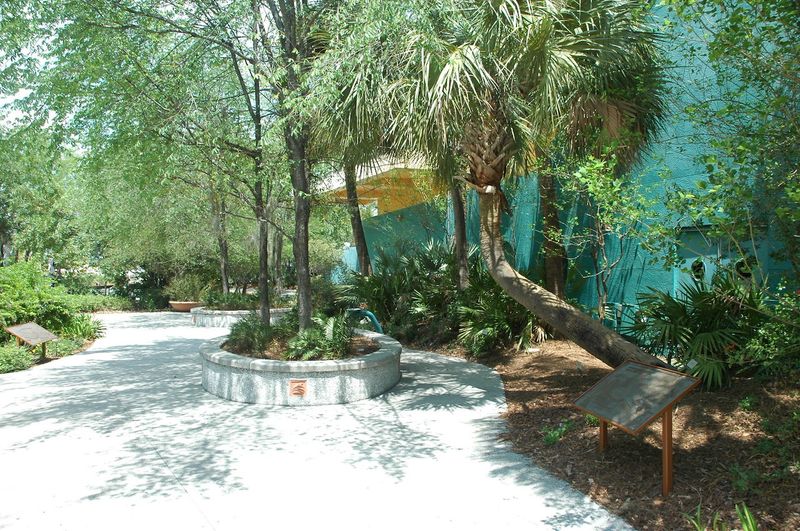
Shade can be a troublemaker in Florida yards, because thin grass leaves bare soil where armadillos can dig with ease. Wild coffee steps into those dim spots with glossy leaves, red berries, and a dense habit that makes the ground less exposed.
Native to Central and South Florida, wild coffee is a smart pick for shaded beds under oaks, palms, and larger shrubs. It prefers well-drained soil with some organic matter, so it pairs nicely with leaf litter and mulch rather than constant raking.
That natural cover can help reduce the soft, open soil conditions that invite nighttime rooting.
Wild coffee is not a true coffee plant for your morning cup, despite the name. Its small flowers support pollinators, and its berries attract birds, giving it a role beyond simply taking up space.
Use it in masses where turf has failed, especially along the shaded side of a house or beneath a canopy where irrigation keeps the soil bug-rich. Replacing weak grass with a layered native planting often does more good than fighting to keep a thin lawn alive.
7. Muhly Grass
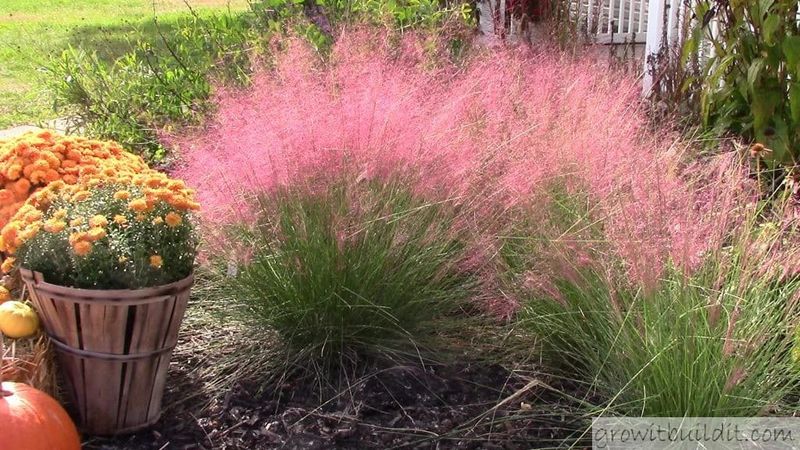
When muhly grass blooms, it looks like pink mist caught in the yard. Before the showy plumes arrive, though, the plant is already doing useful work with tough, wiry clumps that cover ground without much fuss.
Florida native muhly grass thrives in full sun and well-drained sandy soil, two conditions that describe many armadillo-damaged lawns. Its dense base helps hold soil and makes planting beds feel less like loose digging zones.
Unlike thirsty turf, established muhly usually needs little irrigation, which can also help avoid creating damp areas rich with grubs and worms near the surface.
Plant muhly in sweeps along sunny borders, driveway edges, or around open islands where armadillos keep testing the soil. It is not spiny like cactus or woody like holly, but its strength is coverage: it turns empty, tempting ground into a textured native planting.
Cut it back once a year before new growth pushes out, and otherwise let it handle Florida’s heat. For gardeners who want beauty, low maintenance, and a softer look than a prickly barrier, muhly grass is a smart finishing piece.