
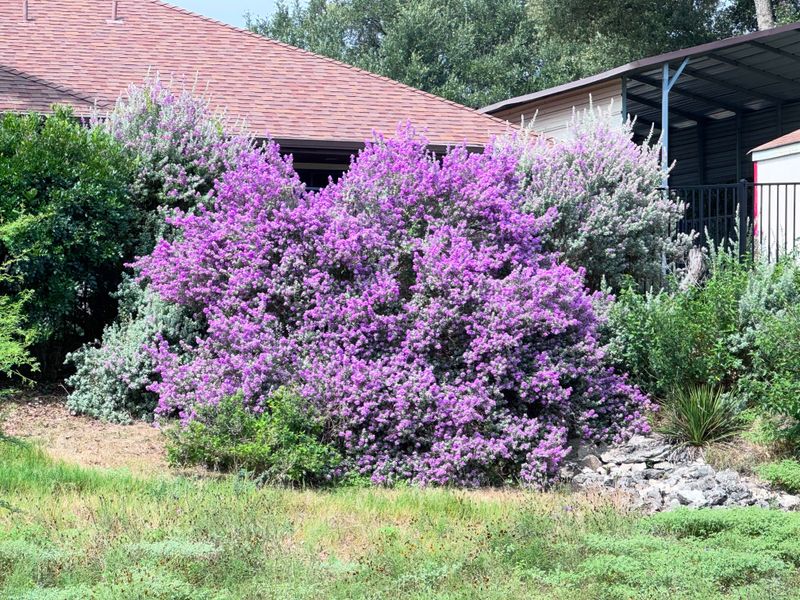
A lot of Texas gardeners have heard that a certain native shrub can keep scorpions away just by growing in the yard, and the idea is genuinely appealing. The plant in question is cenizo, also called Texas sage or Texas silverleaf, and it is a real Texas native with silver foliage, purple blooms, and a noticeable scent.
The problem is that no reliable research backs up the claim that its smell makes scorpions leave or stay out of a home. This article keeps cenizo’s well-earned gardening reputation intact while swapping the unsupported pest-control promise for prevention steps that actually work.
The scent claim does not hold up
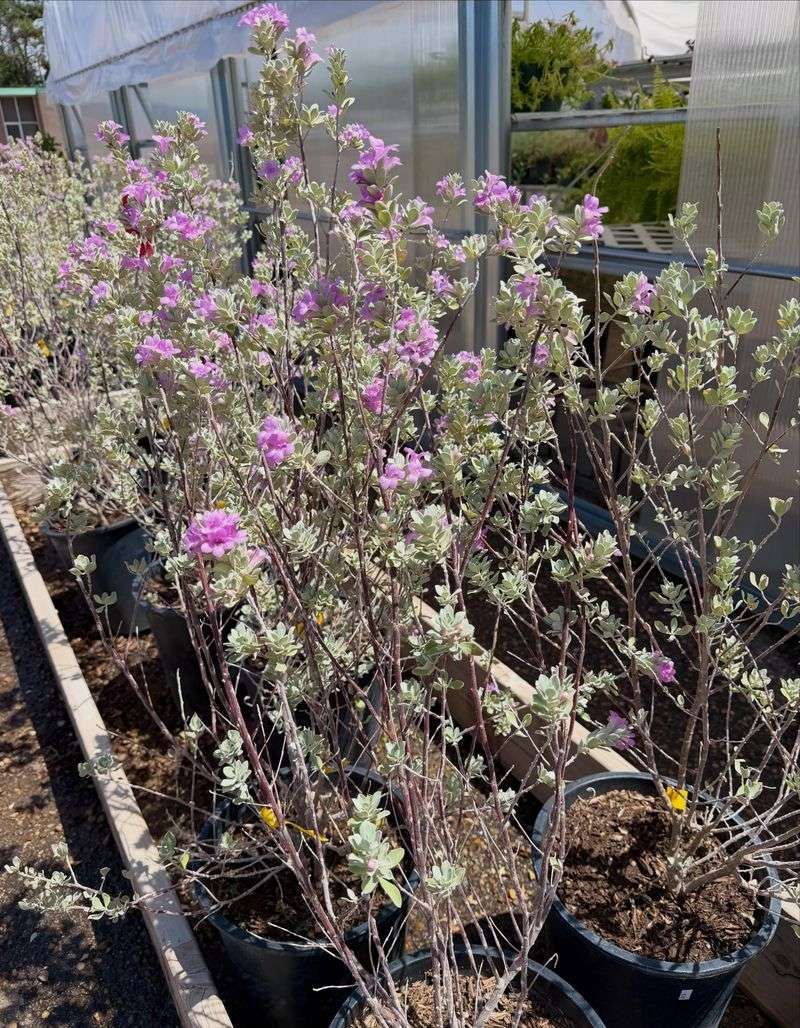
Cenizo has been circulating in Texas gardening circles as a plant whose scent supposedly sends scorpions packing, but that reputation runs well ahead of the evidence. No authoritative Texas extension source and no scorpion-specific field study found in the available research confirms that a living cenizo shrub repels scorpions, clears them from a yard, makes them hunt in a different location, or stops them from entering a home through its foundation.
The striped bark scorpion, which Texas A&M AgriLife Extension identifies as the only scorpion species found throughout the entire state, uses rocks, boards, debris, dead vegetation, and building gaps as habitat. Its movement decisions are driven by heat, prey availability, and structural access points, not by the presence or absence of an aromatic shrub nearby.
Researchers have chemically analyzed the volatile compounds in cenizo’s leaves and flowers, and published work on Leucophyllum frutescens essential oils confirms the plant has identifiable aromatic chemistry. That is a different thing entirely from proving that scorpions avoid a yard where the shrub is growing.
Chemical characterization tells us what compounds are present; it does not tell us how scorpions behave outdoors around a living plant in a Texas summer.
Cenizo is genuinely worth growing in the right Texas conditions, and the rest of this article explains exactly where and how to plant it. But the pest-control claim attached to its scent has no field evidence behind it, and relying on a shrub instead of proven prevention measures could leave a household exposed.
The sections ahead cover the plant’s real strengths, why aromatic chemistry is not the same as outdoor pest control, and what actually reduces scorpion pressure around a Texas home.
Meet cenizo, the Texas native behind the story

Leucophyllum frutescens goes by several names depending on who you ask: cenizo, Texas sage, Texas ranger, and Texas silverleaf are all common. One clarification worth making early is that despite the “sage” label, Leucophyllum frutescens belongs to the Scrophulariaceae family, not the Salvia genus, so it is not related to the culinary sage used in cooking.
The shared name causes real confusion, especially when pest-control advice gets copied from one plant to another without checking the source.
As a Texas native, cenizo earns its place on its own merits. Its soft silver-gray foliage reflects heat effectively, and after a rain or a rise in humidity it often bursts into a display of small purple, pink, or white flowers.
Texas A&M’s range plant database notes it as a native of dry, rocky, calcareous soils, primarily in the Trans-Pecos, Edwards Plateau, and Rio Grande Plains regions. Once established in suitable conditions, it handles drought and triple-digit Texas heat with minimal fuss.
The aromatic quality is real. Crushing a leaf or brushing against a branch releases a noticeable scent, and the plant’s volatile compounds have been documented in chemical analyses.
That aromatic character is part of why the scorpion story spread, since it is easy to assume a strong plant smell must be doing something to insects or arachnids nearby.
According to the Native Plant Society of Texas, cenizo is also a pollinator plant, supporting bees and butterflies when it blooms. The Texas A&M AgriLife Earth-Kind Plant Selector lists it as a low-water landscape choice for appropriate regions.
Plant it because it fits your site and rewards your yard with color and wildlife value, not because of a pest-control promise the research cannot support.
Aromatic chemistry is not field proof

Knowing that cenizo contains aromatic volatile compounds is genuinely interesting plant science, but it does not answer the practical question of whether a scorpion walking along a Texas foundation will turn around because of the shrub growing nearby. The chemical analysis of Leucophyllum frutescens essential oils identifies what compounds are present in extracted material, not what happens in an outdoor setting where scent behaves very differently.
Outdoor scent concentration is shaped by factors that a lab extraction cannot replicate. Wind disperses volatiles rapidly and unpredictably.
High summer temperatures in Texas accelerate evaporation, but they also move air across a yard in ways that make consistent scent coverage around a foundation essentially impossible. Rainfall, plant condition, cultivar variation, and whether the leaves are intact or physically damaged all affect how much aromatic compound actually reaches the surrounding air at any given moment.
A related point: even if a concentrated essential oil showed some effect on a laboratory arthropod under controlled conditions, that result would not automatically transfer to a living shrub growing outdoors in Texas heat. The concentration of volatiles a scorpion might encounter while crossing a yard is orders of magnitude lower than what a lab study uses, and the conditions are entirely different.
No scorpion-specific field trial found in the research establishes a protective planting distance, a required plant density, a duration of effect, or a measurable reduction in the number of scorpions entering a home. Cenizo’s documented aromatic character is a real plant trait worth appreciating.
It is just not evidence that the shrub functions as a scorpion deterrent when rooted in a garden bed. Those are two separate claims, and only the first one has support.
Choose the planting site for the plant’s needs

Texas is not one climate or one soil type, and cenizo is not a plant for every corner of the state. Its native range centers on the Edwards Plateau, Trans-Pecos, and Rio Grande Plains, where soils tend to be dry, rocky, and alkaline.
Gardeners in those regions who can offer sharp drainage and minimal supplemental water will get the best results. The Native Plant Society of Texas notes that cenizo struggles in poorly drained sites, and overwatering is one of the fastest ways to kill an otherwise tough plant.
Before planting anywhere near a structure, consider drainage carefully. A spot that collects water after rain, sits in heavy clay, or receives regular irrigation from a nearby lawn zone is likely to produce a stressed, root-rotted shrub rather than a healthy one.
The Earth-Kind Plant Selector from Texas A&M AgriLife can help confirm whether cenizo is appropriate for your specific county and site conditions before you invest in the plant.
Native status and aromatic foliage do not automatically make a shrub a good foundation planting. Any dense shrub grown too close to a wall, allowed to contact siding or rooflines, or kept moist by irrigation can create the kind of sheltered, humid microhabitat that scorpions and other pests actually prefer.
Texas A&M’s scorpion guidance specifically recommends pruning vegetation away from structures and keeping the area around a foundation clear.
A practical rule: give cenizo room to grow to its natural size (often 5 to 8 feet tall and wide depending on cultivar) without pressing against the house. Plant it where its silver foliage and seasonal blooms can be appreciated as a landscape feature.
Texas A&M’s range plant resource confirms it performs best with full sun and excellent drainage, conditions that are easier to achieve in an open garden bed than against a north-facing or irrigated foundation planting.
Make the foundation less inviting
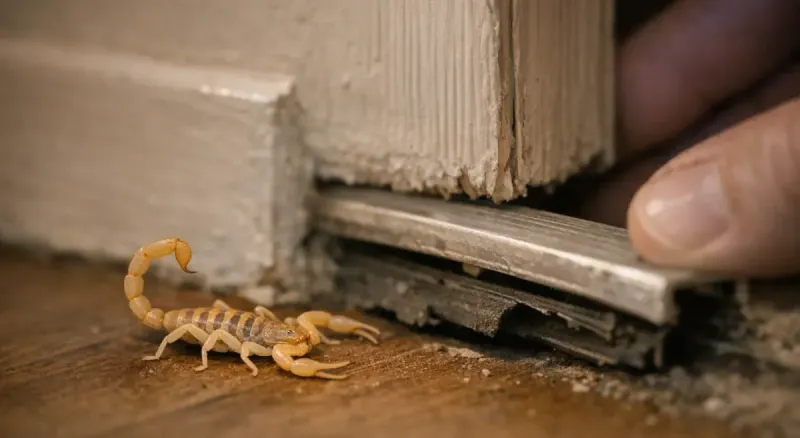
Reducing scorpion pressure around a Texas home comes down to removing the conditions they need: cover, moisture, prey, and access to the inside. The striped bark scorpion, which occurs statewide, regularly hides under rocks, boards, lumber, leaf litter, and dead vegetation.
Clearing those materials from the perimeter of a structure is one of the most direct actions a homeowner can take, and it works regardless of what plants are growing nearby.
Start with the ground-level perimeter. Remove any stacked wood, stored materials, loose stones, bricks, and debris within several feet of the foundation.
Keep grass trimmed short so the transition zone between lawn and house stays open and dry. Texas A&M AgriLife Extension’s scorpion management guide puts habitat removal and exclusion at the top of the prevention list, ahead of any chemical or planting approach.
Sealing entry points is the next layer. Scorpions can enter through foundation cracks, gaps around pipes and conduit, poorly fitted door sweeps, loose window screens, roof eaves, attic vents, and plumbing penetrations.
Caulking cracks, installing door sweeps, replacing torn screens, and weather-stripping frames around doors and windows all reduce the number of routes available. UC Statewide IPM’s scorpion resource reinforces that structural exclusion is more reliable than relying on repellent plants or perimeter sprays alone.
Outdoor lighting deserves attention too. Lights that attract flying insects create a reliable prey source for scorpions hunting near the structure after dark.
Reducing the number of bright white lights on exterior walls, moving lights away from entry points, or switching to yellow-spectrum bulbs in scorpion-prone areas can lower insect activity and, in turn, make the area less productive hunting ground. Combined with cleared harborage and sealed openings, these steps address the actual reasons scorpions approach a home, without depending on any plant’s unproven scent.
Reduce encounters and respond safely
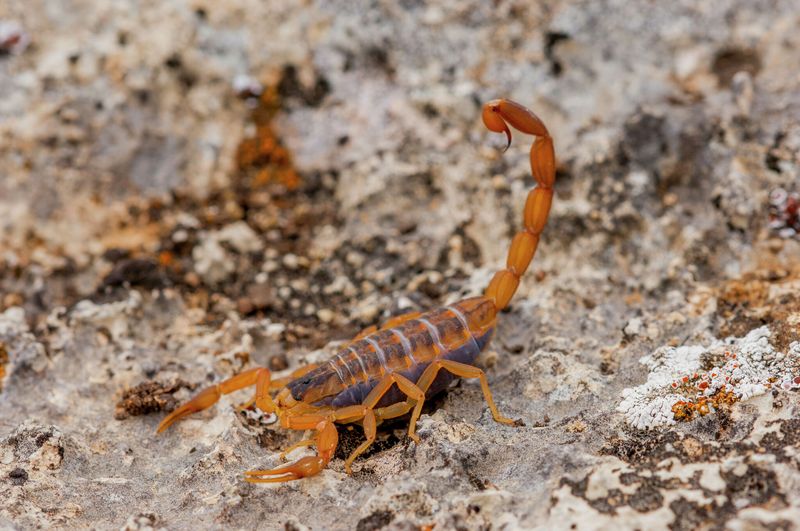
Personal habits matter as much as yard conditions when it comes to avoiding scorpion stings in Texas. Wearing shoes or boots any time you step outside at night is one of the simplest and most effective precautions, since scorpions are most active after dark and can be nearly invisible on concrete or soil.
UC Statewide IPM and CDC guidance for outdoor workers both recommend shaking out shoes, boots, and clothing before putting them on, since scorpions can hide inside footwear left outdoors or on a garage floor.
Wear gloves when moving rocks, shifting lumber, turning compost, or working in areas with ground-level debris. Use a tool rather than bare hands to move objects that have been sitting undisturbed for a while.
These habits apply year-round in Texas, but especially during warm months when scorpion activity peaks.
If pesticides become part of the plan, keep them in a supporting role rather than the primary strategy. Texas A&M’s extension guidance describes exterior applications around foundations as one component of an integrated approach, but labels change and not every product is appropriate for every surface, pet situation, edible garden, or proximity to water.
Always read and follow the product label completely. Do not apply undiluted essential oils, homemade mixtures, or unlabeled compounds around a foundation, particularly where children, pets, or pollinators are present.
When a sting happens, CDC guidance recommends applying ice wrapped in a cloth to the affected area without submerging it in ice water, staying calm, and contacting a qualified health-care provider or the Poison Control Center at 1-800-222-1222. Seek urgent medical help if symptoms beyond local pain appear, including trouble breathing, convulsions, staggering, drooling, or muscle twitching.
Children and older adults are at higher risk for serious reactions and should be evaluated promptly after any sting.
Plant cenizo for the landscape, not the promise
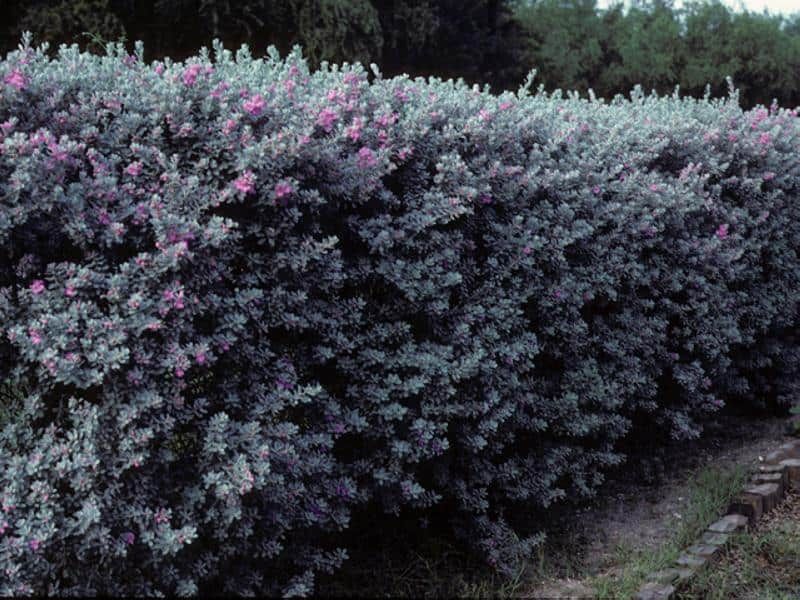
Cenizo is a plant that earns its place in a Texas yard on straightforward terms. The silver foliage handles reflected heat, the flowers respond to humidity with a reliable seasonal show, and an established shrub in the right site asks for almost nothing in the way of water or fertilizer.
Texas A&M’s range plant resource confirms those qualities for gardeners in the Edwards Plateau, Trans-Pecos, and Rio Grande Plains regions where the plant is native and best adapted.
What cenizo cannot do is substitute for a real prevention plan. Counting on its scent to redirect scorpions means skipping the steps that actually work: clearing harborage from the perimeter, keeping vegetation trimmed away from the structure, sealing foundation and wall openings, managing insect-attracting lights, and using safe personal precautions when working outdoors.
Texas A&M AgriLife Extension puts those measures at the center of scorpion management, and no aromatic plant changes that priority order.
Choose cenizo because it fits your soil, your drainage, your region, and the look you want from a low-water Texas garden. A shrub planted for the right reasons, in the right spot, with room to grow away from the wall, is a genuinely good addition to a Texas landscape.
The scorpions will stay away or not based on what you do with the cracks, the debris, and the lights.