
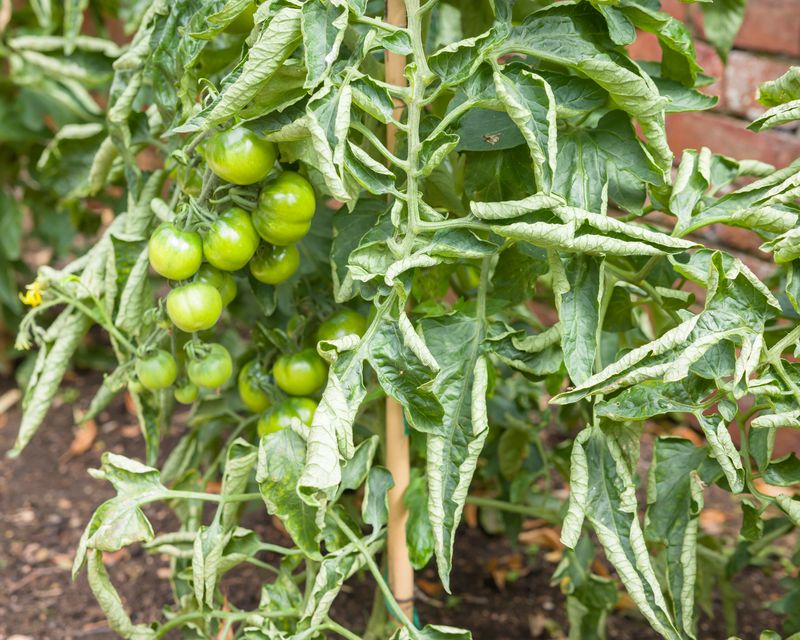
Walking out to your tomato plants on a blazing August afternoon to find the lower leaves curled into tight tubes can send any gardener into a panic. Before you reach for a spray bottle or start pulling plants, take a breath – the culprit is often a harmless stress response called physiological leaf roll, not a disease.
Knowing what to look for, and what questions to ask first, can save your plants and your nerves.
The Full Pattern Matters More Than the Curl Alone
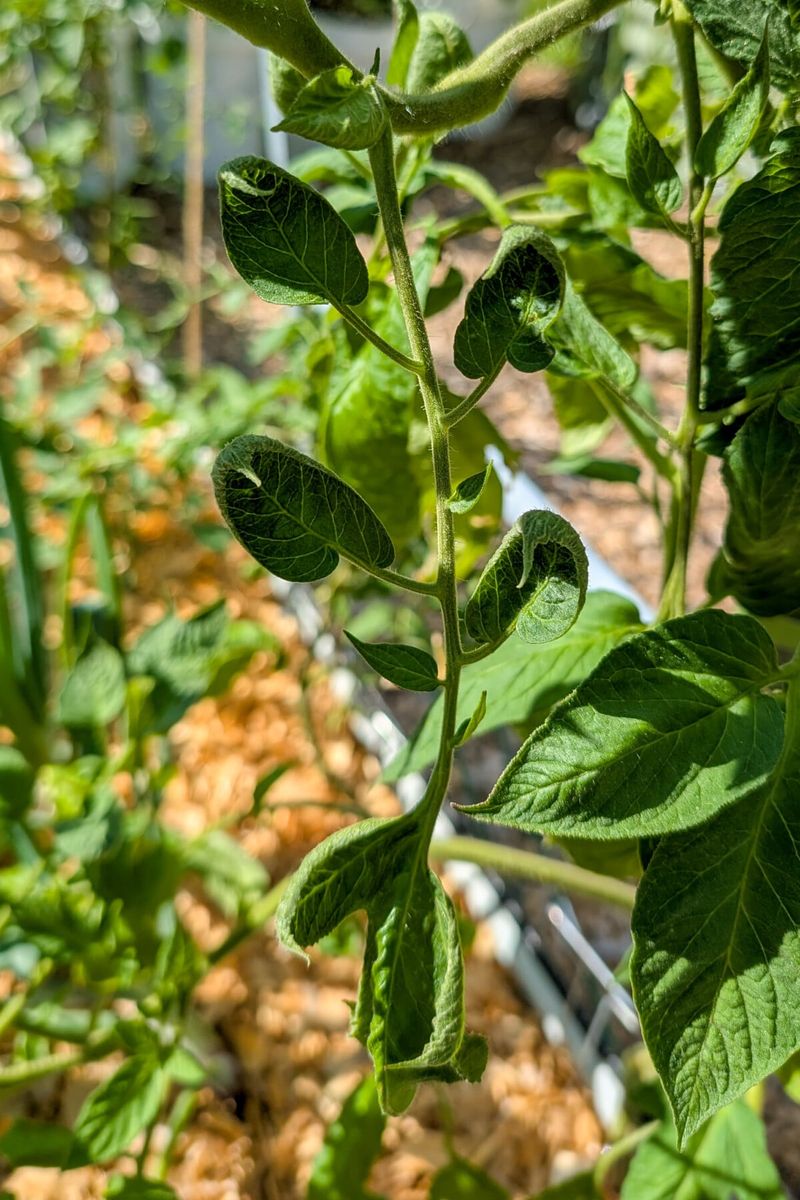
Curling tomato leaves alarm most gardeners, but the shape of the curl is only one piece of the puzzle. Physiological leaf roll has a recognizable pattern: older or lower leaves on the plant show symptoms first, with leaflets rolling upward and inward until the margins may touch or even overlap along the midrib.
The affected leaves feel firm, thickened, or leathery to the touch, yet they stay generally green rather than yellowing or developing spots.
When the rest of the plant looks normal – full-sized, actively growing, and producing flowers or fruit without obvious decline – that overall picture strengthens the case for a noninfectious disorder rather than a pathogen. University of Minnesota Extension’s tomato disorders guide describes this pattern and notes that physiological leaf roll involves no infectious agent and typically does not reduce growth, fruit quality, or yield when the underlying stress is addressed.
Here is a quick visual checklist before changing anything about your plant’s care. First, confirm that rolling starts on the lower or older foliage, not the newest growth at the top.
Second, check that the affected leaves are green and firm, not yellow, mottled, spotted, or wilted. Third, look at the whole plant – if it is otherwise a normal size, still setting fruit, and showing no widespread decline, physiological leaf roll becomes a stronger possibility.
Even so, heat and inward rolling alone do not prove this diagnosis, especially in Southern gardens. Florida and Texas gardeners face real pressure from tomato yellow leaf curl virus, herbicide drift, and other diseases that can look similar at a glance.
Match the full pattern before drawing any conclusions.
Late-Summer Stress Can Trigger Physiological Leaf Roll
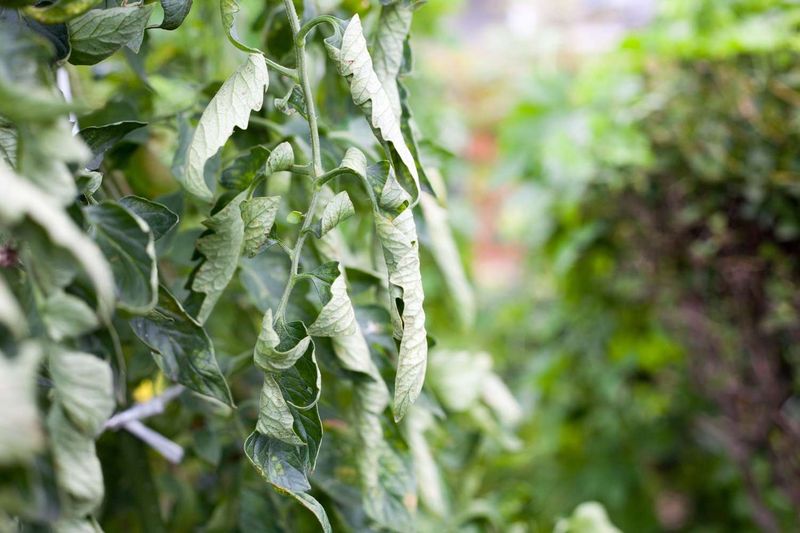
Physiological leaf roll is a noninfectious disorder, meaning no fungus, bacterium, or virus is involved. Instead, it appears when the plant is under one or more environmental or cultural pressures.
Hot, dry weather and drought are among the most commonly cited triggers, but the list is longer than most gardeners expect.
Sharp swings between dry and wet soil – the kind that happen when rain arrives after a dry stretch, or when irrigation is irregular – are associated with the disorder. Prolonged wet roots during periods of high heat can also play a role, as can severe pruning, root disturbance from deep cultivation, transplant stress, and rapid growth flushes.
Some extension sources note that excess nitrogen or a phosphorus imbalance may contribute in certain cases. Clemson Cooperative Extension’s leaf roll fact sheet points out that cultivar differences matter too – some varieties are simply more prone to rolling than others, so two plants side by side may respond differently to the same conditions.
Texas A&M AgriLife Extension material notes that the exact cause of physiological leaf roll is not fully known, and extension sources describe the rolling as a response that may help the plant conserve moisture – though that mechanism is not fully settled. No single trigger explains every case, and the disorder can appear even when water management seems reasonable, particularly if pruning or root stress has occurred recently.
Understanding the range of possible triggers helps gardeners resist the impulse to fix only one variable, such as watering, while overlooking others like recent staking, transplanting, or aggressive suckering in the middle of a heat wave.
Check the Root Zone Before You Add Water
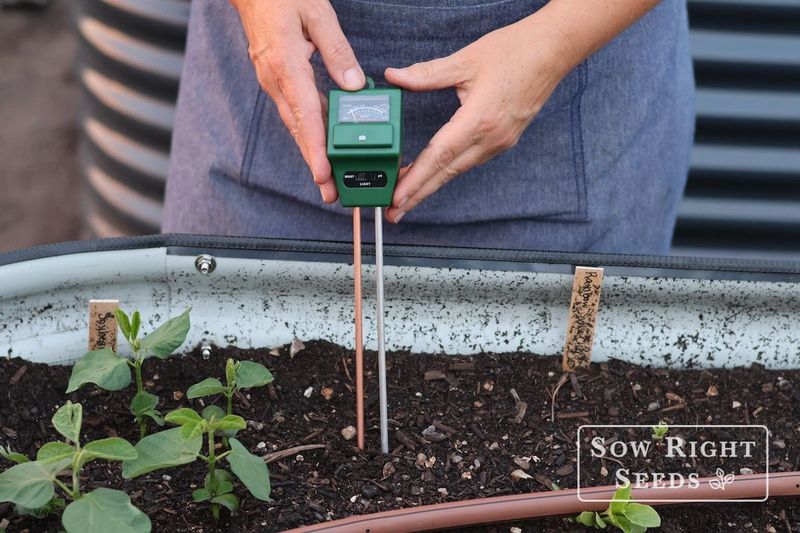
The most common mistake gardeners make when they see curled tomato leaves is reaching for the hose without checking the soil first. Leaf curl does not reliably tell you whether the root zone is dry or wet – both conditions can produce the same rolling symptom.
Judging moisture by the leaves alone leads to overwatering just as often as it leads to the right call.
The better first step is to push a finger or a trowel several inches below the soil surface near the plant’s root zone. If the soil at that depth feels dry and crumbly, the plant likely needs water.
If it feels damp, moist, or even soggy, adding more water will not help and may make things worse by keeping roots in anaerobic conditions. Clemson Extension notes that excessively wet soil combined with high temperatures is one of the documented triggers for physiological leaf roll, so saturated roots are not a safe starting point for more irrigation.
When the root zone is genuinely dry, water thoroughly and deeply rather than applying a quick, shallow sip. Oklahoma State University Extension’s home-garden tomato guide recommends watering deeply enough to wet the full root zone, because light, frequent watering encourages shallow roots that are more vulnerable to both drought and heat stress.
If the soil is already saturated, hold off on watering, check that the bed or container drains properly, and give the root zone time to reach an appropriate moisture level before irrigating again.
Sandy soils, containers, and raised beds in extreme heat may dry out faster than in-ground clay soils, so adjust how often you check rather than following a fixed schedule.
Stabilize Moisture Without Keeping Soil Constantly Wet
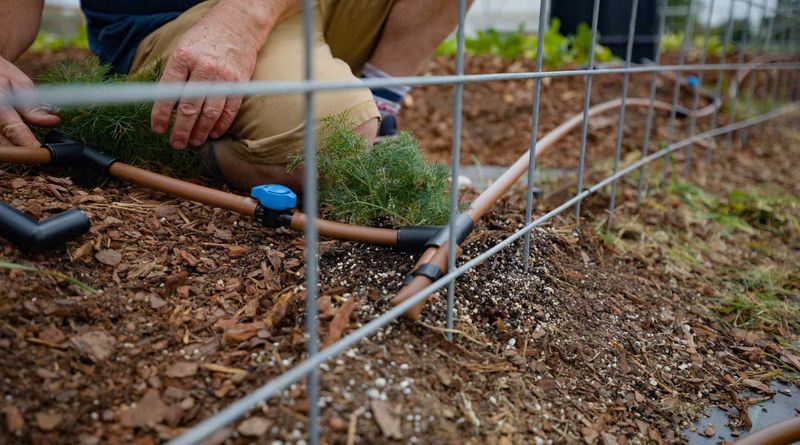
Once you know the root zone is dry and you have watered deeply, the next goal is keeping conditions more stable going forward. Consistency matters more than any single watering event.
A rough general baseline for established tomatoes is about 1 inch of rain or irrigation per week, but that figure needs adjustment for your specific setup. Sandy soils and containers lose moisture faster and may need water more frequently, while heavy clay holds water longer.
Rainfall counts toward the total, so check what has actually fallen before turning on the hose.
Mulch is one of the most effective and lowest-effort tools available. A 2 to 3 inch layer of straw, wood chips, or shredded leaves spread around the base of the plant – kept a few inches back from the stem itself – slows evaporation, moderates soil temperature, and helps buffer the sharp moisture swings that can trigger leaf roll.
University of Minnesota Extension’s growing tomatoes guide recommends mulching around tomato plants to conserve moisture and reduce temperature stress at the root zone.
Drip irrigation or a soaker hose delivers water directly to the soil surface, keeps foliage dry, and makes it easier to apply a consistent amount each time. When overhead watering is the only option, morning is the better time – foliage dries out during the day, which reduces the risk of fungal problems.
Avoid watering in the evening when leaves stay wet overnight.
Even moisture does not mean saturated soil. The goal is to avoid both prolonged drought and waterlogging, not to keep the root zone continuously damp.
Roots need air as well as water, and consistently soggy conditions can damage roots and set up disease problems that compound the original stress.
Reduce Cultural Stress Before Reaching for Products
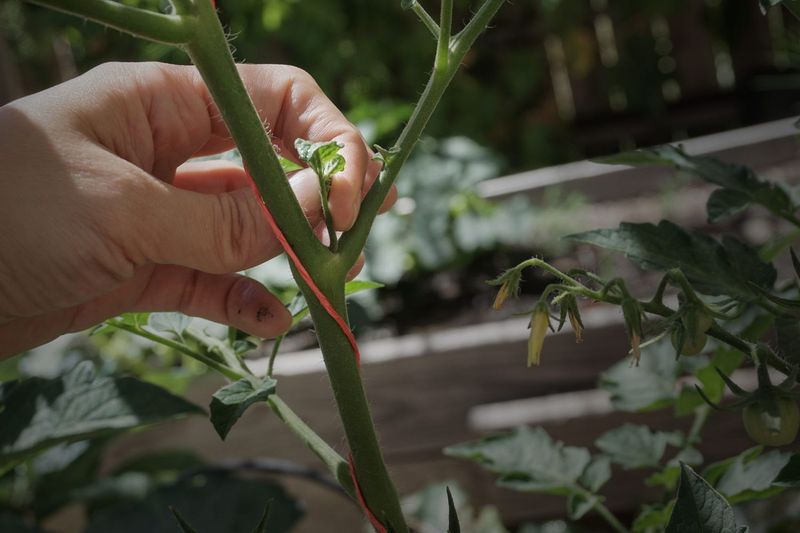
Correcting soil moisture is only part of the picture. Several common garden habits can trigger or worsen physiological leaf roll, and addressing them costs nothing and adds no risk to the plant.
Severe pruning – removing large numbers of suckers or leaves in a single session during extreme heat – is one of the more overlooked contributors. When a plant loses significant leaf area suddenly, it redirects resources rapidly, which can stress the system and show up as rolling on nearby foliage.
Spacing out pruning into smaller sessions, or pausing aggressive suckering during the hottest weeks, gives the plant time to adjust.
Deep cultivation near the base of the plant is another common source of root disturbance. Tomato roots spread widely and sit relatively close to the surface, so hoeing or digging within a foot or two of the stem can sever roots and trigger a stress response.
If you need to weed near the plant, pull by hand or use a shallow tool rather than turning the soil.
Recent staking, transplanting, or container repotting can also explain why leaf roll appears when it does. When you see rolling after one of those events, the timing itself is a diagnostic clue worth noting before assuming the cause is moisture alone.
Products are a different matter. University of Minnesota Extension makes clear that physiological leaf roll requires no direct treatment.
Extra nitrogen fertilizer is not a remedy and may actually contribute to the problem by pushing rapid, soft growth. Calcium sprays are sometimes marketed for tomato leaf symptoms, but they are not established as a treatment for leaf roll – calcium interventions are more commonly discussed for blossom-end rot, which is a separate fruit disorder.
Fungicides and insecticides have no role when the symptom pattern matches a noninfectious stress response. Reserve any product application for a situation where a specific pest, disease, or nutrient problem has been clearly identified and the product is appropriate for that confirmed issue.
Use New Growth and Fruit Set as Separate Recovery Signals
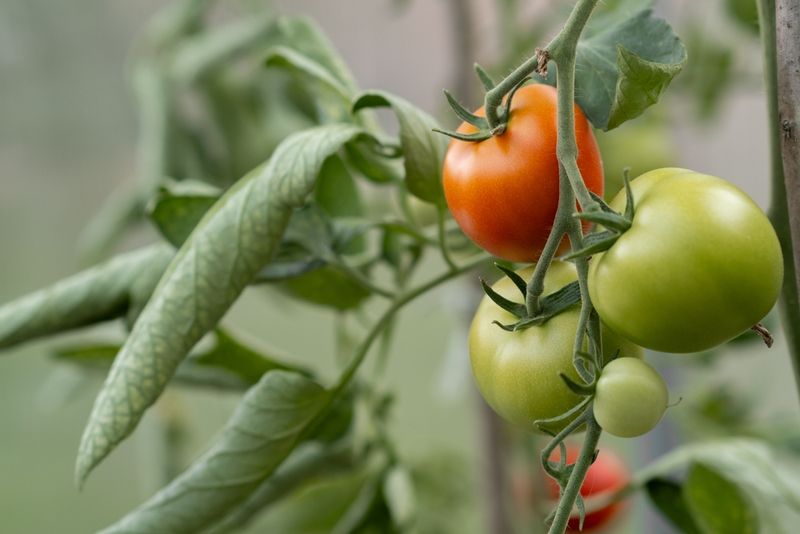
After correcting soil moisture and reducing cultural stress, many gardeners expect the curled leaves to flatten back out quickly. That expectation sets up frustration.
Physiological leaf roll generally does not require direct treatment, and the disorder itself is not what needs to be fixed – the underlying conditions are. Existing rolled leaves may stay rolled even after conditions improve, particularly when the rolling is well established.
UC IPM notes that symptoms may ease when temperatures moderate and soil moisture stabilizes, while University of Minnesota Extension acknowledges that rolled leaves may not fully unroll. The safest expectation is that stress reduction protects new growth and may improve mild cases, but already rolled leaves should not be counted on to recover their original shape.
The better recovery signal to watch is new growth at the top of the plant. If the newest leaves are emerging normally sized, green, and flat, that is a meaningful sign that conditions are improving and the plant is not under a worsening or infectious stress.
Continued flower production and fruit development are also positive indicators that the plant is functioning despite the lower leaf appearance.
Fruit set is a separate concern worth understanding on its own terms. High temperatures can reduce pollination and fruit set even when leaf roll itself is harmless.
UF/IFAS greenhouse tomato production research identifies temperatures above approximately 90 degrees Fahrenheit as capable of causing poor pollination and reduced fruit set, though that finding comes from controlled greenhouse settings and should not be applied as a rigid outdoor threshold for every home garden situation. Reduced fruit during a heat wave does not confirm that leaf roll is the problem – the two issues can occur independently.
New Leaves and Other Warning Signs Require Diagnosis
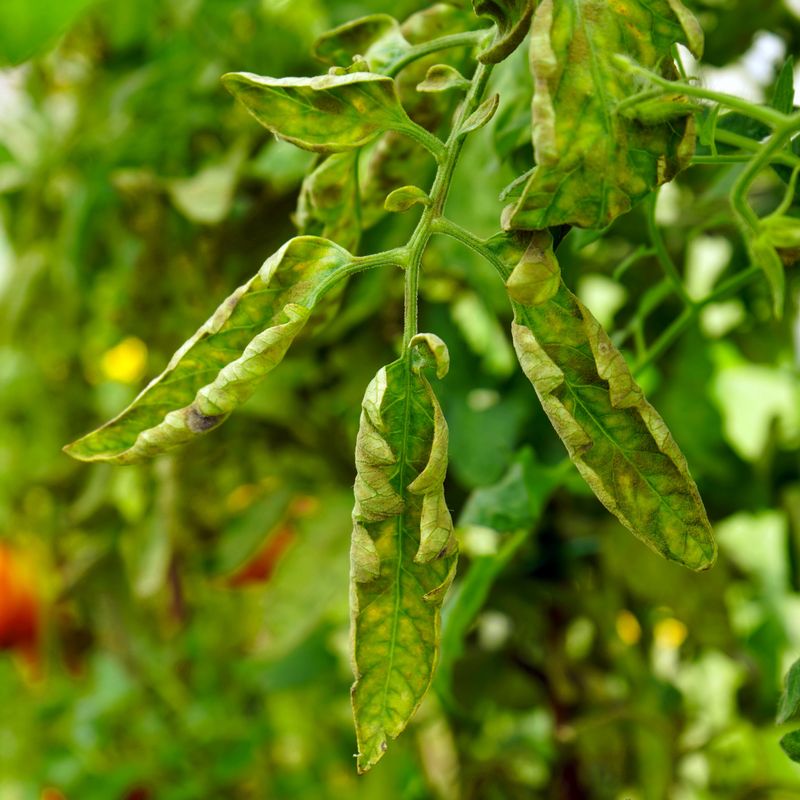
Physiological leaf roll stays on the older, lower foliage. When curling, distortion, or discoloration moves into the newest growth at the top of the plant, that location shift is one of the clearest signals that something else is going on and closer diagnosis is needed.
Tomato yellow leaf curl virus is a serious concern for Florida gardeners in particular. It is transmitted by silverleaf whiteflies and causes upward curling or cupping of newer leaves along with yellowing leaf margins, reduced leaf size, stunting, flower drop, and poor fruit set.
UF/IFAS extension material on common tomato diseases in Florida describes the virus and its whitefly vector as an important diagnostic possibility whenever new-growth symptoms appear. If you see small whiteflies on the undersides of leaves, treat that as a red flag rather than a minor nuisance.
Herbicide injury is another possibility that gardeners in both Florida and Texas should keep in mind. Tomatoes are unusually sensitive to 2,4-D, dicamba, and related compounds that are widely used in lawn care and agriculture.
Texas A&M AgriLife Extension’s guide on tomato leaf twisting and curling explains that herbicide injury often produces twisted, cupped, narrow, or strap-like new growth rather than the uniform inward rolling seen with physiological leaf roll. Symptoms concentrated on one side of the plant, or a pattern that starts after a nearby lawn or field was treated, raise suspicion of drift or soil contamination.
Other warning signs that call for a closer look rather than reassurance include yellow or light-green mottling, severe stunting, very small or strap-like leaves, leaf spots, lesions, or necrosis, unusual fruit markings, widespread plant decline, or plant death. Any of those features alongside leaf curling means the symptom pattern no longer fits a simple stress response and warrants a call to your local cooperative extension office or a plant diagnostic lab.
Follow a Simple Decision Path
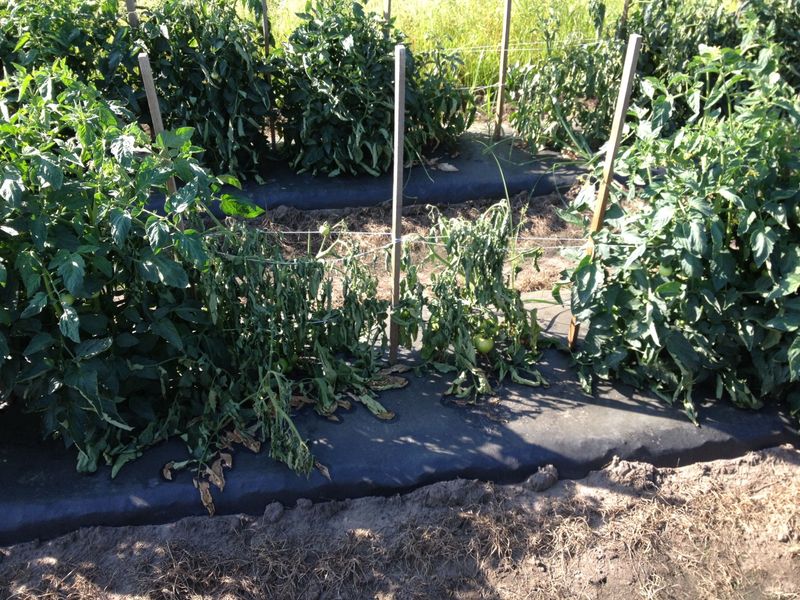
When older, lower tomato leaves roll inward, feel firm or leathery, and stay mostly green while the rest of the plant grows normally, that pattern can fit physiological leaf roll – a noninfectious stress response that calls for careful observation and condition management rather than sprays or aggressive intervention. Start by matching the full symptom picture, not just the curl.
Check the root zone several inches down before doing anything else. Correct dry soil with a thorough, deep watering; correct saturated soil by holding off and improving drainage.
Add mulch around the stem to buffer moisture and temperature, pause hard pruning during extreme heat, and avoid deep cultivation near the roots. Skip extra fertilizer and any product that has not been matched to a confirmed diagnosis.
University of Minnesota Extension and its tomato leaf curl diagnostic tool both support this measured approach.
Judge recovery by new growth at the top of the plant, not by whether the already-rolled leaves flatten. If symptoms move into new foliage, appear with yellowing, mottling, stunting, spots, visible whiteflies, or widespread decline, take that as a reason to seek a closer diagnosis.
A plant that keeps producing healthy new leaves and setting fruit is telling you it is managing – and sometimes that is the most honest measure of success a late-summer tomato can offer.