
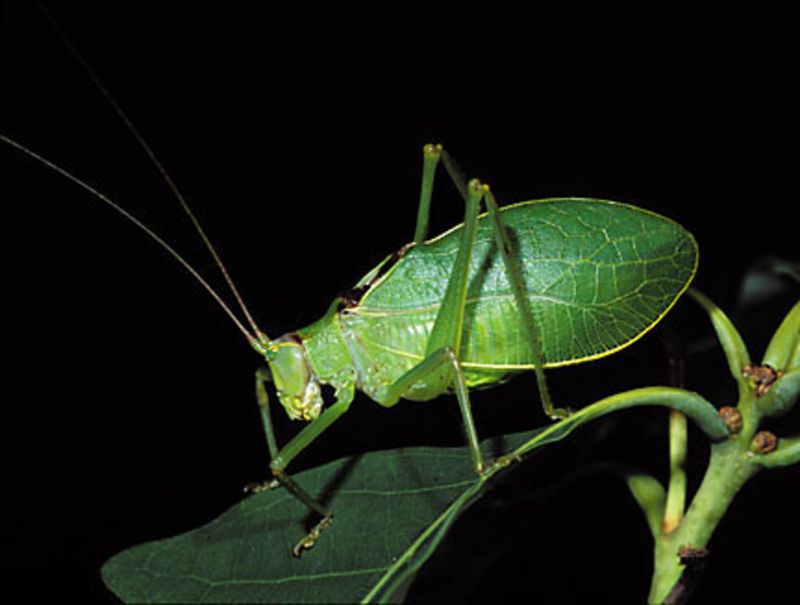
If your North Carolina yard has turned into a nighttime concert hall this summer, you are not alone. Homeowners across the state are stepping outside after dark and hearing what sounds like every katydid in the county packed into one backyard.
Before you reach for the sprayer or start worrying about your plants, it helps to know what that chorus actually tells you and, just as importantly, what it does not.
The Nighttime Chorus Means Adult Katydids Are Active Nearby
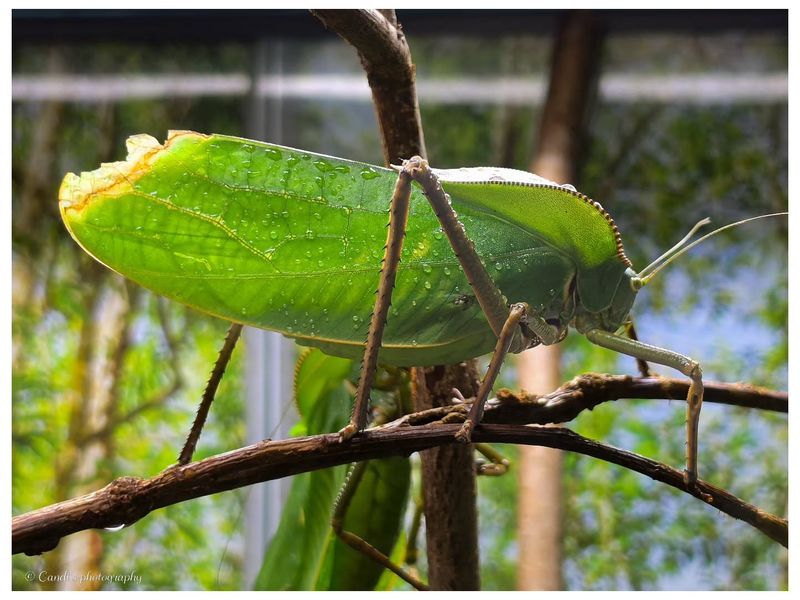
Adult male katydids are the musicians behind that wall of sound you hear once the sun goes down. They rub their wings together in a behavior called stridulation to attract females, and they are built for exactly that job: a bright green or brownish body shaped like a leaf, very long threadlike antennae that can exceed their body length, and enlarged hind legs made for gripping branches in the dark.
NC State’s General Entomology guide to Family Tettigoniidae describes katydids as long-horned grasshoppers with chewing mouthparts whose males produce sounds to attract mates, most noticeably at night.
What the sound does not tell you is that your yard is overrun. Katydids live in trees, shrubs, and other vegetation, often high in the canopy where you cannot easily see them.
Sound travels remarkably well through still night air, so a chorus that seems to come from every direction may actually originate from a cluster of insects in a single oak at the back of the property or in a neighbor’s hedge row.
University of Minnesota Extension’s katydid profile confirms that katydids commonly live in trees, shrubs, and other vegetation and may be heard singing at night. Their presence is evidence that katydids are active nearby, not proof that your yard is infested, neglected, unusually wet, or in any other special condition.
The chorus is a mating signal, and the insects producing it are doing exactly what their biology calls for during the warm summer months.
North Carolina Has More Than One Yard Katydid
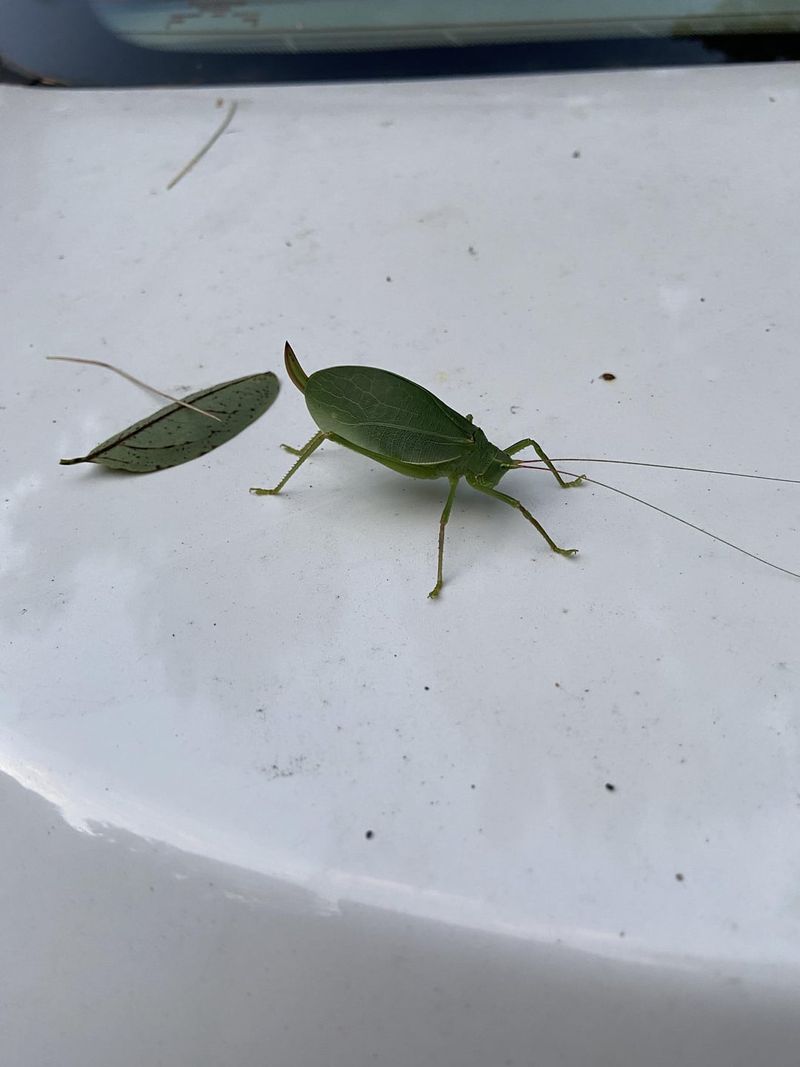
Calling a nighttime caller “a katydid” is a bit like calling a tree “a tree” and expecting that to identify the species. “Katydid” is a family-level common name covering a wide range of insects in the family Tettigoniidae, and North Carolina is home to many of them. The North Carolina Orthoptera checklist lists numerous Tettigoniidae species in the state, spanning genera such as Pterophylla (true katydids), Scudderia (bush katydids), Microcentrum (angle-wings), Amblycorypha (round-headed katydids), Conocephalus, Neoconocephalus, and Orchelimum, among others.
The Orthoptera of North Carolina species database notes that songs can help identify individual species, but that requires careful listening, often a recording, and familiarity with the specific call patterns of each genus. A general description of “loud nighttime calls” cannot narrow the field to one species.
Different katydids prefer different habitats, feed on different plants, and can cause different levels of damage, so knowing which insect you actually have matters before you do anything about it.
Cicadas and crickets often get folded into the same mental category as katydids, and it is worth separating them. Cicadas are stouter, short-antennaed insects that typically belt out their calls during the day or from high in tree canopies; NC State Extension’s guide to annual cicadas describes them as larger insects with distinct buzzing or pulsing calls quite different from katydid chirps.
Crickets also chirp at night but are usually ground-dwelling and have shorter antennae compared to the dramatically long filaments that katydids carry. If you want to know what is actually singing in your yard, the best starting point is a close look at a captured specimen or a recording matched against the state database, not a general description shared over the back fence.
Vegetation and Outdoor Lighting Can Make the Yard Sound Overrun
Sound does not equal density. A yard that backs up to mature oaks, borders a wooded lot, or sits next to a neighbor’s overgrown hedge can absorb the calls of dozens of katydids living entirely outside its fence line.
University of Minnesota Extension notes that katydids commonly live in trees, shrubs, and other vegetation, which means the heaviest populations are often overhead or just beyond the property boundary rather than spread across the lawn at your feet.
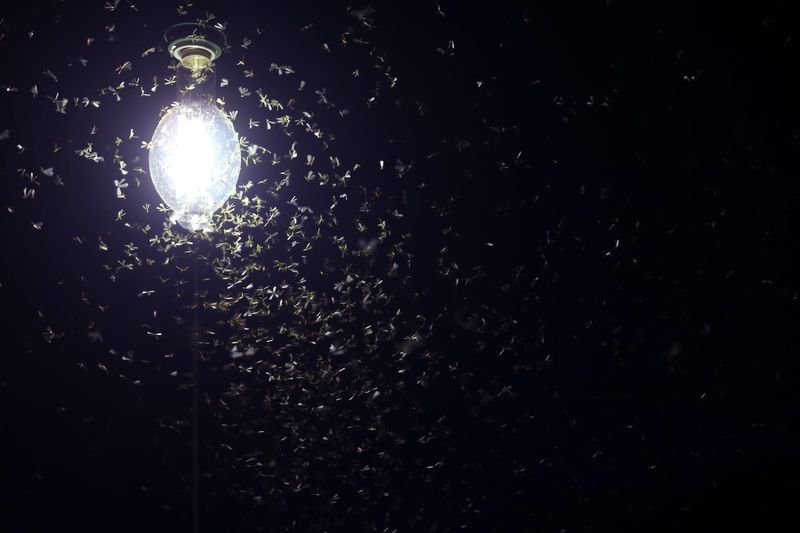
Outdoor lighting adds another layer to the illusion. Texas A&M Landscape IPM guidance on crickets and katydids specifically notes that katydids and other orthopterans can be attracted to night lights.
A bright porch lamp or floodlight can pull insects from the surrounding trees toward the house, making a relatively small number of katydids look and sound like a crowd gathered right at the door.
A quick comparison can help you figure out how much of what you hear is lighting-driven. Walk to the far end of your yard away from any fixtures and listen for a few minutes.
If the sound fades noticeably, outdoor lights are likely concentrating insects near the house. Shine a flashlight up into the canopy of nearby trees and you may spot katydids clinging to branches well above your head, far from your vegetable bed or fruit tree.
Switching porch lights to motion-sensor operation, shielding fixtures so they cast light downward rather than outward, or replacing white bulbs with amber or yellow LEDs can reduce the number of katydids drawn to the immediate area around windows and entryways. Those steps will not eliminate katydids from the broader landscape, since the insects living in your trees and neighbors’ vegetation will continue doing what they do regardless of your porch light, but they can make the activity feel far less concentrated at the house itself.
Weather May Shape Abundance, but It Does Not Diagnose This Summer’s Reports
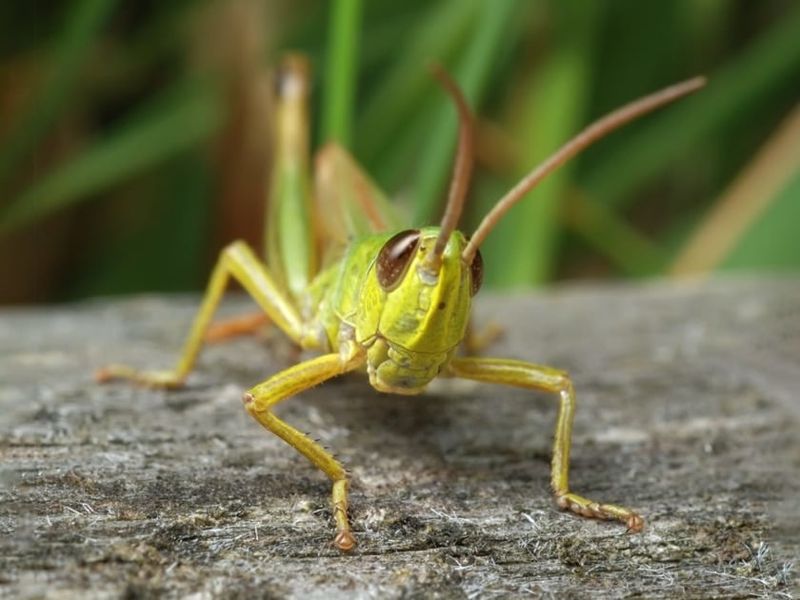
When katydid calls seem louder or more frequent than usual, it is natural to look for a cause. Environmental conditions can contribute to larger katydid populations in some areas and seasons.
Texas A&M Forest Service’s katydid resource describes outbreaks that may follow successive drought years, while also emphasizing that outbreaks are generally short-lived and that trees usually recover. That is useful context, but it comes from Texas research and cannot be directly applied to every North Carolina yard reporting noisy nights this summer.
North Carolina did experience a notably hot and relatively dry stretch entering this summer. The NC State Climate Office reported that heat intensified and drought conditions persisted through June 2026, and the National Weather Service’s central North Carolina summer outlook flagged elevated temperatures for the season.
Those documents describe the climate conditions; they do not establish that those conditions produced more katydids in any particular backyard.
“Take over” is a homeowner observation, not a measured population event. No authoritative statewide monitoring source has confirmed that North Carolina katydid populations are unusually high across the state this summer.
Local conditions, vegetation structure, lighting, and the specific species present in a neighborhood all play roles in what any one person hears on a given night. Weather may be one piece of that picture, but treating it as the definitive explanation for your yard’s chorus overstates what the available evidence actually shows.
Inspect the Plants Before You Decide the Katydids Are a Problem
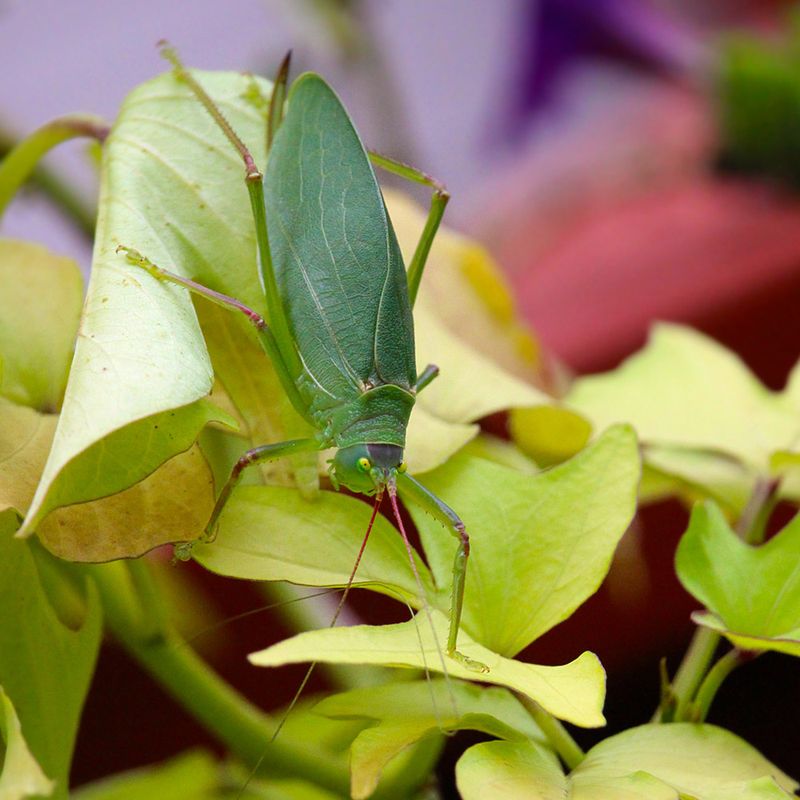
Sound alone is not a damage report. Before deciding that the katydids in your yard need to be managed, walk the property in daylight and look at the plants themselves.
UC Integrated Pest Management’s katydid guidance describes three things to look for: fresh holes along leaf edges, small irregular holes in leaf centers, and shallow circular scars on young developing fruit. Each of those signs points to chewing activity, but only physical inspection can confirm whether katydids are actually feeding on your plants rather than simply singing from the trees above them.
Foliage damage on ornamental shrubs and trees is usually minor. Katydids tend to chew on one or a few leaves before moving to another plant, so scattered edge notching on a healthy shrub rarely threatens the plant’s overall vigor.
Fruit-bearing plants deserve closer attention. A single katydid moving across a row of blueberries, young pears, or developing stone fruit can leave multiple small feeding wounds as it samples fruit after fruit, and those scars can allow secondary problems to develop.
Keep in mind that katydids are not the only insects that chew leaf edges or scar fruit. Grasshoppers, leaf-cutter bees, and various caterpillars can leave similar marks.
Identifying the actual culprit matters before you do anything, because a treatment aimed at katydids may be irrelevant if something else is causing the damage. If you find feeding signs, try to observe the plant at dusk or early morning, when katydids are most likely to be actively feeding, and confirm that a katydid is actually present before moving to the next step.
Minor Leaf Damage Usually Calls for Watching, Not Spraying
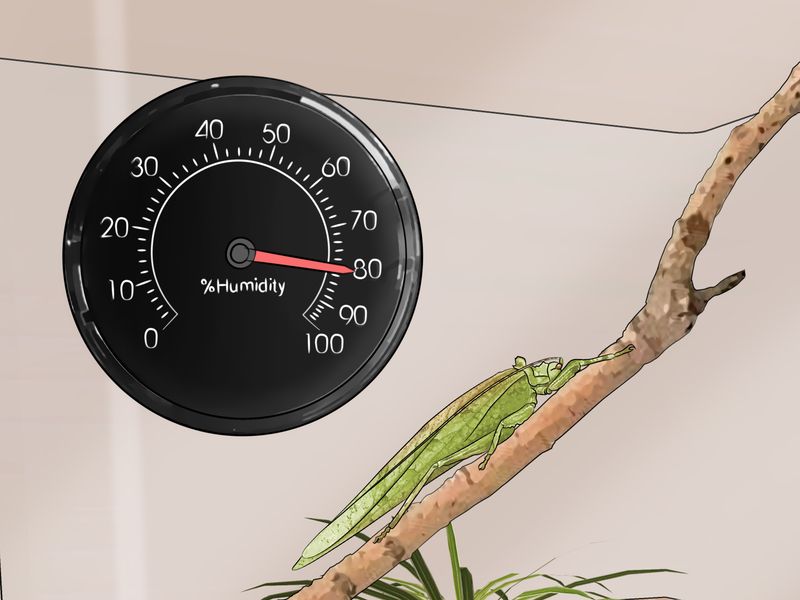
Finding a few chewed leaf edges does not mean the plant is in trouble. Extension guidance consistently supports a watch-and-wait approach when injury is minor and the plant is otherwise healthy.
UC IPM’s katydid page states that katydid injury on home fruit bushes and trees is often small and fruit quality is usually little affected, making no control the generally recommended response in those situations.
Protecting the broader yard ecology is part of the reasoning here. Katydids are native insects that serve as prey for birds, bats, and other wildlife common to North Carolina yards.
Spraying because the insects are audible, rather than because they are causing meaningful harm, risks killing katydids and other nontarget insects, including pollinators and the natural predators that help keep pest populations in check over time.
EPA’s integrated pest management principles frame monitoring as a core tool, not a placeholder for action. Keeping a simple log of where you see damage, how much area is affected, and whether it is getting worse over a week or two gives you the information needed to make a grounded decision.
If the damage stays scattered, affects only a small fraction of the plant’s leaves, and the plant continues to grow normally, the most protective step for your yard is to keep watching rather than reaching for a product.
Use Lighting Changes and Targeted IPM When Damage Crosses a Threshold
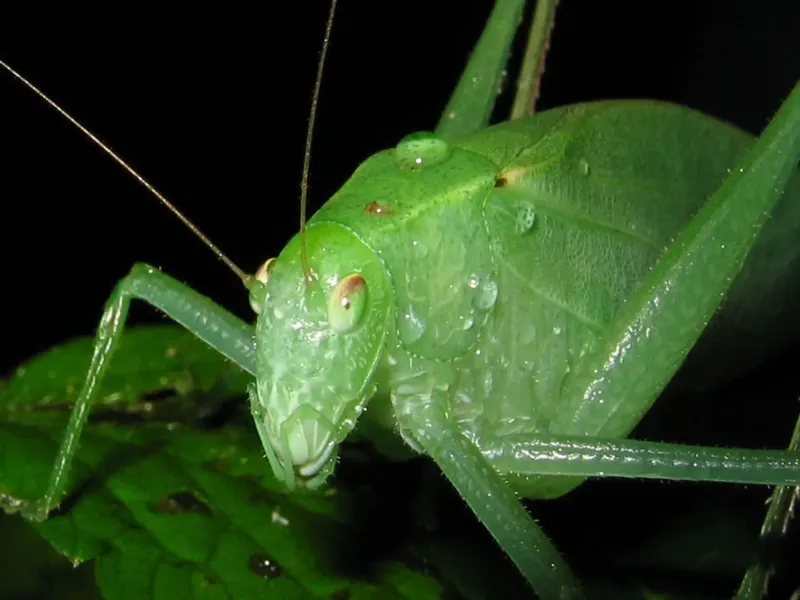
When plant inspection turns up meaningful damage, especially on young fruit, a practical response starts with the simplest steps and works up only as needed. Lighting adjustments are a low-cost first move.
Texas A&M Landscape IPM’s guidance on crickets and katydids notes that orthopterans are drawn to night lights, so switching porch and entry fixtures to motion-sensor operation, pointing fixtures downward to reduce outward glow, or replacing white bulbs with amber LEDs can reduce the number of insects congregating near the house. Those changes will not clear katydids from your trees, but they can meaningfully reduce the density at the surfaces where you are finding damage.
Hand removal is worth considering when only a few adults are responsible for the feeding you have documented. UC IPM notes that adults may come to lights at night and can be easier to capture in the early morning when they are cool and less active.
Wearing gloves and checking fruit trees or berry bushes at first light, then dropping katydids into a bucket of soapy water, is a targeted response that poses no risk to pollinators or other beneficial insects.
If damage continues and crosses a threshold where fruit quality or plant health is genuinely at stake, apply the integrated pest management sequence. Identify the specific katydid species if possible, document the extent of injury, set a meaningful threshold for what level of damage justifies a treatment, and try the lowest-risk option appropriate for the confirmed pest.
EPA’s IPM principles position targeted pesticide use as a last resort reached only after identification, monitoring, and lower-risk steps have been applied.
If a pesticide becomes necessary, read the product label in full before opening the container. EPA’s pollinator protection tools and strategies make clear that some labels impose timing restrictions and other requirements to reduce exposure to bees and other beneficial organisms, and those label directions are legally binding.
Avoid spraying blooming plants, do not treat broadly across the yard simply because katydids are audible, and use the narrowest application that addresses the confirmed damage. Blanket nighttime spraying is not automatically safe for wildlife, and routine yard treatments aimed at sound rather than documented injury are not supported by IPM guidance.
What the Chorus Really Reveals About Your Yard
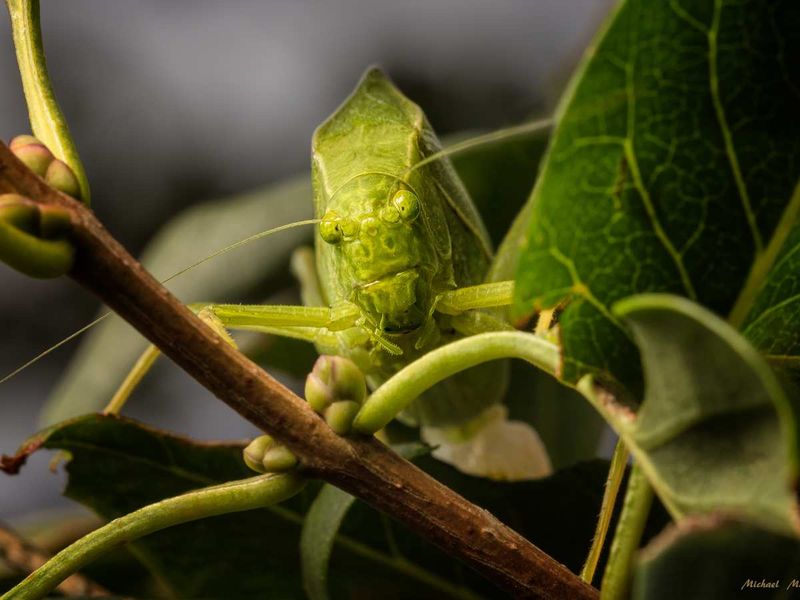
Strip away the drama of a late-summer night chorus, and what remains is straightforward. Adult katydids are active in nearby vegetation, males are calling to attract mates, and outdoor lighting may be pulling some of them closer to your windows and doors than they would otherwise come.
NC State’s Tettigoniidae guide and University of Minnesota Extension both describe this as normal warm-season behavior for a group of native insects that live in trees and shrubs.
The chorus does not reveal soil health, moisture levels, pesticide history, lawn quality, or biodiversity. It does not confirm a statewide invasion or identify a single species.
Those are conclusions the sound simply cannot support, and acting on them risks wasting money or harming the nontarget insects that share your yard.
UC IPM’s guidance keeps the decision simple: inspect your plants for actual feeding damage before changing anything. If the leaves and fruit look fine, the most useful thing you can do is leave the lights on a timer and let the concert run its course.
The katydids will quiet down on their own as the season shifts, and a yard that stayed unsprayed will still have all the predators and pollinators it had before the chorus began.