
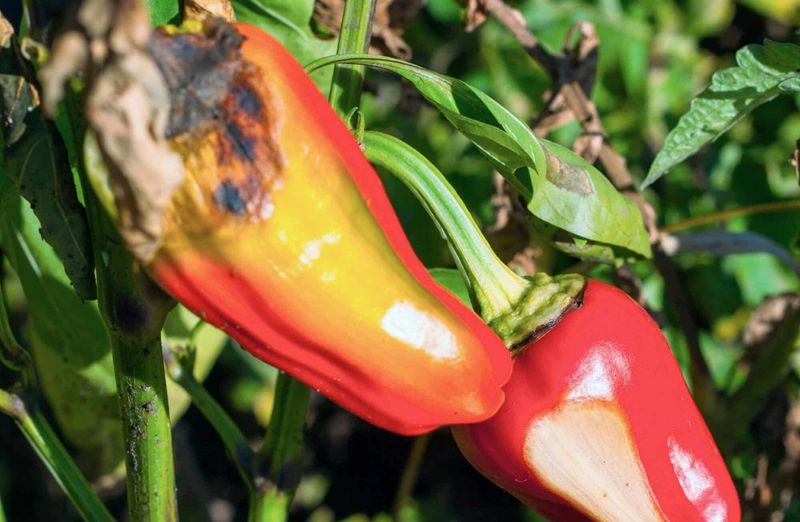
Walking out to your pepper bed and spotting pale, papery patches on your fruit can send a gardener straight to panic mode. Before you pull the plants or douse them with a fungicide, take a closer look at exactly where that damage sits and what it feels like.
A dry, tan or whitish spot limited to the sun-facing side of the pepper tells a very different story than a soft, spreading, foul-smelling lesion. Getting that distinction right is what separates a salvageable harvest from a wasted one.
Dry, sun-facing damage points toward sunscald
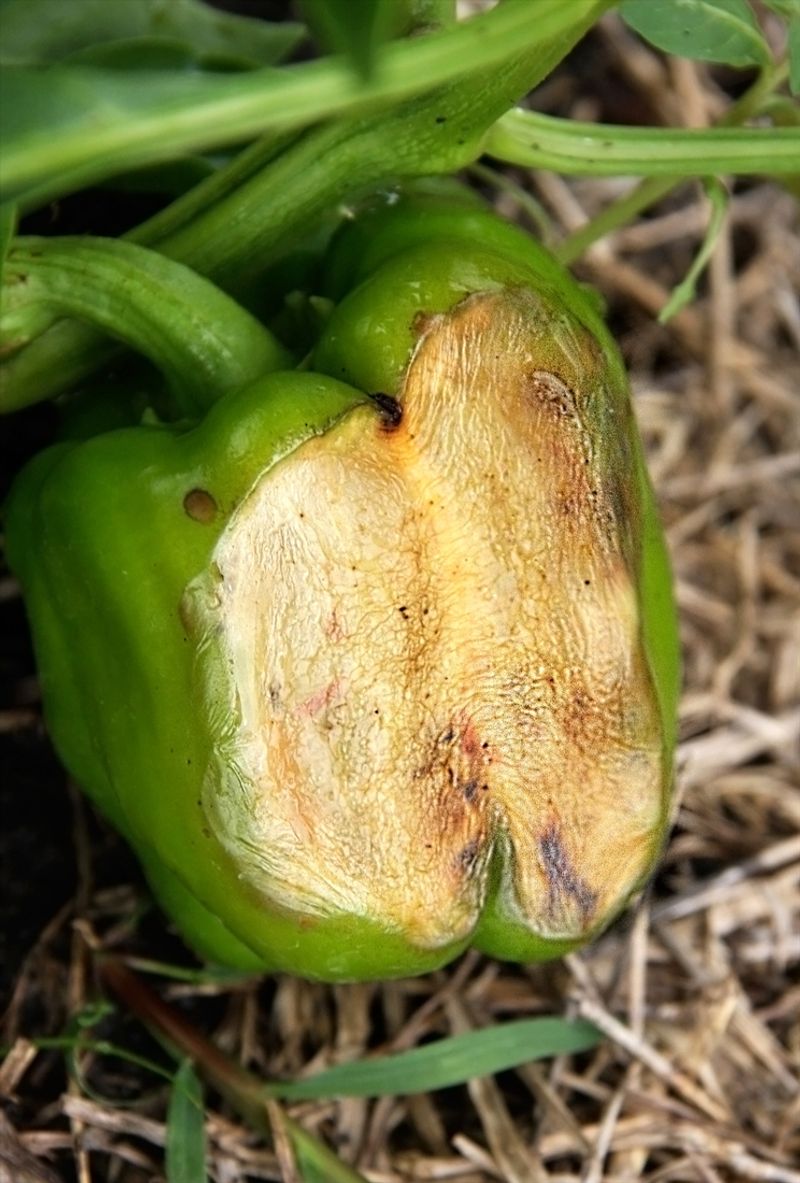
Not every pale or sunken patch on a bell pepper signals sunscald, and the title of this article deserves an honest correction before anything else. Softness and a slightly sunken shape alone are not enough to confirm sunscald.
The symptom pattern that actually fits this disorder is a pale tan, white, or yellowish area on the side of the fruit that faces direct sun, one that feels dry, tough, wrinkled, or leathery rather than mushy or wet.
University of Minnesota Extension’s pepper diagnostic tool describes sunscald damage as a bleached or pale discoloration that dries out and may become papery or flattened over time. The key phrase is “over time” – the tissue does not stay plump and firm, but it also does not become water-soaked or slimy.
Location matters just as much as texture. A patch that wraps around to the shaded side of the fruit, or one that appears on peppers hanging entirely under dense leaf cover, does not fit the typical sunscald picture.
Before treating any pepper as a sunscald case, compare the exposed and shaded sides of the same fruit. Check several other peppers on the plant, too, especially any that are hanging in different positions.
If the damage is consistently on the sun-facing surface and feels dry, you have a reasonable basis for a sunscald diagnosis. If the lesions are spreading, wet, or appear on surfaces that were never in direct light, keep reading before you decide.
Heat becomes damaging when the canopy no longer shields the fruit
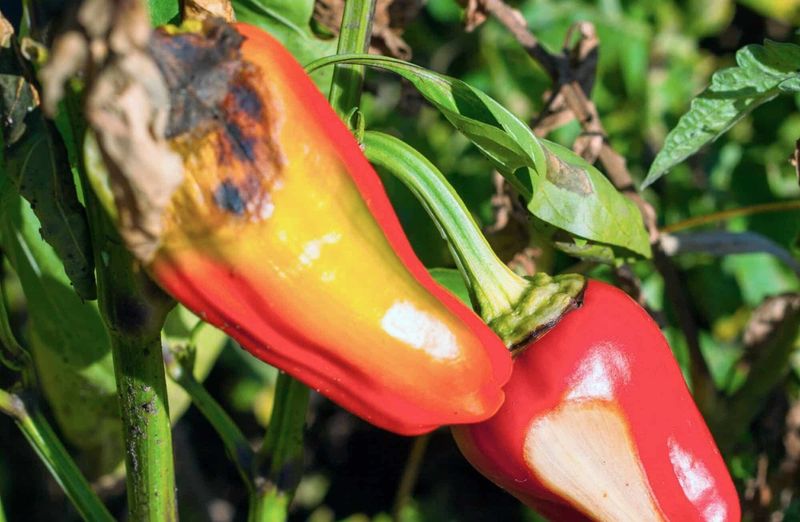
Peppers are full-sun vegetables, so sunscald is not really about growing them in too much light. The problem is more specific: developing fruit that loses its protective leaf canopy gets hit with a heat load it was never meant to handle.
When leaves are doing their job, they intercept a large share of direct solar radiation before it reaches the fruit. Lose enough of that cover, and the exposed skin of a pepper can reach temperatures that damage or kill the surface tissue.
Several things can strip away that protective layer. UC IPM’s guide to sunburn on peppers and eggplants identifies defoliation from insects or leaf diseases, wilting during drought stress, over-pruning, and lodging – branches that fall outward and expose previously shaded fruit – as common exposure triggers.
A plant that simply grew with a naturally sparse canopy is also at risk during intense heat spells. These are different root causes, but they share the same result: fruit that was once shaded is now sitting in full sun with no buffer.
Sunscald can show up any time these conditions line up, not just during a defined late-summer window. A sudden aphid infestation that strips leaves in July, a fungal leaf spot that causes early defoliation, or a heavy windstorm that knocks branches sideways can all expose fruit weeks before the hottest part of the season arrives.
The calendar matters less than the combination of intense sun and lost canopy cover.
Check for rot and look-alike disorders before you decide
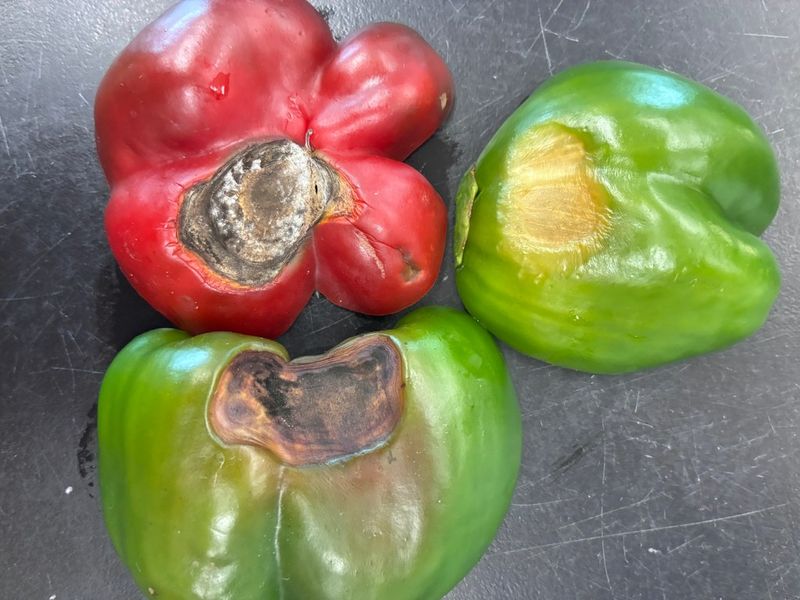
A few common pepper disorders look similar enough to sunscald that a quick visual check can save you from misreading the problem entirely. Starting at the bottom of the fruit is the fastest way to rule out blossom-end rot.
That disorder begins at the blossom end, the tip opposite the stem, and typically progresses to a dark brown or black, sunken, leathery patch. UGA Extension’s guide to blossom-end rot in peppers and tomatoes connects it to calcium transport problems tied to inconsistent watering, not direct sunlight.
If the damage is at the tip rather than the sidewall, blossom-end rot is the more likely explanation.
Anthracnose is another disorder that can fool gardeners. Minnesota Extension’s pepper fruit rot diagnostic describes anthracnose lesions as round, sunken spots that commonly show dark or salmon-colored centers, often appearing on ripe or overripe fruit.
Critically, anthracnose is not restricted to the sun-facing surface, so spotting similar lesions on shaded peppers or on the underside of fruit is a strong reason to suspect a fungal infection rather than heat damage.
Water-soaked lesions, soft spreading decay, a foul smell, visible mold, or whole-plant wilting that came on quickly are all warning signs for something more serious. Phytophthora, for example, can cause rapid crown and fruit rot under warm, saturated soil conditions.
UGA’s bell pepper defects guide reinforces that sidewall lesions from disease can mimic other fruit disorders, which is exactly why inspecting shaded fruit, the stem, the leaves, and the soil conditions around the plant matters before settling on any single answer.
Protect and rebuild the canopy instead of cutting it back
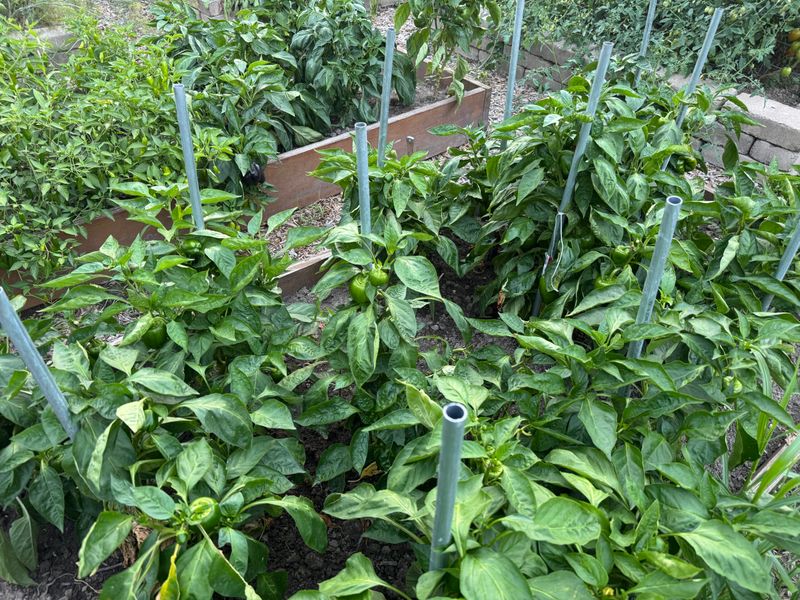
Once sunscald is the most likely diagnosis, the instinct to tidy up the plant by removing damaged or ragged-looking leaves is exactly the wrong move. Healthy foliage is the pepper’s primary shield against the sun, and removing more of it during hot weather increases the amount of fruit surface exposed to direct radiation.
The first response should be to protect what leaf cover remains, not reduce it further.
UC IPM recommends preserving or restoring protective canopy as the primary management step after a sunscald diagnosis. If branches have lodged outward after a storm or under the weight of heavy fruit, stake or tie them back into an upright position so the canopy closes over exposed fruit.
Garden stakes and soft ties work well for this, and the adjustment can make a real difference within a day.
If defoliation from pests or leaf disease caused the exposure in the first place, treating that underlying problem becomes the priority. UC IPM’s pepper pest management guidelines provide a useful starting point for identifying common insects and leaf diseases that strip foliage.
Aphids, spider mites, bacterial leaf spot, and Phytophthora foliar infection can all thin a canopy quickly. Addressing the pest or disease stops further leaf loss and gives the plant a chance to push new growth that will shade the next round of developing fruit.
Keep moisture even, but do not expect water to heal the lesion
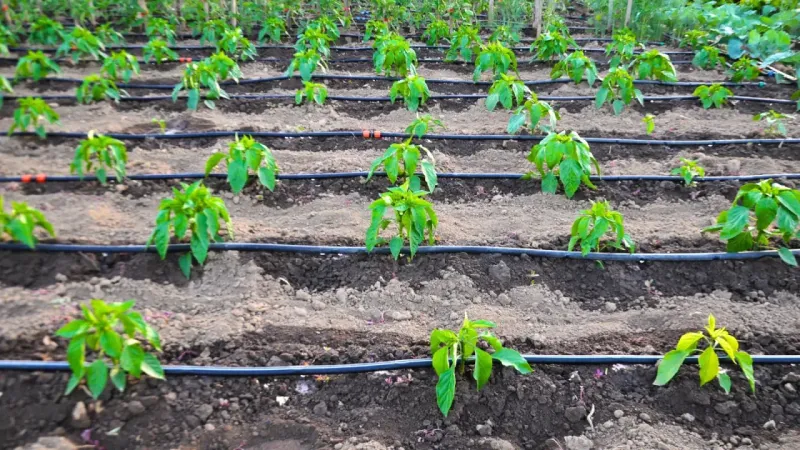
Steady soil moisture plays a real supporting role in sunscald prevention, though not in the way some gardeners assume. Water stress causes pepper plants to wilt, and wilting collapses the foliage that would otherwise shade the fruit.
Keeping the soil consistently moist during hot, dry stretches helps the plant stay upright and leafy, which indirectly protects developing peppers from direct sun exposure.
UC IPM advises consistent soil moisture and mulching as part of a sunscald management plan, with drip or targeted irrigation preferred over overhead watering that repeatedly wets foliage. A 2-3 inch layer of straw or wood chip mulch around the base of the plant can significantly reduce evaporation, moderate soil temperature, and reduce the frequency of watering needed during heat spells.
Utah State University Extension’s pepper growing guide also highlights consistent moisture as a key factor in overall plant vigor during hot periods.
What watering cannot do is reverse tissue that has already been damaged by sun and heat. Once the surface cells of a pepper have been cooked by direct solar exposure, no amount of irrigation will restore them to normal.
Managing moisture going forward supports the plant’s ability to grow new, healthy foliage and protect the next flush of fruit. Think of it as building resilience rather than treating an existing wound.
Use temporary light shade when exposed fruit cannot stay covered
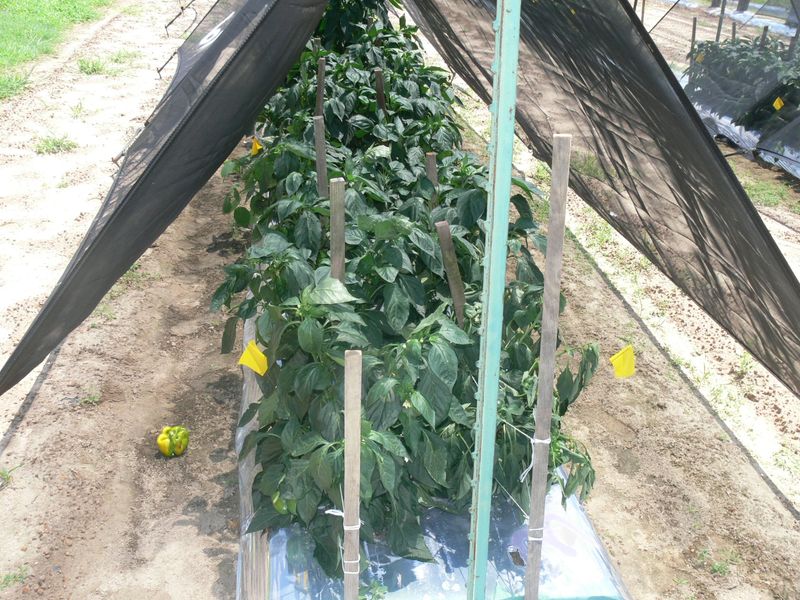
Sometimes a plant simply cannot rebuild its canopy fast enough to protect fruit that is already hanging in full sun. In those situations, a temporary shade barrier can reduce the heat load on exposed peppers while the plant recovers.
Breathable shade cloth rated at 30 to 40 percent light reduction is a practical option – it cuts direct solar intensity without blocking the airflow the plant needs to stay healthy.
Utah State University’s production guide on using shade for vegetable crops notes that peppers are especially vulnerable to sunburn at the mature-green stage and that shading changes the crop’s water requirements. A shaded plant transpires less, which means the soil stays moist longer, but it also means gardeners need to check moisture levels more carefully to avoid letting the soil stay saturated.
Excess humidity trapped under tightly enclosed shade can raise the risk of fungal disease or fruit rot.
The goal is supplemental protection, not deep shade. Draping cloth loosely over a wire frame or a few stakes above the plants, rather than wrapping it tightly around the foliage, keeps air moving and prevents the canopy from staying wet after rain or irrigation.
UC IPM also supports light shading as a temporary measure rather than a permanent fix, and that framing is worth keeping in mind. Shade cloth is a bridge while the plant recovers, not a substitute for healthy foliage or a guaranteed way to eliminate every sunscald risk.
Assess damaged peppers carefully and focus on the next fruit
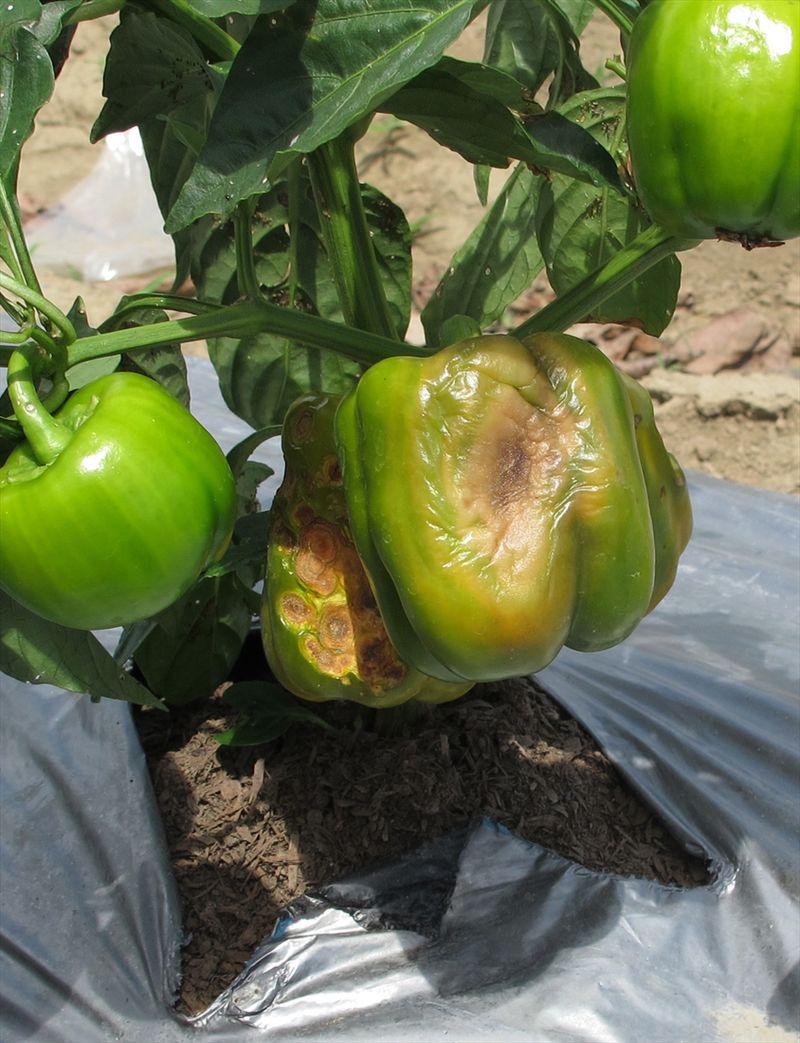
Sunscalded tissue will not return to normal, and no treatment applied after the fact will restore the damaged area. That reality shifts the focus of management toward protecting what comes next – new foliage, developing buds, and young fruit that have not yet been exposed.
Canopy care, consistent moisture, and temporary shade all work in service of that future harvest rather than healing the patch already there.
For the fruit already showing damage, the decision about whether to keep or discard it comes down to what the rest of the pepper looks like. A Utah State University plant health newsletter notes that peppers with sunscald-related deformation can still be edible when the damaged area is dry and otherwise intact.
Cut away the affected patch, inspect the surrounding flesh, and use the pepper normally if everything else looks and smells fine. The cosmetic damage does not automatically compromise the whole fruit.
Discard without hesitation any pepper that has soft, slimy, foul-smelling, actively moldy, or rapidly spreading damage. Minnesota Extension’s fruit rot diagnostic makes clear that those signs point toward decay or disease rather than simple heat injury.
A practical sequence to carry forward: confirm that the damaged surface actually faced the sun, inspect the whole plant for pests or disease driving canopy loss, preserve every healthy leaf you can, keep moisture steady at the root zone, and check new fruit regularly as the plant pushes through the rest of the season. A pepper plant that survives a heat wave with its canopy mostly intact can still deliver a solid late harvest.