
A great blue heron can turn an ordinary Florida yard into a place worth watching. These tall birds look for easy hunting, safe footing, and a clear way to leave.
If one keeps stopping by, your yard may offer more than you realize. Here are seven features that can catch a heron’s attention, plus ways to manage them.
1. Shallow water with a gentle edge
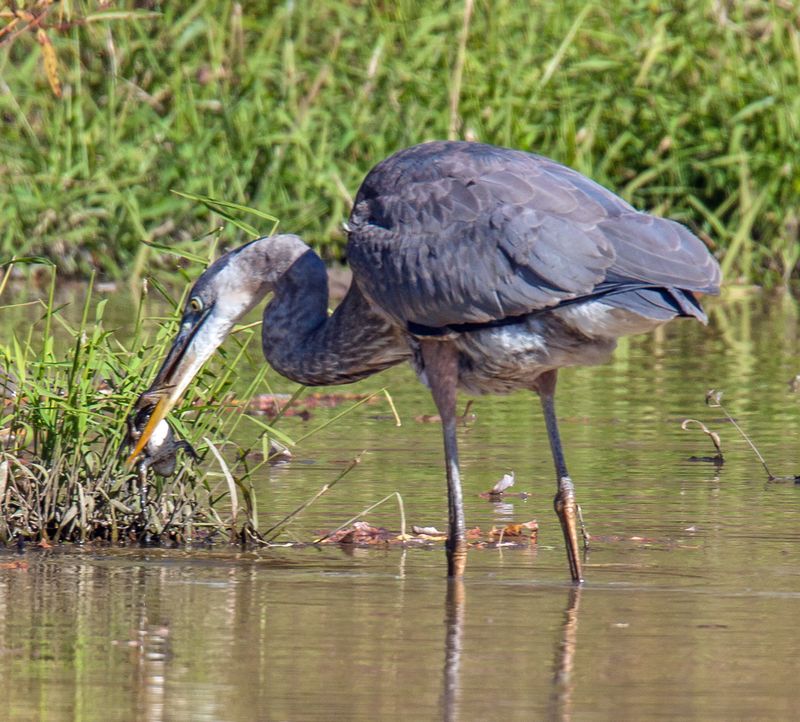
Watch a heron approach a pond and you may notice it does not head straight for the deepest part. It often works the edge, where it can stand firmly and spot movement below the surface.
A broad, shallow shelf gives the bird room to take slow steps and strike at prey.
Steep pond walls offer fewer places to stand. If you are building a water feature, a gently sloped bank or planting shelf can make it more useful to wildlife while giving the yard a softer, more natural look.
Use stable stones or planted soil rather than loose material that may slide under a bird’s feet. Keep the edge easy to see so no one accidentally steps into the water.
Florida downpours can change a pond’s water level quickly, so plan for overflow that moves away from the house. A heron may visit a suitable edge even when the rest of the pond is too deep for wading.
If you keep ornamental fish, however, that same shelf gives the bird access to them. Decide whether wildlife watching or fish protection matters most before you shape the shoreline.
2. Fish in an accessible pond or canal
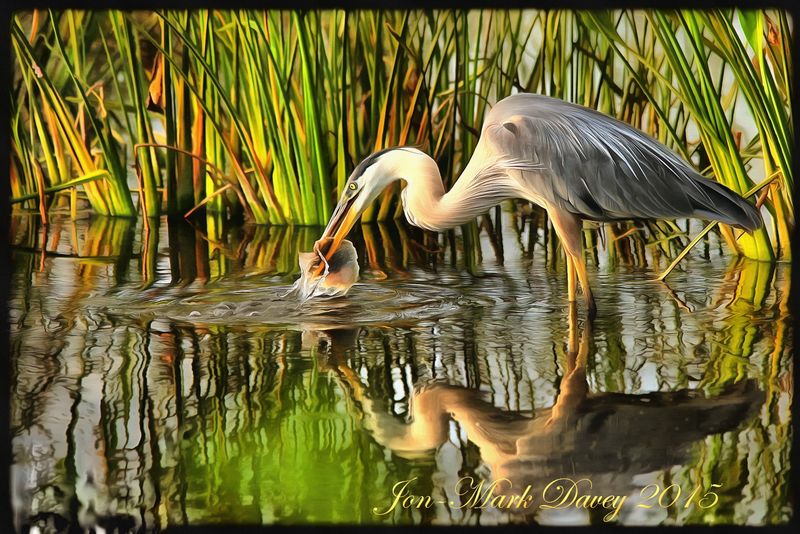
A still heron at the water’s edge is usually paying close attention to dinner. Fish are an important part of its diet, and a pond or canal with fish near the surface can be worth repeated visits.
The bird may wait several minutes before making one quick strike.
That explains why a yard beside a canal can attract herons even without a garden pond. In a backyard pond, naturally occurring small fish may draw attention too.
You do not need to add fish to attract a heron, and releasing aquarium fish or other nonnative animals into Florida waterways can harm local habitats. A healthy pond with varied depths and aquatic life is a better goal than a pond designed as a feeding station.
For homeowners with koi or other valued fish, frequent heron visits call for protection, not more food. Give fish deeper places to retreat and consider a properly fitted pond cover that will not trap wildlife.
Avoid fishing line stretched around the bank, which can entangle birds and other animals. A visiting heron is impressive to watch, but its interest in fish is not always good news for a pond keeper.
3. A rain garden that briefly holds water
After a hard Florida rain, a low spot can become a tiny hunting ground. Shallow water may bring frogs, small aquatic animals, and other prey within reach of a great blue heron.
A rain garden can offer that temporary wet edge without requiring a permanent pond.
Place a rain garden where runoff already moves through the yard, away from foundations and septic systems. Choose plants suited to the site’s wet-and-dry cycle; Florida-native options may include blue flag iris and soft rush where local conditions fit.
Because much of Florida has fast-draining sandy soil, watch how long water actually stays after a storm before choosing plants. Your local UF/IFAS Extension office can help you match choices to your area.
The word temporary matters. A rain garden should drain between storms rather than remain a stagnant puddle, especially where mosquitoes are a concern.
If water routinely stands for days, check for blocked drainage or an unsuitable location instead of treating it as a wildlife feature. Herons may visit during brief wet spells, then move on as the garden dries.
That changing scene is part of the appeal.
4. Open ground with a clear view
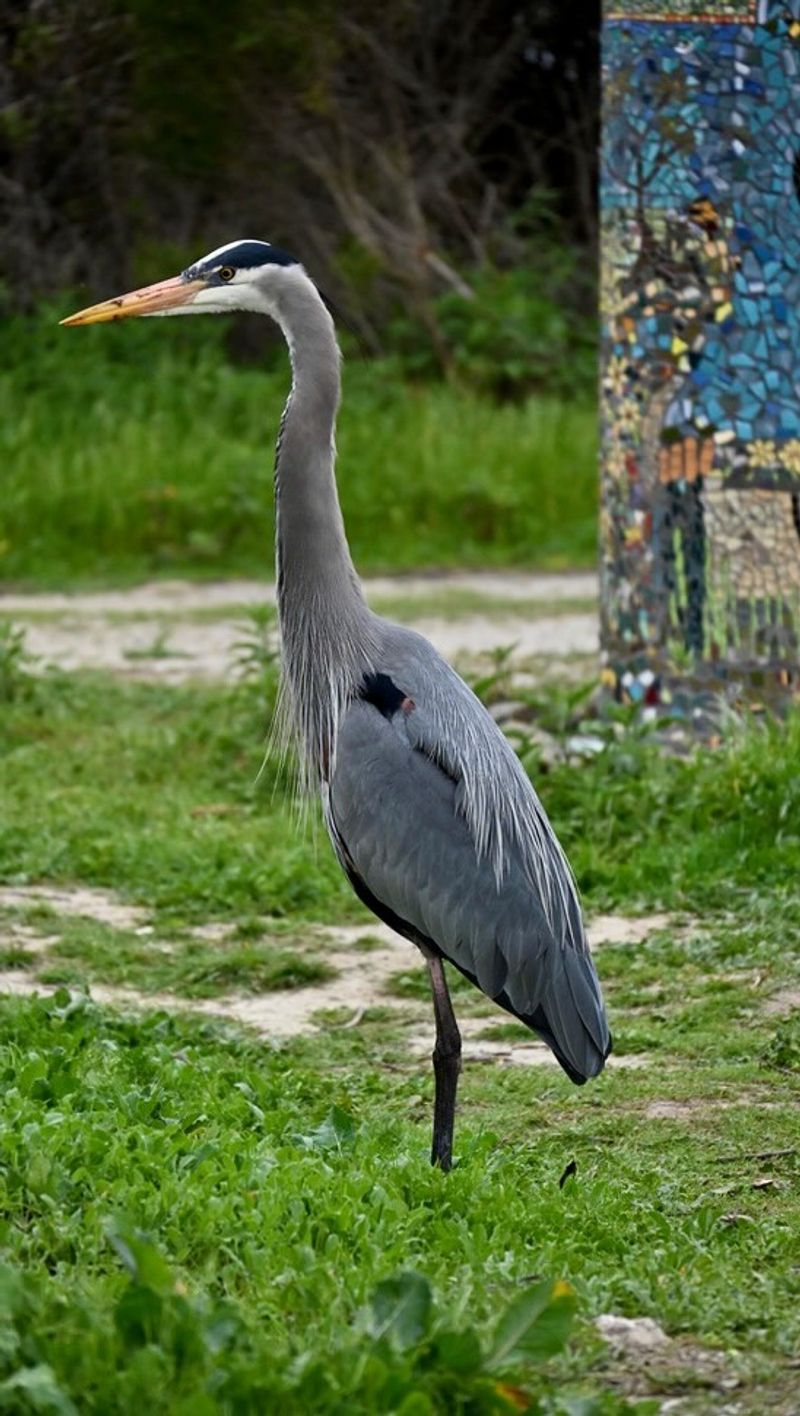
Not every heron visit happens in water. Great blue herons also walk across lawns and other open ground, where they may catch lizards, frogs, or large insects.
Their long legs and patient hunting style work surprisingly well on land.
An open stretch near a pond, lake, or drainage area gives a heron a place to scan for prey without pushing through thick shrubs. Shorter groundcover around a water feature can serve this purpose without turning the whole yard into high-maintenance turf.
Leave taller plants in beds farther back, where they can soften the view from the house. In Florida’s heat, the goal is not a perfectly clipped lawn but a practical balance between open space and planted cover.
Visibility helps the bird notice trouble as well as prey. A heron is more likely to feel comfortable where it can see an approaching dog or person and take off without hitting a fence or low branch.
If one crosses your lawn, watch from a distance rather than trying to follow it. The bird is using the space as a hunting route, not asking for food.
5. Native plants along a waterline
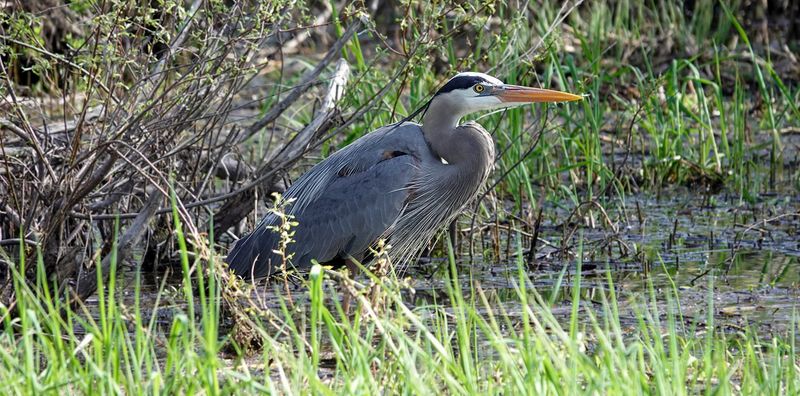
A bare shoreline may look tidy, but a planted edge supports a busier food web. Native wetland plants provide places for small fish and other aquatic animals to shelter.
Where the plantings meet open water, a heron can watch for prey moving in and out of cover.
Think in patches rather than making a solid wall of tall leaves. Groups of Florida-native pickerelweed or rushes can add texture, while gaps leave room for a heron to stand and hunt.
Plant choice depends on whether the edge stays wet, floods only after storms, or sits above the usual waterline. Check local rules before changing the bank of a lake, canal, or stormwater pond, since these areas may be managed or protected.
Once established in the right spot, native shoreline plants can also make a pond edge look more finished with less repeated replanting. Avoid letting aggressive or invasive species take over, and remove unwanted growth carefully so you do not disturb a visiting bird.
A varied border does not guarantee herons, but it can make the waterline useful to more wildlife than an empty strip of turf.
6. Quiet corners away from daily traffic
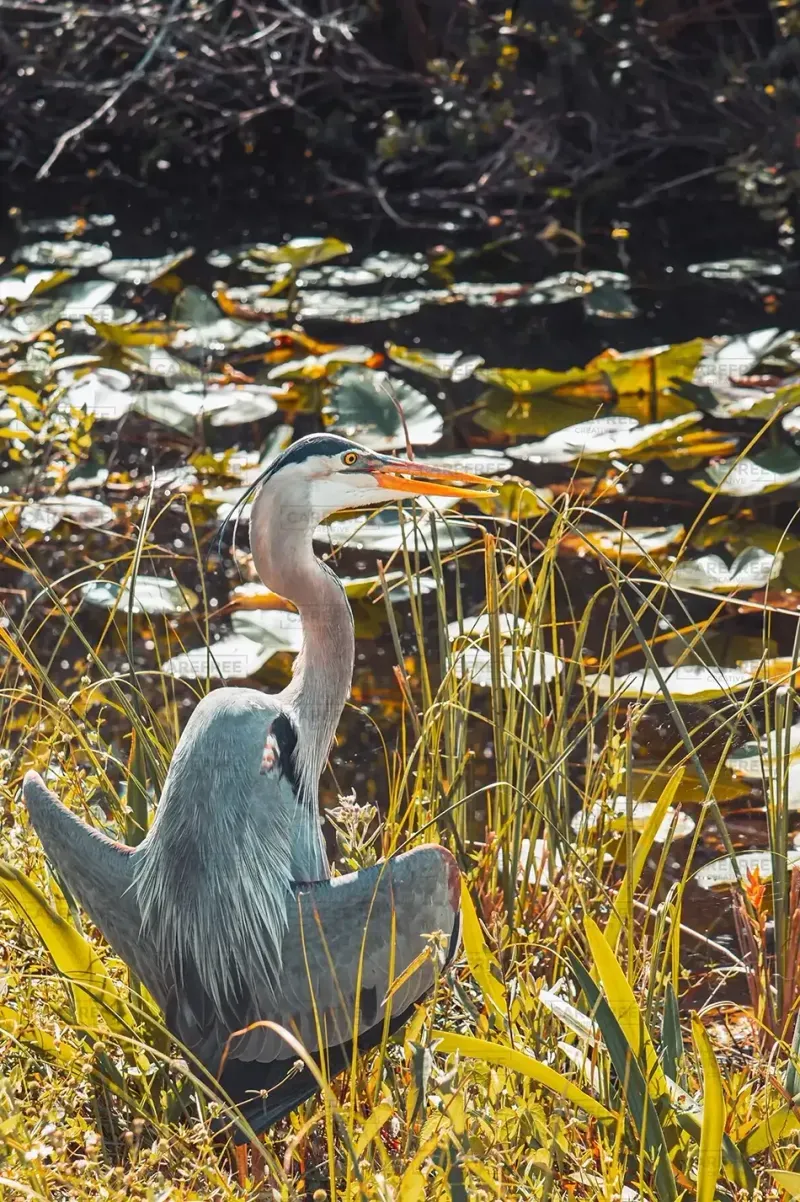
The bird that freezes when you open the back door is telling you something: it wants space. A quiet corner can let a great blue heron hunt long enough to find food, especially if the water and yard are not beside a busy patio or a dog’s usual path.
You do not have to stop using your yard. Put seating, play areas, and frequent foot traffic in one zone, then let a pond edge or low area remain relatively undisturbed in another.
A few shrubs between the house and that corner can screen movement without blocking the heron’s view of its surroundings. Keep paths clear for people, and give pets a separate place to run when birds are present.
Herons are wild animals, not backyard guests to tame. Feeding them can change their behavior, draw other animals, and create problems around homes and waterways.
Watching from a window or from across the yard is usually more rewarding than trying to get close. If a heron regularly leaves as soon as someone steps outside, giving it a little more room may be the simplest yard change you can make.
7. An easy route from nearby wetlands
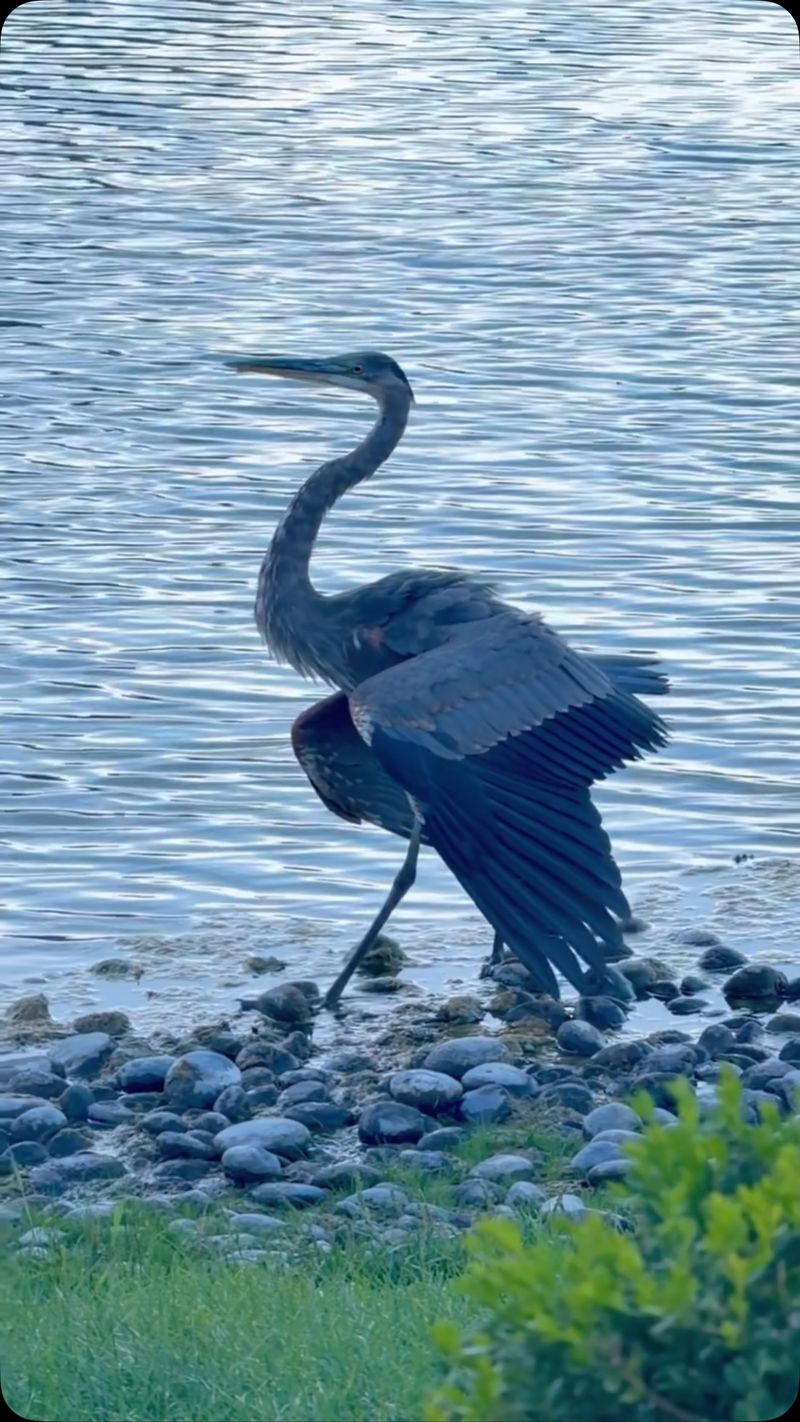
Location can do more work than any landscaping project. A yard beside a lake, canal, marsh, or connected drainage system lies close to places where great blue herons already travel and hunt.
A bird exploring that area may add your shoreline to its regular rounds.
Look at the route from the water to the part of your yard where herons appear. An open bank or clear landing area is easier for a large bird to use than a narrow gap crowded by furniture and low branches.
You do not need to remove healthy trees to create a landing strip. Instead, keep new structures and plantings from blocking an existing open approach, while respecting property boundaries and any rules for managed waterways.
Nearby habitat also explains why two similar yards can get very different numbers of visits. A pond that seems ideal may see few herons if it is far from their usual travel routes, while a simple canal-side lawn gets daily walk-throughs.
Focus on making your yard safe and functional rather than trying to guarantee a sighting. When a heron does arrive, its presence offers a glimpse of the wider Florida landscape your yard belongs to.