
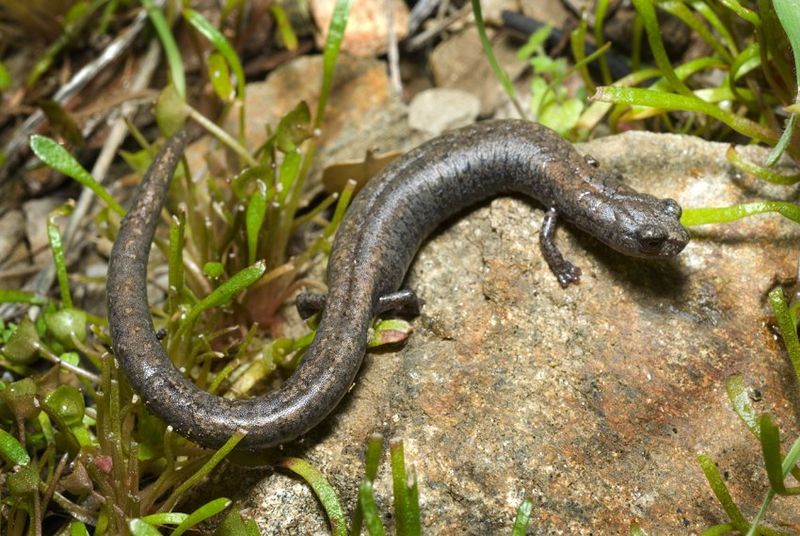
A tiny, thread-thin salamander may be living under a flat stone or a patch of leaf litter in your California yard, and you might never see it. It comes out mostly at night when the ground is wet, and it spends dry spells hidden underground.
Because it depends on cover that gardeners often move or clear, a few careful habits can make a real difference. Here is what is known about where it lives, what it eats, and how to make room for it safely.
Meet the California slender salamander
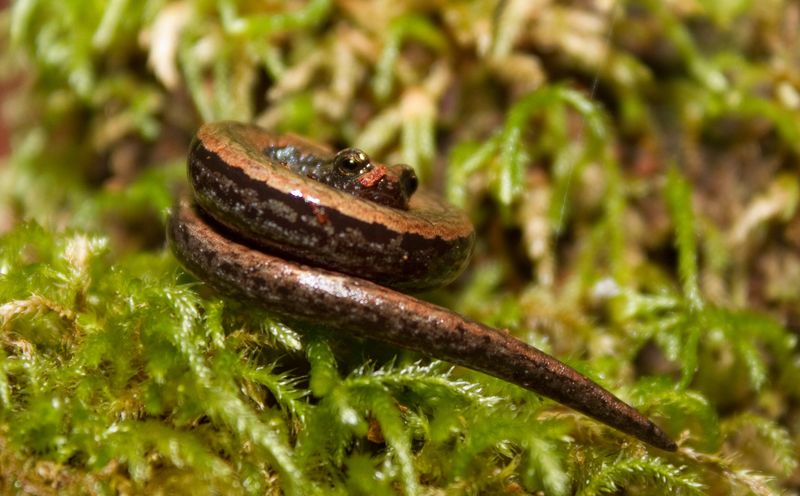
The California slender salamander, Batrachoseps attenuatus, is a small, narrow-bodied amphibian with tiny legs and a long tail. It looks a bit like a dark worm at first glance, which is one reason people overlook it.
According to California Department of Fish and Wildlife’s life-history account, this species lives in the Coast Ranges north to Monterey and San Benito counties, and in the Sierra foothills north to Butte County. It is tied to moist cover such as logs, leaf litter, bark, and flat stones.
That range matters. This is not a statewide yard animal, and it is not a species you should expect in every part of Southern California.
If your home sits outside the documented range, the habitat advice in this article is not aimed at you.
Names can also cause mix-ups. A different species, the garden slender salamander, is Batrachoseps major, and Amphibian Species of the World lists it separately.
Everything here concerns B. attenuatus only, so check that your area falls within its range before you plan anything.
When this hidden salamander may appear
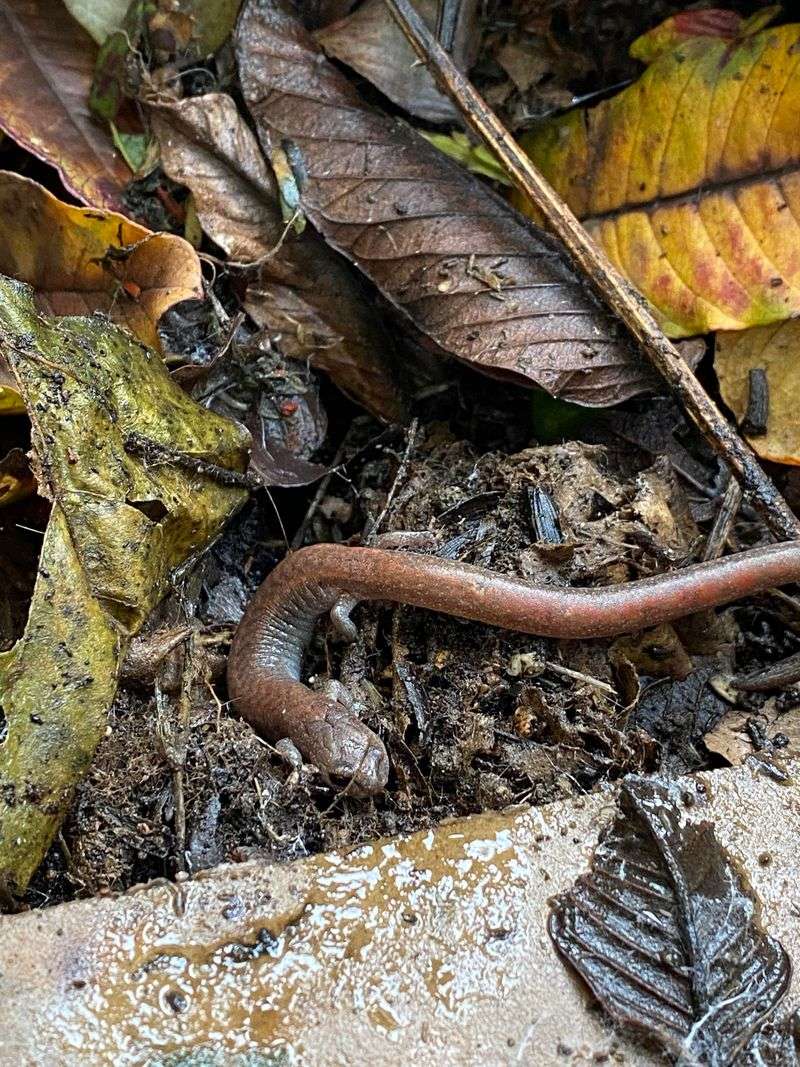
Picture a wet November night in the foothills. The ground is soaked, the air is cool, and a salamander no longer than your finger slips out from under a piece of bark.
That is the kind of moment this animal is built for.
CDFW describes B. attenuatus as usually active on the surface at night during moist periods, generally from October through May. When conditions dry out, it retreats underground, where it stays out of sight.
So the rainy season is your best chance for a glimpse, but it is only a chance. A yard with good cover will not always produce a sighting, and a rainy night does not guarantee one.
The animals may be present and simply staying below the surface, or they may not live on your property at all.
If you want to look, choose a damp evening and use a dim light. Watch from a distance, leave stones and logs where they are, and avoid flipping cover just to check.
Seeing nothing tells you very little, so treat any sighting as a bonus rather than a measure of success.
What its diet does—and does not—tell us about slugs
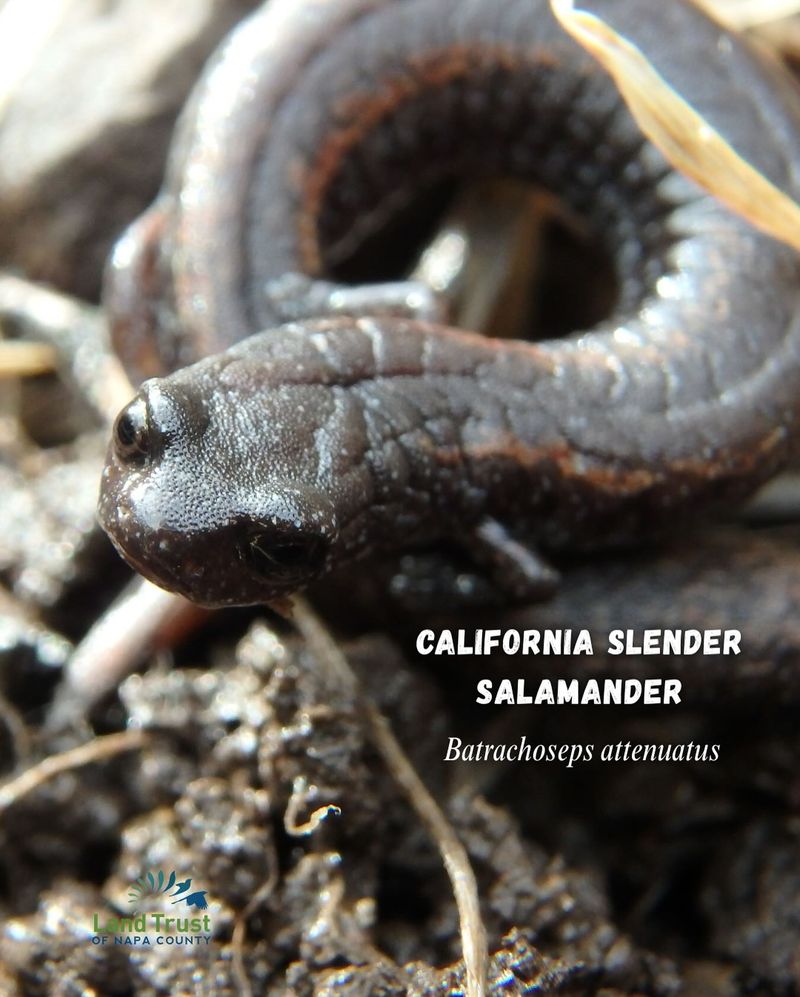
Diet is where the popular story gets ahead of the facts. CDFW’s account lists snails, earthworms, mites, spiders, and insects as prey for B. attenuatus.
Slugs are not on that list.
Small slugs do appear in reports about a related animal, the Channel Islands slender salamander, as described by the National Park Service. That is a different species living in a different place, so it cannot be treated as proof for the salamander in your yard.
Research also shows that diets shift. A 1985 study in northwestern California looked at several salamander species and found differences by species, site, season, and prey size.
What does that add up to? These salamanders eat small invertebrates, including some snails and mites.
Nobody has shown that they eat enough garden slugs to protect your lettuce or hostas. Enjoy them as a small piece of native wildlife, not as a pest crew.
Protect suitable cover where it already exists
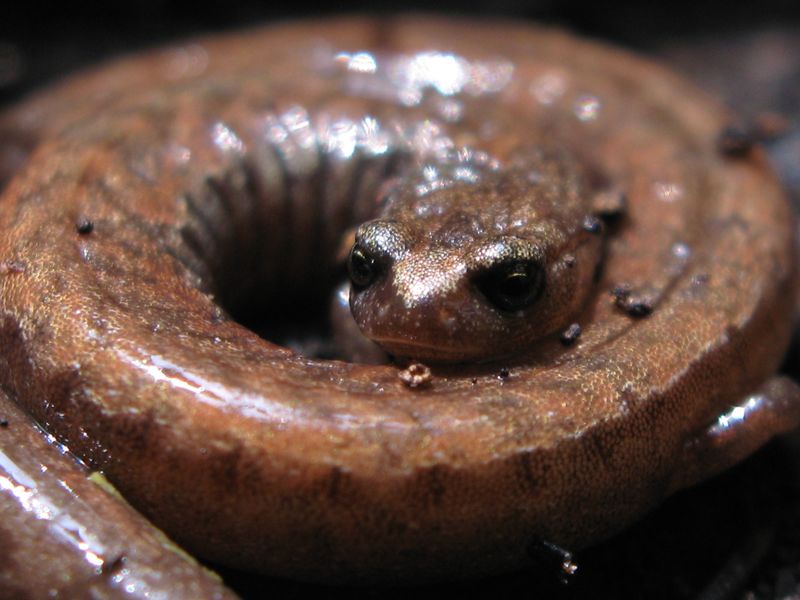
Salamanders need somewhere damp to hide, and they find it in ordinary spots. CDFW names leaf litter, decaying logs, bark, and flat stones as cover and foraging sites for B. attenuatus.
The kindest step is often the simplest: leave alone the moist, sheltered spots that already exist in the right parts of your yard. A rock at the base of a shady slope or an old log behind the shed may be doing more work than you realize.
CDFW also notes that many recaptured salamanders were found under the same cover object where they were first seen, which suggests these hiding places matter.
Be realistic about what you can control. No study shows that adding a log pile or a stone stack will bring salamanders to a yard.
If you already have cover and you live within the species’ range, protecting it is a reasonable choice. If you do not, there is no promise that building something new will change who shows up.
Choose spots away from the house, and keep the next section in mind before you leave anything in place.
Work carefully without compromising defensible space

Fire safety comes first. CAL FIRE’s defensible-space guidance calls for removing dead or dry vegetation and debris, and local rules can be stricter.
The Board of Forestry’s page says the Zone 0 rules were still under final review at its latest update. Check with your local fire authority, and never keep litter or wood where the rules say to remove it.
Farther from the house, where rules allow, a little care goes a long way. Move stones, boards, and logs slowly, and put them back the way you found them when you can.
One empty look under a rock does not prove the area is unused, because salamanders retreat underground.
CDFW also notes that eggs are commonly laid underground and may occur under surface objects. That is a good reason to go easy on cover you do not need to disturb.
No source measures how often routine yard cleanup harms these animals. So this is careful practice, not a tested protocol.
Do the required clearing, and be gentle with everything else.
Use integrated pest management for slug damage
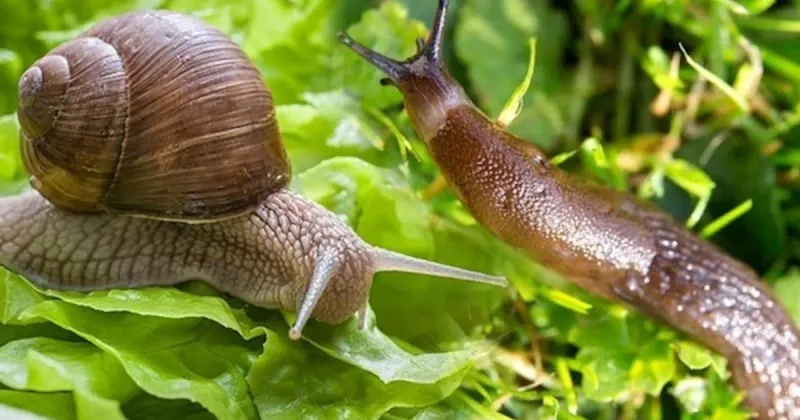
If slugs are chewing your plants, start with UC IPM’s guidance on snails and slugs. It lays out a step-by-step approach that combines several methods rather than relying on one fix.
UC IPM says natural enemies of slugs and snails are generally not effective enough to give satisfactory control in home gardens. That means hoping salamanders will handle the problem is not a plan.
Baits need thought too. UC IPM notes they can affect non-target mollusks, and the risks vary with the active ingredient and the product.
Sources do not show that baits harm California slender salamanders, and different products should not be treated as if they act the same way. Read the label and the UC IPM advice before you choose.
Keep the two goals separate. Manage slugs with proven methods, and protect existing salamander cover as a side benefit of good stewardship where the species lives.
A salamander under a stone is a quiet reminder that a yard can hold more life than it shows.