
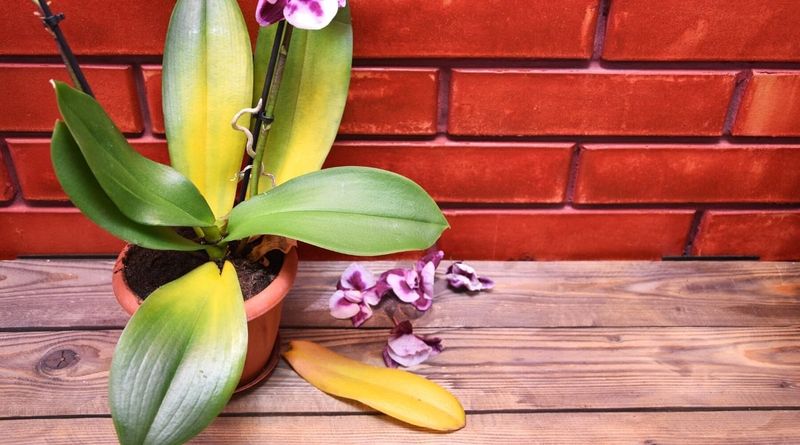
Summer in Florida can leave orchids looking rough, with droopy leaves, tired roots, and pots that never seem to dry the same way twice. Fall is a good time to slow down and look closely at what your plant is telling you.
A careful checkup can sort out normal aging from real problems. It also helps you avoid fixes your orchid does not need.
Start by identifying the orchid
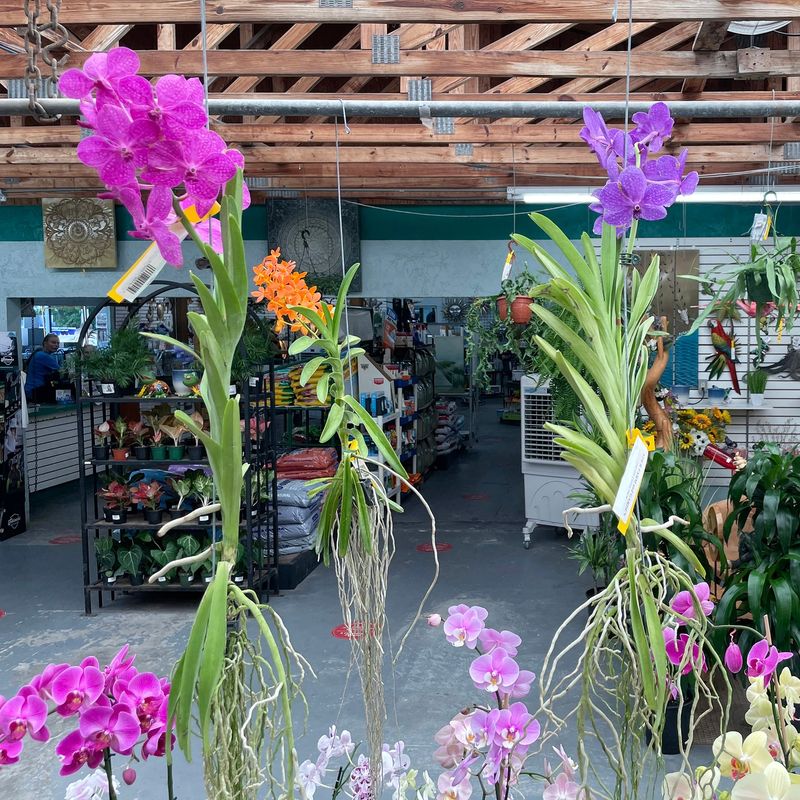
Before you change anything, figure out what you are growing. “Orchid” covers a huge range of plants, and they do not all want the same water, light, temperature, or flowering routine. UF/IFAS Extension in Clay County recommends identifying the plant before setting its care routine.
Start with the tag that came with the plant or the store receipt. If both are gone, look at the shape.
Phalaenopsis, often sold as moth orchids, have broad, flat, fleshy leaves and thick roots that often creep over the pot edge. Vandas have strap-like leaves in two neat rows, and they are often grown in open baskets with roots hanging in the air.
These two make a handy comparison because their seasons differ. UF/IFAS Extension in Charlotte County reports that Vandas commonly bloom from spring through fall.
Phalaenopsis follow a different seasonal pattern, which we will get to later.
Do the best you can here. A photo of the whole plant, the leaves, and the roots can help a local orchid society or your county extension office narrow it down.
If you cannot name it exactly, stay cautious and make small changes.
Is that yellow leaf a warning?
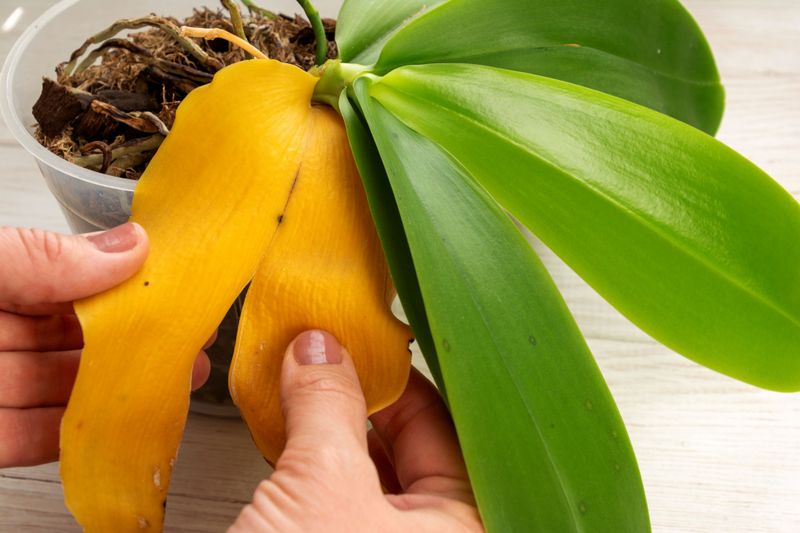
A yellow leaf grabs attention, but it does not always mean something went wrong this summer. According to the American Orchid Society, a single older Phalaenopsis leaf can yellow naturally.
If it is one lower leaf and the rest of the plant looks firm and green, it may simply be aging.
Widespread change is different. Yellowing across several leaves, wilting, or blotches deserve a closer look.
Root problems, temperature stress, pests, and disease can all cause those symptoms.
Take a step back and look at the whole plant. Are the leaves plump or wrinkled?
Is the yellowing on old leaves only, or on new growth too? Did the plant recently move, get hit by a cold snap, or sit in a hot window?
Worn leaves alone are too vague to name a cause. Write down what you see, take a photo, and keep going through the checkup.
The next sections cover roots, water, light, and pests, and those will help you connect the leaf clues to a real cause.
Roots and potting mix tell a fuller story
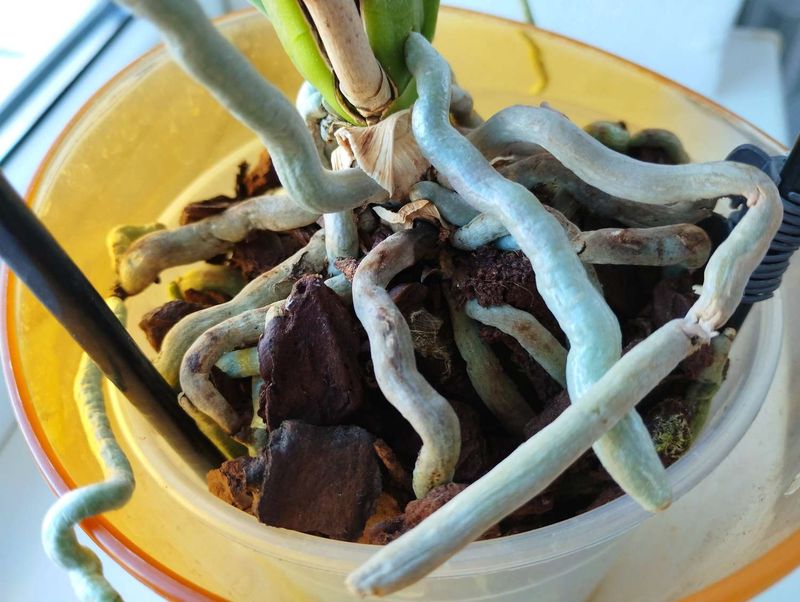
Roots hold a lot of answers, so look at them before changing your care. If your orchid is in a clear pot, you can check without disturbing it.
Otherwise, gently lift the plant and look at the roots and the mix around them.
Feel matters more than color. The American Orchid Society describes mushy or hollow roots as a sign the medium may be staying too wet.
Firm roots can be dark or brown for reasons other than rot, so color alone is not a reliable diagnosis.
Squeeze a root gently. A firm root is a good sign, even if it looks tan or brown.
A root that collapses, feels squishy, or is empty like a thin tube is more worrying.
Now look at the potting mix. Bark and other media break down over time.
When the mix turns soft, packed, or soggy, it can hold too much water and contribute to root loss.
In a Florida summer, frequent rain and humid air can keep some pots wetter than you expect. Hot, breezy spots may dry fast instead.
Either way, let the roots and the mix guide you, not guesswork.
Jot down what you find: firm, mushy, hollow, or mixed. That note will shape your watering and repotting decisions in the next sections.
Water by how quickly the pot dries
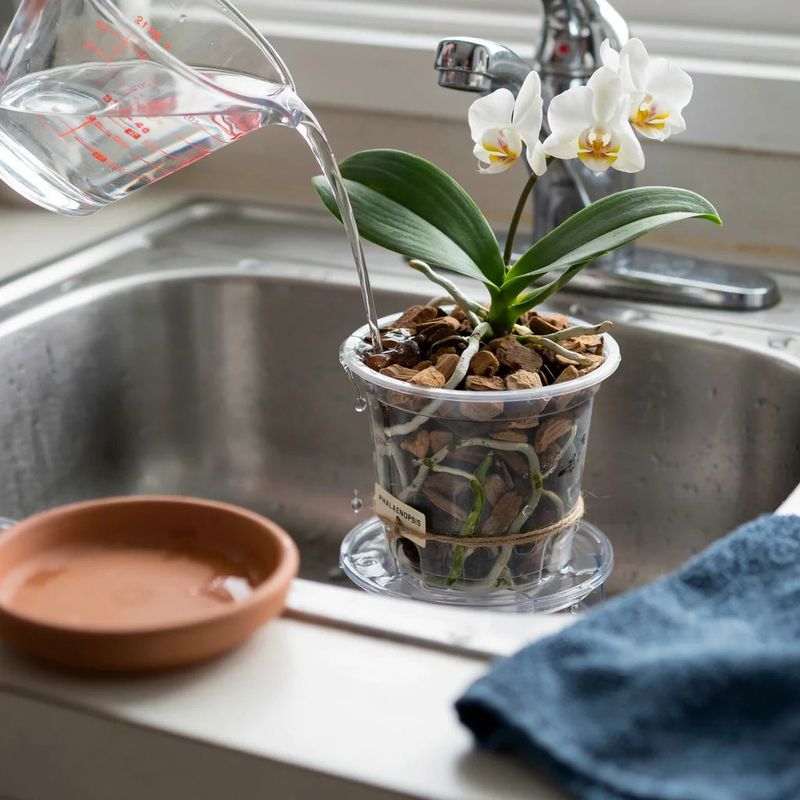
A fixed schedule like “every Sunday” will not fit every Florida home or every orchid. Heat, airflow, pot type, and potting medium all change how fast a pot dries.
A plastic pot in a shaded corner holds moisture far longer than a clay pot on a breezy porch.
For Phalaenopsis, the American Orchid Society culture sheet advises watering thoroughly, then waiting until the medium is nearly dry. Water in the morning, and do not leave water sitting in the crown where the leaves meet.
Put your root check to work here. If you found mushy roots and soggy mix, the pot may be staying wet too long, so give it more time between waterings.
If the mix dries out in a day or two and roots look shriveled, you may need to water sooner, or think about the pot and medium.
Let the pot drain fully. Do not leave it standing in a saucer or outer pot full of water.
Tip out any extra after a few minutes.
Other orchids differ. A Vanda in an open basket may be watered far more often than a Phalaenopsis in bark, so match the routine to your plant.
Ice cubes are a debated shortcut. One Ohio State and University of Georgia experiment found no measured harm under its test conditions, but some extension advice discourages the practice.
Ordinary watering with good drainage is the safer route.
Bright, indirect light is a safer reset
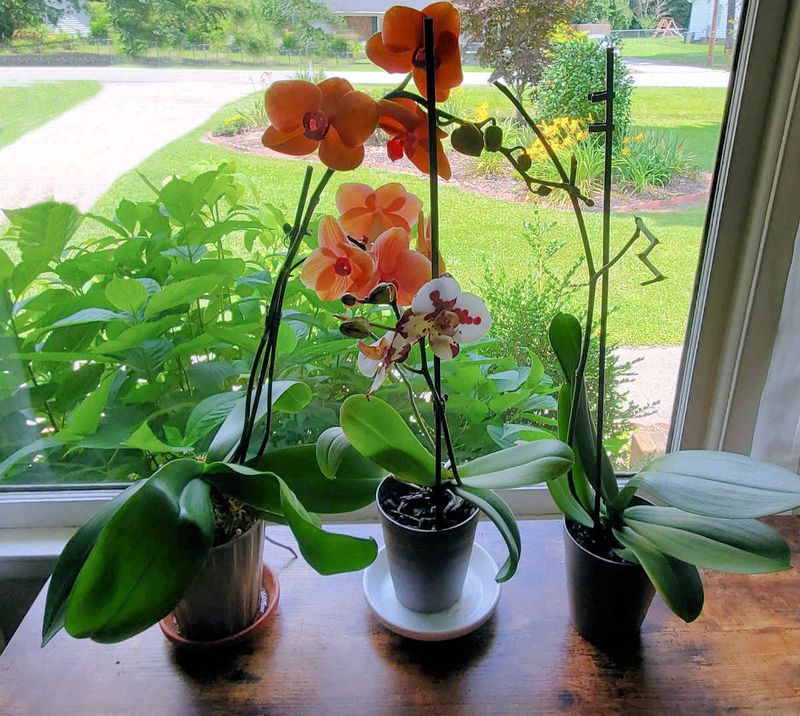
Light shapes both leaf health and flowering. UF/IFAS says most orchids prefer bright, indirect light and may fail to bloom in a dark location.
The American Orchid Society warns that excessive heat and direct sun can injure leaves.
So think of light as a dial, not a switch. If your orchid has sat in deep shade all summer, a brighter spot may help.
If it has scorched, bleached, or bronzed patches, it may be getting too much.
Make changes in small steps. Moving a plant straight into harsh Florida sun is a fast way to burn leaves.
Try a spot with bright light filtered through a sheer curtain, a screen, or tree canopy, and watch for a week or two before moving again.
Leaf clues can help. Dark, floppy leaves may signal too little light.
Leaves that feel hot, look yellow-white, or show dry brown patches may be getting too much.
Different orchids have different needs, so a Vanda in a sunny basket is not a good model for a Phalaenopsis on a windowsill. Check what your plant type prefers, then adjust gently.
Repot only when the plant or medium calls for it
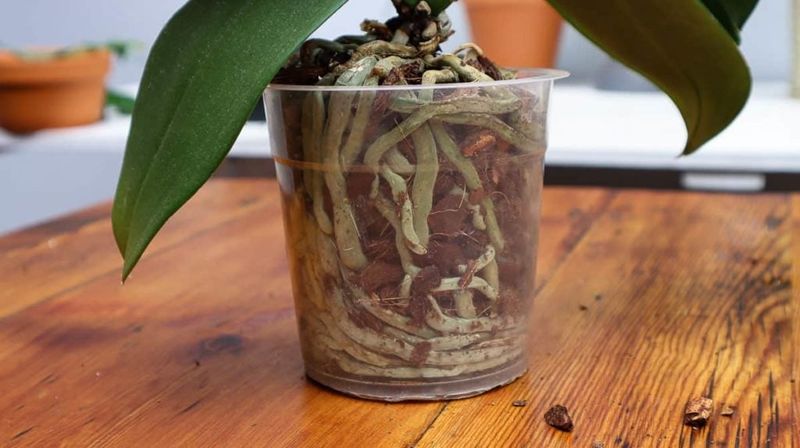
The end of summer is not a reason by itself to repot. Good reasons are that the medium has broken down or the plant has outgrown its pot.
If the mix still drains well and the roots are healthy, leave things alone.
Timing matters too. The American Orchid Society says new roots just beginning to form are a favorable time to repot.
It also notes that repotting a plant in bloom can risk premature flower loss.
When you do repot, follow UF/IFAS guidance. Remove dead or diseased roots, water the plant afterward, and withhold fertilizer for several weeks.
Use clean scissors or pruners, and fresh orchid medium suited to your plant type. Choose a pot only slightly larger, if the plant needs more room at all.
A giant pot holds extra wet mix, which is the opposite of what most orchids want.
Not sure whether it is time? Look at the medium first.
Mushy, compacted, or crumbly mix is a stronger sign than a plant that merely looks tired.
If your orchid is holding flowers, it is usually kinder to wait until they finish, unless the plant is in real trouble.
Inspect for pests and disease
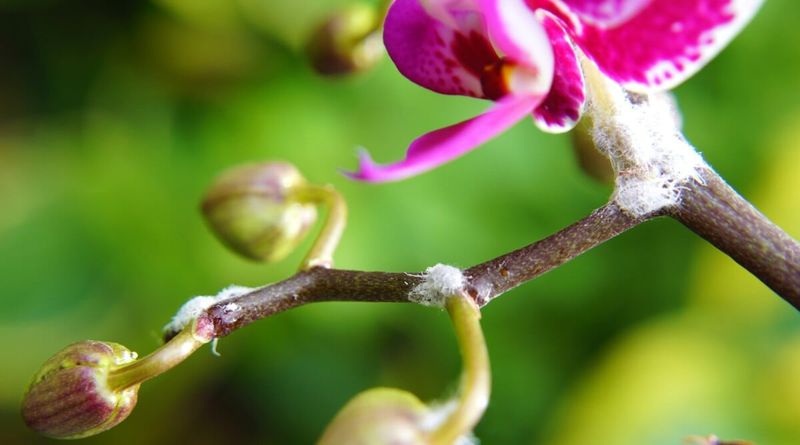
A good checkup goes beyond water and roots. UF/IFAS lists scale, mealybugs, thrips, and mites among common orchid pests.
Look at the undersides of leaves, along the stems, and around the crown and any flower buds.
Watch for small bumps, cottony white clusters, sticky residue, speckled or silvery leaf surfaces, and distorted growth. A hand lens or your phone camera zoom can help.
Pests are easy to miss without a close look.
If you suspect disease, move that plant away from your others. UF/IFAS advises isolating plants suspected of disease and using clean tools.
Wipe or sanitize scissors and pruners between plants, and again between cuts on a suspect plant.
These are practical checks and containment steps. They do not guarantee that a problem will never spread, but they give you a sensible way to limit contact while you figure out what you are dealing with.
If you are unsure what you are seeing, take clear photos and ask your county extension office or a local orchid society. A quick identification helps you pick the right next step.
Fall can cue a spike, but October is no deadline
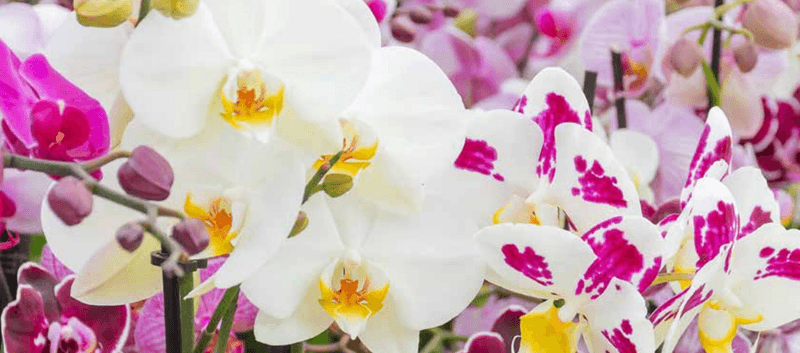
Recovery and flowering are related, but they are not the same job. Some orchids do respond to fall conditions.
The American Orchid Society says Phalaenopsis can respond to cooler fall nights and shorter days, and that spikes often show up in early winter.
The AOS culture sheet describes several weeks of autumn nights near 55°F as a possible cue. It also says usual night temperatures should generally remain above 60°F.
That makes 55°F a general cue, not a Florida prescription, and it is no reason to leave an unidentified orchid out in the cold.
Three stages are easy to mix up. Spike initiation happens inside the plant, a visible spike appears later, and open flowers come later still.
A fall cue does not promise a spike by October, or a bloom on any date.
Other orchids follow other calendars. As noted earlier, UF/IFAS Extension in Charlotte County reports that Vandas commonly bloom from spring through fall.
So keep your focus on plant health. Good roots, sensible watering, and suitable light give your orchid its best chance, but they cannot guarantee flowers.
Make one evidence-based change at a time
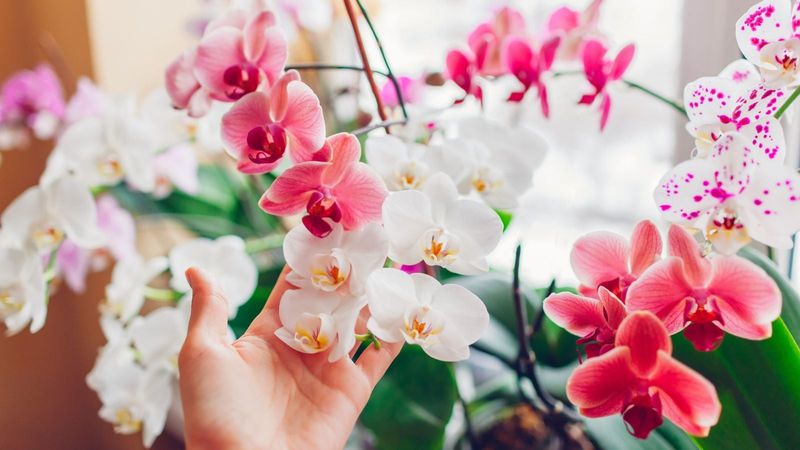
Work in order. Identify the orchid, look over leaves and roots, judge the medium, then adjust water or light.
Repot only if the plant or mix calls for it. UF/IFAS Extension and Gardening Solutions are good places to check orchid-specific guidance.
Change one thing at a time, then watch for a few weeks. That way you know what helped.
Stacking several fixes at once leaves you guessing.
A worn-looking orchid in fall is a reason to look closely, not to rush. Steady, orchid-specific care beats any deadline.