
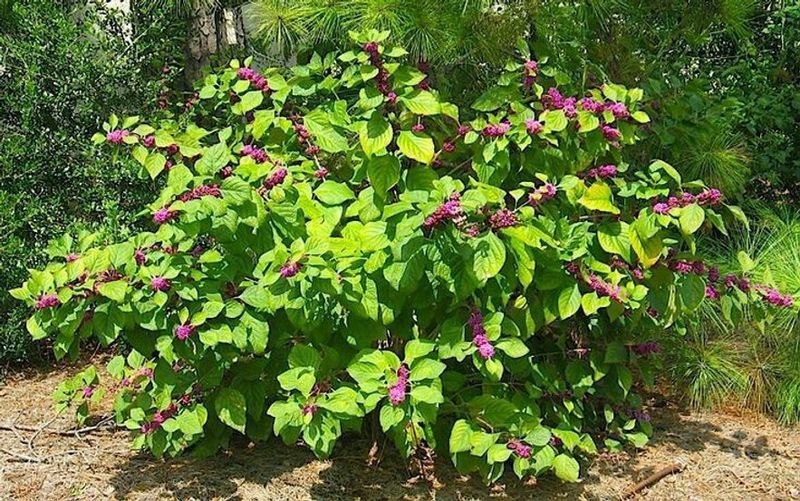
Tucked into the edges of southeastern forests, American beautyberry (Callicarpa americana) is a native shrub that most North Carolina homeowners walk right past without a second look. Yet it feeds songbirds, supports pollinators, and hosts specific butterfly and moth larvae across several seasons.
On top of that, two compounds found in its leaves showed up in a USDA laboratory study with surprising results involving ticks. Understanding what the plant actually does, and what the science really says, helps you decide whether it belongs in your yard.
The plant behind the story is a native shrub
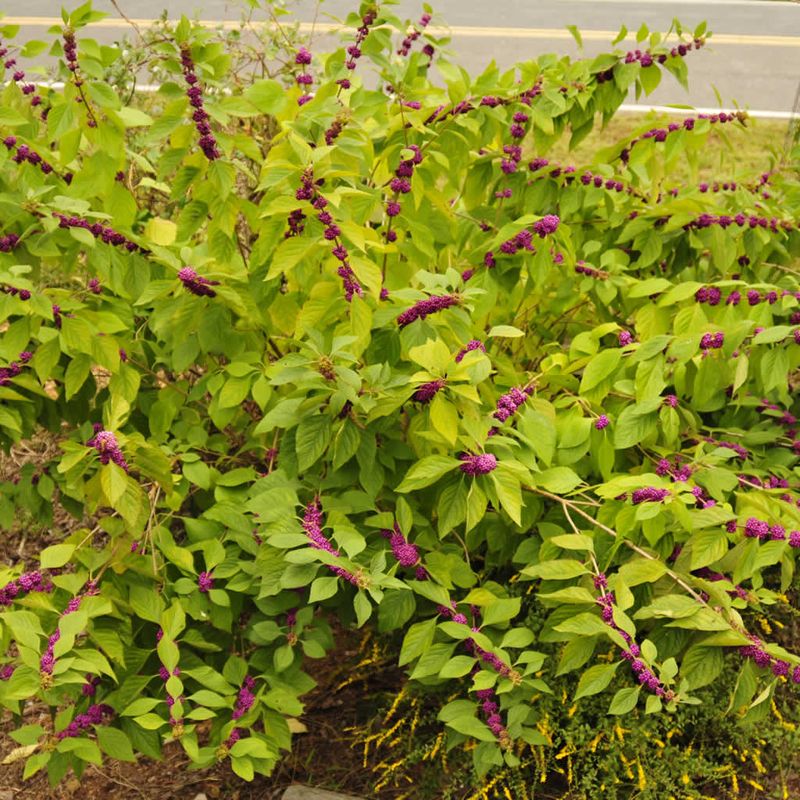
American beautyberry, known scientifically as Callicarpa americana, is the plant at the center of the wildlife-and-tick conversation you may have seen circulating online. One thing worth clearing up right away: the title that sparked much of this interest called it a tree, but NC State Extension’s plant profile classifies it as a deciduous shrub, typically reaching 3 to 8 feet tall and 3 to 6 feet wide at maturity.
That distinction matters when you are choosing a spot for it in your yard, because a multi-stemmed shrub with arching branches behaves very differently from a canopy tree in terms of placement, pruning, and the space it claims over time.
American beautyberry is native to the southeastern United States, and its presence in North Carolina is not evenly distributed across the state. NC State lists it as horticulturally suitable for the Coastal, Piedmont, and Mountain regions, so nurseries across the state carry it.
Its documented natural distribution, however, is more concentrated in the Coastal Plain and southeastern Piedmont, which means mountain gardeners in particular should confirm local suitability, check plant provenance, and consider whether their specific site conditions match what the shrub prefers before purchasing.
The name “American beautyberry” is the right one to use when researching or buying this plant. Several introduced Asian species in the same genus, including Callicarpa japonica and Callicarpa dichotoma, are sold in nurseries and share a similar berry display, but they are not the same plant and do not carry the same native ecological relationships.
Using the full common name, or the scientific name Callicarpa americana, keeps the distinction clear and helps you source the right species for a North Carolina wildlife garden.
Beautyberry supports wildlife in distinct seasons
One of the most practical things to know about American beautyberry is that its value to wildlife is real but seasonal, not continuous. The shrub produces small, pink to lavender flowers on new growth during late spring and into summer.
Those flowers attract a range of pollinators, including native bees and butterflies that visit for nectar, making the plant a useful addition to any yard where pollinator support is a goal.
Beautyberry’s relationship with insects goes beyond flower visits. University of Florida IFAS documentation identifies American beautyberry as a larval host plant for two specific species: the spring azure butterfly and the snowberry clearwing moth.
This is a separate function from pollinator attraction. Host plants provide the leaves that caterpillars and larvae feed on, which is a foundational role in a wildlife-friendly yard that often gets overlooked in favor of showier flower benefits.
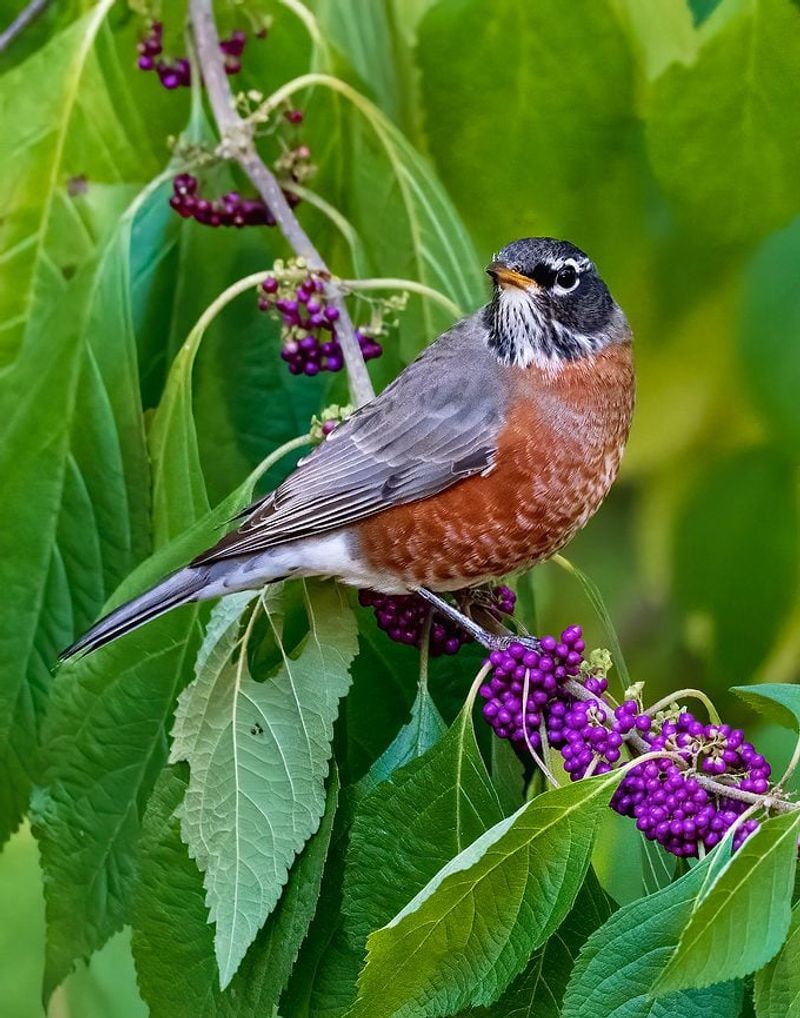
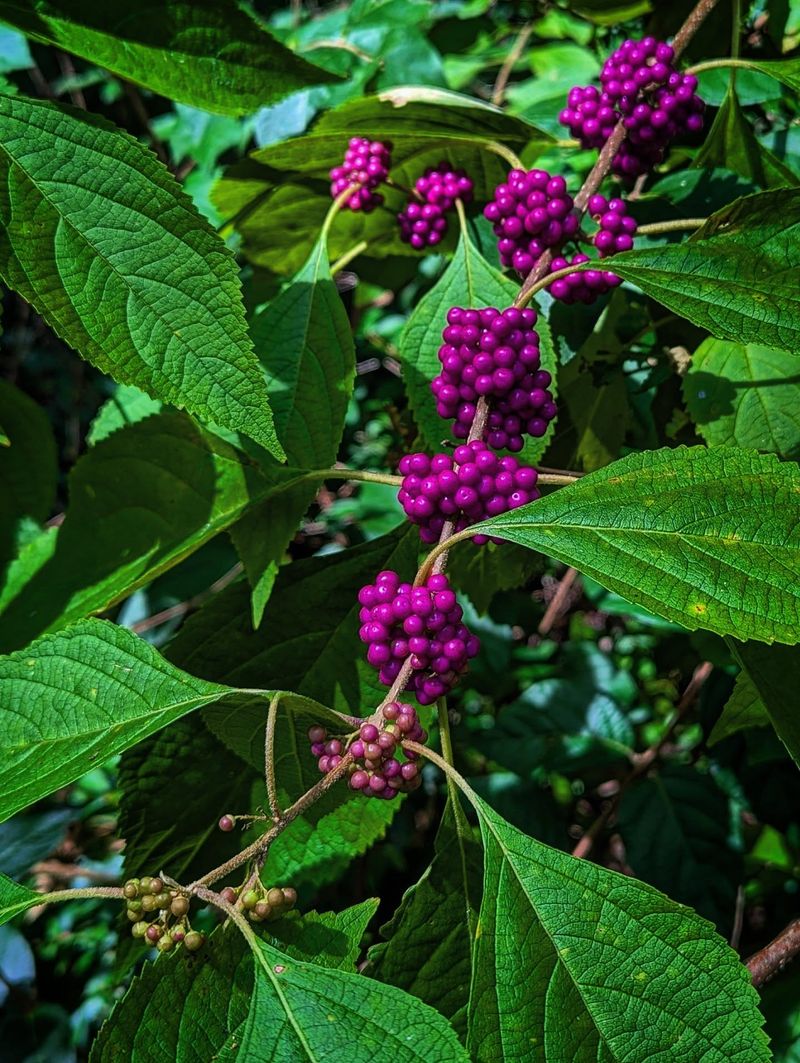
The fruit is where beautyberry gets its name and its most visible wildlife role. Clusters of vivid purple or bluish berries develop along the stems from roughly August through October and can persist into early winter if birds do not strip them first.
NC State’s wildlife documentation lists American robins, brown thrashers, purple finches, and eastern towhees among the birds recorded feeding on the fruit, along with small mammals. Deer also browse the foliage and fruit, which is worth knowing if deer pressure is heavy in your area.
The seasonal arc runs from spring flowers and larval hosting through late-summer and fall fruit, giving the shrub genuine multi-season value without overstating it as a year-round food source.
The tick evidence comes from a controlled laboratory assay
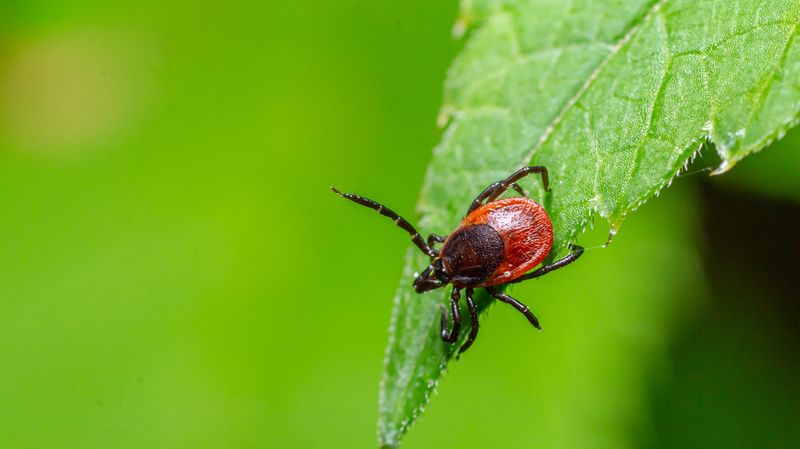
The tick story attached to American beautyberry traces back to a specific piece of research, and understanding what that research actually tested matters before drawing any conclusions about the plant. Scientists at the USDA Agricultural Research Service isolated two chemical compounds from Callicarpa americana: callicarpenal and intermedeol.
These are terpenoid compounds found in the plant’s leaves, and the researchers tested whether they could repel ticks under controlled laboratory conditions.
The published study used fingertip assays, meaning treated material was applied to a cloth wrapped around a finger and then exposed to tick nymphs in a controlled setting. The test subjects included nymphs of two tick species found in the Southeast: blacklegged ticks (Ixodes scapularis) and lone star ticks (Amblyomma americanum).
Callicarpenal produced the strongest result against blacklegged-tick nymphs, repelling 98% at one tested dose under those specific assay conditions.
Two important limits come with that headline number. First, the repellency declined with time.
In the duration portion of the testing, callicarpenal repelled all tested blacklegged-tick nymphs at three hours but dropped to repelling only 53.3% at four hours at the reported dose. Second, the compounds performed substantially worse against lone star ticks, which are common across much of North Carolina and the broader Southeast.
That species-specific gap is a major qualification for anyone reading the research from a North Carolina yard perspective.
The USDA ARS summary of the findings described the work as preliminary potential, not a finished product or a consumer recommendation. The compounds were isolated and tested in a laboratory, not applied as fresh leaves, not spread around a yard, and not tested as part of any registered repellent formulation.
Keeping that distinction clear is what allows the research to be genuinely interesting without being misleading.
A beautyberry shrub cannot serve as a proven tick barrier
Laboratory repellency by isolated compounds is genuinely interesting science. Planting a shrub in your yard is a different thing entirely, and the gap between those two outcomes is where the tick-barrier claim falls apart.
The USDA study did not test a living beautyberry plant, crushed leaves applied to soil or grass, or any residential landscape scenario. No published research demonstrates that growing American beautyberry in your yard reduces the number of ticks on your property, prevents ticks from moving through your lawn, or lowers the risk of tick-borne illness for people who spend time outside.
Tick species make the limitation even sharper for North Carolina homeowners. The same study that produced the strong blacklegged-tick result showed callicarpenal and intermedeol performed substantially worse against lone star ticks.
Lone star ticks are widespread across the state, aggressive in their host-seeking behavior, and associated with several illnesses. A research finding that holds up well against one tick species under laboratory conditions but weakens considerably against another species is not a foundation for treating any plant as a landscape-level pest barrier.
Comparisons that describe beautyberry compounds as working “like DEET” deserve the same caution. DEET comparisons in the research were made under specific assay conditions involving isolated compounds at particular doses, not fresh plant material, not a living shrub, and not outdoor application to skin.
Those conditions do not translate into “plant this shrub and get DEET-like protection in your yard.” The research is worth knowing about as a scientific lead, one that may eventually contribute to new repellent products. Treating it as proof of all-season yard protection overstates what the data actually show.
Choose a suitable site and prune for new growth
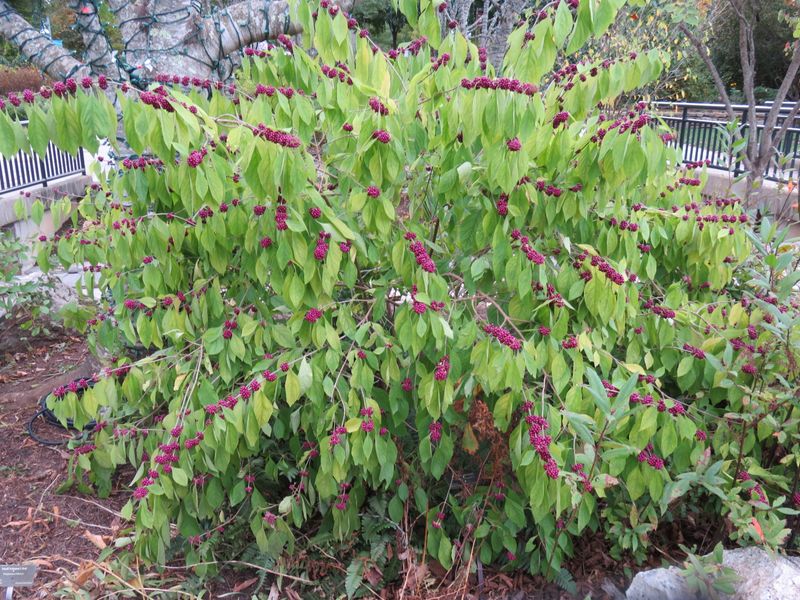
Picking the right spot for American beautyberry is straightforward once you know its preferences. The shrub handles full sun to partial shade, which gives it flexibility along woodland edges, fence lines, or open borders where afternoon light is filtered.
Adequate drainage matters more than soil type: beautyberry tolerates a range of soil textures as long as the roots are not sitting in standing water. A spot that stays wet after heavy rain is not a good fit.
Provenance is worth a few minutes of attention before you buy. Because the shrub’s documented natural range in North Carolina is concentrated in the Coastal Plain and southeastern Piedmont, plants grown from local seed sources are more likely to be adapted to your specific conditions than those grown from distant stock.
Mountain gardeners face a wider gap between the plant’s natural habitat and local growing conditions, so checking with a local Extension office or native plant nursery about site suitability and sourcing is a practical step before committing to a planting.
Flowers and fruit both form on new growth, which shapes how and when you prune. Late winter or early spring, before new shoots emerge, is the right window for any shaping or size management.
Cutting the shrub back at that point encourages a flush of new stems, which in turn carry the summer flowers and the fall berry clusters. Heavy pruning is optional rather than required: if the plant fits its space and you are satisfied with its size, light tidying is enough.
Avoid pruning in late spring or summer, because you would be removing the growth that carries that season’s flowers and the developing fruit.
Placement also connects to tick management in a practical way. CDC yard guidance recommends keeping play areas, decks, and patios away from yard edges and wooded zones where ticks are most active.
Beautyberry works well as a wildlife-garden planting set back from high-use family spaces, not as a dense border planted right up against a swing set or patio. Choosing placement thoughtfully means you get the habitat benefits without creating a spot where kids brush against shrubby vegetation at the yard edge where tick activity is highest.
Use CDC and EPA measures for actual tick protection

Reducing tick exposure around your home comes down to a combination of yard management and personal precautions, and the good news is that the recommended steps are concrete and manageable. CDC guidance on tick-safe yards focuses on removing the conditions ticks depend on: clear leaf litter from the lawn and garden beds, cut tall grass and brush near the house regularly, and mow the lawn on a consistent schedule.
Ticks do not travel far on their own; they wait in moist, shaded vegetation for a host to walk by, so reducing that habitat near the spaces your family uses most is the most direct intervention available.
A roughly 3-foot-wide barrier of wood chips or gravel placed between your lawn and any adjacent wooded or brushy area is another CDC-recommended step. That dry, open strip is harder for ticks to cross than a continuous carpet of grass or leaf cover, and it creates a clearer boundary between managed yard space and tick-active habitat.
Keeping play equipment, decks, and seating areas toward the center of the yard rather than against the wooded edge reduces the chance of ticks dropping from vegetation onto people.
Personal protection matters just as much as yard management. CDC recommendations for preventing Lyme disease and other tick-borne illnesses include wearing long sleeves and pants when spending time in or near wooded areas, tucking pants into socks, showering within two hours of coming indoors, and doing a full-body tick check after outdoor time.
Prompt removal of any attached tick is critical: the longer a tick feeds, the higher the transmission risk for certain pathogens.
For repellents, use products that are registered with the EPA and have been evaluated for both safety and effectiveness. EPA guidance on using repellents safely covers active ingredients, correct application, and age-related considerations for children.
Registered repellent options include DEET, picaridin, IR3535, and oil of lemon eucalyptus, among others. Crushing beautyberry leaves and rubbing them on skin is a folk practice that lacks validated formulation, dose, safety, and regulatory information; it is not a substitute for a registered product, especially for children or anyone with sensitive skin.
Plant beautyberry for habitat, not false security
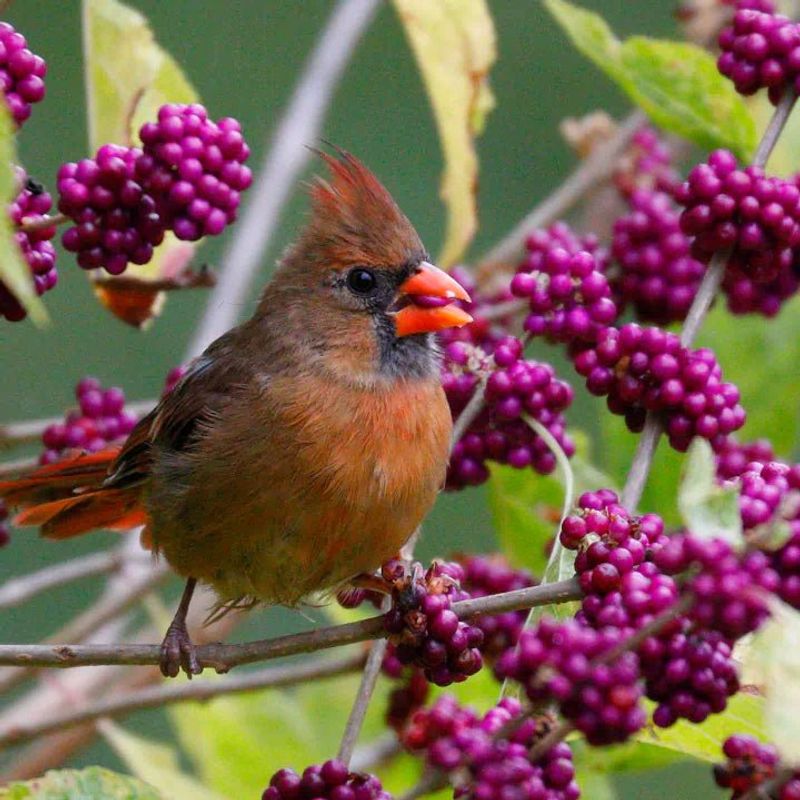
American beautyberry earns a genuine place in a North Carolina wildlife garden on its own terms. Its documented seasonal value includes pollinator-attracting flowers in late spring and summer, larval-host relationships with the spring azure butterfly and snowberry clearwing moth, and clusters of purple fruit from late summer into early winter that feed songbirds and small mammals.
That combination of functions makes it a practical choice for anyone trying to build more wildlife activity into a low-maintenance yard.
Its connection to tick research is real but narrow. The laboratory finding that two isolated beautyberry compounds repelled blacklegged-tick nymphs under controlled assay conditions is an interesting scientific lead.
Planting the shrub does not extend that result into your yard, reduce the tick population on your property, or provide any measurable personal protection. The ecological profile of Callicarpa americana as a hardy southeastern native stands on its own without the tick claim attached.
The workable approach is to plant and maintain American beautyberry where the site fits, pairing it with CDC landscape practices and EPA-registered personal repellents for actual tick-risk management. A shrub that feeds birds, supports native insects, and looks striking in fall is already doing enough good work without being asked to stand guard.