
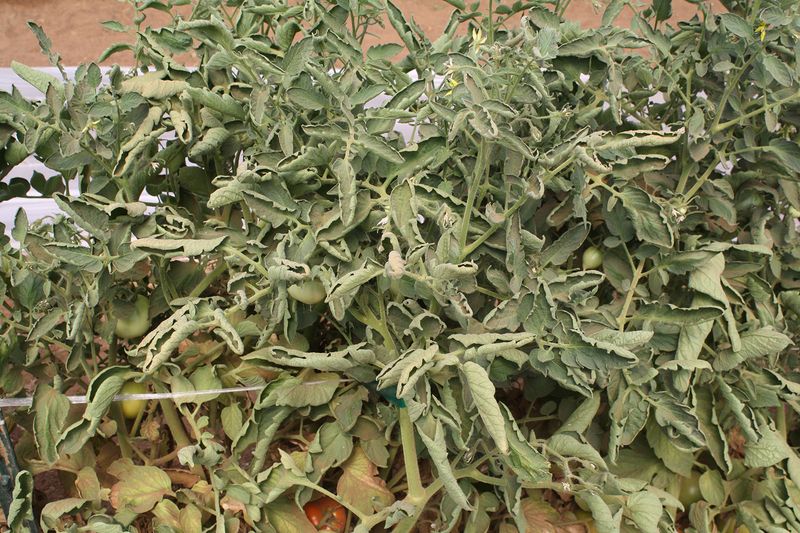
Walking out to your tomato plants on a blazing August morning and finding tightly curled, leathery leaves can feel like something has gone seriously wrong overnight. For most Southern gardeners dealing with relentless summer heat, that alarming curl is actually a stress response called physiological leaf roll, and it does not mean your plants are dying.
Knowing how to read the pattern of symptoms is what separates a simple care adjustment from unnecessary panic. Once you understand what to look for, you can stop chasing the wrong problem and focus on what actually helps your plants.
The green, leathery lower leaves usually tell a different story
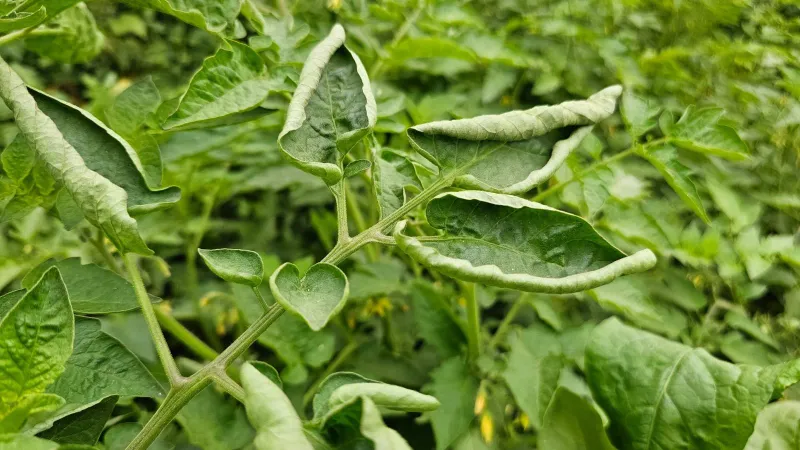
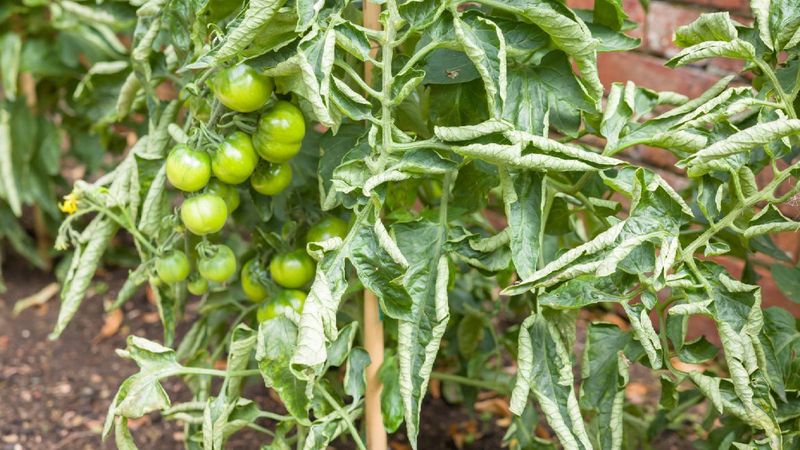
Tomato leaves that roll upward and inward, feel thick or rigid to the touch, and still hold a healthy green color are showing a recognizable pattern. University of Minnesota Extension describes this physiological leaf roll as a noninfectious stress response in which leaf margins curl upward and sometimes fold so far inward that they overlap or form a tube shape.
The texture can feel leathery or firm, yet the color stays normal rather than yellowing or browning.
Critically, the problem tends to appear on the older, lower leaves first before moving up the plant. A tomato that is still putting out new growth, setting flowers, and developing fruit while its bottom leaves look like tightly rolled cigars fits this pattern far better than it fits the picture of a spreading disease.
The plant as a whole should look vigorous, not collapsed or wilting across all its growth.
Leathery texture alone, however, is not enough to call it physiological leaf roll with confidence. Clemson Extension and the University of Minnesota tomato diagnostic tool both point to the full combination of symptoms as the reliable checkpoint: upward or inward rolling, older leaves affected first, normal green color, and an otherwise healthy plant.
Use all four clues together before drawing any conclusions, because other problems can produce curled leaves too.
Late-summer stress changes how tomato leaves hold water
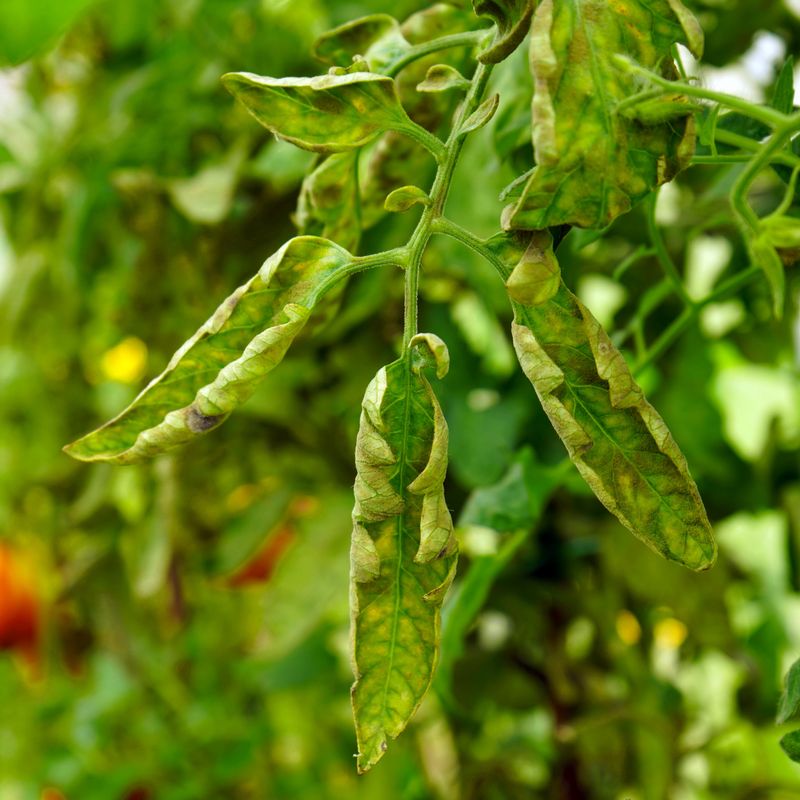
Tomato plants respond to stress by adjusting how their leaves manage water loss, and rolling the leaf margins inward is one way the plant reduces the surface area exposed to sun and dry air. UC IPM lists heat, drought, uneven moisture, and excessive soil moisture as conditions associated with physiological leaf roll, along with rapid growth, heavy fruit load, root disturbance, heavy nitrogen applications, and severe pruning.
That list matters because it knocks out a common assumption. Curled leaves do not automatically mean the soil is dry and the plant is thirsty.
Overwatered roots can be just as stressed as drought-stressed ones, and both situations can produce the same outward curling. Washington State University HortSense specifically notes that fluctuating soil moisture is among the triggers, meaning irregular watering patterns can be just as problematic as consistent underwatering.
Southern late-summer conditions pile on multiple stresses at once. Daytime temperatures in Florida and Texas regularly push well above 90 degrees Fahrenheit in August, soils can swing from saturated after a thunderstorm to bone-dry within days, and plants carrying a heavy load of ripening fruit are already working hard to move water and nutrients.
Missouri Extension describes physiological leaf curl as the most common reason for abnormal tomato leaf growth, and the combination of heat, moisture swings, and fruit load in late summer makes the response especially likely in Southern gardens.
Stabilize the root zone instead of chasing the curl
Before adjusting anything, check the soil moisture and drainage. Push a finger two inches into the ground near the root zone: if it feels dry at that depth, the plant may need water; if it feels soggy, the problem could be the opposite.
Reacting without checking first is one of the fastest ways to make physiological leaf roll worse.
Once you know the soil condition, aim for slow, deep watering that keeps moisture consistent rather than repeated shallow sprinkling. Iowa State University Extension offers roughly 1 inch of water per week as a general home-garden starting point, while Utah State University Extension suggests 1 to 2 inches per week.
Neither figure is a fixed rule: heat, recent rainfall, soil type, plant size, container growing, and drainage all change what your specific plants actually need. Use those numbers as a ballpark, not a prescription.
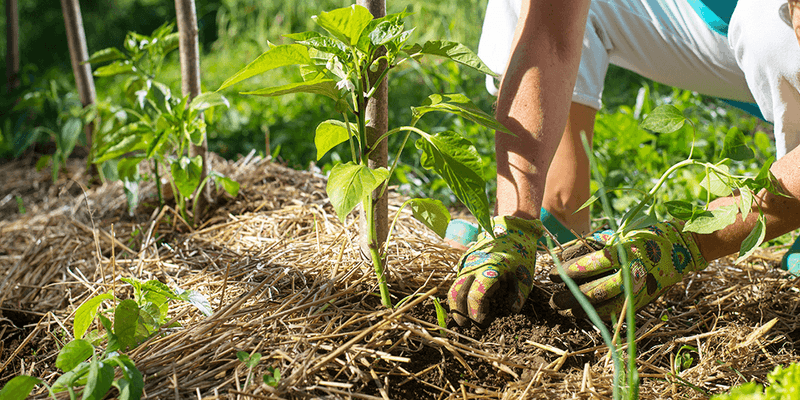
Mulch is one of the most practical tools available for root-zone stability. A 2 to 3-inch layer of organic mulch – straw, wood chips, or shredded leaves – helps the soil hold moisture longer, moderates soil temperature during the hottest part of the day, and suppresses weeds that compete for water.
Keep the mulch pulled back a couple of inches from the main stem to avoid trapping moisture against it.
For watering method, apply water at the soil surface rather than overhead. Texas A&M AgriLife Extension and other sources consistently recommend morning watering at the base of the plant, because splashed soil can carry fungal spores that cause diseases like Septoria leaf spot.
Drip irrigation or a soaker hose does this job efficiently and keeps foliage dry.
Two common fixes can make physiological leaf roll worse
Reaching for a bag of fertilizer when tomato leaves curl is a natural impulse, but extra nitrogen is one of the last things a plant showing physiological leaf roll needs. Clemson Extension identifies excess nitrogen as a possible contributor to leaf roll, not a remedy.
Pushing more nitrogen into a stressed plant can encourage a flush of leafy vegetative growth at the expense of fruit development and can make the rolling worse rather than better.
Fertilize only when a soil test or clear deficiency symptoms give you a specific reason to act. Utah State University Extension recommends basing fertilizer decisions on soil tests rather than on visible symptoms alone, because deficiency and toxicity can look similar and guessing wrong costs you both time and fruit.
Aggressively stripping off curled leaves is the other common mistake. It feels productive, but UC IPM guidance on pruning tomatoes notes that severe pruning can itself trigger or worsen leaf roll.
Beyond that, foliage shields developing fruit from direct sun: remove too many leaves and you invite sunscald on fruit that was perfectly protected a day earlier.
Finally, Washington State University HortSense is clear that no chemical treatment is recommended for physiological leaf roll itself. Applying an insecticide or fungicide to a plant that has a noninfectious stress response does nothing for the plant and adds unnecessary chemical exposure to your garden.
Reserve any product for a situation where you have actually identified a pest or disease, and always follow the label.
Recovery shows up in new growth, not necessarily old leaves
Once you have stabilized moisture and avoided counterproductive interventions, the temptation is to stare at the curled leaves waiting for them to flatten. That wait can be discouraging, because University of Massachusetts Extension specifically notes that older leaves may stay rolled even after conditions improve.
Judging recovery by whether existing leaves uncurl is the wrong yardstick.
A better measure is what the plant does next. Healthy new leaves emerging at the growing tip, continued flower development, and fruit that keeps sizing up are the real signals that the plant is managing its stress and moving forward.
University of Minnesota Extension points to normal new growth and continued productivity as the indicators that physiological leaf roll is not causing lasting harm. Progressive yellowing, browning, stunting, or a halt in flowering are the signs that call for closer investigation.
Keep in mind that severe heat and drought can produce their own separate effects on a tomato plant, and those effects are not the same thing as physiological leaf roll. UF/IFAS Extension in Florida and other Southern sources note that flower drop, poor fruit set, sunscald, smaller-than-normal fruit, and reduced overall yield can all result from the stress of extreme summer conditions.
Those outcomes are real and worth acknowledging, but they stem from the heat and drought themselves, not from the leaf-rolling response as a separate cause.
New distorted growth is the warning sign to investigate
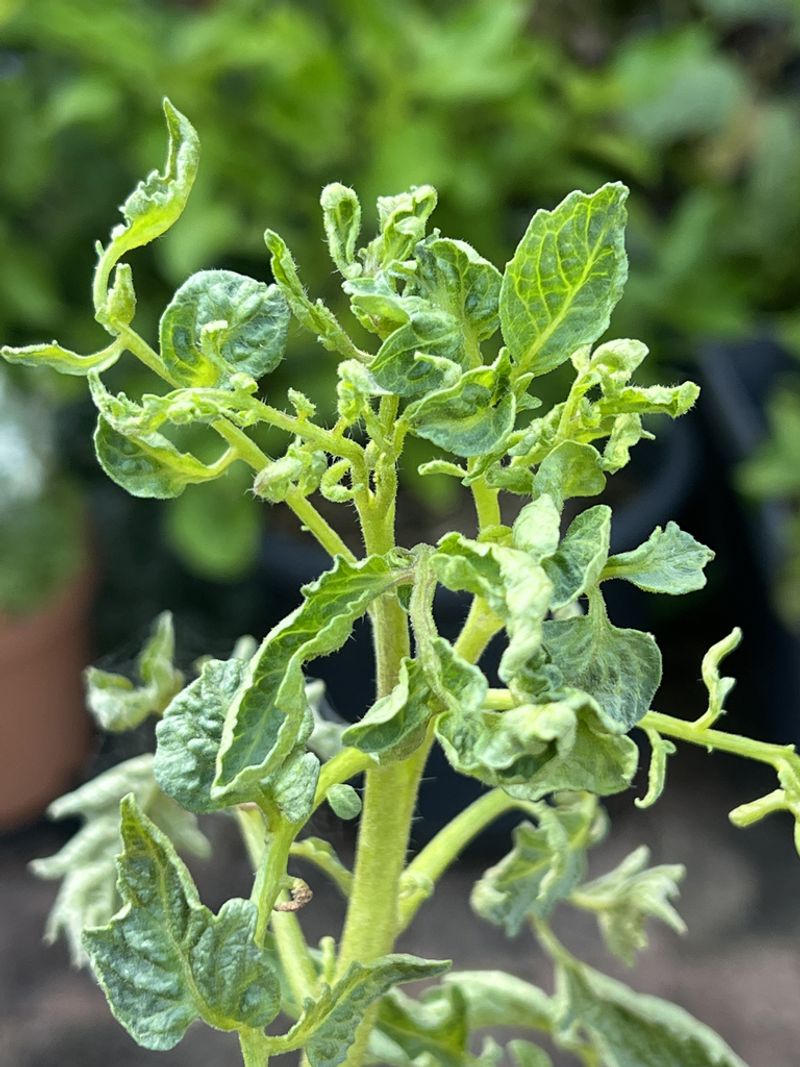
Physiological leaf roll stays predictable when it follows its classic pattern: older leaves, upward or inward rolling, normal green color, vigorous plant. The moment you notice the newest growth at the top of the plant looking wrong, the diagnostic calculus changes.
Texas A&M AgriLife and University of Maryland Extension both flag twisted, narrow, cupped, stunted, yellow, mottled, brittle, fernlike, or shoestring-like new growth as symptoms less consistent with ordinary physiological leaf roll and more suggestive of viral infection, herbicide injury, or another disorder.
Tomato yellow leaf curl virus is a specific concern for gardeners in Florida, Texas, and other Gulf Coast states. NC State Extension describes the virus as producing upward or downward leaf curling accompanied by yellowing of young leaves, crumpling, shortened internodes between leaves, overall plant stunting, bushy growth, and flower drop.
The virus is transmitted by whiteflies, so its presence often comes with visible insect activity on the undersides of leaves.
Herbicide injury is another serious look-alike that Southern gardeners should not overlook. Drift from products containing 2,4-D, dicamba, or related compounds can travel from a neighboring lawn or field and land on your tomatoes.
The pattern is telling: herbicide injury typically hits the newest growth first and may produce twisted or spiraling stems, thickened veins, strapping of leaf tissue, bleaching, browning, or symptoms concentrated on the side of the plant facing a spray source. EPA registration-review material on pyridine and pyrimidine herbicides documents how persistent herbicide residues can also reach garden soil through contaminated compost, manure, hay, or grass clippings – meaning you do not have to witness a spray event to experience the damage.
Other viruses can produce mottling, necrotic spots, or severe distortion that should not be dismissed as summer heat stress.
Inspect the undersides before blaming insects
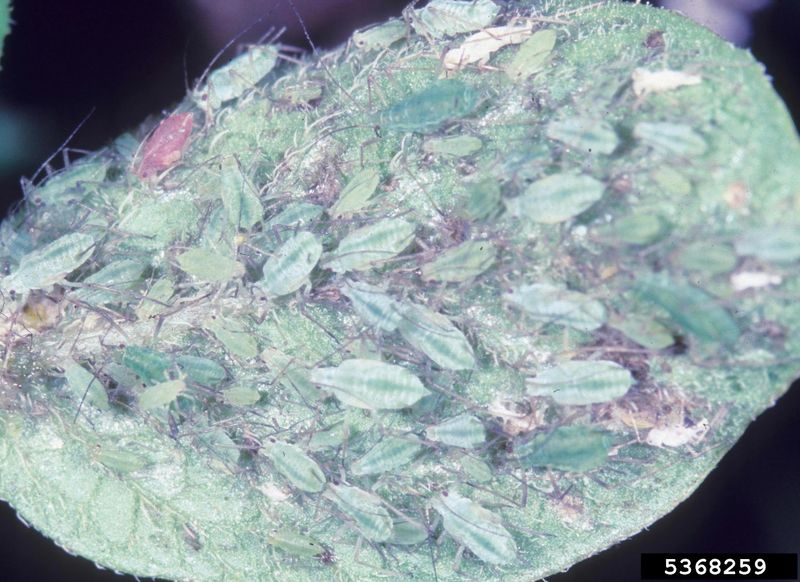
Sap-feeding insects are capable of causing tomato leaves to curl, but the key word is “capable.” Curling alone is not enough evidence to justify spraying anything. Before reaching for a product, flip the leaves over and look at the undersides, especially on younger leaves and at the growing tips where aphids, whiteflies, and thrips tend to cluster first.
What you find on the undersides will guide your next step. UC ANR urban IPM and the University of Minnesota diagnostic tool both recommend examining leaf undersides and new growth carefully before drawing conclusions.
If you see small clusters of soft-bodied insects, sticky honeydew residue, or sooty mold growing on that residue, insects are more likely involved. Also look for natural enemies: lady beetles, lacewing larvae, and tiny parasitoid wasps often work the same leaves and can keep pest populations in check without any intervention from you.
Resist the urge to apply a homemade soap or oil mixture at the first sign of trouble. UC IPM guidance on tomato whiteflies cautions that oils and soaps can injure foliage, especially when temperatures are high or when the product is applied at the wrong concentration.
Clemson Extension echoes the caution about misapplication risk in hot conditions. If a pest is confirmed and treatment is warranted, use a registered product according to its label, paying attention to pollinator safety and crop re-entry intervals.
The practical decision rule: a green, productive tomato with tightly rolled lower leaves and no visible insects or distorted new growth calls for stress reduction and observation. Progressive symptoms, identifiable insects, or distorted new growth are what warrant a closer look and a more targeted response.
A curled leaf is a clue, not a command to panic
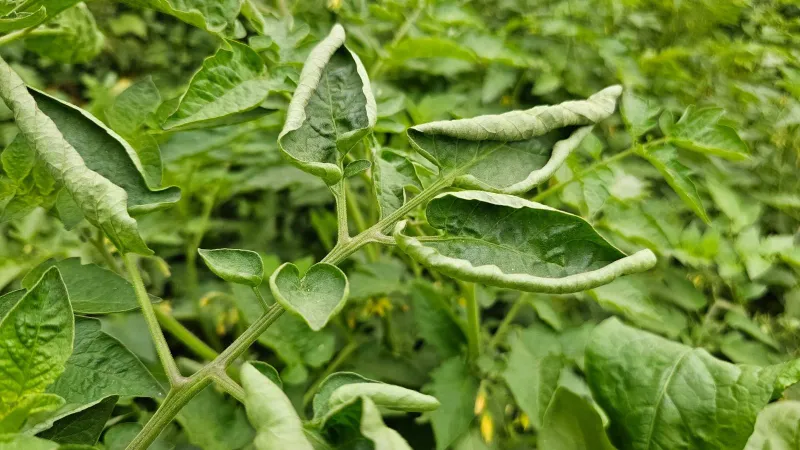
Green, upward- and inward-rolled lower leaves on a tomato that is otherwise growing, flowering, and setting fruit usually reflect physiological leaf roll. UC IPM and University of Minnesota Extension both confirm that this noninfectious stress response generally does not call for leaf removal, pesticide applications, or plant disposal.
The practical response is straightforward: check soil moisture before adding water, apply organic mulch to stabilize the root zone, skip extra nitrogen unless a soil test says otherwise, and avoid hard pruning that removes protective foliage. Then watch the new growth at the top of the plant rather than the older curled leaves lower down.
Keep the distinction clear between the leaf-roll response itself and the separate effects that severe heat or drought can have on yield, fruit size, and flower set. Those are real concerns for late-summer Southern gardens, but they call for the same stress-reduction steps rather than a different treatment.
A tomato plant curling its leaves is asking for steadier conditions, and giving it that is usually all it needs.