
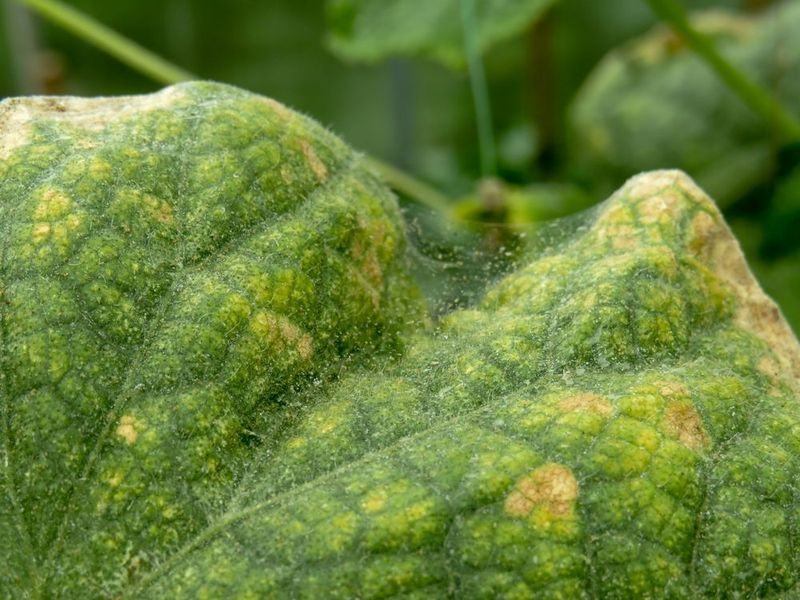
Walking out to your cucumber patch one August morning to find the leaves looking dull, dusty, and covered in tiny pale dots is a sinking feeling. That bronze, stippled look often points to spider mites, one of the sneakiest pests in the summer garden.
Getting a handle on what you are dealing with early can mean the difference between a vine that keeps producing and one that quietly collapses before the season ends.
Bronze, dusty stippling points to spider mites—but does not prove them
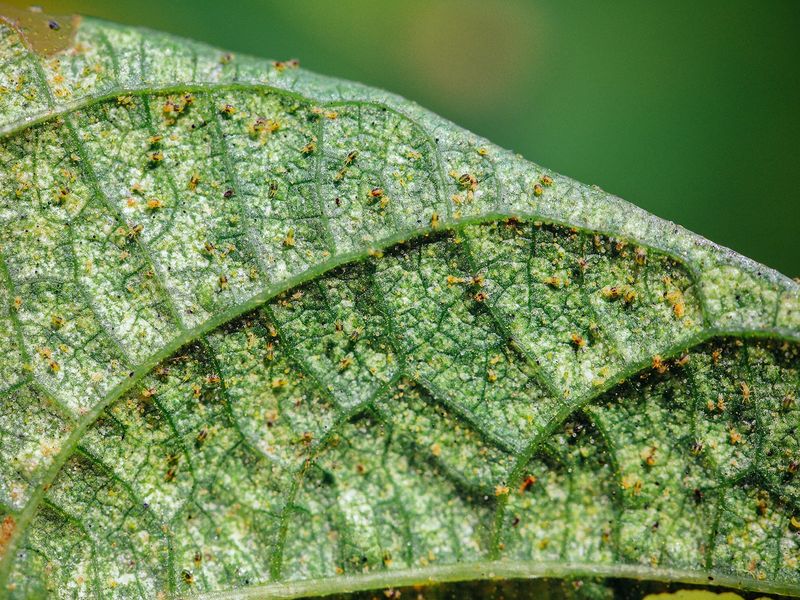
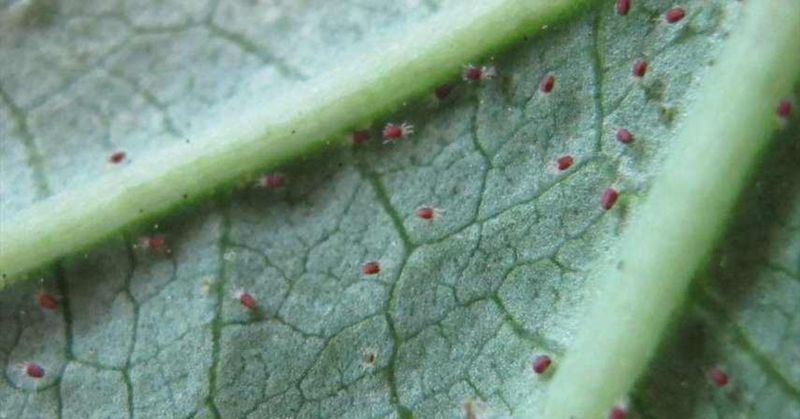
Fine pale dots scattered across cucumber leaves, a dull or dusty sheen on the vine, and patches of bronze or browning that seem to spread overnight are all symptoms that fit spider-mite injury closely. Twospotted spider mites (Tetranychus urticae) feed mainly on the undersides of leaves, puncturing individual cells to extract their contents and strip out chlorophyll.
UC IPM’s cucurbit spider-mite guidance describes how early feeding shows up as tiny pale or yellowish stipples, while heavier infestations can progress to bronzing, leaf browning, leaf drop, visible webbing, and reduced plant vigor or yield.
That progression matches what many Southern gardeners see when a vine starts declining in late summer. However, matching the symptom description is not the same as confirming the pest.
Several other problems produce overlapping discoloration: downy mildew, powdery mildew, bacterial or fungal leaf spots, nutrient deficiencies, drought stress, aphids, thrips, and squash bugs can all leave cucumber leaves looking off in ways that overlap with mite injury. University of Minnesota Extension notes that stippling alone does not confirm spider mites without a closer look at the plant.
The practical step is to treat bronze, stippled leaves as a strong clue rather than a closed case. Before escalating to any treatment, flip the leaves over and look for the pest itself.
UF/IFAS documentation on twospotted spider mites confirms that the mites are tiny and often yellowish, greenish, orange, or reddish, and that adult mites have eight legs. Seeing them – or the evidence they leave behind – is what turns a strong clue into an actionable diagnosis.
Hot, dry weather helps an existing mite problem accelerate
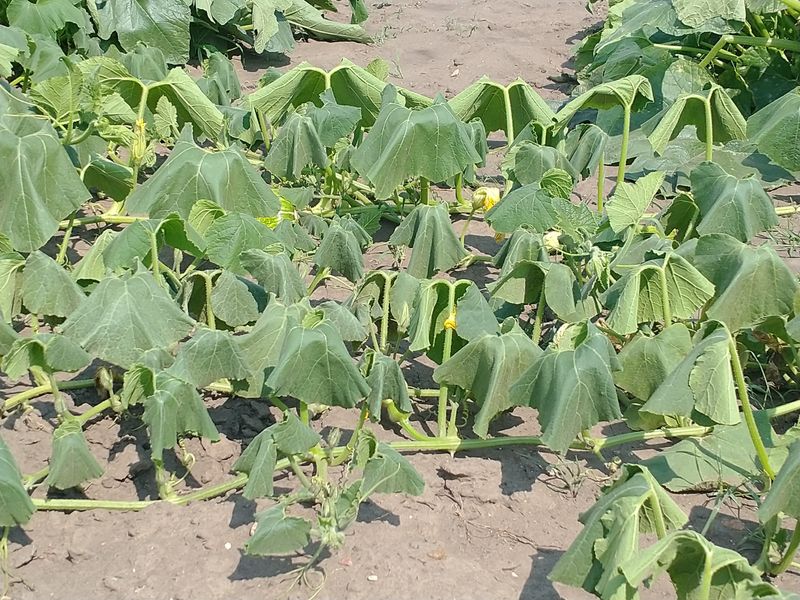
Heat and drought do not manufacture spider mites from thin air, but they create conditions where an existing population can expand rapidly and where cucumber plants become far less able to tolerate the damage. UC IPM’s home and landscape spider-mite resource explains that hot, dry weather speeds up mite reproduction cycles and stresses host plants simultaneously, a combination that tends to push light infestations toward heavier ones quickly.
Late summer is a plausible risk window across parts of the South, though the timing is not identical in every location. Florida and Texas gardeners face different planting calendars and climate patterns, so a late-summer mite surge in one area may occur at a different point in the season elsewhere.
UF/IFAS insect management guidance for cucurbits identifies spider mites as a significant cucumber pest in Florida specifically, while Texas A&M AgriLife documents twospotted spider mites as a common Texas pest across a range of crops.
The mites on your vine likely did not appear from nowhere. They may have been present on neighboring cucumbers, squash, melons, or tomatoes before the heat pushed populations higher.
Ornamental plants, weeds at the garden edge, transplants brought in from a nursery, and even contaminated tools or clothing can all introduce mites. Wind and the silken threads mites produce also allow them to drift short distances, which means a problem on one side of the garden can reach the other side faster than most gardeners expect.
Inspect the undersides and rule out look-alike problems
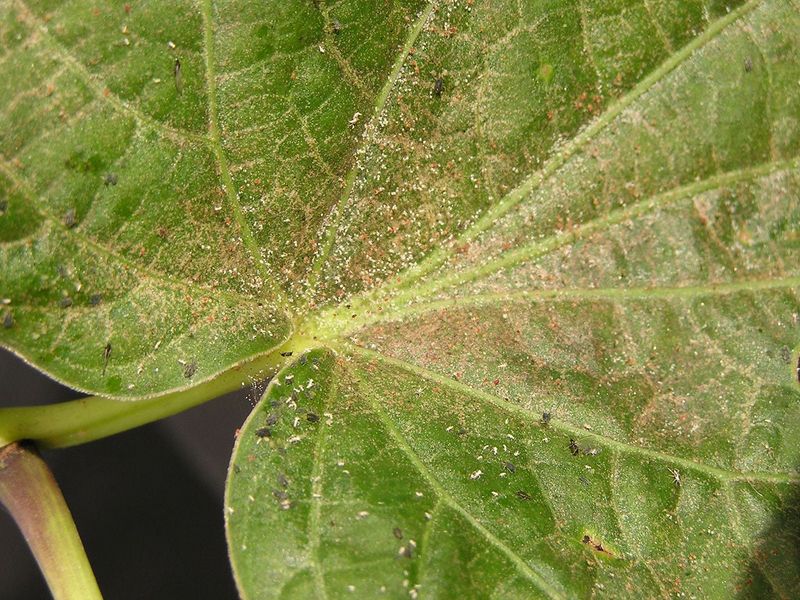
Flipping a discolored leaf over is the single most useful thing a gardener can do when cucumber symptoms look suspicious. The underside is where twospotted spider mites feed, lay eggs, and leave behind dark fecal debris.
A 10x hand lens makes the inspection far more reliable, but even without one, close examination under bright light can reveal movement or webbing that confirms a mite problem.
A quick field test involves shaking a suspect leaf firmly over a sheet of white paper, then watching the paper surface for a few seconds. Utah State University Extension recommends this approach and notes that tiny dots that begin moving across the paper are likely mites.
A hand lens helps distinguish mites from harmless debris or other small organisms that might also fall onto the paper. Texas A&M AgriLife describes the mites as extremely small and confirms that the eight-legged adults may appear yellowish, greenish, orange, or reddish, often with two darker spots.
Fine webbing on the leaf underside or along stems supports the diagnosis strongly, but UC IPM’s quick-tip spider-mite card clarifies that visible webbing usually indicates a heavier infestation and that its absence does not rule the pest out. Early-stage colonies may show no webbing at all while still causing real leaf damage.
Several diseases can mimic mite injury closely enough to mislead a quick glance. University of Maryland Extension’s cucumber problem key describes downy mildew as creating angular, vein-bounded yellow or tan lesions on the upper leaf surface, sometimes with a gray-purple fuzzy growth on the underside under humid conditions.
Powdery mildew produces a visible white powder on leaf surfaces. Cornell Vegetable Program’s cucumber leaf symptom key also notes that uniform yellowing without any mite evidence on the leaf underside may point to drought stress or a nutrient problem rather than pest feeding.
No single visual clue should be treated as definitive on its own.
Start with water, plant care, and repeated monitoring
Once mites are confirmed or strongly suspected, the lowest-risk first move is a firm but controlled stream of water aimed directly at leaf undersides and the lower portions of the vine. The water physically dislodges mites and can reduce a low-level population without introducing any chemical into the garden.
UC IPM and Utah State University Extension both recommend water sprays as a starting point for mite management, while being clear that this step addresses mites already on the plant rather than eggs or sheltered individuals tucked into leaf folds or stem crevices.
Recheck the vine two to three days after any water treatment. Eggs that survived the spray will hatch, and any mites that found shelter will resume feeding.
The National Pesticide Information Center notes that repeat monitoring and follow-up may be necessary because a single application rarely ends an established infestation. Pairing water sprays with consistent irrigation also matters: a water-stressed cucumber is more vulnerable to mite damage, and keeping soil moisture steady reduces that vulnerability.
Dust along garden paths or dry soil surfaces can coat leaf undersides and protect mites from contact treatments and predators. Reducing dusty conditions around the vine is a simple, low-effort step worth taking.
UF/IFAS vegetable insect management guidance links dusty, dry conditions to worse mite outbreaks on cucurbits. One important caution: do not turn water application into a daily overhead misting routine.
Frequent wetting of foliage raises the risk of fungal diseases, which can compound the vine’s problems rather than solve them.
Scout nearby plants to prevent a rebound
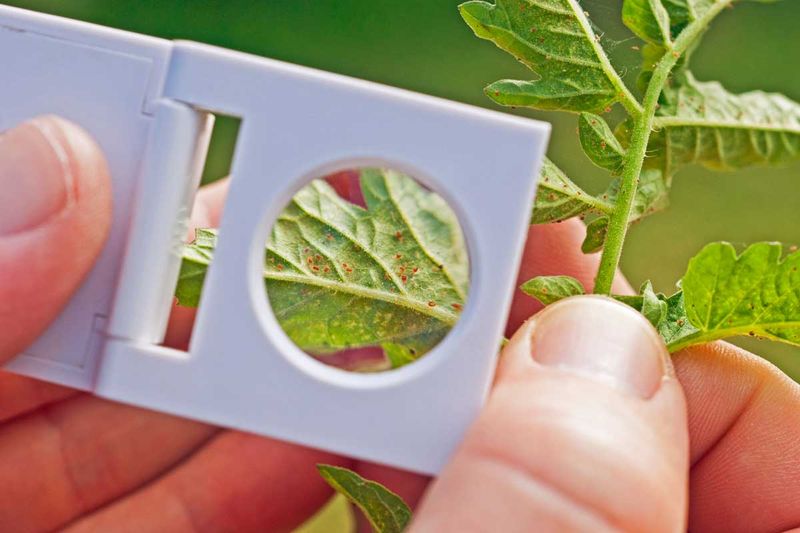
Treating the affected cucumber vine without checking the plants around it is like patching one side of a leaky boat. Spider mites move readily between neighboring hosts, and a garden with cucumbers, squash, melons, and tomatoes growing close together gives them plenty of options.
UF/IFAS vegetable insect management guidance specifically recommends scouting neighboring cucurbit hosts when managing mite populations, because reinfestation from an untreated plant nearby can undo any progress made on the original vine.
Ornamental plants and weeds at the garden perimeter deserve attention too. Washington State University’s spider-mite fact sheet notes that mites occupy a wide range of host plants and can move between them by direct plant contact, by drifting on wind currents, or by riding silken threads they produce.
Transplants purchased from a nursery and brought into the garden can also carry mites that were not visible at the time of purchase.
Tools, gloves, and clothing can transfer mites from an infested plant to a healthy one during routine garden work. Rinsing tools between plants and washing hands after handling a suspected plant are small habits that reduce that risk.
Utah State University Extension recommends ongoing scouting rather than a single check, because mite populations can rebuild quickly under warm, dry conditions. Build a habit of checking leaf undersides on the original vine and its neighbors every few days rather than assuming the problem has resolved after one round of treatment.
Protect natural enemies before choosing stronger treatments
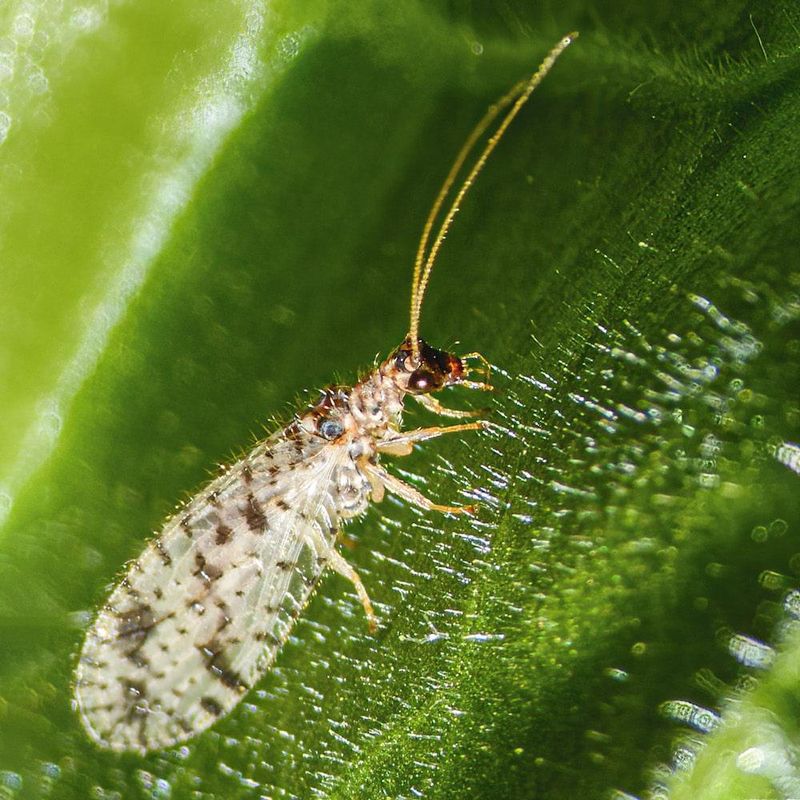
Before reaching for any spray, it pays to consider what is already working in the garden. Predatory mites, lacewings, lady beetles, minute pirate bugs, and predatory thrips all feed on twospotted spider mites and can keep populations from spiraling out of control when they are present in sufficient numbers.
UC IPM’s cucurbit spider-mite page identifies these natural enemies as an important part of mite suppression, particularly in garden settings where they can establish and persist.
Broad-spectrum insecticides are the biggest threat to this natural balance. Pyrethroids, organophosphates, and carbamates applied for any reason – whether targeting mites, aphids, or another pest – can kill predatory mites and other beneficial insects along with the target.
UC IPM’s home and landscape spider-mite resource warns that broad-spectrum treatments have been associated with mite resurgence and even population increases, because the natural controls that were suppressing the mites are eliminated. Utah State University Extension echoes this point for cucurbit gardens specifically.
Treatment decisions should rest on live mite activity, the pace at which injury is advancing, how much fruit the plant is still producing, the vine’s overall age and condition, and whether predators are visible on the leaves. Seeing damaged leaves alone is not enough reason to spray.
Purchased predatory mites are sometimes sold as a biocontrol option, but UC IPM notes that research has not established their effectiveness specifically in cucurbit crops, so they should not be counted on as a guaranteed rescue for a cucumber vine already in decline.
Use labeled soap or horticultural oil only when conditions are safe
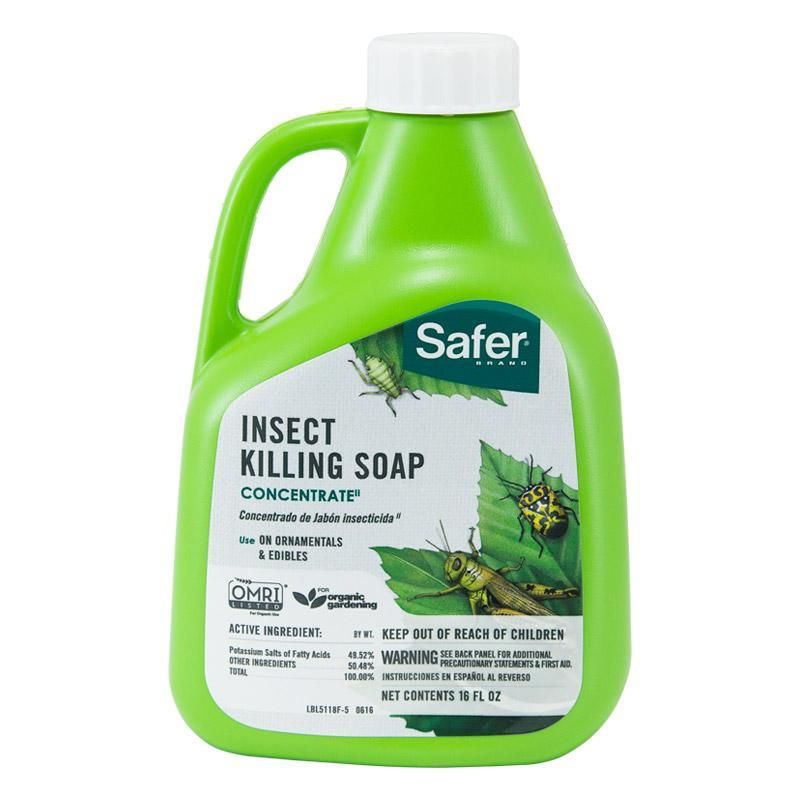
When water sprays, adequate irrigation, dust reduction, and predator preservation have not slowed an active mite infestation, a labeled insecticidal soap or horticultural oil may be a reasonable next step. Both are contact treatments, meaning the product must physically reach the mites to work.
That requires thorough coverage of leaf undersides, which is where the mites actually live and feed. A quick pass over the top of the plant accomplishes very little.
UC IPM and UF/IFAS guidance on natural pest management products both describe soap and oil as products that may require repeat applications according to the label, because a single treatment rarely reaches every mite or egg on the plant. Follow the product label exactly: use only a product specifically labeled for cucumbers or edible crops, apply at the rate listed, observe the pre-harvest interval before picking fruit, and wear any protective equipment the label requires.
Household dish soap is not a substitute for labeled insecticidal soap. UF/IFAS specifically notes that household soaps carry a higher risk of plant injury than commercial insecticidal soap formulations.
University of Connecticut Extension’s insecticidal soap fact sheet explains that commercial products are formulated to reduce phytotoxicity while still being effective against soft-bodied pests.
Cucumbers are sensitive to soap and oil injury, and that sensitivity increases under stress. Clemson Cooperative Extension advises against applying soaps or oils to drought-stressed plants or during direct sun exposure.
The National Pesticide Information Center similarly cautions against applications during very hot conditions. Early morning, when temperatures are lower and the plant is well-hydrated, is a safer application window than midday or afternoon in summer heat.
Sulfur-based products carry additional risks on cucurbits and should not be used without specific label guidance and careful attention to temperature limits.
Measure recovery by new growth and fruit, not old leaf color
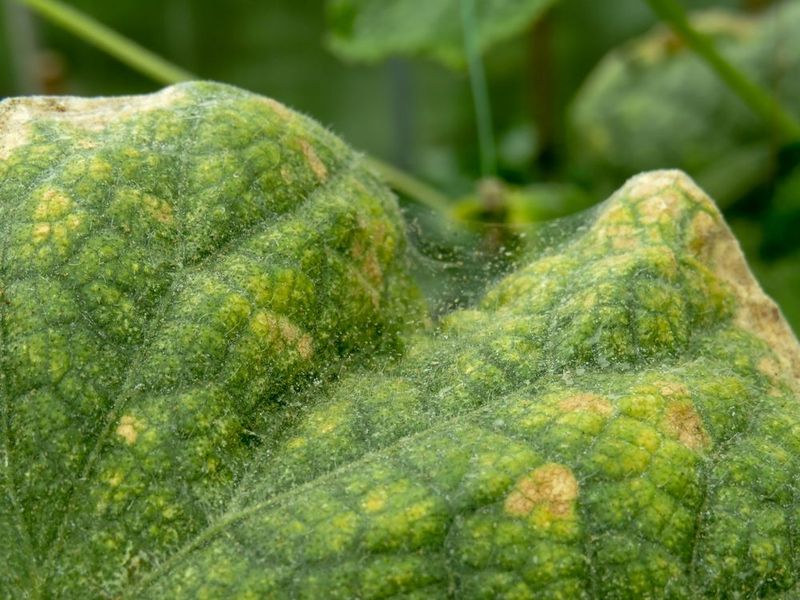
Severely bronzed or stippled leaves will not turn green again once mite feeding has killed or dried the affected tissue. That is a normal outcome, not a sign that treatment has failed.
UC IPM and University of Maryland Extension both point to fewer live mites, halted spread, new healthy growth, and continued fruit production as the meaningful signs of improvement. Focus your attention on the newest leaves emerging from the vine tips and on whether the fruit already setting is continuing to develop.
Cucumbers can tolerate some mite presence without a significant drop in yield, particularly on a plant that is otherwise healthy and well-watered. UC IPM notes that no universal spider-mite threshold has been established for cucurbits, which means treatment decisions should be based on live mite numbers, the pace of injury, plant condition, and fruit production rather than on a fixed mite count.
A vine showing active new growth and producing fruit while carrying some older bronzed leaves may not need further intervention beyond continued monitoring.
A severely infested plant that has stopped producing, is losing leaves rapidly, and is clearly declining despite treatment presents a different calculation. Mississippi State University Extension acknowledges that removing a heavily infested plant can be a reasonable choice when it is unlikely to recover and is serving as a source of mites for nearby plants.
Removal is not an automatic response to spotting mites or damaged leaves – it is a considered option for a vine that has passed the point where management is practical. A cucumber that still has green new growth and developing fruit is worth continuing to protect.