

Spotting a fox trotting through your yard on a summer morning can stop you in your tracks. Most homeowners wonder right away whether something is wrong with their property or whether the animal is sick or dangerous.
The truth is more straightforward: a fox showing up is usually a clue about what your yard or neighborhood quietly offers, not a sign of a crisis. Reading that clue correctly puts you in a much better position than reaching for a phone to call a trapper.
A Fox Sighting Signals Usable Habitat, Not an Infestation

Seeing a fox pass through your yard is best understood as an ecological clue rather than an alarm. The animal has likely found some combination of food, cover, or a relatively safe travel route somewhere in your yard or the surrounding neighborhood.
That does not mean your property is overrun with rodents or that rabbits are multiplying under your shed. The North Carolina Wildlife Resources Commission notes that foxes eat mice, voles, and rabbits but also consume insects, birds, eggs, fruit, berries, carrion, garbage, and pet food left outdoors.
Any one of those resources, or several in combination, could explain the visit.
A single sighting is weak evidence on its own. One fox passing through a yard on a Tuesday does not tell you what it ate, where it came from, or how often it plans to return.
Research on suburban wildlife finds that yards can concentrate food resources and prey species in ways that attract predators, but an animal’s activity is also shaped by the broader landscape around it. A fox’s home range commonly stretches well beyond any single property.
Before treating the sighting as a removal emergency, take a few days to observe. Notice whether the fox appears at the same time, follows the same path, or pauses in a particular corner of the yard.
That pattern tells you far more than the first glimpse does. Investigating what your yard offers, and adjusting it if needed, is a more reliable response than focusing on the fox itself.
What the Fox May Find Around a North Carolina Yard
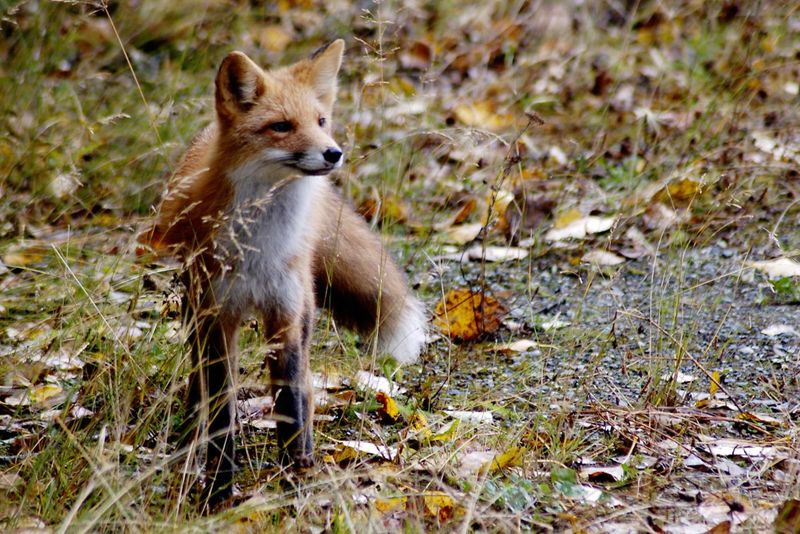
Foxes are opportunists, and a typical North Carolina yard offers more than most homeowners realize. On the food side, the list includes mice, meadow voles, rabbits, ground-nesting birds and their eggs, large insects, fallen fruit from apple or pear trees, spilled birdseed beneath feeders, compost piles, outdoor pet food bowls, poultry feed left in open containers, and unsecured garbage.
NCWRC’s guidance on coexisting with foxes specifically identifies pet food, bird food, and fallen fruit as attractants that bring foxes closer to homes. None of those items signals a hidden infestation; they are simply resources a fox will use if it finds them.
Cover and travel routes matter just as much as food. Red foxes are commonly associated with habitat edges: the line where a mowed lawn meets a woodlot, a drainage corridor behind a subdivision, an overgrown lot next door, a brushy fence line, or a pasture nearby.
Gray foxes, which are native to North Carolina, favor denser cover and can even climb trees. Either species might pass through a yard that sits along a natural travel corridor, even if that yard itself offers nothing remarkable.
Ornamental shrubs, dense ground cover, spaces beneath decks or porches, sheds with open gaps at the base, and crawl-space vents can all serve as resting spots or denning opportunities. Suburban wildlife studies show that the presence of these features can increase a property’s appeal to a range of animals, not just foxes.
Finding dense shrubs or a gap under your deck does not prove a fox is living there, but it does give you something concrete to inspect.
Why Summer Fox Sightings May Become More Noticeable
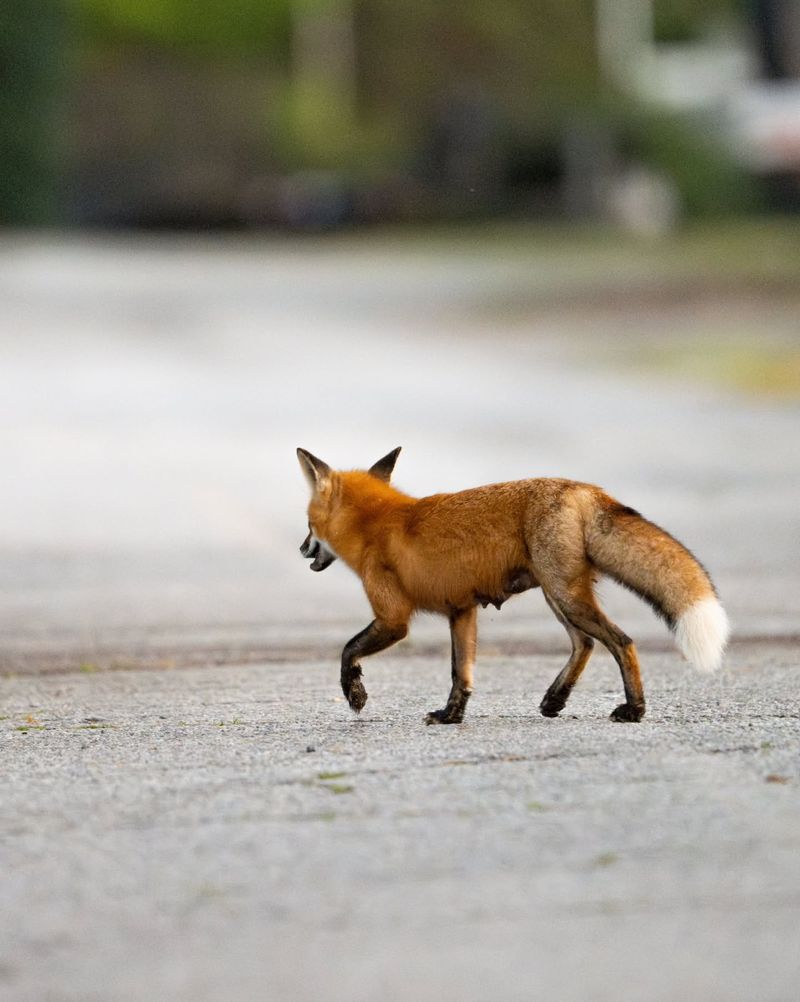
Summer fox activity has a seasonal explanation that has nothing to do with disease. In North Carolina, foxes give birth from late February through April.
NCWRC advises that kits begin exploring outside the den in late spring and early summer, which puts more foxes on the landscape at the same time that people are spending more time outdoors. The overlap naturally produces more sightings, even if the local fox population has not changed at all.
Young foxes are also less experienced at avoiding people, so they may linger in open areas longer than an adult would. An adult fox hunting during daylight hours is not automatically a cause for concern either.
NCWRC notes that while foxes are mostly nocturnal, daytime activity is common enough that it should not be treated as a red flag on its own, particularly during the spring and summer months when adults are feeding kits.
Increased visibility is not the same as a growing population, a den under your porch, or a fox that has lost its fear of people. A fox that trots across your yard at noon in July may simply be a young animal still figuring out its territory, or an adult taking a shortcut through a familiar travel route.
Jumping to conclusions about what the sighting means can lead to unnecessary stress and actions that are harder to undo than the original visit.
How to Tell Whether a Fox Regularly Uses the Property

One glimpse of a fox is not enough to conclude that the animal has claimed your yard. The difference between a fox passing through once and one that returns regularly matters a great deal for deciding what, if anything, to do.
Repeated sightings at similar times or places, images from a trail camera, fresh tracks in soft soil or mud, scat along a fence line, prey remains such as feathers or fur, or disturbed soil and matted vegetation beneath a structure all build a stronger case for regular use.
Even with that evidence, the picture stays incomplete. A fox detected on your trail camera three nights in a row may be covering a home range that spans several city blocks or a significant stretch of rural land.
The camera shows you one point on a much larger circuit. North Carolina has both red and gray foxes, and their habits are not identical.
Red foxes are strongly associated with open habitat edges, farmland, and brushy fields, while gray foxes, the state’s only native species, prefer denser woodland cover and are more comfortable in forested suburban lots. Identifying which species you are seeing helps narrow down what the yard likely offers.
A systematic look around the property is more useful than trying to track the fox itself. Walk the perimeter and check for gaps under structures, areas with disturbed vegetation, scat or tracks near food sources, and any spots where a small animal could rest undisturbed.
That inspection tells you whether the yard has something worth addressing, regardless of how often the fox appears.
Remove Artificial Attractants Before Removing the Fox

The most effective first response to a recurring fox visit is not trapping or deterring the animal directly. Changing what the yard offers is more reliable, and the effects last longer.
Start with the items that are easiest to modify: bring pet food and water bowls inside at night, secure garbage cans with locking lids or store them in a garage, and clean up spilled birdseed beneath feeders after each use. NCWRC’s fox coexistence guidance specifically calls out pet food, bird food, fallen fruit, and unsecured trash as the attractants most likely to draw foxes toward homes.
Fallen fruit from backyard trees deserves its own attention. Apples, pears, figs, and berries that drop to the ground are easy calories for a fox.
Pick them up regularly or rake them into a compost bin with a secure lid. Poultry feed stored in open bags or shallow trays near a chicken coop is another target; move it into a sealed container and keep the feeding area clean.
NCWRC’s wildlife conflict prevention page reinforces that removing access to artificial food is more effective than attempting to remove the animal, because another fox or a different species may move in if the attractant stays.
Feeding foxes intentionally, or leaving food out for feral cats that foxes can also access, makes the problem worse over time. A fox that associates a yard with easy food becomes bolder and harder to discourage.
Removing attractants addresses the underlying condition rather than treating each new visit as a separate emergency. NCWRC’s wildlife problem resources make clear that a fox’s presence is not a reliable pest-control service and should not be encouraged for that purpose.
Protect Pets and Manage a Possible Den Safely

Chickens, rabbits, and small pets are genuinely at risk if a fox is regularly visiting the yard. The answer is not to wait and see.
Hardware cloth rather than standard chicken wire, a floor on the enclosure, latching doors, and a covered run give poultry and rabbits meaningful protection. Small dogs and cats left outside unattended are also vulnerable, particularly at dawn and dusk.
CDC guidance on pets and wildlife recommends supervising pets outdoors and keeping them away from wildlife rather than allowing them to approach or chase animals they encounter.
If a fox appears to be using a space beneath a deck, porch, shed, or crawl space, resist the urge to seal the opening immediately. Blocking an occupied den can trap adults or kits inside, which creates a worse problem than the original one.
NCWRC advises using noncontact deterrents first: bright lights aimed at the space, a talk-radio station left playing nearby, loud intermittent noise, or a motion-activated sprinkler can encourage a fox family to relocate on its own. Once you are confident the space is empty, confirmed by checking for fresh tracks or using a loose barrier of flour or sand to detect activity, you can close the opening permanently.
For situations involving actual property damage, a fox that cannot be discouraged through attractant removal and noncontact deterrents, or a recurring conflict with livestock, NCWRC’s wildlife problem page connects homeowners with licensed Wildlife Damage Control Agents. Relocating a fox yourself is not a legal option in North Carolina; NCWRC’s wildlife handling guidance explains that relocation can spread disease and create serious survival problems for the animal.
The NC Wildlife Helpline is also available for questions about specific situations. NCWRC’s coexistence guidance consistently points toward changing conditions and working with qualified professionals rather than attempting removal as a first step.
Recognize When Behavior or Appearance Needs Expert Guidance
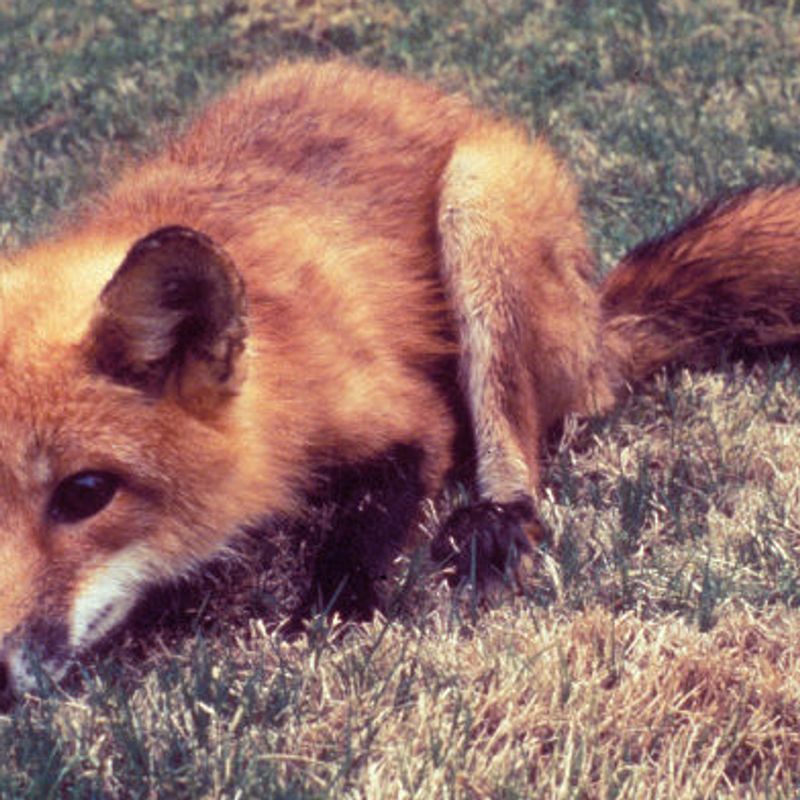
Most foxes seen in a North Carolina yard are healthy animals going about their normal routines. Daytime activity alone is not a warning sign.
NCWRC’s fox coexistence guide states directly that seeing a fox during the day is not, by itself, a valid reason to call for removal. Foxes are commonly more visible during the spring and summer months, and a fox moving purposefully, foraging, or crossing a yard without lingering is behaving normally.
The situations that do require action are different in character. A fox that is circling, staggering, self-mutilating, or making unprovoked approaches toward people should be reported to animal control or NCWRC rather than approached or cornered.
If a person or pet is bitten or scratched, wash the wound thoroughly with soap and water immediately, then contact a healthcare provider, veterinarian, or local health department for a rabies-risk assessment. CDC rabies prevention guidance is clear that simply seeing a fox in a yard is not an exposure.
Contact, meaning a bite or scratch, is what triggers the need for evaluation. CDC’s clinical overview of rabies confirms that post-exposure assessment should follow any direct contact with a wild animal that cannot be tested.
Patchy or thin fur in summer is not automatically a sign of mange. NCWRC notes that seasonal shedding can produce uneven coats that look alarming.
Intense scratching, crusty or scabbed skin, lethargy, or severe deterioration are more meaningful signs that something is wrong. Report those observations to NCWRC or animal control rather than attempting to handle or medicate the animal.
CDC guidance reinforces that people should never approach, corner, touch, or feed a fox under any circumstances. NCWRC’s red fox page echoes that keeping distance protects both people and the animal.
Use the Sighting to Make a Low-Conflict Yard Change
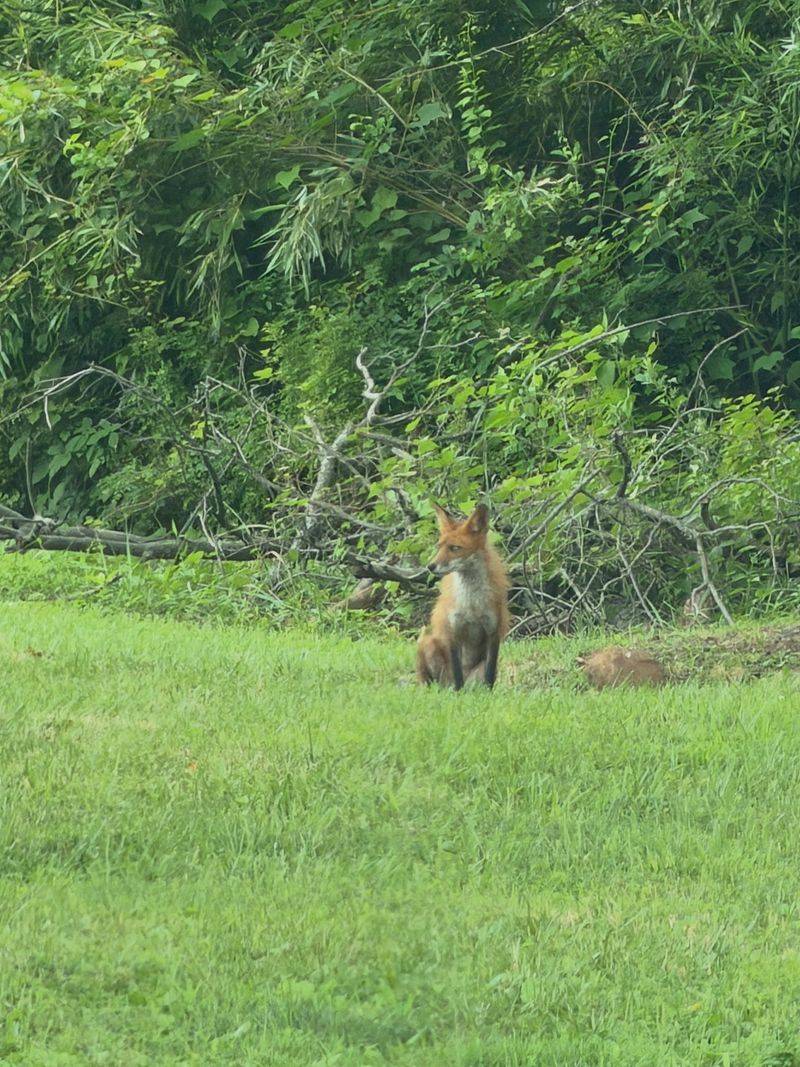
A fox in the yard is most useful as a prompt to look at what the property offers rather than as a diagnosis of what is wrong. Work through a simple sequence: observe the pattern for a few days, then inspect the yard for food sources, cover, and structural gaps.
Remove artificial attractants, secure vulnerable animals, and address any openings under structures once you have confirmed they are empty. NCWRC’s wildlife conflict prevention guidance points consistently toward changing conditions rather than chasing individual animals, because the underlying resources are what keep drawing wildlife back.
For anything beyond a passing visit, including property damage, livestock conflicts, direct contact with a person or pet, or behavior that seems genuinely abnormal, contact a licensed Wildlife Damage Control Agent or the NC Wildlife Helpline. Those resources exist precisely for situations where a homeowner needs professional judgment rather than a general checklist.
A summer fox sighting usually reflects something useful in the local landscape, not a failing in your yard management. North Carolina’s foxes are adaptable animals navigating a shared landscape.
Responding with clear-eyed adjustments rather than alarm keeps the yard safer for people, pets, and the wildlife passing through it.