
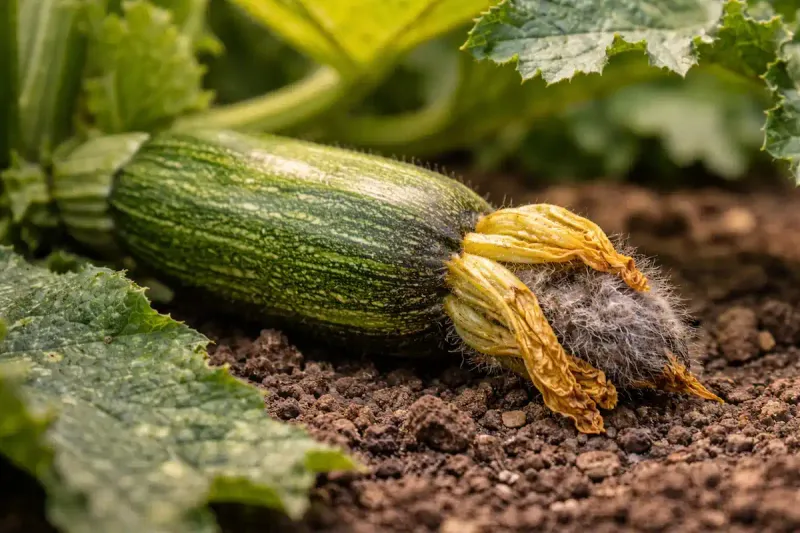
Walking out to your zucchini patch and finding a row of shriveled, brown baby squash is one of the more discouraging sights in a summer garden. The plant looks healthy, the flowers keep coming, yet nothing is growing into harvestable fruit.
Poor pollination is a common reason this happens in late summer, but it is rarely the only possibility worth checking. Heat stress, uneven watering, disease, and other issues can produce nearly identical symptoms, so the smartest move is to work through a short diagnosis before deciding what to fix.
A shriveled baby zucchini needs a diagnosis, not a verdict
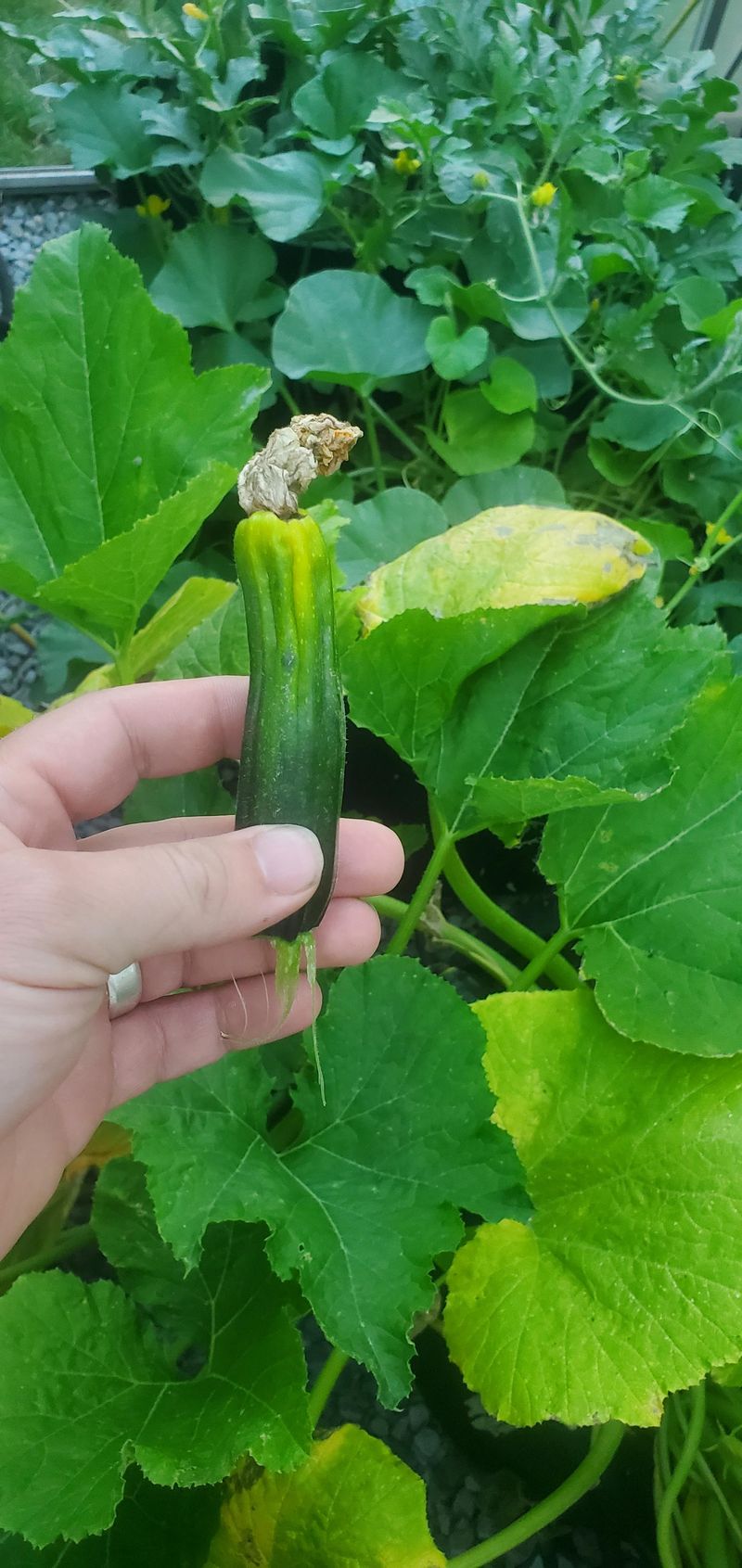
Watch a female flower long enough and the sequence becomes familiar: a bright yellow bloom opens, a small green zucchini begins to form behind it, and then the fruit stalls. Within a day or two it softens, turns brown near the tip, and falls.
University of Florida IFAS research on cucurbit pollination confirms that incomplete pollen transfer is a well-supported cause of this pattern, because most conventional zucchini cultivars depend on bees or other insects to move pollen from male flowers to the stigma of female flowers before the fruit can develop normally.
That said, poor pollination is a common explanation, not a guaranteed one. Texas A&M AgriLife Extension’s cucurbit fruit disorder guide lists incomplete pollination alongside heat stress, water imbalance, and disease as overlapping causes of fruit abortion in summer squash.
Any of those can produce a shriveled baby zucchini, and several can act at the same time.
There is also a cultivar exception worth knowing early. A Cornell trial of 21 summer-squash varieties found that some zucchini types set fruit when flowers were bagged to exclude insects entirely, while others produced little or nothing under those same conditions.
Treating the shriveled fruit as a clue to investigate, rather than a verdict against your garden, puts you in a much better position to actually fix the problem.
Identify the female flower before you blame pollinators
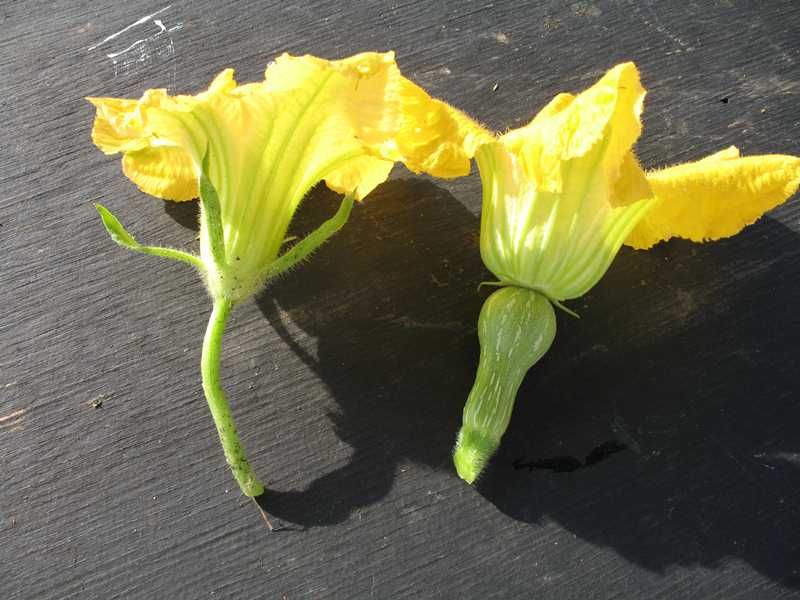
Before assuming pollinators failed, spend sixty seconds checking whether the plant is actually producing female flowers at all. University of Minnesota Extension’s guide to growing summer squash explains the difference clearly: a female flower has a visibly swollen, miniature zucchini-shaped ovary sitting directly behind the petals, while a male flower rises on a plain, narrow stem with pollen-bearing anthers inside the bloom.
Only female flowers can develop into harvestable fruit.
Iowa State University Extension notes that young squash plants commonly open a flush of male flowers first, sometimes for a week or more, before the first female flowers appear. A plant covered in blooms but producing no fruit during that early window is behaving normally, not failing.
The balance of male to female flowers can also shift with plant age, variety, and environmental conditions.
The distinction matters for diagnosis. If the plant is forming female flowers and the tiny ovaries behind them are shriveling before they enlarge, that pattern points toward a fruit-abortion problem worth investigating.
If the plant has only male flowers open, the situation calls for patience rather than intervention. IFAS guidance on cucurbit pollination reinforces that misidentifying flower sex is one of the most common reasons gardeners worry unnecessarily about pollination failure.
Heat can disrupt the few hours when pollination matters
Squash flowers operate on a tight schedule. They open in the morning and remain receptive for only a few hours before closing, which means the entire window for successful pollen transfer happens during the hottest part of the season’s hardest days.
University of Minnesota Extension’s article on limited fruit set and fruit abortion highlights how that compressed timing makes pollinator activity in the early morning especially critical for summer squash.
High temperatures can interfere with pollination in more than one way at once. Bees may reduce foraging activity during extreme heat, cutting the number of flower visits during that brief window.
At the same time, heat can reduce pollen viability, slow pollen germination on the stigma, and decrease the flower’s own receptivity. Penn State Extension’s overview of pollination services in cucurbits notes that these reproductive processes are all sensitive to temperature stress, which is why heat and pollination failure so often appear together rather than as separate problems.
University of Delaware Cooperative Extension reports that summer squash commonly aborts flowers or small fruit when daytime temperatures run through the 90s and nighttime temperatures stay in the high 70s, particularly when plants are also under water stress. Those figures are useful warning conditions for Southern gardeners in Florida and Texas, not hard biological cutoff points.
Cultivar, humidity, irrigation, plant health, and how long the heat event lasts all shape the outcome, so two neighboring gardens can respond differently to the same forecast.
Read the failed fruit for clues to other causes
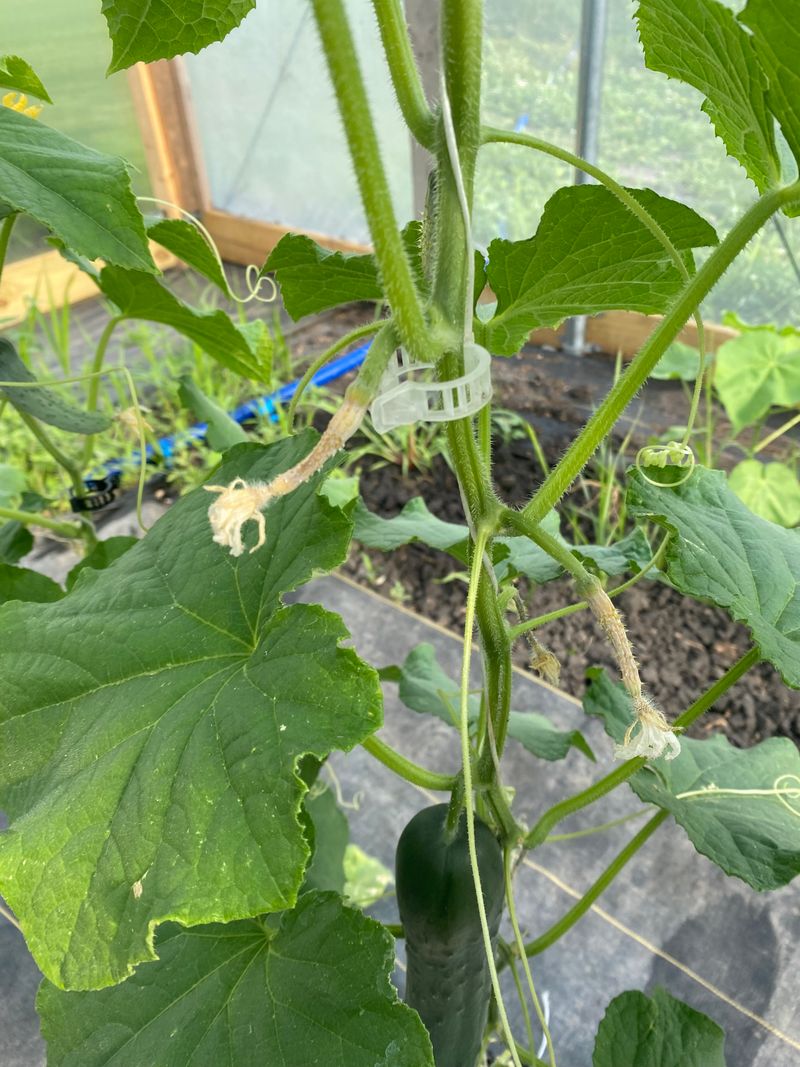
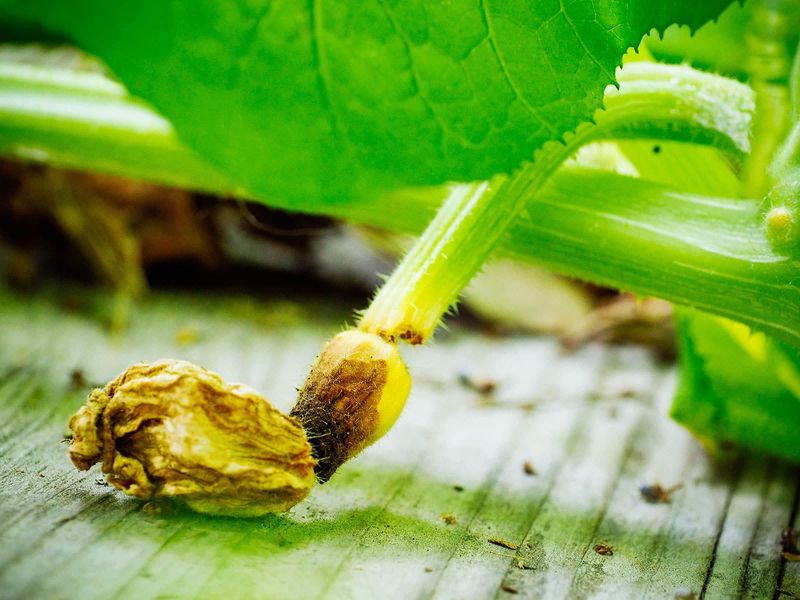
Not every shriveled zucchini tells the same story. Poorly pollinated fruit tends to stay small, soften gradually, and brown near the blossom end before dropping cleanly.
The University of Minnesota Extension piece on fruit abortion in squash describes this pattern and notes that the fruit usually shows no fuzzy or powdery coating. If that matches what you see, incomplete pollination or heat-related fruit abortion are reasonable explanations to pursue.
A different appearance points toward disease. University of Minnesota Extension’s Choanephora rot fact sheet describes the fungal disease as most likely when the blossom or young fruit becomes mushy and develops white, purplish, or black fuzzy fungal growth, especially after extended wet or humid weather.
That texture and color are distinct from the simple browning of an aborted fruit. Applying a fungicide to a poorly pollinated fruit would do nothing, and assuming disease in a fungus-free fruit could send you in the wrong direction.
Blossom-end rot is a third possibility that deserves its own look. Clemson Cooperative Extension’s summer squash factsheet describes it as a dark, dry, sunken lesion at the blossom end, associated with inadequate calcium delivery to the developing fruit and often made worse by irregular soil moisture.
It is a physiological disorder, not a pollination problem and not a fungal disease. Checking recent weather, watering patterns, and the physical appearance of the fruit together gives you a much clearer path to the right response.
Hand-pollinate a fresh female flower in the morning
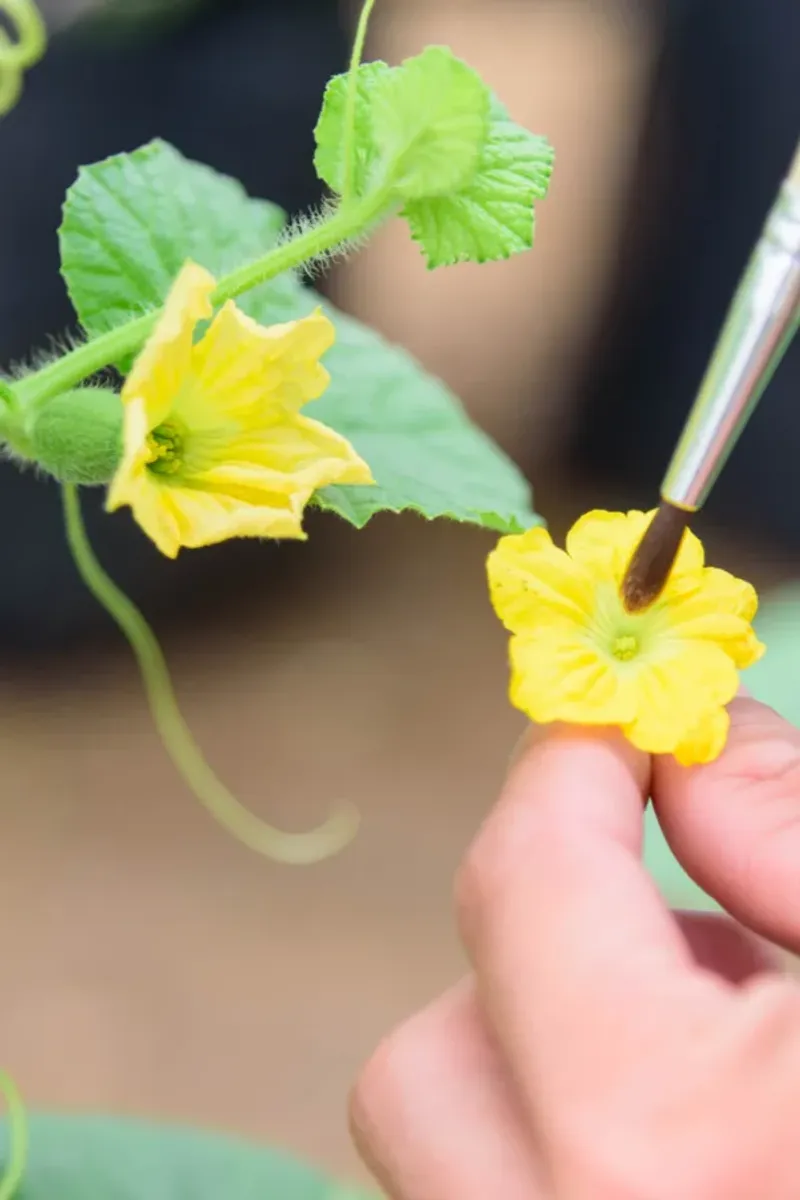
When incomplete pollination seems like the most likely culprit, hand-pollination gives you a way to test that theory and potentially rescue the next flush of flowers at the same time. The method is straightforward.
Step into the garden shortly after sunrise, find a freshly opened male flower with visible pollen on its anthers, and use a cotton swab, small paintbrush, or the male flower itself to collect that pollen. University of Georgia Extension’s guide to homegrown squash specifically recommends gathering pollen from the male flower and distributing it across the central stigma inside an open female flower.
The stigma is the sticky, knobbed structure at the center of the female bloom. Coat it thoroughly rather than touching it once and moving on, because adequate pollen quantity matters for normal fruit development.
Penn State Extension’s cucurbit pollination resource notes that the amount and viability of pollen deposited during the receptive period affects whether fruit develops fully.
Hand-pollination cannot revive a zucchini that has already begun to shrivel or abort. Aborted fruit is finished regardless of what you do to it.
The goal is to work with fresh flowers that opened that same morning, repeating the process on each new female flower as it opens over the following days. During a heat wave or drought, even successful hand-pollination may not guarantee fruit retention if the plant is under severe stress, so keeping up with watering at the same time improves your odds.
Stabilize moisture while protecting the bees
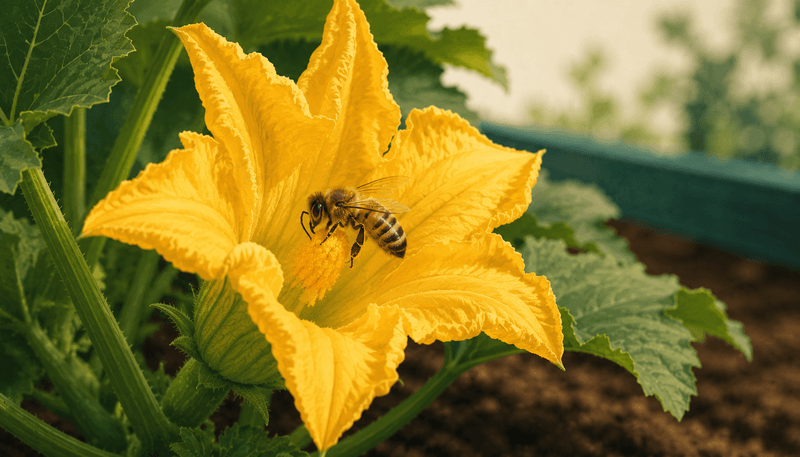
Consistent soil moisture is one of the most practical things you can manage during a hot stretch. Water stress can compound heat-related fruit abortion, and swings between dry soil and sudden heavy irrigation are harder on developing fruit than a steady supply.
University of Delaware Cooperative Extension specifically identifies water stress as a factor that worsens flower and fruit abortion in summer squash during high-temperature periods. A layer of mulch around the base of the plant slows evaporation and helps buffer those moisture swings between watering sessions.
University of Minnesota Extension’s irrigation guidance for vegetables supports maintaining uniform moisture rather than allowing severe drying followed by a heavy soak. While you are adjusting your watering routine, go ahead and clear away any fruit that has clearly aborted.
Clemson Cooperative Extension notes that oversized, mature zucchini left on the vine can suppress the development of new fruit, so prompt harvesting of anything ready to pick also supports continued production.
Protecting bees during this period is equally important. Penn State Extension’s pollinator health and pesticides resource advises avoiding unnecessary insecticide applications and never spraying while bees are actively foraging.
Penn State’s cucumber pollination page reinforces following all product-label pollinator precautions. IFAS guidance on cucurbit pollination also notes that supporting wild bees through flowering plants and reduced pesticide exposure may help local pollinator populations over time, though it is not a same-day fix for a plant already struggling to set fruit.
Check whether your variety can set fruit without pollination
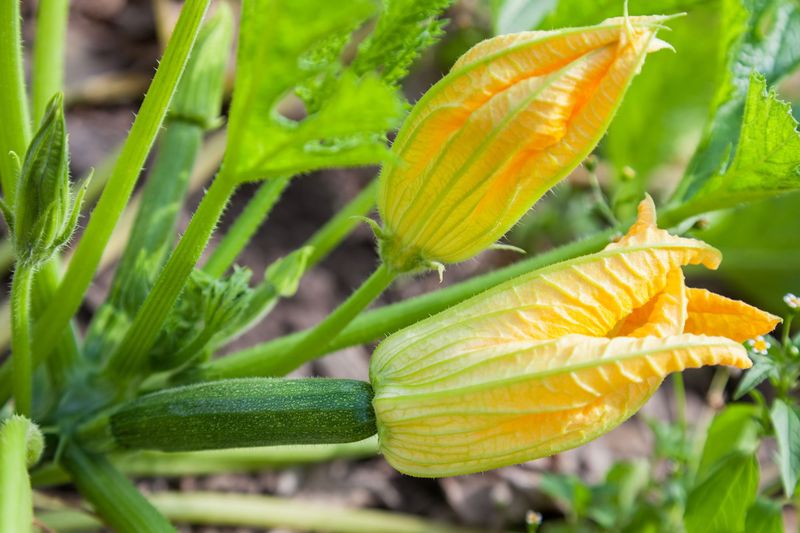
Some zucchini cultivars can form fruit without any insect pollination at all, a trait called parthenocarpy. Knowing whether your variety has that ability changes how you interpret a fruit-set problem.
A Cornell trial evaluating 21 summer-squash varieties found that performance varied considerably: certain zucchini types set fruit when flowers were bagged to prevent any insect access, while other varieties produced little or nothing under those same conditions. There is no single answer that applies to all zucchini.
University of Delaware Cooperative Extension mentions parthenocarpic varieties as an option worth considering for gardeners in regions where summer heat regularly disrupts bee activity or pollen performance. Checking the seed packet, catalog description, or a university variety trial report is the most reliable way to find out whether your cultivar is listed as parthenocarpic.
University of Maryland Extension’s resource on vegetable pollination in a changing climate notes that even varieties with parthenocarpic potential may show variable results depending on growing conditions. A parthenocarpic cultivar still needs adequate water, reasonable temperatures, and good overall plant health to sustain production.
Switching varieties addresses the pollination piece but leaves heat stress, moisture management, and disease as factors that any zucchini plant must still contend with through a Southern summer.
Use the next morning bloom as your reality check
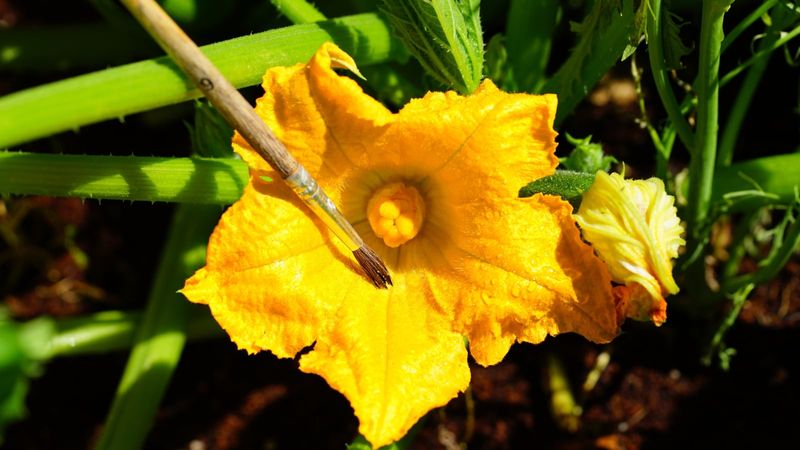
The next time a female flower opens, treat it as a structured check rather than another disappointment. Step outside early, confirm the flower is female by looking for the swollen ovary behind the bloom, and hand-pollinate it if you have a fresh male flower available.
IFAS guidance and University of Georgia Extension’s squash guide both support this morning-window approach as the most practical time to intervene.
While you are there, press the soil near the root zone to check moisture, and look at any failed fruit for fuzzy fungal growth or the distinct dry, dark lesion of blossom-end rot. Consistent irrigation and prompt removal of aborted or oversized fruit remain the most reliable follow-through steps.
One failed flush during a brutal heat wave does not mean the plant is finished for the season. Persistent problems across multiple bloom cycles call for a closer look at cultivar choice, watering consistency, disease pressure, and overall plant condition.
Poor pollination is a common reason zucchini babies shrivel in summer heat, but the symptoms always deserve a quick check of several conditions before settling on a single answer.