
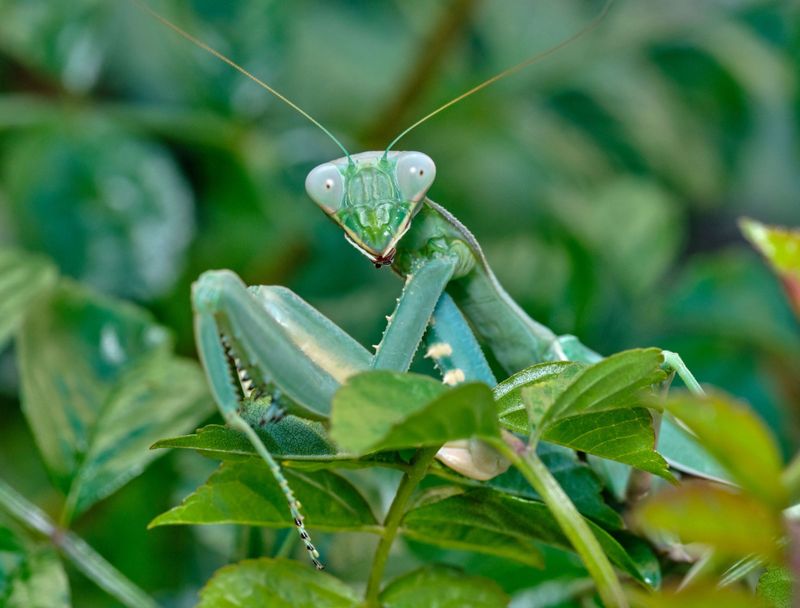
Spotting a praying mantis perched on your tomato cage or kale plant feels like a small garden miracle, and many California homeowners wonder whether to leave it, move it, or simply back away slowly. Mantises do eat insects, including some that damage vegetables, but they are not the reliable pest-control partners that garden lore makes them out to be.
Knowing what they actually do, and what they do not, helps you make smarter choices for your backyard beds without shooing away a creature that is at least doing no harm.
Let a naturally occurring mantis stay
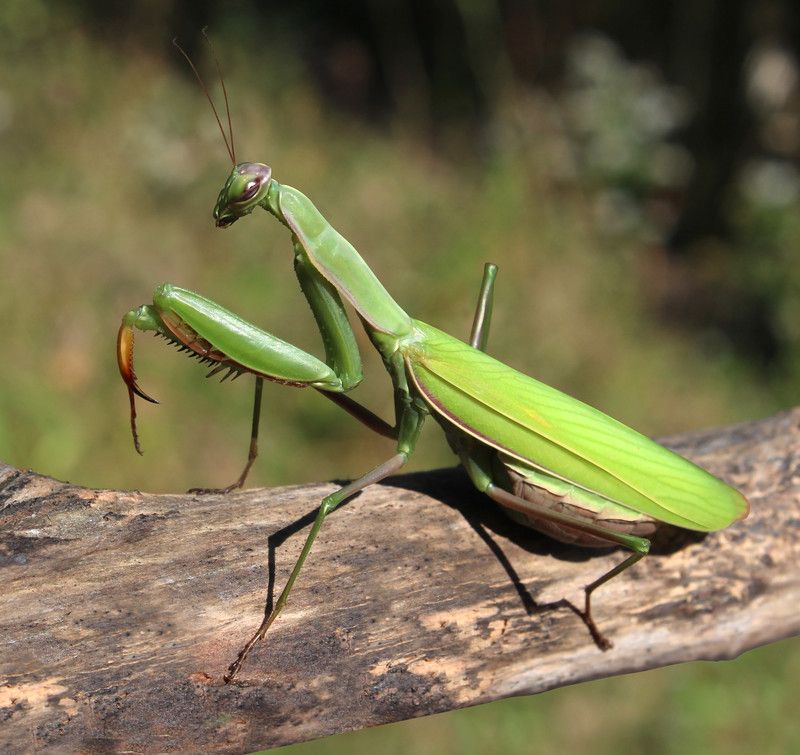
Finding a praying mantis in your vegetable beds is a reasonable excuse to put down the trowel and just watch for a minute. These insects are harmless to people, and UC IPM’s guide to mantids confirms that there is no good reason to shoo one away or kill it simply because it has wandered into your garden space.
Leaving it undisturbed is the wildlife-friendly call, and it costs you nothing.
The key distinction to hold onto is this: tolerating a predator that showed up on its own is very different from relying on that predator as a pest-management program. A mantis may consume individual insects while it moves through your beds, including the occasional aphid, small caterpillar, or fly.
What it will not do is stay in one spot, patrol a particular bed, or systematically work through a pest population.
Mantises move on their own schedule, and nothing guarantees that the one you spotted this morning will still be near your squash by the weekend. University of Maryland Extension notes that mantids are generalist predators, meaning they eat whatever live prey crosses their path rather than seeking out a specific pest.
That unpredictability is exactly why pest management cannot rest on a single mantis sighting.
So the practical decision is straightforward. When a mantis appears naturally in your California vegetable garden, leave it alone.
Observe it from a comfortable distance, avoid disturbing the plants it is resting on, and resist the urge to handle it. Appreciate it as part of the garden food web while building your actual pest-control plan around methods that are more dependable and direct.
A mantis may eat pests without controlling them
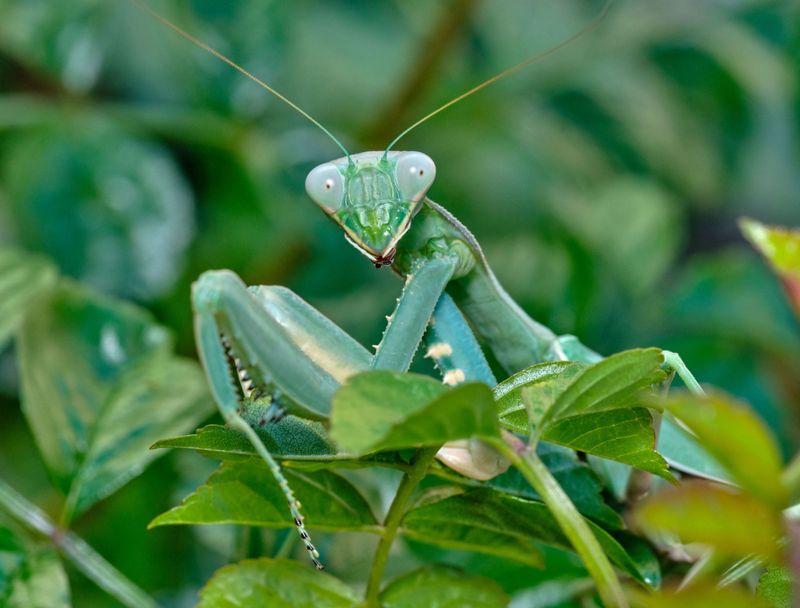
Adult mantises and their younger nymph stages both hunt by waiting in place, then striking with their spiny forelegs to grab whatever live prey comes within reach. Their menu can include aphids, caterpillars, flies, leafhoppers, and moths.
That list sounds promising until you add the rest of it: bees, butterflies, syrphid flies, spiders, and other predatory insects are equally fair game. A mantis does not distinguish between a pest and a pollinator.
The bigger issue is how few insects a single mantis actually eats. California’s UC IPM program describes mantids as generalist, relatively inactive predators that consume relatively few insects and concludes that they provide little or no meaningful biological pest-control benefit.
A mantis spends most of its time sitting still, which is efficient for an ambush hunter but not for a creature you are counting on to reduce a growing aphid colony.
Aphids, for example, can reproduce fast enough to outpace almost any generalist predator. A mantis that eats three or four aphids in a day barely registers against a colony of dozens expanding on the underside of your pepper leaves.
University of New Hampshire Extension explains that mantises do not necessarily stay near the crop or focus on the insect causing damage, which means even an active mantis may be hunting something entirely unrelated to your pest problem.
The honest framing is this: a mantis is an occasional predator and a part of the garden food web, not an on-call pest service. Replacing the idea of an efficient hunter with the more accurate picture of an opportunistic generalist helps you appreciate what a mantis genuinely contributes without setting yourself up for disappointment when the aphids keep multiplying.
Identify California mantises without guessing
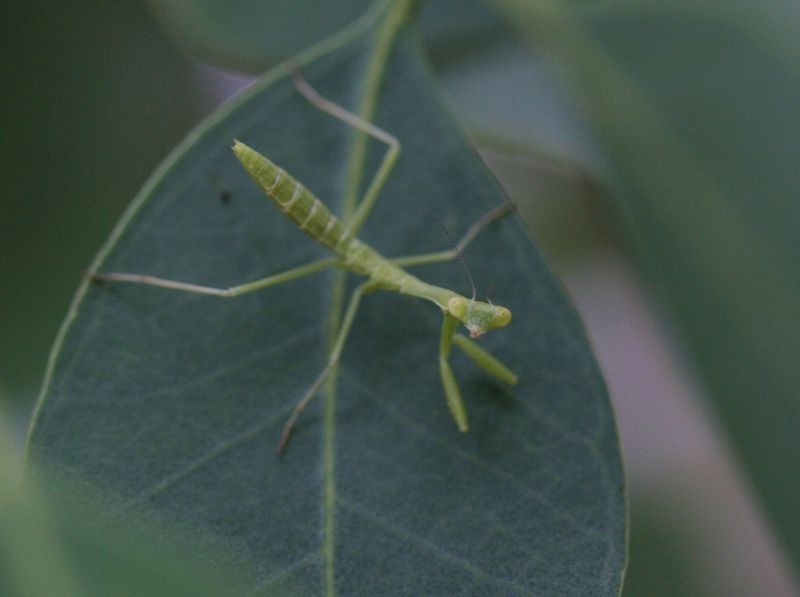
Not every mantis you see in a California yard belongs to the same species, and assuming otherwise can lead to some mistaken conclusions about what you are looking at. The state is home to several native species, including the California mantid (Stagmomantis wheeleri, also listed as S. californica) and the bordered mantid (Stagmomantis limbata), as well as smaller gray species in the genus Litaneutria.
Introduced Chinese and Mediterranean mantises are also present throughout California and are the species most commonly sold in garden catalogs.
UC IPM lists at least nine mantid species found in California, native and introduced alike. Color is not a reliable way to tell them apart because a single species can appear in multiple color phases, ranging from green to brown depending on the individual and its surroundings.
If accurate identification matters to you, look at body size, wing shape, and the patterns on the inner surface of the forelegs rather than relying on color alone.
Oothecae, the hardened, foamy egg cases that female mantises attach to stems, twigs, fences, walls, or fence posts, are another feature worth recognizing. Spotting one in your yard means mantises have been reproducing locally, which is a reasonable sign that the habitat is suitable for them.
Kansas State University extension notes that these cases can contain dozens to hundreds of eggs.
Finding an ootheca does not prove that your garden will receive any measurable pest control once the eggs hatch. UNH Extension recommends leaving a naturally occurring case in place when garden work will not disturb it, which is sensible wildlife stewardship, but it is worth keeping your expectations realistic about what hatching nymphs will actually accomplish for your vegetable beds.
Do not buy mantis egg cases for pest control
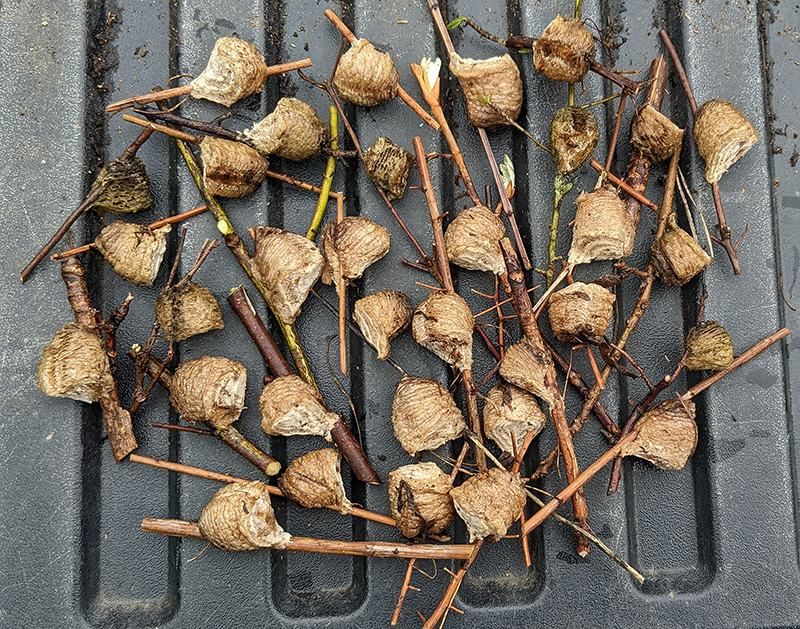
Garden centers and online retailers sell praying mantis oothecae as a natural pest-control product, and the pitch is appealing: release the eggs, hatch a small army of predators, and watch the pests disappear. Reliable extension guidance does not support that outcome.
UNH Extension states plainly that released mantises are not dependable control agents for aphids or caterpillars, and purchasing oothecae does not change the underlying biology of a generalist, relatively inactive predator.
Commercial egg cases are also frequently from introduced species, particularly Chinese or Mediterranean mantises, rather than California natives. Releasing more of an introduced species into your yard may not align with the wildlife-friendly goals that prompted the purchase in the first place.
UC IPM’s mantid overview makes clear that mantises, regardless of species, are not considered useful biological-control agents by California’s integrated pest management program.
There is a meaningful difference between leaving an egg case that a wild mantis already attached to your fence post and purchasing one to place there intentionally. The first is wildlife stewardship.
The second is an intervention that carries a cost, introduces uncertainty about species origin, and offers no reliable payoff in pest reduction. Neither a purchased case nor a successful hatch guarantees that the emerging nymphs will stay near your vegetable beds, target the pest causing damage, or improve biological control across the garden.
Save the money you would spend on commercial oothecae and put it toward mulch, a soaker hose, or plants that support the broader community of natural enemies already working in your garden. Those investments have a clearer connection to long-term pest reduction than any bag of eggs from a catalog.
Make sprays the last resort

One of the most direct ways to support any mantis that wanders into your yard is to think twice before reaching for a spray bottle. Broad-spectrum and residual insecticides can kill mantises outright, and they do not spare the other natural enemies – lady beetle larvae, lacewing larvae, parasitoid wasps, syrphid fly larvae – that provide more targeted pest suppression than a mantis ever will.
Applying a contact or systemic insecticide to address one pest can quietly dismantle the biological control that was already happening in your beds.
UC IPM recommends nonchemical methods first and advises against pesticides that damage beneficial species. That guidance applies whether or not you have ever seen a mantis in your garden.
The goal is to preserve the web of predators, parasitoids, and decomposers that keep pest populations in check over time, not just to solve one outbreak quickly and then start over from zero.
When a situation genuinely requires a product, the rules are firm. Any pesticide must be labeled and registered for the specific crop or site, the specific pest, and the intended use, and it must be applied exactly according to its label directions.
EPA pollinator-protection guidance reinforces that no product is universally safe for beneficial insects, including mantises. Risk depends on the active ingredient, formulation, application timing, weather conditions, crop type, and how much exposure the insect actually receives.
University of Maryland Extension specifically notes that residual insecticide sprays around mantids and other beneficial insects should be avoided. Monitoring first, using nonchemical measures where they are sufficient, and treating only when necessary with a properly labeled product protects both the mantis you spotted and the dozens of other organisms quietly working in the same space.
Use a practical plan for aphids
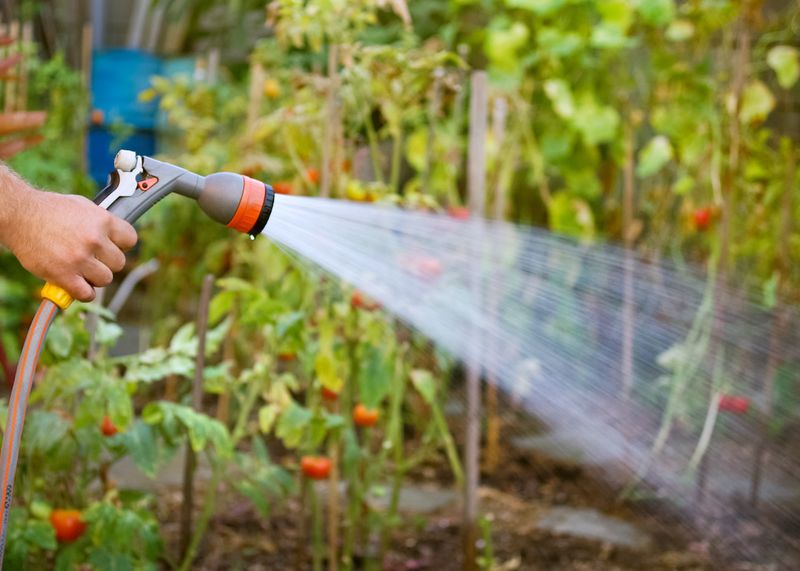
Aphids are fast reproducers, and a mantis is not going to outpace them. Practical aphid management starts with regular plant inspections, ideally two or three times a week during warm months when populations can surge quickly.
Check the undersides of leaves, the growing tips of shoots, and anywhere you notice distorted or sticky foliage. Catching a small colony early gives you far more options than discovering a heavy infestation after the fact.
For plants sturdy enough to handle it, a strong stream of water from a hose knocks aphids off leaves effectively and costs nothing. UC IPM’s aphid management guide recommends this approach along with pruning heavily infested leaves or shoots and avoiding excessive nitrogen fertilizer, which produces the soft, succulent growth that aphids find most attractive.
These steps are free, low-risk, and do not harm any of the insects working in your garden.
Ants are a factor that many gardeners overlook. Certain ant species actively tend aphid colonies, protecting them from lady beetles, lacewings, syrphid larvae, and parasitoid wasps in exchange for the honeydew aphids excrete.
If you notice ants moving up and down your vegetable stems, managing them may do more for your aphid problem than anything else. UC IPM’s ant management guidance recommends targeted ant baits or physical barriers around plant bases rather than broad outdoor sprays that would harm beneficial insects.
If an infestation is heavy enough to warrant a product, insecticidal soaps and horticultural oils are among the less-disruptive options. Both work primarily by contact with the insect’s body, so thorough coverage of infested surfaces, especially leaf undersides, is essential.
They may need to be reapplied after a few days. Neither should be used on drought-stressed plants or applied during hot weather, and some plants are sensitive to them, so check the label and test a small area first before treating the whole bed.
Inspect caterpillars before you treat
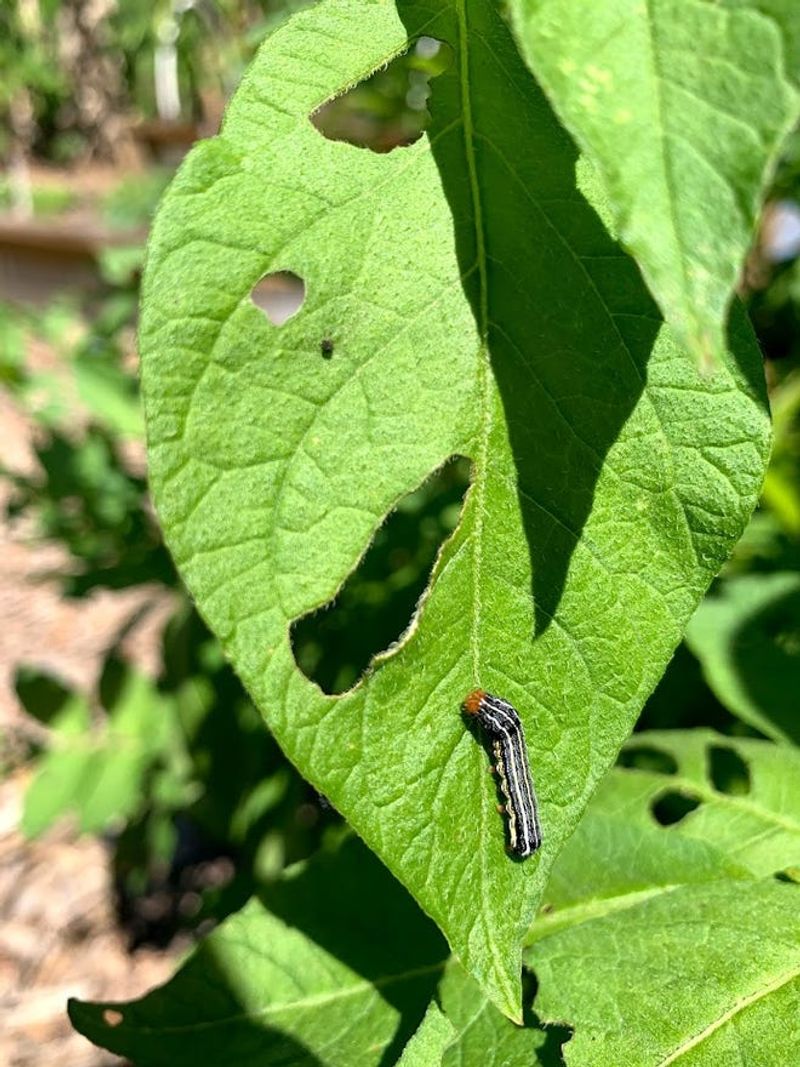
Caterpillars on vegetable leaves are not automatically a problem that needs solving. Before doing anything, spend a few minutes figuring out what you are actually looking at.
UC IPM’s leaf-feeding caterpillar guide recommends checking for feeding holes, webbed or rolled leaves, egg clusters, and the caterpillars themselves. Once you locate them, handpicking and dropping them into soapy water is often sufficient for a light infestation, and pruning heavily affected leaves removes both the larvae and the damage in one step.
The more important question is whether the caterpillar in front of you is a vegetable pest or a butterfly or moth larva you actually want to keep. Swallowtail caterpillars on fennel or parsley, monarch caterpillars on milkweed, and Gulf fritillary larvae on passionflower are all common in California gardens, and none of them belong on a pest list.
Treating any plant with an insecticide without first identifying what is feeding on it risks killing caterpillars that will become butterflies or moths you were hoping to attract.
UC IPM specifically advises against applying insecticides to butterfly-garden plants for exactly this reason. A mantis may occasionally eat a caterpillar it encounters, but it is an opportunistic predator rather than the main control in any scenario.
As UC IPM notes, mantids consume relatively few insects overall, so relying on one to manage caterpillar pressure on your brassicas is not a workable plan. Identification first, handpicking where practical, and a careful decision about whether treatment is even warranted will serve you better than any single predator ever could.
Support the garden’s entire natural-enemy community
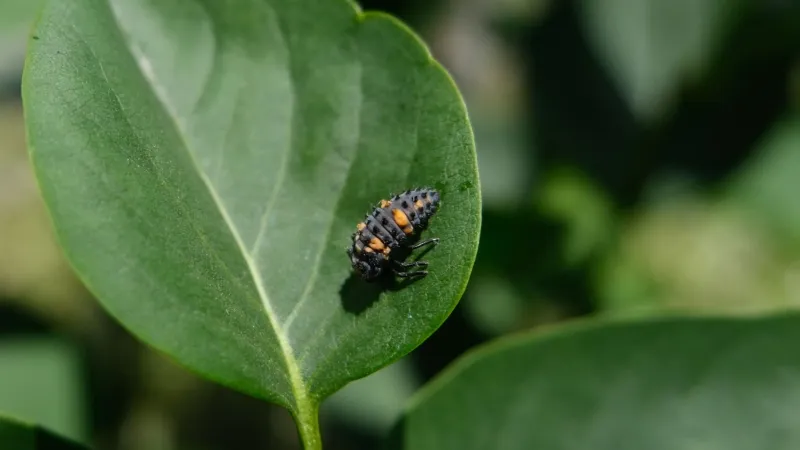
A single mantis is the most visible predator in your garden, but it is far from the most effective one. Lady beetle larvae, lacewing larvae, syrphid fly larvae, and parasitoid wasps are natural enemies that can target aphids more directly and in greater numbers than a generalist like a mantis.
Supporting the whole community of beneficial insects, rather than focusing on one conspicuous species, gives your vegetable beds a much stronger foundation for managing pests over time.
Flowering-plant diversity is one of the most practical tools for that goal. UC IPM’s biological-control overview explains that flowering plants can provide nectar, pollen, shelter, and habitat for beneficial insects and natural enemies generally.
Planting sweet alyssum near brassicas, letting dill or fennel bolt, or tucking in some native buckwheat along a raised-bed border gives a range of small predators and parasitoids the resources they need to establish and reproduce in your yard. This is habitat support for the broader community, not a recipe for attracting mantises specifically or a guarantee of pest elimination.
The integrated approach combines several layers: diverse plantings that feed and shelter natural enemies, regular monitoring so you catch problems early, hand removal and water sprays as first-response tools, ant management to stop aphid defenders from undermining your natural-enemy community, and carefully selected treatments used only when necessary and only according to label directions. No single element of that plan, including a resident mantis, works well in isolation.
Together, they create conditions where pest populations are less likely to reach damaging levels and where the organisms already living in your garden can do meaningful work.
Keep the mantis and lower your expectations
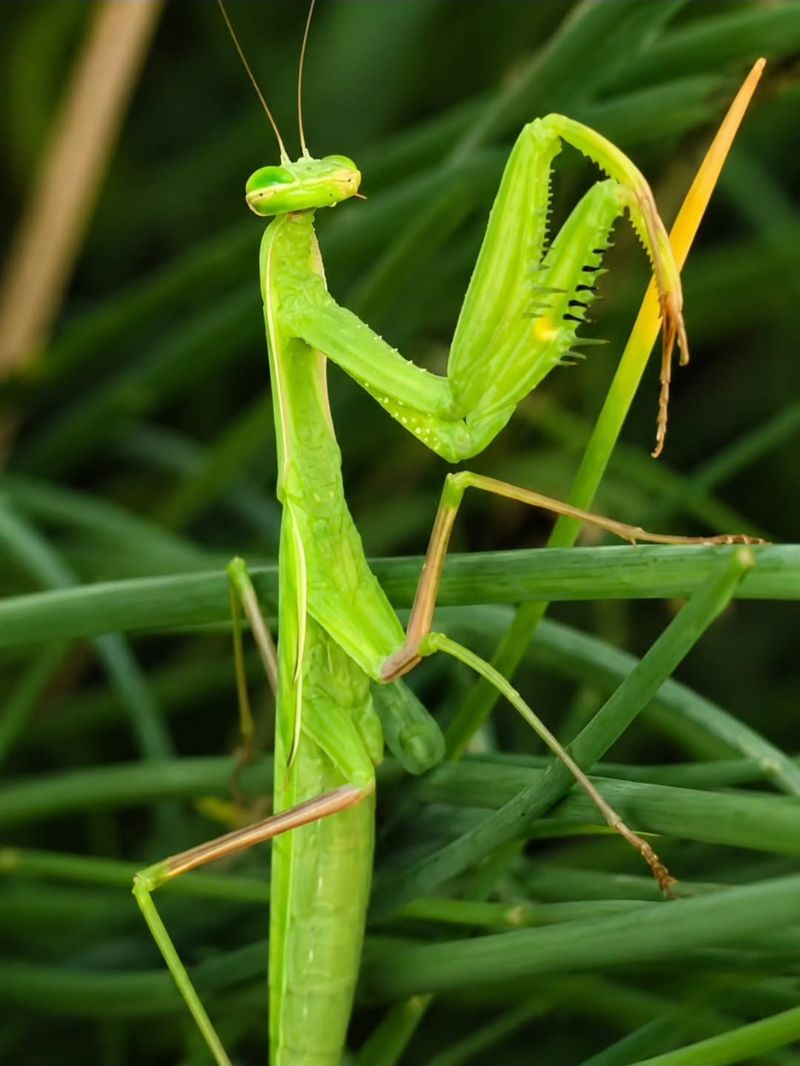
A naturally occurring mantis or an undisturbed ootheca in your California vegetable garden is worth keeping. UC IPM confirms that mantids can eat insects that include occasional pests, and leaving one alone costs you nothing while preserving a part of the garden food web.
What it will not do is clear an aphid outbreak, stop caterpillar damage, or function as a pest-control program on its own.
Your actual pest-management plan belongs on steadier ground: regular inspections, hand removal, water sprays for aphids on sturdy plants, ant management to protect the natural enemies already working in your beds, and a mix of flowering plants that support the broader beneficial-insect community. UC IPM’s aphid guidance and its caterpillar resource both point toward monitoring and nonchemical methods first, with any treatment requiring a properly labeled product applied exactly as directed.
Broad-spectrum sprays undermine the natural enemies doing quiet, consistent work alongside your mantis, so reserve them for situations where nothing else is sufficient.
Observe the mantis when you get the chance, avoid handling it unnecessarily, and skip the purchased egg cases. A wild mantis that chose your garden on its own terms is a better garden companion than any commercially released one, and a realistic view of what it can offer makes the relationship a lot more satisfying.