
Every spring, the same story plays out along the shaded edge where your lawn meets the trees: the mulch has shifted, bare soil has appeared, and weeds are already moving in. Replacing that mulch bag after bag feels like a losing battle, and it often is on slopes or near drainage where bark floats away with the first hard rain.
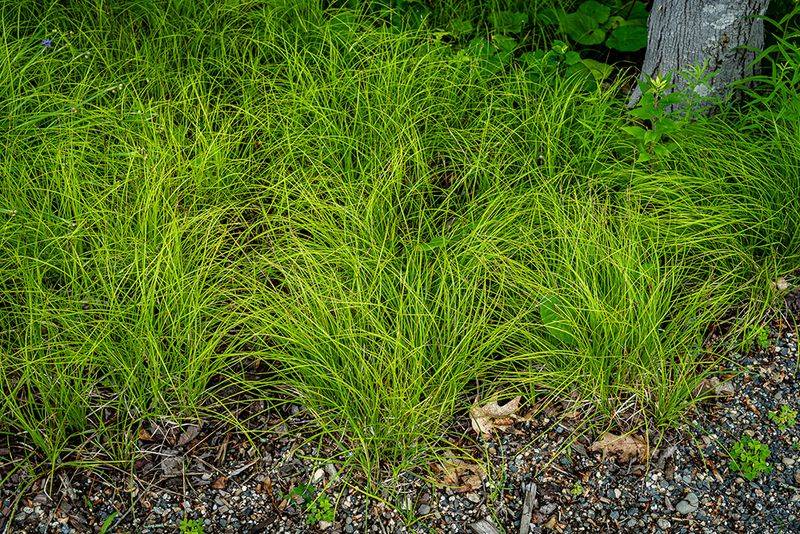
Pennsylvania sedge, a native grasslike ground cover suited to shaded North Carolina woodland edges, offers a gradual way to close that gap with a living layer instead of a repeatedly replaced one. Understanding where it fits, and where it does not, is what makes the difference between a successful planting and a frustrating one.
A washed-out mulch bed needs more than a new bag of mulch
Mulch earns its place in the landscape. NC State Extension guidance on planting preparation confirms that organic mulch suppresses annual weeds, retains soil moisture, and moderates soil temperature through heat and cold.
Those are real benefits, and nothing about replacing mulch with a living ground cover changes them.
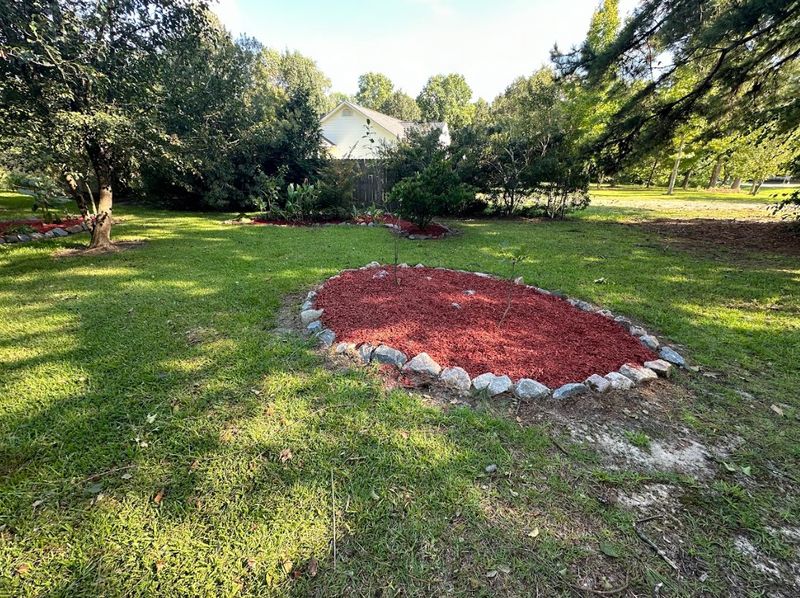
The problem shows up when the same mulch keeps disappearing. Pine bark nuggets are especially prone to floating off during heavy rain, and on a slope or near a downspout, even a fresh 3-inch layer can migrate before the week is out.
That pattern of repeated displacement is a signal worth reading carefully. If runoff is concentrated, if the slope is steep, or if a drainage problem is pushing water across the bed, adding more mulch treats the symptom rather than the cause.
An established living ground layer holds soil differently than loose bark does. Roots anchor the surface and rhizomes gradually fill the gaps where weed seedlings find purchase.
Over time, a dense planting can reduce the amount of exposed soil available for germination, which is a meaningful advantage over a layer that washes away.
That said, a ground cover planting cannot correct active water-flow problems on its own. If runoff is concentrated from a downspout, a hardscape edge, or a roof drainage path, grading, a French drain, or a more stable erosion-control treatment may need to come first.
Penn State research on mulch performance reinforces that mulch itself remains a useful tool when applied correctly. The goal is not to abandon mulch entirely but to work toward a stable planted surface that eventually needs less of it.
Pennsylvania sedge offers a close match for suitable shaded edges
Most homeowners walking through a garden center have never heard of Pennsylvania sedge. Sold under the name oak sedge as often as its scientific name, Carex pensylvanica, it sits quietly in the native-plant section while flashier perennials draw the crowd.
That overlooked status is part of what makes it worth a closer look for the right site.
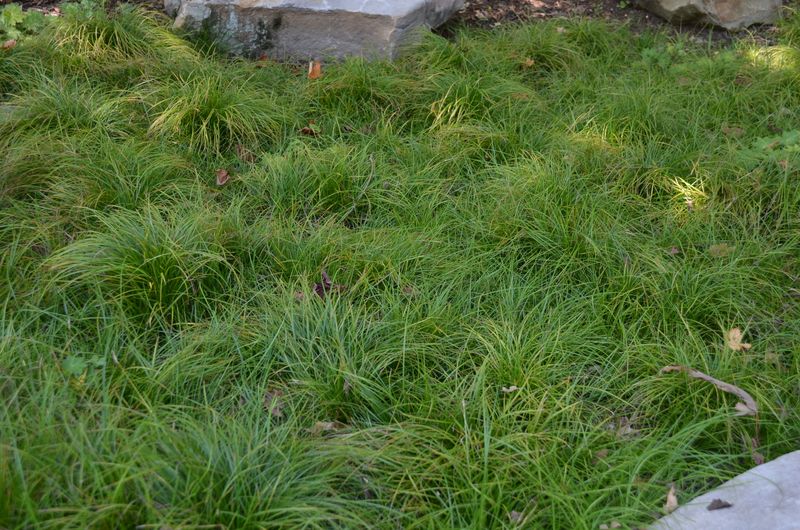
NC State Extension’s plant profile for oak sedge lists it as a North Carolina native suited to dry-to-moist shade and woodland conditions, with a fine texture, a spreading and clumping habit, and a general height range of about 1 to 8 inches. It can function as a shady lawn alternative, which is a meaningful distinction from most ornamental ground covers that simply fill space.
One clarification matters before purchasing: Pennsylvania sedge looks like a grass but is botanically a sedge in the Cyperaceae family, not the grass family. The practical difference is minor for most homeowners, but the botanical distinction is real.
A quick way to remember it is the old field saying, “sedges have edges” – the stems are triangular in cross section rather than round.
NC State also notes some taxonomic uncertainty worth knowing before you order online. North Carolina populations of Pennsylvania sedge may belong to a related but not yet formally described species.
That uncertainty does not make the plant less useful, but it does make sourcing matter. Reputable native plant nurseries selling locally grown or regionally appropriate material are a better bet than generic bulk suppliers.
The EPA’s native plant profile for Carex pensylvanica documents its natural occurrence in thickets and dry woodlands across eastern North America, supporting its fit for North Carolina’s shaded edges.
The plant will not form a seamless, wall-to-wall carpet in one season or even two. What it can do, given the right site and reasonable patience, is gradually close the open ground where weeds and bare soil keep returning.
The sedge can reduce open soil, but it will not erase weeds
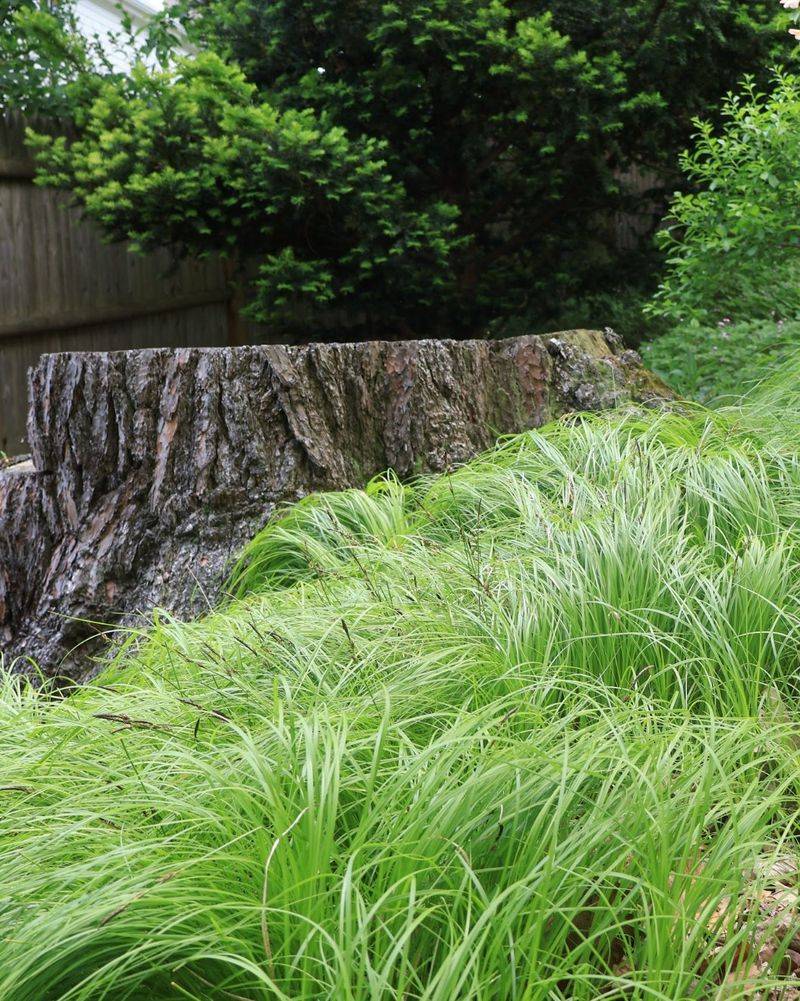
Slow growth is the most important thing to understand about Pennsylvania sedge before you plant it. NC State’s oak sedge profile describes the plant as slow-growing, which means a newly planted area will not look dense or finished for at least a full growing season, and likely longer depending on spacing and site conditions.
What the sedge does over time is reduce the amount of bare soil available for weed seeds to germinate. As the planting thickens, fewer open patches remain, and some annual weed seedlings struggle to get established where the sedge has filled in.
That is genuine competition, and it adds up. The honest framing, though, is gradual reduction in exposed soil rather than permanent weed elimination.
Perennial weeds are a different challenge entirely. Bindweed, ground ivy, wild violet, nutsedge, and other plants that spread by rhizomes, tubers, bulbs, stolons, or crowns do not care whether a sedge is nearby.
Penn State’s guidance on weed control in landscape plantings explains that perennial weeds can grow directly through mulch and established plantings, which means they will grow through young sedge just as readily.
The practical takeaway is that readers should plan to keep weeding during the establishment period, not assume the sedge will handle it. NC State’s pre-planting guidance recommends controlling perennial weeds before the first plant goes in the ground, because trying to remove established perennial weeds from around newly planted sedge is far harder than clearing them beforehand.
Temporary mulch between young plants helps during this window. Penn State’s native ground cover planting guide recommends at least 2 inches of mulch after planting to suppress weeds while plants fill in.
The mulch is not the enemy here; it is part of the bridge between a bare bed and an established living layer.
Match the plant to shade, climate, moisture, and foot traffic
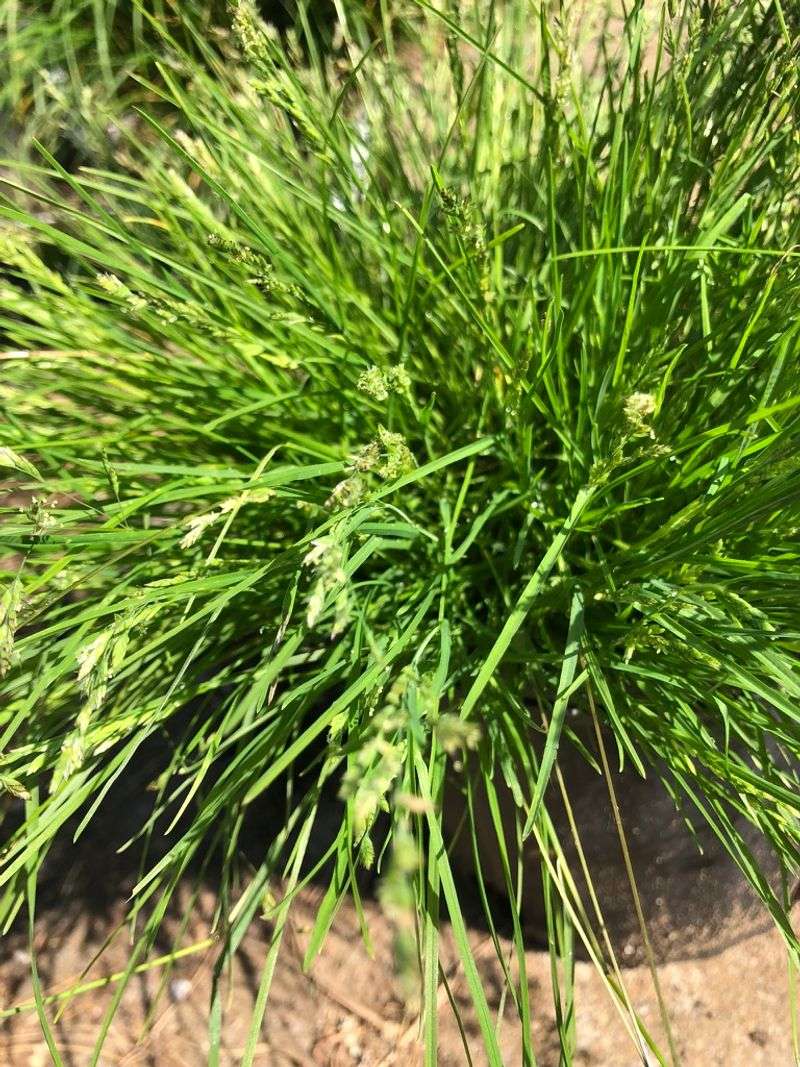
Before ordering plants, spend some time reading the actual site. Pennsylvania sedge is not a one-size-fits-all solution, and matching it carefully to conditions will save money, time, and frustration.
Shade tolerance is one of the sedge’s genuine strengths. NC State’s oak sedge profile notes that it handles heavy shade well and is naturally found under dry woodland canopy.
Its preferred range runs from dry to moist shade, so a spot that stays perpetually wet or has standing water after rain is not a good fit. Consistently waterlogged soil will stress the planting and open the door to problems that have nothing to do with weeds.
Climate within North Carolina matters more than many homeowners expect. The same NC State profile states that Pennsylvania sedge performs best in cooler climates.
Mountain yards in the western part of the state are likely the most favorable match. Piedmont edges with afternoon shade and reasonable soil moisture can work well too, though summer heat stress is a real consideration.
Coastal Plain sites tend to run hotter and drier, and results there may be less consistent. That does not make the plant impossible on the coast, but it does mean the site assessment needs to be honest about heat and moisture levels.
Foot traffic is a hard limit. Pennsylvania sedge will not tolerate heavy use.
Play areas, dog runs, paths where family members cut through regularly, and any edge that gets walked on more than occasionally are poor candidates. NC State’s native plants handbook reinforces that newly planted natives need time and appropriate conditions to establish roots, and repeated compaction or trampling during that window can set the planting back significantly.
Finally, assess water movement across the site separately from shade and soil type. If runoff channels through the area after heavy rain, the sedge cannot fix that on its own.
NCDOT erosion-control research treats native plantings as one component of a broader stabilization strategy, not as a standalone drainage solution. Concentrated runoff should be addressed with grading, drainage correction, or appropriate erosion-control measures before any ground cover planting goes in.
Prepare the ground before planting the living layer
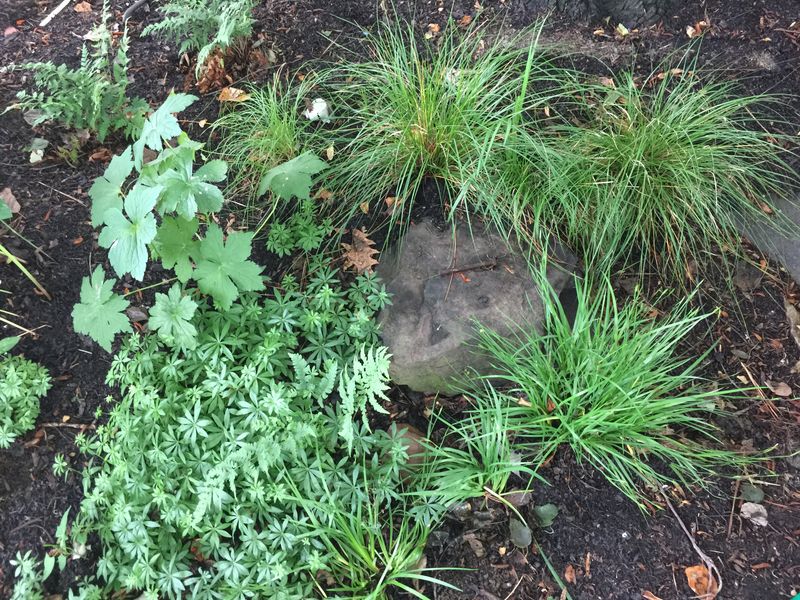
Ground preparation is where most native ground cover plantings succeed or fail, and skipping steps here costs more time later than doing them upfront. Start with perennial weeds.
Any plant that spreads by underground rhizomes, tubers, bulbs, or stolons needs to come out before the first sedge plug goes in. NC State’s pre-planting guidance is direct on this point: weeds with underground structures can grow through mulch and compete with new ground covers from below, and they are much harder to remove after a planting is in place.
Soil compaction deserves equal attention. Compacted soil restricts water infiltration, limits oxygen movement, and makes it harder for roots to grow outward.
A garden fork or broadfork worked through the planting area before installation gives roots a better start. If the area has been heavily trafficked, compaction may be significant enough to warrant more thorough correction before planting.
Timing follows site preparation. Spring and fall are the best planting windows for most native ground covers, including Pennsylvania sedge.
Penn State’s native ground cover guide recommends applying at least 2 inches of mulch after planting to suppress weeds while plants fill in. That mulch layer is a working part of the establishment strategy, not an afterthought.
For the mulch itself, material choice matters on slopes and near drainage areas. NC State’s native plants handbook recommends roughly 3 to 4 inches of organic mulch for perennial beds and warns against exceeding 4 inches, which can create anaerobic conditions at the soil surface.
Coarse, fibrous materials like shredded hardwood or pine straw hold position better than pine bark nuggets, which float easily near drainage paths or on any meaningful slope.
Water newly planted sedge consistently for the first several weeks, or until roots have clearly established. Native plants are not maintenance-free from day one.
They need reliable moisture during that early root-building window, and dry spells during the first summer after planting are the most common reason a promising installation stalls out.
Plan for modest maintenance and meaningful habitat value
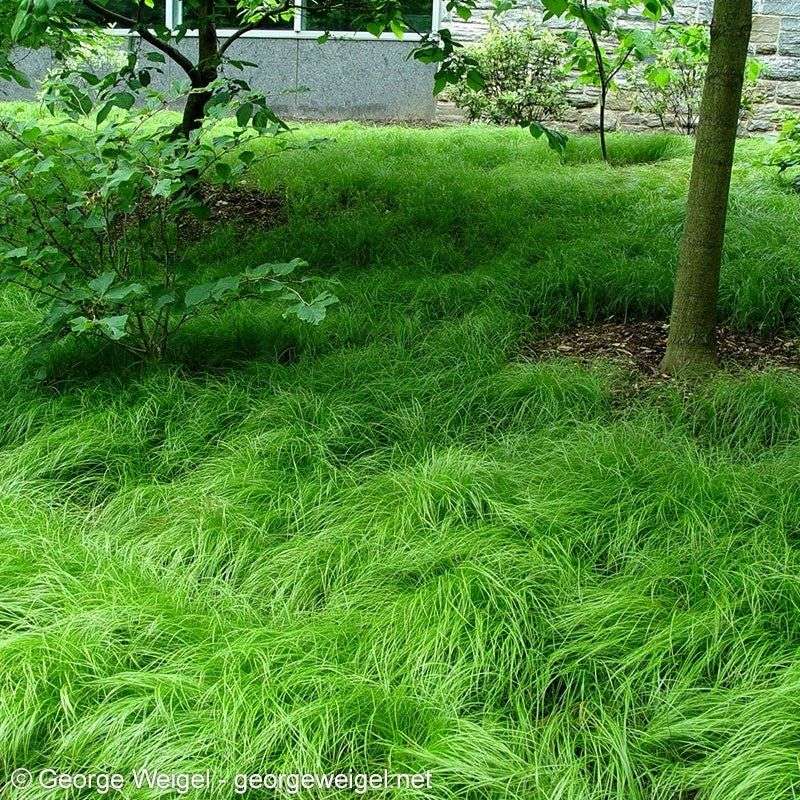
Once Pennsylvania sedge fills in, the maintenance picture changes noticeably. NC State’s oak sedge profile notes that a managed short sedge lawn can be maintained with mowing or weed-whacking once or twice per season to hold a height of around 2 inches.
That is a significant reduction from a conventional lawn’s weekly mowing schedule.
A naturalized woodland-edge planting will look less uniform than a managed sedge lawn. Some areas will fill in faster, bare spots may persist for a season or two, and the overall texture will be more relaxed than a clipped surface.
That is a reasonable trade for the reduced upkeep, but readers expecting a tidy, carpet-like result right away should calibrate their expectations accordingly. Occasional weed removal and monitoring for gaps remain part of the routine during the slow fill-in period.
The habitat side of the ledger is worth taking seriously. NC State’s overview of the broader Carex genus documents that sedges provide seed, cover, and nesting habitat for wildlife across multiple species.
Pennsylvania sedge specifically supports some satyrine butterfly larvae, and birds and small mammals use its seed and the plant structure for cover. Those benefits are real, even if no specific wildlife sighting can be promised.
Fallen leaves add to the picture. NC State’s native plants handbook encourages leaving fallen leaves in place under established trees where practical.
Leaves decompose into the soil, support ground-dwelling insects and other invertebrates, and act as a natural mulch layer beneath the sedge canopy. Letting them stay rather than raking them out is one of the lower-effort stewardship choices available to a North Carolina woodland-edge gardener.
River oats creates height, movement, and a different kind of edge
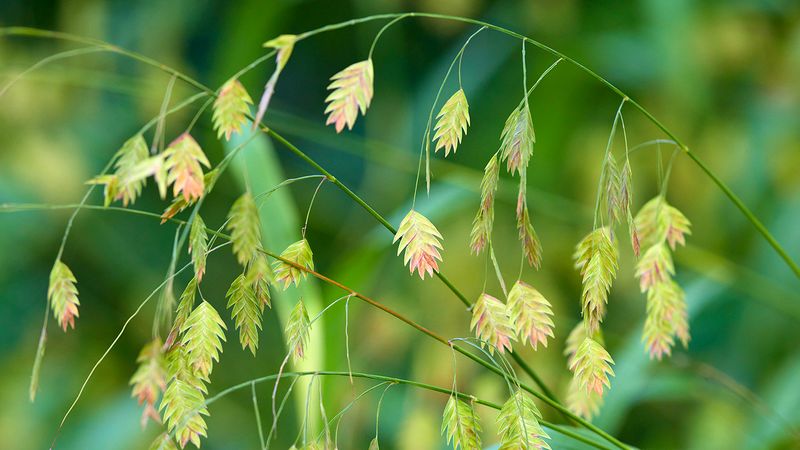
River oats occupies a completely different visual and functional space from Pennsylvania sedge, and understanding that difference prevents a common planning mistake. Where Pennsylvania sedge stays low and gradually covers the ground plane, river oats grows 2 to 5 feet tall in clumping forms with dramatic, dangling seed heads that catch every breeze.
It is an ornamental grass in the fullest sense of the phrase.
NC State’s river oats profile describes it as a North Carolina native suited to part shade and moist to wet, well-drained sites, including naturalized areas, stream edges, and water-garden margins. Those conditions overlap with some woodland edges but lean wetter and brighter than Pennsylvania sedge’s preferred dry-to-moist shade.
The two plants are not interchangeable; they solve different problems.
The seed heads are a genuine draw. Duke Gardens’ notes on river oats highlight their ornamental persistence through fall and winter, when the flattened, oat-like clusters turn bronze and keep moving in light wind long after the growing season ends.
Birds and small mammals use the seed, and some butterfly larvae feed on the foliage, so the wildlife value is documented.
The spread warning is not optional. River oats can move aggressively through both rhizomes and self-seeding, and NC State specifically flags that it may become weedy in favorable conditions.
That characteristic makes placement deliberate work. Choose a spot where some spread is acceptable, such as a large naturalized area, a rain garden edge, or a slope that needs stabilization and has room to absorb a widening clump.
Remove unwanted seedlings before they mature and set seed, because once a river oats colony establishes momentum, pulling it back takes real effort. For a tight bed near a path or a formal garden edge, that spread potential is a liability rather than an asset.
Make the transition gradually and choose locally
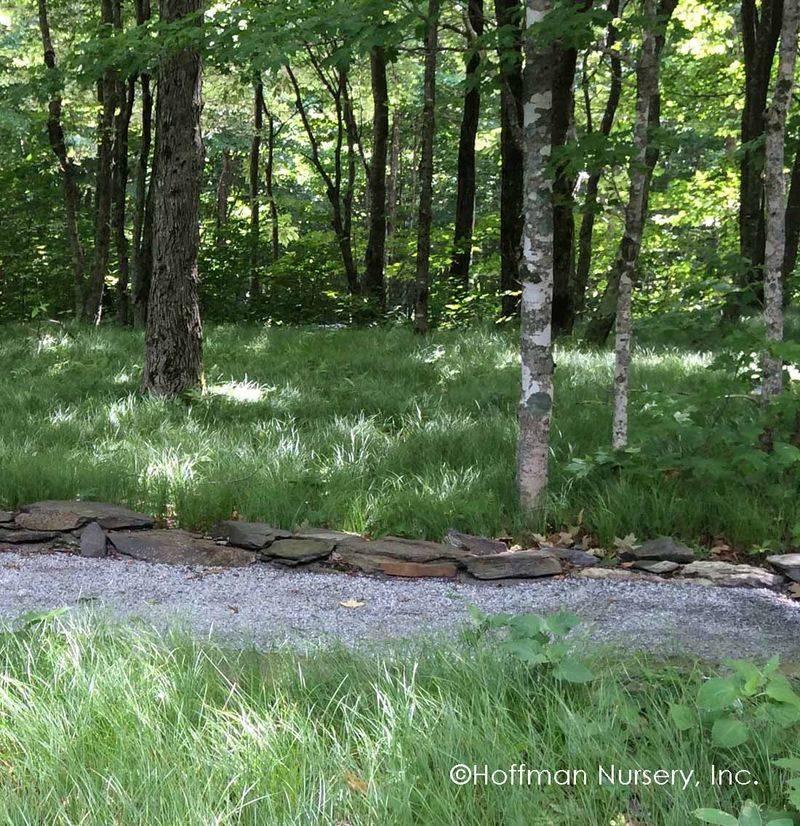
The clearest way to frame the choice is to start with the problem you are actually trying to solve. A low, shaded, low-traffic woodland edge where mulch keeps washing out or weeds keep returning in the open soil is a good candidate for Pennsylvania sedge.
NC State’s oak sedge profile supports it as a gradual living ground layer for exactly that scenario, with the understanding that establishment takes time and weeding continues during the fill-in period.
Where the edge needs height, movement, and a stronger visual presence along a moist or partly sunny margin, river oats is the more appropriate choice. The two plants can coexist in the same general area if conditions allow, with the sedge handling the low ground layer and river oats adding structure at the back or along a wetter section.
Penn State’s native ground cover guide recommends mixing species rather than covering an entire area with one plant. Mixed plantings are more resilient, more visually interesting across seasons, and less likely to collapse entirely if one species underperforms in a particular spot.
Source plants from reputable native nurseries that sell locally grown or regionally appropriate material. Address persistent perennial weeds and any runoff problems before the first plant goes in the ground.
Water consistently until roots establish, and keep stable mulch in place until the sedge thickens enough to hold the surface on its own. Good site preparation is what separates a planting that gradually closes the gap from one that simply adds another layer of work.
The sedge will not transform the edge overnight, but given the right conditions and honest expectations, it can change what that edge looks like in three years in a way that a bag of mulch never will.